




Abstract
Background:
Previous studies have proposed that the maternal intake of pre/probiotics may affect the immune composition of breast milk. Nevertheless, the available findings are contradictory. This meta-analysis aimed to examine the impact of maternal supplementation with pre/probiotics on the levels of total immunoglobulin A (IgA), secretory IgA (SIgA), transforming growth factor beta 1 (TGF-β1), and TGF-2 in breast milk.
Methods:
PubMed and Scopus were systematically searched using a comprehensive search strategy for eligible randomized-controlled trials published up to February 2021. A random-effects model was applied to pool weighted mean difference and 95% confidence interval (CI) as effect size. Cochran's Q statistic and the I2 statistic were used to measure the between-study variance. Egger's regression test was used to assess publication bias.
Results:
A total of 12 different studies, with a total sample size of 1722 individuals (probiotic group: 858, placebo group: 864), were included in this meta-analysis. In the overall analysis, compared with placebo, maternal supplementation with pre/probiotics had no significant effect on concentrations of total IgA, SIgA, TGF-β1, and TGF-β2 in the breast milk. In the subgroup analysis, pre/probiotics did not affect total IgA, TGF-β1, and TGF-β2 in both colostrum/transitional and mature milk. However, a significant increase in SIgA was found in colostrum/transitional milk following pre/probiotic administration (WMD = 19.33, 95% CI: 0.83–37.83; p = 0.04), without evidence for remarkable heterogeneity (I2 = 0.0, p = 0.57).
Conclusions:
Maternal supplementation with pre/probiotics may increase SIgA in colostrum/transitional milk, without any effect on total IgA, TGF-β1, and TGF-β2.
Research Highlights
_ Maternal supplementation with pre/probiotics may increase secretory immunoglobulin A (IgA) in colostrum/transitional milk.
_ Pre/probiotics had no significant effect on total IgA, transforming growth factor (TGF)-β1, and TGF-β2 in the breast milk.
Background
Breast milk from a healthy woman provides the most important source of nutrients, including the bioactive components that promote survival and healthy development and decrease the incidence of allergic disorders in infants. 1 Also, human milk is a complex mixture of bioactive components that provide a wide range of antibodies (especially immunoglobulin A [IgA]) and anti-inflammatory agents such as tumor necrosis factor (TNF), interleukin 10 (IL-10), and transforming growth factor β (TGF-β) and probiotics (live microorganisms considered to have beneficial health effects. 2 Maternal diet and supplement intakes have a strong influence on breast milk composition and hence for the health of the infant. 2 Moreover, nutritional, metabolic, and immunological processes in the gut are reflected in the mammary gland and the milk through the enteromammary link. 3
Therefore, manipulation of the gut flora by perinatal supplementation either in pregnancy or during lactation, with beneficial microbial products, probiotics, may affect the immune composition of breast milk, including TGF-β and IgA.4–6
TGF-β1 and TGF-β2 are two isoforms of a key immunoregulatory cytokine in mammals. The TGF-β1 isoform serves as an immunoregulatory cytokine involved in the mucosal immune system; TGF-β2 similarly has immunoregulatory roles but is less studied in breast milk compared with TGF-β1. During the early postnatal period, when endogenous TGF-β production in the intestine is sparse, maternal milk constitutes an important exogenous source. TGF-β is also considered a key factor in promoting IgA production and induction of oral tolerance. IgA is a major immunoglobulin found in epithelial tissues that serves as a primary defense agent against pathogenic microorganisms and enteric toxins in the gastrointestinal and respiratory tracts, which help maintain intestinal humoral immunity by binding to antigens, thereby limiting their access to the epithelium.7–10
High levels of breast milk IgA11–13 and TGF-b14,15 have been suggested to influence allergy development in the child, although this is still controversial. 16 In fact, supplementation of probiotics to lactating women was associated with increased levels of TGF-β2 in breast milk. 5 Studies showed TGF-β1 and TGF-β2 can protect the immune system against the development of allergic disease and the levels of TGF-β varied considerably between studies, which was explained by the probiotic consumption of the mother. 17 Although a study has shown that probiotics are known to stimulate the production of IgA by B cells, 7 other studies have shown that there are no possible interactions between probiotic supplementation and breast milk levels of IgA; so, the effect of probiotic supplementation on breast milk IgA concentration is conflicting. 18
Also, the effect of probiotic supplementation on TGF-β concentration in breast milk is shown to be conflicting in another study. 18 The outcomes of these studies vary and available data are challenging and no meta-analytical data providing overall information about this issue are currently available. This systematic review and meta-analysis aimed to determine the possible effects of pre/probiotic supplementation on breast milk levels of TGF-β1, TGF-β2, and IgA to support better treatment to achieve clinical remission and prevent the development of allergic diseases that are dramatically increasing.
Methods
The findings of this meta-analysis were reported based on a stepwise process in accordance with the guidelines of the Preferred Reporting Items for Systematic Reviews and Meta-Analyses (PRISMA). This project does not contain any studies with human participants or animals performed by any of the authors. PICOS format was applied to design study; accordingly, Population (females in lactation or pregnancy period), Intervention (probiotic, prebiotic, or synbiotic supplementation), Comparison (placebo), Outcome (breast milk levels of TGF-b1, TGF-b2, total IgA, and secretory IgA [SIgA]), and Study design (parallel and crossover clinical trials).
Search strategy and literature search
A comprehensive systematic search was performed through MEDLINE/PubMed and Scopus to retrieve all potential studies considering the effect of pre/probiotic supplementation on breast milk levels of TGF-b1, TGF-b2, total IgA, and SIgA. Search was restricted to publication in English language and databases were searched before February 2021. The combination of Medical Subject Headings (MeSH) and key words was as follows: (Synbiotic* OR Prebiotic* OR Probiotic* OR Symbiotic*) AND (“human milk” OR breastmilk OR “breast milk” OR “Milk, Human”[Mesh] OR breastfeeding OR milk) AND (TGF-b1 OR “Transforming growth factor beta 1” OR TGF-β1 OR TGF-b2 OR “Transforming growth factor beta 2” OR TGF-β2 OR “Transforming growth factor beta” OR “Immunoglobulin A” OR IgA).
In addition, the reference list of review articles was also scanned to detect any potential publications that were missed.
Inclusion and exclusion criteria
Trials were included in quantitative analysis if they met the following criteria: (1) randomized-controlled trials (RCTs) with parallel or crossover design; (2) RCTs that considered the effect of pre/probiotics on breast milk levels of TGF-b1, TGF-b2, total IgA, and SIgA; (3) RCT studies with sufficient or calculable or convertible data to the mean of total IgA, SIgA, TGF-b1, and TGF-b2, along with standard deviation (SD) for both intervention and placebo groups. Duplicates, book chapters, letters to editor, animal studies, case reports, narrative reviews, gray literature (dissertations, congress abstracts, and patents), and studies with insufficient data after contacting with the authors all were excluded.
Data extraction and quality assessment
The results of primary search from all databases were exported to the Endnote X9 software. Afterward, duplicates were removed and the other studies were assessed by title and abstract and/or full-text. Subsequently, the data of studies that fulfilled inclusion criteria were extracted according to a predefined extraction form as follows: the first author's last name, journal and year of publication, country of origin, study design, mean or range of age, type and dosage of pre/probiotic supplementation, duration of intervention, sample size, the mean and SD of TGF-β1, TGF-β2, and total IgA and SIgA following pre/probiotic supplementation.
Quality assessment
The methodological quality of eligible studies was independently assessed by two authors according to the Jadad score. 19 It indicates the quality of the studies based on their description of randomization, blinding, and dropouts (withdrawals). Accordingly, studies with scores ≤2 and ≥3 were considered low- and high-quality studies, respectively.
Statistical analysis and data synthesis
The effects of pre/probiotic supplementation were considered weighted mean difference (WMD) and the corresponding 95% confidence intervals (CIs) on breast milk levels of TGF-b1, TGF-b2, and IgA. In case outcomes were reported as median and range, mean and standard error (SE), or CIs, mean and SD values were estimated. The level of total IgA, S IgA, and TGF-b1 and TGF-b2 was collected in mg/mL, μg/mL, and pg/mL, respectively. To assess heterogeneity and inconsistency in results of individual studies, we used Cochran's Q statistic and the I2 statistic. I2 > 50% and Q test p-value <0.1 were signs of heterogeneity, and the random-effects model (REM) was used.
Subgroup analysis was also conducted by type of milk (colostrum/transitional milk versus mature milk). The WMD was plotted against its SE (WMD) in a funnel plot to show potential publication bias visually. In addition, we used Egger's weighted regression test to confirm it statistically. Sensitivity analysis was used to express the impact of each publication on the pooled effect size by removing one study at a time. All statistical tests for this meta-analysis were performed with STATA statistical software (version 14.0; Stata Corporation, College Station, TX) and SPSS (version 23.0; SPSS, Inc., Chicago, IL).
Results
Study characteristics
A total of 506 studies were found by the systematic search of databases, of which 97 articles were duplicate studies and were removed. Of the 409 unique publications, the first screening according to the title/abstract removed 367 articles, and the second screening process removed 30 studies as they were reviews or case reports, were not clinical trials, had irrelevant intervention or outcome, assessed serum levels of outcomes, did not report extractable data, or were performed on animals. Ultimately, a total of 12 different studies4–6,18,20–27 with a total sample size of 1722 individuals (probiotic group: 858, placebo group: 864), published between 2001 and 2019, were included in the current meta-analysis. The flow diagram of the study is reported in Figure 1.
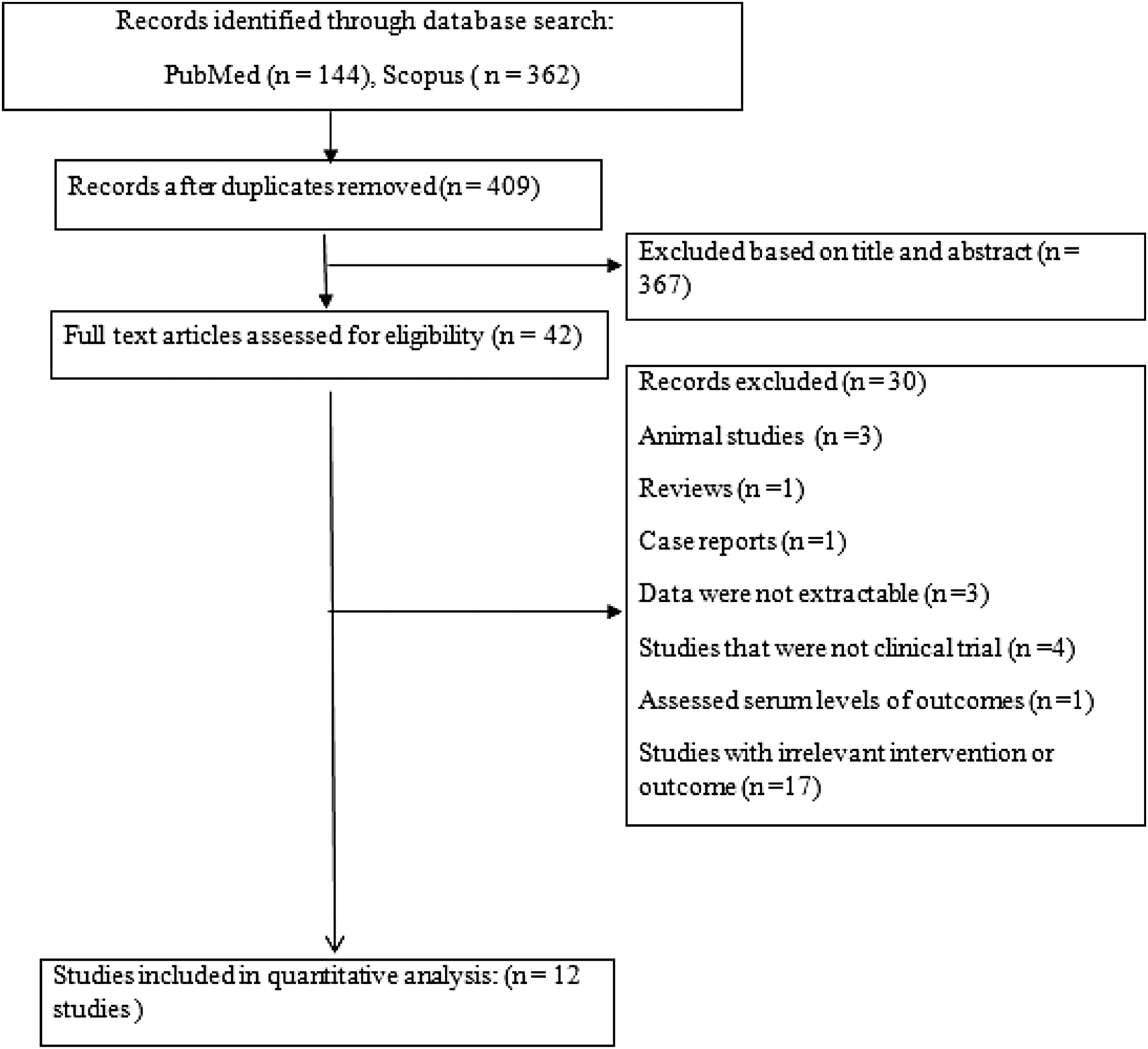
Flowchart of the study.
The sample size of included studies ranged from 51 to 423 participants and their age was between 27 and 34 years. The study population was pregnant women in three studies,6,18,20 lactating women in four studies,4,24–26 and pregnant and lactating mothers in five studies.5,21–23,27 Data analyzed included 8 studies with 12 data sets on total IgA,4,18,20,22–24,26,27 2 studies with 6 data sets on SIgA,6,18 9 studies with 13 data sets on TGF-β1,4–6,18,20,22,25–27 and 8 studies with 12 data sets on TGF-β2.4,5,18,21,23,25–27
The majority of the studies administered pre/probiotics as an intervention, while the study by Kubota et al. 22 and Nikniaz et al. 4 supplemented subjects with prebiotics and synbiotics, respectively. Moreover, for nine studies, outcomes were assesses in both colostrum/transitional and mature milk,6,18,20,21,23–27 while in three studies,4,5,22 outcomes were assessed only in mature milk. According to the Jadad score, the quality of studies was moderated to good with a scores ≥3. The characteristics of the eligible publications are described in Table 1.
Study Characteristics
CFU, colony forming unit; IgA, total immunoglobulin A; LGG, Lactobacillus rhamnosus GG; NR, not reported; SIgA, secretory IgA; TGF-β1, transforming growth factor beta 1; TGF-β2, transforming growth factor beta 2.
Findings from meta-analysis
The pooled impact of pre/probiotics supplementation on total IgA, SIgA, TGF-β1, and TGF-β2 is reported in Figures 2–5, respectively. In the overall analysis, compared with placebo, maternal supplementation with pre/probiotics had no significant effect on concentrations of total IgA (WMD = −0.06, 95% CI: −0.20 to 0.08; p = 0.39), SIgA (WMD = 5.57, 95% CI: −5.46 to 16.61; p = 0.32), TGF-β1 (WMD = 17.28, 95% CI: −22.08 to 56.64; p = 0.39), and TGF-β2 (WMD = 86.89, 95% CI: −196.22 to 370.00; p = 0.005) in the breast milk by the REM analysis. In the subgroup analysis by type of milk (colostrum/transitional milk versus mature milk), pre/probiotics did not affect breast milk levels of IgA, TGF-β1, and TGF-β2 in both colostrum/ transitional milk and mature milk.

The pooled impact of probiotic supplementation on total IgA stratified by type of milk. IgA, immunoglobulin A.

The pooled impact of probiotic supplementation on SIgA stratified by type of milk. SIgA, secretory IgA.
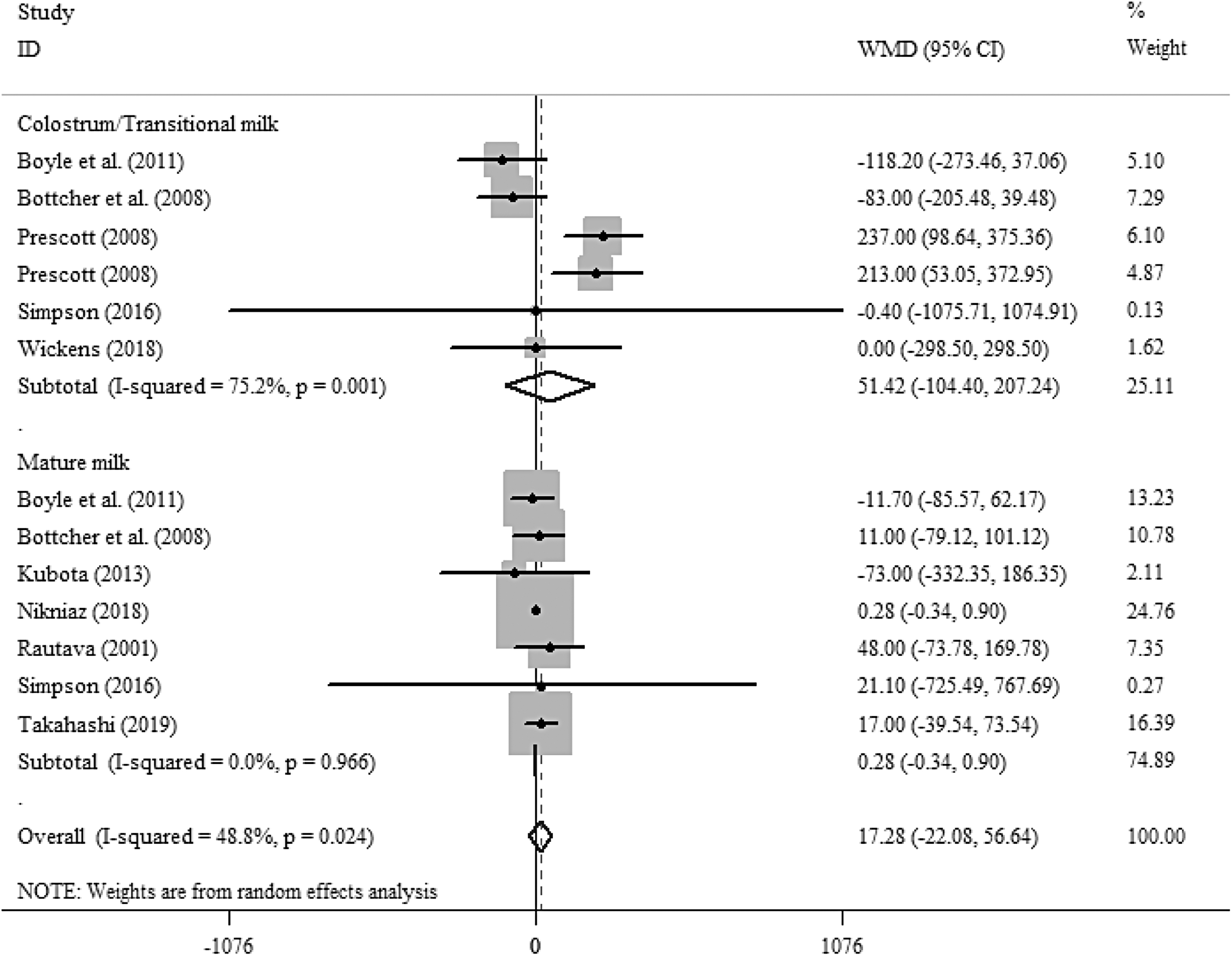
The pooled impact of probiotic supplementation on TGF-β1 stratified by type of milk. TGF-β1, transforming growth factor beta 1.
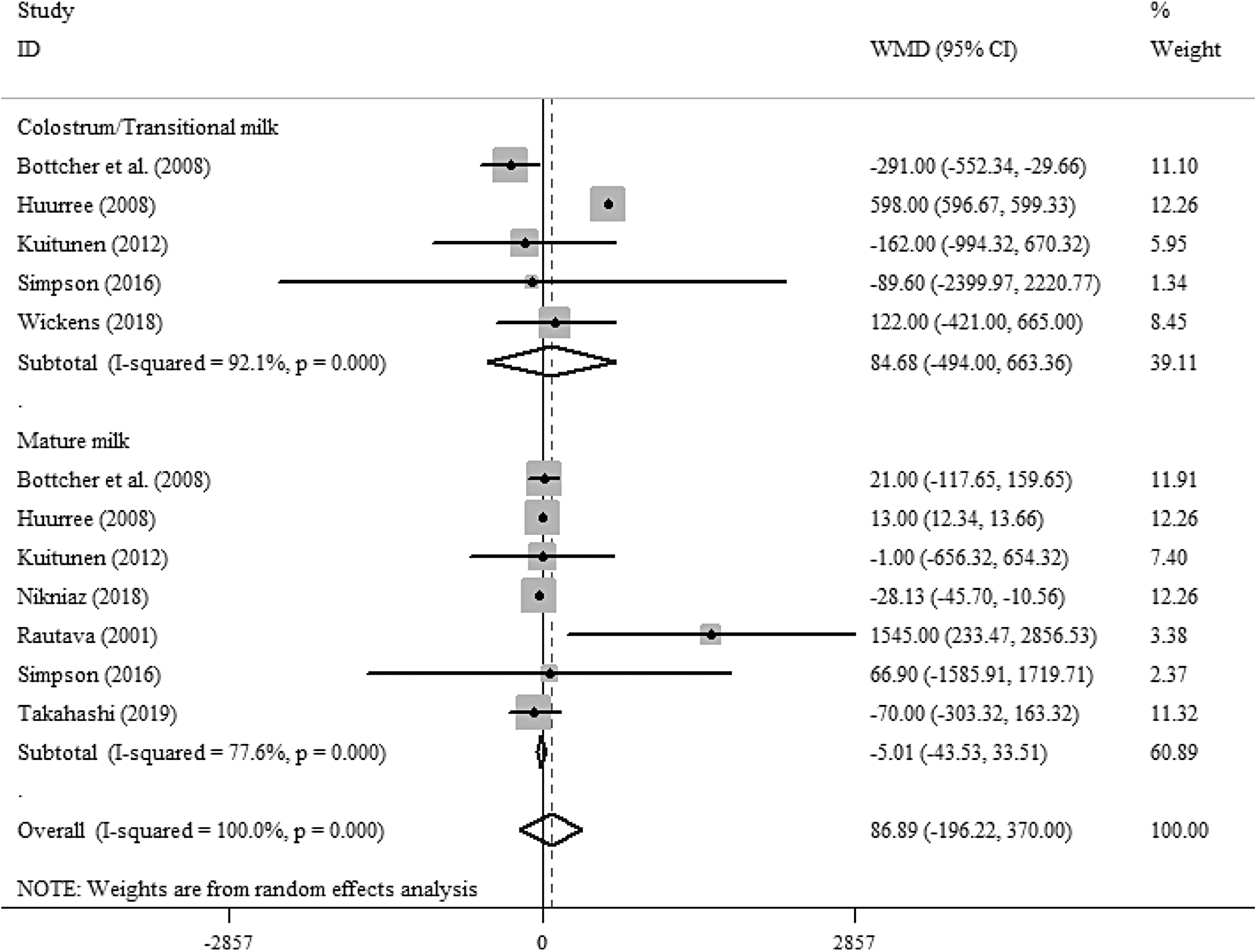
The pooled impact of probiotic supplementation on TGF-β2 stratified by type of milk. TGF-β2, transforming growth factor beta 2.
However, a significant increase in SIgA was found in colostrum/transitional milk following pre/probiotics administration (WMD = 19.33, 95% CI: 0.83–37.83; p = 0.04), without evidence for remarkable heterogeneity (I 2 = 0.0, p = 0.57) (Fig. 3). In the sensitivity analysis, removing the study by Kubota et al. 22 and Nikniaz et al. 4 which supplemented mothers with prebiotics and synbiotics, respectively, and reanalyzing other studies that used pre/probiotics as intervention did not change the pooled effect size for investigated outcomes, showing the reliability of the findings.
Publication bias
There was no significant evidence of publication bias for all outcomes (Fig. 6).
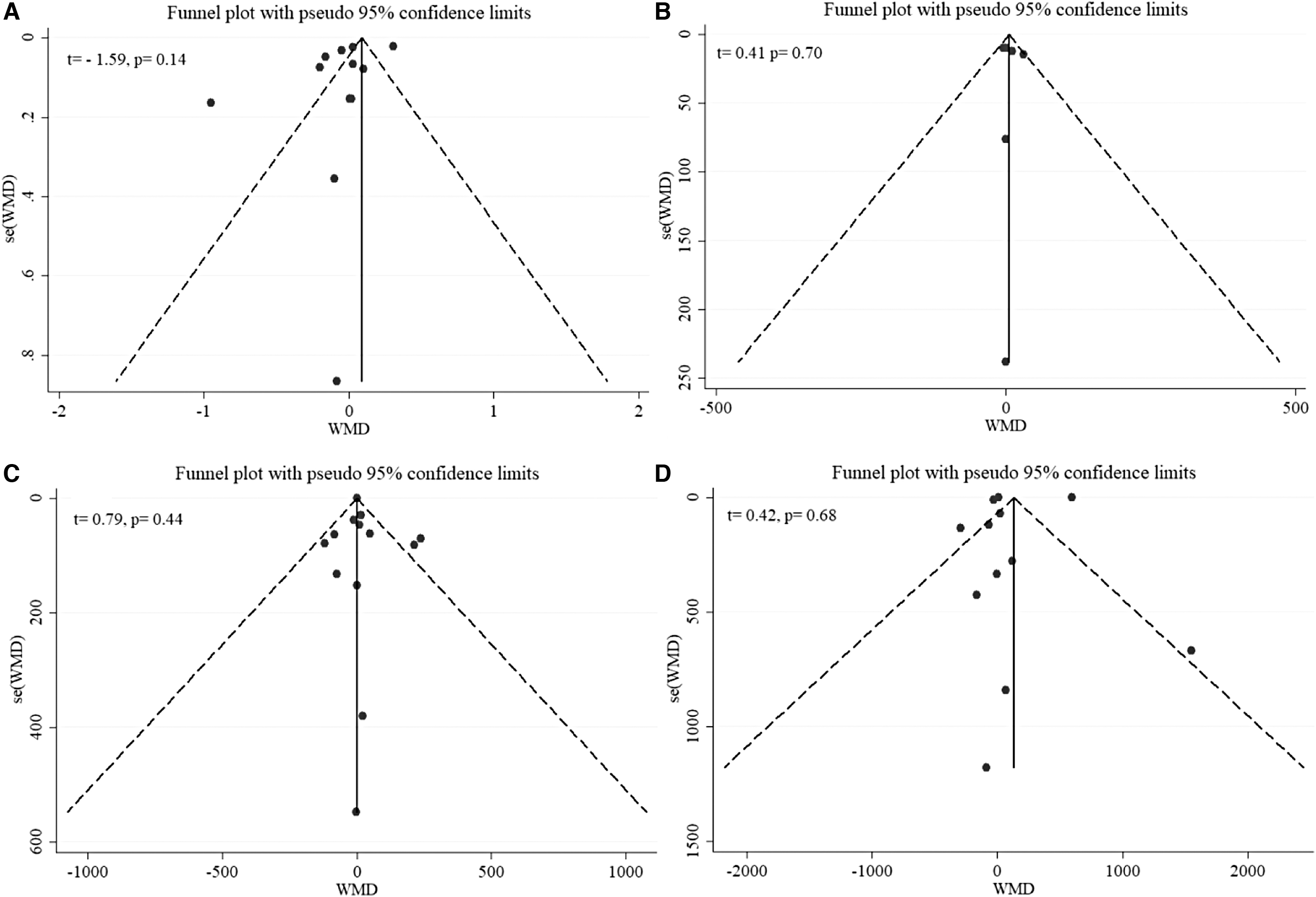
Funnel plot for publication bias for total IgA
Discussion
To the best of our knowledge, the present study is the first systematic review and meta-analysis of outcomes from 12 RCTs on the effect of pre/probiotic supplementation on breast milk levels of TGF-β1, TGF-β2, and IgA. The results of our meta-analysis showed that pre/probiotics had no significant effect on the concentrations of total IgA, SIgA, TGF-β1, and TGF-β2 in the breast milk. However, a significant increase in SIgA was found in colostrum/transitional milk following pre/probiotic administration.
Breast milk is a rich source of nutrients and bioactive factors, including lactoferrin, prostaglandins E2, IgA, and TGF-β. 1 One of these factors is TGF-β1, which plays an important role in the healthy immune maturation and development of the infant. 28 Evidence suggests that environmental and dietary factors can affect the concentrations of TGF-β1 in mother's milk, and so, its concentration in breast milk varies from person to person.29,30 Recently, studies have assessed the interactions between probiotic supplementation and breast milk levels of TGF-β1, TGF-β2, and IgA.23,25,27,31
In the study of Wickens et al., supplementation with Lactobacillus rhamnosus did not change breast milk TGFβ/IgA profiles. 27 The study by Kuitunen et al. showed that probiotic intervention for 3 months was associated with an increase in IL-10 levels and a decrease in casein IgA levels in breast milk, while their levels in colostrum did not change. The probiotic intervention also reduced the colostrum TGF-2 levels, while after 3 months of supplementation, it did not influence the breast milk TGF-2 levels. 23 In the study of Sentsova et al., administration of Lactobacillus reuteri protectis in pregnant women with gastrointestinal diseases and allergies increased the levels of SIgA and TGF-β levels in their milk compared with the control group. 32
In another study, L. reuteri intake by pregnant women did not alter IgA, SIgA, TGF-b1, TNF, soluble CD14, and sodium/potassium (Na/K) ratios in breast milk, while it lowered TGF-b2 concentrations. 18 In contrast, a study by Simpson et al. showed that the TGF-β concentration was not significantly affected by probiotic supplementation. 25 Also in the study of Quin et al., probiotic supplementation did not affect the breast milk SIgA or IgE levels and had no effect on breastfeeding immune responses. 31 The possible reason for contradictions is the difference in the eligible studies, including probiotic dose, bacterial strains, age of infants, the milk type (colostrum or mature milk), duration of supplementation, and maternal health conditions.
Since TGF-β1 has a decisive effect on the development of the immature gastrointestinal tract by influencing IgA generation and oral tolerance induction during early infancy, 33 it is necessary to know the environmental factors that affected it. Although the potential mechanisms of pre/probiotics on breast milk composition are unclear, one possible hypothesis is the control of the endogenous production of both TGF-b1 and TGF-b2 in breast milk by epithelial cells (ECs) in the mammary gland. 34 Specially, another hypothesis is that probiotic supplementation induces IgA transport produced by plasma cells in the mammary gland across alveolar ECs by the polymeric Ig receptor. 35 Due to the lack of scientific evidence regarding the mechanisms of pre/probiotic effect on the breast milk components, the need for further research to elucidate the precise cellular and molecular mechanisms is felt.
No publication bias was found in this study, but some limitations should be considered. First, the search results were limited to English-language publications. Second, eligible articles varied in terms of probiotic dose, bacterial strains, age of infants, the time when milk samples were collected (colostrum or mature milk), duration of supplementation, maternal health conditions, and maternal dietary habits. According to the available evidence, each of these factors may affect breast milk levels of TGF-b1, TGF-b2, and IgA, and so, the results should be interpreted cautiously. Also, a significant heterogeneity was seen among the eligible RCT studies; subgroup analysis showed that the type of milk (colostrum, mature milk) partially justified the source of heterogeneity.
Conclusion
Although pre/probiotic supplementation does not significantly affect breast milk IgA, TGF-β1, and TGF-β2 levels, there is evidence that it may increase SIgA levels in colostrum/transitional milk. Due to insufficient scientific evidence, higher quality research needs to determine the clinical efficacy and estimate the exact molecular and cellular mechanisms.
Footnotes
Authors' Contributions
A.T., T.R., M.D., A.J., P.J., B.R., M.M.N., M.L.G., N.G., and S.A. contributed to conceptualization, data curation, formal analysis, 299 investigations, methodology, project administration, validation, and visualization. A.T., T.R., and B.R. contributed to writing the article. S.A. contributed to data analysis, supervision, validation, and writing—review and editing.
Confirmation Statement
Each listed author submitted the article in her/his own personal professional capacity, and is not an employee of any U.S.-sanctioned government.
Availability of Data and Material
The data sets used and/or analyzed during the current study are available from the corresponding author on reasonable request.
Disclosure Statement
No competing financial interests exist.
Funding Information
No funding was received for this article.