




Abstract
A central goal of the Academy of Breastfeeding Medicine is the development of clinical protocols for managing common medical problems that may impact breastfeeding success. These protocols serve only as guidelines for the care of breastfeeding mothers and infants and do not delineate an exclusive course of treatment or serve as standards of medical care. Variations in treatment may be appropriate according to the needs of an individual patient.
Background
Breastfeeding has long been known to be the most beneficial method of infant feeding. Not breastfeeding has been associated with increased risk of sudden infant death, necrotizing enterocolitis, diarrhea, respiratory infections, and otitis media. The benefits of breastfeeding have been found to continue long beyond infancy and even into adulthood, having been linked to decrease in obesity and overweight, type 2 diabetes, and increased intelligence quotient points. 1 In addition, breastfeeding also has protective effects for the mother, including decreased risks of postpartum hemorrhage, postpartum depression, heart disease, breast cancer, and ovarian cancer.
The World Health Organization (WHO) and the United Nations Children's Fund (UNICEF) recommend the initiation of breastfeeding for infants within the first hour of life, and exclusive breastfeeding for 6 months of age. Thereafter, they recommend the addition of safe, nutritious, and age-appropriate complementary foods with continued breastfeeding up to 2 years of age and beyond.2,3 Although the benefits of breastfeeding are well known, according to WHO, globally only about 40% of infants under age 6 are exclusively breastfed. Less than 20% of infants are breastfed for 12 months in high income countries, and only 67% of infants in low- and middle-income countries receive any breast milk between 6 months and 2 years of age. 1
There are many underlying causes contributing to the low rates of breastfeeding, including environments that are unsupportive for breastfeeding mothers. This ranges from national policies that do not protect women's decisions to breastfeed (i.e., inadequate maternity leave and lack of safe spaces to express milk) to the attitudes and beliefs of the individuals (partner, family members, and health care providers) who frequently interact with the mother and infant. Family members, physicians, and other health care providers all play a role in influencing individuals' choices about infant feeding. A parent's perception of the attitudes of hospital staff toward breastfeeding has been shown to be predictive of breastfeeding failure by 6 weeks of age. 4 Similarly, another study showed that women had higher odds of exclusively breastfeeding their infants at 1 and 3 months of age if they perceived that their obstetric or pediatric care provider favored this. 5 It is important, therefore, that physicians and other health care providers working closely with mother–infant dyads show their support for breastfeeding both directly during patient and family interaction, and also indirectly by showing their offices to be “breastfeeding-friendly.” In line with WHO and UNICEF's Baby Friendly Hospital Initiative (BFHI), which urges any facility providing maternal and newborn care to implement the Ten Steps to Successful Breastfeeding, the outpatient setting has been realized as another environment in which thoughtful intervention can positively impact exclusive breastfeeding rates. 6 Implementation of such practices, specifically in the primary care setting, has been shown to positively influence breastfeeding rates and exclusive breastfeeding.7,8 Taking into account the 2018 BFHI Revised Implementation Guidance, 3 this updated protocol seeks to offer recommendations for the outpatient setting that will contribute to reaching WHO's goal of increasing exclusive breastfeeding among 6-month-old infants to 50% by 2025. For the purpose of this protocol, the term “breastfeeding” includes both direct breastfeeding of the child as well as the feeding of any expressed breast milk.
Recommendations
Quality of evidence for each recommendation is noted in parentheses. Levels of evidence are listed as I–V, with level I being the highest, as defined in the Oxford Centre for Evidence-Based Medicine 2001 Levels of Evidence.
1. Establish a written breastfeeding-friendly office policy.8–10
Collaborate with colleagues and office staff during policy development and inform all new staff about the policy. Provide copies of your practice policy to hospitals, physicians, and all health care professionals covering your practice for you, including other physicians, nurses, midwives, lactation consultants, and support staff in the office. (III)
2. Educate all office staff on breastfeeding support skills and implement the skills with patients.
a. Educate nursing and support staff (front office staff, medical assistants, pharmacists, etc.) in the office on the benefits of breastfeeding and train them on skills necessary to support breastfeeding, including initiation of breastfeeding, troubleshooting common breastfeeding problems, and responsive baby feeding, according to their role in serving the breastfeeding mother.11,12 Consider utilizing Baby friendly hospital initiative training course for maternity staff of the WHO/UNICEF training courses, which is accessible from the WHO website. 13
b. Assess breastfeeding at the initial prenatal visit as well as subsequent visits with the obstetrician. Also assess breastfeeding at the initial infant pediatric visit and as needed at subsequent visits at least up to and including 6 months. All physician office practices should provide mothers with skilled lactation support to assess adequacy of feeding and maintenance of exclusive breastfeeding, especially in the early days/weeks after birth. If feasible, consider employing an International Board Certified Lactation Consultant (IBCLC) or establishing a relationship with recommended local IBCLCs to whom you can refer patients. 9 (III) In addition, experienced breastfeeding peer support personnel can be utilized. 7 Offer culturally inclusive and ethnically competent care, understanding that families may follow cultural practices regarding the discarding of colostrum, maternal diet during lactation, and early introduction of solid foods. Provide access to multilingual staff, medical interpreters, and ethnically diverse educational material as needed within your practice. (III)
3. Comply with the WHO International Code of Marketing of Breast-milk Substitutes.
a. Keep all literature that promotes artificial feeding, including infant and toddler formula, out of view from patients and families. Although it is understood that some physician offices may need to have purchased formula in the office, these supplies should be kept in a locked area where only a physician or health care provider has access to them if deemed necessary for the infant. (I) In accordance with the WHO International Code of Marketing of Breast-milk Substitutes, there should be no promotion, display, or advertising of breast milk substitutes. 14 (VII) A study published in 2016 showed a decrease in exclusive breastfeeding rates in those individuals receiving formula samples in the mail. 15 It can, therefore, be extrapolated that receiving formula samples from a doctor's office could have similar effects.
b. As health professionals, we should not accept incentives that can be perceived as promoting formula. Physicians, due to their knowledge and expertise, have the trust of their patient and families. As a result, it is essential that we avoid any type of sponsorship or relationship with companies that can pose a conflict of interest. Physicians may be influenced by gifts or sponsorships received by these companies, which could negatively influence the advice they provide to patients in terms of their health and well-being. 16
c. Physicians/health care providers should provide factual evidence-based information about the importance of breastfeeding and the risks of artificial feeding for all mothers in the antenatal visits and at any visit where a breastfeeding mother asks for supplementation. In addition, for those parents who are unable to breastfeed or for whom breastfeeding is contraindicated, provide information regarding infant formula (in comparison with breast milk), including risks of improper use (i.e., dilution or thickening and contaminated water) for those infants who may require it. 17 Information on this can be accessed on the WHO website on Food Safety.18,19
4. Know your local and national breastfeeding laws.
a. Know about laws that protect against discrimination from breastfeeding in public. Many countries have laws in place that protect women from discrimination against breastfeeding or expressing milk in public places. For example, in the United States, all 50 states and territories have specific laws that allow women to breastfeed in public and private places. 20 Several states also allow exemption from Jury Duty for breastfeeding mothers. (V) In the United Kingdom and Australia, it is considered sex discrimination to treat a woman unfavorably for breastfeeding a child of any age.21,22 Breastfeeding policies or initiatives in countries and states with no formal breastfeeding laws should also be known to best help support women breastfeeding.
b. Know your country's maternity leave policy. Knowledge of the available maternity leave and the mother's plan to utilize such leave can help the health care provider support her breastfeeding goals early on. Maternity leave in developed countries ranges from 12 weeks unpaid (United States) to 36 weeks paid (Norway). 23 Longer maternity leave versus delayed return to work has been shown to increase the duration of breastfeeding.24,25
c. Prepare mothers to advocate for continued breast milk expression in the workplace upon return to work. Be aware of laws enabling them to do so without discrimination. In the Philippines, all workplaces must provide clean lactation stations and a 40-minute lactation break for every 8-hour work period. 26 In the United States, employers must provide “reasonable break time for an employee to express breast milk for her nursing child for 1 year after the child's birth … and a place, other than a bathroom, that is shielded from view and free from intrusion … to express breast milk.” 27 (V) Many women cite returning to work as a reason to stop exclusively breastfeeding. Empower women to continue breastfeeding after returning to work by providing education on working with their employer re-expression of breast milk and storage. 28
5. Promote breastfeeding in your office.
In accordance with the aforementioned laws, physician offices should invite women to breastfeed in the waiting room or a private room (not a bathroom) without fear of interruption or intimidation. Consider displaying signs in all patient areas, including waiting rooms and examination rooms that say as such. Examples are as follows (Fig. 1).
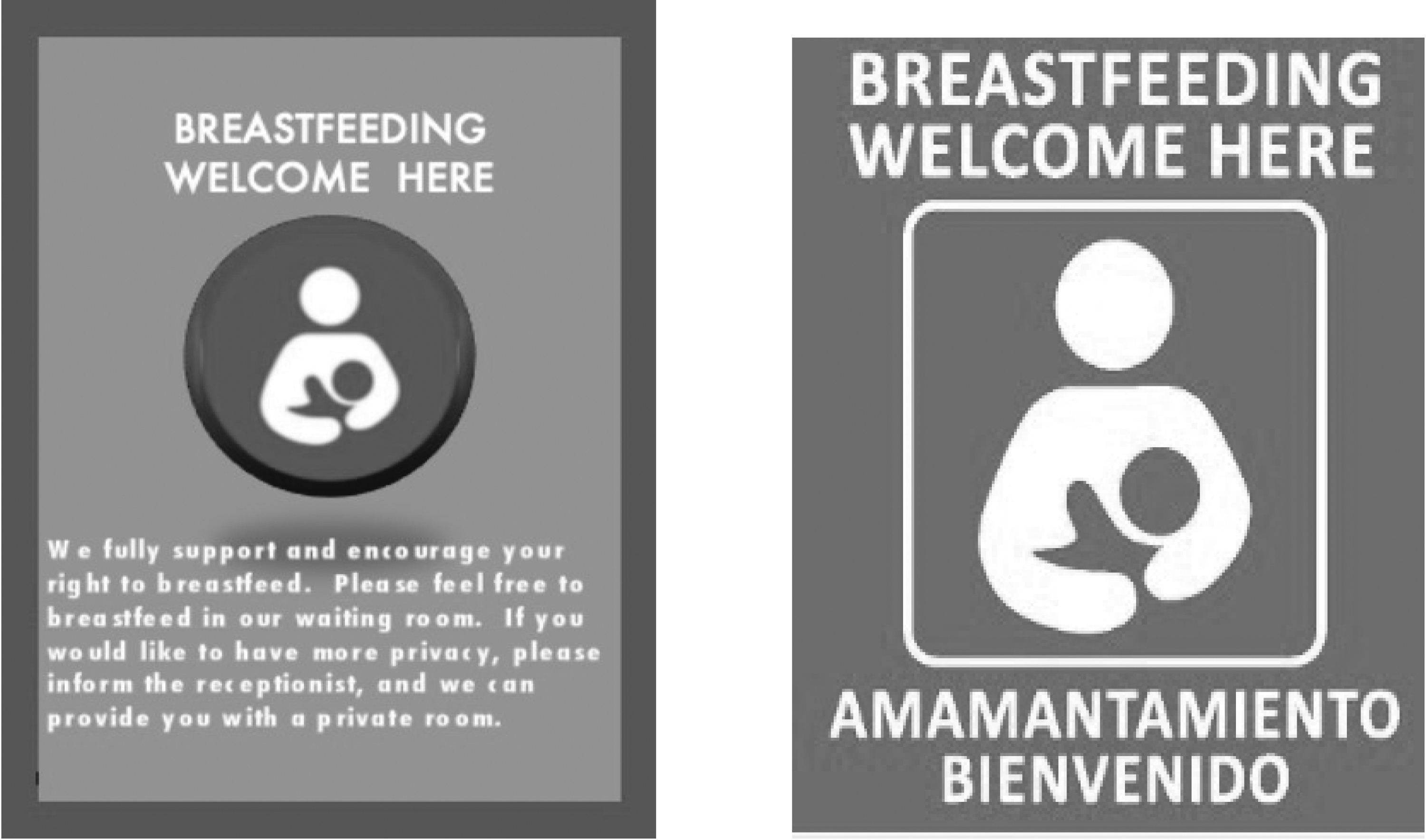
(Left) Sign created for Center for Women's Health at Silverside of Prospect-Crozer Health System. (Right) Sign created by Virginia Department of Health. Created by Dr. Swathi Vanguri.
Breastfeeding-friendly physician offices should be consistent in their promotion and support of breastfeeding. It is important to extend the same protection for breastfeeding mothers to the physicians, nurses, and office staff at your practice. (IV)29,30 Consider providing breast pumps in the office in addition to breastfeeding-friendly space for expression and storage of breast milk for employees.
6. Normalize breastfeeding.
In addition to displaying signs, there are also subtle ways to normalize breastfeeding. For example, depicting breastfeeding dyads or posters in the waiting room and examination rooms that depict breasts as functional organs can help both patients and families understand your support for breastfeeding. However, it is very important that such imagery reflects the culture, ethnic, and racial background of your patient population. Likewise, imagery should be inclusive of all sexual orientations as well as gender identities. (V) 31 There are also videos available that can be played in the patient waiting rooms that promote breastfeeding.32,33 Patients and families need to identify with the images to be influenced by them. 34
Social marketing campaigns have shown that depicting positive images of breastfeeding with pictures of a broad range mirroring the diversity of the population in that country improve breastfeeding rates in the community. 35
The following are examples of racially and ethnically diverse images depicting breastfeeding in a positive light (Figs. 2–4).

An example of racially and ethnically diverse images depicting breastfeeding in a positive light. Source: https://wicbreastfeeding.fns.usda.gov/wic-staff

Breastfeeding positions (Source: Shutterstock).
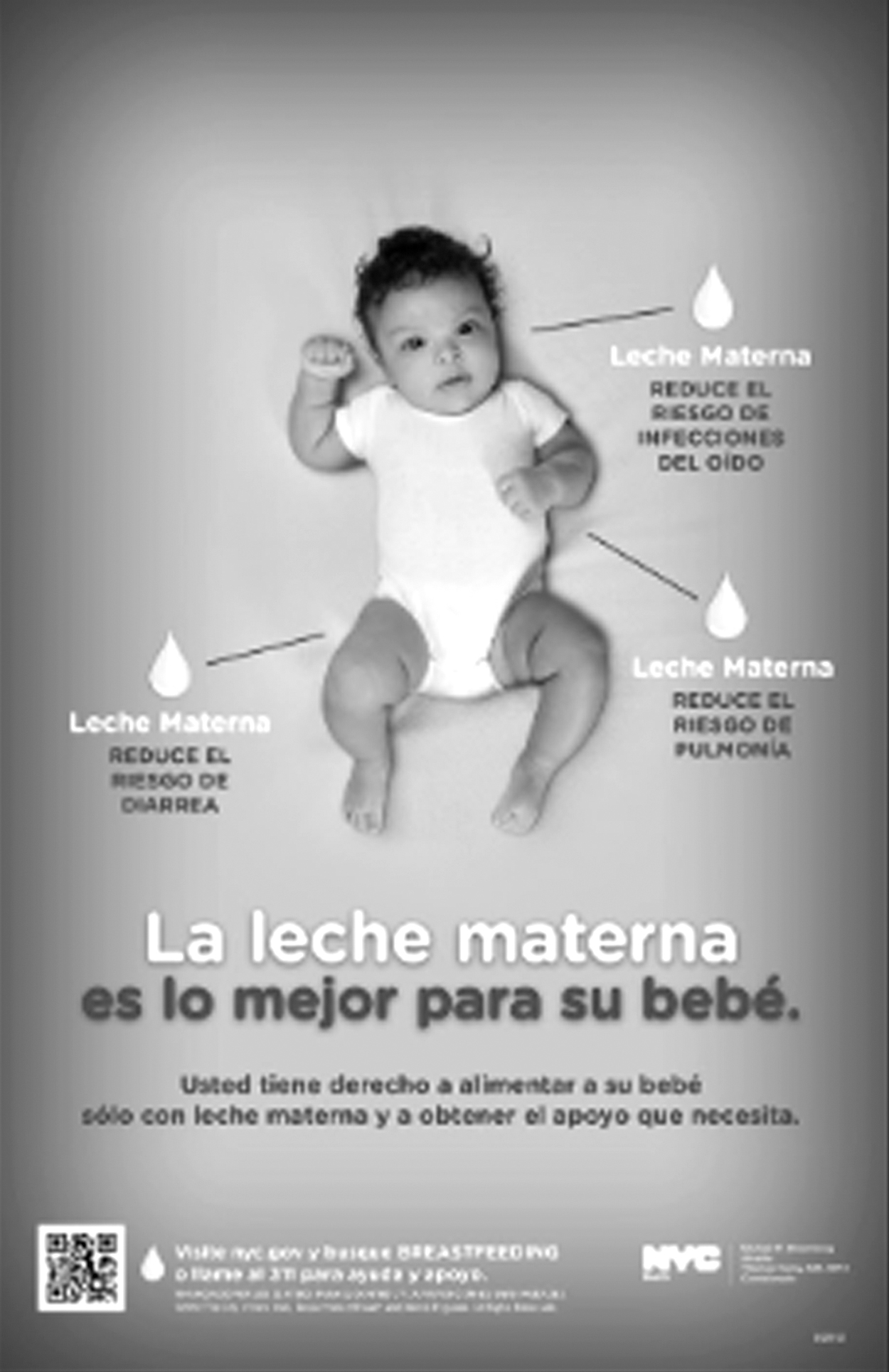
New York City Department of Health poster, 2012.
7. Considerations when providing prenatal care
If providing prenatal care for the mother, introduce the subject of infant feeding in the first trimester and continue to express your support of breastfeeding throughout the course of the pregnancy. If you are a physician providing postnatal care for the infant, consider offering a prenatal visit to become acquainted with the family. Be aware of any cultural or social influences on the mother's feeding preferences and discuss any obstacles that may prevent her from achieving her goals. 36 Use open-ended questions, such as “What have you heard about breastfeeding?” to inquire about a feeding plan for this child. Provide educational material that highlights the many ways in which breastfeeding benefits the baby and the mother.
Identify patients with lactation risk factors (such as flat or inverted nipples, history of breast surgery, lack of increase in breast size during pregnancy, and previous unsuccessful breastfeeding experience) to enable individual breastfeeding care for her particular situation, which may include referral to a lactation specialist. 37 A good resource is WHO's Guideline entitled “Protecting, promoting and supporting breastfeeding in facilities providing maternity and newborn services.” 38
Encourage attendance of both parents at antenatal visits and at prenatal breastfeeding classes and offer direct education to all family members involved in childcare (nonbreastfeeding parent, grandmother, etc.). 39 (I) It has been shown that skin-to-skin contact between the father and the infant elevates cortisol, dopamine, and oxytocin levels in the father, which results in improved bonding and rewiring of fathers' brains to create a positive association with close interaction with their babies.40–42 (II-a, II-b, II-c, III)
a. Be aware of the few contraindications to breastfeeding to further educate and support mothers at any stage in their breastfeeding journey. However, giving expressed breast milk but not breastfeeding is permissible for certain other maternal issues.2,43
b. Be aware of breastfeeding recommendations in mothers with HIV, and how they may vary in different countries. For example, updated WHO guidelines recommend that all HIV positive mothers on antiretroviral therapy exclusively breastfeed for the first 6 months, but the United States still lists HIV positive status as a contraindication for mothers breastfeeding either exclusively or inconsistently or providing any expressed breast milk to their infants. 44
c. Be aware of breastfeeding safety before prescribing medication, and when appropriate, consider alternative medications with more evidence to support safety in breastfeeding. The risk-benefit ratio should be weighed against the risks of not breastfeeding when making recommendations regarding medication initiation or modification. Each mother is different and this discussion with a breastfeeding-friendly physician should be not only be encouraged but deemed necessary. Keep a list of resources to aide you in this including knowledgeable pediatricians, family physicians, OB/GYNs, pharmacists, and reputable websites addressing breastfeeding and medication use that is, LactMed, E-lactancia, Embryotox, and your country's specific website addressing this topic.45–47
Dispel breastfeeding myths regarding the use of certain medications (i.e., antidepressants, antibiotics, and opioids) while breastfeeding, and the effects on the infant.48,49 Anecdotal evidence shows that mothers will discontinue breastfeeding while on antibiotics, antidepressants, or antiepileptics either as a result of direct instruction or assumption about the risk to their infant. They should be educated early that many common medicines are safe to use while breastfeeding, and at the very least enlightened about available resources to verify which medicines are compatible with breastfeeding.
8. Immediate postpartum care
Physician interaction with the breastfeeding dyad in the immediate postpartum period depends on the system of health care and insurance systems within the country. For example, if you are in a system in which you see infants while in-hospital, you can collaborate with local hospitals and maternity care professionals within your community50,51 and provide your office policies on breastfeeding initiation within the first hour after birth to delivery rooms and newborn units. Use prenatal counseling to discuss possible challenges mothers may face from hospital routines or staff. Leave orders in the hospital or birthing facility instructing nurses/staff to avoid giving formula/sterile water/glucose water to a breastfeeding infant without specific medical orders. Also, speak to nursing managers to prohibit dispensing commercial discharge bags containing infant formula, formula coupons, and/or feeding bottles to mothers.15,52
Show support for breastfeeding during hospital rounds. Help mothers initiate and continue breastfeeding. Counsel mothers to follow their infant's states of alertness as they relate to hunger and satiety cues and ensure that the infant breastfeeds on demand, with the recommendation of 8–12 times within 24 hours. 53 It is important to ensure the adequacy of feeding and identify suboptimal intake early so mother's milk supply can be protected, and the infant is protected from the consequences of suboptimal intake. 54 (II-a)
9. Bridging postpartum care to the outpatient setting
As part of your office protocol on bridging inpatient and outpatient care of patients, encourage hospitalized breastfeeding mothers to feed newborns only human milk and to avoid offering supplemental formula, glucose water, or other liquids unless medically indicated. 55 Advise the mother to avoid offering a bottle or a pacifier/dummy until breastfeeding is well established.56,57 (I, III). Be sure to provide adequate resources to the breastfeeding dyad upon discharge from the hospital so that they continue to be supported until their first outpatient visit. This should include literature about breastfeeding and contacts for lactation consultants or other members of the community that will be available to provide support for the mother at home.
a. Obstetricians: The WHO recommends a postpartum visit for the mother in the first 3 weeks after delivery. 58 Many obstetricians also see patients at 6 weeks postpartum.
b. Pediatricians and other Primary Care Physicians: Studies show a great variance in the timing of when the infant is seen by a general practitioner (physician). Depending on the length of stay in the hospital this may vary from 48 hours to 3 weeks of age for the infant's first checkup, which is covered by insurance. In this system, this is the first opportunity the pediatrician has to support breastfeeding. Depending on the health care system, with differences in public versus private insurance, parents may have access to midwives and home visits. However, regardless of the location, in many countries and cultural practices the mother–baby dyad remains at home where they have help from family and friends.59,60 (I, II-b)
c. Physician Assistants, Nurse Practitioners, and Midwives: In many areas of the world, the first follow-up visit will be done by nonphysician health care workers. 61 Midwives care for the mother and infant in the days and weeks after hospital discharge in many European countries. By law, every woman in Germany is entitled to midwifery care from conception until introduction of solid foods (typically months 5–6 postpartum or later if problems arise). 61 (II-b)
Ensure there is access to a lactation consultant/educator or other health care professional trained to address breastfeeding questions or concerns during each visit. Advise the mother that feeding will be observed during the visit so that she can let staff know if the infant is ready to breastfeed while she is waiting. Provide comfortable private seating for the breastfeeding dyad to facilitate an adequate evaluation. Begin by asking parents open-ended questions, such as “How is breastfeeding going?” and then focus on their concerns. Take the time to address the questions that a mother may have. Assess latch and successful and adequate milk transfer at the early follow-up visit. Identify lactation risk factors and assess the infant's weight, hydration, jaundice, feeding activity, and output. Provide medical help for women with sore nipples or other maternal health problems that may impact breastfeeding. Provide close follow-up until the parents feel confident and the infant is doing well with adequate weight gain based on the WHO Child Growth Standards.62,63 (III)
10. Collaboration between disciplines
Encourage cross-disciplinary breastfeeding and lactation care among specialties that provide prenatal care, that is, obstetricians, midwives, and physician extenders. Collaborate and share information with all providers involved in the dyad's care using electronic health records if available or by other means. 64 (V)
11. Education: for the patient
Incorporate education reminders at various gestational ages, starting at the first prenatal visit, regarding breastfeeding. These include but are not limited to benefits of breastfeeding, skin-to-skin, infant nursing cues, rooming in, hand expression, obtaining a breast pump, storing of breast milk, and continuation of breastfeeding/expression of breast milk when returning to work/school. Provide relevant information about breastfeeding support once mother and baby leave the hospital. In the United States, the recommendation is that any educational material distributed to patients should be at or below fifth grade level.65,66 (IV, V)
The following are examples of simple educational literature given prenatally to obstetric patients at various gestational ages (Figs. 5 and 6).
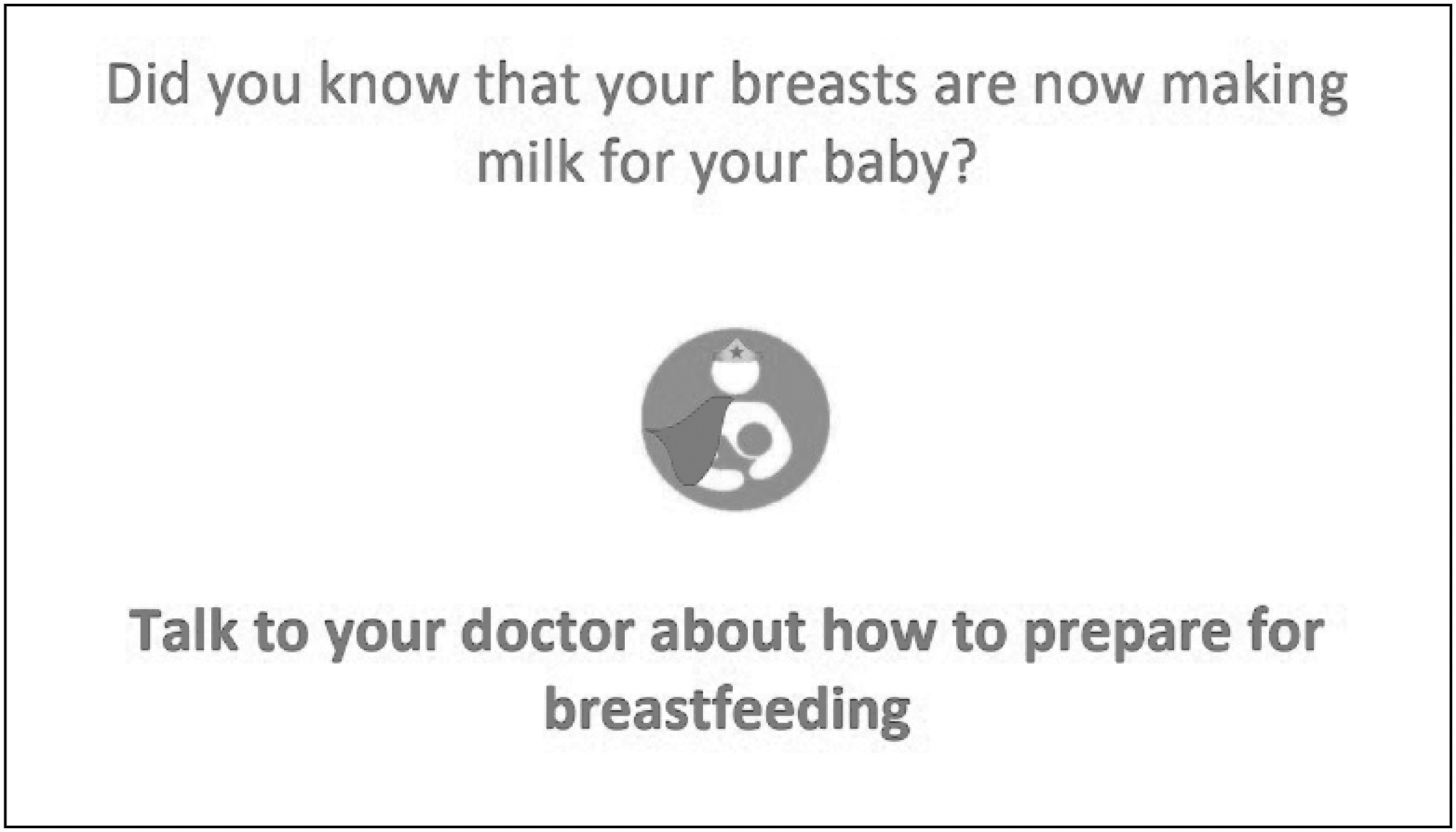
“You are making milk” given to Crozer-Chester Medical Center patients after 20 weeks during an anatomy ultrasound. Created by Dr. Swathi Vanguri.

“Breastfeeding Benefits” given to Crozer-Chester Medical Center patients at 28 weeks. Created by Dr. Swathi Vanguri.
12. Education: for the health care provider
Ensure that all physicians, health care providers, nurses, pharmacists, and staff have proper education regarding breastfeeding during their training. There should be academic education, as well as practical education. Although breastfeeding education may begin in the preclinical years, medical schools may not be preparing future physicians well in this area. 67 (III-b) In fact, studies have shown that OB/GYN physicians in their residency training are significantly less likely to discuss breastfeeding during prenatal visits than nurse midwives and nurse practitioners. 68 (III-a) In addition, younger pediatricians relative to older pediatricians reported feeling less confident about their ability to manage common breastfeeding problems and discuss breastfeeding with parents. 69 (IV) Physicians play an important role in influencing breastfeeding since breastfeeding initiation and duration improves if a mother perceives that this form of feeding is desired by her health care provider.4,5 (II-b, II-c) A systemic review showed that nursing students do not receive adequate breastfeeding education, particularly with breastfeeding assessment and management. All the studies showed that the knowledge of nursing students was influenced by timing of maternal and child health component, previous breastfeeding experiences, gender and cultural influences. 70 (III-a)
Areas of suggested education include the risks of artificial feeding, the physiology of lactation, management of common breastfeeding problems, medical contraindications to breastfeeding, and practical skills to assess latch and appropriate milk transfer. Make educational resources available for quick reference by health care professionals in your practice (books, protocols, web links, etc.). (Table 1)
Evidence-Based Resources
ABM, Academy of Breastfeeding Medicine; UNICEF, United Nations International Children's Emergency Fund.
13. Collect breastfeeding data
Work with your local health administration to help track breastfeeding initiation and duration in your practice and learn about breastfeeding statistics in your community. Be aware of barriers to breastfeeding in your patient population and consider targeting interventions at those found particularly less likely to initiate breastfeeding or to breastfeed for a shorter duration of time (which will vary in socioeconomic status depending on country of residence). 1 (II-3) Since experiencing any of the Ten Steps has been found to increase breastfeeding initiation and duration in a hospital setting,71–73 it is especially important for the breastfeeding-friendly provider to ensure their patients are exposed to as many of the Ten Steps as possible within their scope of practice.
Recommendations for Future Research
Further research into the impact of these recommendations is imperative to determine which measures have the largest impact in supporting breastfeeding individuals and improving breastfeeding rates. Therefore, it is helpful to survey patients both before and after implementing these practices. Further research into the impact of culturally and racially competent promotion of breastfeeding on breastfeeding rates will also be helpful in understanding the best way to ensure a breastfeeding-friendly office. Furthermore, it is also helpful to survey staff before and after implementing staff training and breastfeeding-friendly employee accommodations to better understand their personal experiences with breastfeeding patients and the impact of these interactions on themselves and on the patients.
Footnotes
ABM protocols expire 5 years from the date of publication. Content of this protocol is up-to-date at the time of publication. Evidence-based revisions are made within 5 years or sooner if there are significant changes in the evidence.