




Abstract
Background:
Human milk is recognized as an ideal food for newborns and infants owing to the presence of various nutritive factors, including healthy bacteria.
Aim/Objective:
This review aimed to understand the effects of human milk microbiota in both the prevention of disease and the health of infants.
Methods:
Data were obtained from PubMed, Scopus, Web of Science, clinical trial registries, Dergipark, and Türk Atıf Dizini up to February 2023 without language restrictions.
Results:
It is considered that the first human milk microbiota ingested by the newborn creates the initial microbiome of the gut system, which in turn influences the development and maturation of immunity. Bacteria present in human milk modulate the anti-inflammatory response by releasing certain cytokines, protecting the newborn against certain infections. Therefore, certain bacterial strains isolated from human milk could serve as potential probiotics for various therapeutic applications.
Conclusions:
In this review, the origin and significance of human milk bacteria have been highlighted along with certain factors influencing the composition of human milk microbiota. In addition, it also summarizes the health benefits of human milk as a protective agent against certain diseases and ailments.
Introduction
Human milk is highly nutritious and possesses a unique composition in terms of a higher amount of protein, lactose, and specific growth factors and microbiome. It is considered an ideal food for infant nutrition owing to the presence of certain nutritional factors such as lactoferrin, immunoglobulins, and leukocytes conferring immunity to the infants. 1 Diverse microorganisms present in the initial streams of human milk modulate the colonization of microbiota in the small intestine of infants and it has been recognized that it significantly affects the development and maturation of the infant's immune system. Thus, breastfeeding is considered critical for the overall growth and development of newborns as it establishes local and systemic immune tolerance to the foreign molecules ingested during breastfeeding. 2 Although human milk is considered sterile, recently researchers have established the presence of certain commensals and other probiotic bacteria considered the best for infant's gut. 3
Staphylococci, Bifidobacteria, Streptococci, and lactic acid bacteria are certain microorganisms found in human milk. Among these, Bifidobacteria is considered to stimulate the growth of other potential healthy bacteria in the newborn gut system, although the origin of all these bacteria remains controversial.3,4 Human milk ingested by newborns (800 mL/day) contains around 105–107 bacteria, which proves the close proximity of the gut microbiota of the infant to the mother's milk. Furthermore, human milk oligosaccharides (HMOs) have an essential role in the development of healthy bacteria in breastfed infants. Lactobacillus strain in human milk is found to stimulate the production of cytokines and inflammatory mediators (CD4+, CD8+, natural killer cells, and regulatory T cells). 5 Human milk bacteria serve as biotherapeutic agents as these are considered to possess probiotic potential, antiallergic, antiarrhythmic, and inhibiting the infectivity of HIV and others.
Therefore, this review underlines the significance of diverse human milk microbiota and its role in the protection of certain diseases and ailments in newborn and infants. It also highlights certain factors that can influence the composition of milk thereby affecting the overall growth and development of the newborn.
Human Milk Microbiota
Breastfeeding has strong beneficial effects on infantile immunity, 6 cognitive development,7–9 protection against sudden infant death syndrome,10,11 and infections.12–14 Moreover, increasing evidence suggests that breastfed infants are better protected against noncommunicable chronic diseases later in their life, including type 1 and 2 diabetes mellitus, obesity, cardiovascular diseases, allergies, asthma, and inflammatory bowel disease, than nonbreastfed infants.15–19 With the increase in the incidence of noncommunicable chronic diseases recently, research on the potential relationship between the developmental origins of these diseases and early infant microbial colonization has become interesting.
Human milk contains diverse bacterial species and hosts bacteria at concentrations of approximately 103 colony-forming units (CFUs).20–22 Using the culture-dependent and/or culture-independent methods, many studies have explored the microbial diversity of human milk and the infant's gut and revealed the co-occurrence of bacteria in human milk and the infant's gut, endorsing the hypothesis of vertical bacterial transmission from milk to the infant gut.22–24 Recently, the taxonomic classification at the strain level of bacteria revealed that Streptococcus spp. and Veillonella dispar are shared by human milk and correspond in the feces of infants. 25 It has also been reported that this co-occurrence is reduced depending on breastfeeding methods such as breast pumps and feeding from a bottle. 25 Apart from the method of breastfeeding, epidemiological studies have revealed that gut microbiota composition differs in breastfed and formula-fed infants.25,26
A study from Northeast China showed that the differences in gut microbiota and metabolite composition of healthy infants were related to various feeding methods, such as exclusively breastfeeding, mixed-feeding, exclusively formula-feeding, and complementary feeding. 26 The study reported that exclusively breastfed infants have decreased bacterial species richness or diversity, but have a more stable microbial community, containing a higher abundance of saccharolytic species to provide health-promoting benefits to their hosts such as Bifidobacterium and Lactobacillus. 26 Moreover, the gut microbiota of formula-fed infants seems to have increased richness and diversity with higher numbers of Enterococcus, Enterobacter, Citrobacter, Escherichia coli, and Clostridium difficile.27–30
In a meta-analysis of seven microbiome studies from five different countries (the United States, Canada, Haiti, South Africa, and Bangladesh), 1,825 feces samples from 684 infants were examined. 31 According to the results of the meta-analysis, intestinal bacterial diversity, microbiota age, and relative abundances of Bacteroidetes/Firmicutes in the first 6 months of life were found to be higher in nonexclusively breastfed infants compared with exclusively breastfed infants. The results of the study suggested that exclusively breastfeeding is associated with a more steady, less diverse, gut microbiota, which may be necessary for the early months of development. 31
Bacterial Diversity of Human Milk
Human milk is the first and major source of both HMOs and microorganisms for early infant microbial colonization.32–34 In colostrum (0–5 days), there are higher microbial contents than in transitional (6–14 days) and mature milk (15–90 days). 35 Many studies have searched for the difference in microbial contents of human milk regarding lactation stages.35–42 The results of the studies are summarized in Table 1. Colostrum is characterized by an increased abundance of Weissella, Leuconostoc, Staphylococcus, Streptococcus, and Lactococcus. 20 Damaceno et al. found that the total bacterial concentration in colostrum (median: 3.44 log10 CFU/mL) was higher than in transitional (2.2 log10 CFU/mL) and mature milk (2.68 log10 CFU/mL) (p < 0.00001; however, more genera were identified in transitional and mature milk than in colostrum. 35
Microbial Diversity in Human Milk
BMI, body mass index; MALDI-TOF MS, matrix-assisted laser desorption/ionization time-of-flight mass spectrometry; NS, not specified; PCR, polymerase chain reaction; rRNA, ribosomal RNA.
A recent study revealed a significant decrease in microbial diversity throughout the first 6 months of lactation, especially between weeks 8 and 24. 43 Similarly, previous studies have shown that as lactation progresses, bacterial diversity decreases,20,37,42 and it may be related to the change in the nutritional composition and bioactive compounds of human milk during the lactation stages. Higher availability of proteins, immunoglobulins, cytokines, and HMOs in the colostrum may contribute to higher microbial diversity. 44
Origin of Human Milk Microbiota
The microbial content of the colostrum, which is the first contact of the newborn, is the microorganism that first colonizes the baby's intestines. Many studies have demonstrated that human milk microbiota is transmitted from mother to infant at the species and/or strain level.23,24,37,45,46 Although breast milk has emerged as a source of infant gut bacteria, the origin of human milk microbiota is still largely unknown. It was previously considered that bacteria found in human milk originated from the infant's oral cavity and the mother's breast skin. However, the finding of anaerobic bacteria associated with the gut microbiota in human milk by culture-dependent and/or culture-independent methods has sparked new debates about the origin of breast milk microbiota.20,47–50
Martı´n et al. 51 hypothesized that maternal gut-originated bacteria could transmit to the infant through breastfeeding due to changes in the lactating mammary gland. They suggested that all changes in the mammary areola and mammary canal system, including enlargement of the nipple and areola, increased lymph and blood flow to the mammary gland, and contraction of myoepithelial cells under the influence of oxytocin, may prepare a suitable environment for the bacterial transmission. 51 In a study investigating the factors contributing to the breast milk microbiome, a distinct strain of Bifidobacterium breve was determined in the maternal gut, breast milk, and infant's gut. 52 The fact that the baby was delivered by cesarean section limits the risk of transmission of this anaerobic bacterial strain during delivery and strengthens the presence of microbial translocation via the enteromammary pathway. 52
Another finding supporting the enteromammary pathway is that colostrum samples obtained before first infant feeding already harbors a microbial community. 36 As mentioned above, one of the two main pathways suggested for the origin of human milk microbiota is the enteromammary pathway, and the other is retrograde inoculation by the infant's oral microbiota. 53
The exact origin of the microorganisms (skin, oro-nasopharynx, maternal gut, vaginal delivery) in human milk is difficult to determine due to the complex and interactive relationship between mother and infant. Many external factors affect the composition of human milk microbiota (breast pump, nipple shield, water, other breastfed sibling, clothes, family, medical staff, pets, etc.) apart from the enteromammary pathway and retrograde inoculation. Figure 1 shows the factors affecting the human milk microbiota.
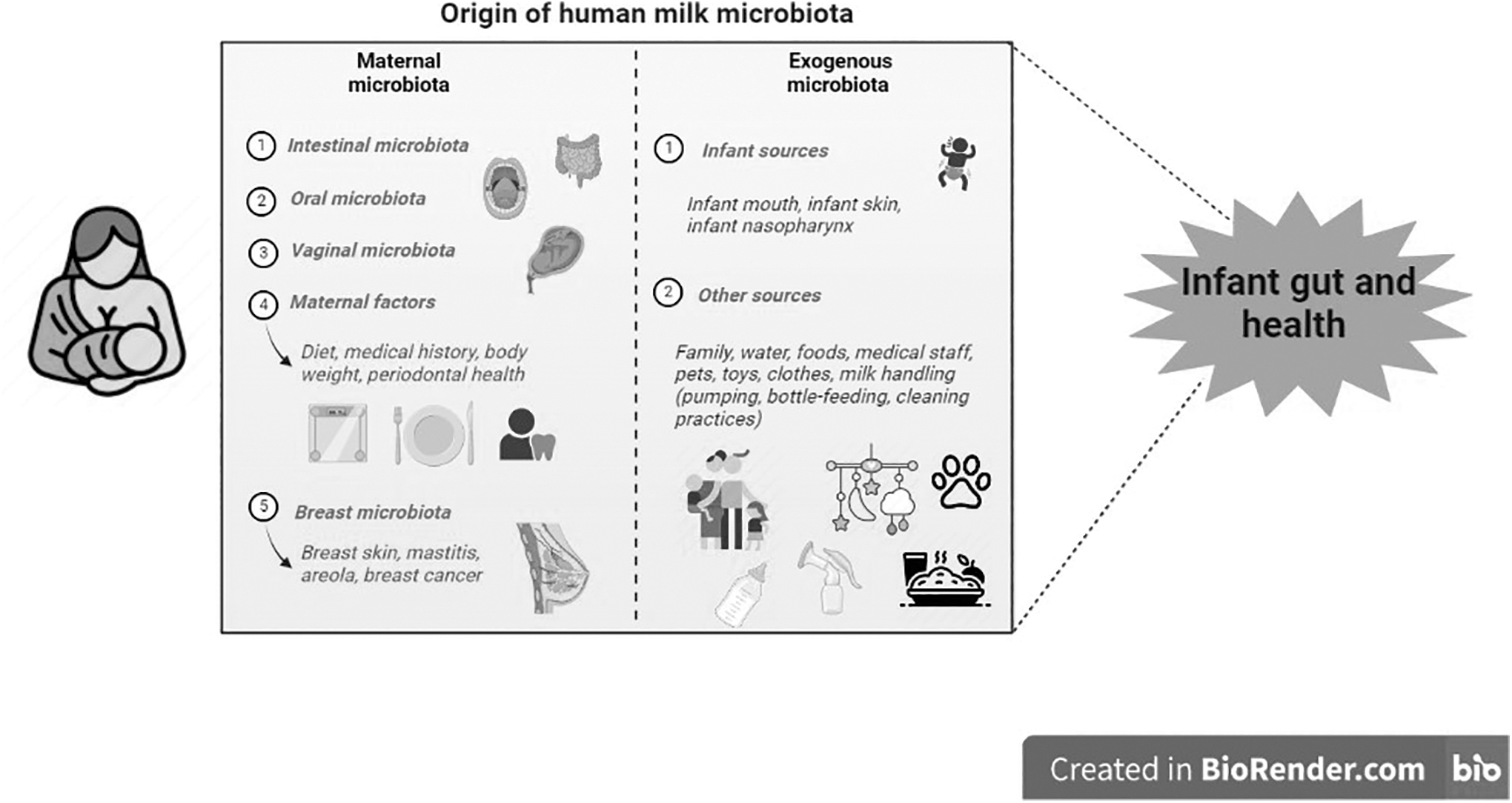
Origin of the human milk microbiota. Maternal and exogenous microbiota plays important roles in the origin of human milk microbiota, which eventually affects infant gut and health.
Maternal Factors That Influence Microbial Composition of Human Milk
Maternal factors that influence the microbial composition of human milk include diet and habits, gestational age, mode of delivery, parity, lactation stages, mastitis, obesity, cancer, celiac disease, gestational diabetes, HIV, and coronavirus disease 2019 (COVID-19). Besides, the infant's gender and the nutrition method also compose other factors that influence the microbial composition of human milk (Fig. 2).
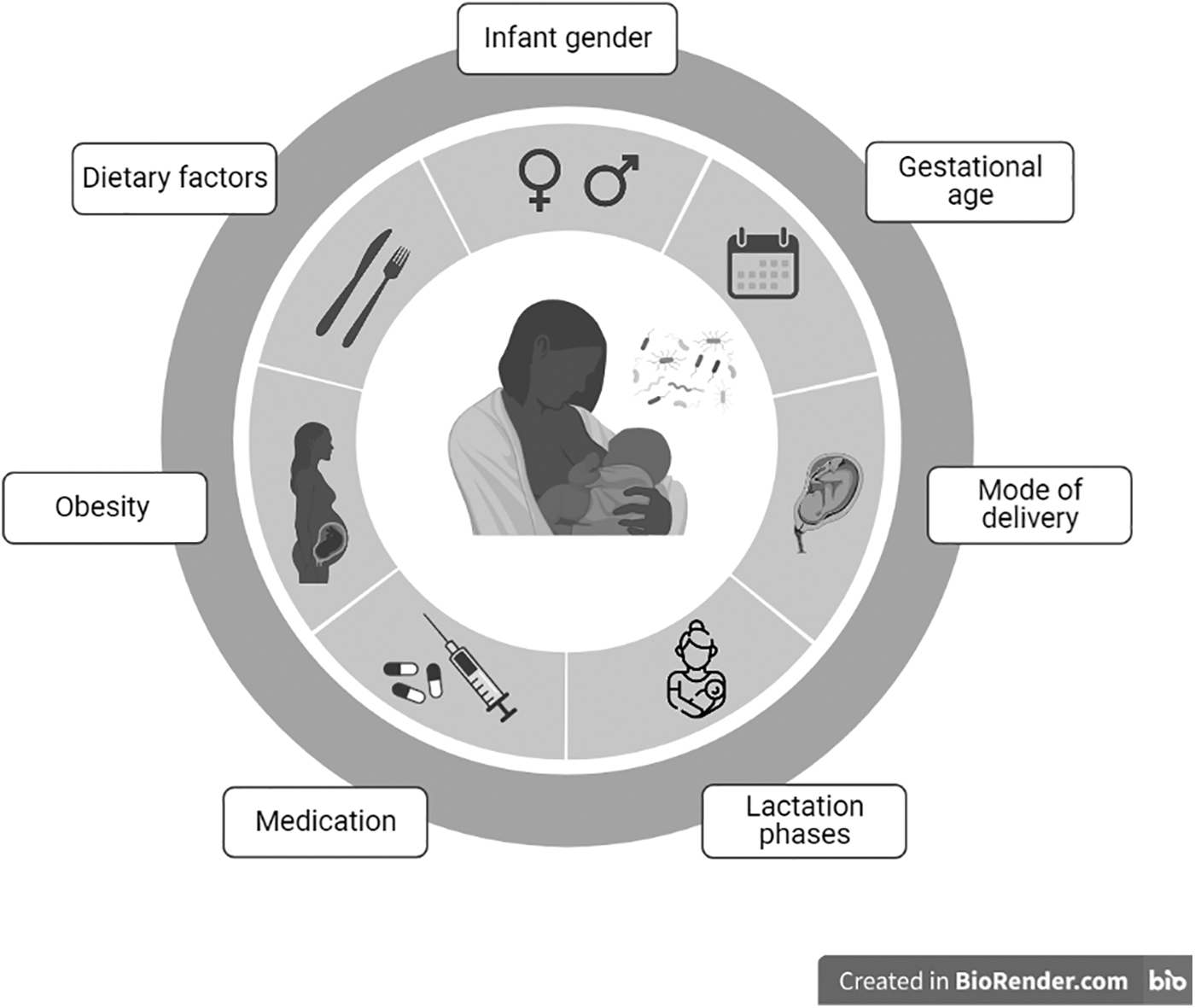
Maternal factors that influence the microbial composition of human milk. There are many maternal factors that affect the microbial composition of human milk such as obesity, diet, mode of delivery, gestational age, and medications.
Lifestyle habits
Human milk is a highly complex compound for infant growth, consisting of fat, carbohydrates, proteins, minerals, vitamins, and other nutrients. With the balance of nutrients, human milk has become sufficient as the sole source of nutrition for a while in an infant's life. The interaction of macronutrients, micronutrients, and bioactive factors in human milk and the biochemistry of human milk change during breastfeeding stages and according to the needs of the infant. 54 Nutrition received through the maternal diet affects the content, taxonomic components, and microbiota of human milk. Some studies report that the content of human milk changes according to the diet and local food received by the mother.55–59 Albesharat et al. reported that since fermented food is highly consumed in Syria, the breast milk of Syrian women contains higher levels of Lactobacillus plantarum. 55
Williams et al. reported that overweight and obese women produce milk with relatively higher abundance of Granulicatella. The Granulicatella level increases with the increase in energy intake. Moreover, saturated fatty acids and monounsaturated fatty acids in the mother's diet were inversely associated with the relative abundance of the Corynebacterium level. 58 Similarly, Kumar et al. reported a negative relationship between saturated fatty acids and Corynebacterium and Streptococcus. 56 Padilha et al. associated vitamin C consumption during pregnancy with a high Staphylococcus level in breast milk content during lactation. Increased glucose intake in lactation decreases the Pseudomonas level. 57 Compared with the lactation period, the mother's diet during pregnancy affects human milk microbiota further.
Vitamin C consumption during pregnancy is associated with the components of human milk microbiota. Furthermore, the polyunsaturated fatty acid (PUFA)/linoleic fatty acid level in the newborn's gut microbiota is closely associated with the increase in the amount of Bifidobacterium in human milk. 57 It causes changes in the human milk microbiota of Italian and Burundian mothers who have different lifestyles and dietary habits. However, besides lifestyle and dietary habits, other factors can affect the microbiota between these two populations. Especially in Burundi, factors such as younger mothers, lower passive smoking exposure, and higher prenatal antibiotic use affect human milk microbiota. 60 The fatty acid (FA) composition of milk varies according to dietary patterns. In the study evaluating the FA composition and the results of the diet in the milk of lactating Tibetan women, n-3 PUFA, linoleic acid, and α-linolenic acid (ALA) were found to be deficient, including docosahexaenoic acid (DHA).
Besides, the Tibetan maternal diet is primarily rich in Zanba (butter tea). However, the intake of fatty fish, vegetables, and fruits in the diet is insufficient. Therefore, this situation led to a high carbohydrate intake in mothers. Carbohydrate intake affects the main FAs in milk. Because of this study, a negative correlation was found between carbohydrates and eicosapentaenoic acid and DHA concentrations. In this regard, it is recommended that lactating mothers living in the region consume diets rich in DHA. 61 There are water-soluble B vitamins (B1, B2, B3, B6, B9, B12), vitamin C, and fat-soluble vitamins A and E in human milk. B vitamins are coenzymes in metabolic processes and are crucial for neurotransmitter synthesis. In infants who are not treated for vitamin B1 deficiency, beriberi develops. Vitamins C and E, which are antioxidants, protect tissues from oxidative stress and damage in the early postnatal period.
Vitamin A is critical for vision, cell growth and development, and immune system function. Although human milk is a good source of these vitamins, it is not an adequate source of vitamins D and K. Because vitamin D is the vitamin responsible for bone health and vitamin K is responsible for blood clotting, it is important for the baby. In this regard, vitamin D and K supplements are provided to the newborn in the postpartum period. 54 Maternal vitamin supplementation is important in the case of need. However, these supplements can cause changes in human milk content. Maternal vitamin A supplementation significantly increases retinol, α, and β-carotene concentrations in human milk. Maternal vitamin D supplementation, on the contrary, increases 25-hydroxy-D levels in human milk.
A higher level of ascorbic acid was observed in the human milk of women taking vitamin C supplements. The levels of α-tocopherol increased in the human milk of women who took vitamin E supplements. Breastfeeding mothers should consume all essential nutritional sources both for their health and for protecting human milk concentrations. 62 During the breastfeeding period, habits are important and diet. Smoking is reported to affect human milk negatively. 63 The milk of mothers who smoked during the lactation period contains lower fat and energy. This condition is considered to be caused by smoking-related toxic effects accumulated in fatty tissues, particularly in mammary glands. 63
In a study evaluating the effect of exercise on human milk, it was reported that interleukin (IL)-8 and tumor necrosis factor-α (TNF-α) concentrations in mothers who exercised were 36% and 27% lower, respectively, compared with the control group. There was 22% lower IL-6 in the colostrum of mothers who continued the exercise program, 30% more fractalkine, and 20% higher IL-10 in mature milk. 64 Another factor affecting breastfeeding and the mother–infant relationship is stress. The stress factors of the mother and the stressful lifestyle can affect the content of human milk. The mechanisms underlying the transmission of maternal stress to the child remain unclear. In a Dutch study, maternal stress in the first month postpartum was generally associated with overall lower levels of FA in human milk. This may indicate a pathway for transmitting maternal stress signals to an infant. 65
Gestational age
Gestational age is a factor that affects the content of human milk. The content of human milk microbiota changes according to the time of labor. 59 Compared with preterm deliveries, Bifidobacterium levels were reported to be higher in mothers who have term delivery. 66 However, the time of labor was reported not to affect bacterial components in human milk in another study. 67
Mode of delivery
The content of human milk could differ by the mode of delivery. Khodayar-Pardo et al. reported that while women who had a cesarean section had higher bacterial concentrations in colostrum and transitional milk, women who delivered vaginally had higher levels of Bifidobacterium. 66 Hermansson et al. reported that human milk microbiota had relatively less diversity in women who had a cesarean section compared with women who delivered vaginally. 68 Burianova et al. reported that women who had vaginal delivery had higher carbohydrate content in their milk. 63 In addition to the mode of delivery, antibiotics used during labor could also affect human milk microbiota. The mode of delivery is reported to have more effects on the microbiota composition according to intrapartum antibiotic administration. 68 On the contrary, in some studies, the mode of delivery was reported to have no effects on human milk microbiota. 67
Infant's sex
The biological sex of the infant is a factor that can affect the human milk microbiota. Moossavi et al. reported that women who had a male infant had more limited human milk microbiota diversity. 69 Williams et al. reported that the milk of women who had a male baby was richer in terms of Streptococcus. 58 On the contrary, some studies in the literature indicated that the infant's sex did not affect human milk microbiota. 67 It has been reported that the composition of animal milk differs according to the sex of the offspring.70,71 However, studies showing the relationship between human milk compositions and infant sex are limited.72–76 The findings of these limited study are contradictory. It has been reported that there is no relationship between breast milk composition and infant sex in the Filipino population. 72
On the contrary, it has been reported that the energy in human milk is higher in male infants in the American population, and in female infants in the Korean and Kenyan populations.73–75 Researchers emphasize that the content of human milk is not only related to sex and can be affected by many other factors. In particular, socioeconomic status is stated to be a related factor that has a significant effect on human milk content. 76 There is higher level evidence that male infants with a higher growth rate than female infants consume greater amounts of breast milk. Increased milk consumption in male infants is associated with increased nutritional needs. 77 In a study with Chinese, Malay, and Indian populations, mothers of the postpartum first 3 months of male infants reported higher levels of energy and lipids in human milk.
In human milk of mothers with male infants, lipids were found to be 39% higher and energy 24% higher. 78 It has been reported that higher concentrations of free amino acids, glutamine, glutamate, glycine, cysteine, and tyrosine associated with male infant sex are observed in mature human milk monitored monthly in the first trimester. 79 In another study with a 7-month postnatal follow-up, it was reported that the composition of human milk did not differ according to the sex of the newborn.80,81 All these results suggest that human milk composition may be sex-specific and sex-related differences become less clear 2–4 months after birth. 77
Parity
A few studies in the literature report that parity affects human milk microbiota. Moossavi et al. showed that human milk microbiota had less diversity in primiparous women in comparison with multiparous women. 69 Primiparous women have higher protein and lower carbohydrate levels in their breast milk, yet some other studies in the literature report that parity does not have effects on human milk microbiota.63,69
Lactation stages
Human milk composition varies according to the lactation stage. The colostrum content is rich in proteins, minerals, antibodies, antimicrobial peptides, complement factors, cytokines, lysozyme, and HMOs. During the transition from colostrum to mature milk, while protein and mineral concentrations decrease, lipid and carbohydrate concentrations increase. Studies show that colostrum has more varied microbiota than mature milk.59,82 However, some other studies claim that mature milk has more varied microbiota than colostrum.36,39,60,66,82 The literature also includes studies indicating that colostrum and mature milk are similar in terms of microbiota.67,83,84
Using a breast pump
In addition to being nutritious, human milk is a protective factor for the infant thanks to the microbiota diversity it has due to being nonsterile. In a physiological translocation mechanism, the maternal gut microbiota is considered to be transported to the mammary gland during breastfeeding. The presence of bacterial communities accumulated in the colostrum before the first lactation supports this condition. 85 This process could be explained by physiological and hormonal changes and increased permeability in the gut epithelium during late pregnancy. Mononuclear cells, dendritic cells, and CD18 cells are involved during the transition of these microbes from the gut to the breasts. 86 By loosening the connections between gut epithelial cells and passing bacteria through the intestinal lumen, dendritic cells penetrate the gut epithelium, making the transportation of bacteria possible by macrophages to the mesenteric lymph nodes and eventually to the mammary gland.87,88
Human milk can be given to the baby in ways other than breastfeeding. Milking techniques affect human milk microbiota, but aseptic conditions are one of the most important factors causing microbiota diversity. Human milk samples taken in aseptic conditions indicated less microbiota diversity.22,47,84 Besides, the microbiota of women who fed their baby only with breast milk was reported to be richer than that of women who used mixed feeding. 89 Moossavi et al. reported that breast milk milked with a pump was poorer in terms of microbiota than breast milk milked by hand. 69
Obesity
Maternal body mass index before pregnancy is important in the development of human milk and an infant's gut microbiota. 90 The breast milk of obese women involves high fat and energy levels. However, the woman's weight has no effects on the human milk calorie. The protein level is high in mothers who are overweight and obese, yet mature milk demonstrates differences according to the mother's fatty mass. While total saturated and n-3 PUFAs decrease, monounsaturated and n-6 PUFAs increase in the colostrum of women who are overweight or obese.63,91
Mastitis
Mastitis is usually related to an infection from Staphylococcus aureus. The use of probiotics as an alternative or supplementary to antibiotic treatment is of importance in the management of mastitis.92–94 The use of probiotics is reported to be beneficial for preventing mastitis-related dysbiosis. 95 However, some studies indicate that probiotic treatment causes a significant decrease in the number of bacteria in human milk. 96 A study investigated women diagnosed with mastitis who were administered Lactobacillus fermentum, CECT 5716 or CECT 5713 Lactobacillus salivarius, and antibiotics daily for 3 weeks. While the average amount of bacteria was similar in the three groups on day 0, the amount of bacteria was found to be lower in the probiotic groups in comparison with the control group on day 21.
The probiotic treatment was found to cause a significant decrease in the abundance of milk bacteria. After the probiotic supplementation, Lactobacillus salivarius ECT 5713 and Lactobacillus fermentum CECT 5716 could be identified in women's milk samples. Women in the antibiotic group were found to have significant differences in decreasing the number of bacteria and improving pain scores. 96
Cancer and cancer treatments
As cancer cells may include estrogen receptors, they could multiply rapidly. Therefore, anticancer medicine could demonstrate a more toxic effect on rapidly multiplying cells. Cancer cells are considered not to maintain their presence in mammal tissues during the breastfeeding period due to the effects of high calcium concentrations and fluidity of the milk. Fluidity plays a natural barrier role in the human body. Diseases such as cancer develop when the fluidity decreases in the body. Hence, breastfeeding could demonstrate a protective effect mechanism against cancer. 97
The mother's receiving chemotherapy during lactation also affects human milk microbiota. Urbaniak et al. analyzed the human milk content of a breastfeeding woman who received chemotherapy due to Hodgkin's lymphoma at 2-week intervals for 4 months. Throughout the treatment, decreases were found in Bifidobacterium, Eubacterium, Staphylococcus, Cloacibacterium, DHA, and inositol metabolites. This change in the microbiota reduces the useful effects of human milk. 67 “Human alpha-lactalbumin made lethal to tumor cells (HAMLET)” is an important component that has a bactericide effect on human milk content. This component is a complex structure that is composed of human α-lactalbumin and oleic acid. HAMLET has a killing effect on gram-positive bacteria with a mechanism similar to apoptosis in eukaryotic cells. 98 Glycolytic enzymes are required for the full demonstration of HAMLET activity. Hence, HAMLETs mediating a change in cancer cell metabolism as part of death induction could be explained by glycolysis inhibition. 99
Brisuda et al. 100 presented the first human placebo-controlled double-blind experimental study that analyzed the effects of HAMLET on cancer cells. The study group (n = 40) was composed of individuals who had nonmuscle invasive bladder cancer. The study formed alpha-helical peptide oleic acid complexes (alpha1-oleate) from the A39 residue obtained from alpha-lactalbumin. The patients received six infusions of alpha 1H or placebo treatment for 22 days. The study results showed that intravesical instillations of alpha1-oleate enabled the shrinking of tumor cells significantly and made their size smaller. No significant side effects were detected after the treatment. 100 Hence, studies support that HAMLET had a killing effect on the cancer cells.98,100
Gestational diabetes
Human milk microbiota changes with the effects of the metabolic changes happening during the pregnancy period. Gestational diabetes mellitus (GDM) and maternal obesity cause dysbiosis of the gut microbiota. In this regard, it could also affect human milk microbiota via the breast. The gut microbiota of obese women has less diversity.101,102 In a similar vein, the gut microbiota of women with GDM is also reported to have low diversity. 103 In this regard, these changes experienced in microbiota affect human milk content and cause an obesogenic environment in the infant's gut. This condition is a factor that increases the baby's risk of obesity.102,103 A study reported higher amounts of Gemella in the breast milk of obese women with GDM or impaired glucose tolerance. On the contrary, apart from diabetes and obesity, human milk microbiota is reported to be affected by factors such as the use of antibiotics and an infant's sex. 102
Villamil et al. reported that in the late lactation period, Immunoglobulin A (IgA) and Immunoglobulin M levels were lower in human milk of celiac disease patients. While IL-6, TNF-α, and monocyte chemoattractant protein-1 were the highest in these women's milk, the soluble Toll-like receptor-2 prevalence was found to be lower. 104
Celiac disease
Celiac disease is a chronic autoimmune small bowel disease that emerges with intolerance against gluten-containing food. A study conducted showed that celiac disease and a gluten-free diet did not have effects on human milk microbiota. However, compared with healthy women, human milk microbiota was shown to be more diverse in women with a continuing risk of celiac disease. 105 Olivares et al. reported that the human milk of patients with celiac disease contained significantly lower IL 12p70, transforming growth factor (TGF)-β1, Bifidobacterium, Bacteroides fragilis group, IgA, and interferon (IFN) levels. These changes in human milk content could decrease its protective effects on babies against celiac disease. 106
Olshan et al. analyzed the human milk microbiome in the study groups composed of gluten-free diet (n = 20) celiac patients and healthy controls (n = 16). Three increased bacterial strains were found as Acinetobacter ursingii SM 16.037 = CIP 107286, Rothia mucilaginosa ATC 25296, and Acinetobacter sp. 479375 in women with celiac disease who received a gluten-free diet. Besides, there was an increase in Bacillus cereus abundance. The four increased bacterial strains in the human milk of healthy women were found as Bacteroides, Faecalibacterium prausnitzii, Clostridiales, and Gemella. 107 Human milk microbiota (Bifidobacterium) of healthy women and women with celiac disease was found to demonstrate differences in terms of immunity agents (IgA) and TGF-β1. 108 These differences in human milk microbiota affect infants' immune systems by changing their gut microbiota. 105
HIV
The literature excludes clear evidence on whether the HIV infection is transmitted via breast milk. Human milk is considered the source of pediatric HIV-1 infection. However, there is evidence showing that the babies breastfed by HIV-positive women were not infected. In this regard, human milk is seen as both a transmission factor and a protection factor for HIV-1. 93 CD4+ cells in human milk have a protective effect against HIV. 109 A study measured the HIV-specific secretory IgA (SIgA) level of human milk in mothers whose baby was infected with HIV (n = 26) and who were not (n = 64). HIV-specific SIgA, HIV RNA, CD4 counts in human milk, and plasma RNA amounts were found to be similar in both groups. HIV-specific SIgA in human milk did not show a protective effect against HIV transmission. 110 In this regard, particularly in developing countries, HIV-positive women are generally encouraged to breastfeed their babies.
Depending on local and individual conditions, the main justification for breastfeeding is that HIV infections transmitted via human milk enable protection against morbidity and mortality associated with optimal nutrition for infant, diarrhea, and lower respiratory tract infections. 93 A study that investigated human milk microbiota compositions of women who have and who do not have HIV RNA in their breast milk found that human milk that had HIV RNA had higher levels of bacterial diversity and Lactobacillus spp. ratio. Bifidobacterium, Streptococci, and Enterococci are reported to be the primary bacterial groups in the infant's feces. 89 On the contrary, another study reported that human milk microbiota of HIV (+) and HIV (−) women indicated no significant differences in terms of their compositions. Besides, bacterial diversity was also found to be similar to each. 111
COVID-19
There were uncertainties regarding medical protocols at the start of the pandemic. In the early times of the pandemic, breastfeeding and skin-to-skin contact of mothers with COVID-19 (+) were delayed. 3 Demers-Mathieu et al. reported a positive relationship between antigen samples and secretory antibodies in human milk samples taken from severe acute respiratory syndrome coronavirus 2 (SARS-CoV-2)-positive women. 112 Breast milk of women who were infected with SARS-CoV-2 enables protection against COVID-19 and passive immunity for their babies.45,113,114 However, human milk samples taken from women who were SARS-CoV-2-positive or who had previously been infected with SARS-CoV-2 included no RNA. 115 Although the human milk microbiota dysbiosis in SARS-CoV-2-positive women is not yet clear, there is evidence in the literature that COVID-19 may alter the human milk microbiota. 101 A change in proteomics and metabolomics has been reported in human milk samples from COVID-19-positive mothers. It is stated that this change develops in three ways as complement activation, platelet degranulation, and macrophage function. 116
Although some published guidelines recommend expressing breast milk as an alternative to direct breastfeeding for mothers with positive/suspected SARS-CoV-2 infection, there is substantial evidence to suggest that breastfeeding is an important component of promoting a healthy neonatal microbiome. It has been reported that exposure to the skin of the areola in addition to breast milk is necessary for developing the microbiome. Other infant feeding methods, alternative to breastfeeding, caused depleted Bifidobacteria and an increase in negative microbiota parameters, including the enrichment of potential pathogens. Therefore, direct breastfeeding is recommended.117,118
Role of Human Milk Microbiota in the Prevention of Disease and Infant Health
Shaping the infant microbiota
The microbiota of the newborns develops and has diversity over time because of some changes. The gut microbiota of the newborn is limited to a few types after birth, but microbiota diversity increases as the baby grows up. In babyhood, there are 1,012 bacteria and around 150–200 bacterial types per gram on average. Maternal microbiota is the main origin of the infant's microbiota. The transmission way of microbes is important in terms of the development of microbiota. Vertically and horizontally acquired microbes have a role in the shaping of the gut microbiota in the early period. Anaerobic clostridia and bacteroides are vertically acquired (birth, enteromammary, etc.) microbes. 119 In the first days of life, around 16.3% of the infant's gut microbiota originated vaginally. While the gut of babies born vaginally is rich in Lactobacillus and Prevotella, the gut of babies born via the cesarean section is rich in Staphylococcus, Corynebacterium, and Propionibacterium.120,121
In the horizontal transmission, microbes are transmitted to the infant from siblings, individuals out of the family, surfaces at home and hospital, animals, complementary food, and the environment. Horizontally acquired microbes are generally composed of facultative anaerobic basils. 122 Human milk microbiota is important for developing infant gut microbiota (Table 2; Fig. 3). A study in the literature reported that the maternal gut microbiota was rich in Proteobacteria, Firmicutes, Actinobacteria, and Bacteroidetes, and human milk is considered to be based on maternal gut microbiota. 123 Gut microbiota has some differences between infants fed with human milk and infant formula. A study in the literature reported that the gut microbiota of infants who were fed only with breast milk was richer in Bifidobacterium, Staphylococcus, and Streptococcus. The gut microbiota of infants fed with infant formula was reported to be richer in Bacteroides, Clostridium, Enterobacteriaceae, Enterococcus, and Lachnospiraceae. 59
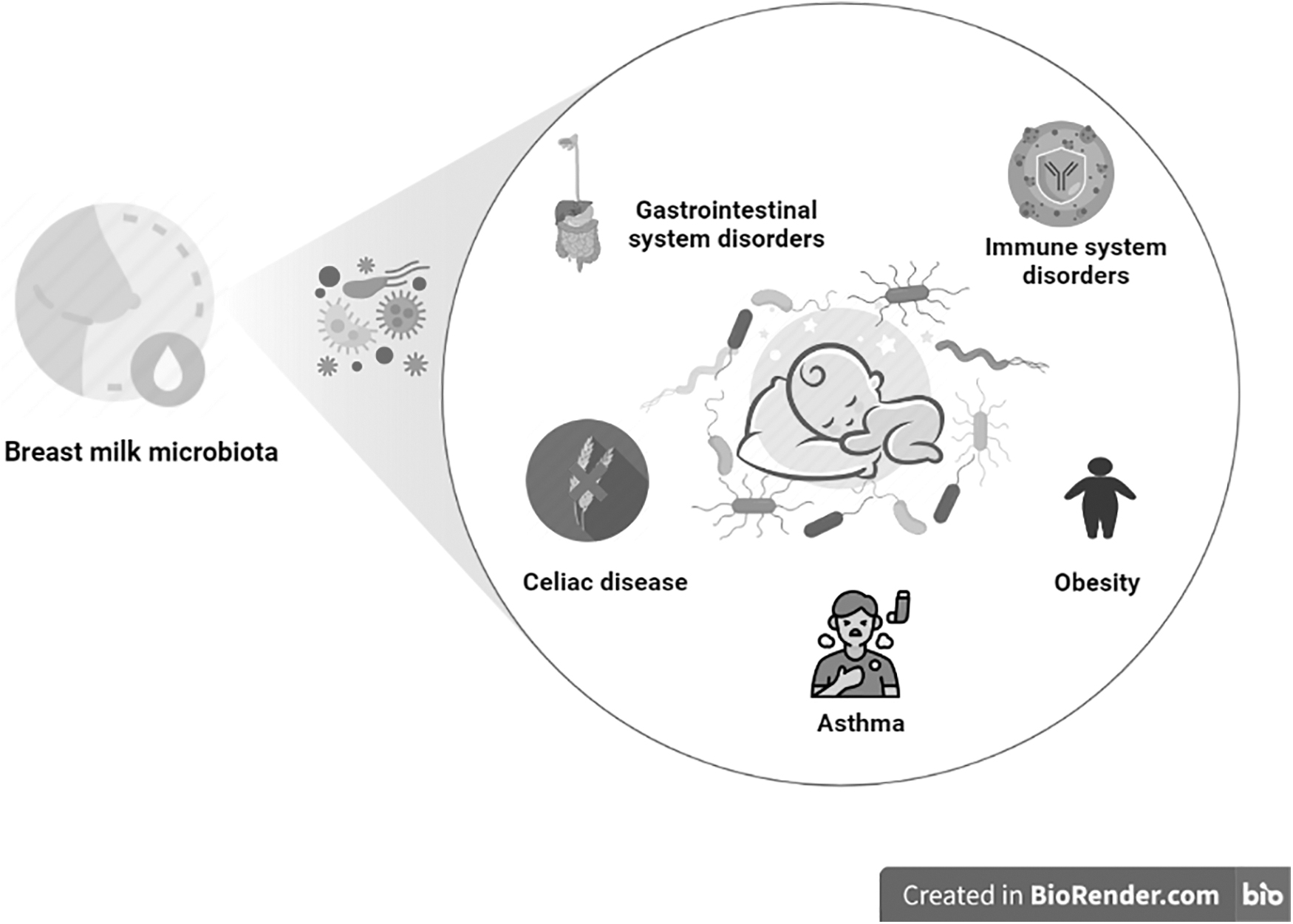
Role of human milk microbiota in the prevention of disease and infant health. Human milk microbiota has been shown to prevent some common diseases during the first year of life and later life such as obesity, asthma, celiac disease, immune system disorders, and gastrointestinal system disorders.
Role of Human Milk Microbiota in the Prevention of Disease and Infant Health
IgA, immunoglobulin A; IGF-I, insulin-like growth factor-I; SCFA, short-chain fatty acid-bacterial metabolites; SIgA, secretory IgA; TGF, transforming growth factor.
Another study reported that the Streptococcus parasanguinis ratio was higher in the breast milk of women who fed their babies only with breast milk compared with women who used mixed feeding. 89
Obesity
Human milk microbiota is reported to be protective against obesity (Table 2; Fig. 3). Various Lactobacillus and Bifidobacterium probiotic strains play a role in this effect mechanism. These strains enable an antiobesity effect by reducing body weight and fatty mass. 124 Human milk has a direct central effect on the gut microbiota of a 12-month baby. 90 A causal relationship is considered to exist between the gut microbiota and obesity. In this regard, the mother's use of probiotics enables such benefits as increasing gut barrier integrity, producing beneficial metabolites, and host immune system modulation. 125
Another study reported that the use of these strains, L. plantarum 73a alone or Bifidobacterium animalis subsp. lactis INL1 under SHIME® system conditions, in obese infants, increased alpha diversity and healthiness. The administration of both strains leads to a reduction in Proteobacteria, which is associated with an inflammatory condition. In this regard, the use of L. plantarum 73a alone or along with Bifidobacterium animalis subsp. lactis INL1 seems to be a potential probiotic candidate for preventing obesity. 126
Immune system disease
Human milk has important effects on the infant's immune system and enables passive immunity of the infant. Some components play a role in enabling passive immunity in human milk. These components include lactoferrin, caseins, lysozyme, superoxide dismutase, platelet-activating factor, lactoperoxidase, osteopontin, acetylhydrolase, alkaline phosphatase, growth factors, hormones, some immune cells, glycosaminoglycans, glycoproteins, glycolipids, oligosaccharides, and microbiomes. These components have anti-inflammatory and antioxidative effects against infections and cancer in infants.127,128 HAMLET, which is obtained from human milk and is a natural complex, is a component that eradicates Streptococcus pneumonia (pneumococcus) and is immune against the development of resistance. It was reported that HAMLET provided an effect that significantly reduced antibiotic concentrations required to eradicate pneumococci in clinically antibiotic-resistant strains. 129
The lack of Bifidobacterium and oligosaccharide in human milk is associated with systemic inflammation and immune disorders in the first years of life. Bifidobacterium infantis EVC001 suppresses gut T helper (Th)2 and Th17 cytokines and induces IFN-β. It also includes immune-regulatory galectin-1. Galectin-1 provides a connection between beneficial microbes and immune regulation. 130 Quin et al. analyzed the effect of sulfonated and diet-derived HMOs on infant gut microbiota and immunity. A positive relationship was found between sulfonated and diet-derived HMOs, yet no significant changes were observed in the infant's immune markers. 131
Asthma and allergic diseases
By regulating the baby's immune system, the maternal gut microbiome could be associated with allergic diseases, eczema, and asthma (Fig. 3). Dendritic cells in the gut microbiome decrease allergic airway diseases by stimulating bone marrow hemopoiesis. Prevotella copri carrier is realized with succinate production in the mother during pregnancy. In this way, fetal dendritic cell networks that protect against allergic disease/asthma are established. 132 In their meta-analysis, Wei et al. reported that the mother's probiotic use did not have effects on preventing eczema or asthma. 133 Infants' microbiome has a low genetic potential in allergic diseases for protecting butyrate. This condition highlights the importance of the production of short-chain fatty acid-bacterial metabolites (SCFA) in protecting infants from allergic diseases. 134 Zuurveld et al. reported that SCFA in human milk has immunomodulatory and protective effects against the development of allergic diseases. 135
Gastrointestinal system diseases
In addition to food digestion and nutrient absorption, the gastrointestinal system has a defense function in the intestinal tract. Commensal bacteria are abundant in guts (1 × 10¹⁴ CFU) and develop a defense system against agents that cause many diseases. The acidic environment in the stomach and mucosa of the small intestine provide a physical barrier. It is also responsible for sending signals to the lower tissues. 136 Maternal nutrient intake and the enteromammary pathway are of great importance for developing gut microbiota. Increased, riboflavin, pantothenic acid, vitamin B6, and vitamin B12 intake are associated with an increase in Prevotella and a decrease in Bacteroides. 88 Since the gastrointestinal and immune systems have not been fully mature in preterm infants and infants with low microbiota diversity, there is a decrease in the protective effect of microbiota and an increase in the risks of necrotizing enterocolitis.137,138
Besides, the infants' gut microbiota has a protective effect against gut infections and diarrhea. 135 Casein, whey, SIgA, lactoferrin, and lysozyme in human milk have an antimicrobial effect in the infant's gut. Serum albumin and insulin-like growth factor-I enhance the growth and development of the infant. 139 With the maintenance of breastfeeding, it is shaped from the skin and gut-derived organisms such as Staphylococcus and Streptococcus to the infant's oral and skin organisms such as Veillonella, Leptotrichia, and Prevotella. 20
Celiac disease
Breastfeeding and human milk intake have a protective effect against the early development of celiac disease. 140 A meta-analysis reported that the risk of celiac disease decreases significantly when breastfed babies are given gluten. 141 The study by Cilleruelo et al. highlighted that breastfeeding has a protective effect during gluten intake. 142 A protective effect against celiac disease can be provided with IL 12p70, TGF-β1, Bifidobacterium, B. fragilis group, IgA, and IFN in breast milk.105,107
Conclusion
Human milk contains a plethora of bacteria not only beneficial for the overall growth of newborns but also plays a critical role in the development of the gut system and maturation of the immune system of the newborn and infants. Among several controversies related to the origin of human milk microbiota, it has been successfully established that the mammary gland possesses its own unique microbiota during the late gestation period and early lactation.
However, several factors could influence the human milk and milk microbiota composition such as age, diseased conditions, food habits, and others. Although various lactic acid bacterial strains have been explored for their significant role in immune enhancement and modulation of gut bacteria in infants and newborns, efforts must establish the linkage and correlation of the mother's intestinal bacteria with mammary gland secretion and after that the colonization of bacteria in the newborn gut system. Research toward this field might open new avenues for researchers working in the field of biotherapeutics and probiotics.
Footnotes

Authors' Contributions
Drafted the work or revised it critically for important intellectual content and final approval of the version to be published: E.M., A.C., B.Y., and H.S. Designed and drafted the work and revised it critically for important intellectual content and final approval of the version to be published: S.G.S., B.A.V., E.G., F.O., and N.B. All the authors have read and agreed to the published version of the article.
Disclosure Statement
The authors declare no conflicts of interest.
Funding Information
No funding was received for this article.