




Abstract
Background:
Breastfeeding is vital for infant nutrition, especially for multiple babies (twins) born prematurely, yet breastfeeding rates among mothers of twins are lower compared with mothers of singleton babies. This review presents a synthesis of research findings on breastfeeding challenges experienced by mothers following twins’ births.
Methods:
The electronic databases of CINAHL, MEDLINE, PsycINFO, EMBASE, and Web of Science were systematically searched in August 2023. All eligible quantitative, qualitative, and mixed-methods studies reported on breastfeeding challenges experienced by mothers of twins were included. The review adhered to Preferred Reporting Items for Systematic Reviews and Meta-Analyses guidelines and followed Lucas et al.’s framework for thematic synthesis. Two reviewers independently screened all studies by title, abstract, and full text. The methodological quality of studies was independently assessed by two reviewers using the Joanna Briggs Institute critical appraisal tool and mixed-methods appraisal tool based on study design.
Results:
The review included 16 studies: quantitative (n = 5), qualitative (n = 8), and mixed methods (n = 3), published between 1980 and 2022, involving 3,351 mothers from 16 countries. Three main themes were generated as follows: (1) transitioning to a new role, finding the balance between self and the newborns’ needs; (2) the inevitability of emotional challenges; and (3) navigating support and information.
Conclusion:
The integrated findings of quantitative, qualitative, and mixed-methods studies on challenges experienced by mothers of twins will have scope for researchers to address the challenges through tailored intervention, education, and support and can help health care professionals revisit policy and practices to extend support services for mothers of twins beyond the initial postpartum and to the community for improving breastfeeding practices among mothers following multiple births.
Introduction
While breastfeeding may not be the right choice for every parent, it is the best choice for every newborn. Breastfeeding is universally recognized as the optimal source of infant nutrition with benefits to babies and mothers.1–3 The World Health Organization and the United Nations Children’s Fund recommend exclusive breastfeeding for the first 6 months of life, followed by the introduction of complementary foods and continued breastfeeding thereafter (WHO, 2001).
Although multiple birth is a moment of joy for the family, in reality, many mothers suffer from postpartum challenges following multiple births, with breastfeeding being one of the key challenges. 4 Increased incidence of multiple births has been identified as an outcome of advancement in medical technology. 5 Compared with women with singleton pregnancies, women with multiple pregnancies are more likely to experience preterm birth, evidenced by a shorter gestational age of ≤37 weeks (54.7% versus 6.1%), extremely preterm (3.6% versus 0.4%), very preterm (18.2% versus 1.4%), and late preterm (33.0% versus 4.3%) births, 6 subsequently associated with the increased risk of adverse perinatal outcome including lack of success in breastfeeding.4,7
Breastfeeding rates among mothers of twins vary widely across different cultures, with low rates of exclusive breastfeeding at 17% 8 and 18.1%. 9
Concerns about insufficient milk supply,7–10 premature birth,4,6,11 breast issues,7,8 and returning to work 12 contribute to delayed initiation and low rates of breastfeeding among mothers of twins.10,13,14 In addition to these challenges, misconceptions about breastfeeding and lack of adequate support from health care professionals and family members are other known challenges.12,15–18 Evidence suggests successful breastfeeding provides essential nutrients for infants and enhances maternal confidence in nursing and lactation. 19 Therefore, it is crucial to address the unique breastfeeding challenges among mothers of twins to support them in their breastfeeding journey. The effective way of breastfeeding twins, considering their challenges, has not been investigated to date, with limited evidence around mothers’ experience of breastfeeding twins. By identifying and addressing these challenges, health care professionals can develop evidence-based interventions to support mothers of twins and improve breastfeeding outcomes. This systematic review and meta-synthesis aimed to fill the literature gap by exploring the breastfeeding challenges faced by mothers of twins based on available literature.
Aim
This article aims to provide insight and understanding through aggregation, synthesis, and summarization of findings from studies reporting on breastfeeding challenges experienced by mothers following twins’ birth.
Materials and Methods
Study design
A study protocol was developed and registered in PROSPERO. This is available from https://www.crd.york.ac.uk/prospero/display_record.php?ID=CRD42022312576
Search strategy
The research team, in collaboration with the subject librarian, prepared a detailed search strategy using five databases: CINAHL Complete (EBSCO), MEDLINE (EBSCO), PsycINFO (EBSCO), EMBASE (Elsevier), and Web of Science (Clarivate). To ensure a comprehensive review, all databases were searched from inception.
Search tool
The PIO (P—Population, I—Phenomenon of interest, O—Outcome) approach was used for the search strategy.
This review includes qualitative, quantitative, and mixed-methods research studies that report the breastfeeding challenges experienced by mothers following multiple births. Based on the research question, a three-strand search strategy with concepts such as Twins, Breastfeeding, and Barriers using database index terms and keyword, strings were developed. A detailed breakdown of these searches is available in Supplementary Appendix SA1—Search Strategy.
Selection
Inclusion criteria
All primary research studies qualitative, quantitative, and mixed-methods studies that report views of mothers on the breastfeeding challenges experienced following multiple births.
Exclusion criteria
Studies on breastfeeding among mothers of twins during pregnancy.
Studies solely on breastfeeding among triplets and higher order.
Studies on interventions to overcome problems of breastfeeding among mothers of twins.
Studies on the weaning process.
Randomized controlled trial.
Studies reporting views or experiences of health care professionals or support persons.
The initial search was carried out on July 18, 2022, followed by an updated search on August 28, 2023. A total of 2,102 articles were retrieved through database searches. Additionally, reviewers manually screened reference lists of eligible studies and searched on Google Scholar and related articles on PubMed using the similar items feature. No new studies were retrieved.
Results were exported directly into Covidence. Two authors carried out the title, abstract, and full-text screening independently, and the third author resolved any conflicts arising from the screening. After removing duplicates (n = 456), 1,646 studies were screened for title and abstract, and 1,588 were removed, leaving 58 studies for full-text screening. A total of 42 studies were excluded, with reasons presented in Fig. 1. A total of 16 studies were included.

PRISMA flowchart. PRISMA, Preferred Reporting Items for Systematic Reviews and Meta-Analyses.
Assessment of Methodological Quality of the Included Studies
The methodological quality of the included studies was assessed by Joanna Briggs Institute (JBI) critical appraisal tools for qualitative and quantitative studies.20,21 Mixed-methods appraisal tool version 2018 was used to appraise mixed-methods studies (Supplementary Appendix SA2—Critical appraisal tools).
Quality assessment results of included studies
Each included study was independently reviewed by two reviewers for methodological quality, with a plan to resolve conflicts by a third reviewer. There were no conflicts, and no studies were excluded following the quality appraisal (Supplementary Appendix SA3—Results of quality appraisal of included studies).
Data Extraction
A data extraction tool was developed to report on each included study’s design, participants, sample size, data collection method(s), data analysis, and findings reported by the author(s).
Study characteristics
The 16 studies were published between 1980 and 2022 and conducted in the United States (n = 4), Canada (n = 1), Turkey (n = 2), Israel (n = 1), Saudi Arabia (n = 1), Japan (n = 1), Ghana (n = 1), Iceland (n = 1), Sweden (n = 1), Brazil (n = 1), New Zealand (n = 1), and Italy (n = 1) involving a total of 3,351 mothers following multiple birth (with twins). Of the 16 studies, 8 were qualitative, 5 quantitative, and 3 mixed-methods studies (Supplementary Appendix SA4—Summary of characteristics of the included studies).
Data Analysis
This systematic review and meta-synthesis was modeled on Lucas et al.’s framework of thematic synthesis,22,23 which is appropriate to synthesize findings of both qualitative and quantitative data (Supplementary Appendix SA5—Lucas et al.’s. framework of thematic synthesis).
Three emerging themes with several subthemes were derived Fig. 2.
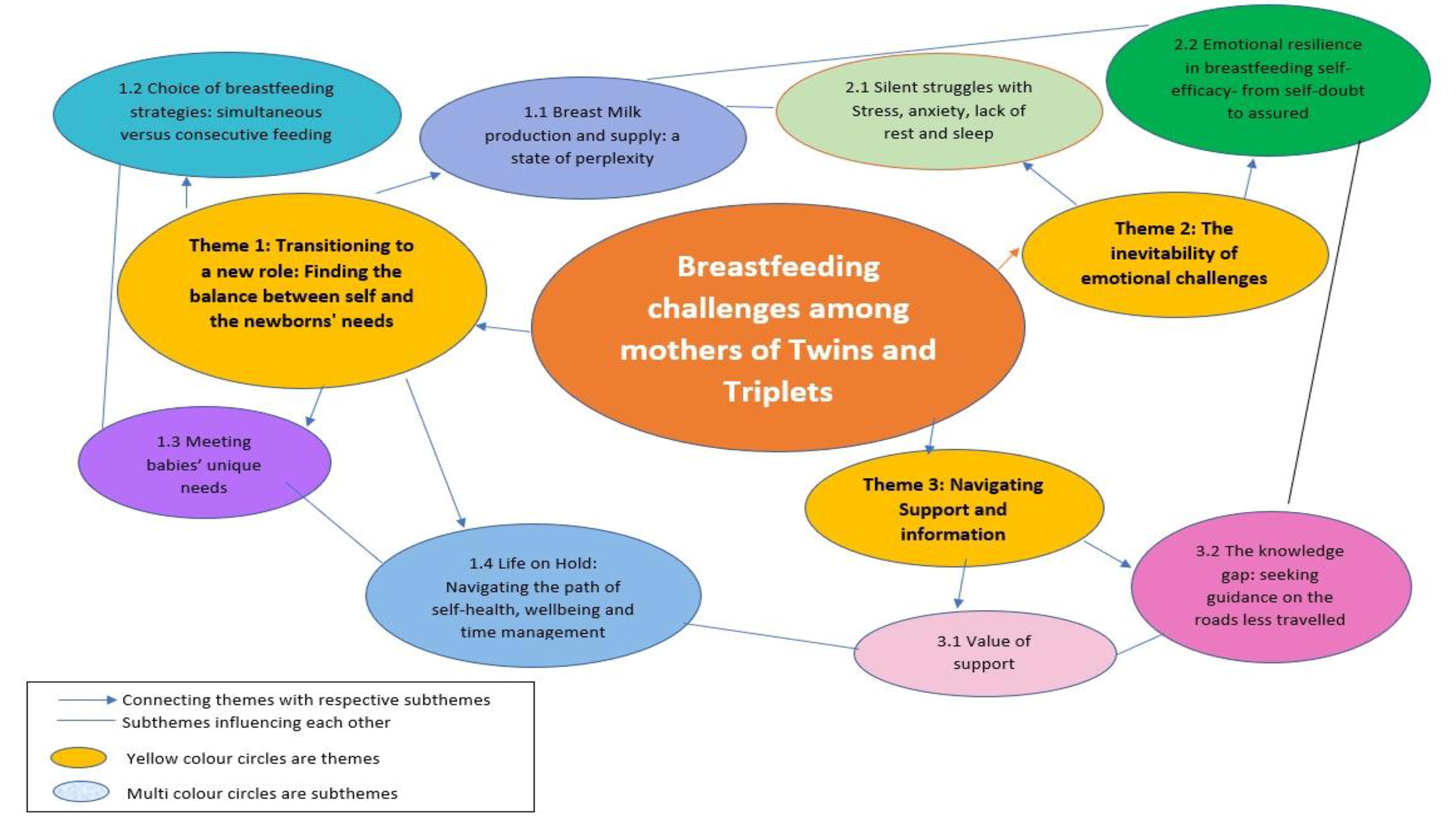
Interconnection of themes and subthemes. Prepared by authors based on findings.
Findings and results
Theme 1: Transitioning to a new role: Finding the balance between self and the newborns’ needs
Mothers’ challenges in adapting to the breastfeeding process were reported in all 16 studies (Table 1). The four interconnected subthemes related to challenges in transitioning to a new role were (1) breast milk production and supply—a state of perplexity; (2) choice of breastfeeding strategies: simultaneous versus consecutive feeding; (3) meeting babies’ unique needs; and (4) life on hold: navigating the path of self-health, well-being, and time management.
Description of Each Theme and Subtheme Mentioned in Each Study
Studies contain only quantitative data under themes and subthemes.
Breast milk production and supply—a state of perplexity
The subtheme “perplexity” depicts the challenges faced by mothers, from inadequate milk production to sufficient and, with few mothers, excess milk production. Ten studies highlighted mothers’ concerns, beliefs, and attitudes regarding insufficient breast milk supply.
“I did not have enough milk.” (Jonsdottir et al., p. 9) 28
“I stopped because they needed more food than I could provide and unable to keep up an adequate supply for two babies.” (Damato et al., p. 299) 24
Mothers of twins appeared to be more likely to perceive breast milk insufficiency and supplemented with formula, highlighting the complexities of breastfeeding with twins. Confidence in their milk sufficiency was crucial in mothers’ breastfeeding decisions. In a study conducted in Japan by Yokoyama et al., 1,173 (78.7%) mothers of twins practiced mixed feeding. 32 The mean duration of breastfeeding among 123 mothers of twins was approximately 17.9 weeks, equivalent to 4.5 months reported by Damato et al. in the United States. 61
“I used the breast pump every time I breastfed for six weeks so that I would have breastmilk to give them … Sometimes, although I had to use formula, and at that time, I simply had had enough … So, I decided that I would only use formula in the bottle, quit pumping, and what happened would happen.” (Jonsdottir et al., p. 9) 28
On the contrary, in a study conducted by Cinar in Turkey found that 10 mothers of multiple perceived their milk supply as sufficient for babies sufficient milk supply. 13
“As I was operated, nurses gave formula milk to the babies after the delivery. After then, I gave formula milk once a day but just conscientiously … actually breastfeeding was enough.” (Cinar et al., 2013, p. 505) 13
Variations in milk supply presented challenges in breastfeeding. A study by Tahiru et al. in Ghana revealed that out of 185 mothers, most (61.4%) who did not practice exclusive breastfeeding for 6 months perceived that they could not produce enough breast milk to satisfy their infants until they were 6 months old. 8 Similar findings by Mikami et al. in Brazil highlighted among 254 mothers, 56.3% mothers reported breastfeeding difficulties associated with insufficient milk supply (44.2%), infant’s dysfunctional suck and the burden of breastfeeding (6.1%), 25 while 30% reported breastfeeding process as time-consuming in another study by Damato et al. conducted in the United States. 24 Only 16.9% had exclusive breastfeeding, and 83% practiced nonexclusive breastfeeding. These findings were supported by Allihaibi in Saudi Arabia, where exclusive breastfeeding rates were lower among twins compared with singleton babies (46.7% versus 79.2%). 7
Overall, women’s experience and perception of milk production and supply played a crucial role in their decisions over exclusive breastfeeding, formula feeding, or mixed feeding.
Choice of breastfeeding strategies: Simultaneous versus consecutive feeding
Six studies emphasized the complexity of latching and positions while breastfeeding twins.
In a study by Nyqvist in Sweden, most mothers did not prefer simultaneous feeding due to challenges in managing both infants, including latching, waking, relatching, and burping, preferring individualized attention for each baby. 26
A study by Cinar et al. in Turkey with 10 mothers of twins highlighted that simultaneous breastfeeding was more time-efficient for some mothers, although it presented challenges in holding, lack of control while holding twins, and positioning twins. 13
“I bought a twin breastfeeding pillow and tried simultaneous breastfeeding, but I couldn’t succeed… the babies were too small.” (Cinar et al., 2013, p. 506) 13
“It was difficult and heavy to hold two infants simultaneously, especially in connection with repositioning and burping.” (Nyqvist, 2002, p. 252) 26
Gottstein in Israel highlighted that mother opted for bottle feeding due to the practical difficulties of breastfeeding multiple infants simultaneously. A few mothers tried the “double cradle” hold but found it impractical. 27
Overall, women expressed mixed experiences concerning simultaneous and consecutive feeding, with a few preferring simultaneous feedings compared to others due to practical difficulties.
Meeting babies’ unique needs
This subtheme, supported by 10 studies, discussed the influence of infant behavior, health, and birth conditions on breastfeeding experiences.
Infants’ health issues, such as prematurity, low birth weight, and neonatal intensive care unit (NICU) admission, affected breastfeeding practices among mothers of twins, as evidenced in a study by Allihaibi in Saudi Arabia and Tahiru et al. in Ghana.7,8 Yokoyama et al. in Japan also reported a high rate of low birth weight, that is, 78.5%. 14 Damato et al. in the United States noted that infant behavior and health issues such as low birth weight, NICU admission, and poor sucking ability accounted for 16.7% and 23%, respectively, as reasons for breastfeeding cessation. 24 Similarly, a study by Nyqvist in Sweden among 13 preterm twins reported issues of breastfeeding behavior, especially the sucking ability. 26
“I needed someone to hold … I positioned my babies at the breast, and to turn off the alarms, because my infants were “stuck” to the wall; they were connected to monitors and received oxygen through nasal prongs. He was confused and could not suck as fast as the other one because he had been ill. They were tired because of … When there were noisy sounds, they got startled and let go of the breast, and we had to start over from the beginning again.” (Nyqvist, p. 253) 26
Infants’ dysfunctional suck associated with prematurity, weak sucking, and sleepiness posed additional challenges for mothers in Iceland. 28 This was consistent with a Brazilian study by Mikami et al. with 128 mothers who often cited infants’ behavior as a reason for noncompliance with exclusive breastfeeding. 25
“You know they sucked a little and then just went to sleep; they were so tired.” (Jonsdottir et al., p. 9) 28
“I stopped because it was getting difficult to tandem nurse due to their weight and size and also because they began to get teeth.” (Damato et al., p. 299) 24
Infants’ health complications, such as prematurity, low birth weight, and behaviors posed significant hurdles to breastfeeding twins, as documented in studies across different regions.
Life on hold: Navigating the path of self-health, well-being, and time management
This subtheme, supported by 10 studies, highlighted the profound impact of maternal health on the breastfeeding experience.
Tahiru et al. in Ghana and Quitadamo et al. in Italy reported a high rate of cesarean births among mothers of twins.8,9 Mikami et al. in Brazil reported among a total of 128 mothers, 80% birthed by cesarean, exacerbating the physical challenges of breastfeeding and insufficient milk supply reported by 56.3% of mothers. 25 Jonsdottir et al. in Iceland also highlighted breastfeeding challenges due to maternal health issues. 28 Quitadamo et al. in Italy conducted a comparison revealing that the type of birth significantly influenced exclusive breastfeeding outcomes. 9
“…They brought the babies to me to breastfeed initially, but refused due to the severe pain. I said, not right now, I’m in a very difficult situation…” (Kocabey, p. 21) 29
A study by Kocabey et al. in Turkey, through interviews with 13 mothers, found the negative effect of pain on breastfeeding due to cracked nipples. 29 While a few mothers in Cinar et al.’s study in Turkey persevered in breastfeeding despite sore nipples, others introduced formula milk. 13
“My nipple was wounded … I was crying from the pain while breastfeeding … at that time I repeatedly said ‘I’m not breastfeeding’” …” (Kocabey, p. 22) 29
Low energy, fatigue, the burden of breastfeeding, and physical and emotional exhaustion were reported by 16.7% of mothers in Damato et al.’s study as affecting breastfeeding. Similarly, lack of rest and sleep, breastfeeding babies being time-consuming, tiredness, and overwhelmingness were described by women in multiple studies as key reasons to give up breastfeeding.9,16,26,28
“It is all in a mist,” “it is all blurred,” “I did not sleep,” “I was so tired,” and “it has been the most difficult time in my life.” (Jonsdottir et al., p. 11) 28
“I hated breastfeeding … and having to nurse for 40 minutes every 2 hours .… It’s too time-consuming. I stopped because it was hard on me, and all I did all day was nurse.” (Damato et al., pp. 299–300) 24
“Sometimes I get so exhausted. I get so tired I just can’t keep my eyes open, so I call my mother to take over. It’s nonstop. At times it can be overwhelming, and sometimes I want to cry.” (Beck, p. 92) 30
Breastfeeding necessitated efficient time management to combat exhaustion. Many opted to express breast milk by pumping. On the contrary, few mothers found pumping breast milk to be another burden and time-consuming. 24
“We try and keep them on the same schedule as much as possible, or else we’d be total machines. When one wakes up to be fed, we wake the other one up too to be fed.” (Beck, p. 94) 30
“‘I wanted my body back,’ and ‘Stopped because I felt fat, exhausted,’ ‘I wasn’t enjoying the experience anymore,’ and ‘I hated the way I looked with breasts, and it was hurting my self-esteem.’” (Damato et al., p. 300) 24
A study explained that mothers often had to put their own lives on hold during the first year of their twins’ lives. Activities such as yoga and exercise classes were postponed, and leisurely activities became rare. 30
“I can’t go out with both…I can’t spare time for myself.” (Cinar et al., 2013, p. 506) 13
In the study by Kocabey in Turkey, mothers faced conflicts and incompatibility within their families, often seeking help from nonfamily members to maintain breastfeeding. 29 McGovern narrated that mothers struggled to meet the needs of other children while breastfeeding twins and found it demanding, resulting in a few women stopping breastfeeding due to the difficulty in managing both. 31 Aligning with these results, challenges in managing older siblings were reported as another reason to give up breastfeeding in Damato et al.’s study. 24
“I felt it was too time-consuming considering my 2-year-old toddler had already been without his mother’s best attention for over half my pregnancy. Going to the bottle was no doubt the best decision for my entire family.” (Damato et al., p. 299) 24
Damato et al. in the United States also reported on challenges faced by mothers balancing work-related responsibilities, mainly when working from home. 24 Consistent with findings of Tahiru et al.’s study that highlights employment demands, financial responsibilities, and managing other children, limited mothers’ breastfeeding frequency impacting breastfeeding twins. 8
“My work is so involving, and I need to make money, hence my inability to let them suckle much,” and “I have other children to take care of, so I would not get enough time to let them suckle as frequently as possible.” (Tahiru et al., p. 4) 8
This subtheme described the significant impact of health complications, cesarean births, physical exhaustion, and family commitments on the decisions surrounding breastfeeding.
Theme 2: The inevitability of emotional challenges
The emotional challenges faced by breastfeeding mothers of twins were reported in 11 studies. The subthemes that emerged from this theme are silent struggles with stress, anxiety, and lack of rest and sleep and emotional resilience in breastfeeding self-efficacy—from self-doubt to feeling assured.
Silent struggle with stress, anxiety, and lack of rest and sleep
This subtheme, supported by nine studies, emphasized maternal stress, anxiety, depression, and difficulty in coping while breastfeeding twins.
The studies by Kocabey et al. in Turkey and Nyqvist in Sweden reported a maternal sense of inability to provide proper care, failure, and stress when they had problems with breast and milk production and breastfeeding issues, leading to feelings of disappointment. Mothers also described postpartum psychological distress affecting breastfeeding.26,29
“On days when the infants don’t take much milk, you get really depressed.” (Nyqvist, p. 252) 26
“I was very worried that they would be weaned, my milk would be insufficient or something. … and thus, sometimes I could not breastfeed due to these concerns…” (Kocabey et al., 2022, p. 22) 29
A secondary data analysis by Damato et al. in the United States with 123 mothers of twins reported that depression (r = −0.21, p = 0.03) was attributed to the duration of breastfeeding (r = 0.64, p < 0.001), suggesting a negative correlation; the higher the level of depression, the lower the breastfeeding duration. Similarly, Yokoyama et al. in Japan, among 1,529 mothers of twins, observed maternal anxiety as being associated with a risk of bottle-feeding; mothers who felt greater anxiety were more likely to choose bottle-feeding than those who did not feel any anxiety. 32 Similar findings were reported by Quitadamo et al. in Italy, with 41% of mothers experiencing stress and difficulties in managing twins.
“…going to hospital and all those things wore me out … milk ceased … because of distress.” (Cinar et al., 2013, p. 506) 13
“taking a lot of time … while nursing one, the other was crying … I had to take the baby off the breast … I was filled with remorse.” (Cinar et al., 2013, p. 506) 13
Becks described maternal exhaustion over breastfeeding as another key finding narrating mothers’ silent struggle in the United States, similarly in another study by Damato et. al, mothers described themselves as a “milk machine” and “milk factories.”24,30 These findings were supported by other studies where mothers expressed feeling overwhelmed and fatigued and highlighted the emotional toll of breastfeeding. 27
“I felt like all I was doing was being a milk machine. First, one cried, and then the other, and then back to the first one. Basically, that is what I am: a milk machine. (Beck, p. 95) 30
What a torture to have twins!” (Gottstein, p. 194) 27
Sleep challenges due to sleep interruptions resulting from night feeding and frequent waking up with babies crying were reported in four studies.13,28,29
“I awoke several times during the night … they were crying a lot … it was very tiring … I have continuous back pain and sleeplessness.” (Cinar et al., 2013, p. 506) 13
“…once I was so tired that I tried to rest for a minute while heating the formula at 5:30 am. I lied down for a second. … but at 7:30, my father woke me up. We were in smoke. If we’d been a little late, maybe we’d be burned. So, there is a desperate need for rest…” (Kocabey et al., p. 21) 29
In Jonsdottir et al.’s. study in Iceland, sleep disruptions led a few mothers to modify their breastfeeding approaches and the decision to use formula. Another mother ceased breastfeeding at 3 months due to interrupted sleep and diminishing milk supply. 28
“…just not doing anything other than breastfeeding and pumping, having even less sleep at night than before … So, I quit pumping and started to use formula.” (Jonsdottir et al., p. 11) 28
In contrast, in the same study conducted by Jonsdottir et al. in Iceland, mothers demonstrated firm dedication to breastfeeding despite experiencing disrupted sleep. 28
“… and even if I was tired during the nights, I just thought, “no, I must get out of bed,” and they [her twins] must do it [breastfeed]. Although they were lazy, I never gave up…” (Jonsdottir et al., p. 10) 28
Collectively, these studies highlighted the significant impact of breastfeeding twins on the mental health of mothers and sleep disturbances, emphasizing the burden, coping difficulties, and unhappiness associated with breastfeeding.
Emotional resilience in breastfeeding self-efficacy—from self-doubt to feeling assured
Allihaibi’s study in Saudi Arabia with 178 mothers of twins reported a lower confidence rate among mothers in exclusive breastfeeding, with only 56.6% of mothers feeling confident and 60% lacking confidence in producing enough milk. 7 Another study by Tahiru et al. in Ghana found mothers who were not confident of enough breast milk production were 83% less likely to practice exclusive breastfeeding when compared with those who were confident (adjusted odds ratio = 0.1720; 95% confidence interval = 0.04–0.79; p-value = 0.017). 8
Mothers’ uncertainties about their milk supply, which led to formula feeding out of concerns about their infants’ satisfaction, were reported in multiple studies.8,9,13
“I didn’t think about the sufficiency of my milk … I supposed that it will be enough for two or three months. On their visits, the doctor told that babies were poorly nourished and offered formula milk.” (Cinar et al., 2013, p. 505) 13
Confidence in milk sufficiency was crucial in mothers’ breastfeeding decisions and degrees of confidence in breastfeeding from self-doubt to feeling assured.
“I have always tried to breastfeed but with little results, because I didn’t have much milk and for two months, I even pumped it, then I stopped with great regret; it was difficult to breastfeed two babies at the same time.” (Quitadamo et al., 2021, p. 9) 9
“I’m going to be sufficient. … seems it is possible.” (Kocabey et al., 2022, p. 23) 29
“Being a problem solver was part of becoming an expert juggler and learning how to adjust quicker.” (Beck, 2021, p. 92) 30
Mothers displayed strength in overcoming breastfeeding challenges with determination, persisting in their commitment to exclusively breastfeed twins despite anticipated difficulties. This reflects their proactive approach in striving for breastfeeding goals during challenging times.9,28
“After every feeding for many weeks after birth, I used the breast pump to get more milk. The plan was always to breastfeed exclusively. Even though deep down, I knew it was highly unlikely that I could do that. But I thought, let’s try it.” (Jonsdottir et al., p. 9) 28
Studies highlighted that mothers’ experiences ranged from feeling privileged to struggling with time-consuming routines, impacting their breastfeeding decisions.7–9,13,26,28–31
“I believe that breastfeeding is a sacred thing. It is something miraculous … I think being a mother of twins is really a great privilege.” (Kocabey et al., p. 21) 29
Overall, this subtheme found that mothers’ emotional struggles with breastfeeding twins led a few mothers to persevere with breastfeeding while others opted for alternative feeding methods.
Theme 3: Navigating for support and information
Mothers often require assistance and correct information to achieve optimal breastfeeding for their twins.
Value of support
Nine studies contributed to the pivotal role of social support networks, encompassing peers and family bonds, the indispensable need for caregiver support, and support from lactation nurses in nursing twins. Mothers narrated the value of the support they received from their family members.
“We could not have done this without my parents. … My mother sat by their [the twins] side while they slept so we could take a nap.” (Jonsdottir et al., 2022, p. 12) 28
Mothers mentioned the need for support in Monvillers et al., and most mothers (92.9%) in Mikami et al.’s study reported having support during lactation.25,33 Jonsdottir et al. in their study conducted in Iceland with 63 mothers cited diverse support sources: partners, family, nannies, and health care professionals. In regard to home support received by mothers, 46.1% didn’t receive any support, and 53.9% received assistance, primarily from grandparents (78.6%), older children (14.2%), and aunts (14.2%). Local twin clubs offered valuable breastfeeding insights. 28
“… If I slept well, which means if there were other people who take care of babies other than me. (laughing). Maybe, I would have had more breast milk. Then, I could have breastfed the babies …” (Kocabey et al., p. 22) 29
Support suggestions included the need for assistance with breastfeeding and housework. Quitadamo et al. in Italy reported that mothers with help at home breastfed their twins for an average of 5.45 months, compared with 2.8 months for those without help. 9 Similar findings were reported by Kocabey et al. in Turkey, where mothers expressed the need for support in household work to enable mothers to devote quality time to twins. 29
“… I think it is a requisite to have a helper with multiple babies. To help cleaning, laundry, cooking … I always think I should have all time devoted to the babies…” (Kocabey et al., 2022, p. 22) 29
While mothers in Jonsdottir et al.’s Iceland study acknowledged the support received from husbands, on the contrary, a lack of cooperation from family members in childrearing was reported by mothers to increase the odds of bottle-feeding by 1.83 times in Yokoyama et al.’s study in Japan.28,32
“We were totally in it together. He [husband] always woke up with me and heated the bottles and arranged things. We were totally in it together; otherwise, the breastfeeding would never have worked.” (Jonsdottir et al., p. 12) 28
Mothers often had conflicts with family members, especially grandparents, with regard to support; they preferred support from outside the family circle. 29
“… Mother, father, sister … I don’t want anybody … I want someone conscious, let me explain the process to him…” (Kocabey et al., 2022, p. 22) 29
Nyqvist in Sweden highlighted mothers valuing support from nurse-led breastfeeding advice, as the presence of knowledgeable nurses eased the breastfeeding process. 26 This notion is supported by the findings of Jonsdottir et al. in Iceland, indicating that midwives play a crucial role in the support network for mothers. 28
“The nurses gave you strength. They said: ‘Of course you can breastfeed.’ Even if the infant only took one or a few millilitres of milk, they said: ‘That’s great!’” (Nyqvist, p. 253) 26
“I was glad for the NICU stay. Tube feeding the twins gave me time to adjust. If it weren’t for all the encouragement and assistance (CHN) has given me, I wouldn’t be breastfeeding now.” (Jonsdottir et al., p. 10) 28
Conversely, in Nyqvist’s study in Sweden, mothers encountered difficulties due to limited nurse assistance, particularly concerning breastfeeding. They expressed disappointment with nurses prioritizing infants over parental well-being. 26
“It feels as if the nurses only concentrate on the infants, even though you yourself feel like a nervous wreck.” (Nyqvist, p. 253) 26
Overall, this subtheme discussed women’s experiences of the value of support in coping with challenges while breastfeeding twins. Lack of support was narrated as being disappointing and challenging.
The knowledge gap: Seeking guidance on the road less traveled
This subtheme, supported by nine studies, revealed findings on mothers’ information needs, challenges due to conflicting advice, and knowledge gaps.
Although mothers demonstrated knowledge about breastfeeding and its significance, previous breastfeeding experiences were deemed valuable with a desire for personalized care.29,31
Nonetheless, mothers lacked critical knowledge about breastfeeding twins and their ability to produce enough milk. Mothers stopped breastfeeding after perceiving a lack of milk supply out of unawareness.34,35
“That’s a question I ask myself, uh, could I breastfeed both of them? Maybe my body will not be able to produce enough milk for them.” (McKenzie, 2005, p. 223) 35
“Perhaps if I had pumped more and received proper information during the stay in the maternity unit, I would have better understood why and how often I should be pumping.” (Jonsdottir et al., p. 10) 28
Jonsdottir et al. in Iceland identified challenges mothers face in accessing guidance from health care providers. 28 Mothers commonly seek advice from various sources, including health workers, friends, family, fellow parents of multiples, and hotlines. Limited knowledge among health care providers was a recurring concern, leading some mothers to seek support online through platforms such as Facebook groups for mothers of twins.
“I thought somehow that their guidance would include feeding strategies after discharge and especially with preterm infants … No one talked to me about that, and that was not good.” (Jonsdottir et al., p. 11) 28
Similarly, Cinar et al. in Turkey reported that mothers needed adequate and clear information regarding breastfeeding multiples. Conflicting advice from health care personnel and differing opinions about breastfeeding added to their confusion. 13
“It’s confusing with all these people who have diverging opinions and philosophies. They give you opposite messages. One nurse says: “35 mL is enough” and the other one says: “35 mL is not enough, give him more milk by tube.” It has your emotions swinging up and down like a yo-yo.” (Nyqvist, p. 252) 26
Overall, women described a knowledge gap in breastfeeding twins. Many relied on online resources to find information on issues related to breastfeeding. In general, women expressed the need for more consistent information from professionals to cope with the challenges of breastfeeding twins.
Discussion
Mothers of twins face numerous challenges impeding their compliance with global breastfeeding guidelines. Mothers of twins face similar breastfeeding challenges as those with singletons, but these challenges are intensified with the practicalities of feeding more than one at the breast.8,36–39 There are additional challenges due to prematurity, low birth weight babies, and operative births.4,34,36,38,40 This systematic review and meta-synthesis reported similar findings concerning breastfeeding challenges associated with operative birth, prematurity, and low birth weight.4,6,41 Breastfeeding was further complicated by the twins’ poor sucking ability, subsequently resulting in NICU admission, separation from the mother, and disruption in the lactation process.11,42,43 Consistent with findings from this systematic review, respiratory issues, phototherapy, prematurity, and low birth weight are identified as barriers to breastfeeding.6,11,37,42,43
Studies report that mothers with singletons with adequate milk supply are more likely to breastfeed their babies exclusively. 44 Maternal prenatal intention to breastfeed, self-efficacy, and support are described as facilitators and associated with exclusive breastfeeding.34,44–46 Breastfeeding challenges were attributed to a lack of adequate information, guidance, support, and cultural expectations, which perpetuated mothers’ misconceptions about milk supply and self-efficacy and eventually affected exclusive breastfeeding rates, 44 consistent with the findings of this review. On the contrary, mothers who perceived adequate milk supply received support and were described as being motivated to continue breastfeeding. 13
Individualized need-based education,8,47,48 guidance and support from health professionals and lactation consultants to overcome the challenges to correct maternal perception of insufficient milk supply by informing supply-demand dynamics and highlighting the need for frequent breastfeeding sessions or pumping, and so forth have been recommended as measures for a successful breastfeeding experience among mothers of twins.12,15–18,48,49
One of the key findings of this systematic review highlighted positioning challenges with consecutive and simultaneous feeding methods while breastfeeding twins and mothers narrated both positive and negative perspectives with breastfeeding techniques.13,26,31 Mothers of twins face dilemmas over choice of breastfeeding technique. Although there are limited trials on the comparison of single and simultaneous techniques, however reviews and guidelines from breastfeeding organizations Twin Trust and Le Leche League underscore the advantages and offer guidance on simultaneous breastfeeding practices in addition to the use of supportive breastfeeding devices such as pillows and chairs.26,50–52
Breastfeeding challenges are further intensified following the operative mode of birth. 41 Moreover, one of the key findings of this systematic review suggested that lack of support, afterbirth pains, fatigue, lack of sleep, the burden of balancing family responsibilities, intensified maternal anxiety and stress, and the like ultimately lead to cessation of breastfeeding8,24 supported by other studies.42,43,53–57
Establishing a routine for expressing breast milk immediately after birth, skin-to-skin contact, minimizing separation, designated stay near NICU to combat fatigue, and so on effectively maintain optimal breastfeeding among preterm. 58 Emotional and physical support in handling twins between feeds, burping, helping with household activities, and managing children by other family members are described as facilitators for successful breastfeeding.16,18 Prenatal education by lactation consultants and support groups regarding correct latching, positioning, simultaneous feeding, breastfeeding comfort devices, and breastfeeding log records is crucial to manage the breastfeeding of twins.18,48 Maintaining a balanced diet and rest is essential for adequate milk production.18,59,60 Yet, there is a substantial lack of interventional studies that give targeted solutions for mothers of twins to tackle breastfeeding challenges.
Overall, findings emphasized the need for trials to provide evidence-based, individualized care for addressing concerns associated with each challenge, prioritizing knowledge enhancement, collaborative breastfeeding plans, and fostering strong support networks to navigate these challenges effectively.
Strengths and Limitations of the Study
This is the first systematic review of this kind that solely focuses on breastfeeding challenges among mothers of twins. This systematic review presents a meticulous integration of quantitative and qualitative findings from studies of varying methodology, sample size, and geographic location, ensuring a comprehensive exploration of core breastfeeding challenges experienced by mothers of twins. The findings of this review are limited to the experiences of mothers of twins only. The included studies do not cover all variations in maternal perspectives due to cultural and geographical context. Future research should aim to address these limitations by employing more rigorous study designs for larger and more diverse samples.
Future Implications
Findings contribute to a deeper understanding of the emotional challenges faced by mothers of twins and the critical role of support networks in mitigating these challenges. Health care providers can use this insight to tailor support services and prioritize maternal well-being during breastfeeding. There is a need for improved communication and individualized education within health care settings to ensure that mothers receive accurate information and guidance to support breastfeeding. More investigation is warranted to comprehensively explore maternal perspectives on optimal breastfeeding support mechanisms or interventions required for the successful initiation and continuous sustenance of breastfeeding among twins. Future longitudinal studies are essential to assess the long-term impact of breastfeeding twins on maternal mental health and well-being.
Further investigation into the effectiveness of different support interventions, such as peer support groups and online resources, could provide valuable insights into best practices for supporting mothers of twins. Culture affects human behavior and, thus, breastfeeding practices. Exploring cultural and contextual factors that influence breastfeeding experiences among diverse populations of mothers could help inform more culturally sensitive and tailored support services. Future research can identify breastfeeding challenges among mothers of twins across different cultures and demographic characteristics.
Conclusion
This systematic review provides an insight into breastfeeding challenges experienced by mothers of twins. Mothers narrated the challenges in finding ways to work between positioning to supply of milk, physical to emotional needs, and balancing life between self and babies’ needs. The endeavor of breastfeeding twins necessitates the mother meeting the infants’ unique needs while also managing self-care, family responsibilities, the emotional turmoil and exhaustion, stress, anxiety, and sleeplessness that arise while maintaining the lactation process. Additionally, the need for more support and information affected the breastfeeding process. These documented challenges provide valuable implications for theory, practice, and future research endeavors. By addressing these challenges, health care providers and policymakers can better support mothers of twins in achieving their breastfeeding goals and ultimately promoting both mothers’ and multiples’ health and well-being.
Footnotes
Acknowledgment
The authors would like to thank The Library of Trinity College Dublin, Ireland.
Authors’ Contributions
All the reviewers were involved in all the steps and have contributed equally to this systematic review and meta-synthesis.
Data Availability

Disclosure Statement
The reviewers declare no potential conflict of interest.
Funding Information
No financial support was obtained from any organization/institute. This research is self-funded by the authors.
References
Supplementary Material
Please find the following supplemental material available below.
For Open Access articles published under a Creative Commons License, all supplemental material carries the same license as the article it is associated with.
For non-Open Access articles published, all supplemental material carries a non-exclusive license, and permission requests for re-use of supplemental material or any part of supplemental material shall be sent directly to the copyright owner as specified in the copyright notice associated with the article.
