




Abstract
Background:
There is limited evidence on whether the interaction of mothers staying in double rooms (DRs) in the hospital after birth affects breastfeeding attitudes and milk production.
Research Aim:
To compare the breastfeeding attitudes and milk production of mothers staying in a DR in the hospital after birth with mothers staying in a single room (SR).
Materials and Methods:
In the study, 181 mothers who gave birth at term were included. Of them, 92 stayed in SRs, and 89 stayed in DRs. The milk production and breastfeeding attitudes of the mothers were considered as dependent variables.
Results:
The mothers staying in SRs needed health care professional support more (83.7%) than did the mothers staying in DRs (71.9%; p < 0.05). Milk production was more in the mothers staying in SRs (χmean: 14.16 ± 3.34) than it was in the mothers staying in DRs (χmean: 10.13 ± 2.42; p < 0.05). There were no significant differences between the breastfeeding attitudes of the participants in terms of the type of the room they stayed in.
Conclusions:
While most mothers prefer staying in a SR in terms of privacy and comfort, some mothers prefer staying in a multiple-bed room because social interactions they have positively affect their breastfeeding attitudes. Health care institutions may consider incorporating shared or DRs into their postpartum care protocols, which creates comfortable and supportive environments for breastfeeding mothers.
Introduction
Breastfeeding, which is considered the gold standard in infant nutrition, has many benefits for both mother and baby. 1 Considering the factors that negatively affect the continuation of breastfeeding, among the factors related to mother and baby, such as lack of self-efficacy in breastfeeding, delivery method, baby’s condition, spouse/partner support, and breast problems are the leading reasons.2,3 Among other factors that negatively affect breastfeeding behavior are work life, not establishing skin-to-skin contact between the mother and the newborn, use of medications contraindicated for breastfeeding, smoking, alcohol consumption, and diseases such as HIV and breast cancer. 3 Being aware of these negative factors emphasizes how critical it is to provide support to breastfeeding mothers. Effective support systems that focus on the health of the mother and baby can facilitate the continuation of breastfeeding and minimize the effects of these social determinants. In recent years, it has been observed that peer communication and receiving counseling have positive effects on mothers’ breastfeeding.4,5 In some studies, it is argued that mothers who receive one-on-one face-to-face training from a health care professional are more likely to initiate breastfeeding and to have a desire to breastfeed than are mothers who receive group training.3–8 In contrast, in some other studies, it is suggested that breastfeeding support groups with peer interaction are more effective in maintaining breastfeeding.9,10
Within the scope of 10 steps toward baby-friendly hospitals, mother-to-mother support groups are considered an important practice for the continuation of breastfeeding at discharge. 11 Strong cooperation between mothers who share the same room and experience breastfeeding together in addition to receiving one-on-one training from health care professionals can positively affect the continuity of breastfeeding by providing peer interaction.12,13 In this context, breastfeeding support groups in which peer interaction is intense can strengthen the breastfeeding process not only through information sharing but also through emotional support and experience sharing. 14 Although various studies have been conducted on factors affecting mothers’ breastfeeding behavior before they are discharged from the hospital, there is a gap in the literature regarding studies conducted on the effect of the hospital environment and the mother’s stay in a private room or wards on breastfeeding.
Thus, in the present study, it was aimed to compare the breastfeeding attitudes and milk production of mothers who stayed in a private single room (SR) in the hospital after birth with those who stayed in a double room (DR).
Materials and Methods
Research design
This observational study has a cross-sectional and comparative design. Ethical approval was obtained from a university’s clinical research ethics committee (number: 2022.03.70/Decision no: KAEK/2022.03.70). Written informed consent was obtained from the participants. The study was conducted in accordance with the principles established in the Declaration of Helsinki.
Setting and relevant context
The study was conducted in a city hospital in Istanbul, Turkey. The annual number of births in the hospital is 16,695. The mean postnatal discharge times are 24 hours in mothers who give births vaginally and 48 hours in mothers who give births through cesarean section. There are five postpartum services within the Gynecology Hospital. Each service consists of 24 beds, and the total bed capacity of the hospital is 120 beds.
There are two types of rooms for the care of postpartum mothers in postpartum units at the hospital: half of the rooms are DRs (Fig. 1) and the other half are SRs (Fig. 2). The hospital received the title of baby-friendly hospital in 2022, and the mother–baby dyads stay in the same room. In postnatal services, mothers are supported 24/7 by lactation midwives regarding breastfeeding and are visited in their rooms every 3–4 hours. A companion is allowed to stay with the mother in postpartum rooms.
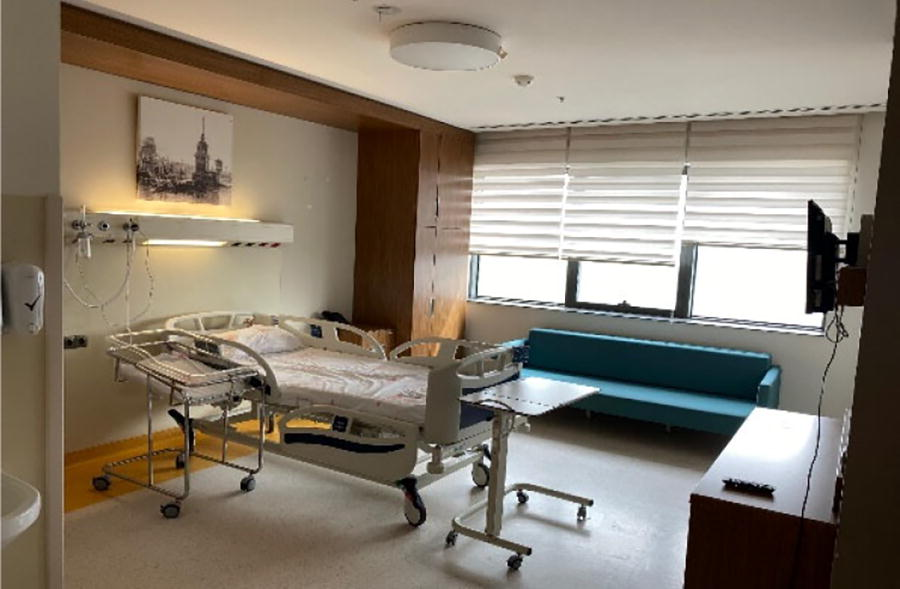
Single postpartum room.
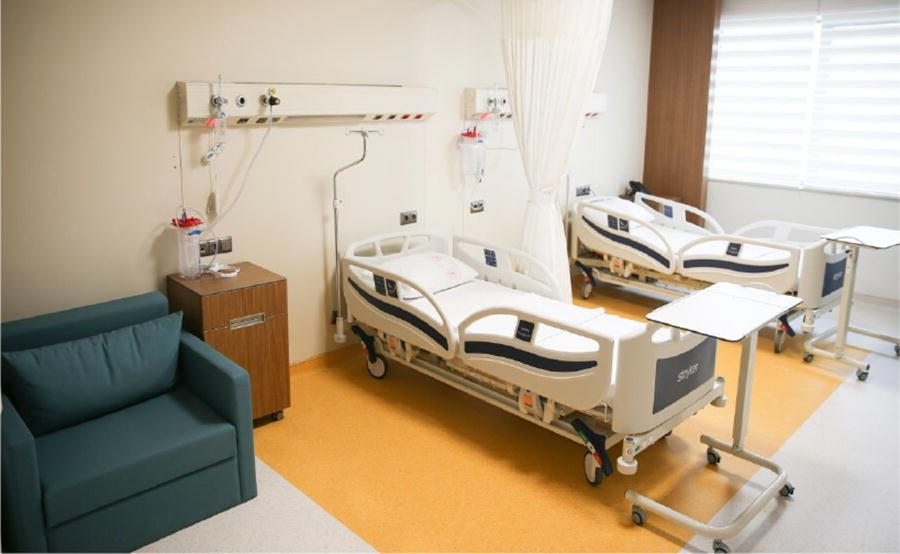
Double postpartum room.
Sample
The sample of the study consisted of postpartum women hospitalized in the postpartum services of the city hospital in Istanbul. Inclusion criteria were as follows: being able to read, write, speak, and understand Turkish, staying in the same room with the baby, not having any barriers to breastfeeding for neither the mother nor the baby, giving birth at term, having a baby with a birth weight over 2,500 g, having given birth to a singleton baby, and volunteering to participate in the study. Of the mothers, those who did not stay with their babies in the same room, those who had health problems, those whose babies had health problems, or those who had a condition that prevented them from breastfeeding were excluded from the study. The monthly number of births in the hospital is 1,281, and the number of births given in 3 months is 4,561. The minimum sample size was calculated as 88 people for either group (176 in total) using the G*Power (Version 3.1.9.4, Frans Faul, Universitat Kiel, Germany) software according to the default parameters (effect size < 0.50, power: 95%, margin of error: 5%). At the end, 181 mothers were included in the study. Of them, 92 stayed in SRs and 89 stayed in DRs. Mothers were selected by a simple random sampling technique, taking into account hospital registry lists. Numbers were first assigned to the mothers’ names in the registry, and the participants were selected using the simple random numbers table.
Measurement
Personal information form
The form consists of items questioning the mothers’ sociodemographic and obstetric characteristics (age, education level, marital status, and number of children). The form also includes items questioning the mother’s breastfeeding status, the person who helped with the first breastfeeding, the way the baby is fed, and perceiving whether the milk production is sufficient.
The mother’s opinions about the room she stayed in were assessed by questioning the following: the type of the room she stayed in, whether she interacted with the mother staying with her if she stayed in a DR, her discomfort, whether she was uncomfortable with the companion, and whether she shared her breastfeeding experience with the other mother with whom she shared the room.
Scale for the assessment of breastfeeding attitudes
The 46-item scale was developed by Arslan and Özkan H. (2015). Of the items, 3, 4, 6, 7, 8, 11, 13, 15, 19, 23, 24, 26, 27, 28, 29, 30, 31, 32, 37, 38, 42, and 43 assess positive attitudes on a five-point scale ranging from 4 (strongly agree) to 0 (strongly disagree). The other items, which assess negative attitudes, are reverse scored as follows: 0 (strongly agree) and 4 (strongly disagree). The highest and lowest possible scores that can be obtained from the scale are 0 and 184, respectively. While the total score that can be obtained from the positively keyed items is 88, the total score that can be obtained from the negatively keyed items is 96. A high score obtained from the scale indicates that the mother displays a positive breastfeeding attitude. In the present study, the Cronbach’s alpha value of the overall scale was 0.75.
Assessment of milk production
To assess the milk production of the mothers, breast milk was milked once from each breast for 10 minutes using an electric breastfeeding pump between 08:00 p.m. and 12 midnight after birth. The same device was used in all the mothers. The device was calibrated before each use. Hygiene precautions were taken before the breastfeeding pump was used in each mother.
Data collection
The researcher who collected the study data was a midwife at the hospital where the study was conducted. Data were collected using the face-to-face interview technique between February 2022 and May 2022. To collect the data, the Personal Information Form developed by the researchers and the Scale for the Assessment of Breastfeeding Attitudes were used. Data were collected from mothers who met the inclusion criteria and volunteered to participate in the study after they signed the written informed consent.
Data analysis
The study data were analyzed using the Statistical Package for Social Sciences for Windows 25.0 program. Whether the variables in the study were normally distributed was analyzed by the Kolmogorov–Smirnov analysis. Number, percentage, arithmetic mean, and standard deviation were used to calculate the descriptive characteristics of the participants and the mean score of the scale. To compare the participants’ descriptive, obstetric, and postpartum breastfeeding characteristics, chi-square and independent samples t tests were used. The independent samples t test was used to compare the mean scores the participants obtained from the scales in terms of the variables.
Results
The mean age of the participants was 28.72 ± 5.67 (min: 18, max: 43) years in those staying in an SR and 26.76 ± 5.83 (min: 18, max: 41) years in those staying in a DR. No statistically significant differences were determined between the mothers staying in a private room and the mothers staying in a semiprivate room in terms of the variables such as educational status and some of their obstetric and postpartum breastfeeding characteristics. There were no differences between the mothers staying in both room types in terms of perceiving night’s sleep, breastfeeding, and milk production as sufficient (p < 0.05).
Of the mothers, 83.7% staying in SR and 71.9% staying in a DR stated that they needed health care professional support (p < 0.05; Table 1).
Participants’ Descriptive, Obstetric, and Postpartum Breastfeeding Characteristics
p < 0.05.
Given the conditions of the room, of the women staying in a DR, 66.7% said that the curtain used to ensure their privacy with the person they shared the room with ensured the privacy adequately, 13.8% were uncomfortable with the curtain and the other patient, 10.3% were uncomfortable with the companion of the other patient, 89.5% stated that they contacted the other mother they shared the room with, and 87.4% stated that they contacted the other mother’s companion.
Of the mothers, 81.6% wanted to stay in an SR, 32% stated that they would continue to contact with the mother with whom they shared the same room after being discharged, 66.7% stated that the other mother they shared the room with encouraged them to breastfeed, and 42.5% shared their breastfeeding experiences with each other (Table 2).
Room-Sharing Perceptions of the Mothers Staying in Semiprivate Rooms
The mean scores obtained from the Scale for the Assessment of Breastfeeding Attitudes by the participants staying in an SR or DR are given in Table 3. Staying in an SR or DR did not lead to any statistical difference between the participants’ scores (p > 0.05; Table 3).
Comparison of the Mean Scores Obtained from the Scale for the Assessment of Breastfeeding Attitudes by the Participants Staying in Private or Semiprivate Rooms
Independent samples t test.
SD, standard deviation.
Comparison of the milk production of the participants staying in an SR or DR demonstrated that the milk production of the participants staying in a DR was higher than that of the participants staying in an SR (p < 0.05; Table 4).
Comparison of the Milk Production of the Participants Staying in Private or Semiprivate Rooms
Discussion
Breastfeeding is not only a physiological process but also a highly emotional process that creates a unique bond between the mother and child. Two mothers’ sharing a room can create a supportive environment that can strengthen this emotional bond crucial for successful breastfeeding. The number of studies in the literature conducted on the effect of staying in a private or multiple-bed room on mothers’ breastfeeding rates or attitudes is limited. The present study was aimed at comparing the potential effect of staying in an SR or DR on breastfeeding attitudes and milk production of mothers who have just given birth.
In the present study, various opinions of breastfeeding mothers staying in a DR regarding room conditions were revealed. A significant portion of the women thought that the curtain in a DR room is sufficient for privacy (66.7%). However, 13.8% of those staying in a DR stated that the presence of the other patient and 10.3% stated that the presence of the other patient's companion disturbed them. In Persson and Dykes’s study, the participating mothers stated that peace and tranquility were not provided adequately in the postnatal clinic, and that they were bothered by the presence of several people and each other’s visitors in the room, phones’ ringing, and babies’ crying. 15 These results suggest that room layout and privacy play an important role in the comfort of breastfeeding mothers. However, unlike other studies, in the present study, the majority of the participants (89.5%) stated that they communicated with the person they shared the room with, and most of them stated that they easily talked with other patient’s companion, which suggests that social support and experience sharing are common among breastfeeding mothers. However, effects of other people’s presence in the room on breastfeeding should also be taken into account. In addition, one out of three mothers stated that they would continue to communicate with the other patient after discharge. Not only may this result reflect the mothers’ desire to maintain support networks after they are discharged from the hospital but also it can be regarded as something positive since it encourages peer interaction. In the literature, there are several studies whose results indicate that multiple-bed rooms, compared with single or private rooms, increase social interactions between mothers. In Pineda et al.’s study, mothers staying in a single private room reported that they suffered from stress significantly due to changes in the parental role compared with mothers staying in a multiple-bed room. 16 In their study, Harris et al. state that it is possible for women to have more opportunities to rest in SRs, but that if they are inexperienced mothers, they do not have much chance to meet or contact other mothers in corridors and other open areas in the service. 17 In addition, not only did the mothers in the present study share their breastfeeding experiences with the other mothers, but also most of them were encouraged to breastfeed by the other mother with whom they shared the room. These results indicate that there is not only a positive atmosphere in semiprivate rooms during interactions with other mothers and their companions but also cooperation and support networks among breastfeeding mothers.
When the women who participated in the present study were asked about their room preferences, the majority of them stated that they preferred to stay in an SR. Almost all of the women staying in an SR were satisfied with their room, and one out of three mothers stated that they felt comfortable in an SR. In the literature, it has been indicated that private or SRs are more suitable for newborn development, privacy, and personal space and provide better noise and light control, and mothers prefer SRs more than they prefer multiple-bed rooms, 14 because SRs meet breastfeeding mothers’ needs for personal space, comfort, and privacy. However, an interesting finding in the present study is that one third of the women staying in an SR stated that they overslept and therefore they delayed breastfeeding. Despite the advantages of staying in a private room, it is noteworthy that breastfeeding mothers tend to oversleep and delay breastfeeding. In their study, Consales et al. emphasized that mothers generally preferred to leave their babies in the baby room overnight, probably because they did not want their sleep to be disrupted. 12 It is not surprising that the mother wants to sleep because she is tired and weak in the postpartum period, but this result shows that the single of the room may cause unexpected difficulties for some mothers. After birth, mothers need a great deal of help. Considering the ratio of health workers to hospitalized mothers/babies, the inadequacy of the number of health personnel comes to the fore and inevitably limits the time devoted to mothers and their needs. 12 In a study, it was emphasized women staying in a hotel ward were more dissatisfied than were women staying in a traditional postnatal ward after birth in a hospital, which was associated with the insufficient opportunity to receive support for the baby throughout the night. 18 Oversleeping and delaying breastfeeding by mothers may pose an obstacle to meeting the baby’s needs fully and on time. Private SRs can be preferred due to the comfort, privacy, and convenience they offer, but not only these factors but also issues such as supporting breastfeeding routines and allowing mothers to rest should be taken into account.
According to the results of the present study, there was no statistical difference between the breastfeeding attitudes of the participants staying in an SR and the participants staying in a DR (p > 0.05), which suggests that whether the room was single or double had no significant effect on breastfeeding attitudes, and that attitudes of the participants in both groups toward breastfeeding were generally similar. Results obtained in the literature were similar to those in the present study, and the type of the room had no effect on mothers’ breastfeeding attitudes at discharge.13,14 In this context, the effect of whether the room is single or double on mothers’ attitudes toward breastfeeding is not obvious; however, it should be taken into consideration that individual factors may affect these attitudes.
Another striking result in the present study is that milk production of the participants staying in a DR was higher than that of the participants staying in an SR. There are several possible explanations why milk production of the participants staying in a DR room was higher. First, witnessing the other mother breastfeeding successfully may have positively affected the mother’s breastfeeding performance and encouraged her to breastfeed. Another possible factor is that health care workers spend more time in DRs. Thus, the health worker’s evaluating a mother’s breastfeeding behavior may contribute to the other mother’s obtaining information. Another factor is that mothers’ sharing their experiences with each other may motivate them to breastfeed. In addition to all these, it should not be forgotten that cultural factors and traditional attitudes might affect cooperation between women. However, it is not possible to reach this conclusion based on the results of the present study because this was not included among its objectives. It is possible that results obtained differ from one study to another. In their study, Domanico et al. emphasized that babies staying in a single family room with their mothers sucked more breast milk compared with those staying in other types of rooms, and that this might be the result of mother–baby bonding. 19 In a study that included premature babies, it was reported that milk production of mothers staying in an SR was higher than that of mothers staying in a multiple-bed room. Although Grundt et al. determined that the frequency of pumping and breastfeeding was higher in mothers staying in an SR than was that in mothers staying in a multiple-bed room, they did not find any evidence that staying in a private room increased breast milk production. 13
The participants staying in SRs needed health care professional support more (83.7%) than did the participants staying in DRs (71.9%). Mothers staying in DRs can share experiences with other mothers they share the rooms with and receive more support during the breastfeeding process. Therefore, they may ask for help from health care professionals less, which is probably because mothers staying in SRs need special care more. Mothers who prefer a private room may be more inclined to request support. Nurses participating in Domanico et al.’s study stated that although providing health care in multiple-bed rooms was physically more challenging, they were more stressed and less satisfied while doing their work in SRs. The nurses also reported that mutual interactions between the mothers staying in multiple-bed rooms were more supportive and provided socialization between experienced and inexperienced mothers, and that those staying in SRs lacked peer support. 19 While the design of an SR offers privacy and comfort, mothers staying in multiple-bed rooms are constantly in contact with health staff and other mothers in similar situations, which may influence their breastfeeding through observational learning, role modeling, and social interaction. 14
Limitations
In the present study, although many factors affecting breastfeeding were investigated, some variables questioned may have been investigated inadequately to detect a statistically significant difference between the two room types. Factors such as cultural differences, receiving breastfeeding counseling, and the mothers’ sleep patterns and fatigue levels may have affected their breastfeeding behaviors. This study did not examine parameters such as information on the actual degree of breastfeeding (LATCH, infant weight, and maternal complaints). The evaluation of these parameters was excluded by the institution authorities during the ethics committee stage of the research. In addition, roommate characteristics (such as type of birth and breastfeeding experience) were not taken into account in depth. However, this may be an important factor to be evaluated in future studies.
Conclusion and Recommendations
In conclusion, although the number of studies conducted on shared room and milk production is limited, the existing literature on related topics supports the idea that shared room practice can positively affect the success of breastfeeding. While staying in an SR is preferred by most mothers in terms of privacy and comfort, in DRs, the social interactions between mothers come to the fore. Considering the positive impact of staying in a shared room on breastfeeding and milk production, health care facilities may consider incorporating shared rooms into their postpartum care protocols. Mothers can be given the opportunity to choose the type of room they will stay in during the care process provided within the scope of the postpartum care protocols. Creating comfortable and supportive environments for breastfeeding mothers before they are discharged from hospitals can improve their breastfeeding experiences. In studies to be conducted in the future, the dynamics of multiple-bed rooms and the impact of shared room on the physiological, psychological, and cultural aspects of breastfeeding should be investigated in more depth.
Footnotes
Acknowledgments
The authors would like to thank the participating mothers for their support in this research.
Authors’ Contributions
A.E.: conceptualization, data curation, formal analysis, methodology, supervision, writing—original draft, and writing—review and editing; N.A.: conceptualization, data curation, formal analysis, methodology, supervision, writing—original draft, and writing—review and editing; E.S.Ç.: conceptualization, formal analysis, methodology, supervision, writing—original draft, and writing—review and editing; R.E.: conceptualization, methodology, supervision, writing—original draft, and writing—review and editing; E.Ç.T.: conceptualization, methodology, supervision, writing—original draft, and writing—review and editing.
Disclosure Statement
The authors declare that there were no conflicts of interest associated with this study.
Funding Information
This research did not receive any specific grant from funding agencies in the public, commercial, or not-for-profit sectors.