




Abstract
Introduction:
In recent years, foot reflexology has been frequently used as a method to solve problems such as stress, pain, and depression. It has been observed that the studies focused on the effect of foot reflexology on the pregnancy and birth process.
Research Aim:
A meta-analysis of experimental trials evaluating the effectiveness of foot reflexology applied in the postpartum period on comfort and breastfeeding outcomes was conducted in the present study.
Materials and Methods:
A comprehensive electronic search was done through the PubMed, WoS, Wiley, ScienceDirect, Scopus, and Google Scholar databases to identify experimental articles. There was no time restriction when searching the database. The risk of bias was assessed using the Joanna Briggs Institute (JBI) critical appraisal checklist for quasi-experimental studies and the Cochrane risk of bias tool for randomized trials. The meta-analysis was conducted using Comprehensive Meta-Analysis. Cochran’s Q test and Higgins’ I2 were used to assess study heterogeneity.
Results:
Three studies, two randomized controlled trials and one quasi-experimental trial (n = 260), were included in the analysis. Foot reflexology applied to postpartum women was found to have positive effects on the LATCH (standardized mean difference [SMD]: 1.010, confidence interval [CI]: 0.752/1.269, Z = 7.664, p = 0.000), Visual Analogue Scale (VAS)-breast tension (SMD: 2.212, CI: 1.902/2.522, Z = 13.981, p = 0.000), VAS-breast heat (SMD: 2.240, CI: 1.928/2.552, Z = 14.086, p = 0.000), VAS-breast pain (SMD: 2.302, CI: 1.836/2.768, Z = 9.686, p = 0.000), postpartum comfort (SMD: 3.578, CI: 3.131/4.025, Z = 15.689, p = 0.000), and breastfeeding satisfaction (SMD: 1.492, CI: 1.178/1.806, Z = 9.318, p = 0.000) scores.
Conclusions:
This meta-analysis determined that the foot reflexology intervention increased breastfeeding success, satisfaction, and postpartum comfort levels and statistically significantly reduced the signs of breastfeeding onset.
Introduction
The postpartum period starts immediately after the infant’s birth and extends up to 6 weeks (42 days). This period is critical for women, newborns, partners, parents, caregivers, and families. 1 Mothers experience numerous biopsychological changes during the postpartum period. Sudden changes in female hormones, maternal role, insomnia and fatigue, newborn care, and changes in body image lead to psychological changes in the mother. 2 Biopsychological changes adversely affect postpartum comfort and delay the start of breastfeeding. 3 Particularly after cesarean section, comfort is lower due to complaints such as pain, fatigue, insomnia, difficulty caring for the newborn, activity intolerance, effects of anesthesia, and abdominal tension. 4 Kolcaba defines comfort as “the expected result with a complex structure within physical, psychosocial, and environmental integrity to provide help and comfort for an individual’s needs and overcome problems.” 5 Providing comfort in the postpartum period is essential to facilitate the mother’s adaptation to this period, ensure the early initiation and continuation of breastfeeding, provide mother–infant interaction, and accelerate the recovery process. 6 It is important that nurses who care the most for mothers and play a key role in this process evaluate mothers’ comfort. As mentioned above, evaluating comfort is also essential to ensure effective breastfeeding.
Various recent studies on postpartum women have stated that reflexology is one of the safely applied interventions increasing comfort levels and breastfeeding scores.3,7 Reflexology is a systematic practice that aims to improve the functions of relevant body parts by applying pressure to certain points on the hands and feet. 8 To explain in detail, pressure points that act as sensors on the feet and hands are connected to particular body parts and play a role in regulating blood-energy flow, providing a feeling of relaxation, and maintaining homeostasis.9,10 Foot reflexology is stated to be the most effective way of performing reflexology due to the width of the application area and the closeness of the pressure points to the skin surface. 11 Foot reflexology is frequently used in complementary and alternative medicine treatment.10,12 The foot reflexology technique involves applying controlled pressure to a specific point of the foot, which is known to activate different body parts, thus enhancing circulation and energy flow and also regulating the body homeostasis, 13 and it differs from general foot massage because it targets the reflex zones of the feet that correspond to different body parts more deeply. 12
In recent years, foot reflexology has been frequently used as a method to solve problems such as stress, pain, and depression.14,15 Upon reviewing the literature, it is seen that there are systematic reviews and meta-analysis studies on the effects of foot reflexology and pregnancy outcomes14,16 and labor pain and anxiety. 15 As is seen, studies conducted to date have focused on the pregnancy and childbirth process. No meta-analysis study has been performed on its effect on breastfeeding outcomes and postpartum comfort. There are methodological differences (the zone of foot reflexology, application time, application period, etc.) upon reviewing studies on the subject in the current literature. The aim of the current meta-analysis is to examine the effectiveness of foot reflexology applied in the postpartum period on comfort and breastfeeding outcomes.
Materials and Methods
Research design
The current research is a meta-analysis study. The Preferred Reporting Items for Systematic Reviews and Meta-Analyses (PRISMA) checklist was used to prepare the study protocol and article reporting. Before initiating this study, the protocol of the systematic review and meta-analysis study was registered in the PROSPERO database (CRD42024501187).
This section describes the study design, inclusion/exclusion criteria, search strategy, evaluation, and reporting stages.
Research question
The current study was conducted and reported following the principles recommended in the PRISMA. The PICOS tool was used to create a search strategy: (P) Population: postpartum women; (I) Intervention: foot reflexology; (C) Comparator: routine care; (O) Outcomes: postpartum comfort and breastfeeding; (S) Study type: experimental trials.
Search strategy
A comprehensive electronic search was done through the PubMed, WoS, Wiley, ScienceDirect, Scopus, and Google Scholar databases to identify experimental trials investigating the impact of foot reflexology on comfort and breastfeeding in postpartum women. The following medical subject headings and free-text terms were used in the database search: (“Reflexology” OR “foot massage” OR “foot reflexology”) AND (“postpartum” OR “postpartum women”). The database search was done between September 1, 2023, and November 5, 2023, and there was no time restriction in the study year.
Study selection
The electronic search results were imported into the reference management software EndNote to facilitate the deduplication and organization of records, and duplicates were removed. The researchers independently identified and selected studies to be included in this meta-analysis based on the inclusion criteria. The following studies were included in the research: (i) experimental trials, (ii) studies where the study sample consists of postpartum women, (iii) studies whose language of publication is English, and (iv) studies whose full text can be accessed. Reading the titles and abstracts of the papers, the researchers first eliminated those that were irrelevant or did not fit the inclusion criteria. After reading the complete texts of the remaining papers, the researchers separately incorporated them into the study. The study lists created by two authors were compared, and in case of any disagreements about any of them, the issue was discussed in a session attended by all researchers, and a consensus was reached. Figure 1 shows the PRISMA flow diagram for the selection process of studies.
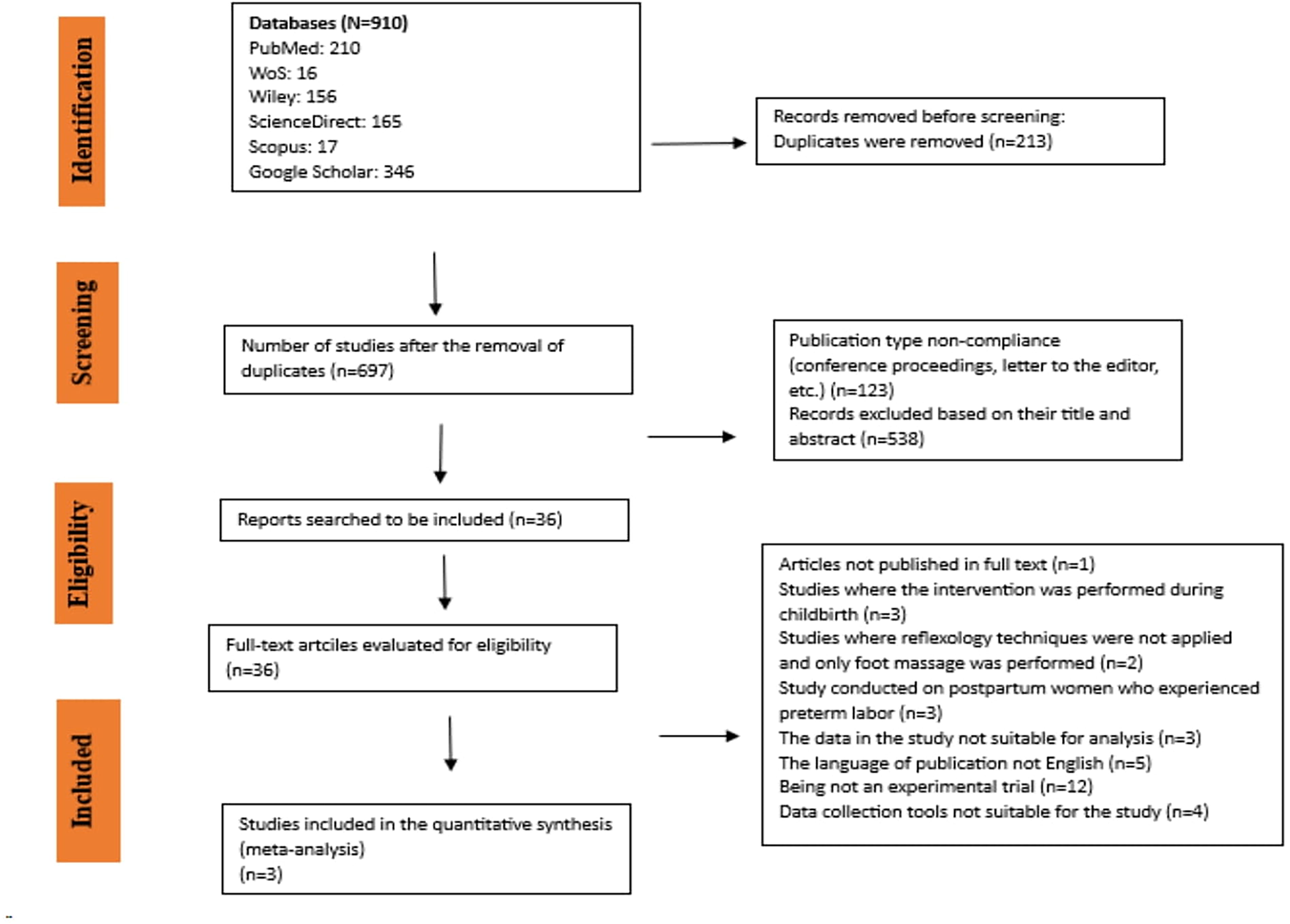
Study flow chart.
Data extraction
A data extraction tool developed by the researchers was utilized to obtain the study data. The aforesaid data extraction tool includes information about where and when studies were conducted, method, sample sizes, intervention group content, control group content, findings, and measurement tools for the studies included in the systematic review and meta-analysis.
To reduce the risk of bias, two researchers separately performed the literature review, selection of articles, data extraction, and quality assessment process of the articles in this study. In case of disagreements or inconsistency in the selection, the opinion of the other researcher was sought, and disagreements were resolved through discussion. Furthermore, to ensure that all research stages were realized completely and the research was conducted in a quality way, all researchers attended a systematic review and meta-analysis course where the pilot study and search stages were carried out on a subject not included in the present work.
Assessment of risk of bias
Two authors independently evaluated the risk of bias of the studies included in this meta-analysis. The other author performed verification. Inconsistencies were resolved through discussion among the researchers. The risk of bias of included studies was assessed using the Cochrane risk of bias tool for randomized trials and the JBI critical appraisal checklist for quasi-experimental studies. All of the included studies were reviewed, including their titles and abstracts. Afterward, in the checklist assessment, the full texts of the studies were examined, and the studies were scored as a result of the review (Table 1).
Summary of the Basics of the Studies Included in the Meta-Analysis Based on the PRISMA Method
VASPS, Visual Analog Satisfaction Patient Scale; VASPS for BS, VASPS for Breastfeeding Satisfaction; LATCH, The Breastfeeding Charting System; PPCQ, Postpartum Comfort Questionnaire; RCT, randomized controlled trial.
Statistical analysis
The meta-analysis was conducted using Biostat’s Comprehensive Meta-Analysis 3.0 software. Cochran’s Q test and Higgins’ I2 were used to assess heterogeneity between trials; an I2 greater than 50% was deemed to indicate considerable heterogeneity. As a result, results for the random effect are considered when I2 is more than 50%, and results for the fixed effect are considered when I2 is little. For continuous variables, mean difference (MD) and standardized mean difference (SMD) were calculated. Every test was computed using two-tailed testing, and a statistically significant result was defined as a p value of <0.05.
Results
Study selection
From among 910 publications found up to January 2024, 36 potentially eligible studies were selected. Among these, three experimental trials were included in the meta-analysis. There were two articles from Türkiye, one from Egypt, and one from Taiwan. Thirty-three studies with different study protocols, inappropriate data and population, missing data, full text unavailable, and whose language of publication was not English were excluded from the study (Fig. 1).
Descriptive statistics of the included publications
Table 1 summarizes data on the three studies selected. The total sample size of the included studies is 260 (intervention group: n = 130 and control group: n = 130). The number of participants in the reflexology group varied between 30 and 50. The control group was used as a comparator in all groups. Routine care was provided in the control groups. All studies were published in English. The methodological features and results of the studies that made up the meta-analysis are shown in Table 1.
Risk of bias of the included studies
As seen in Figures 2 and 3, all three experimental trials have a low risk of bias. Hence, no studies were excluded based on quality (Figs. 2–3).
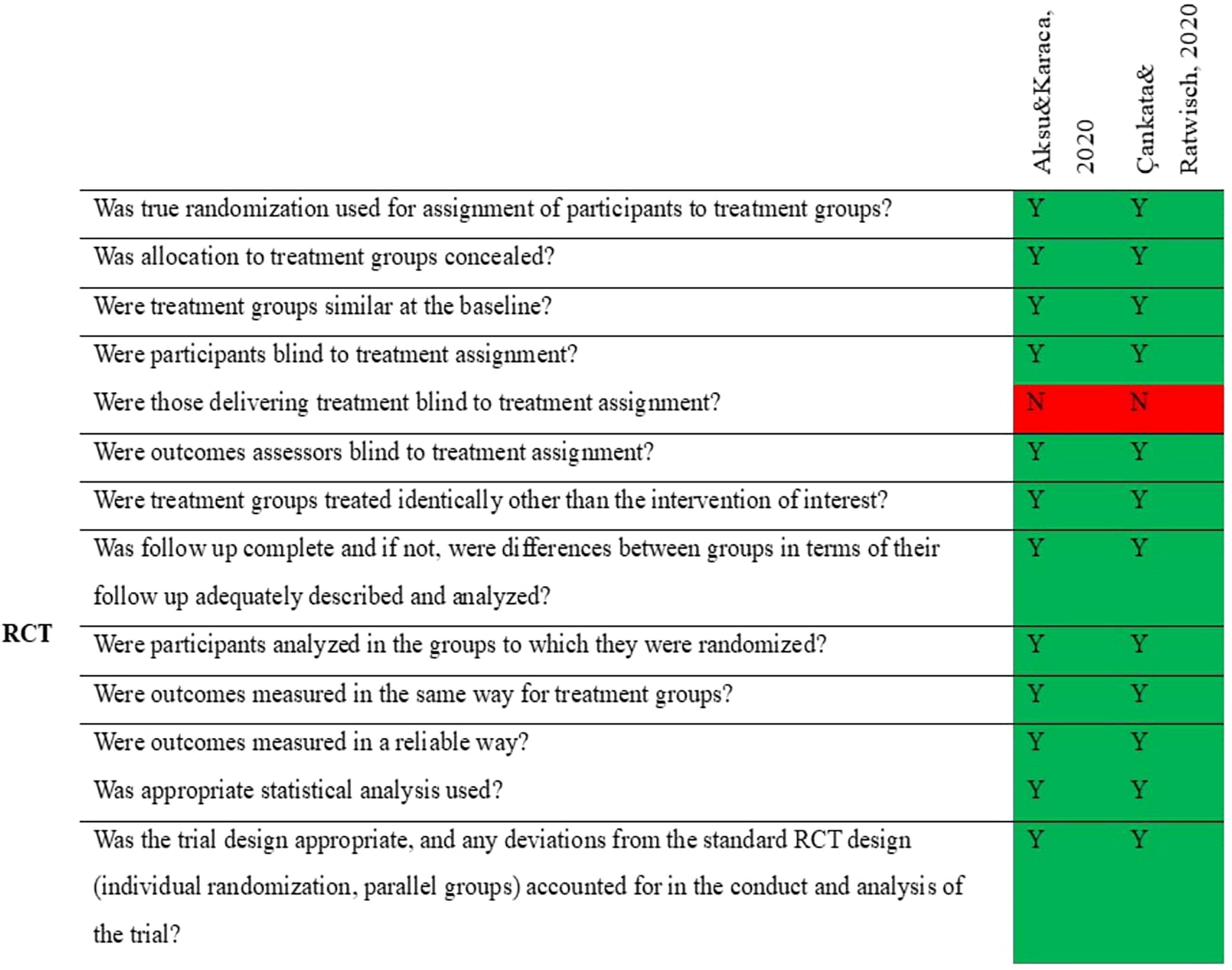
Methodological quality assessment of RCTs using JBI. RCTs, randomized controlled trials.
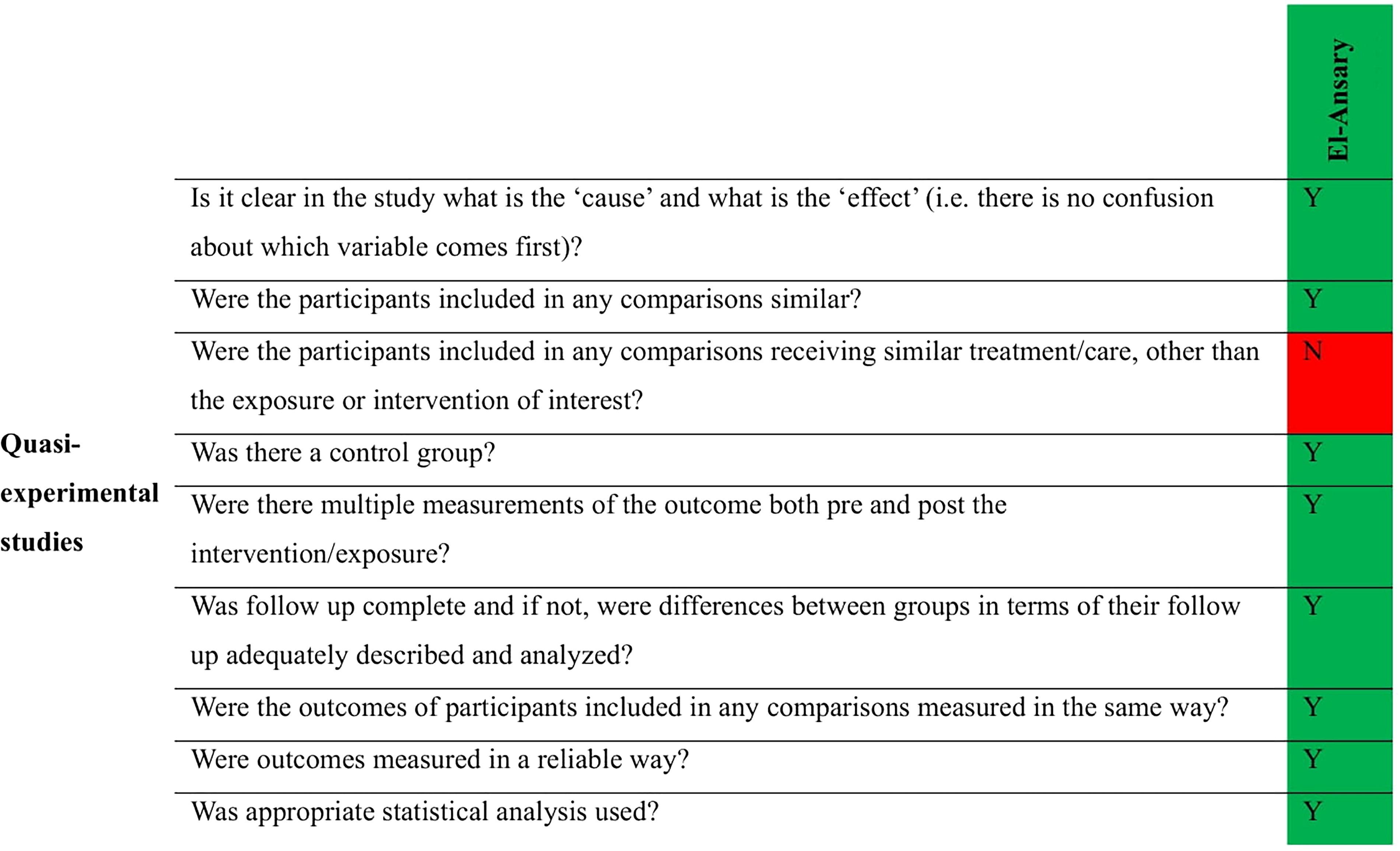
Methodological quality assessment of quasi-experimental trials using JBI.
Effects of foot reflexology on the LATCH score
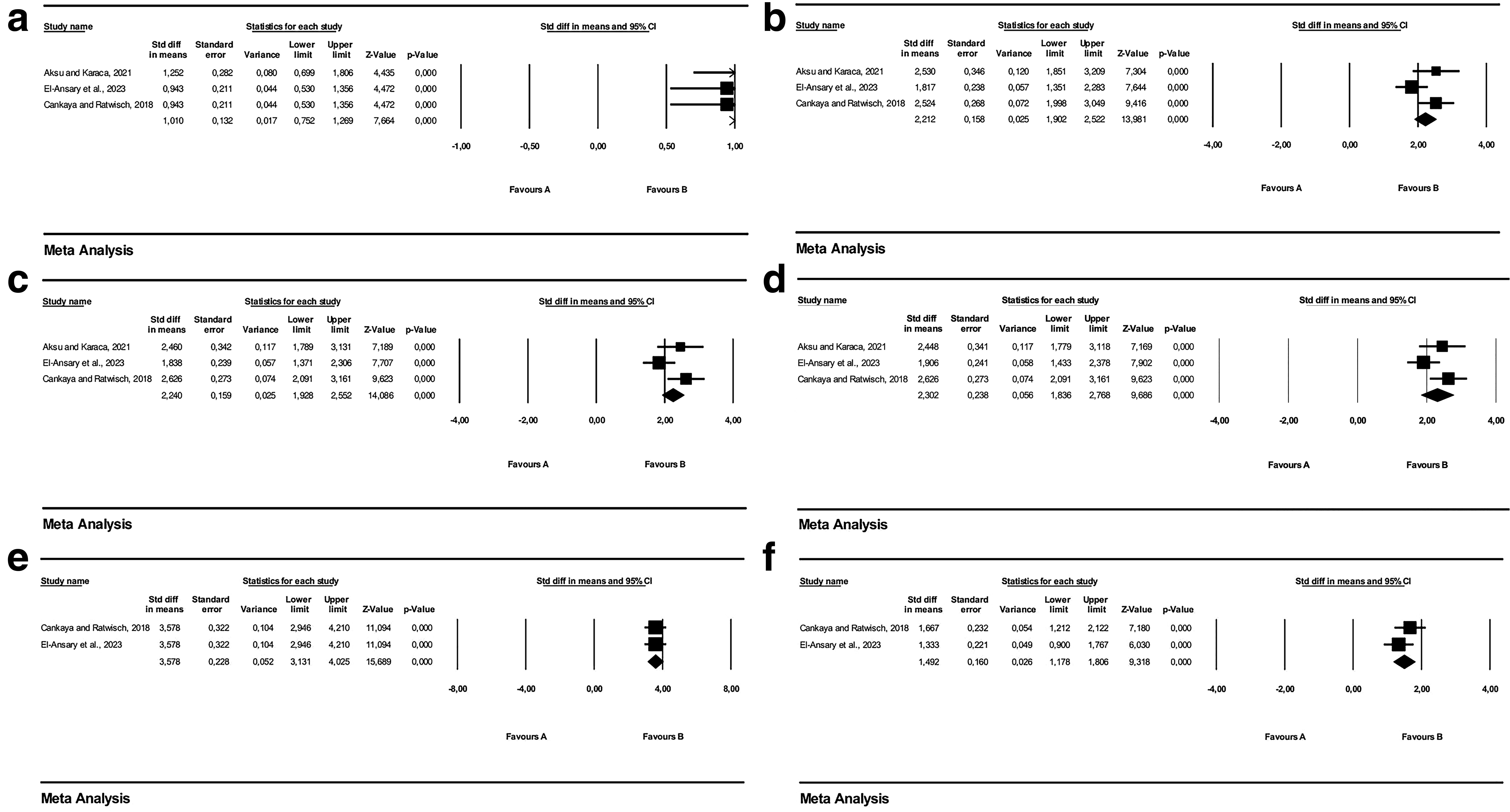
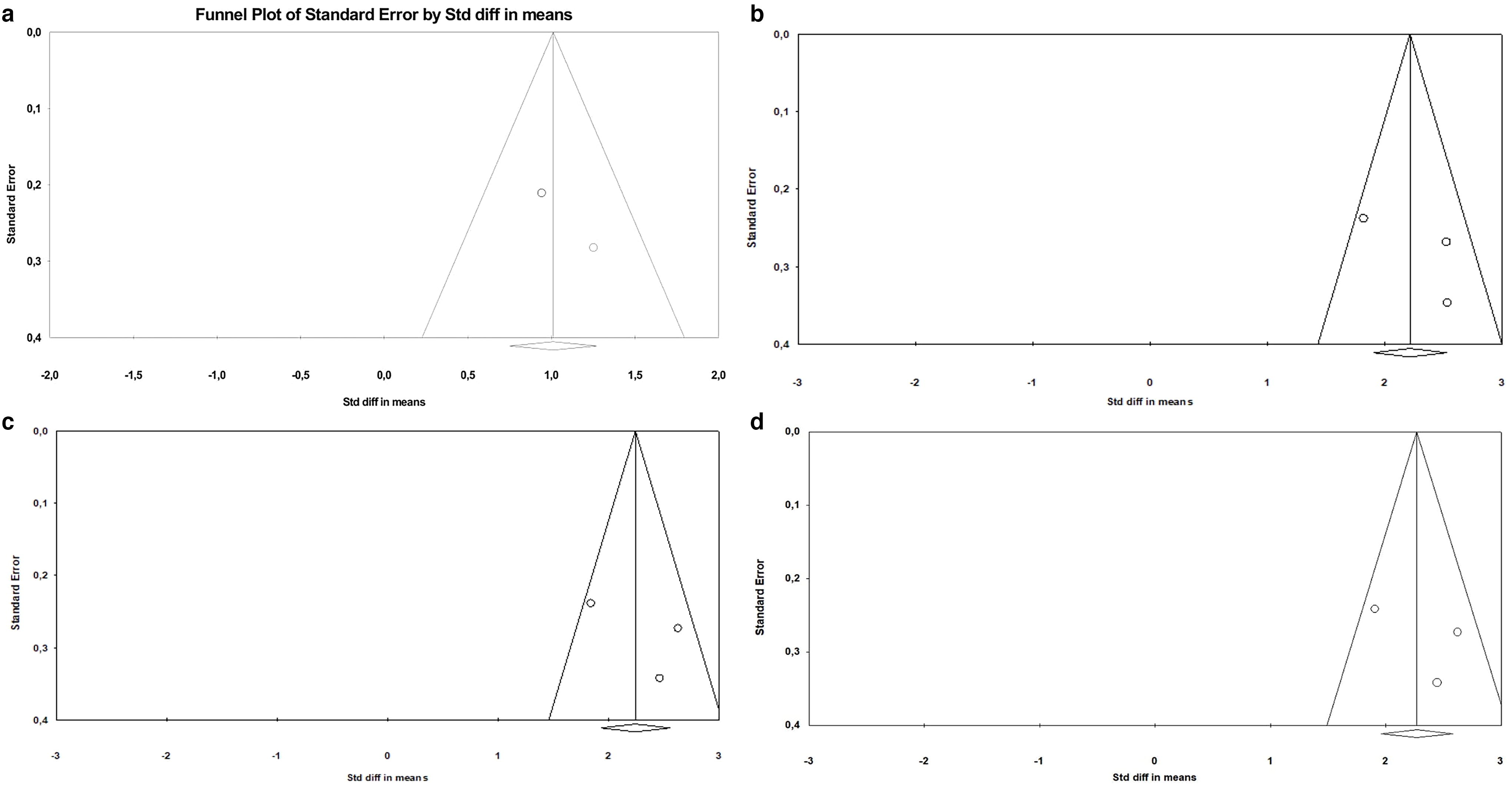
Three studies examined the impact of foot reflexology on the LATCH score in postpartum women.3,7,17 Foot reflexology was found to increase the LATCH score statistically significantly (SMD: 1.010, confidence interval [CI]: 0.752/1.269, Z = 7.664, p = 0.000) (Fig. 4a). No publication bias was found for the LATCH score (Fig. 5a).
Effects of foot reflexology on the VAS-breast tension score
Three studies investigated the impact of the foot reflexology intervention on the VAS-breast tension score in postpartum women.3,7,17 It was found that foot reflexology reduced the VAS-breast tension score statistically significantly (SMD: 2.212, CI: 1.902/2.522, Z = 13.981, p = 0.000) (Fig. 4b). No publication bias was found for the VAS-breast tension score (Fig. 5b).
Effects of foot reflexology on the VAS-breast heat score
Three studies researched the impact of the foot reflexology intervention on the VAS-breast heat score in postpartum women.3,7,17 Considering the effect of the foot reflexology intervention on VAS-breast heat scores in postpartum women, it was revealed that foot reflexology reduced the VAS-breast heat score statistically significantly (SMD: 2.240, CI: 1.928/2.552, Z = 14.086, p = 0.000) (Fig. 4c). No publication bias was found for the VAS-breast tension score (Fig. 5c).
Effects of foot reflexology on the VAS-breast pain score
Three studies investigated the impact of the foot reflexology intervention on VAS-breast pain scores in postpartum women.3,7,17 Foot reflexology was found to reduce the VAS-breast pain score statistically significantly (SMD: 2.302, CI: 1.836/2.768, Z = 9.686, p = 0.000) (Fig. 4d). No publication bias was found for the VAS-breast pain score (Fig. 5d).
Effects of foot reflexology on the postpartum comfort score
The two analyzed studies measured postpartum comfort outcomes using the Postpartum Comfort Questionnaire.3,7 Concerning the impact of the foot reflexology intervention on postpartum comfort scores in postpartum women, foot reflexology was revealed to increase comfort levels (SMD: 3.578, CI: 3.131/4.025, Z = 15.689, p = 0.000) (Fig. 4e).
Effects of foot reflexology on the breastfeeding satisfaction score
Both studies assessed breastfeeding satisfaction with the Visual Analog Satisfaction Patient Scale for breastfeeding satisfaction.3,7 The researcher specifies a score between 0 and 3 during scoring (0 = completely unsatisfied, 1–2 = little satisfied, 3–4 = satisfied, and 5 = completely satisfied). Considering the impact of the foot reflexology intervention on breastfeeding satisfaction scores in postpartum women, it was determined that foot reflexology increased breastfeeding satisfaction (SMD: 1.492, CI: 1.178/1.806, Z = 9.318, p = 0.000) (Fig. 4f).
Discussion
Summary of evidence
A meta-analysis of experimental trials examining the effect of foot reflexology applied to postpartum women on postpartum comfort and breastfeeding outcomes was performed in our study. A total of three studies, two randomized controlled trials (RCTs) and one quasi-experimental trial, were included in the meta-analysis. Foot reflexology applied to postpartum women was found to have positive effects on the LATCH, VAS, postpartum comfort, and breastfeeding satisfaction scores. To the best of our knowledge, this is the first systematic review and meta-analysis to determine the effect of foot reflexology on postpartum comfort and breastfeeding outcomes.
Comparison with prior reviews
No meta-analysis that explicitly focused on foot reflexology for enhancing postpartum comfort and breastfeeding outcomes could be found. Our work is the first meta-analysis involving three experimental trials on the impacts of foot reflexology on comfort, breastfeeding satisfaction, LATCH, and VAS scores in postpartum women.
Our findings demonstrate that foot reflexology increases the LATCH score statistically significantly. LATCH is a measurement tool that objectively evaluates breastfeeding and identifies breastfeeding problems. It is thought that breastfeeding success increases with the increasing LATCH score. 18 In three studies in which the mode of delivery was cesarean section, women to whom foot reflexology was applied had significantly higher postpartum LATCH scores compared with the control groups.3,7,17 This meta-analysis confirmed the impact of the intervention on postpartum LATCH scores. In other words, foot reflexology increases breastfeeding success. There are studies supporting that foot reflexology positively affects breastfeeding.19,20 In addition to reducing pain and anxiety by reducing adrenaline and noradrenaline levels and increasing endorphins and oxytocin, which is highly related to lactation, reflexology can also positively contribute to breastfeeding. 21 The results of the current work cover the postpartum period. Considering that the researcher found few studies on the impacts of reflexology on breastfeeding, it is understood that more studies are needed in this field.
The first signs of the start of breastfeeding are breast tension, reduced breast heat, and breast pain.22,23 There are few randomized trials in the literature on its effects on lactation. Although the two studies included in the analysis found the mean VAS-breast tension, breast heat, and breast pain scores of mothers after cesarean section to be significantly higher in comparison with the control group,3,7 the other study found no significant difference in the VAS-breast tension parameter but identified a significant difference between the groups in terms of breast heat and breast pain. 17 This review found that the foot reflexology intervention in postpartum women statistically significantly reduced VAS-breast tension, breast heat, and breast pain scores. Studies showed a high level of heterogeneity on all three parameters. Despite statistical heterogeneity, the results were similar across studies. The reason why VAS-breast tension was not significant in the study by Aksu and Palas Karaca (2021) may be related to the frequency of reflexology application (two times a day for 2 days) and the difference in the timing of measurement of the tests. Breastfeeding initiation symptoms were assessed after each application. It is essential to establish a standardized method protocol for foot reflexology for reliable results and comparisons. Furthermore, a sufficient number of studies should be conducted on the subject.
Our study found that foot reflexology increased the postpartum comfort level in postpartum women. Reflexology increases an individual’s comfort by causing physiological changes. To explain in more detail, pressure on the reflex area stimulates hundreds of nerve endings, prevents pain transfer by leading to the release of endorphins, reduces tension, and ensures comfort.24–27 The two studies discussed in this review showed that foot reflexology significantly increased postpartum comfort.3,7 A systematic review and meta-analysis study including 13 RCTs conducted to investigate the impacts of foot reflexology on anxiety, pain, labor duration, birth satisfaction, blood pressure, pulse, and respiratory rate in pregnant women found that foot reflexology reduced anxiety and pain in pregnant women. 14 A meta-analysis study conducted with a different sample showed that foot reflexology is a useful nursing intervention for relieving fatigue and promoting sleep. 28 Foot reflexology can be an alternative method to increase postpartum comfort for the purpose of facilitating the management of this process, in which the postpartum period and problems with adaptation to motherhood are experienced together. The absence of reported side effects, being a low-cost and reliable practice, and being performed without the need for invasive intervention are the prominent features of reflexology that make it a preferred option. Reflexology can be used as an effective intervention in a patient care program.
This meta-analysis revealed that foot reflexology increased breastfeeding satisfaction in postpartum women. The studies by Çankaya and Ratwisch (2020) and El-Ansary et al. (2023) reported the mean breastfeeding satisfaction scores of mothers in the postpartum intervention group to be significantly higher.3,7 The results of the meta-analysis supported the results of both studies. The similarity of the results may be related to the similarity of the studies in the characteristics of mothers, who were primiparous and gave birth by cesarean section and applying reflexology to both feet. Reflexology, an effective tool to relax mothers, provides opportunities for a better body, mind, and soul. Moreover, it contributes to hormonal balance by reducing pain and stress and increasing relaxation, 7 helping initiate and maintain breastfeeding. 29 In addition, various studies have reported that reflexology increases the amount of breast milk.21,30,31 In this regard, the mentioned determinants are thought to increase women’s breastfeeding satisfaction. It is recommended that future research discuss this subject in detail.
Strength and Limitations
There are strengths to this review and meta-analysis. First, selection of articles and quality assessment were done by two researchers. The majority of the included articles were of high quality. Limitations should be taken into account when interpreting the results of this review. An important limitation is the limited number of randomized controlled studies on foot reflexology. Only three foot reflexology cases focusing on breastfeeding and postpartum comfort could be located. The included studies were conducted in the Türkiye, Egypt.
Implications for Further Research
The results of the current study provide high-level evidence for increasing women’s comfort in the postpartum period and enhancing breastfeeding outcomes. Studies on this subject should be expanded to include different countries. Furthermore, the number of well-designed, high-quality RCTs should also be increased. RCTs should include appropriate sample size, adequate randomization, concealment of group allocation, analysis, and comprehensive methodology and reports that will mean bias control by at least one outcome assessor.
Conclusion
The present meta-analysis found that the foot reflexology intervention increased breastfeeding success, satisfaction, and postpartum comfort levels and statistically significantly increased signs of breastfeeding onset (breast tension, increased breast heat, and breast pain). Foot reflexology is an effective and supportive method for initiating and maintaining breastfeeding, particularly in the first days of breastfeeding. In this context, foot reflexology can be recommended as a complementary intervention that can be safely applied to postpartum women. Furthermore, a better understanding of the mechanisms of foot reflexology in the future and strengthening the evidence with long-term follow-up should be a priority for future preparation and practices to research its effectiveness on other parameters.
Footnotes
Authors’ Contributions
D.M. and A.D.K.: Designed the research; D.M. and A.D.K.: Provided essential material (databases); A.D.K. and K.I.: Performed the main statistical analysis; K.I.: Performed additional statistical analysis; D.M., A.D.K., and K.I.: Provided consultation of results interpretation; A.D.K.: Wrote the original draft; D.M., A.D.K., and K.I.: Reviewed and edited the article; D.M. and A.D.K.: Had primary responsibility for final content; and all authors: read and approved the final article.
Disclosure Statement
The authors report no conflicts of interest.
Funding Information
No funding was received for this article.