




Abstract
Background:
Probiotic bacteria isolated from human milk can have a preventive effect against necrotizing enterocolitis and other risks of prematurity. The aim of the study is to identify the possible factors that can influence the presence of lactic acid bacteria (LAB) in donated human milk (DHM).
Methods:
Next-generation sequencing and selective microbiological culturing of samples from pools of raw DHM were performed. Data on the donors, their children, and the milk are correlated with the microbiological findings. A regression model is performed, to predict the probability of the presence of the genera Lactobacillus and Bifidobacterium.
Results:
The abundance of the genus Bifidobacterium positively correlated with the donor’s body mass index (p = 0.050). The abundance of the Lactobacillus positively correlated with the lactation age (p = 0.007) and negatively with the total bacterial count on blood agar (p = 0.001). The abundance of the Bifidobacterium positively correlated with the growth on selective transgalactosylated oligosaccharides–propionate agar media (p = 0.036). In the regression model for predicting the probability of the presence of LAB, the feeding mode and the length of storage in the milk bank proved to be statistically significant predictors.
Conclusion:
The results of this study indicate that mature DHM, that has a lower bacterial count, that was stored in the milk bank for a shorter time after pool formation and that is donated from a mother exclusively breastfeeding her infant is assumed to have both LAB.
Introduction
A microorganism, which is to be declared as a probiotic, must not be the cause of nonopportunistic infections or possess a virulence or resistance that can be transferred to another organism.1,2 Some of the basic criteria for probiotics intended for human consumption are human origin, safe and long-term application in a particularly sensitive population (newborns, infants), and adaptation to mucous membranes and milk substrates. 3 Of the probiotic bacteria present in milk, those of the genera Bifidobacterium and Lactobacillus should be emphasized, which, according to the analysis, have a predictive value of 0 for infection, that is, they were never found in samples of breast tissue or mother’s own milk (MOM) with the occurrence of infection. 4 Three potentially probiotic lactobacilli species were isolated from milk—Lactobacillus gasseri, Ligilactobacillus salivarius, and Limosilactobacillus fermentum. 5 L. salivarius CECT5713 and L. gasseri CECT5714 were successfully used in the treatment of mastitis and proved to be an effective alternative to antibiotic therapy. 6 Numerous bacteria of the genus Bifidobacterium have only been found in the human milk microbiota (HMM) but not in other body fluids of the human organism. 4 They are uniquely genetically adapted to use glycans from MOM as an energy source.7,8 Bifidobacterium genus makes up only a small percentage of the HMM but dominates the microbiota of the gastrointestinal system of breastfed children.9–11 Three strains, each of Bifidobacterium breve and longum, showed the ability to adhere to the intestinal mucosa.12,13
The understanding of HMM and their potential role has been limited by the difficulty of cultivating many bacterial species, which has led researchers to focus on easily cultivable bacteria. For years, microbiologists were focused on the interactions between pathogen and human, which, combined with the limitations of cultivation, led to the neglect of colonizing and nonpathogenic agents.14,15
The advancement of culture-based and culture-independent methods has enhanced our understanding of the interactions between nonpathogenic microorganisms and various human body sites. It is assumed that dysbiosis of the intestinal microbiota of newborns, especially premature infants, predisposes to the occurrence of necrotizing enterocolitis, while probiotic bacteria isolated from human milk prevent it.16–18
When breast milk is not available, donated milk provides numerous benefits for premature and vulnerable newborns, but pasteurization deprives it of potentially beneficial bacterial microbiota. There are no viable bacteria in pasteurized DHM, which according to some researchers is not even a disadvantage. 19 It is assumed that the probiotic effect is achieved by activating the immune system after recognizing also nonviable bacterial cells or their parts inactivated by high temperatures, also known as para-probiotics or probiotics ghosts. 20
The aim of the study was to identify the possible factors that can predict the presence of lactic acid bacteria (LAB) genera in DHM. The results of this study can serve as a contribution for research on the addition of raw MOM or DHM with a desirable composition of bacteria to pasteurized milk that does not have a viable microbiota.
Materials and Methods
The study was approved by the Hospital Ethics Committee and conducted according to the principles of the Declaration of Helsinki.
The samples included in the research are archived samples of raw DHM from single-donor pools. Human milk donors express surplus of milk at their homes and freeze it at home’s refrigerator, according to the instructions received from human milk bank (HMB). In the HMB, the milk is defrosted, a pool of donated milk is made (Fig. 1A), and samples are taken to determine the nutritional values and bacterial count. The archived samples were frozen until the deoxyribonucleic acid (DNA) isolation.
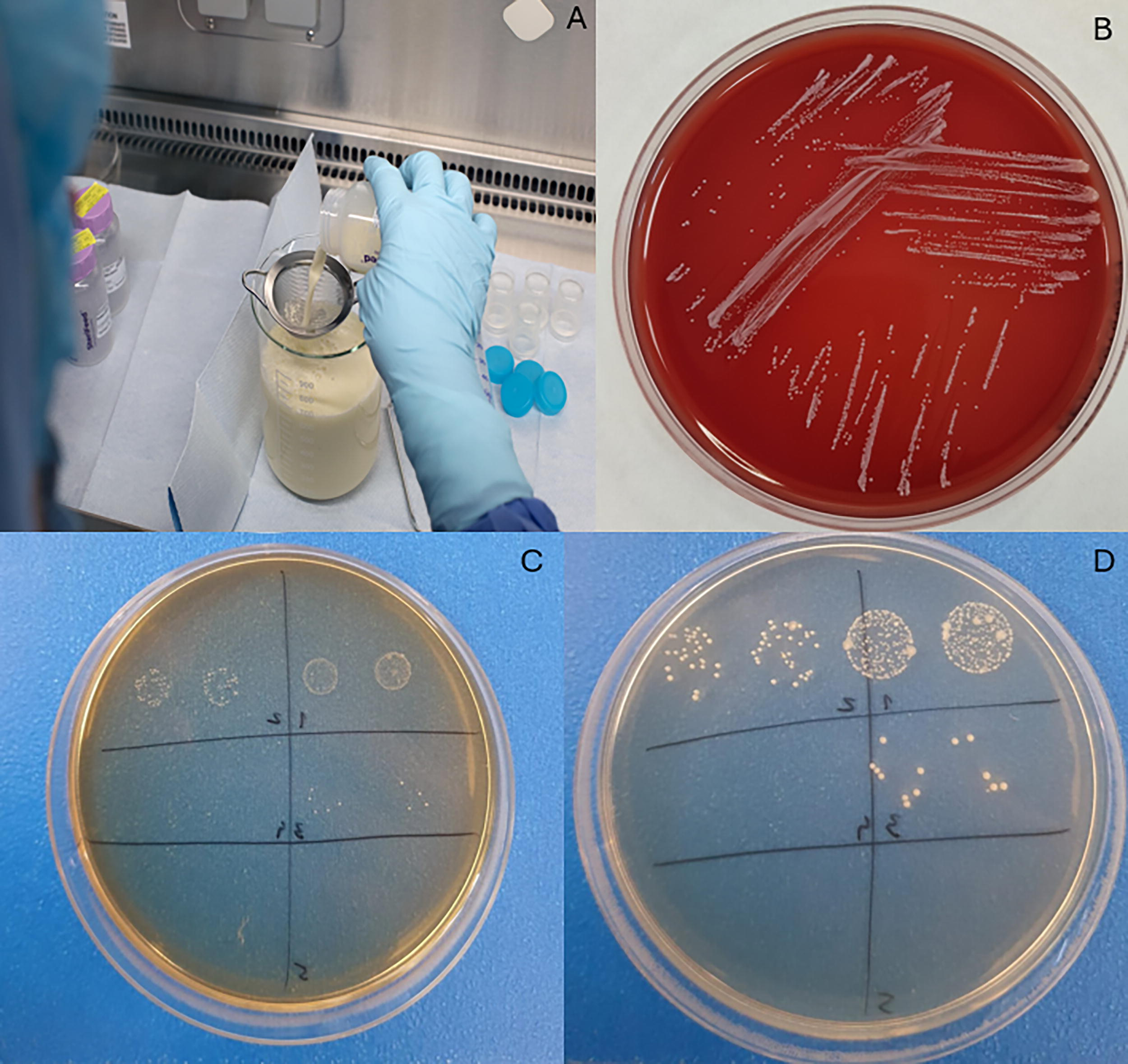
Donated human milk pooling and microbiological cultures.
DNA was isolated using the Maxwell® DNA Tissue kit (Promega, Wisconsin, USA) on Maxwell 16 Research System instrument (Promega). The hypervariable region V1–V3 of the 16S ribosomal ribonucleic acid gene was amplified with appropriate primers—27F-519R. Next-generation sequencing (NGS) was performed at MR DNA (Molecular Research, www.mrdnalab.com, Texas, USA) on the Illumina MiSeq platform. The final zero-radius operational taxonomic units were taxonomically classified using nucleotide Basic Local Alignment Search Tool (BLASTn) from a curated database derived from the National Center for Biotechnology Information (www.ncbi.nlm.nih.gov) and compiled for each taxonomic level into counts and percentage files. Percentage files containing the relative percentage of sequences within each sample that map to the designated taxonomic classification were used for further analysis of results.
Fresh raw milk samples were inoculated onto a commercially available blood agar (BA, Graso Biotech, Starograd Gdanski, Poland) as part of routine quality control in the microbiology laboratory (Fig. 1B). All different colonies grown on BA are identified by matrix-assisted laser desorption/ionization time-of-flight (MALDI-TOF) mass spectrometry on the Maldi Biotyper device (Bruker, Massachusetts, USA), expressed as number of colony-forming units (CFU) per milliliter (mL). Additional microbiological cultures were performed, and thawed archived samples of raw milk were inoculated onto selective media suitable for LAB. The number of viable bacteria was determined by the indirect method, i.e., by inoculating prepared decimal dilutions of suspensions of milk samples in sterile physiological solution onto De Man–Rogosa–Sharpe (MRS) agar in the form of drops (0.01 mL) to determine the total number of lactobacilli and onto transgalactosylated oligosaccharides (TOS)-propionate agar to determine the total number of bifidobacteria in two parallels. After 48 hours of anaerobic incubation at 37°C, the colonies that had grown were counted, and the number of viable cells, that is, CFU/mL of the sample, was calculated.
The research included data on the donors age, body mass index (BMI), antibiotic exposure in the previous 6 months, delivery mode, gestational age at delivery (GA), expressing mode, their children—parity, lactation age, feeding mode, with MOM and milk samples—days of storage at home and in the HMB before and after pooling, average temperature in the home freezer, and bacterial colonies count. The expressing modes are manual technique and electrical or mechanical pump. The feeding modes are breastfeeding, bottle feeding with pumped milk, or a combination of those. The samples are divided into four groups according to the number of CFU/mL grown on BA:
Sterile, without bacterial growth Total CFU ≤ 103 Total CFU > 103 ≤ 104 Total CFU > 104 ≤ 105
In view of the results of milk cultivation on TOS and MRS agars, the samples were classified according to whether bacterial growth was detected or not.
The statistical analysis was performed with IBM SPSS Statistics, version 27.0.1. The variables are calculated and presented using descriptive and comparative statistics. The normality distribution of the dependent variables was assessed using the Shapiro–Wilk test. Appropriate measures of association between the observed clinical and sociodemographic variables were calculated in relation to the microbiological findings of the DHM. Based on the clinical and anamnestic data collected, logistic regression was used to determine propensity scores which were used to predict belonging to the group with the corresponding bacterial microbiota. A regression prediction model was created, and the variables that had a significance level of p < 0.200 in the previous analyses were used as predictors. A p-value of <0.05 was considered statistically significant.
Results
The descriptive statistics of the quantitative variables researched are presented in Table 1. The correlation results between the donors, children, and milk characteristics and bacterial genera abundance are presented in Tables 2–4. The results are presented for the genera of interest for research—Lactobacillus, Bifidobacterium, and eight other bacterial genera that are most abundant according to the NGS results. Abundance of the genus Bifidobacterium correlates positively with donor’s BMI (Table 2). Lactobacillus abundance correlates positively with lactation age (Table 3). The abundance of bifidobacteria correlates positively with growth on the selective media TOS, while the abundance of lactobacilli correlates negatively with growth on the MRS medium.
Descriptive Statistics for Donor, Children, and Milk Characteristics
Temperature not known for donations without data logger.
BMI, body mass index; GA, gestational age at delivery in weeks; HMB, human milk bank.
Correlations Between Donor’s Characteristics and Bacterial Genera Abundance
Bold data represent statistically significant p-values.
BMI, body mass index; GA, gestational age at delivery in weeks.
Correlations Between Infant’s Characteristics and Bacterial Genera Abundance
Bold data represent statistically significant p-values.
Correlations Between Milk Microbiological Findings and Bacterial Genera Abundance
Bold data represent statistically significant p-values.
MRS, De Man–Rogosa–Sharpe; TOS, transgalactosylated oligosaccharides.
Table 5 presents the regression model for predicting the groups belonging to the genera Lactobacillus and Bifidobacterium. The model is statistically significant (p < 0.001), successfully classifies 83.3% of the samples, and explains 52.4% of the variance of the dependent variable (r2 = 52.4%). Of all the predictor variables used in the regression model, only feeding type and duration of storage in the HMB at −30°C from pool creation to DNA isolation were found to be statistically significant, and this was controlled for the influence of other variables in the regression model. The combination of breastfeeding and expressing MOM significantly reduces the probability of belonging to the group containing both LAB by 1/0.063 = 15.87 times compared with exclusive breastfeeding (odds ratio [OR] = 0.063; 95% confidence interval [CI] = 0.005–0.863; p = 0.038). Furthermore, with each day of prolonged storage in the HMB at −30°C from pool creation to DNA isolation, the probability of belonging to the group containing both LAB genera decreases by 1/0.991 = 1.009 times or 0.9% (OR = 0.991, 95% CI = 0.986–0.999; p = 0.001).
Binary Logistic Regression Model—Prediction of Belonging to the Group with LAB Genera
Bold data represent statistically significant p-values.
CI, confidence interval; LAB, lactic acid bacteria; OR, odds ratio; REF, reference value of variable.
Discussion
In this study, characteristics were found that can be associated with the presence and abundance of LAB in DHM.
There is no evidence in the previously published literature that maternal age influences the composition of the HMM, which is also confirmed by this study (Table 2). According to previous studies, BMI contributes differently to the composition of HMM. In two studies with a larger number of subjects, no association was found with the presence of bacterial HMM.21,22 According to the study by Cabrera-Rubio et al., women with a higher BMI had a higher presence of the genus Lactobacillus in their colostrum and a lower presence of the genus Bifidobacterium in mature milk. 23 In a study from China, in which the composition of the milk of 89 women from different regions of the country was compared, a higher BMI was associated with more genus Staphylococcus and less genera Lactobacillus and Streptococcus. 24 In the study on a group of 267 children, a positive correlation was found between an increased BMI and the presence of bifidobacteria in the intestine. 25 In this study, the BMI of the donor also correlated positively with the presence of the genera Bifidobacterium (Table 2). The composition of HMM may be influenced by GA, although the results of previous studies are contradictory. According to Khodayar-Pardo et al., a higher relative and absolute abundance of the genus Bifidobacterium was found in women who gave birth at term, while another study found no association with GA.26,27 In the results of this study, GA had no effect on LAB bacteria, but donors who gave birth in the later weeks of pregnancy had more bacteria of the genus Streptococcus and less Staphylococcus (Table 2). Lower diversity, but no difference in HMM composition, has been described in firstborns compared with children with one or more siblings, as demonstrated in this study (Table 3).22,28
Previous studies consistently show that nutritional composition of human milk changes during breastfeeding and adapts to the needs of the newborn or infant. 29 Regarding changes in the composition of the HMM during lactation, the studies come to different conclusions.21,27,28,30,31 In the first 10 days after birth, more bacteria from the genera Streptococcus, Staphylococcus, and Enterococcus are found in milk, and after the first 10 days of lactation, more bacteria from the genera Lactobacillus, Bifidobacterium, and others are found in milk.26,32 The number of bifidobacteria in the HMM increases during lactation. 26 According to Drago et al., there are more anaerobic bacteria in mature milk than in colostrum. 33
In the DHM samples examined in this study, earlier weeks of lactation correlated statistically significant with higher abundance of the genus Staphylococcus, and later weeks with higher numbers of Lactobacillus, Burkholderia, Ralstonia, and Acidithiobacillus (Table 3).
Mature milk is probably richer in probiotic bacteria in terms of HMM, but the nutritional value in the first days and weeks is optimal for premature infants, especially in terms of protein content. 29
Interesting and partially unexpected results were obtained by comparing the results of microbiological cultures of raw milk with the results of the abundance of isolated genera using the NGS method (Table 4). NGS is an expensive method and not available or applicable in daily work. Cultivation on BA is a routine method used in the quality control of DHM before and after pasteurization (Fig. 1B). In this study, DHM samples with a larger number of bacterial colonies grown on BA also showed a higher proportion of the genus Staphylococcus and a lower proportion of the genera Streptococcus, Lactobacillus, Burkholderia, and Ralstonia.
The NGS method has one limitation, and it also detects bacteria that are not viable, but as such may also have a beneficial effect on the digestive and immune system of the milk recipient. 20 In a study by Stinson et al., almost 70% of bacterial cells in fresh milk samples were not viable, but they are also thought to play a role in the digestive system of infants by exposing the developing mucosal immune system to a range of bacteria in a nonthreatening way. 34 Selective cultures of TOS and MRS are more available than NGS and can contribute to knowledge about the viability of LAB in milk samples. As expected, a positive anaerobic culture on the TOS selective medium showed a positive correlation with the presence of the genus Bifidobacterium (Fig. 1C, Table 4), whereas a positive culture on the MRS medium showed an unexpected negative correlation with the presence of the genus Lactobacillus (Fig. 1D, Table 4).
The duration and temperature of milk storage have been described in the literature as factors that can affect the composition and viability of HMM, with conclusions drawn about the best preservation of the microbiome at temperatures of −80°C, when isolation from fresh milk samples is not possible.35,36 The common storage at home is at −20°C, while in hospital at −30°C. During the course of this study, there were no conditions for storing milk at −80°C, although this would be ideal and would preserve the milk for a longer period of time in terms of microbiome and nutritional values.34,36 In this study, statistically significant results were obtained in relation to the duration and conditions of storage. In the regression model for belonging to the group of samples containing both probiotic bacterial genera, the days of storage in HMB from pool formation to DNA isolation proved to be significant predictors (Table 5). According to Moossavi et al., feeding mode is a decisive factor for the composition of HMM, and breast milk expressed with a pump is less diverse and has a higher prevalence of potential pathogens and a lower prevalence of bifidobacteria. 22
In the performed study, feeding method was found to be a predictor of the presence of LAB in regression model.
A limitation of this study is the sample size, due to financial limitations. Further studies should be conducted on a larger sample size, including more sample characteristics.
Conclusion
This study provided evidence for a possible influence of donor, infant, and milk characteristics on the presence of LAB in DHM. These results can have important implications for optimizing the processing and storage of DHM to preserve LAB.
If we wanted to define the “ideal milk” that has both satisfactory bacterial microbiota, according to the results of this study, it would be the mature DHM of a mother who exclusively breastfeeds her infant, milk that has a lower bacterial count and that has been stored in the HMB for a shorter period of time after pool formation. The study of HMM using the NGS method can provide us valuable results and insight into identified and future probiotic and pathogenic bacteria. By culturing on selective media, we can identify in which DHM samples there are viable bacteria of interest.
Footnotes
Acknowledgments
Thanks to all human milk donors for their noble act. Thanks to mentors of JN doctoral thesis for recognizing love and interest for human milk and support of the research.
Authors’ Contributions
Concept and design: J.N. Acquisition, analysis, and interpretation of data: J.N., K.B., and A.L.P. Drafting the article: J.N. and A.L.P. Revising it critically for important intellectual content: K.B. and D.J. Approved final version of the article: J.N., D.J., K.B., and A.L.P. All authors have read the article and approved it as well as responsible authorities at the institution where the work has been carried out. All authors attest to the validity and legitimacy of the data and its interpretation and agreed to its submission to the journal. Research described in the study has not been published before, and it is not under consideration for publication anywhere else.
Disclosure Statement
No competing financial interests exist.
Funding Information
The research was supported financially by the scientific project Reproductive and Regenerative Medicine—research of new platforms and potential; Horizon 2020 project OSTEOproSPINE Contract No EU (K.K. 01.1.01.008). The authors received no financial support for the authorship and publication of this article.