




Abstract
Introduction
Whole saliva is a complex mixture composed of secretions from three major salivary glands and numerous minor salivary glands contaminated with serum constituents, blood corpuscles, exfoliated oral epithelial cells, and a plethora of microorganisms. Hence, saliva as a biospecimen is an excellent source of proteins and nucleic acids. 4 The noninvasive nature and the potential for self and frequent collection are significant advantages of saliva over peripheral blood as a specimen for biomarker investigations. 5 Over the last decade, saliva has gained considerable importance as a diagnostic fluid for predicting populations at risk for a variety of oral and systemic conditions. The clinical significance of salivary proteome, transcriptome, and genetic markers have been explored for cancers of the oral cavity, breast, and pancreas, for infectious diseases including hepatitis and acquired immune deficiency syndrome, and for metabolic diseases such as diabetes and osteoporosis. 6 A major challenge in the utilization of biological analytes for clinical applications is the necessity to stabilize and maintain the integrity of informative biomarkers for clinical diagnostics. 7 The purpose of this study is to evaluate the quality of unstimulated whole saliva (UWS) samples stored for 1 to 5 years as biospecimens with efficient preservation of cells, proteins, and nucleic acids.
Materials and Methods
Specimen collection
The study cohort consisted of individuals reporting to the clinics at the Indiana University School of Dentistry. UWS was collected by the drooling method after obtaining informed consent as described. 8 Briefly, individuals were asked to refrain from eating or drinking 2 h prior to collection. They were seated in a chair with the head bent slightly to the right; the drooling UWS was collected into a pre-chilled 15 ml centrifuge tube for 5 min. All samples were transported on ice immediately to the laboratory for processing. 20 UWS samples collected each year between 2006 and 2010, and 10 samples collected in 2011 were analyzed in this study. The protocol was approved by the institutional review board of the Indiana University Purdue University at Indianapolis.
Saliva processing and storage
Upon receiving, all UWS samples were processed immediately.8,9 Each UWS sample was centrifuged at 2500 rpm for 10 min at 4°C and 500 μl aliquots of the supernatant were stored as clarified saliva at −80°C. The cell pellet was then diluted 1:10 in isotonic diluent (Hematronix Inc, Benicia, CA) and 2 drops of Zap-o-globin (Beckman Coulter Inc, Brea, CA) to lyse blood corpuscles. The resuspended pellet was centrifuged at 1400 rpm for 10 min. The cellular pellet was then reconstituted in 500 μl in cell culture medium with 5% DMSO (Sigma-Aldrich Inc, St. Louis, MO) and stored at −80°C.
UWS protein analysis
Protein quality was assessed by gel electrophoresis. 50 μg of protein from each UWS sample was resolved in a 12.5% sodium dodecyl sulfate (SDS)-polyacrylamide gel run at 120 v for 2 h or until the loading buffer crosses the gel and merges with buffer in the electrophoresis tank. Protein bands were visualized by staining with Coomassie blue for an hour, followed by overnight destaining with 20% methanol. The images were documented using the GelLogic systems (Eastman Kodak Company, Rochester, NY). The quantity of the protein in each UWS sample was determined by absorbance at 280 nm using the NanoDrop ND-1000 spectrophotometer (Thermo Scientific, Wilmington, DE).
Nucleic acids extraction from clarified saliva
DNA from saliva was isolated using the Qiagene kit (Qiagen Inc, Valencia, CA) and/or the Oragene kit (DNA Genetek Inc, Ontario, Canada) following manufacturer's recommendations. Cell-free RNA was extracted from clarified saliva using RNeasy kit from Qiagen as described. 10 The concentration of 1 μl nucleic acid was determined by the NanoDrop method. The 260/280 and 260/230 nm ratios were calculated by the NanoDrop spectrophotometer. The purity of DNA was assessed by degenerate oligonucleotide primed PCR (DOP PCR) using the DOP kit from Roche as per manufacturer's (Hoffman-La Roche Ltd, Indianapolis, IN) protocol.
Analysis of the stored cells derived from UWS
The archived cellular sediments derived from the UWS (stored at −80°C from years 2006–2010) were visualized and counted by cell Countess® Automated Cell Counter (Invitrogen, Carlsbad, CA) using trypan blue staining for excluding dead cells. The total number of cells, live cells, dead cells, and the cell viability were recorded. Microscopic evaluation suggested that the preparation was predominantly epithelial cells, although the presence of a small percentage of leukocytes cannot be completely excluded. The cells were then investigated by real-time polymerase chain reaction (RT-PCR) as below.
Polymerase chain reaction
The quality of DNA was examined by amplification of the tlr-4 gene using a modified nested two-step PCR protocol. A first round amplification was performed using 50 ng of genomic DNA, platinum PCR Supermix (Invitrogen, Austin, TX) and the following oligonucleotide primers: forward primer: 5’CACCAGAGTT TCCTGCAA3’ and the reverse primer: 5’CTGCC AGGTCTGAGCA3’ (RefSeqGene on chromosome 9; accession# NG_011475) under the following cycling conditions: 94°C for 2 min, followed by 40 cycles of 94°C for 60 s, 53.4°C for 30 s, 72°C for 1 min, and then a final extension of 72°C for 15 min. Genomic DNA from human macrophage like cells, THP-1, known to express TLR-4 constitutively was amplified as the positive control. Absence of template DNA in the reaction mixture constituted the negative control. The quantity of TLR-4 gene was then determined by real time-PCR using the SYBR green/ROX qPCR master mix (SA Biosciences, Frederick, MD) according to manufacturer's recommendations on the ABI Prism 7000 Sequence Detection System (Perkin Elmer Applied Systems, Foster City, CA). The following nested primers were used to assure the specificity of the amplified sequence; forward: 5’ CAGAGTTTCCTGCAATG G3’ and reverse: GCTTATCTGAAGGTGTTGCACAT3’ (Human TLR-4 mRNA; Accession # NM_138554). Each reaction contained 2×12.5 μl of SYBR green Master Mix, 1 μl of 10 μM of primers, and 50 ng of the first round PCR product or the genomic DNA, to a total volume of 25 μl. The thermal cycling conditions included an initial denaturation step at 50°C for 2 min, 95°C for 10 min, 40 cycles at 95°C for 15 s, annealing temperature for 30 s and extension at 72°C for 30 s. At the end of the PCR cycles, specificities of the amplification products were controlled by dissociation curve analysis. The nested PCR products were analyzed by electrophoresis on 1.5% agarose gels, stained with ethidium bromide and images saved using GelLogic systems (Eastman Kodak Company, Rochester, NY).
2–4 μg of total cellular RNA isolated using the Qiagen kit (Invitrogen, Carlsbad, CA) was reverse transcribed using the iScript cDNA synthesis kit (Biorad). Equal amounts of cDNA was used to amplify small proline rich protein 2a (SPRR2a), a gene abundantly expressed in stratified squamous epithelium, as described. 8 The primers used include: forward-5’AGTGC CAGCAG AAATATCCTCC-3′ and reverse-5′GAACGAGGTGAGCCAAATATCC-3′.
Statistical analysis
Group comparisons were made by two-way analysis of variance (ANOVA) followed by Tukey's post-hoc. p value less than 0.05 is considered significant.
Results
Qualitative and quantitative assessment of total protein content in stored clarified UWS
The concentration of total proteins in the clarified UWS ranged between 0.39 and 5.79 mg/ml. No significant difference was observed in the range and/or the average protein content in the freshly collected clarified UWS or samples stored over a period of 0 (2010) to 5 years (2005) (Table 1). The quality of the protein was also well maintained, as observed by widely distributed molecular masses represented on polyacrylamide gels (Fig. 1).
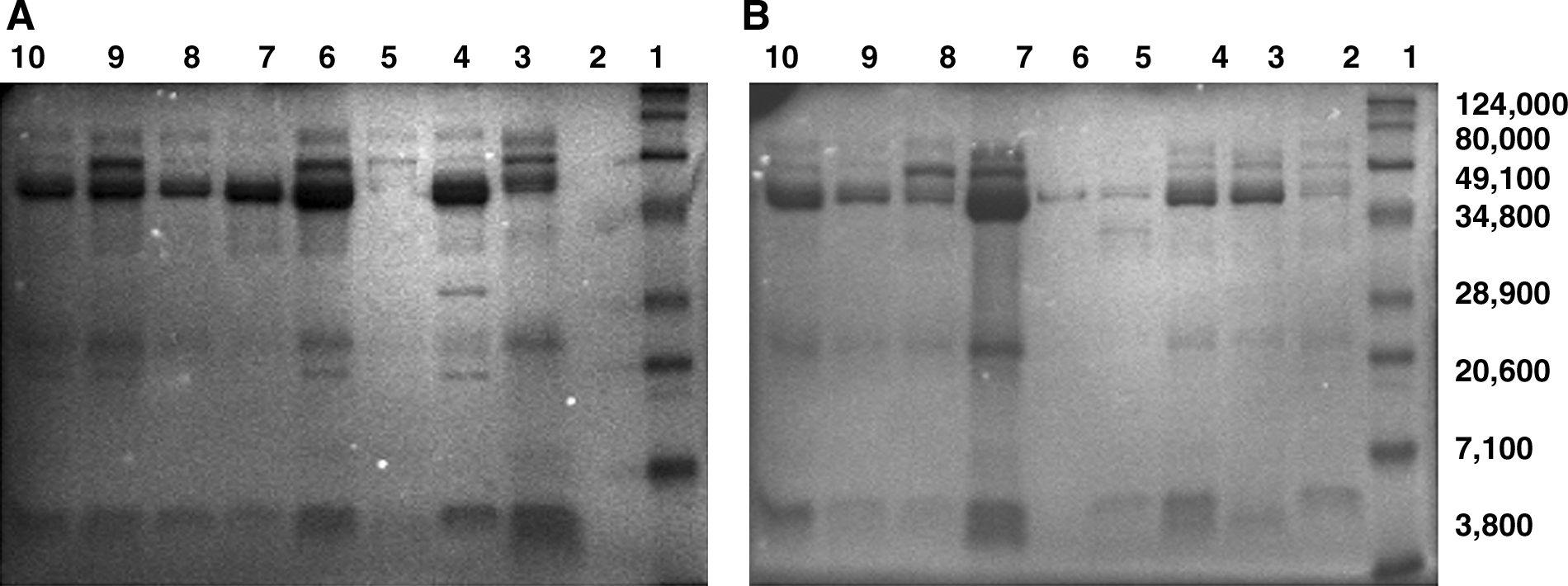
Gel electrophoresis of salivary proteins. 50 μg of total proteins from select samples of clarified saliva from
SE, Standard error of measurement.
Comparison of nucleic acids in the stored clarified UWS samples
The use of saliva as a source of DNA has been long recognized. 5 Consistent with previous studies, the concentration of DNA in the UWS ranged from 3.9 to 4.9 ng/μl. The presence of free floating RNA in human saliva has been recently reported. 11 The concentration of the free RNA in the clarified UWS ranged between 0.3 and 16.3 ng/μl. No significant difference was observed in the range and/or the average RNA and DNA content in the freshly collected clarified UWS or samples stored over a period of 0 (2010) to 5 years (2006) (Tables 2 and 3).
SE, standard error of measurement.
SE, standard error of measurement.
To investigate whether the DNA purified from stored saliva samples could be used in genotyping and mutational screening of disease causing genes, we determined the quantity of TLR-4 gene, a molecule of interest to our laboratory research. The data suggest that the DNA isolated from freshly collected and stored UWS over a period of 5 years could be amplified for the TLR-4 gene (Fig. 2A). In addition, the stored UWS samples perhaps possess equivalent amount of the gene as evidenced by the overlapping threshold cycle (ct) values (Fig. 2B).
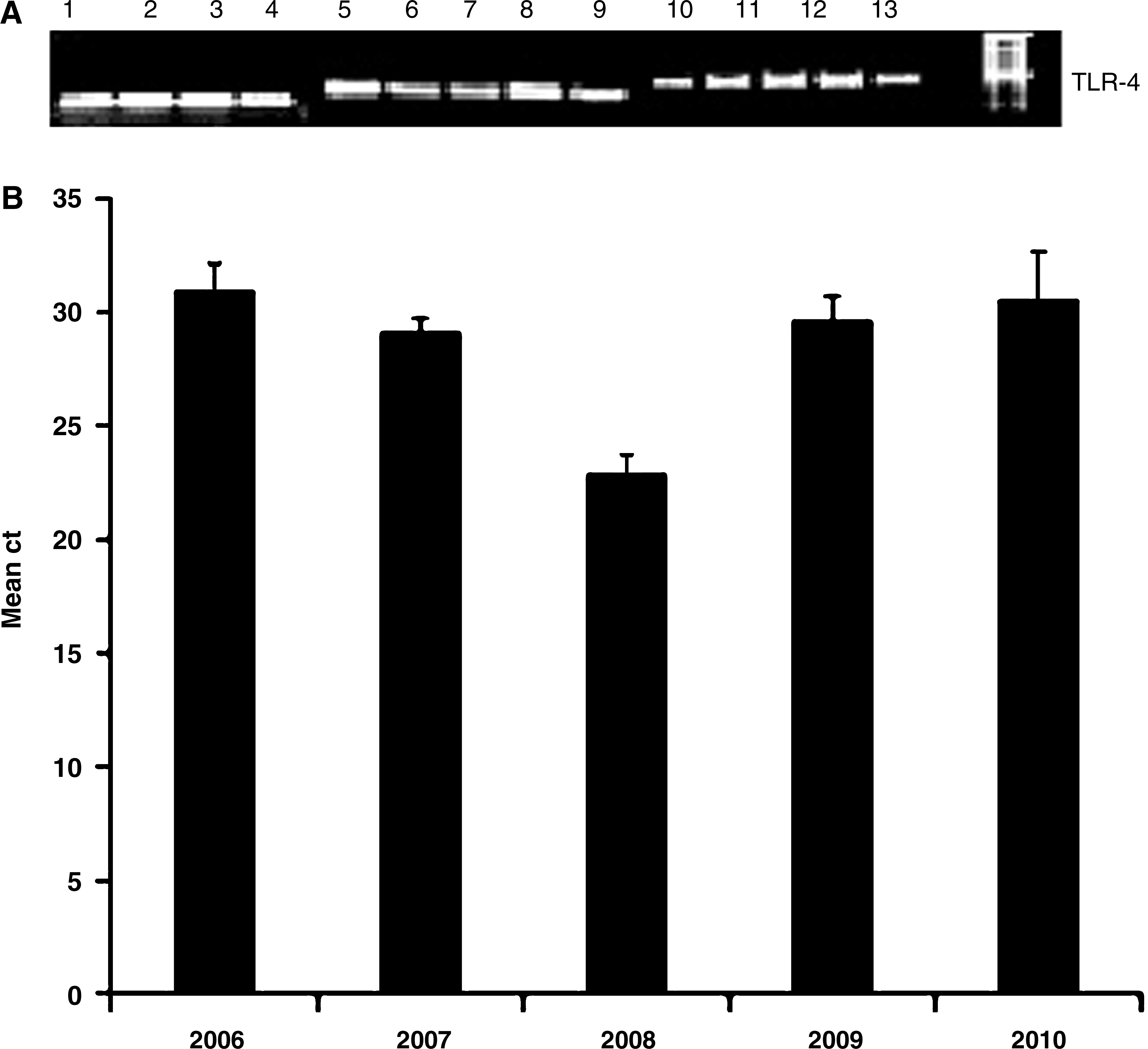
DNA integrity in stored saliva samples. The quality of purified genomic DNA was examined by amplification of the TLR-4 gene using a modified nested PCR protocol. 50 ng of the genomic DNA was subjected to an initial amplification of 561 bp TLR-4 gene as described in the methods section. 50 ng of the first round product was then used as a template to amplify the TLR-4 gene (86 bp) by real-time PCR.
Cells isolated from the UWS are viable over an extended period
We investigated the quality of cellular sediments derived from the UWS stored for 5 years. Visualization by Countess® and through a light microscope showed that the sediments consisted predominantly of flat polygonal cells suggestive of epithelial morphology (Fig. 3A). The identity of the epithelial cells was confirmed by amplifying SPRR2a, a gene linked to keratinocyte terminal differentiation and abundantly expressed in cornified cell envelope (Fig. 3B). The total number of epithelial cells ranged between 1.4×10⁵ and 4.3×10⁶ cells/ml of the UWS stored from 0 (2010) to 5 years (2006) (Table 4), consistent with previous reports.9,12 The average number of live epithelial cells in the stored samples ranged between 0.96±0.27×10⁴ and 5.3±1.4×10⁵ cells/ml of the UWS. No significant difference was observed in the percent viability of the epithelial cells in the UWS samples stored at −80°C for 0–5 years.
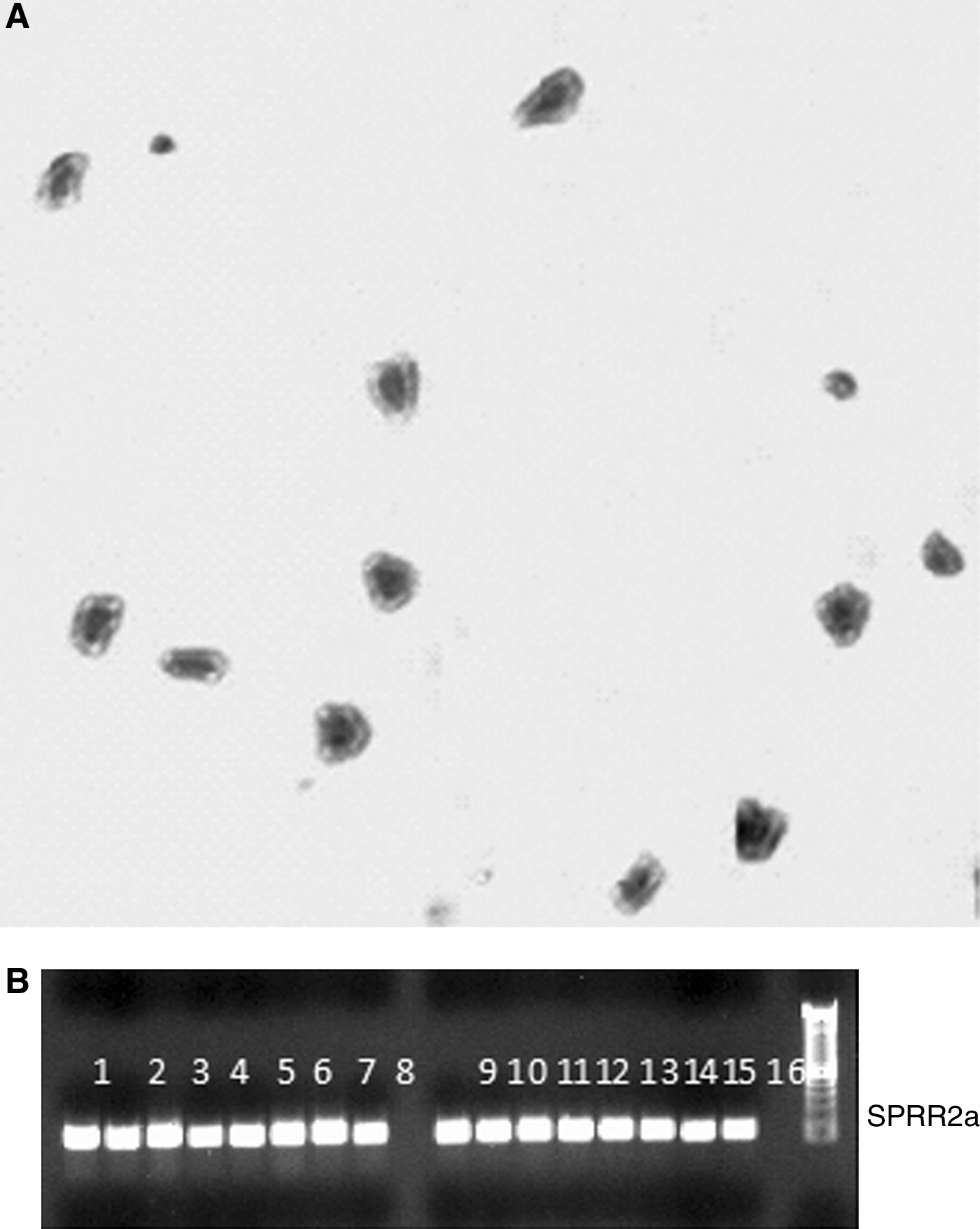
Cells derived from the UWS retain viability over an extended storage period. 10 μl of suspensions of salivary cellular sediments mixed with equal volume of trypan blue were assessed by the Countess® machine and the images captured.
SE, standard error of measurement.
Discussion
Biobanking is an innovative approach for conservation and sustained utilization of biological material for research and clinical applications. 13 Variations in the storage conditions, lag time between sample collection and storage, and duration of storage are some of the factors that contribute to the quality of the archived samples for use as research materials.7,14 Here we report the validity of the archived frozen UWS samples as biospecimens for molecular and cellular investigations.
Human saliva meets the demands of an inexpensive, noninvasive, and accessible body fluid to act as an ideal diagnostic medium. 5 In addition to being an indicator of oral health, saliva is a reservoir of analytes from systemic sources that reach the oral cavity through different pathways. 15 Furthermore, saliva is valuable for the measurement of dietary biomarkers such as nitrates and nitrites. Evaluation of inflammatory mediators such as interleukin-6 (IL-6) and C-reactive protein (CRP) has been suggested as indicators not only of periodontitis but also as risk factors of cardiovascular diseases. Similarly salivary levels of c-peptide and free fatty acids or of adiponectin and amyloid αβ42 have been suggested as potential markers of type-2 diabetes and Alzheimer's disease, respectively. Significantly, unique proteins in saliva not present in the plasma may lead to the discovery of protein "signatures" indicative of oral and systemic diseases. 15 Recently, the clinical significance of stable free floating RNA in clarified human saliva has been validated in breast cancer patients. 11 Salivary p53 and p16 or BRACA-1 and BRACA-2 have been suggested as genetic markers of carcinoma of the oral cavity and breast, respectively. 6
Availability of high quality biospecimens is essential for molecular characterization and development of personalized medicine. 1 Proteins and nucleic acids are potentially degradable biomolecules, emphasizing the need for appropriate sample storage and handling conditions for maintaining the molecular quality of the biospecimens. 7 Our data suggest that collection of UWS in pre-chilled tubes and immediate processing to separate soluble and cellular components of the UWS sample, followed by storage of aliquots of clarified saliva at −80°C adequately maintains the proteins and nucleic acid content of the saliva biospecimen over an extended period.
The clinical value of exfoliative cytology has been well documented in many cancers. 16 However, the concept of evaluating the viability and the functional potential of the exfoliated cells for exploring the pathophysiology of the disease process is investigated recently.17,18 In this study we report that epithelial cells isolated from human saliva can be stored for a long period while retaining viability. We have recently reported that the epithelial cells in the UWS can recognize and respond to microbial products and the response is differentially regulated between health and oral mucosal inflammatory conditions.8,9 In this context, saliva has a major advantage over blood and urine in that it can provide data on events at mucosal surfaces, which may provide a surrogate for other such fluids (e.g., vaginal, gastric, nasal).
Recently, the UK biobank has started storing saliva samples. 19 The success of molecular research and its applications in both the clinical and research arenas depend on appropriate preservation of biospecimens. 13 In this study, we show that saliva samples stored over a long period retain sufficient molecular quality. The less contagious nature, the ease of collection, the rich biological content, and the potential for frequent collection for real-time monitoring makes saliva an excellent biospecimen for home-based collection for epidemiological investigations, research on environmental exposure, as well as monitoring disease progression and response to treatment.
Footnotes
Disclosure Statement
No competing financial interests exist.