




Abstract
The term “biobank” first appeared in the scientific literature in 1996 and for the next five years was used mainly to describe human population-based biobanks. In recent years, the term has been used in a more general sense and there are currently many different definitions to be found in reports, guidelines and regulatory documents. Some definitions are general, including all types of biological sample collection facilities. Others are specific and limited to collections of human samples, sometimes just to population-based collections. In order to help resolve the confusion on this matter, we conducted a survey of the opinions of people involved in managing sample collections of all types. This survey was conducted using an online questionnaire that attracted 303 responses. The results show that there is consensus that the term biobank may be applied to biological collections of human, animal, plant or microbial samples; and that the term biobank should only be applied to sample collections with associated sample data, and to collections that are managed according to professional standards. There was no consensus on whether a collection's purpose, size or level of access should determine whether it is called a biobank. Putting these findings into perspective, we argue that a general, broad definition of biobank is here to stay, and that attention should now focus on the need for a universally-accepted, systematic classification of the different biobank types.
Introduction
Use of the term “biobank” in the names of organizations and facilities shows that the term is applied to many different types of collections. For example, in its catalogue of European biobanks, the Biobanking and Biomolecular Resources Research Infrastructure (BBMRI) classifies biobanks as human or non-human, as well as clinical or population-based. 8 The names given to biological collections indicate that the term is used to describe collections in all these categories. For example, in the clinical category, there are examples such as the Biobanque de Picardie, Malignant Mesothlioma Biobank, and Retinoblastoma Biobank. In the non-human category there are examples such as VetBioBank and the Pathogenbiobanks of Lübek, Köln, and Bonn.
Official definitions of the term show considerable variation. In the 2006 Organization for Economic Cooperation and Development (OECD) report entitled Creation and Governance of Human Genetic Research Databases, 9 the term biobank was defined as follows: “a collection of biological material and the associated data and information stored in an organized system, for a population or a large subset of a population,” which refers to human-population based biobanks. The 2009 OECD report entitled Guidelines for Human Biobanks and Genetic Research Databases 10 indicates that human biobanks and genetic research databases are “structured resources that can be used for the purpose of genetic research and which include: (a) human biological materials and/or information generated from the analysis of the same; and (b) extensive associated information.” The fact that this 2009 OECD definition uses the term “human” biobanks implies that non-human biobanks also exist. In Canada, the national policy on research ethics uses the term “biobanks” to encompass all “collection(s) of human biological materials…. that may include associated information about individuals from whom biological materials were collected.” 11 In the United States, the Federal Policy for the Protection of Human Subjects or the “Common Rule,” most recently updated in 2009, refers only to collections of specimens and the word biobank does not appear. 12
According to national laws in Europe there are a range of definitions for the term “biobank.” Icelandic law gives a very general definition: a biobank is a “collection of biological samples which are permanently preserved.” 13 Other national laws are more specific: Swedish law gives the definition as “biological material from one or several human beings collected and stored indefinitely or for a specified time and whose origin can be traced to the human or humans from whom it originates.” 14 Portuguese law states that a biobank is “any depository of biological samples and related derivatives, with or without a pre-defined period of storage, based on prospective collection or made up of previously collected material, obtained for health care purposes, public health monitoring programs, or for research, and that includes identified, identifiable, anonymized or anonymous samples.” 15 Finally, Belgian law defines a biobank as a “structure that provides storage and provision of human body material, which is exclusively for scientific research and not intended for any human application.” 16 .
In a recent study that set out to identify biobanks in the United States, the variety of entities that “collect and store biological specimens,” and associated terms for these entities, was highlighted. The study also considered a range of entities with a broad definition of size. 17 Given these different definitions and the changing usage of the term “biobank” since it first appeared in the literature 17 years ago, we decided to conduct a survey of the opinions of people who identify themselves as being interested in or involved in sample collections. This article describes the survey and its findings.
Methods and Survey Background
This survey was conducted between September 2 and October 22, 2012. Invitations were sent out to members of ISBER 1 and ESBB 2 ; they were also sent out to LinkedIn discussion groups related to sample collections including the Biorepository Hub, ESBB and ISBER Discussion Groups, and the Human Tissues Group.
A total of 303 people participated in the survey which was conducted using the SurveyMonkey web-based tool. 18 Apart from question 5 that was only directed to a subset of participants, each question received at least 292 responses.
There were a total of 19 questions. Questions 1 to 13 asked for the respondent's opinions about the meaning of the term “biobank,” and replies to these questions are described in the results section. Questions 14 to 19 asked for the respondent's experience and involvement in sample collection activities; resulting demographic information is shown in Tables 1–5.
Data represents responses from 297 individuals; multiple responses were acceptable.
Data represents responses from 298 individuals; multiple responses were acceptable.
Data represents responses from 295 individuals.
Data represents responses from 296 individuals.
Data represents responses from 298 individuals; multiple responses were acceptable.
Table 1 shows the types of sample collection facilities with which the respondents were associated. The largest groups were disease-based, hospital-integrated, clinical trials, and population-based facilities (at 30% or higher); association with all other types was 13% or less.
Table 2 shows the settings of the sample collection facilities. The largest groups were public sector, hospital, university and non-profit settings, all above 35% (some individuals are associated with collections in more than one setting). Association with the private sector, pharma/diagnostic, and commercial settings was all reported at 21% or below.
Tables 3 and 4 show the size and age, respectively, of the sample collection facilities with which respondents were most closely associated. The largest number of respondents was associated with facilities with 10-100 thousand samples (29%) or 100 thousand to 1 million samples (23%). In terms of age, 10% of facilities were 2 years old or less; as many as 37% were 11 years or older.
Table 5 shows the training, professions and occupations of respondents. Fifty-eight percent of respondents replied that they work for or manage sample collection facilities, while 9% replied that they did not. Research scientists (42%) and administrators (23%) were the largest single groups.
Table 6 shows the geographic regions in which respondents work; the majority were from Europe (52%) and North America (35%).
Data represents responses from 298 individuals.
Results
The first question in the survey asked whether the terms “biobank” and “biorepository” have the same meaning. The response choices offered were: strongly agree, agree, not sure, disagree, or strongly disagree. As can be seen from the results in Figure 1, 62.2% agreed or strongly agreed, 15.8% were not sure and 21.9% disagreed or strongly disagreed. Free text responses were invited on this question and of the 63 responses received, a summary of as many as 20 indicated a view that biobanks are dynamic resources intended for sharing, whereas biorepositories are more static resources intended for long-term storage. So a proportion of people believe there is a difference in meaning, but there is no consensus on this point.
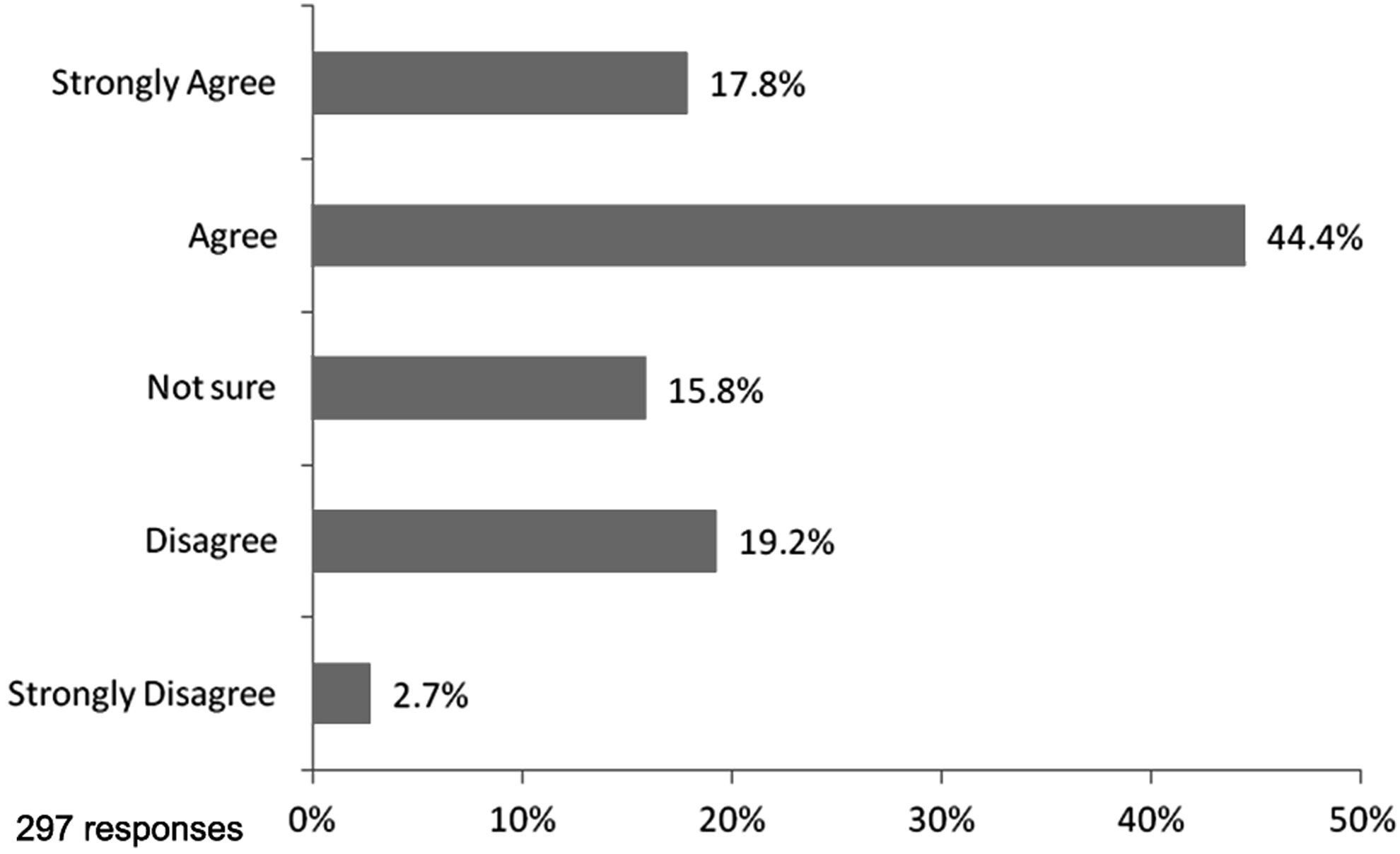
Responses to survey question 1: Level of agreement with the statement that, “The terms “biobank” and “biorepository” have the same meaning.”
The second question asked to what type or types of biological collections should the term biobank be applied, and the responses are shown in Figure 2. In summary, over 93.6% agreed that the term should be applied to biological collections of human material and 82.3% to collections of animal material. There was least agreement that the term should be applied to collections intended for therapeutic purposes like blood transfusions (53.8%), tissue transplantation (57.5%), and environmental collections (54.5%). Overall, more than 50% agreed that the term biobank can be applied to all types of biological collections. A similar question was asked using the term “biobanking” rather than “biobank” to determine if there was a subtle difference between interpretation of the terms, with “biobank” referring to the facility and “biobanking” referring to the practice or activity. In fact, the results shown in Figure 3 were similar to those seen in Figure 2. Overall, more than 50% agreed that the term “biobanking” can be applied to the collection, processing and storage of all the types of collections mentioned, including animal, plant, microbial and environmental materials.

Responses to survey question 2: “To which of the following examples do you think the term “biobank” should be applied?”
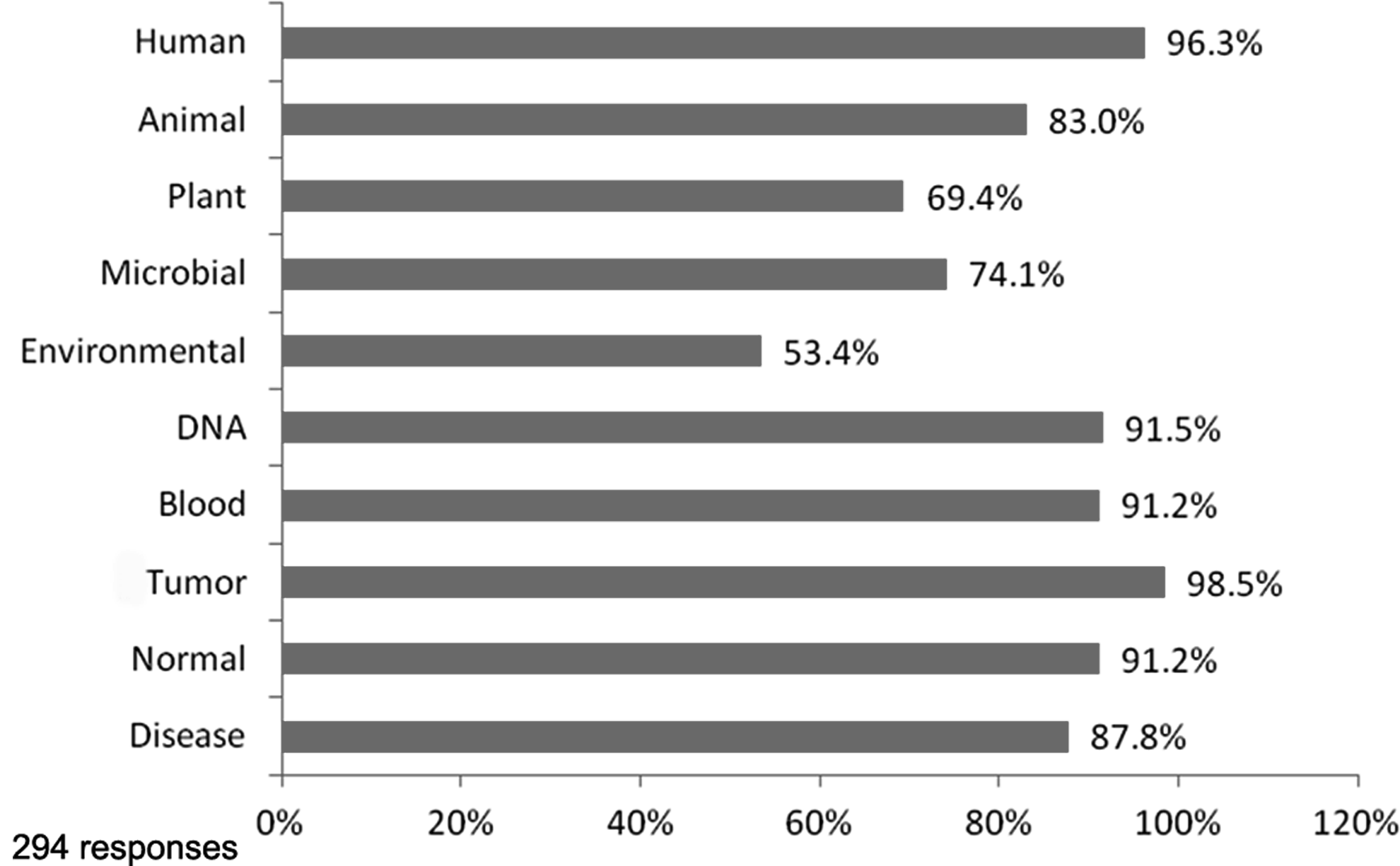
Responses to survey question 3: “The term “biobanking” describes the collection, processing and storage of the following types of samples.”
Opinion was divided on whether a sample collection must be larger than a certain size to be called a biobank. On this subject, 37.6% agreed or strongly agreed, 12.1% were not sure and 50.3% disagreed or strongly disagreed (Figure 4). Amongst those who agreed that a sample collection must be larger than a certain size to be called a biobank, there were very different ideas of the “cut-off” point, with at least 10% of respondents in favor of each of the following suggested cut-off points: 1, 10, 100, 1000 and 10,000 samples (Figure 5). In free text comments, many respondents referred to the fact that for rare disease collections, even a small collection can be highly significant. No consensus was reached on whether the size of a collection should determine whether it should be called a biobank.
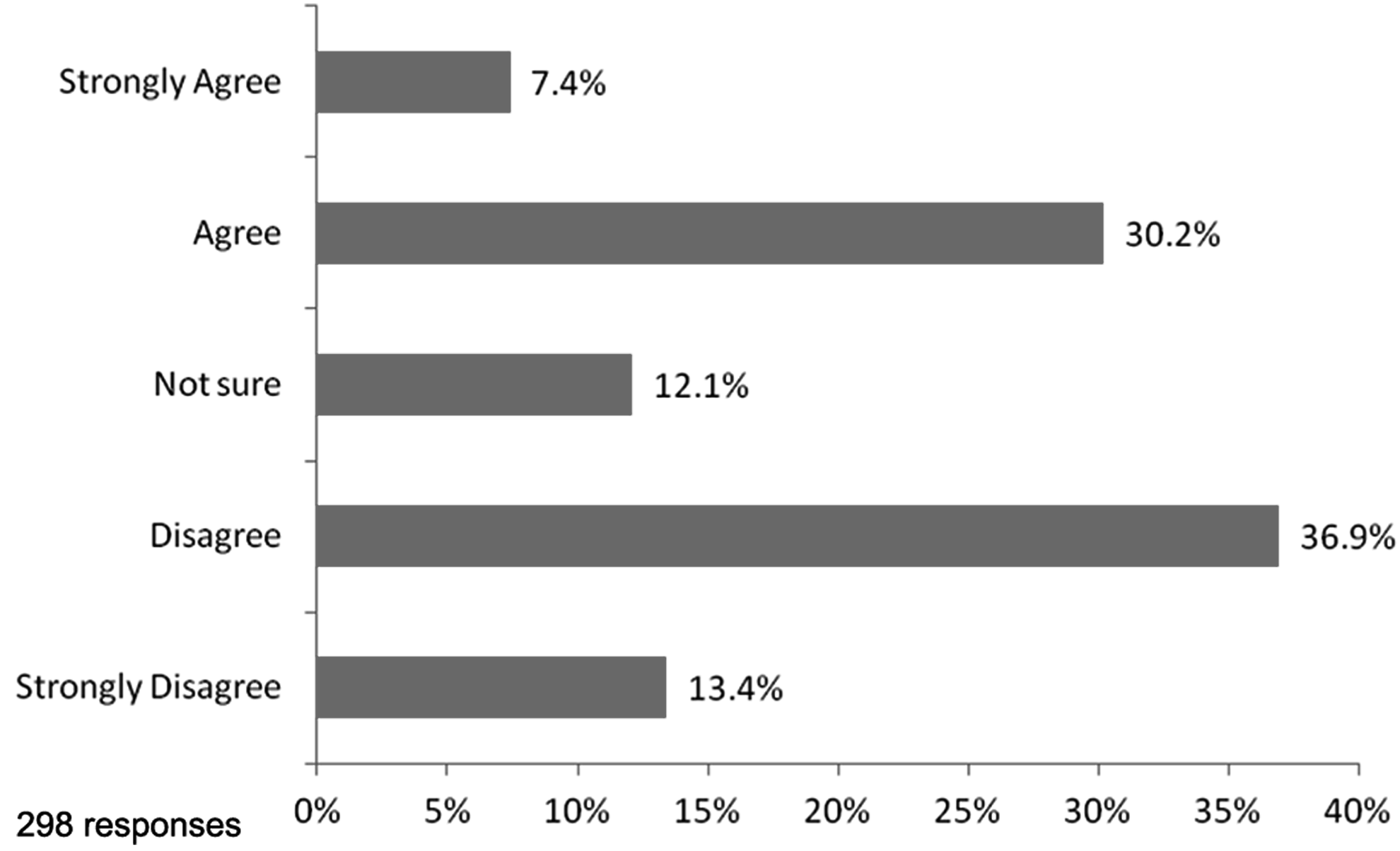
Responses to survey question 4: Level of agreement with the statement that, “To be called a “biobank,” a sample collection must be bigger than a certain size.”
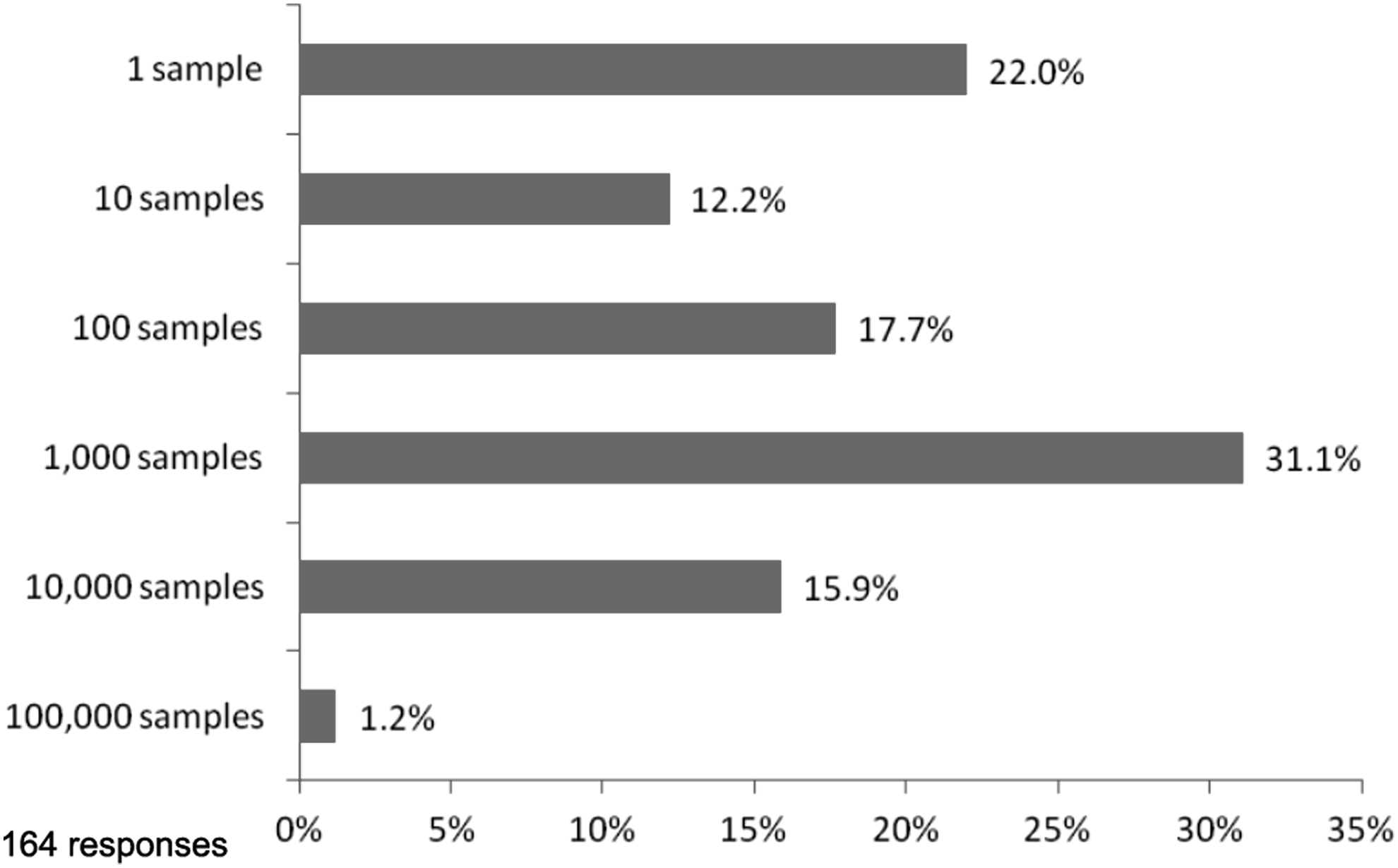
Responses to survey question 5: “If you agree that a sample collection must be bigger than a certain size to be called a “biobank,” indicate the minimum collection size that can be called a “biobank.’”
However, there was a clear consensus with regard to professional standards. As shown in Figure 6, as many as 79.5% of respondents agreed or strongly agreed that to be called a “biobank,” the management of a sample collection must follow professional standards (i.e., standards agreed to by a recognized external group such as an association, society or network). There was also a clear consensus with regard to sample data. As many as 89.3% of respondents agreed or strongly agreed that to be called a “biobank,” the sample collection must be associated with sample data (i.e., information on sample origins/composition, or the host from which the sample was obtained) as shown in Figure 7.
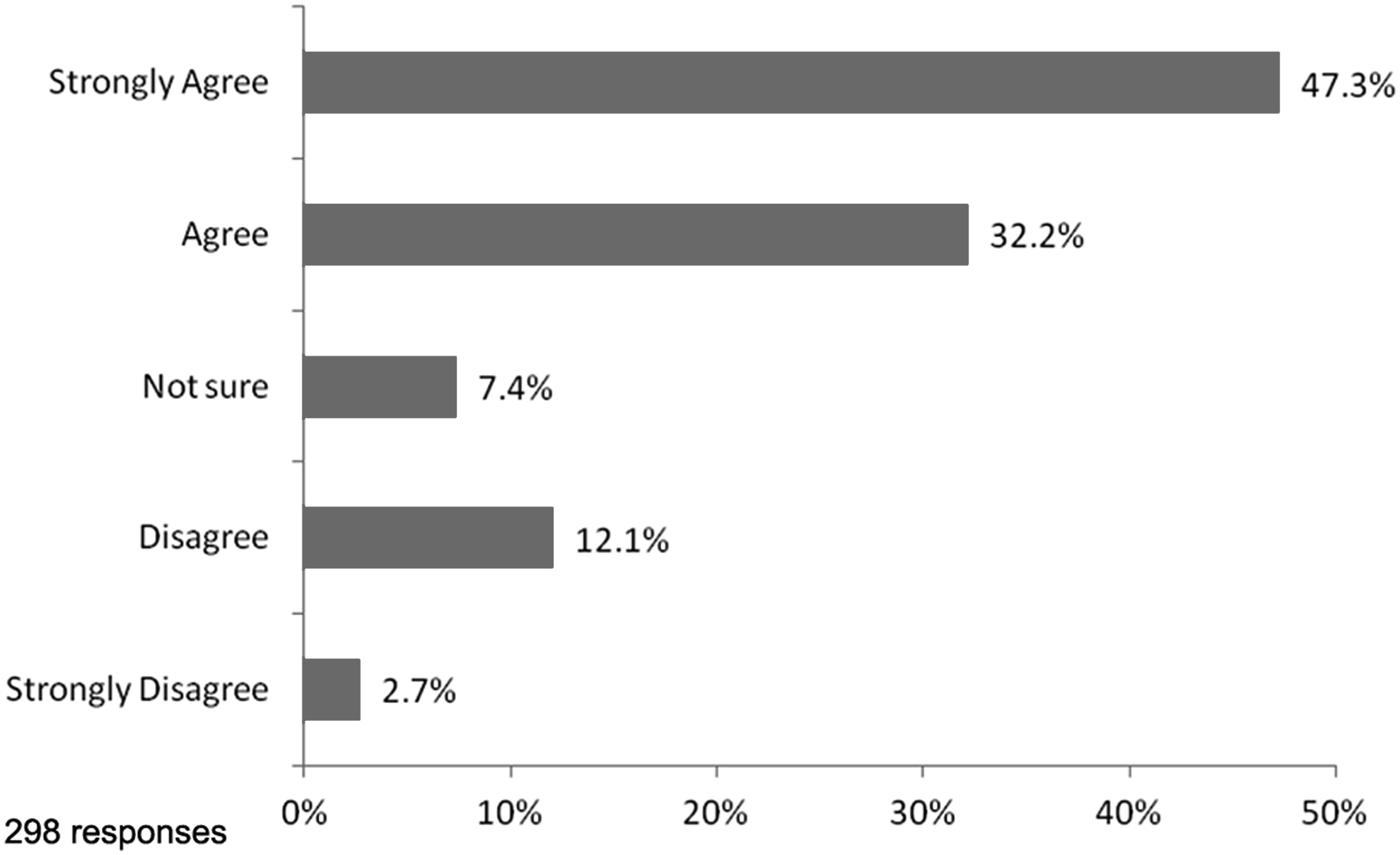
Responses to survey question 6: Level of agreement with the statement that, “To be called a “biobank,” the management of a sample collection must follow professional standards (i.e., standards agreed to by a recognized external group such as an association, society or network).”
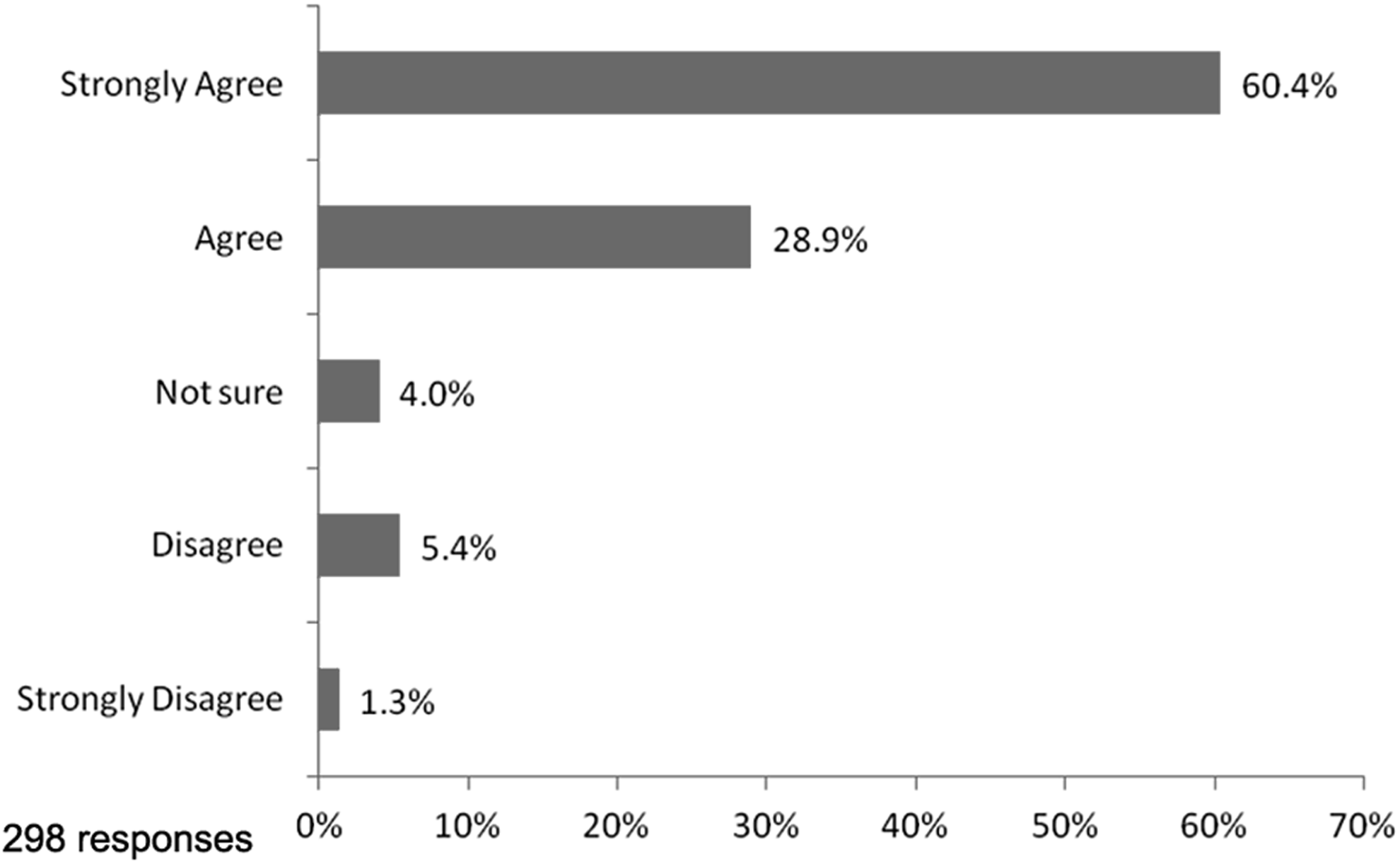
Responses to question 7: Level of agreement with the statement that, “To be called a “biobank,” the sample collection must be associated with sample data (i.e., information on sample origins/composition, or the host from which the sample was obtained).”
On the question of sample availability, there was a lack of consensus (Figure 8). Over 30% answered that in order to be called a biobank samples must be available to certain specific categories of individuals including the biobank owner, internal users, others in the same institution and external users. However, more than half of respondents (58.1%) answered that the issue of accessibility is not relevant to the question of whether the name “biobank” can be applied.
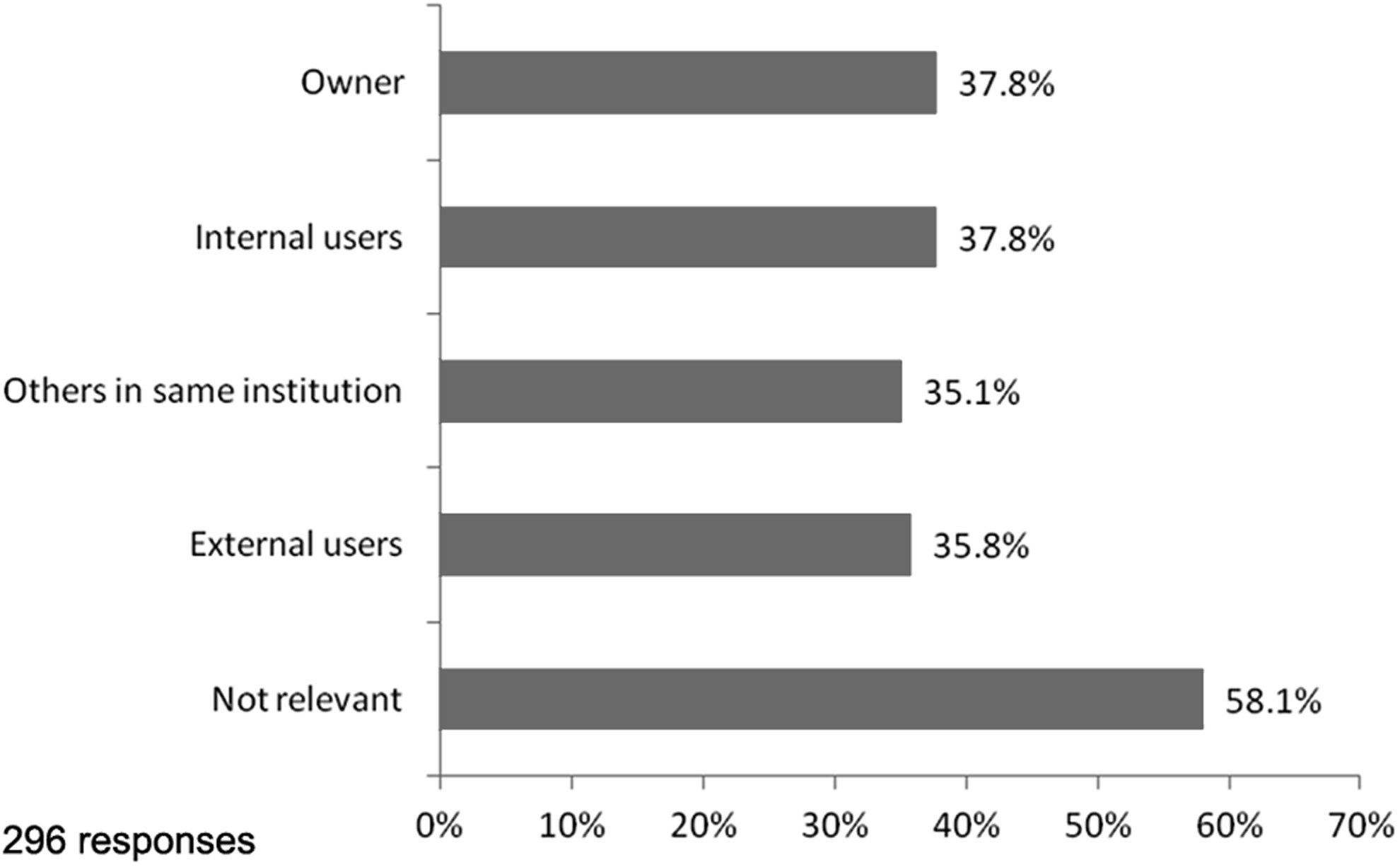
Responses to question 8: “To be called a “biobank,” a sample collection must be accessible to the following users.”
Finally, a series of questions were asked about the significance of a sample collection's purpose. The first of these, question 9, asked respondents their level of agreement with the following statement: “To be called a biobank, the main purpose of a sample collection must be research”. As shown in Figure 9, opinion was divided with 42.7% agreeing or strongly agreeing, 11.4% not sure and 45.8% disagreeing or strongly disagreeing.
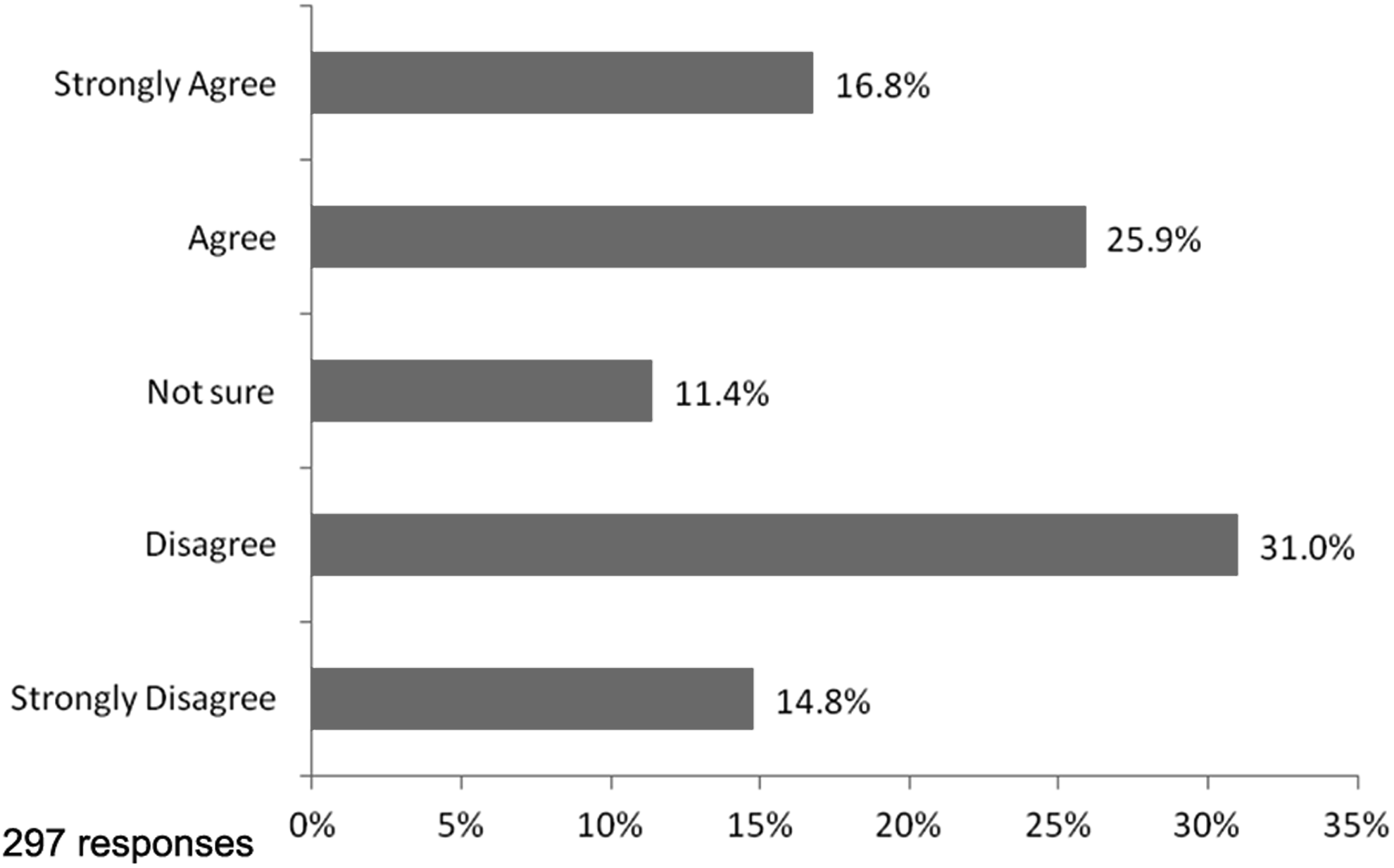
Responses to question 9: Level of agreement with the statement that, “To be called a “biobank,” the main purpose of a sample collection must be research.”
Other statements in this series asking respondents for their level of agreement were as follows:
• Question 10. If the main purpose of a sample collection is diagnosis (as in a Pathology Lab) and if research is a secondary purpose, then this cannot be described as a “biobank.” • Question 11. If the main purpose of a sample collection is therapy (as in a cord blood bank), then this cannot be described as a “biobank.” • Question 12. If the main purpose of a sample collection is reproductive medicine (as for a sperm bank) then this cannot be described as a “biobank.” • Question 13. If the main purpose of a sample collection is forensic science, then this cannot be described as a “biobank.”
For this series of statements, at least 25% of respondents agreed and at least 25% disagreed, so there was no consensus on whether a collection's purpose should determine whether or not it should be called a biobank.
Additional analyses were performed on the data within the responses to the questions to explore variation in responses in relation to demographic categories such as geographic region, collection size, and facility setting. As might be expected, respondents from larger-size collections and population-based collections tended to set higher size thresholds in their definition for biobank. Interestingly, when responses from the two largest regions (North America and Europe) were compared, North American respondents more often considered the terms biobank and biorepositories to have the same meaning. This is consistent with GoPubMed literature review, where the term “Biorepository” is used more often in North America than in Europe. In addition, North American respondents considered that the level of user access to a collection had less bearing on whether it could be called a biobank.
Discussion
The results of this survey provide some indication of what the term “biobank” currently means to people interested in the management of sample collections. The overall opinion can be summarized by the consensus views that biobanks include collections of human, animal, plant and microbial samples, and that these collections must be associated with sample data and must be managed according to professional standards. There is no consensus on whether a collection's purpose, size or level of access should restrict use of the term biobank
This interpretation of the term “biobank” differs from official definitions provided by various authoritative institutions and organizations,8–12 and this variation is obviously undesirable. It is well accepted that standardization is critical in many aspects of biobanking, and it is essential that there is agreement on the meaning of the term “biobank” itself. Otherwise, communication problems will continue, as will misunderstandings about the scope of various regulations and guidelines related to sample collections.
It is interesting to note that (as mentioned above) the term “biobank” was first used in relation to human population-based collections. Over time, it has been used increasingly broadly and applied to human disease-based collections as well as to animal and other types of biological collections. This may explain why some official definitions are specific to human population-based collections, while others are much more general. Generalization of the meaning of “biobank” to include non-human collections makes sense intuitively, since the prefix “bio-“ comes from the Greek word “bios” which means life in general. The prefix “bio-“ is also a component of the word biology, which means the study of life. So there is nothing about the word biobank that suggests specificity in terms of species. Biobank is a neat, convenient, meaningful word that can be modified to give the word “biobanking” which denotes the activity of managing sample collections and also the associated discipline. Given all of these factors, it is not surprising that the term “biobank” has become popular and that its meaning has become generalized. At this time it seems unlikely that the term “biobank” will revert to having a more specific meaning.
While use of the word “biobank” has become more general, thus far it has not commonly been used in the literature to describe sample collections intended for therapeutic purposes, for example transfusion blood banks, cord blood banks, transplantation tissue banks and banks for assisted reproduction. In the free-text comments in this survey, a number of respondents argued against use of the word biobank to describe sample collections for therapy, given that they are subject to distinct regulations. However, a significant proportion of all respondents in this study (at least 25%) felt that collections intended for therapy may be described as biobanks and in many respects it seems logical to do so, given the similarities in technology and management for all types of biological collections.
In summary, the results of this survey suggest that the term “biobank” now has a very general meaning which includes diverse collections of biological samples, regardless of species. Based on our findings, we propose the following definition for the term “biobank”:
A biobank is a facility for the collection, preservation, storage and supply of biological samples and associated data, which follows standardized operating procedures and provides material for scientific and clinical use.
We recommend that additional terms are linked to the term “biobank” to indicate specific types of biological sample collection or intended application. Many such terms are already available, for example population-based, disease-associated, hospital-integrated, therapeutic, veterinary, museum, environmental, and clinical or research, etc. Obviously, there is much overlap in meaning between these different terms that have evolved independently. At this stage, the authors suggest that the time has come to develop a systematic classification of all biobank types and to make every effort to ensure this classification is universally accepted. This classification needs to draw a clear distinction between intended applications such as clinical therapeutic, non-therapeutic, and research areas; intended use from single to multiple users; and types of collections distinguished by parameters such as sources, sample types, and design.
Footnotes
Acknowledgments
We are grateful to the Marble Arch International Working Group on Biobanking for Biomedical Research and the ISBER Working Group on Hospital-Integrated Biobanks for valuable discussion.
Author Disclosure Statement
Drs. Hewitt and Watson have no conflicts of interest or financial ties to disclose.
1
International Society for Biological and Environmental Repositories.
2
European, Middle Eastern and African Society for Biopreservation and Biobanking.