




Abstract
Sustainability of biorepositories is a key issue globally. This article is a description of the different strategies and mechanisms used by the Australian Breast Cancer Tissue Bank (ABCTB) in developing and operating the resource since its inception in 2005. ABCTB operates according to a hub and spoke model, with a central management hub that is responsible for overall management of the resource including financial, ethical, and legal processes, researcher applications for material, clinical follow-up, information/database activities, and security. A centralized processing laboratory also operates from the hub site where DNA and RNA extractions are performed, digital imaging of stained tumor sections occurs, and specimens are assembled for dispatch for research projects. ABCTB collection sites where donors are identified, consent obtained, and specimens collected and processed for initial storage are located across Australia. Each of the activities of the resource requires financial support and different sources of revenue, some of which are allocated to a specific function of the ABCTB. Different models are in use at different collection centers where local variations may exist and local financial support may sometimes be obtained. There is also significant in-kind support by clinics and diagnostic and research facilities that house the various activities of the resource. However, long-term financial commitment to ensure the survival of the resource is not in place, and forward planning of operations remains challenging under these circumstances.
Introduction
T
This initiative was offered from 2004–2007 and in this first round provided support to eight similar endeavors across Australia, see https://www.nhmrc.gov.au/_files_nhmrc/file/grants/funding/funded/sbnrf.pdf for a full list. The initial term of the funding was for 5 years. It was apparent that in order to establish the core facility, recruit a large number of donors relatively quickly, and to operate under best practice conditions, the A$500,000 per annum awarded by NHMRC was insufficient. However, the ABCTB was successful in obtaining top-up support from the National Breast Cancer Foundation and the Cancer Institute of New South Wales, the latter for specific items such as cryogenic storage facilities and IT infrastructure. The University of Sydney is the administering institution for the ABCTB and the custodian of the resources held therein and all appropriate legislation must be complied with.
The ABCTB recruits and collects material from newly diagnosed breast cancer patients who are undergoing surgical removal of the tumor. At the present time, all breast cancer subtypes are collected and the holdings reflect this distribution in the general patient population. A resource focused specifically on familial breast cancer (kConFab) also exists in Australia, and the ABCTB and kConFab operate collaboratively when a familial case is known pre-recruitment, and there is also a small crossover of donors recruited to both resources.
The first donor to the ABCTB was consented in 2006, and to date there are just over 6000 donors. 1
The resource operates according to a hub-and-spoke model with a central management core overseeing functions that include: governance; financial management; grant applications and reporting; central data management/storage; data security; management of a central processing laboratory; management of clinical follow-up; provision of samples and data to researchers; quality management activities (SOP's, QA programs, certification, education and training, records audit); and oversight of activities at all local sites including ethical compliances. Collection sites form the spokes and are responsible for: donor recruitment; donor consent; specimen collection, processing and storage; data entry.
Material collected includes snap-frozen tumor tissue, FFPE tissue, blood, and derivatives. A central processing laboratory performs DNA and RNA extractions, making of TMAs, imaging of tumor sections, and any other requests by researchers. An extensive data set is also collected at the time of diagnosis and subsequent treatment and long-term clinical outcome information. Applications for material and data are accepted from throughout the world, providing that applications are ethically approved and scientifically sound.
The functions of the different operational aspects of the resource and the funding sources that support these are summarized in Table 1. In the start-up phase, several collection centers were established at health service locations where there was high activity in the diagnosis and treatment of breast cancer, and it was important from the beginning to engage all departments in the biobanking process.
Funding was provided to the collection sites to establish their operations and they were encouraged to allocate this money in the best way to suit each individual center. Although all sites used the same SOPs and entered donor data into the central ABCTB database, local processes varied in line with the different clinical pathways in operation at each site; each center used the most suitable mechanism to recruit donors and process samples and collect data.
The majority of sites employed a tumor bank officer who was connected to diagnostic anatomical pathology. Salary and employment conditions were negotiated locally. To be able work within the hospitals, staff are required to be employed by the health care facility in which they work and employment conditions and pay rates differed slightly between centers.
This local financial management of collection sites did lead to some discrepancies in costs between sites, and some diagnostic departments and/or breast clinics also required some financial support before they would commit to take part in the bioresource. A blanket allocation of funds was provided for the first 2 years to allow centers to become established, but following a review of activity after 2 years, funding allocation was linked to performance/recruitment figures based on the previous year's collection figures.
In 2011 there were seven collection centers, and recruitment was around 1000 new donors per annum. It was recognized that, although necessary to achieve start up, the funding allocated to collection centers was unsustainable for the long term and that it was not cost effective to continue collections at sites where recruitment levels were low. A distribution map of collection centers is shown in Figure 1.
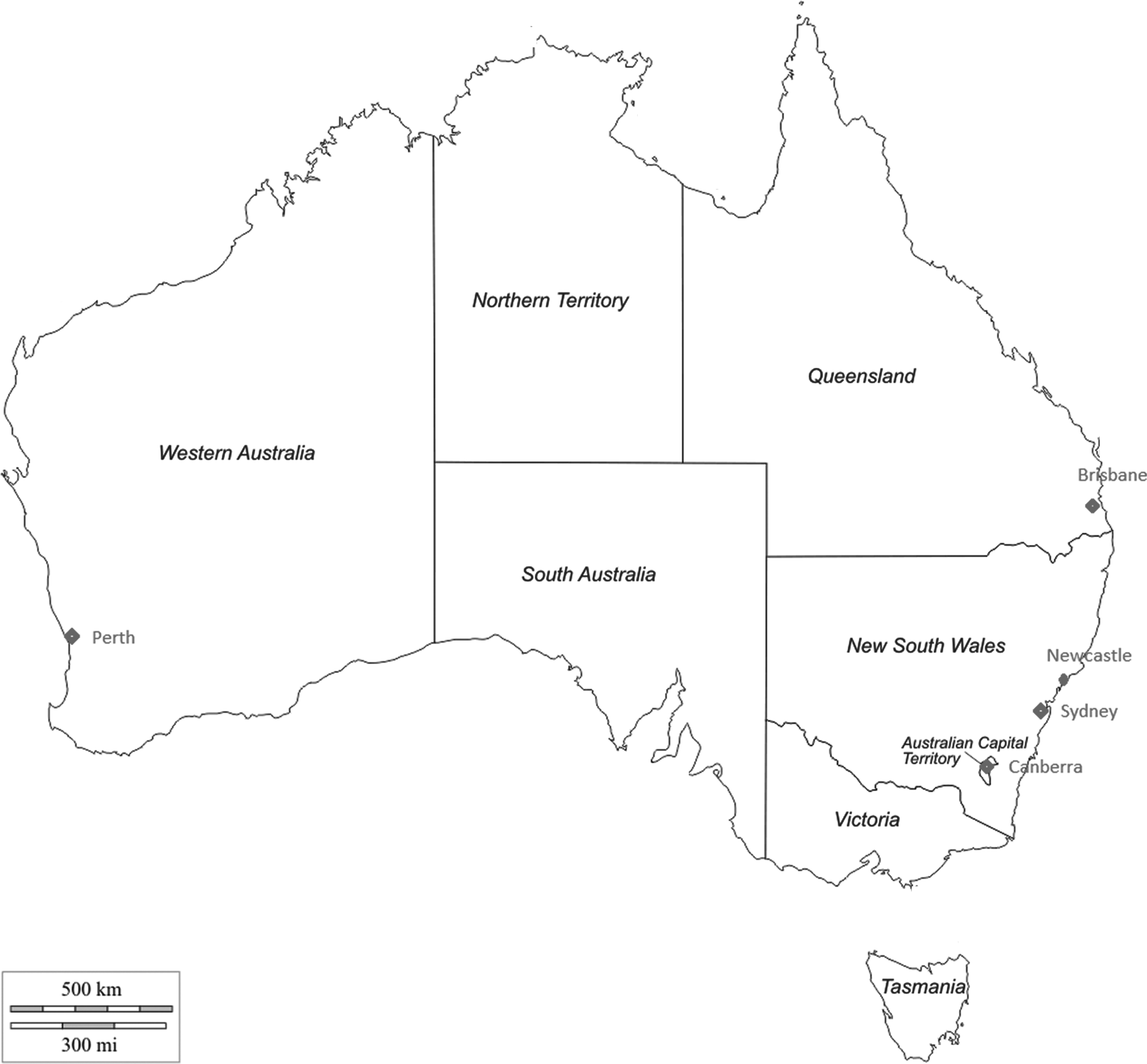
Map of distribution of ABCTB collection nodes.
This situation coincided with the resource achieving one of the early objectives of having 5000 recruited donors, and applications were invited from those sites wishing to continue collections and identify those who wished to cease recruitment. Analysis of these applications led to a winding down of activity over the next 1–3 years with the closure of four sites. Sites were also encouraged to seek local sources of financial support. One of the centers (Site 8) is now fully funded by a local research grant, and another (Site 7) receives some local institutional support.
The criteria used to assess the continuity of centers included assessment of sites with the lowest cost per donor recruited, which had an obvious bias to the sites recruiting the largest number of donors that by-and-large required a smaller comparative level of salary support (Sites 2 and 4). However, this was not the sole consideration, and those sites that had the highest proportion of cases with the full complement of blood, fresh tissue and FFPE material were highly regarded, as were those able to collect a comprehensive clinical history.
Of the centers that ceased activity, one (Site 1) opted to discontinue, as they felt that they had been supportive and engaged collaborators since the inception of ABCTB, but that there were now added pressures on the breast cancer clinic and pathology laboratory such that they could not guarantee the same level of support. Site 3 had recently lost their experienced Tumor Bank officer and were having difficulties finding a suitable replacement, which was adding strain to the diagnostic pathology department; Site 5 was also involved in collections for a local breast tumor bank which they wished to expand without conditions imposed by a larger organization such as the ABCTB; and Site 6 had dwindling recruitment levels due to changes in clinic staff, leading to decreased engagement with the consenting process.
Despite no longer being a full collection center, Site 1 continues to participate in limited tissue banking activity under the governance of the ABCTB, specifically aimed at collection of metastatic breast cancer, with funding being procured from local sources.
The most successful sites in terms of cost per donor and samples procured have been those where there is a strong link with, and support from, diagnostic anatomical pathology departments, particularly where there is involvement by the senior pathologist(s).
In 2012, two new sites joined the network under a new ‘affiliate’ agreement. These sites self-fund collection activities and may reserve individual samples for local research programs, but they enter donor and sample information into the central database, follow ABCTB SOPs and have the support mechanisms of the central hub. A table of the collection sites with the differences in funding and operation is shown in Table 2.
Donor recruitment levels reflect the number of new donors consented per annum. Specimens associated with donors are: 84% blood, 37% frozen tissue, and 81% paraffin embedded tissue. Blood is separated into fractions of whole blood, white cell buffy coat, plasma, and serum with an average of 10 vials stored per donor.
Financial Scale and Allocation for Specific Functions
Operating funds from competitive grant sources for the ABCTB have fluctuated from around A$500,000–$900,000 pa.
The activities of the resource have adapted accordingly to the funding available. The comparatively well-resourced early years when the bank was being established proved essential to enable collection activities to be established and supported and allowed us to build up a large enough cohort to meet most research demands but were not financially sustainable in the long term. The major cost to the resource is staffing, the tumor bank officers are largely autonomous at each site and we need to employ fully qualified personnel who can work independently and at a level where we have full confidence in their abilities. Some staff are employed via health care organizations and others by universities/research organizations, all of which have significant on-costs in addition to base line salaries. Major employers in Australia apply ‘on-costs’ (otherwise known as overheads) to recover the costs of employing personnel (payroll tax, compensation, superannuation, long service leave): the University of Sydney on-costs add 29% to the base salary level.
However, despite donor numbers of over 6000 cases, there are still subgroups of disease where numbers are very low, and we need to continue recruitment of new donors to increase specimens in these areas. It is also necessary to continue collections that will reflect changes in treatment regimens over time, so maintenance of collection activities is required. Going forward, there are plans to implement a more targeted recruitment strategy to concentrate on obtaining resources from patients in cancer subgroups of under-represented cohorts. This is a challenge to implement since the grade and type of tumor are unknown prior to definitive surgery for the majority of breast cancers in Australia. It is however becoming more commonplace for some hospitals to perform a core biopsy prior to definitive surgery, which provides some opportunity to pre-determine specific types of donors.
As the collection of new donors decline, we divert more resources into the collection of outcome and longitudinal follow-up data. This is an increasingly onerous task and with an ever increasing cohort, will remain so. Again we are looking at ways to rationalize this by concentrating data collection on those cases of greatest utility and are currently developing a tier system that will be used to identify which cases are targeted for the most intense data collection. Tier One cases will have a complete clinical and outcome data set, while the lower tiers will have less invested in the continued collection of data. Data linkage opportunities with cancer registries and the death registry are also being explored but may be of limited utility.
As successes in breast cancer treatment advance, and patients are now surviving long term, it will also be necessary to make a decision as to the maximal and optimal number of years to collect outcome data. This will be both a logistical and financial decision, but researchers are generally requesting at least 10 years of outcome information.
Sources of Funding
Funding sources supporting our operations to date have been by competitive grant mechanisms. The initial Enabling Grant system provided by the federal NHMRC terminates in December 2014 and there is no equivalent infrastructure funding to replace this scheme. This will result in major financial concerns for many Australian resources, and operations will necessarily have to be scaled down.
The ABCTB operates a cost recovery mechanism for applicants to the bank but the income from this is small and the uncertain nature of both the type and volume of applications for material makes it an inconsistent income stream. Income from this source has varied from between A$5,000 to A$24,000 per year and is too unreliable to be allocated to any specific directed purpose such as employment of a staff member.
Although the establishment of the ABCTB was intended primarily to support academic research, it is within the terms of reference that engagement with commercial organizations may be considered. The reduction in competitive grant opportunities available may lead to more active engagement with such organizations.
Year-to-year funding for ABCTB is challenging. Currently different aspects of ABCTB operation are supported by three grants that range from between 3–5 years in duration. In addition, short-term,(up to 1 year) funding applications have also been sourced for small projects (e.g., data linkage) or for items of equipment. Long-term operational and financial planning is challenging in the absence of sustainable funding models.
Operating costs for collection centers have dropped over the last 4 years with central funding currently provided to two sites, from a peak of eight in 2010. This has been achieved by both reducing actual recruitment numbers but also by now having three sites that are able to self-fund activities. These sites have different mechanisms to support this—one has obtained local grant support; one has institutional support; and one operates by integration/support of diagnostic pathology services.
Future Directions
Two major reviews of the health and medical research sector in Australia, the Wills review in New South Wales, 2 and the Australia-wide McKeon report 3 in 2012 and 2013, respectively, both identified biobanking as a key research area that required support.
The national McKeon report identified that biobanks play a key role in accelerating research and that the demand for biobank services had increased considerably in the last decade and will continue to increase in the future. It also noted that Australia remains without a coherent national biobank strategy and national funding mechanism to support the long-term availability of biobank resources. It noted that “a national biobank strategy based on a hub-and-spoke model to coordinate all existing or newly created specimen based biobanks in Australia should be developed.” The responsibility for implementation was given to the NHMRC with a time frame of 2014–2015, but the report was silent on where funds would be sourced to achieve this, and there has been no information provided by NHMRC to date on an implementation plan.
The Wills review (NSW state wide) noted that biobanks are vital for the investigation of the risk factors for chronic disease and biomarkers for improved disease understanding and that adequate funding must be made to both establish new and maintain existing biobanking networks.
One of the recommendations of the Wills report was to: “Scale up and fund to ensure sustainability for existing research assets with a particular focus on: biobanking, bioinformatics, population-based cohort studies and record linkage.” The responsibility for this was given to the NSW Ministry of Health; the Cancer Institute of NSW; Local Health Districts; and Medical Research Institutes.
It was announced in July 2014 that $1.5 million over 3 years has been allocated to NSW Health Pathology to establish a state-wide approach to biobanking. The aim of the 3-year study will be to develop and oversee the implementation of a project plan to create a state-wide biobanking service. This is currently in the first stages of development, with the announcement of a project manager to scope the project, engage with stakeholders and develop an implementation plan, which will then be tested subsequent to agreement with a large stakeholder group that will likely include NSW Health pathology centers, major research precincts across the state, the Cancer Institute of NSW, and already functioning biorepositories. If the pilot is successful, it is hoped that a better integration of biobanking activities into the routine health care system might be achieved.
It is extremely unlikely that the ABCTB would be able to operate without any grant or other significant institutional support. Even if new donor recruitment were to cease completely, there is significant activity and therefore expenditure associated with the collection and cleaning of data. Key data items undergo an audit process, which is costly, but necessary to ensure the integrity of data items that will be utilized by researchers. Unless we can be confident of the quality of samples and data then the resource is of little value, so it is necessary to invest in activities that support this.
It is challenging to operate continually under financial uncertainty and the capacity of ABCTB to obtain funding over the past 8–10 years will not necessarily be repeated in the future, especially in times of decreased research infrastructure support.
We need to be forward thinking in our approaches to sustainability and embrace all opportunities, be they commercial, private, research, or directed individual fund raising campaigns.
If We Had Our Time Over Again.….
Although the ABCTB has been very successful in establishing a high quality resource in a relatively short time frame and has supported many projects, financial limitations continue to be a concern.
What we have done well
Use of technology
One direction the ABCTB has taken from the beginning is to utilize technology solutions whenever possible. This has included the adoption and expansion of an open source database (Caisis), which has resulted in very low start-up and ongoing costs and allowed customization; the development of an on-line application system for researchers applying to the bank, which has made the process both time and cost effective; development of an automatic audit tool within the database so that items requiring audit can be instantly displayed; and development of software to present a snapshot image from our image archive to the website. All these activities have reduced the time needed for the different processes and therefore a cost saving in personnel time.
Obtaining support from local health care facilities
Sites of recruitment/collection were only developed where there was support from the local medical/clinical community to champion collection on that site. This also resulted, in most instances, in significant ‘in-kind’ support, such as nurses administering ABCTB consent, private pathology companies providing pathology reports and FFPE blocks at no cost, public pathology departments providing access to equipment (such as microtomes and automated staining systems), access to medical records and data transfers from clinic data bases, all of which reduce our overall expenditure.
In hindsight there are options we could perhaps have pursued more vigorously including:
Engagement with breast cancer clinical trial groups
Although not necessarily well funded themselves, a closer relationship with clinical trials would most likely benefit both parties. Most trials have a tissue/blood collection component and the bioresource can provide the expertise to collect and process these in the best possible manner. The trial personnel are very adept at the consent process and the accurate collection of clinical data. Opportunities to work together would reduce costs for both parties, increase quality, and avoid repetition of tasks. This is an avenue we are now exploring more diligently and hope to have some combined activities in the near future.
Offer our services on a profit-based model to researchers
There are processes the ABCTB performs well—nucleic acid extractions; construction of TMAs; sectioning and staining of tissue; digital imaging of tissue sections, and while we do offer to perform these to local researchers on a cost recovery basis, and have done so, this is a potential income stream that we might have exploited more fully by advertisement. As there is a fine balance between our core business of biobanking and the type of service provision described above, and undertaking more of the latter has the potential to compromise our biobanking activities, this is an area not actively pursued to date but may be in the future, which may result in an income stream.
Linkage of data fields with electronic medical records
Data collection and verification costs are high but necessary to ensure the data that accompanies our donor records is accurate. Many healthcare facilities have electronic medical records and if we could link aspects of this—such as pathology results, and automatically upload verified diagnostic information, this would be a huge savings in time and cost. The difficulties lie in the large number of different EMR systems in use across our collection network; hospital firewalls making data transfer problematic ; and lack of the necessary resources to write (and run) the appropriate transfer code. Although ABCTB sources data from electronic sources where available, an avenue of active interest is to a more structured data linkage approach to overcome these challenges.
Footnotes
Author Disclosure Statement
The authors disclosed no conflicting financial interests.