




Abstract
Canine tumors are valuable comparative oncology models. This research was designed to create a sustainable biobank of canine mammary tumors for breast cancer research. The aim was to provide a well-characterized sample cohort for specimen sharing, data mining, and long-term research aims. Canine mammary tumors are most frequently managed at a local veterinary clinic or hospital. We adopted a biobank framework based on a large number of participating veterinary hospitals and clinics acting as collection centers that were serviced by a centralized storage facility. Recruitment was targeted at rural veterinary clinics. A tailored, stable collection kit (DogMATIC) was designed that was used by veterinarians in remote or rural locations to collect both fresh and fixed tissue for submission to the biobank. To validate this methodology the kit design, collection rate, and sample quality were analyzed. The Australian Veterinary Cancer Biobank was established as a network of 47 veterinary clinics and three veterinary pathology laboratories spanning over 200,000 km2. In the first 12 months, 30 canine mammary tumor cases were submitted via the DogMATIC kit. Pure intact RNA was isolated in over 80% of samples with an average yield of 14.49 μg. A large network biobank, utilizing off-site collection with the DogMATIC kit, was successfully coordinated. The creation of the Australian Veterinary Cancer Biobank has established a long-term, sustainable, comparative oncology research resource in Australia. There are broader implications for biobanking with this very different form of collection and banking.
Introduction
O
Currently, numerous single institution biobanks exist in Australia and worldwide as sample repositories for specific research clusters such as autism, 3 gynecological tumors, 4 cardiovascular disease, 5 and pediatric tumors. 6 In addition, there are many well established single institution generic biobanks that collect various tumor types and normal samples for medical research. Rutgers University Cell and DNA Repository in the USA is the world's largest university-based biobank. 7 More recently, large multi-institutional biobanks have been established to maximize the collection of valuable patient samples and create high volume research cohorts.
In Australia, this includes the Victorian Cancer Biobank, which began in 2006 and now has over 33,000 samples. 8 Internationally, the ‘String of Pearls’ biobanking initiative was established in 2007 and includes all eight university medical centers in the Netherlands. This biobank was established to enhance research into stroke, Type 2 diabetes mellitus, hereditary colorectal cancer, inflammatory bowel diseases, leukemia, neurodegenerative diseases, renal failure, rheumatoid arthritis, and arthrosis. 9 The Guangzhou Biobank, a collaboration between the University of Birmingham, the University of Hong Kong, and the Guangzhou Occupational Diseases Prevention and Treatment Centre in China, has over 30,000 participants and has been in existence for over a decade. 10 Finally, possibly the world's largest biobank, the UK Biobank, has collected DNA from over half a million participants. 11
Increasingly, biobanks have been established to study areas outside those of traditional human medical research. This has included the study of aquaculture species 12 and of endangered species conservation. 13 A novel use of biobank material has been to minimize costs of training guide dogs by identifying polymorphisms in genes that are related to their working capabilities. 14
A contemporary use has been the establishment of comparative oncology biobanks for translational research. A number of these biobanks collect tumors from domesticated dogs and cats for use as animal models for human cancers. In particular, these include canine cancers such as lymphoma, osteosarcoma, and prostate carcinoma. 15 One of the largest examples of comparative oncology biobanking is the Pfizer–Canine Comparative Oncology Genomics Consortium (CCOGC) Biospecimen Repository, an independent nonprofit organization that has collected over 1600 canine cancer samples that include lymphoma, melanoma, hemangiosarcoma, and osteosarcoma. 16 Canine mammary tumors, similar to other tumor types such as lymphoma and osteosarcoma, are considered a good natural model for their human disease counterpart.17,18 Similarities in breast cancer between the two species include similar age of onset, 19 tumor morphology, 20 heterogeneity, and tumorigenetic pathways.18,21 Thus, it was our aim to establish a comparative oncology biobank for canine mammary tumors (CMTs).
Human biobanks are usually localized in established tertiary or medical institutions with pathology departments. The guidelines for specimen collection within these biobanks, although under refinement, are well established. 22 There is very little published data on creating a biobank using samples that are all collected outside such institutions.
In Australia, veterinarians often assume the roles of general practitioner, surgeon, and oncologist. Therefore, the tumors they remove would often be lost to a biobank as they are not collected at a hospital or larger referral center. In addition, veterinary samples collected by a tertiary hospital are more likely to be cases of increased complexity, which could produce a biased sample set of the disease to be studied.
Australia has one of the highest pet ownership rates in the world: more than one-third of all households own at least one dog.
23
We established the Australian Veterinary Cancer Biobank (AVCBB) to capitalize on this large potential donor pool. Initially, the biobank collection was begun with a pilot project focusing on canine mammary tumor collection. To expand the catchment area a postal biobanking kit, the DogMATIC (
In order to determine the viability of this form of biobanking, we examined the quality of samples collected and the attitudes (towards biobanking of samples) of participating veterinarians. The establishment of a CMT biobank provides a repository of samples available to researchers to improve our understanding of breast cancer in both humans and dogs. In the long term, the biobank has the potential to create a foundation for identifying new cancer biomarkers and improved treatments.
Materials and Methods
An animal ethics application was submitted to the RMIT University Animal Ethics Committee (RMIT AEC). This committee decided that this project did not to require formal ethics approval, as it did not fit within their purview or within the current Australian Code for the Care and Use of Animals for Scientific Purposes, 8th edition (2013). This was because the samples were collected as part of the normal treatment of the animal. In addition, as no information about the owners was received it also conformed to the Australian Privacy Act (1998).
DogMATIC kit: Sample collection and storage
Veterinary clinics were recruited across both metropolitan and rural Victoria, Australia, over a period of 6 months. Each clinic was provided with the DogMATIC sample collection kit. This kit included:
1. A sample collection instruction sheet 2. A barcoded patient history form: dog's name, breed, age, reproductive history, mammary tumor history; sample collection time, date and temperature of sample storage 3. Two sterile single-use 5 mm punch biopsy needles (Vital Medical Supplies, Sydney, Australia) 4. Two sterile forceps (Medilife, Sydney, Australia) 5. One pre-labeled ‘tumor’ 3 mL cryovial (Astral Scientific, Sydney, Australia) filled with 2.5 mL RNAlater (Sigma Aldrich, Australia). The vial was color coded with a blue cap and barcoded 6. One pre-labeled ‘normal’ 3 mL cryovial (Astral Scientific) filled with 2.5 mL RNAlater (Sigma Aldrich). The vial was color coded with a yellow cap and barcoded 7. A permanent marker 8. A barcoded specimen container containing 70 mL of 10% neutral buffered formalin (NBF) (Grale Scientific, Melbourne, Australia) 9. 3 sheets of Fan Pad-GL (Grale Scientific) 10. Two separate specimen bags (Grale Scientific) 11. A reply paid envelope
The sample collection sheet instructed veterinarians to sample towards the center of the lesion, to avoid surgical margins, and any obvious necrotic areas. Basic data entry details including collection date, time and storage method (refrigerated or ambient temperature) prior to postage were recorded using the patient history form. This information form was also used to log the dog's first name, age, breed, reproductive history, and previous history of mammary tumors. The patient history form was pre-barcoded to match the barcode of the cryovials. Veterinarians also noted their consent to be contacted by the AVCBB in the future for follow-up information on the animal. Follow-up information was collected from veterinary clinics via phone, fax or email and stored in a database (Access, Microsoft 2010).
The two sets of sterile forceps and punch biopsy needles were used to sample the tumor and any adjacent grossly normal mammary tissue, if available, respectively. These samples were stored in cryovials on which the dog's name, date, and veterinary clinic were recorded using the permanent marker. In the first 3 months of the pilot study, it was noted that very few fixed samples were being submitted to the AVCBB.
Consequently, it was decided to add the formalin-filled specimen container to maximize fixed tissue sample collection. To ensure the formalin did not leak during transit, formalin neutralizing pads (Fan Pad-GL) were wrapped around the sample pot in a separate specimen bag; the second specimen bag separated the cryovials from the formalin sample. The samples and information form were submitted to the biobank using the reply paid envelope and posted at ambient temperature.
Rural veterinarians submitted samples via postal mail, whilst metropolitan veterinary clinics also had the option to contact the AVCBB directly and have the samples collected in person.
Following surgery, formalin-fixed tissues were provided either by the veterinarian or from a participating veterinary pathology service. In addition, the veterinary pathology services also submitted any suspected CMTs that they received from nonparticipating veterinary clinics. Fixed samples were classified based on WHO classification for CMT. 24
After receipt of samples at the biobank, the number and type of samples were recorded. The date and time of collection and storage conditions of these samples was also recorded in addition to all patient data. The fresh samples in RNAlater were stored in an −80°C freezer until enough samples were received for batched RNA isolation.
DogMATIC kit validation: The view of biobank network clinics
In order to gauge the success and viability of this form of biobanking, all veterinary clinics that submitted a sample were asked to participate in a brief telephone questionnaire at the end of the pilot study. The questionnaire contained eight questions:
1. Were the kit instructions easy to understand? 2. Was the kit easy to use? 3. Would the clinic be willing to fix samples as part of the tissue banking kit? 4. What percentage of all histology/tissue samples in general was sent histological for diagnosis? 5. Over what time frame would the clinic be willing to continue to participate in sample collection? 6. If the AVCBB also offered a histological diagnostic service, would that increase the likelihood of participating in future research projects? 7. What form of communication between the AVCBB and clinic is preferable? 8. Did the interviewee have any other comments or suggestions regarding the sample collection kit?
Questions 1, 2, 3, and 6 were Yes/No response questions. The AVCBB staff member conducting the interview recorded responses to all questions in hard copy.
Testing RNA quality of remotely collected samples
Total RNA was isolated from cryovial samples according to the manufacturer's instructions (RNeasy kit, Qiagen, Venlo, Netherlands). Isolated RNA and RNA loading dye (New England BioLabs, Ipswich, MA, USA) were separated in a 1% denaturing agarose gel with Gel Red and TAE buffer pH 8. 28s and 18s ribosomal bands were visualized under UV light.
In addition to determining the RNA integrity, the purity and RNA concentration of the final sample were also determined using the NanoDrop spectrophotometer (Thermo Scientific, Waltham, MA, USA) by evaluating the ratio of the absorbance of the sample at both 260 and 280 nm. The concentration of the RNA sample was used to calculate the total RNA yield. Samples that did not produce visible 28s and 18s rRNA bands were excluded from future research use.
Statistical analysis
The correlation between transit time and the concentration of RNA isolated from the tissue was determined by establishing the coefficient of determination (R 2 ) using GraphPad Prism version 6.00 for Windows (GraphPad Software, La Jolla, CA, USA).
Results
Biobank network and collection rate
The AVCBB created a network of 47 veterinary clinics and three veterinary pathology services spread over 200,000 km2 in Victoria, Australia. One hundred sample collection kits were distributed to veterinary clinics during the first 6 months. During the first 12 months, 17 veterinary clinics submitted at least one CMT case: a response rate of 36%. Six veterinary clinics submitted two or more suspected mammary tumor cases, with the number of cases submitted over the year from these clinics ranging from two to six. In total, 30 CMT cases were submitted using the DogMATIC kit in the 12-month pilot project, a collection rate of 2.5 fresh sample cases per month. The total cost for each DogMATIC kit including consumables and postage was under $30 AUD (approximately $27 USD/€ 20).
Of the 30 CMT case samples received during the pilot project, seventeen were submitted without a corresponding fixed tissue sample. These cases were not submitted to a participating veterinary pathology service.
The histological classification of samples collected during the pilot project is listed in Table 1. In addition to the 30 cases received from veterinarians using the DogMATIC kit, the biobank also received formalin samples from participating veterinary pathology clinics. This represented a further 111 suspected mammary tumors (just over 9 samples per month). The histological classification of these samples is summarized in Table 2. Follow up data (including survival) on animals from which samples were submitted using the DogMATIC kit or a pathology service, was also collected and will continue until animals are deceased.
N, normal; T, tumor. When the transit time is unknown it is listed as unavailable.
Transit time
The transit time from the participating clinic to the AVCBB ranged from 5.5 hours to 240 hours (Table 1). The average transit time for samples from time of collection in RNAlater until storage in an −80°C freezer was 76 hours (3.2 days). Two cases (24 and 25) took longer to arrive than the recommended time in RNAlater (7 days) to reach the biobank. Despite this, the tumor samples from both cases still demonstrated intact RNA. It was not possible to determine the transit time for five cases; nine out of the ten samples still produced intact RNA. There was no significant correlation between the transit time and the total RNA yielded from samples (Fig. 1) (R 2 =0.027).

Scatterplot of RNA concentration compared to the transit time. There was no correlation between transit time and RNA yield. R 2 =0.026
Survey results
The survey results from 15 of the 17 veterinary clinics that supplied samples in the pilot project are as follows:.
1. All participants found the kit easy to use, the instructions easy to understand, and they were also willing in the future to collect fixed tissue samples in addition to the fresh samples for research.
2. All of the clinics were willing to participate for at least 12 months. Over 60% of clinics that took part in the survey indicated they submit less than half of all surgical tissue samples for histological diagnosis, usually due to the financial costs incurred by the owner.
3. All but one clinic indicated that providing a diagnosis, as part of their participation, would increase the likelihood of participating in research projects.
4. Two veterinary clinics were not willing to participate in the survey.
Comments for question 8, which was open-ended, included:
• That the AVCBB contact details be easier to find • The forceps were unnecessary • They often forgot about collecting for the biobank • A poster to display in their clinic would help remind them about the biobank • Send extra cryovials containing RNAlater as tumors are often large • A project timeline for CMT sample collection would helpful
Sample quality evaluation
Every sample received using the DogMATIC kit was analyzed. There were 51 tissue samples in total (30 tumor and 21 matched normal mammary tissue samples as determined by gross examination) from 30 CMT cases. Forty-three of the 51 samples available for analysis demonstrated intact 28s and 18s bands using gel electrophoresis (Fig. 2). Forty-six samples produced a 260/280nm ratio of greater than 1.90 indicating pure RNA (Table 1). The concentration range of these samples was 2.4–870.7 ng/μL (Table 1). When available for comparison, in each case there was no difference in the quality or concentration of RNA extracted from the tumor and normal tissue samples. Overall, intact RNA was isolated from greater than 80% of samples. Consequently, the final total RNA yield ranged from 0.71–43.54 μg. The average total RNA yield was 14.49 μg. These results clearly demonstrate that the DogMATIC kit is suitable and sufficiently robust for the timely collection of samples for RNA extraction. The resulting RNA was of sufficient quality and yield for use in applications such as qPCR, gene microarrays, and other molecular analyses.
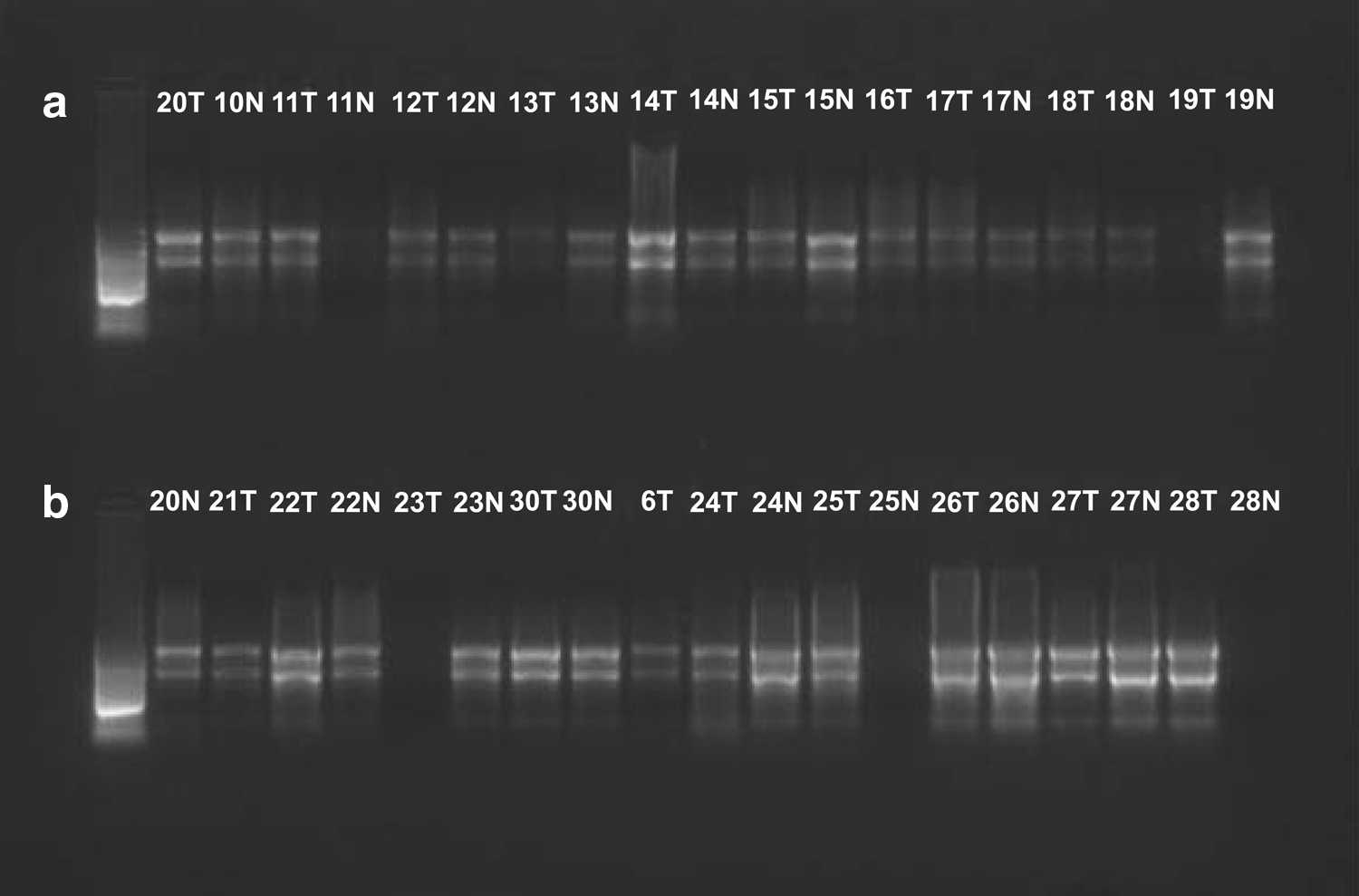
Representative denaturing agarose gel electrophoresis of RNAlater stabilized samples (N, normal; T, tumor) demonstrating intact rRNA 18s and 28s bands. No rRNA bands detected for samples 19T, 23T, 25N, 28N.
Discussion
The aim of establishing the Australian Veterinary Cancer Biobank was to create a long-term comparative cancer research platform in Australia. The DogMATIC kit was designed to allow receipt of samples from remote and rural locations. Many features of cancer in pet dogs can uniquely contribute to our understanding of cancer pathogenesis, progression, and therapy in humans. 17 Despite this, there has been little visible growth in comparative oncology research in Australia.
Initially, establishing a veterinary oncology biobank encountered some unique obstacles. First, human oncology biobanks often use an organizational structure based at on one or more geographically linked groups of high volume hospitals/institutions. This structure allows the biobanks to exploit on-site surgical and pathology facilities, minimizing cold ischemic time of samples and maximizing the amount of tissue that can be sampled for research. This is important as a cold ischemic time, the period from surgical removal to fixation/stabilization of breast cancer specimens, should be kept below 1 hour, according to American Society of Clinical Oncology guidelines.25,26 To our knowledge, there is only one published example of a human cancer biobank that has been established at an institution without an integrated pathology service 27 and none that exclusively use off-site collection.
The AVCBB model deviates from a traditional human biobank model. This is due to the fact that canine patients with a suspected mammary tumor receive treatment/surgical resection at a local veterinarian clinic. Veterinarians fulfil a range of roles, including those of primary care physician and surgeon. Dogs with mammary tumors are most commonly treated by their local veterinarian with a small percentage of cases being referred to either speciality or tertiary veterinary clinics. This structure provided a challenge in creating a canine mammary tumor biobank for comparative oncology research.
Instead of using a traditional biobank structure, we adopted one that utilizes multiple collection sites with a single repository. An important benefit of this structure is that it enhances the sample catchment area, increasing the likelihood of obtaining samples. This is particularly important, as the incidence of canine mammary tumors tends to be low in urban areas where anecdotally a higher proportion of female dogs are spayed at a young age. This is also the reason the majority of participating clinics were recruited from rural areas where spay rates are lower. Traditional dogma has been that spaying a dog before 2.5 years of age leads to a significant reduction in the risk of mammary tumour development.28,29 Thus the majority of participating clinics were recruited from rural areas where spay rates are lower.
Due to this being a prospective collection method, 17% of cases submitted to the AVCBB were not CMTs (either benign or malignant). The reported range of the incidence of malignant CMT is 26%–73%, 31 whilst the WHO guidelines suggest 41%–53%. 24 These correlate well with our study where 40.7% of CMTs were malignant (Table 2).
Our results demonstrate that over 80% of samples collected offsite in rural locations yielded intact RNA with an average sample yield of 14.46 μg. It is unlikely that any of these samples contained significant amounts of necrotic material, as the rRNA bands following gel electrophoresis would not be discrete and there would be smearing towards the anodal end of the gel. Furthermore, the overall yield of RNA would be very low if necrotic areas were present in the sample. The intact average sample yield allows for downstream experiments, for example, microarray, RNAseq, and qPCR.
Cold ischemic time (although not calculated) could explain why some samples with only short transit times demonstrated degraded RNA (Fig. 2). Intact RNA can be isolated from human breast cancer samples with cold ischemic times of up to 30 minutes. 32 This time frame could be used as a future recommendation to veterinarians further improving sample quality. The sample registration form has been amended to include cold ischemic time for future collections.
A limitation in the pilot study design was the ability to accurately establish the composition of the RNAlater samples provided. For example, the normal tissue may have contained infiltrating tumor cells. To remedy this, the AVCBB will conduct a trial using sterile surgical markers to ink the sampled area for both the normal and tumor samples. This will allow histological analysis of the area surrounding the punch biopsy to determine the suitability of the samples taken.
Developing and then conducting a trial with the DogMATIC kit resulted in successfully establishing a veterinary biobank. Based on our initial results, if the DogMATIC kits were expanded nation-wide, an annual submission rate of at least 100 samples would be realistic. Although the submission of DogMATIC kits with only RNAlater samples was an initial design flaw, this was remedied by the addition of the formalin container.
The results of our survey demonstrate that the kit was easy to use and that the participating veterinarians were prepared to participate in biobank collection long-term. This provides a foundation for increasing the collection size in the future. An interesting result from the survey was the low level of histological diagnoses, with two-thirds of surveyed clinics sending less than 50% of all fixed tissue samples for histological diagnosis. This highlights the under-utilization of a valuable resource in research, be it oncology, veterinary, or comparative. The cost of histological diagnosis can be a strong deterrent for owners, and our findings support the future introduction of pathology service link to comparative biobanks.
As some participating clinics may not have had a CMT case during the collection period of our pilot study, the sample submission rate of 36% could be artificially low. Regardless, there is the potential to improve both the response rate and compliance of veterinarians. The addition to the kit of a formalin pot, rather than relying on collection from veterinary pathology services, greatly improved the number of matched fresh and fixed samples returned. The first fifteen samples received following this current pilot study have all included fixed samples. In addition, the feedback from the survey was, given the large size of tumors, veterinarians were willing to collect more fresh samples for RNA. Consequently, the DogMATIC kit now includes two tumor sample cryovials.
Two important sustainability issues in biobanking stem from the nature of the funding and the limited scale of collection A benefit of the AVCBB's method of biobanking is that its foundation is based on a large-scale collection network. 33 Also, as the kit is stable for a year at ambient temperature, the cost is low and in some cases bypasses the costs needed for pathology and renders the approach more sustainable in the long term.
Canine mammary tumors are a good natural model of human breast cancer and can provide a valuable resource for comparative oncology research. 17 The establishment of the AVCBB, which we believe is the first of its kind in the world, provides a long-term facility to provide researchers access to these under-valued tumor samples. The creation of this network also provides a foundation for supporting comparative oncology trials in the future. The success of using domestic dogs for both disease research and comparative oncology trials is keenly illustrated by the success of the Comparative Oncology Trials Consortium (COTC), based in the United States. Since its inception in 2003, this consortium has successfully completed nine clinical trials, of which two agents have also Phase 1 human studies.34,35
In conclusion, the results of this study demonstrate that remote biobanking can produce modest sample sizes with good quantities of high quality RNA matched with corresponding formalin fixed paraffin embedded tissue and follow-up patient data. These samples are available for molecular, biomarker identification, and survival analysis studies. Consequently, the establishment of the AVCBB has created a long-term comparative oncology research resource. If this approach to biobanking were to be adopted internationally, then it may require owner consent forms to comply with local ethics requirements, or investigators may choose to obtain consent in future iterations of the protocol.
There is also the applicability of using this type of collection kit for other tumor types from almost every species. The use of such a kit for remote collection of tissues allows smaller regional hospitals to participate in biobanking. The samples, if returned within 10 days, produce high quality RNA. So in the case of rare tumors, this could increase numbers in a biobank significantly if every hospital in the region (Europe or the United States) could be a collection point.
Footnotes
Acknowledgments
The authors would like to thank all participating veterinarians and veterinary pathologists for their support in helping to establish the Australian Veterinary Cancer Biobank. This project has been funded by grants from the Australian Companion Animal Health Foundation and RMIT University School of Medical Science. KMM was the recipient of an Australian Postgraduate Award. We would like to thank Fiona Maxey for her helpful comments in the revision of the manuscript.
Author Disclosure Statement
No conflicting financial interests exist.