




Abstract
Collection of human whole blood for genomic DNA extraction is part of numerous clinical studies. Since DNA extraction cannot always be performed at the time of sample collection, whole blood samples may be stored for years before being processed. The use of appropriate storage conditions is then critical to obtain DNA in sufficient quantity and of adequate quality in order to obtain reliable results from the subsequent molecular biological analyses. In this study, EDTA whole blood samples were collected from 8 healthy volunteers, and different durations (up to 1 year) and temperatures (room temperature, 4°C, −20°C, and −80°C) of storage were compared. The effect of the addition of a DNA preservative agent was also assessed before and after storage. DNA concentrations measured by UV spectrophotometry and spectrofluorometry were used to calculate DNA extraction yields and double-strand DNA ratios. DNA integrity was controlled by agarose gel electrophoresis and long-range polymerase chain reaction. The impact of storage conditions on DNA methylation was also evaluated. Results showed that certain storage conditions have a significant impact on the DNA extraction yield but little or no effect on DNA integrity and methylation. Storage of EDTA blood at −80°C guarantees high-quality DNA with a good yield. Higher DNA extraction yields were obtained with the addition of a DNA preservative agent before thawing EDTA blood stored at −20°C or −80°C. Long-term storage at room temperature in the presence of a DNA preservative agent also appeared to be a reliable procedure.
Introduction
N
The handling of blood samples prior to DNA extraction is therefore a critical factor for many clinical studies. Inadequate storage conditions may indeed have a detrimental effect on both the yield and the quality of extracted DNA, which in turn may influence the results from subsequent molecular biological analyses. 4 A decrease in the DNA extraction yield and/or DNA quality can prevent the realization of planned experiments or result in inaccurate data. Moreover, if storage or transport conditions are different between collection centers, biases could be introduced between samples from multicentric studies.
In this context, determining reliable storage conditions for blood samples intended to be used for genomic DNA extraction is mandatory. The objective of the present work was therefore to evaluate the yield and the quality of genomic DNA extracted from EDTA whole blood samples that have been stored for up to 1 year at different temperatures, with and without the addition of a preservative agent.
Materials and Methods
Blood samples
Human blood samples were collected from 8 healthy volunteers at the University Hospitals of Geneva. The use of these human specimens was approved by the Ethical Committee for Research on Human Being of the Geneva state. All volunteers included in the study gave informed consent. Blood collection was done in 6-mL BD Vacutainer™ K2EDTA tubes (Becton Dickinson, Franklin Lakes, NJ). White blood cell counts were performed using a KX-21-N hematology analyzer (Sysmex, Kobe, Japan). For each subject, a total of 41 whole blood samples were prepared immediately after collection and stored at different temperatures for different periods of time (Table 1). In a first group, samples were stored without any additive, and DNA extraction was performed directly on EDTA blood after storage. In a second group of samples, 100 μL of DNAgard Blood solution (Biomatrica, Inc., San Diego, CA) was added to 300 μL of EDTA whole blood before storage. In a third group, 100 μL of DNAgard Blood solution (Biomatrica, Inc.) was added to 300 μL of frozen EDTA whole blood at the end of the storage period just before thawing the sample for DNA extraction. Whole blood samples stored at −80°C or −20°C were put in the freezer immediately after aliquoting. For thawing, frozen blood samples were placed at 37°C and regularly checked until complete defrosting. They were then immediately put on ice until processing.
The number of samples prepared for a given subject for the different storage conditions (temperature and duration) is indicated. Three types of samples were prepared: (1) EDTA: 400 μL of EDTA whole blood; (2) DgB before: 100 μL of DNAgard Blood solution mixed with 300 μL of EDTA whole blood before storage; (3) DgB after: 100 μL of DNAgard Blood solution mixed with 300 μL of EDTA whole blood before thawing, at the end of the storage period.
RT, room temperature.
DNA extraction
DNA extraction was performed on a QIAcube automated sample preparation system (Qiagen, Venlo, The Netherlands) with the DNeasy Blood and Tissue Kit (Qiagen) following the manufacturer's recommendations. Extracted genomic DNA was recovered in a final elution volume of 50 μL.
Determination of the DNA extraction yield and the double-strand DNA ratio
Two methods were used for the measurement of genomic DNA concentration in extracted samples. First, the concentration and the purity of extracted DNA were determined by UV spectrophotometry using a NanoDrop 3000 spectrophotometer (ThermoFisher Scientific, Waltham, MA). Second, spectrofluorometry was performed based on guidelines from LifeTechnologies using the Quant-iT™ PicoGreen dsDNA Assay Kit. Spectrofluorometric quantification assays were performed on a Synergy Mx instrument and analyzed with the Gen5 v2.0 software (BioTek, Winooski, VT). The DNA extraction yield, expressed as micrograms of DNA per milliliter of whole blood, was calculated for all samples. For each subject, DNA extraction was performed on 3 EDTA whole blood samples immediately after collection. The mean DNA extraction yield for these 3 samples was calculated and used as a baseline (T0) reference value for comparison with the different storage conditions. The effect of the different storage conditions on the DNA extraction yield was expressed as the relative DNA extraction yield (% of T0). The double-strand DNA (dsDNA) ratios were calculated by dividing the DNA concentration determined by spectrofluorometry by the DNA concentration determined by UV spectrophotometry.
Agarose gel electrophoresis
Extracted DNA samples were analyzed by electrophoresis on 0.8% agarose gels in 1× Tris/Borate/EDTA buffer. An amount of 100 ng of DNA was loaded into each well. The gel was run at 100 V for 2 h. After the migration, gels were analyzed on the ImageQuant LAS4000 instrument using the ImageQuantTL software (GE Healthcare, Little Chalfont, UK). The Molecular Weight Marker III, DIG labeled, 0.12–21.2 kbp ladder (Roche, Basel, Switzerland) was used for molecular weight determination.
Long-range polymerase chain reaction
Long-range polymerase chain reaction (PCR) experiments were performed using the GoTaq Long PCR Master Mix kit (Promega, Madison, WI). High molecular weight PCR products were analyzed by 0.8% agarose gel electrophoresis. Gels were visualized on the ImageQuant LAS4000 instrument using the ImageQuantTL software (GE Healthcare). The GelPilot High Range Ladder (Qiagen) was used for long-range PCR fragments molecular weight determination.
DNA methylation analysis
Methylation levels were compared between DNA extracted at baseline (T0) and DNA extracted after 1 year of storage in the following conditions: EDTA whole blood at −20°C, EDTA whole blood at −80°C, and EDTA whole blood with DNAgard Blood solution at room temperature (RT). DNA methylation was determined using the Epitect Methyl II PCR Arrays “Human stress and Toxicity” (Qiagen). This assay includes restriction enzymes and buffer, 2× qPCR mastermix with Rox and Sybr green, and 96-well PCR plates precoated with primer pairs for 22 gene targets. One methylation sensitive target and one methylation dependent target are included as internal controls. Assays were run following the manufacturer's instructions. In brief, 1 μg of DNA was divided into 4 samples, which were incubated overnight without enzyme (Mo), with a methylation sensitive restriction enzyme (Ms), with a methylation dependent enzyme (Md), or with both enzymes (Msd). The products were used as templates for Sybr Green qPCR in primer precoated 96-well plates and run on a 7500 Fast Real-Time PCR system (Applied Biosystems; ThermoFisher Scientific). Ct values were entered in the Qiagen designed data processor excel file. Returned data values were the % methylated (M) and unmethylated (UM) copies per gene target.
Statistics
Graphics and basic statistics were made with Microsoft Excel 2008. Statistical analysis of the differences in DNA extraction yields and dsDNA ratios between T0 samples and the various storage conditions was performed using the Kruskal–Wallis test (non-parametric one-way analysis of variance) with Dunn's multiple comparison post-test using GraphPad Prism v6.0 (GraphPad Software, Inc., La Jolla, CA).
Results
Determination of relative DNA extraction yields and dsDNA ratios
DNA concentration in extracted samples was first measured by UV spectrophotometry. Mean DNA extraction yields at baseline (T0), calculated from the 3 replicate extractions performed for each subject, ranged from 10.9 to 24.6 μg DNA/mL of whole blood and had DO260/280 ratios ranging from 1.85 to 1.91. It is noteworthy that the 8 volunteers had similar white blood cell counts (5.8 ± 0.6 g/L). The mean coefficient of variation (CV) of baseline DNA extraction yields was 6%. Relative DNA extraction yields for the different storage conditions are presented in Table 2. When EDTA whole blood was stored at RT, a rapid decrease was observed in the DNA extraction yield, which, after 2 weeks, was only one third of the baseline value (Fig. 1A). Storage of EDTA whole blood at +4°C also resulted in a progressive decrease in the DNA extraction yield over time. However, the process was much slower compared with RT. After 6 months at +4°C, the mean extraction yield had decreased by approximately 40% only. Storing EDTA blood at −20°C and especially at −80°C appeared to stabilize DNA extraction yield over prolonged periods of time. Indeed, the progressive decrease that occurred with the previous storage conditions was not observed. At −20°C, relative DNA extraction yields at 14 days, 6 months, and 1 year remained between 50% and 60%. At −80°C, relative DNA extraction yields >70% were obtained after 6 months and 1 year of storage. However, freezing EDTA blood had a direct adverse effect on the efficiency of DNA extraction. Indeed, after only 7 days at −20°C or −80°C, the extraction yield was already decreased by 30%. It is noteworthy that similar results were obtained on an independent series of EDTA blood samples processed and stored under the same conditions but extracted with an Autopure LS robotic workstation (Supplementary Data 1; Supplementary materials are available online at www.liebertpub.com/). These results suggest that the effect of freezing on the DNA extraction yield was independent of the DNA extraction method. The addition of DNAgard solution as a preservative agent before storage of whole blood at RT appeared to be effective. Relative DNA extraction yields in the 60%–80% range were maintained over 1 year (Fig. 1B). The addition of DNAgard solution before freezing at −80°C was also beneficial, since relative extraction yields >85% were obtained at all time points. In contrast, when DNAgard solution was added before storage at −20°C, the DNA extraction yield regularly decreased over time and reached, after 1 year, nearly one third of the baseline value. The explanation for this difference between samples stored at −20°C or −80°C with DNAgard solution is not known. It was also investigated whether adding DNAgard solution on frozen EDTA blood samples, at the end of the storage period, could have a beneficial effect. Very interestingly, it was observed that adding DNAgard solution before thawing samples stored at −80°C allowed to keep relative yields >90% to be kept over 1 year of storage (Fig. 1C). Similar results were obtained with samples stored at −20°C.

Evolution of DNA extraction yields according to storage duration—UV spectrophotometry data. Genomic DNA concentrations from extracted samples were determined by UV spectrophotometry as described in the Materials and Methods. The DNA extraction yield, expressed as micrograms of DNA per milliliter of EDTA whole blood, was calculated for all samples. For each subject, a baseline extraction yield (T0) was determined as the mean DNA extraction yield obtained from 3 EDTA whole blood samples extracted immediately after blood collection. This baseline value was used as a reference for calculating the relative DNA extraction yield (% of T0) of the different storage conditions. Values presented in the graphics are mean DNA extraction yields calculated using data obtained from the 8 subjects included in the study. Data from 3 groups of samples are presented: (
Mean values are shown in bold.
Genomic DNA concentrations from extracted samples were determined by UV spectrophotometry as described in the Material and Methods. The DNA extraction yield, expressed as μg of DNA per mL of EDTA whole blood, was calculated for all samples. For each subject, a baseline extraction yield (T0) was determined as the mean DNA extraction yield obtained from 3 EDTA whole blood samples extracted immediately after blood collection. This baseline value was used as a reference for calculating the relative DNA extraction yield (% of T0) of the different storage conditions. Values presented are mean DNA extraction yields and coefficients of variation calculated using data obtained for the 8 subjects included in the study. EDTA: 400 μL of EDTA whole blood; DgB before: 100 μL of DNAgard Blood solution mixed with 300 μL of EDTA whole blood before storage; DgB after: 100 μL of DNAgard Blood solution mixed with 300 μL of EDTA whole blood before thawing, at the end of the storage period.
CV, coefficient of variation.
Calculation of the relative DNA extraction yields obtained for the different storage conditions was also performed using DNA concentrations measured by spectrofluorometry. The mean DNA extraction yields obtained from T0 sample replicates ranged from 7.5 to 16.0 μg DNA/mL of whole blood. The mean CV of baseline DNA extraction yields was 6.9%. Lower DNA concentrations were measured by spectrofluorometry compared with UV spectrophotometry. The mean spectrofluorometry/UV spectrophotometry ratio was 0.83. Supplementary Data 2 shows the ratios of DNA concentrations determined by spectrofluorimetry to concentrations determined by UV spectrophotometry. These values correspond to the ratio of dsDNA to total DNA (single and double strands). Relative DNA extraction yields for the different storage conditions were calculated as before and are presented in Table 3. Overall, the results were similar to those obtained from the UV spectrophotometric data. A rapid and important decrease of the DNA extraction yield occurred in EDTA whole blood samples stored at RT (Fig. 2A). With EDTA samples stored at +4°C, −20°C, or −80°C, mean DNA extraction yields were decreased at all time points when compared with baseline extractions. Nevertheless, relative DNA extraction yields were always >60%, and a statistically significant difference (P < 0.05) was observed only for EDTA samples stored 14 days at −80°C. As with UV spectrophotometry data, decreased DNA extraction yields appeared to be reduced after only a few days of storage at −20°C or −80°C. The addition of DNAgard solution before storage at RT allowed to maintain relative DNA extraction yields >80% maintaining over 1 year (Fig. 2B). When the DNAgard solution was added before storage at −80°C, the DNA extraction yield was kept at the level of the baseline samples at all time points. In contrast, for samples stored at −20°C after the addition of DNAgard solution, the mean relative DNA extraction yield decreased progressively to reach only 38% after 1 year. In addition, at 1 year, a very high variability in the DNA extraction yield was observed. As seen with UV spectrophotometry data, adding DNAgard solution before thawing EDTA blood samples stored without any additives at −20°C or −80°C allowed high extraction yields to be obtained at all time points (Fig. 2C).
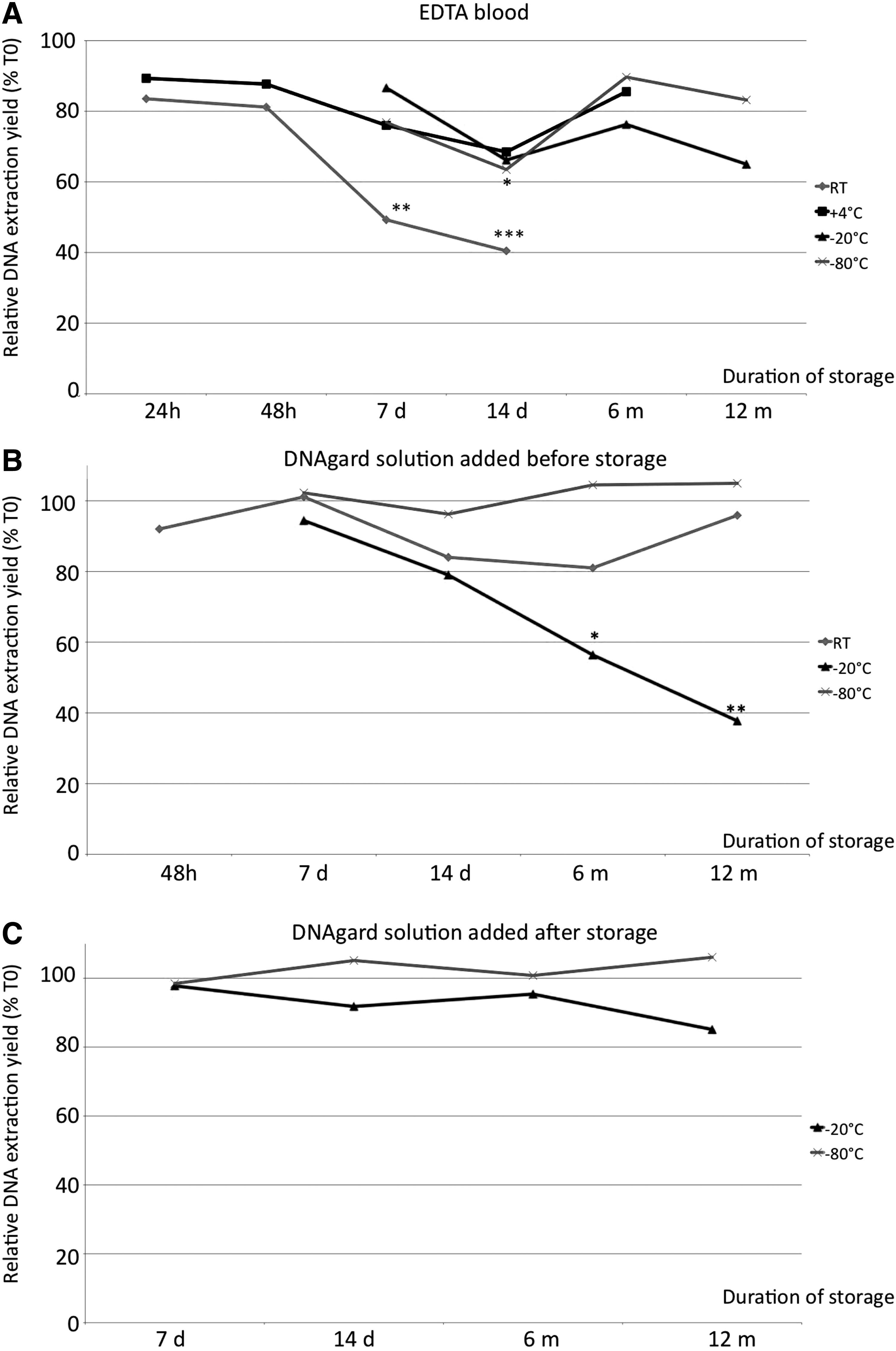
Evolution of DNA extraction yields according to storage duration—spectrofluorometry data. Genomic DNA concentrations from extracted samples were determined by spectrofluorometry as described in the Material and Methods. The DNA extraction yield, expressed as micrograms of DNA per milliliter of EDTA whole blood, was calculated for all samples. For each subject, a baseline extraction yield (T0) was determined as the mean DNA extraction yield obtained from 3 EDTA whole blood samples extracted immediately after blood collection. This baseline value was used as a reference for calculating the relative DNA extraction yield (% of T0) of the different storage conditions. Values presented in the graphics are mean DNA extraction yields calculated using data obtained from the 8 subjects included in the study. Data from 3 groups of samples are presented: (
Mean values are shown in bold.
Evaluation of DNA integrity
DNA integrity was controlled by electrophoresis on 0.8% agarose gels. A representative pattern obtained for the different storage conditions on one series of samples is presented in Fig. 3. Results for all subjects included in the study are presented in Supplementary Data 3. No signs of extensive DNA degradation were visible. All samples exhibited a similar gel pattern except that a more intense smear was observed in EDTA samples stored 7 and 14 days at RT and in samples stored 1 year at −20°C with DNAgard solution added before freezing. DNA integrity was also controlled by performing long-range PCR assays. Successful amplification of a 15-kb DNA fragment was obtained for all DNA samples (Fig. 4 and Supplementary Data 4).
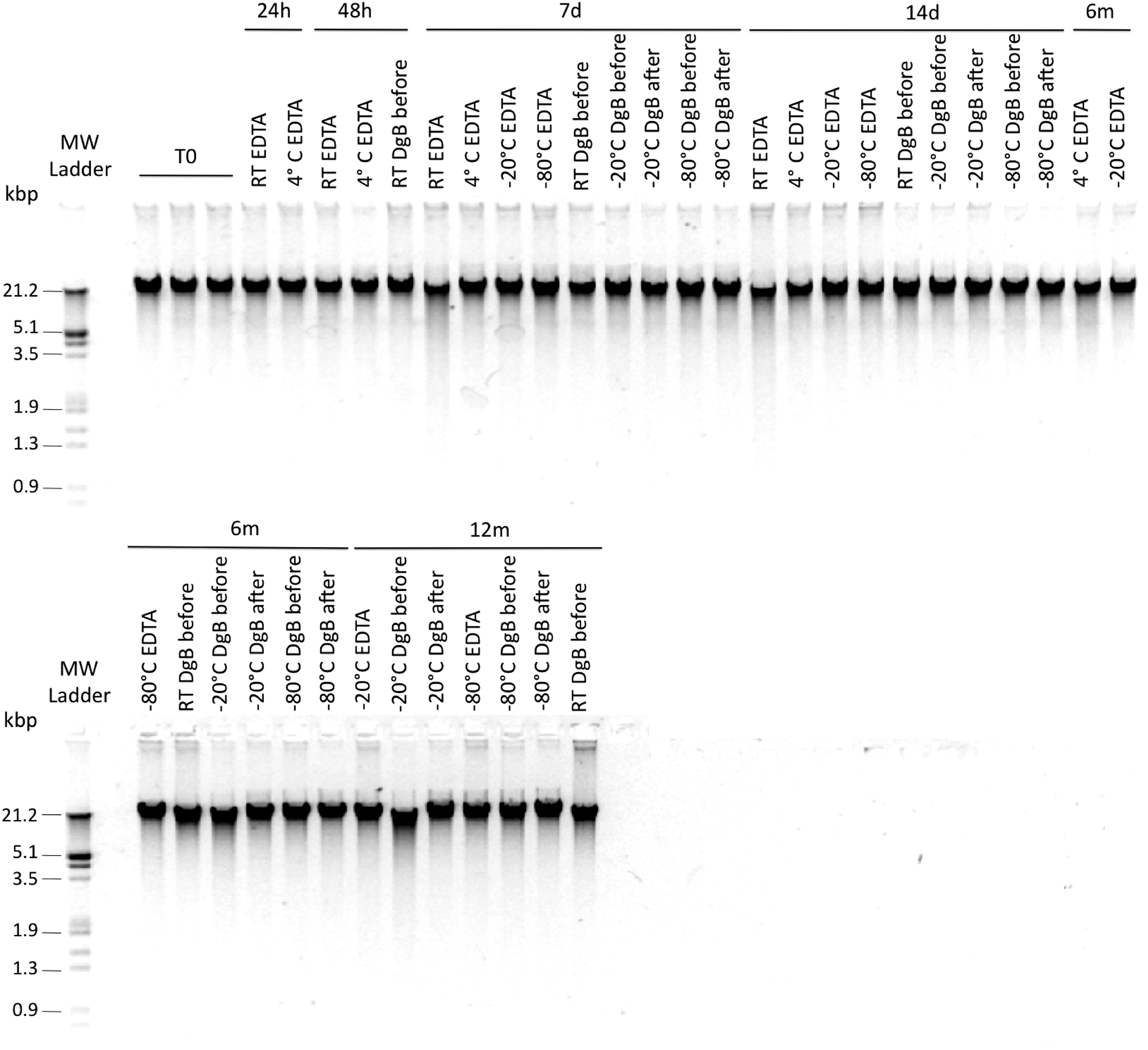
Agarose gel electrophoresis. For each sample, a 100 ng DNA input was analyzed via electrophoresis using 0.8% agarose gels. EDTA: 400 μL of EDTA whole blood. DgB before: 100 μL of DNAgard Blood solution mixed with 300 μL of EDTA whole blood before storage. DgB after: 100 μL of DNAgard Blood solution mixed with 300 μL of EDTA whole blood before thawing, at the end of the storage period.
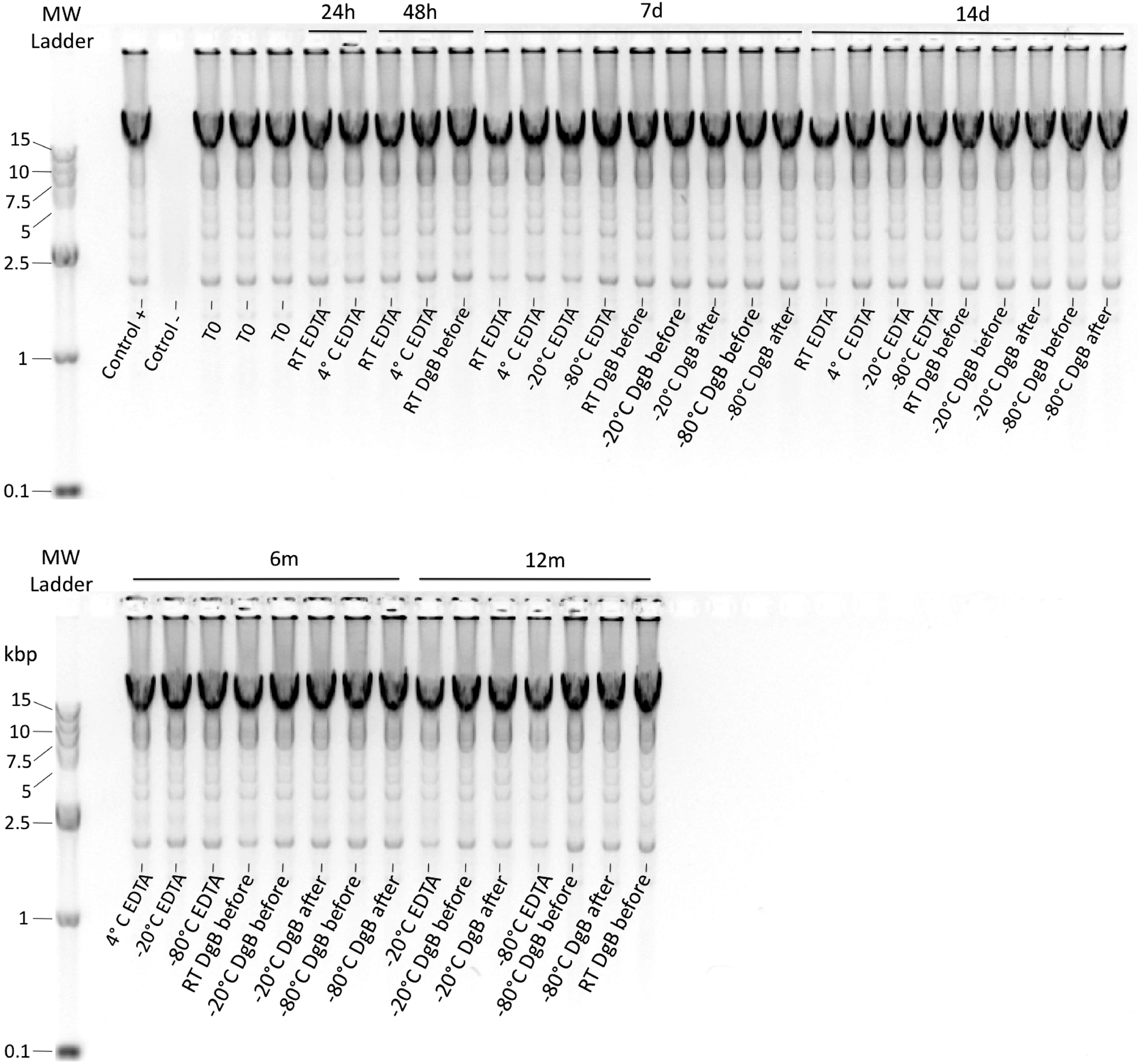
Long-range polymerase chain reaction (PCR). Long-range PCR experiments were performed as described in the Materials and Methods, and PCR products were visualized on 0.8% agarose gels. EDTA: 400 μL of EDTA whole blood. DgB before: 100 μL of DNAgard Blood solution mixed with 300 μL of EDTA whole blood before storage. DgB after: 100 μL of DNAgard Blood solution mixed with 300 μL of EDTA whole blood before thawing, at the end of the storage period.
DNA methylation
The effect of blood sample storage conditions on DNA methylation was assessed by comparing the methylation level of a 22-gene panel (all involved in cellular stress and toxicity pathways) in DNA samples extracted at T0 or after 12 months, at −20°C, −80°C, or RT with DNAgard solution. Percentages of methylated and unmethylated DNA were measured for each of the 22 genes in the different conditions (Table 4). All controls passed, and all assays were validated. For all except one gene, values ≥97% were obtained for unmethylated DNA. In contrast, analyzed sequences from the GDF15 gene were found highly methylated (>98%). In all cases, variation in the percentage of DNA methylation between the baseline DNA extraction and the different storage conditions was <1%.
Mean values are shown in bold.
Mean DNA methylation levels (%) of the 22 gene targets in DNA samples from the 8 healthy volunteers. DNA methylation levels were compared between DNA extracted at baseline (T0) and DNA extracted after 1 year of storage in the following conditions: EDTA at −20°C, EDTA at −80°C, and EDTA with DNAgard Blood solution at RT. DNA methylation was expressed in % methylated (M) and unmethylated (UM) copies per gene target.
Discussion
Results obtained in this study indicate that the temperature used for the storage of EDTA blood samples has a major impact on the DNA extraction yield. At RT, the DNA extraction yield was shown to decrease significantly after only a few days. Storage at +4°C slowed down this process, and the mean extraction yield was maintained >60% after 6 months. Storage at −20°C and −80°C also prevented this fast decrease, but freezing had an immediate impact on the DNA extraction yield. These data corroborate results from previous studies reporting the poor stability of DNA in whole blood samples kept at RT, while storage at 4°C or freezing maintained relatively good extraction yields.5–8 Several authors also observed that the action of freezing whole blood in itself resulted in a significant reduction in the DNA extraction yield.7,9 It is noteworthy that similar trends were observed in the changes of DNA extraction yield according to the duration and temperature of storage with UV spectrophotometry and spectrofluorometry data. Nevertheless, higher relative DNA extraction yields were measured by spectrofluorometry, suggesting that storage differently affects dsDNA and single-strand DNA (ssDNA), with dsDNA being less liable to degrade.
The addition of DNAgard Blood solution, a preservative agent, to EDTA blood before storage at RT or at −80°C significantly improved the DNA extraction yield compared with EDTA blood stored without any additive. Surprisingly, DNAgard Blood solution had a completely different effect when it was added before storage at −20°C. In that case, an important decrease in the DNA extraction yield was observed over time. At present, there is no explanation for this phenomenon.
The addition of a preservative solution before freezing whole blood samples may not always be practical or possible. In addition, numerous EDTA whole blood samples collected for genomic DNA extraction all over the world are currently kept at −80°C without any preservative agents. Whether the addition of DNAgard Blood solution after the storage period, just before blood sample thawing, could be beneficial was therefore investigated. Interestingly enough, DNA extraction yields close to baseline values were obtained at all time points with EDTA blood samples stored at −80°C. The method was also effective with samples stored at −20°C. This procedure therefore represents an innovative, effective, and practical solution for maintaining high DNA extraction yields from whole blood samples after long-term storage at suboptimal temperatures.
Agarose gel electrophoresis and long-range PCR experiments were performed to assess the effect of long-term storage on genomic DNA integrity. DNA electrophoretic patterns corresponding to storage conditions associated with a strong decrease in the relative DNA extraction yield (EDTA 7 and 14 days at RT, 6 and 12 months at −20°C after addition of DNAgard solution) showed a slight DNA degradation. Otherwise, the results obtained suggest that the different storage conditions evaluated did not significantly impact DNA integrity. These data are in accordance with previous studies showing that inappropriate storage conditions strongly reduced the DNA extraction yield but that the extracted DNA was suitable for most downstream molecular biological analyses.6,7,10,11 Regarding the use of a DNA preservative agent, the present work expands data from Udtha et al. who demonstrated that DNA of good purity and suitable for PCR applications was obtained from EDTA blood samples stored for 45 ± 5 days at RT with DNAgard Blood solution. 10 It is, however, difficult to draw general conclusions regarding the suitability of extracted genomic DNA for molecular biological analyses. Indeed, the assessment of DNA quality and integrity may depend on the technique used for evaluation. As an example, while many studies concluded that short-term storage of whole blood at 4°C had no impact on genomic DNA integrity, Malentacchi et al. observed altered genomic DNA patterns using Pulsed Field Gel Electrophoresis after only a few days of storage at 4°C. 12
DNA methylation is an important element in the regulation of gene expression. Changes in the methylation pattern of specific genes have been associated with the development of human diseases and, notably, tumorigenesis processes. 13 In this context, the suitability of DNA extracted from biological samples stored in biobanks for DNA methylation analyses is an essential aspect to evaluate for future epigenetic studies. 14 A few studies assessing changes in DNA methylation levels according to storage conditions have been conducted. In one study on placental tissue, no significant differences were found between samples stored at RT for 30 min and 24 h before having been frozen at −80°C. 15 Other authors stated that methylome profiling could be reliably performed on archived neonatal dried blood-spot samples after decades of storage. 16 These data suggest that DNA methylation is not sensitive to storage conditions. However, to the authors' knowledge, this aspect has never been investigated in the long term for whole blood samples. In the present work, the percentage of methylated and unmethylated DNA of a 22-gene panel was compared between baseline DNA extractions and DNA extracted from EDTA blood samples that had been stored for 1 year at −20°C, −80°C, or RT with DNAgard Blood solution. No differences were found between the different tested conditions, suggesting that DNA methylation was affected neither by long term-storage nor by the addition of DNAgard Blood solution. However, as only a limited panel of genes was investigated, changes in the DNA methylation pattern of other genomic DNA sequences cannot be excluded.
Defining optimal biobanking parameters for clinical studies means combining sample processing and storage conditions that guarantee the highest possible quality of the biological material with efficient, practical, and cost-effective procedures. For whole blood samples stored for genomic DNA extraction, the results obtained in this study showed that the standard procedure, consisting in storing EDTA blood at −80°C, allows for the recovery of high-quality DNA with a good yield. Nevertheless, greater DNA extraction yields can be obtained by the simple addition of DNAgard Blood solution before sample thawing. This finding is of special interest for all collections where whole blood has been stored at −20°C. When immediate storage of blood at −80°C is not possible, short-term transient storage at +4°C is acceptable, but long-term storage at RT in the presence of DNAgard Blood solution is a reliable alternative.
Footnotes
Acknowledgments
This study was supported by a grant from the Clinical Research Center of the Geneva University Hospitals (PRD 11-II-3). DNAgard Blood solution was provided free of charge by Biomatrica, Inc.
Author Disclosure Statement
No conflicting financial interests exist.
References
Supplementary Material
Please find the following supplemental material available below.
For Open Access articles published under a Creative Commons License, all supplemental material carries the same license as the article it is associated with.
For non-Open Access articles published, all supplemental material carries a non-exclusive license, and permission requests for re-use of supplemental material or any part of supplemental material shall be sent directly to the copyright owner as specified in the copyright notice associated with the article.
