




Abstract
Many types of biomedical research projects depend on high-quality biological material with a data set attached. The Quality Management System (QMS) is focused on operational standards for all organizational activities to ensure that the described quality of each procedure, product, or service is guaranteed. The implementation of the QMS is necessary for the provision of both high quality and repeatability of processes in research laboratories. The current status of implementation of the QMS is determined according to the “Organisation of Polish Biobanking Network” within the project “Biobanking and Biomolecular Resources Research Infrastructure BBMRI-ERIC” supported by the Polish Ministry of Science and Higher Education—decision number DIR/WK/2017/01. According to the above, preliminary audits in six Polish institutions were conducted and reports with recommendations concerning the implementation and improvement of the QMS in Polish biobanks were prepared. During all audits, 13 QMS main areas were analyzed. All audited units belong to the BBMRI.pl consortium, which is responsible for the creation of the Polish Biobanking Network within the BBMRI-ERIC structure. Among all 13 analyzed areas, 27 deviations were identified. Eleven of them were implemented in all audited biobanks but defined as the areas for improvement, 16 of them were not implemented correctly or not implemented at all, respectively (areas underlined to corrective procedures).
Introduction
Biobanks have experienced a tremendous expansion in the past few years, starting from the supporting role in advanced science to key sources for new biomedical research. 1 New investigations in the field of genetics, stem cell research, tissue engineering, and other modern therapies require high-quality samples. As Grizzle pointed out in his work, various types of biobanks, sample, and information sets will be continuously increasing, therefore the quality aspects of all associated data will become very important. Grizzle et al. explored the aspects of a robust quality management system (QMS) that needs to be in place, using experience gained at two institutions to show how this approach adds to a biobank's value. 2
The quality of research material is a factor affecting the results of scientific research, and is often responsible for the lack of success and repeatability in projects of both laboratory scientific experiments and sociological research. Depending on results from various scientific reports, it is estimated that ∼60% of the results of scientific observations are unique. In laboratory medicine and biobanking, the stage for eliminating this effect, and which is responsible for the preparation of material for research, is called the “preanalytic phase.” It consists primarily of working according to strictly defined operational procedures—starting from the sampling of the biological specimen its labeling, through transport, and its long-term storage. These procedures should apply to every biobank of human biological materials. The above-mentioned collection of data related to the biological sample is extremely important. The harmonization of the way clinical data are collected has an impact on subsequent statistical analysis. Therefore, when starting any project in the field of banking biological material, the type and method of the data collection should be carefully planned. These aspects are currently implemented only by some biobanking units, because of a lack of knowledge and specific standards of work with human biological materials.
Successful communication between biobanks and samples exchange is the basis of new scientific research and medical application development. 3 The correct implementation of quality standards is not only crucial for their scientific and commercial success but also necessary for building greater trust in the society. This will provide easier access to patient consent and generate a larger supply of samples in the future and more understanding toward the development and use of modern therapies resulting from such scientific work. 4
At present, there is no legal obligation to launch International Organization for Standardization (ISO)-related standards in EU biobanks (i.e.: ISO 9001, ISO 27001, ISO 14001), 5 so quality requirements need to be self-imposed by an independent organization such as BBMRI-ERIC and other entities. One of BBMRI-ERIC's main objectives is to support high quality in biomedical research. 6 The situation in Poland is similar—there are no approved regulations. Under the current legal framework, most of the important regulations exclude biobanks created for scientific purposes and cover only tissue banks, blood banking, and other entities that serve medical purposes. 7 Therefore, biobanking as a wider area of scientific activity is still unregulated in Poland. The only area relatively well covered by the legal system is the protection of patient data. 7 That is why in addition to the legal framework, quality standards must be implemented independently. According to the goal of high quality as a crucial foundation of future development, the Polish structure of BBMRI (BBMRI.pl) was created in 2017, involving seven scientific institutions. One of the tasks is to implement high-quality standards in the Polish Biobanking Network (PBN) and provide resources for future candidate institutions and promote the importance of quality in biobanking. The members of BBMRI.pl believe that maintaining proper standards of quality is crucial for the future scientific and commercial cooperation of the members of the biobanking community in Poland.
Following this approach, a group of specialists has been formed to carry out a set of tasks related to quality management in biobanking (called Task no. 3). All steps related to quality procedures will be implemented as a part of the project of the PBN in BBBRI.pl; therefore, all Polish biobanks could be very attractive partners for cooperation within European research consortia within a few years.
One of the first activities was a QMS audit performed within six biobanking units of the BBMRI consortium. The audit results were used to determine the subsequent steps of Task no. 3 and to show the importance of quality management to the present and future members/observers of the PBN. 4 The lack of proper QMS in biobanks may result in inadequate quality of the biological samples. This was also noticed by Litton, who claims that provenance information, which keeps track of the history of biological material and data, is a fundamental component in reproducibility and reliability of the biological samples. 8 Thus, taking into account the cost of sample collection and storage for possible scientific projects and cooperation, it is unacceptable to avoid the consideration of quality. 2
Materials and Methods
Audit background
During the audits of the biobanks, all data were collected according to following methods: review of QMS documents, processing records, and conversations with employees and observations. Preliminary audits in six biobanking institutions were conducted as the first step of the project task execution (Fig. 1). As a result, six audit reports with recommendations concerning the implementation and improvement of the QMS in Polish biobanks were prepared. The auditors worked on the basis of available standards: ISO 9001, 190011, 9004 and 20387.
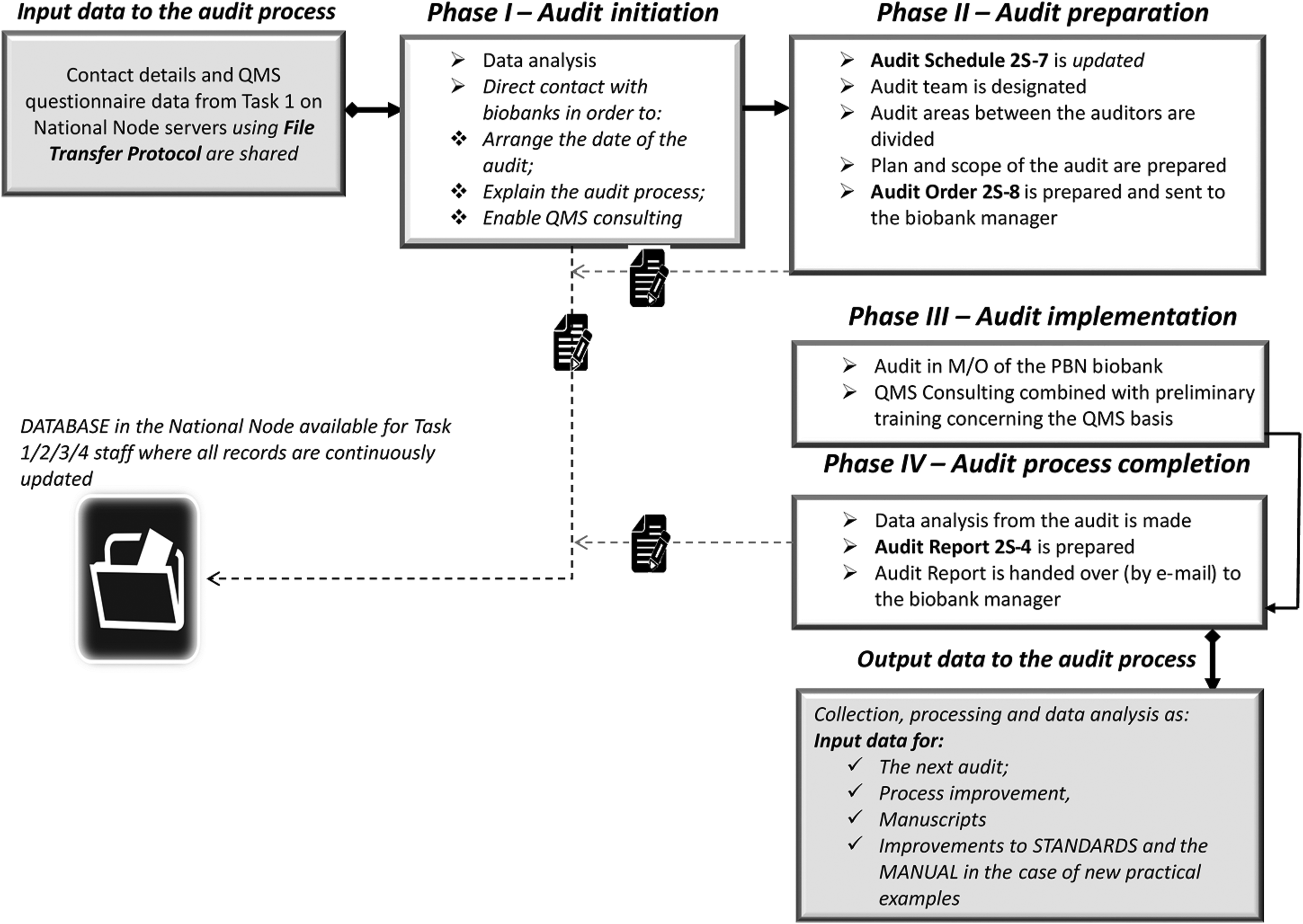
Process management and algorithm of QMS audit in members/observers from PBN. QMS, quality management system; PBN, Polish Biobanking Network.
The audit process in each biobank was planned in accordance with the ISO 19011 and 9004 standards:
An algorithm for conducting audits and communication with biobanks in the scope of audit and postaudit activities was developed; Templates of audit orders, audit reports, and schedules were prepared; The competences of leading and supporting auditors were determined; Checklists were prepared—containing several questions for the audited areas; The auditors were divided into teams; Audit areas were allocated to particular auditors (Fig. 1).
The starting point for the first audit was ISO 9001 and 9004, which recommend process approaches in organization management (total quality management [TQM]). Following ISO standards involves basic requirements in the QMS areas. As Karkoszka and Soković pointed out, an efficient integration of QMS simultaneously with the TQM approach is strongly supported by ISO 9001. Moreover, present standards are a basis of an integrated QMS (environmental management system, occupational health, and safety management system). Furthermore, different methods of nonconformities determination (in products, processes, and services) are recommended in each of the standards, respectively. 9
As previously mentioned, the main aim of the first audit was determination of the QMS level of implementation, and also developmental progress in each biobanking unit. Thirteen main areas were audited according to the check-points list. It is worth mentioning that all audits performed in the PBN can be assigned as external audits despite the fact that all audited biobanks belong to the PBN. As Lebedynetes and Karamavrova suggest, the ISO 9004:2018 “Quality management—Quality of an organization—Guidance to achieve sustained success” indicates that an audit is conducted mainly not only for efficient determination of compatibility level of the implemented QMS, but also can include other criteria. Thus, not only one standard can be involved, including for example, 9001, 14001, 20387, Quality Standards for Polish Biobanks (QSPB). 10
Auditors were engaged in the QM BBMRI-ERIC Working Group, were working on ISO 20387 in the Polish Standardization Committee, and were preparing Quality Standards for Polish Biobanks (QSPB). While process mapping for first, second, and third audits the team determined audit aims and scopes, control areas, and a questionnaire list.
It is important to point out that requirements from ISO 9001 are included in ISO 20387 as well. Moreover, QSPB are convergent with ISO 9001, 14001 and also 20387. A biobank from the PBN is obliged to implement QSPB, but it is not required to be certified with all the present standards (ISO 9001, 20387 etc.)
Every audit report contained observations and recommendations for the implementation/improvement of the QMS. It was planned that the first audit report would not contain nonconformities because of the following:
In Poland, there is no law regulating the activities of biobanks and thus there are no legal requirements for the QMS in biobanks;
The universal ISO 9001 standard could be the basis for conducting an audit for compliance in a biobank, whereas the implementation of the guidelines of this standard is voluntary;
The emerging ISO 20387 standard dedicated to biobanks has only recently been published, and the guidelines implementation will also not be compulsory;
The QSPB created by Task 3 are being prepared (published/will be accessible to the Observers and Members of the PBN in Q4 2018), and the implementation of the guidelines enclosed in the QSPB will be possible after publication (Fig. 2);
One of the main aims of the BBMRI.pl consortium is supporting and assisting the PBN Observers and Members; thus, audit reports present a set of recommendations for the QMS that will facilitate the implementation of the QSPB guidelines for biobanks.
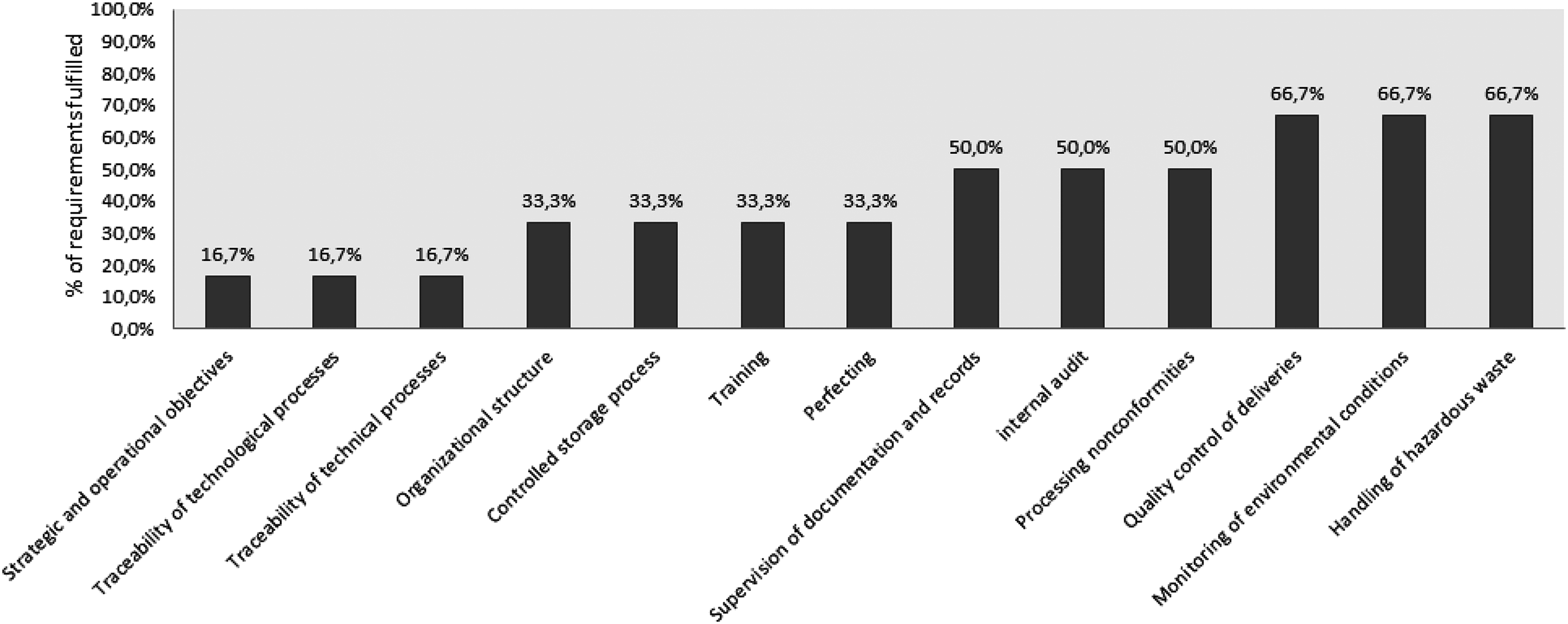
Audited field and percentage of fulfillment requirement in the audited Biobank.
During the first audit, examining the level of QMS implementation and development progress of each biobank were determined. As Sawa and Moisa, 2012, suggest, through the level of organization development described, it is possible to identify the necessary resources for planned aims and scopes realization. 11 Moreover, the processes and services management are more efficient with QMS as a supporting program.
ISO 9004:2018 presents the main areas that should be controlled while the level of organization development is determined. Nevertheless, in 2014 Zdravko Krivokapic et al. proposed to define others areas that can be helpful in evaluation. 12 Thus, our team, during the first audit process mapping, has taken into account mainly ISO standards from the 9000 series.
It is important to note that biobanks are not tissue and cells banks or diagnostic laboratories, where legal requirements and audit guidelines are commonly available with a list of questions. Thus, it was decided that after the first audit the report will contain detailed descriptions of recommendations description (that is constructed as corrective action plan). As Qiu pointed out, an efficient audit should be conducted with standards, legal guidelines, aims, and a control plan. 13 It is important to remember that only auditors are responsible for audit trails determination to ensure the effectiveness of the audit.
Data analysis
Thirteen main QMS areas (Fig. 3) were analyzed in six Polish biobanks and biorepositories from the BBMRI.pl Consortium. 4 During the preliminary audit of each biobank among the analyzed 13 main areas, 27 deviations were identified (Table 1). For each biobank an audit report with recommendations for the QMS implementation or improvement has been prepared. Recommendations included areas for improvement, as well as areas that did not meet basic requirements, which were called areas requiring the application of corrective procedures. Areas for improvement were classified when the basic requirements were fulfilled at 90%. Areas requiring the application of corrective procedures were analyzed in this study as they concerned at least 50% of the audited biobanks. If the requirement was <50%, the implementation was not satisfied.
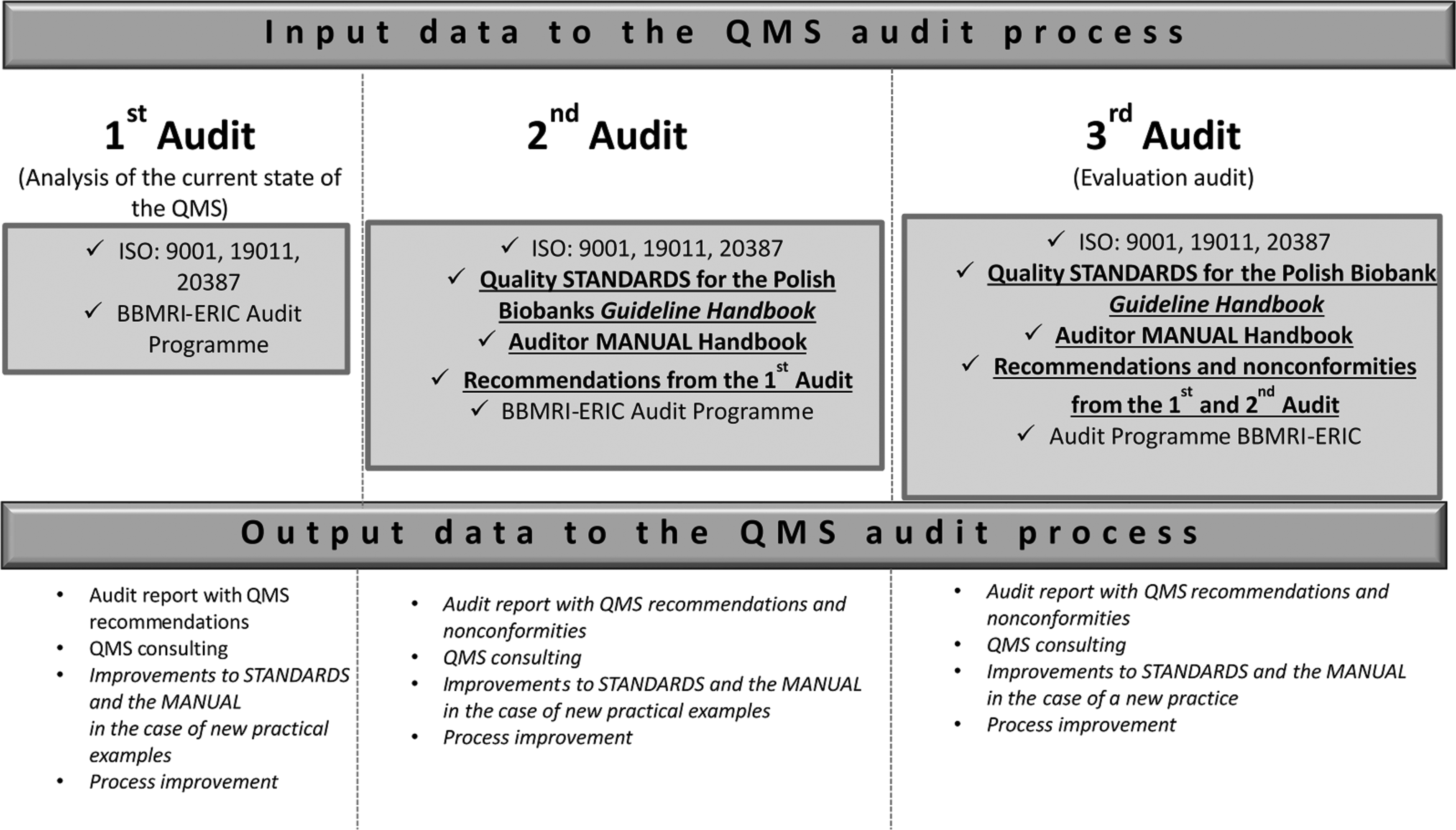
Input and output data from the QMS audit process carried out in Members and Observers of the Polish Biobank Network established by the BBMRI.pl Consortium.
Most Frequent, Repeated Noncompliant Requirements—Areas Subject to Corrective Procedures
The team made a qualitative analysis of deviations using a popular method with qualification components, where a failure mode and effect analysis allowed for elimination of the potential problems occurring in the process by removing of the sources of their origin.14–18
Results and Discussion
The areas that the audits would cover was determined by the team representing Task 3 in the project and included a review of the current state of biobanks and defining the areas and indication of recommendations on where and how the QMS should be implemented and improved. After conducting the audits in the Consortium BBMRI.pl biobank, some crucial results have been determined. First, the successful implementation of the quality assurance and management system in 33% of biobanks has been noticed (Fig. 2). During the audit process, 13 areas provided in Table 1 and Figure 3 were considered.
In each audited biobank some elements of the QMS may be observed; however, the level of implementation differs. It is important to remember that some areas for improvement may even be found in an excellent QMS. An excellent QMS results from the continuous improvement process. According to the audited areas, a different level of implementation was observed. It was established that the level of at least 90% would be sufficient to be considered as accomplished according to the QMS; nevertheless, it is generally assumed that further improvement must be considered accordingly.
The most developed areas of implementation were concerned with quality control, environmental monitoring, and hazardous waste handling. The implementation rate was 66.7% (Fig. 3). It is worth mentioning that in some of the audited units (16.7%) proficiency testing is performed according to a quality control plan, for example, the IBBL (Integrated Biobank of Luxembourg): Proficiency Testing Programme (endorsed by the International Society for Biological and Environmental Repositories). 19 External quality control checks for biobanks are performed by many companies and public institutes. The IBBL offers a variety of tests for cell extraction, cell assays, extraction of proteins, and nucleic acids, whereas other institutions offer proficiency testing for transcriptomics and metabolomics. Each biobank should establish a desired panel for its samples and be able to document a positive check for each batch of biospecimens.
All audited biobanks implemented the legal requirements for the environmental and hazardous waste handling areas. An example may include the use of proper forms of waste transfer, labels for containers, and time for waste deposition. All audited biobanks have controlled access to the supervised zone, whereas authorized employees also have access to dedicated rooms. Moreover, each unit implemented biological sample coding as a critical demand. It is also worth noting that temperature monitoring in equipment in which the biological material is stored is also practiced.
In terms of ethical aspects, each audited unit has obtained the legal consent of the patients (observing the patient's rights principle). Moreover, clearly defined principles of scientific internal and external cooperation have been identified.
For a suitable QMS operation, it is necessary to provide the right number of employees to implement processes within the organization, and also to train employees to work within the organization's policies and practices. Each of the audited units fulfilled both requirements (securing adequate human resources to perform tasks in a biobank). In addition, the willingness to implement and improve the QMS in their institutions was also determined. Quality issues are treated as a critical aspect of their actions within the organization.
Areas for improvement
It must be pointed out that the implementation of guidelines in some particular areas was impressive. The involvement of managers and staff in the implementation and improvement of the QMS in biobanks was set to 100%. According to the analyzed data, the biobanks possess well-defined principles of scientific cooperation with other scientific and commercial entities. Not only did the process of collecting patient's legal consent not raise any objections, but also outlined the way of providing information concerning the patient's participation in the project. Because of customer orientation (collaborating institutions), the responsibility for research projects on human biological material and the principles of its storage have been clearly described. Moreover, sample coding was implemented, which enables a biobank to track biological specimens. Detailed data reveal the level at which requirements are implemented, whereas the areas for improvement are suggested.
As a result, quality management is one of the QMS elements but it is necessary to ensure this quality for the quality system to work properly. To illustrate how complicated quality assurance is, an example of the study conducted by the Institute for Prospective Technological Studies of the Joint Research Center of the European Commission in cooperation with the European Science and Technology Observatory among European biobanks may be quoted. A total of 126 biobanks from 23 countries have participated in the study. The results revealed a significant variability in terms of privacy and data protection as well as consent requirements. 20 The standardization of medical sciences performed by research infrastructures provides advantages not only to biobanks but to the entire research collaboration as well. 21 Therefore, physical samples with all available data sets (i.e., scientific results, participation in clinical trials, and molecular background of the disease) should be developed in biobanking tools as a cross-reference. 22 As Carter argued, the standardization of procedures is an essential part of quality assurance; each biobank should determine and document its ways of working in accordance with standard operating procedures (SOPs) to ensure that samples and data are collected and handled consistently. 23 The standardization of processes in a biobank is crucial as it translates directly into the quality of biological material, research results, and other data collected, that is, using medical questionnaires. SOPs and instructions are primarily aimed to define the rules, even if they concern routine but key process elements. These activities should be recorded in the form of entries in the IT system or on the items implemented in the QMS. Based on the records of processes, it may be analyzed whether the procedures, instructions have been performed correctly, or whether the goal has been achieved. The inadequate quality of samples that may be used in research may have a crucial impact on the translation of results into clinical practice. 24 Thus, the QMS review process is necessary to identify areas for improvement and the areas that function properly. 25 Therefore, all presented assumptions may be considered for an audit given that there is a great need for the implementation and improvement of all presented areas (Table 1). Considering all postaudit data, the process for reviewing the management and improvement of processes has been implemented only at a level of 16.7%.
The balance between implementing the QMS and its auditing is also of considerable importance. The quality is not determined by how many procedures and instructions have been implemented, but whether critical parameters for the processes have been determined and if these parameters are monitored or if they are consistent with the assumptions. If the requirements are not fulfilled, it is crucial to determine whether corrective actions are taken and whether the analysis of indicators from processes constituting input data for the biobank improvement and development process is carried out. According to the audit reports, there is some deficiency in the determination of several critical parameters (83.3%) and critical processes (83.3%). But there is also some evidence in favor of monitoring proper parameters (i.e., temperature of storage samples at 100%, practical implementation of coding at 100%, control access at 100%, delivering quality control at 66.7%, and environmental monitoring at 66.7% of requirement fulfillment). All data are presented in Figure 3.
Biobanks vary in terms of their purpose, scope of activity, and scale of research as well. As Vaught noticed, the scope and scale of the implemented QMS should depend on the scope and scale of the biobank and the nature of its research. 26 According to our study, Polish biobanks have well-defined principles of scientific cooperation with other institutions. It was fulfilled in 100%.
The main criteria in the audit process included agreement for cooperation, responsibilities in terms of the agreement, enclosed files for the agreement, that is, SOPs for sample collection in specific collaborations. Some of the biobanks are also very efficient in providing scientific services (e.g., cytotoxicity study of selected biomaterials). In addition, the service of genetic and bioinformatics research is provided.
The process of obtaining a legal consent or providing project information for a patient, including all the details, raises no objections either. In addition, customer orientation, responsibilities for human sample collecting, testing, and storage are clearly defined. The audit results are 100% fulfilled.
All presented results clearly indicate that there are some areas where the QMS is at an impressive level, although there are no legal regulations in the country. Nevertheless, there are also some areas where minor or major corrections must be made. Audits performed in the QMS area as one of the activities of Task 3 of the project “Organisation of Polish Biobanking Network within the Biobanking and Biomolecular Resources Research Infrastructure BBMRI-ERIC” are the tools used to verify the presence of the QMS status in a Polish biobank. 4
Areas requiring the application of corrective procedures
A detailed analysis of the audit results was performed. Considering all observations from the audit process, the nonfulfillments of 13 audited areas that occurred most frequently were performed. The audit results clearly indicate a deficiency in the requirement of traceability implementation that corresponds to technical, technological, management/inventory management, and data analysis in this order. Traceability is a complex and intricate area, but it is nevertheless crucial in the context of the QMS and the entirety of biobanking issues. If a problem was not observed in the coding of samples, certain steps were not completed (i.e., temperature collection and time of sample arrival).
As it was said, traceability (the definition of which is according to ISO 9000:2005: ability to trace the history, application or location of what is under consideration; when considering product-results of a process, traceability can relate to 1—the origin of materials and parts, 2—the processing history, and 3—the distribution and location of the product after delivery) is a complicated and difficult process that is extremely time-consuming. Calleros-Basilio et al. found that the collection of a significant number of human biological samples and associated quality information involves a major effort in planning, construction, and finally operation, which consumes a significant amount of time. 27 The effort and time devoted to the implementation and monitoring of crucial traceability issues is invaluable and is key to prove the quality of the material and containing data. It is a set of information from processes and indicates responsibility, whereas on the basis of this information it is possible to restore procedures, identify possible gaps, and analyze the effectiveness of planned and performed activities. Moreover, Paltiel has argued that “every time a new project is planned, or a new request for our biobanking services is requested, we make a project specific QC program for the biological material, to assure traceability, sample quality and best practices for the purpose of the project within the available funding.” 28
Nevertheless, requirements for traceability of technological processes and traceability of technical processes have been fulfilled at the level of 16.7% among all audited biobanks (Fig. 3). Although this is not a satisfactory result, it does not however prejudge the quality of biological material or data. There was a lack of awareness about the key role of traceability and the need to create records and store them, from critical processes because they provide an insight into the quality of biological material and data. On the basis of the collected information, QSPBs—which are created within the BBMRI.pl project—will be enriched with additional examples related to the implementation of the traceability process.
A further analysis of audit results showed other frequent gaps, including a lack of implemented organizational structure within a biobank (established within 50% of all audited units) or it being at an insufficient level or a lack of the following components, which included: (1) strategic and operational goals, (2) supervision of the storage temperature for reagents and materials that should be stored under monitored conditions, (3) emergency procedures, (4) wrong identification or no identification of containers and bags for hazardous waste, (5) improper internal audit process implementation, and (6) lack of implementation of supervision of nonconformities (66.7% in this order).
Nevertheless, several points where improvement must be performed in the QMS areas have been stated in the audited biobanks.
Records regarding the quality of supply of materials and reagents—a lack of records means no evidence of material/reagent qualification before its use, that is, it has not been observed that the ordered reagents were checked visually whether they complied with the order upon receipt.
Handling of biological material outside the specifications—a lack of a defined (documented) procedure in the event of a failure to meet the accepted criteria, for example, regarding the exceeding of the biological material (BM) transport time from the place of collection to the biobank. Employees knew the material requirements outside the specification and the need for, for example, BM disposal, which does not meet the criteria. However, this process has not been documented (recorded).
Traceability of reagents in the technological process, for example, no label containing the name of the reagent, the date of its preparation, expiration date—applies to reagents prepared independently/distributed.
The process of withdrawing materials and reagents outside specifications—no separate isolation of the aforementioned reagents or labeling of materials and reagents, for example, with the “expired” label. The employees were aware that the above-mentioned reagents are not usable.
Records of cleaning and disinfection—no confirmation of cleaning and disinfection (of rooms and equipment). Although evidence has been found that these activities are performed according to the adopted plan, these activities were not recorded (documented) after performing the cleaning and disinfection.
Analysis of data from processes—the lack of a summary of the results of the process results in the lack of the supervision of its course and duplication of errors. A systematic error may become a fatal error that will significantly affect the quality and safety of biological material.
Training plan for biobank employees—there are no defined principles of employee training, that is, proof of participation in the training, for example, a certificate, a lack of training schedule despite the fact that employees participate in both training activities and conferences.
All data are presented in Table 1. It must be pointed out that all data from each of the aforementioned elements are an arithmetic mean from all biobanks (i.e., the biobank has a contract for cleaning and all operations are performed properly but there are no evidence/forms for contract performance). Moreover, despite the lack or insufficient level of a training plan for biobank employees in some units, they were trained in different workshops and through different courses (without an approved training plan). In this case, a minor change is needed to meet the requirements.
All presented deficiencies are combined with the traceability process because the majority of shown elements are performed by biobanks (i.e., orders, supplier's evaluation, cleaning records, and reference ranges for biological material). Although all activities are performed at some level, there was still no evidence for their performance.
Conclusions
Quality management is essential for the research and development sector and it becomes increasingly important for academic research as well. 29 For this reason, it is important not only to collect a sufficient number of biosamples but also to achieve high-quality standards associated with efficient sampling, storage, and an analysis of biological specimens as well. 30
The results of the first audit will constitute input data for the second audit in biobanks which began began at the end of 2018. It is extremely important to understand the recommendations indicated by the auditors in the audit report and to implement them in biobanks as part of their QMS.
The implementation of the PBN project and the involvement of the audited biobank management as well as the entire staff were at an impressive level. This may influence the implementation and improvement of the QMS significantly. Despite its tremendous time-consuming challenges, the performance of activities according to the QMS offers benefits for institutions by implementing TQM in practice and making research more efficient. Mistakes may be detected faster, thereby reducing basic quality and operating costs. Biobanks will be able to obtain certifications successfully such as ISO 9001, and/or ISO 14001, and/or ISO 20387, which will have a considerable effect on its trademark and competitiveness. Confirmations of the significance of the QMS may be found in the literature. Cooperation between BBMRI-ERIC Expert Centers and pharmaceutical companies or biotech companies may also be developed (AstraZeneca GmbH, Glaxo-Smith Kline, Genzyme Corp., Sanofi-Adventis, Pfizer, etc.). 29 Biobanks represent a new and valuable way in which translational research may be carried out. It is vital that biobanks confirm the highest standards and provide researchers with materials of high quality consistently. 31
The Task 3 team aims to support these activities through the implementation of common solutions in the field of the QMS in biobanks using tools such as publication/disclosure of the QSPB being developed, results of audits and consultations in the field of the QMS in biobanks, training, and workshops with QMS.
The audits revealed that a crucial issue with Polish biobanks is associated with the achievement of the traceability requirement, which translates into technical processes, technological processes, and a data analysis. The audits also showed that the level of implementation of audited issues was very impressive. Eleven of 27 analyzed areas have been implemented at a significant level of maturity. Very well defined scientific and commercial cooperation rules have been implemented in almost all biobanking units. The process of obtaining the legal consent and informing the patient of the project participation raised no objections for either. Furthermore, the responsibilities of individual collaborating entities regarding biospecimen collection, testing, and storage have been clearly defined in all audited biobanks.
In 2018, the process of the QMS audit was initiated in Members/Observers of the PBN. It will be finished in 2021.
Footnotes
Acknowledgments
The project is supported by the Polish Ministry of Science and Higher Education (decision number DIR/WK/2017/01). “Organisation of Polish Biobanking Network within the Biobanking and Biomolecular Resources Research Infrastructure BBMRI-ERIC.”
The authors thank all Biobanks that have contributed to this work by taking part in the audit process: Biobank Lab, Department of Molecular Biophysics, University of Lodz; Laboratory for Cell Research and Application, Center for Preclinical Research and Technology, Medical University of Warsaw; Wroclaw Research Centre EIT+/PORT, Biobank, Wroclaw; Regional Science and Technology Center, Swietokrzyski Biobank, Checiny; Department of Medical Laboratory Diagnostics and Bank of Frozen Tissues & Genetic Specimens, Medical University of Gdansk and Screening Laboratory of Biological Activity Test and Collection of Biological Material, Wroclaw Medical University.
Author Disclosure Statement
No conflicting financial interests exist.