




Abstract
Asphaltum, a mineral exudate from the mountains, is an ayurvedic medicine believed to be a panacea for male reproductive health issues. The objective of the study was to evaluate asphaltum in terms of phytochemical components, radical scavenging activity (RSA), in vitro dose tolerability, and cryosurvivability of buffalo sperm. Asphaltum was procured from an authentic source and confirmed for the presence of flavonoids, terpenoids, saponins, tannins, alkaloids, steroids, and glycosides. It showed good RSA as confirmed by the DPPH (2,2-diphenyl-1-picrylhydrazyl) assay. In vitro dose tolerability of buffalo sperm (n = 3, replicate = 4, ejaculates = 24) for asphaltum was assessed at 0.75%, 1.5%, 2.25%, 3.0%, 3.75%, 4.5%, 5.25%, and 6.0% (w/v). Buffalo sperm showed good tolerance up to 3% of asphaltum in terms of sperm progressive motility and plasma membrane integrity. Buffalo semen (n = 3, replicates = 4, ejaculates = 24) was cryopreserved in extender supplemented with 0.0%, 0.75%, 1.5%, 2.25%, and 3.0% (w/v) asphaltum and sperm quality was assessed at post-dilution, post-cooling, and post-thaw. After dilution motility, viability and livability; post-cooling motility and plasma membrane integrity; and post-thaw motility, plasma membrane integrity, viability, livability, DNA integrity, sperm RSA, sperm total lipids, sperm mitochondrial activity, and total antioxidant activity of semen were improved by 3%. In conclusion, asphaltum supplementation in an extender at 3% improves the post-thaw quality and antioxidant activity of buffalo semen.
Introduction
Cryo-shock and atmospheric exposure mediate the production of reactive oxygen species (ROS) that damage the sperm structure 1 and cause lipid peroxidation (LPO) of the plasma membrane, 2 which ultimately leads to a low conception rate with cryopreserved semen. The major reason of this oxidative stress is the depletion of the natural protective antioxidant system of sperm against ROS during cryopreservation 3 and a high level of polyunsaturated fatty acids present in the plasma membrane of buffalo sperm. Therefore, supplementation of buffalo semen extender with antioxidants is suggested4,5 to reduce the oxidative stress and to improve the post-thaw quality of sperm.
Asphaltum, commonly known as “shilajit,” is a thick tar-like natural product 6 that is rich in antioxidant activity.7,8 It is a complex mixture of plant and microbial metabolites present in rocks, mainly composed of organic humic and nonhumic substances.6,9,10 The humic substances are present in an amount of about 80%–85%, that include fulvic acids, humic acids, humins, fatty acids, triterpenes, selenium, phospholipids, resins, latex, gums, albumins, selenium, triterpenes, sterols, aromatic carboxylic acids, 3,4-benzocoumarins, amino acids, polysaccharides, phenolic lipids dibenzo-α-pyrones, and nearly 85 ionic minerals, whereas marine plants and microbial fossils in asphaltum-bearing rocks constitute nonhumic substances.6,9,10 Besides these, asphaltum consists of silica, iron, calcium, antimony, lithium, copper, molybdenum, manganese, magnesium, phosphorus, strontium zinc, sodium, and iron-containing quinone-semiquinone-hydroquinone complex structures.6,11 Asphaltum, owing to the presence of iron-containing quinone-semiquinone-hydroquinone complex structures, is believed to imitate the actions of the systemic antioxidant enzymes superoxide dismutase (SOD), glutathione peroxidase (GPx), and catalase (CAT).7,8,12 Asphaltum possesses the ability to scavenge free radicals and exhibit antioxidant activity against OH radicals, paramagnetic nitric oxide, and sulfur trioxide in a concentration-dependent manner.7,8,13
Asphaltum is an effective and potent libido and serum testosterone enhancer, and its spermatogenic effects are reported in oligospermic patients. 14 It has been shown to increase sperm count in rats after dietary supplementation. 15 It also alters hematological parameters and serum biochemical metabolites in rams. 16 Similarly, after the oral administration of asphaltum, there is a notable increase of ovulation in female rats and epidydimal sperm in male rats. 15 In a very recent study, daily oral administration of asphaltum increased the spermatogenesis, weight of reproductive organs, and activities of testicular enzymes in rats. 17 In Murrah sub-fertile buffalo bulls, dietary supplementation of asphaltum along with other herbs improved the post-thaw semen quality parameters such as motility, viability, sperm abnormalities, mitochondrial activities, livability, acrosome, and plasma membrane integrity. 18
Keeping in view the tremendous potential of asphaltum, it was hypothesized that the addition of asphaltum in an extender may improve the cryo-survivability of semen ejaculates of the Nili-Ravi buffalo bull. The objective was to evaluate the effect of asphaltum in semen extender on the quality and oxidative status of Nili-Ravi buffalo bull semen.
Materials and Methods
All procedures performed in this study involving animal subjects were approved and in accordance with the ethical standards set by the Ethics Committee of Pir Mehr Ali Shah Arid Agriculture University Rawalpindi, Pakistan.
Phytochemical screening of asphaltum
Asphaltum was purchased from an authentic supplier at Gilgit, Gilgit Baltistan, Pakistan and screened for the presence of phytochemicals by using standard chemical tests. Alkaloids were confirmed by Wagner's Test in which brown color precipitates indicated their presence. 19 Steroids were confirmed by formation of a brown ring following the Liebermann Buchard test. 20 Terpenoids were assessed following the Salkowski test, and the formation of reddish-brown coloration confirmed their presence. 21 Formation of frothing indicated the presence of saponins, and tannins were confirmed by the formation of black color precipitation following the test described by Aziz et al. 22 The presence of glycosides was assessed by Borntrager's test, which indicates the formation of a red ammonical layer. 20 The presence of yellow color indicated the presence of flavonoids, which usually disappeared on standing. 22
Free radicals scavenging activity of asphaltum
The DPPH (2,2-diphenyl-1-picrylhydrazyl) assay was used to assess the free radicals scavenging activity (RSA) of asphaltum. 5 For this purpose, a DPPH (Sigma-Aldrich, USA) working solution (0.08 μM) was prepared in 80% methanol (BDH, England). Sample solutions of asphaltum (0.75%, 1.5%, 2.25%, 3.0%, 3.75%, 4.5%, 5.25%, and 6.0%) (w/v) were prepared in 2400 μL of DPPH working solution, and distilled water was added up to a final volume of 3000 μL. These solutions were incubated at room temperature for 1 hour, and the absorbance was measured at 517 nm by a spectrophotometer. The DPPH working solution (3000 μL) was taken as the control and distilled water (3000 μL) as a blank. The assay was repeated four times (replicates), RSA was calculated by a formula, and the EC50 value was calculated from a graph of RSA percentage against different concentrations of asphaltum.

In vitro dose tolerability of buffalo sperm for asphaltum
Semen was collected from three Nili-Ravi buffalo bulls (two ejaculates per bull per day) by artificial vagina (42°C) for four consecutive weeks (replicates). Qualified ejaculates (volume >1 mL, motility >65% and concentration 0.5 billion sperm/mL) were pooled, incubated (37°C), aliquoted, and diluted (50 million/mL) at 37°C in sodium citrate buffer (2.9 g sodium citrate [Merck, Germany] in 100 mL distilled water) containing asphaltum (w/v) at 0.00% 0.75%, 1.50%, 2.25%, 3.00%, 3.75%, 4.50%, 5.25%, and 6.00%. Sperm progressive motility and plasma membrane integrity were assessed for each treatment after 15 minutes of incubation at 37°C.
Sperm progressive motility
A semen sample (05 μL) was placed on a microscopic slide, covered with a coverslip (37°C) and progressive motility was observed under a phase-contrast microscope at 400 × magnification (Labomed LX400).5,23
Sperm plasma membrane integrity
The plasma membrane integrity of sperm was assessed by using the hypo osmotic swelling test (HOST). 24 The HOST working solution was prepared by mixing 0.735 g sodium citrate (Merck) and 1.351 g fructose (Scharlau, Spain) in 100 mL distilled water. The semen sample and HOST working solution were mixed in a 1:10 ratio (50 μL:500 μL), respectively, and incubated for 30–40 minutes at 37°C in a water bath. After incubation, 10 μL of semen sample and a drop of 0.5% eosin stain (Scharlau, USA) were placed on a microscopic slide, mixed, and covered with a cover slip. Slides were observed by using a phase-contrast microscope (Labomed LX400) at 400 × magnification, and 100 spermatozoa were observed. Sperm with swollen and bent tails had functional cell membranes, and sperm with unswollen and straight tails had nonfunctional cell membranes. 24
Effect of asphaltum in extender on sperm quality parameters
Preparation of extenders
Different experimental extenders, namely, E0 (asphaltum 0.0% [w/v]), E0.75 (asphaltum 0.75% [w/v]), E1.5 (asphaltum 1.5% [w/v]), E2.25 (asphaltum 2.25% [w/v]), and E3 (asphaltum 3% [w/v]), were prepared. Briefly, 1.56 g citric acid (Sigma-Aldrich, USA), 3.0 g tris-(hydroxymethyl)-amino methane (Sigma-Aldrich), 20 mL egg yolk, 0.2 g fructose (Sigma-Aldrich, USA), 7 mL glycerol (Sigma-Aldrich, USA), streptomycin sulfate (1000 μg/mL; China National Medicines and Health Products, Chongqing, P.R. China), benzyl penicillin (1000 IU/mL; Shanxi Shuguang Pharmaceutical, China), and asphaltum at different concentrations (0.0%, 0.75%, 1.5%, 2.25%, 3.0%) (w/v) were added in each extender and the final volume of each extender was increased to 100 mL by adding distilled water.
Semen collection and cryopreservation
A semen sample (three bulls, two ejaculates per bull per day, four consecutive weeks) was collected, initially evaluated, and pooled as mentioned in the earlier section. The pooled semen sample was diluted (50 million sperm/mL) with different experimental extenders at 37°C and gradually cooled to 4°C within 2 hours, equilibrated at the same temperature for 4 hours, and filled into French straws (0.5 mL; IMV, France) at 4°C. The straws were then exposed to liquid nitrogen vapor for 10 minutes and stored in liquid nitrogen (−196°C). Post-thaw analysis was performed at least 7 days post-cryopreservation. Sperm quality parameters were evaluated at three stages (post-dilution, post-cooling, and at post-thaw), whereas biochemical analysis was done at the post-thaw stage only.
Semen quality assessment
Sperm progressive motility and plasma membrane integrity
Sperm motility and plasma membrane integrity were assessed as described in the previous section.
Sperm viability and livability
A dual staining procedure 25 was used to evaluate viability (live sperm with intact acrosome) and livability (live to dead ratio) of sperm. An equal volume of semen sample and 0.2% trypan blue solution (MP Biomedicals, Germany) were smeared onto a glass slide, air dried, and fixed in formaldehyde-neutral red solution (86 mL 1 M HCL [Merck] + 14 mL 37% formaldehyde [Merck] + 0.2 g neutral red [BDH, UK]). After rinsing with distilled water, the slide was dipped in Giemsa stain (7.5%) (BDH, UK) for 4 hours. A total of 100 spermatozoa from different fields were evaluated under a phase-contrast microscope at 1000 × magnification (Labomed LX400) and spermatozoa were categorized into four categories—AIL (acrosome intact and live), AID (acrosome intact and dead), ALL (acrosome lost and live), and ALD (acrosome lost and dead) on the basis of staining. 26 Dead spermatozoa with disrupted membranes were penetrated by Trypan-blue stain and appeared as blue in color, whereas unstained spermatozoa were considered as live with an intact membrane. Giemsa penetrated the spermatozoa in the acrosomal region and stained them purple with an intact acrosome.
Sperm DNA integrity
A DNA fragmentation test was used to assess the sperm DNA integrity as described by Mello. 27 The semen sample was smeared, air dried, and fixed in 96% ethanol-acetone (1:1) (BDH, UK) at 4°C for 30 minutes. The acid hydrolysis was carried out by placing the slide in 4 N HCL (Merck, Germany) at 25°C for 10–30 minutes. The smear was then rapidly rinsed with distilled water three times for 2 minutes each time and stained with toluidine blue (MP Biomedicals, Germany) for 10 minutes. Slides were analyzed under a phase-contrast microscope at 100 × (Labomed LX400), and 100 sperm were evaluated from at least five different fields. Sperm with functional DNA were lightly stained, whereas sperm with nonfunctional DNA were darkly stained.
Biochemical tests
Free RSA of spermatozoa
The free RSA was measured by the DPPH assay described by Brand-Williams et al.
28
After thawing, semen was centrifuged at 1500 g for 10 minutes to obtain a sperm pellet, which was washed with phosphate-buffered saline (pH 7.4 at 25°C; Sigma-Aldrich, USA) and again centrifuged at 1500 g for 10 minutes. The sperm pellet was diluted with phosphate-buffered saline to obtain a final concentration of 10 million sperm per milliliter. The sperm suspension (200 μL) of each treatment, and 2800 μL of DPPH solution (3.2 mg DPPH [Sigma-Aldrich, USA] in 100 mL of 80% methanol [BDH, UK]) were shaken vigorously and allowed to incubate for 1 hour. A blank was prepared by mixing 2800 μL methanol in a 200 μL diluted sample, and 3000 μL DPPH solution served as the control. After that, free RSA was measured spectrophotometrically at 537 nm and calculated by the formula described by Mensor et al.
29
Total antioxidant activity of semen
The total antioxidant activity of semen was measured by the ferric reducing antioxidant power (FRAP) assay.
30
The working FRAP reagent solution was prepared by mixing acetate buffer: (3.1 g sodium acetate trihydrate [Merck, Germany], 16 mL glacial acetic acid [Merck, Germany] and increased to 1 L with distilled water), 2,3,5-triphenyltetrazolium chloride (TPTZ): (0.031 g TPTZ [Sigma-Aldrich, USA] per mL of 40 mM HCl [Merck, Germany]), and ferric chloride (Merck, Germany) (0.054 g in 10 mL distilled water) in the ratio 10:1:1, respectively. A 3 mL of FRAP reagent was used as the blank, and a standard was prepared by mixing 100 μL ascorbic acid (1 mM) and 3 mL FRAP reagent. Aliquots of 50 μL semen of control and each experimental extender were mixed with 1000 μL FRAP reagent and the absorbance of the blank, standard, and sample were measured with a spectrophotometer at 593 nm. The FRAP value for semen samples was calculated by the following formula:
Mitochondrial activity of spermatozoa
Sperm mitochondrial activity was assessed by the methylthiazolyldiphenyl-tetrazolium bromide (MTT) reduction assay. 31 A sperm pellet was obtained through centrifugation at 1500 g for 10 minutes and diluted (10 million sperm/mL) with phosphate-buffered saline (pH 7.4 at 25°C; Sigma-Aldrich). The MTT stock solution was prepared by adding 5 mg MTT (Sigma-Aldrich, USA) per mL of phosphate-buffered saline (Sigma-Aldrich, USA). The MTT stock solution (140 μL) was added to a 1400 μL sperm suspension, and rates of MTT reduction were taken immediately and after incubation at 37°C for 1 hour at 550 nm by a spectrophotometer. Then, the final rate of MTT reduction was calculated by taking the difference of the initial and final readings from the spectrophotometer.
Total lipids in spermatozoa
The total lipids in sperm were determined by a commercially available kit (FAR Diagnostics, Italy). Briefly, each experimental extender was centrifuged at 1500 g for 10 minutes, the supernatant was removed, and the sperm pellet was washed with phosphate-buffered saline (pH 7.4 at 25°C; Sigma-Aldrich). The solution was again centrifuged at 1500 g for 10 minutes, the supernatant was removed, and the pellet was diluted with phosphate-buffered saline to obtain 10 million sperm per milliliter. A sample lipo-sulfur mixture was prepared by mixing 100 μL diluted spermatozoa of each experimental extender in 2500 μL H2SO4 (Merck, Germany), and a standard lipo-sulfur mixture was prepared by mixing 100 μL standard in 2500 μL H2SO4 (Merck, Germany). Then, a blank reagent was prepared by adding 2500 μL Reagent I (Total Lipids Liquid, FAR Diagnostics, Italy) in 100 μL H2SO4 (Merck, Germany), a sample was prepared by mixing 2500 μL Reagent I in 100 μL sample lipo-sulfur mixture, and a standard was prepared by adding 2500 μL Reagent I in 100 μL Standard lipo-sulfur mixture. All these solutions were shaken vigorously and allowed to incubate at 20°C–25°C for 20 minutes; then, the absorbance of the standard and sample were taken at 530 nm. Then, total lipids in sperm were calculated by the following formula:
Statistical analysis
Results are described as mean ± standard error of mean. The effects of different extenders on sperm progressive motility, plasma membrane integrity, viability, livability, DNA integrity, free RSA, mitochondrial activity, total lipids, and total antioxidant activity were analyzed by analysis of variance (ANOVA) using IBM SPSS Statistics software (Version 25). Duncan's new multiple-range test was used as a post hoc test.
Results
Phytochemical screening of asphaltum
Phytochemical screening of asphaltum confirmed the presence of alkaloids, steroids, terpenoids, tannins, saponins, glycosides, and flavonoids (Supplementary Fig. S1).
Free RSA of asphaltum
The results of free RSA (%) of asphaltum are shown in Figure 1. According to the results, free RSA of asphaltum at 0.75%, 1.5%, 2.25%, 3.0%, 3.75%, 4.5%, 5.25%, and 6% showed an increasing pattern from 0.75% to 3%. However, it was surprising to note that RSA fluctuated and decreased as the concentration of asphaltum was increased to 6%. Hence, the EC50 value (effective concentration showing absorbance of 0.5 and/or scavenging of 50% DPPH-free radicals) of asphaltum was 3%.

Free radicals scavenging activity of different concentrations of asphaltum. *Effective concentration showing absorbance of 0.5 and/or scavenging of 50% DPPH-free radicals. DPPH, 2,2-diphenyl-1-picrylhydrazyl.
Assessment of in vitro dose tolerability of buffalo sperm for asphaltum
The in vitro dose tolerability of buffalo sperm against different concentrations of asphaltum in terms of sperm progressive motility (%) and plasma membrane integrity (%) is shown in Figure 2. An increasing trend of sperm motility and plasma membrane integrity was observed up to 3.0% asphaltum concentration and thereafter, at higher concentrations a decrease in both parameters was observed. The sperm progressive motility (%) was highest (p < 0.05) at concentrations of 0.75%, 1.5%, 2.25%, and 3% compared with control, 3.75%, 4.5%, 5.25%, and 6%. The in vitro dose tolerability of asphaltum in terms of sperm plasma membrane integrity was better (p < 0.05) at 3% asphaltum compared with control, 0.75%, 1.5%, 2.25%, 3.75%, 4.5%, 5.25%, and 6%.
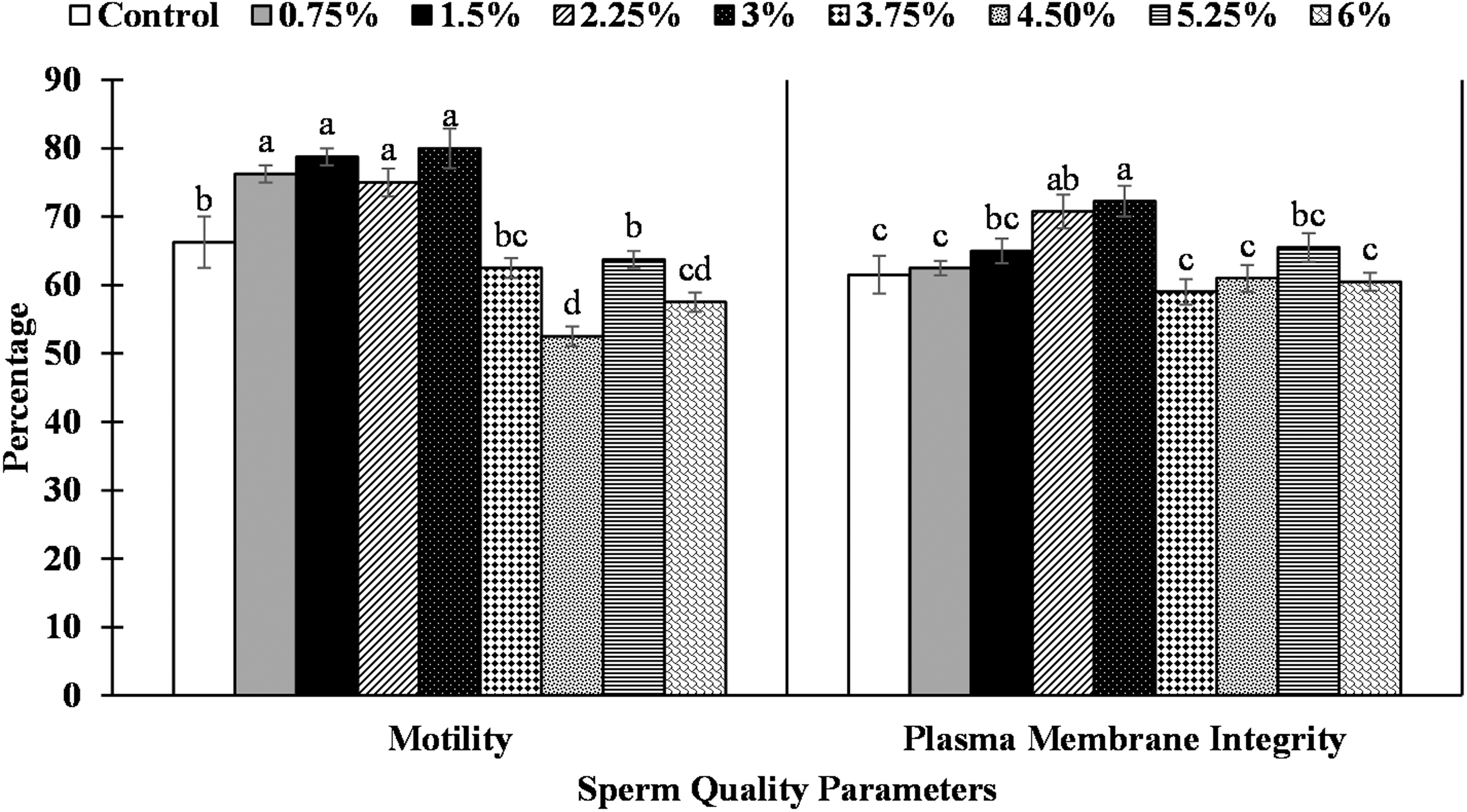
In vitro dose tolerability of Nili-Ravi buffalo bull sperm against different concentrations 0%, 0.75%, 1.5%, 2.25%, 3%, 3.75%, 4.50%, 5.25%, and 6% (w/v) of asphaltum in terms of sperm motility and plasma membrane integrity. The values are mean ± standard error of mean. The different letters within each sperm quality parameter showed significant differences among different concentrations of asphaltum (p < 0.05).
Effect of asphaltum on quality and oxidative status of buffalo sperm at different stages of cryopreservation
Post-dilution
The data on the effects of asphaltum on sperm quality parameters at the post-dilution stage are shown in Figure 3. Sperm progressive motility (%) was higher (p < 0.05) in experimental extender E3 compared with E0, E0.75, E1.5, and E2.25. However, sperm plasma membrane integrity (%) remained similar (p > 0.05) in all experimental extenders, namely, E0, E0.75, E1.5, E2.25, and E3. Asphaltum supplementation improved (p < 0.05) sperm viability (%) in experimental extender E3 compared with E0, E0.75, E1.5, and E2.25. Similarly, sperm livability (%) was highest (p < 0.05) in experimental extender E3 compared with E0, E0.75, E1.5, and E2.25.
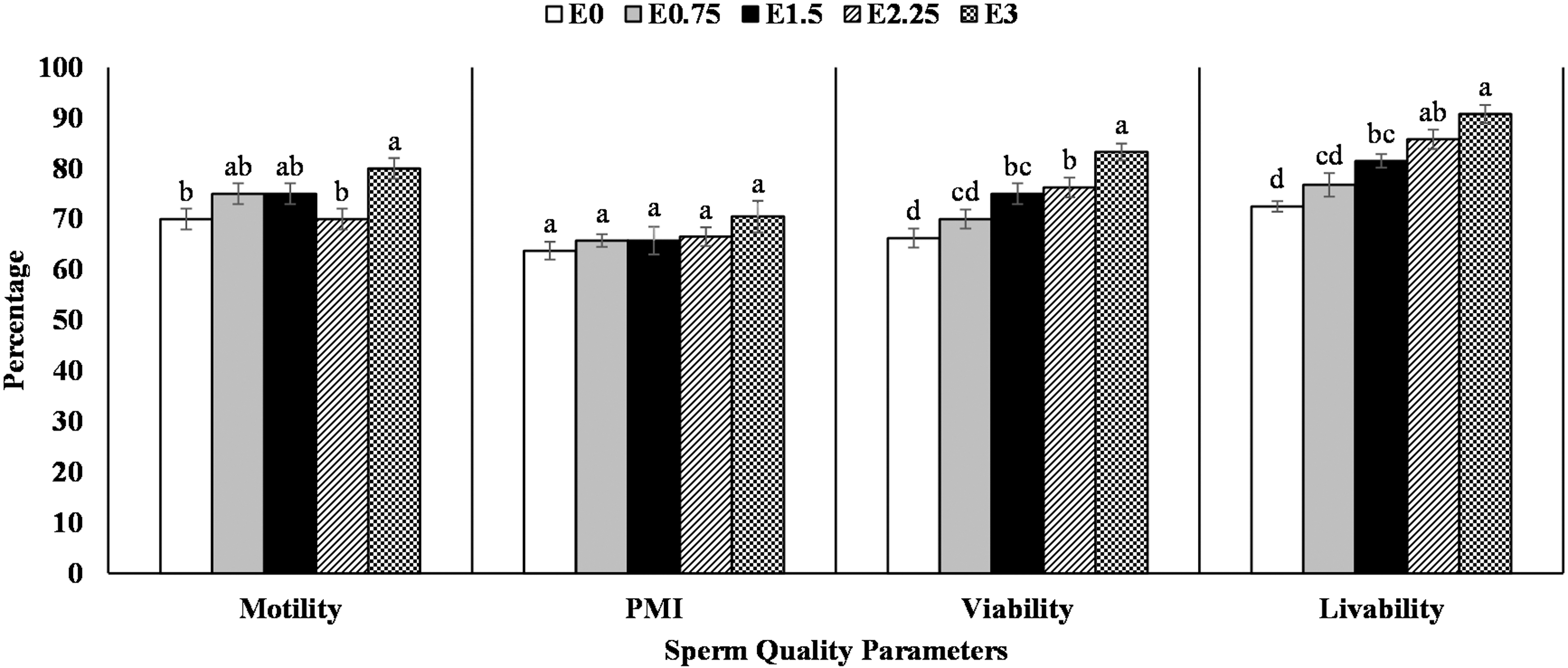
Effect of different concentrations of asphaltum in extender on Nili-Ravi buffalo bull sperm motility, PMI, viability, and livability at post-dilution stage. The values are mean ± standard error of mean. The different letters within each sperm quality parameter showed significant differences among experimental extenders (p < 0.05). E0: Extender without asphaltum; E0.75: Extender with 0.75% (w/v) asphaltum; E1.5: Extender with 1.5% (w/v) asphaltum; E2.25: Extender with 2.25% (w/v) asphaltum; E3.0: Extender with 3.0% (w/v) asphaltum; PMI, plasma membrane integrity.
Post-cooling
The data on the effects of asphaltum on sperm quality parameters at post-cooling stage are shown in Figure 4. Sperm progressive motility (%) was significantly improved (p < 0.05) in experimental extender E3 compared with E0, E0.75, E1.5, and E2.25. Sperm plasma membrane integrity (%) was significantly higher (p < 0.05) in experimental extenders E2.25 and E3 compared with extenders E0, E0.75, and E1.5. At the post-cooling stage, asphaltum did not show any effect on sperm viability (%), which remained similar (p > 0.05%) in all experimental extenders, namely E0, E0.75, E1.5, E2.25, and E3. Similarly, sperm livability (%) remained similar (p > 0.05) in all experimental extenders, namely E0, E0.75, E1.5, E2.25, and E3.
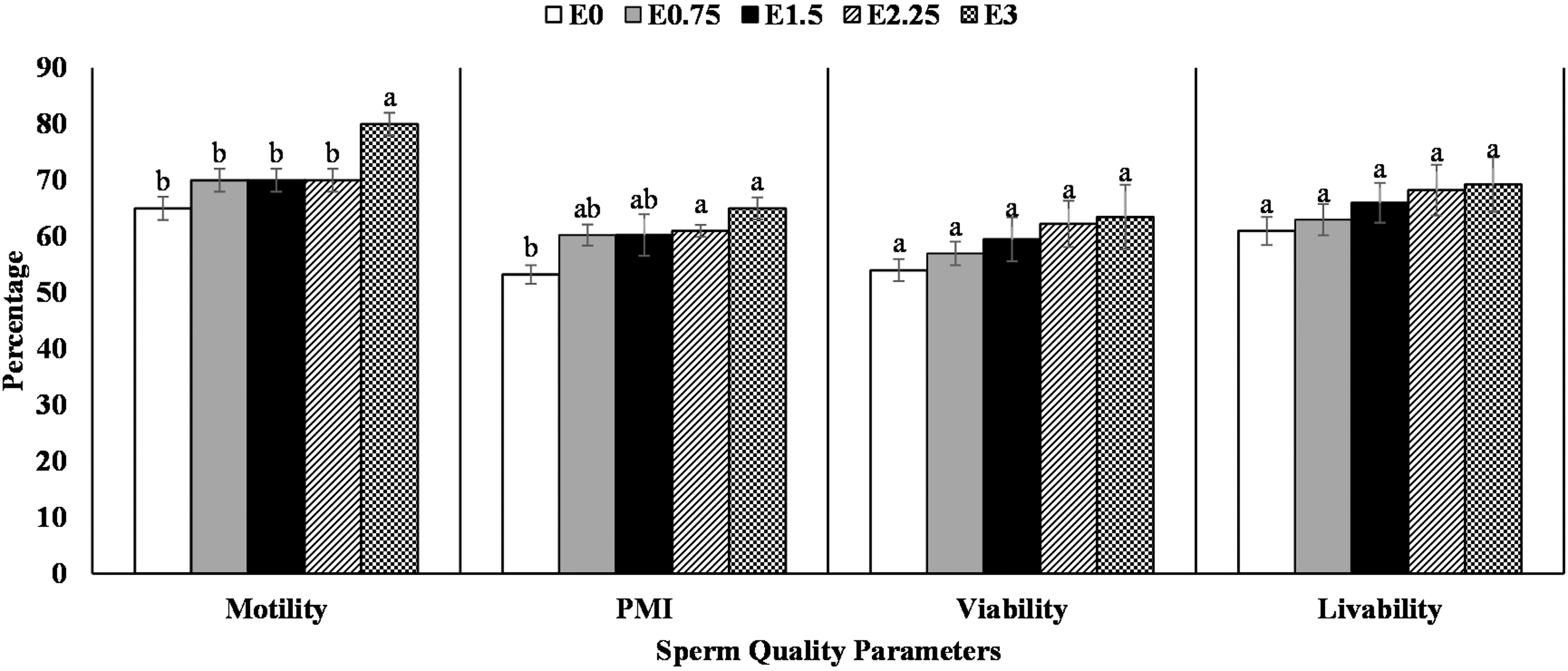
Effect of different concentrations of asphaltum in extender on Nili-Ravi buffalo bull sperm motility, PMI, viability, and livability at post-cooling stage. The values are mean ± standard error of mean. The different letters within each sperm quality parameter showed significant differences among experimental extenders (p < 0.05). E0: Extender without asphaltum; E0.75: Extender with 0.75% (w/v) asphaltum; E1.5: Extender with 1.5% (w/v) asphaltum; E2.25: Extender with 2.25% (w/v) asphaltum; E3.0: Extender with 3.0% (w/v) asphaltum.
Post-thawing
The data on the effect of asphaltum on sperm quality parameters at the post-thaw stage are shown in Figure 5. The motility (%) of buffalo sperm at post-thaw stage was improved (p < 0.05) by supplementation of asphaltum in extenders, namely E0.75, E1.5, E2.25, and E3 compared with control extender E0 without asphaltum. Sperm plasma membrane integrity (%) was improved (p < 0.05) in experimental extender E3 compared with E0, E0.75, E1.5, and E2.25. Similarly, sperm viability (%) was highest (p < 0.05) in experimental extender E3 compared with E0, E0.75, E1.5, and E2.25. Sperm livability (%) was improved (p < 0.05) in experimental extender E3 in comparison to extenders E0, E0.75, E1.5, and E2.25. Sperm DNA integrity was better (p < 0.05) in experimental extenders E1.5, E2.25, and E3 compared with experimental extenders E0 and E0.75.

Effect of different concentrations of asphaltum in extender on post-thaw Nili-Ravi buffalo bull sperm motility, PMI, viability, livability, and DNA integrity. The values are mean ± standard error of mean. The different letters within each sperm quality parameter showed significant differences among experimental extenders (p < 0.05). E0: Extender without asphaltum; E0.75: Extender with 0.75% (w/v) asphaltum; E1.5: Extender with 1.5% (w/v) asphaltum; E2.25: Extender with 2.25% (w/v) asphaltum; E3.0: Extender with 3.0% (w/v) asphaltum.
Free RSA (%) (Fig. 6) of buffalo sperm was higher (p < 0.05) in experimental extender E3 compared with E2.25, E1.5, E0.75, and E0. The total antioxidant activity (Fig. 7) of buffalo semen was recorded highest (p < 0.05) in experimental extenders E2.25 and E3 compared with E0, E0.75, and E1.5.

Effect of different concentrations of asphaltum in extender on post-thaw free radicals scavenging activity of Nili-Ravi buffalo bull sperm. The values are mean ± standard error of mean. The different letters showed significant differences among experimental extenders (p < 0.05). E0: Extender without asphaltum; E0.75: Extender with 0.75% (w/v) asphaltum; E1.5: Extender with 1.5% (w/v) asphaltum; E2.25: Extender with 2.25% (w/v) asphaltum; E3.0: Extender with 3.0% (w/v) asphaltum.
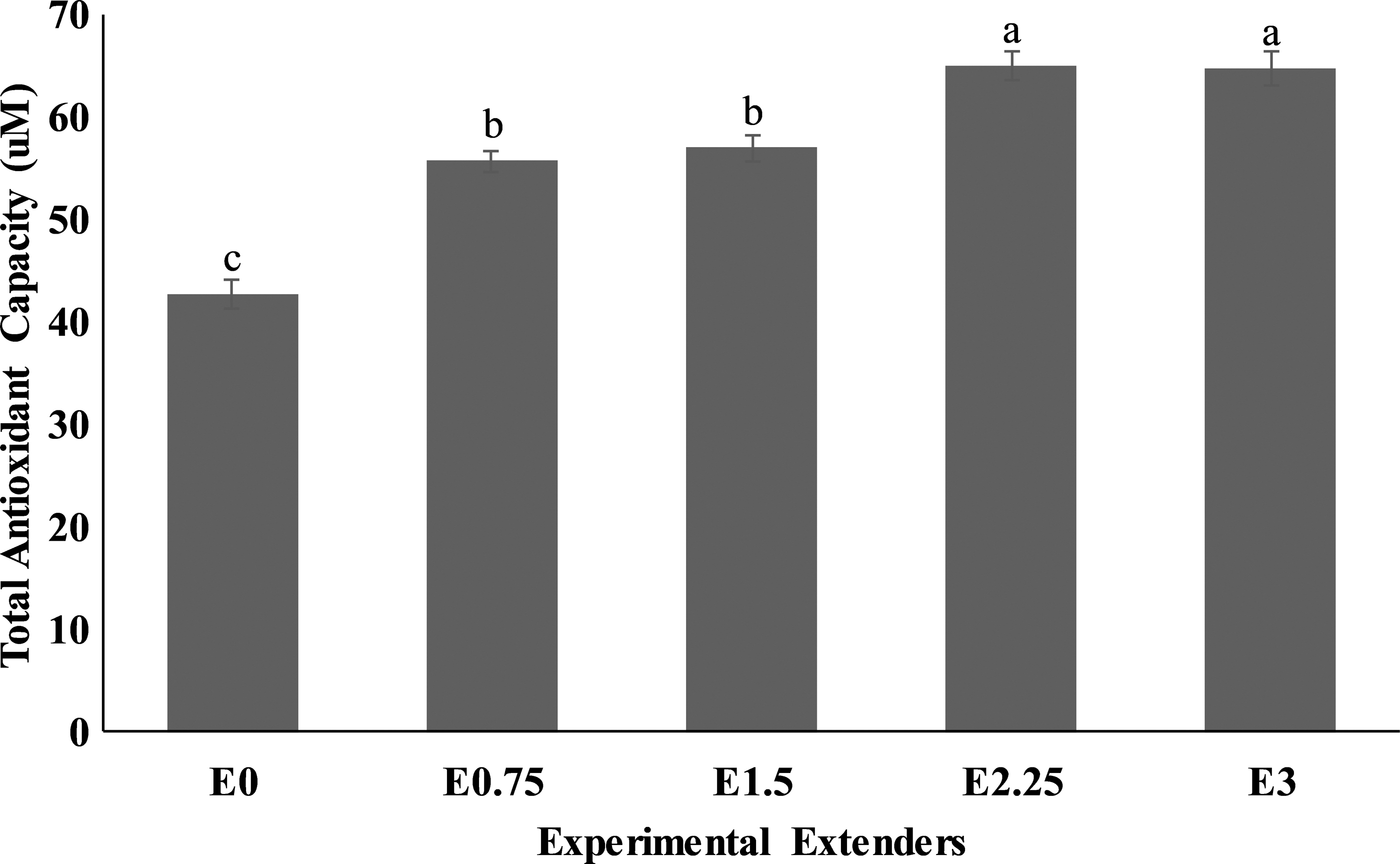
Effect of different concentrations of asphaltum in extender on post-thaw total antioxidant capacity of Nili-Ravi buffalo bull semen. The values are mean ± standard error of mean. The different letters showed significant differences among experimental extenders (p < 0.05). E0: Extender without asphaltum; E0.75: Extender with 0.75% (w/v) asphaltum; E1.5: Extender with 1.5% (w/v) asphaltum; E2.25: Extender with 2.25% (w/v) asphaltum; E3.0: Extender with 3.0% (w/v) asphaltum.
The mitochondrial activity (absorbance) (Fig. 8) of sperm was better (p < 0.05) in extender E0.75, E1.5, E2.25, and E3 compared with E0. The concentration of total sperm lipids (mg/dL) (Fig. 9) was recorded highest (p < 0.05) in extender E3 compared with E0, E0.75, E1.5, and E2.25.
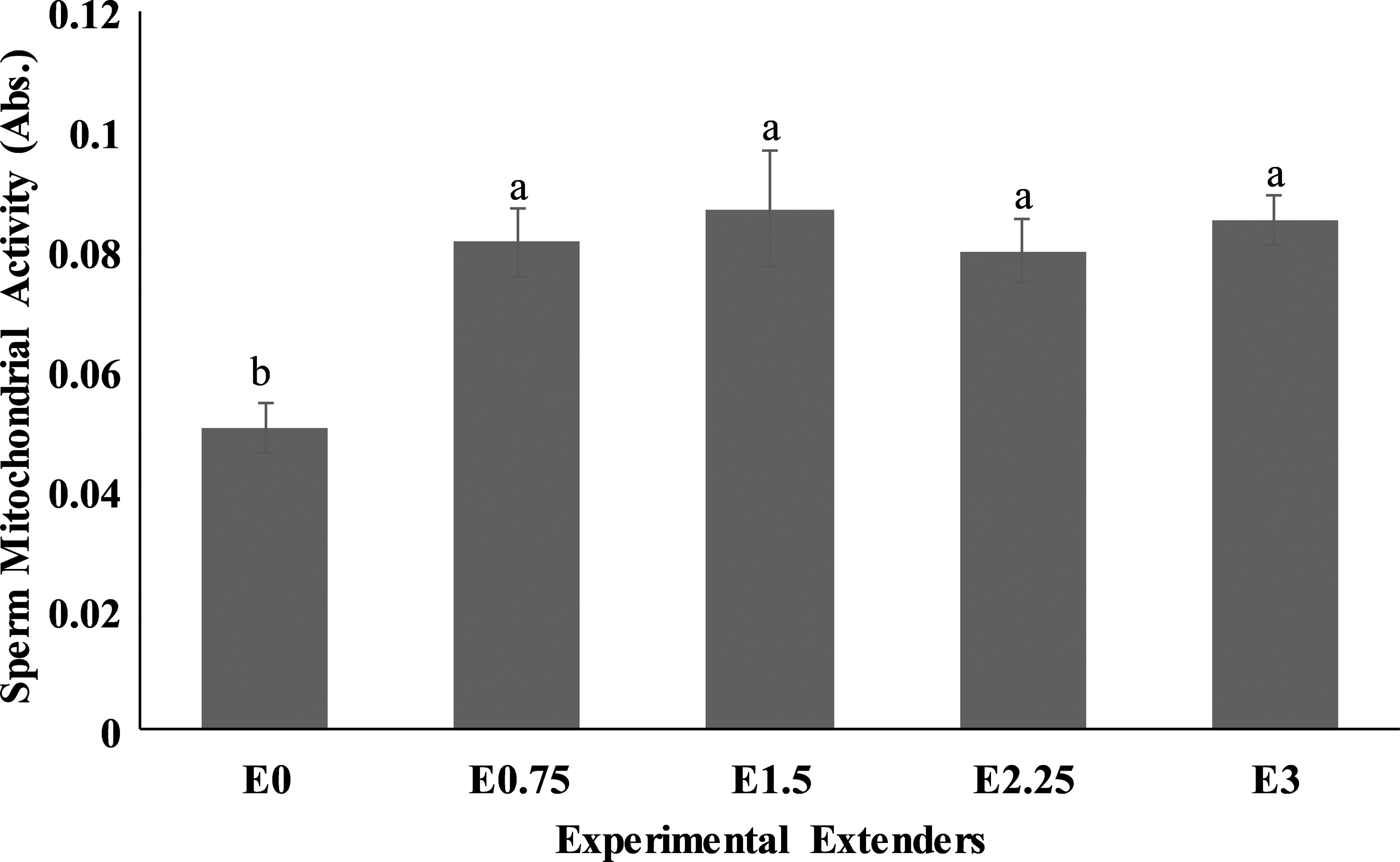
Effect of different concentrations of asphaltum in extender on post-thaw sperm mitochondrial activity of Nili-Ravi buffalo bull. The values are mean ± standard error of mean. The different letters showed significant differences among experimental extenders (p < 0.05). E0: Extender without asphaltum; E0.75: Extender with 0.75% (w/v) asphaltum; E1.5: Extender with 1.5% (w/v) asphaltum; E2.25: Extender with 2.25% (w/v) asphaltum; E3.0: Extender with 3.0% (w/v) asphaltum.

Effect of different concentrations of asphaltum in extender on post-thaw sperm total lipids of Nili-Ravi buffalo bull. The values are mean ± standard error of mean. The different letters showed significant differences among experimental extenders (p < 0.05). E0: Extender without asphaltum; E0.75: Extender with 0.75% (w/v) asphaltum; E1.5: Extender with 1.5% (w/v) asphaltum; E2.25: Extender with 2.25% (w/v) asphaltum; E3.0: Extender with 3.0% (w/v) asphaltum.
Discussion
Semen cryopreservation makes a significant contribution toward utilization of genetically superior animals. 5 However, it is a stressful process that leads to overproduction of ROS, impairs sperm motility, plasma membrane integrity, and viability, and ultimately affects the fertilizing potential of sperm.2–5,32 The ROS are crucial for cellular signaling and physiological pathways but their excessive production beyond the physiological levels has a deleterious impact on cellular integrity.1–3 To cope with this issue and to maintain balance of ROS, antioxidants are present naturally in seminal plasma, but their levels decline during the process of dilution; thus, they fail to compensate for the damages caused by the oxidative stress during cryopreservation.5,32 Therefore, this study was designed to reduce the oxidative stress and to improve the post-thaw semen quality by supplementation of asphaltum in buffalo bull semen extender.
Asphaltum is a multicomponent naturally occurring product exuded primarily from high mountainous rocks and generally it contains 14%–20% water, 18%–20% minerals, 13%–17% proteins, 4%–4.5% lipids, 3.3%–6.5% steroids, 18%–20% nitrogen-free compounds, 1.5%–2.0% carbohydrates, and 0.5%–0.8% alkaloids, amino acids, and other compounds.6,10,11,33,34 The phytochemical analysis of asphaltum performed in the current study revealed that it contains alkaloids, saponins, tannins, flavonoids, steroids, glycosides, and terpenoids, which are responsible for its biological activities. The current results are comparable with a previous study 22 from Chitral, Northern Areas of Pakistan that described the same components except for the flavonoids, alkaloids, and steroids that are reported in the current study. This contrast in chemical composition might have been due to the different geographical locations, as soil minerals and environmental factors affect the plants' ability to produce phytochemicals in asphaltum. 35 The constituents of asphaltum, such as dibenzo-pyrones and fulvic acid,33,34,36 have shown free radical scavenging and antioxidant effects against SO3−, OH radical, and paramagnetic nitric oxide in a concentration-dependent manner.7,8,13 Due to the presence of flavonoids, asphaltum exhibits significant antioxidant activity, as confirmed by the DPPH assay in the current study.
The spermatogenic effects of asphaltum are evidenced in a study on oligospermic patients 14 that reported increased sperm count in rats after dietary supplementation. 15 Similarly, the oral administration of asphaltum showed a remarkable increase in the number of epidydimal sperm in male rats and the number of ovulations in female rats. 15 Based on the spermatogenic effects of asphaltum and high cryo-sensitivity of buffalo sperm, we hypothesized that direct supplementation of asphaltum to the buffalo semen extender may improve its post-thaw quality. However, it was also envisaged that direct supplementation of natural products to the live cells might have deleterious effects. Therefore, a dose tolerability test was a prerequisite, 5 and buffalo spermatozoa exhibited good tolerance against asphaltum up to 3% (w/v) in the current study. This decreased tolerance toward higher concentrations of asphaltum might have been due to the presence of quinones that exhibit antioxidant activity in a concentration-dependent manner, and act as pro-oxidants at higher concentrations due to the generation of hydrogen peroxide that causes LPO and affects the cellular function.37,38 It is interesting to mention that our results of sperm tolerability are well supported by results on free RSA of aphaltum that increased up to 3% and decreased at higher levels.
Lipids are the main components of the sperm membrane; however, freeze thaw cycles induce excessive oxidation of lipids, alter the mitochondrial activity, and modify the membrane proteins and nucleic acids, hence affecting the viability and livability of cells.2,3,23 In the current study, the asphaltum supplementation of the extender resulted in improved sperm motility, plasma membrane integrity, viability, livability, and DNA integrity at all stages of cryopreservation, which might be attributed to the RSA of quinone-semiquinone-hydroquinone complex structures, dibenzo-pyrones, and fulvic acid.12,36 Previously, daily oral administration of asphaltum enhanced the spermatogenesis, weight of reproductive organs, and activities of testicular enzymes in rats. 17 Interestingly, dietary supplementation of asphaltum along with other herbs improved the post-thaw semen quality parameters such as motility, viability, sperm abnormalities, mitochondrial activities, livability, acrosome, and plasma membrane integrity in the Murrah sub fertile buffalo bull. 18
In the current study, free RSA of sperm, mitochondrial activity of sperm, and total antioxidant activity of semen were improved after thawing by supplementation of asphaltum in the extender. Similarly, higher post-thaw sperm total lipid concentration in samples cryopreserved in extender supplemented with asphaltum confirms its protective role against LPO during the process of cryopreservation. The aforementioned improvements are due to the antioxidant activity of asphaltum that is attributed to quinone-semiquinone-hydroquinone complex structures that mimic the actions of antioxidant enzymes such as SOD, CAT, and GPx. The strong antioxidant activity of quinone in the quinone-semiquinone-hydroquinone complex structure might be related to its ability to cross the morphological barrier easily and exhibit its ROS scavenging activity by gaining access to subcellular compartments.5,39 Further, the asphaltum possesses dibenzo-pyrones and fulvic acid 36 that have the ability to scavenge the free radicals and exert antioxidant effects against SO3−, OH radical, and paramagnetic nitric oxide in a concentration-dependent manner. 13 These molecules also act as a transporter of bioactive molecules. 40 Fulvic acids exhibit antioxidant activity at the cellular level by neutralizing the effects of free radicals and increase cellular metabolism, division, and livability of cells by protecting the cell nucleus and mitochondria. 41
Conclusions
The current study concluded that supplementation of asphaltum in buffalo semen extender at the 3% level improved the sperm quality parameters such as progressive motility, plasma membrane integrity, viability, livability, and DNA integrity at all stages of cryopreservation (post-dilution, post-cooling, and post-thaw) and decreased the oxidative stress in sperm during cryopreservation.
Footnotes
Authors' Contributions
S.A., M.A.A., and J.S. planned/executed the study and drafted the article. B.A.R. and M.S.A. proofread the article. S.A.W., S.I., and S.N. were involved in practical work.
Author Disclosure Statement
No conflicting financial interests exist.
Funding Information
No funding was received for this study.

References
Supplementary Material
Please find the following supplemental material available below.
For Open Access articles published under a Creative Commons License, all supplemental material carries the same license as the article it is associated with.
For non-Open Access articles published, all supplemental material carries a non-exclusive license, and permission requests for re-use of supplemental material or any part of supplemental material shall be sent directly to the copyright owner as specified in the copyright notice associated with the article.
