




Abstract
The coronavirus disease 2019 (COVID-19) is a novel illness, which is not fully understood. Whether an individual has traveled outside their respective country or never left their community, COVID-19 is a highly contagious illness, which can result in high death rates. Biobanks will play a role in providing tools to examine data from those receiving treatment along with reviewing the current and long treatment outcomes associated with this novel coronavirus disease. A diverse, global network made up of laboratory scientists, clinical researchers, epidemiologists, data science teams, physicians, and so on must have a standardized, collaborative, virtual biobanking solution to share clinical expertise and evidence-based solutions. This virtual biobank must be centrally managed to ensure standardized quality assurance and quality control efforts. Virtual biobanks will eliminate the need to transport samples between two locations for a specific study, minimizing the risk of contamination. It is necessary for virtual biobanks to upload imaging data from those patients diagnosed with COVID-19. Standardized, collected information will be essential in the area of discovery and validation of disease markers as well as novel therapeutic strategies. It is essential for biobanks to collect COVID-19 specimens along with corresponding clinical and demographic data from COVID-19 diagnostic testing. Because COVID-19 is an acute respiratory illness, proper collection procedures must be in place to collect respiratory samples for biobanking purposes. A preconfigured purpose-built COVID-19 Laboratory Information Management System (LIMS) is an efficient tool to seamlessly manage a data sharing network. Data entered into LIMS will be beneficial in designing much needed clinical trials to address any unmet needs to better address clinical treatment and outcomes. The partners or entities associated with the COVID-19 data sharing network will be able to effectively communicate, view data, and images associated with their respective research interest to advance COVID-19 research and data driven, clinical care.
Introduction
Key to contain coronavirus disease 2019
The coronavirus disease 2019 (COVID-19) is a very new illness, which causes acute respiratory distress and is often spread through close contact from person to person through respiratory droplets from an infected individual.1,2 Symptoms such as fever, cough, and shortness of breath from COVID-19 may appear within 2–14 days after exposure. 3 Complications from this virus can possibly include pneumonia in both lungs, multi-organ failure, and even death. 1 Social distancing, hand washing with soap, and sanitization are key in decreasing the spread of COVID-19 until a vaccine has been developed by scientists. No COVID-19 vaccines exist and clinical trials are currently underway around the globe, to produce a vaccine. The U.S. Department of Health and Human Services (HHS) has taken steps to speed up the development of COVID-19 vaccines by streamlining regulatory processes. 4
The World Health Organization (WHO) reported on June 11, 2020 at 13:53 GMT-5, a total of 216 countries, areas, and territories impacted by COVID-19 with a total number of 7,273,958 confirmed cases and 413,372 confirmed deaths. 5 On June 11, 2020 at 4 pm (ET), the Centers for Disease Control and Prevention (CDC) reported the cumulative total number of COVID-19 cases in the United States as 1,973,797. 6 Globally, the United States has the highest number of total cases (1,968,331) followed by Brazil (739,503) and Russian Federation (502,436). 7 If citizens across the globe do not take social distancing seriously, the number of cases and deaths will continue to drastically increase.
COVID-19 biobanks will play an important role in clinical trials related to COVID-19. Such biobanks will be instrumental for future, scientific research related to the current coronavirus (COVID-19) pandemic the world is facing. Biobanks across the globe will hold the key to collecting, storing, and distributing specimens obtained from coronavirus patients. In addition, biobanks will store COVID-19 specimen data collected from each person, images from chest X-rays (X-ray therapy [XRT]), and (computed tomography [CT]) scans along with each interpretation from the radiologist, which will be key to research related to personalized medicine, genomics research, and outcomes research. Therefore, biobanks will play a vital role in the whole process of patient prevention and prediction, follow-up, and therapy monitoring and optimalization. 8
Virtual biobanks—a vital resource to accelerate COVID-19 research
A virtual biobank is an electronic repository of biospecimens and associated metadata and enables the broad sharing of resources required for research. Virtual COVID-19 biobanks will enable researchers across the globe to access source material and data needed to perform clinical research and trials irrespective of the actual geographical location of COVID-19 specimens. For advancing global research on COVID-19, virtual biobanks can serve as a vital resource by making COVID-19 specimens and associated data universally accessible. Researchers across the globe can seamlessly locate specific COVID-19 specimens they need for research using virtual biobanks. 9
Biobanks participating in the virtual COVID-19 biobanking network should be capable of processing, storing, and providing high-quality COVID-19 specimens to researchers across the globe. This is crucial for the success of the virtual biobanks. Even if one biobank does not maintain the required quality standards, it can be detrimental for the participating biobanks and researchers. Some of the popular virtual biobanks worldwide are National Cancer Institute's (NCI's) Specimen Resource Locator (SRL), UK Biobank, SpecimenCentral.com, REDCap, and the University College London (UCL) Virtual Biobank.10,11
COVID-19 data sharing networks
COVID-19 clinical data entered into each patient's electronic medical record along with data entered into a virtual biobank can be configured such that these data can be transmitted to the subject registry associated with the Laboratory Information Management System (LIMS) database. This LIMS database will be configured differently from what has been done in the past because this new data sharing network will primarily involve COVID-19 patients. This global data sharing network involved needs to have all patient data centralized in one network. The data entered into the subject registry associated with the patients' images must be linked to the collected specimens and data. This will be an essential requirement to any clinical trial being conducted.
Regulatory bodies governing biobanks
The Food and Drug Administration (FDA) is the federal agency responsible for the regulation of human cellular and tissue-based products within the United States. 12 The European Tissue Directives establishes the harmonized approach to the regulation of tissues across Europe. 13 Tissue banks within the United States are governed by the National Organ Transplant Act (NOTA), which mandates that tissues cannot be bought or sold. 14 The authorization of the gift of tissues is governed by the Uniform Anatomical Gift Act (UAGA), which regulates the donation of organs, tissues, and other human body parts in the United States. 14 In addition, the UAGA helps regulate donations to science, medicine, and education. 15 The United Nations Educational, Scientific, and Cultural Organization (UNESCO) International Declaration on Human Genetic Data provides guiding principles related to the collection, processing, use, and storage of human proteomic data, biological samples for medical and scientific research, and genetic data. 16 Additional regulatory guidance for biobanks comes from several sources, which includes the International Society for Biological and Environmental Repositories (ISBER, 2012) guidelines, 17 the Organization for Economic Cooperation and Development (OECD) guidelines, and the NCI's Best Practices for Biospecimen Resources. 18
This review article emphasizes the urgent need for virtual biobanks to fight the COVID-19 pandemic. The article discusses key elements in establishing virtual biobanks, including regulatory, ethical, and financial elements. It also discusses challenges in establishing virtual biobanks, including data heterogeneity, data security, data transfer, benefit sharing, safeguarding of intellectual property, and solutions or strategies to overcome the challenges. Data sharing tools can enable researchers across the globe to quickly access specimens and associated metadata stored by virtual biobanks required to accelerate research on COVID-19. 19
Virtual COVID-19 biobanks will also facilitate studies on COVID-19 that are logistics-prohibitive owing to a high risk of contamination of specimens (Figure 1).
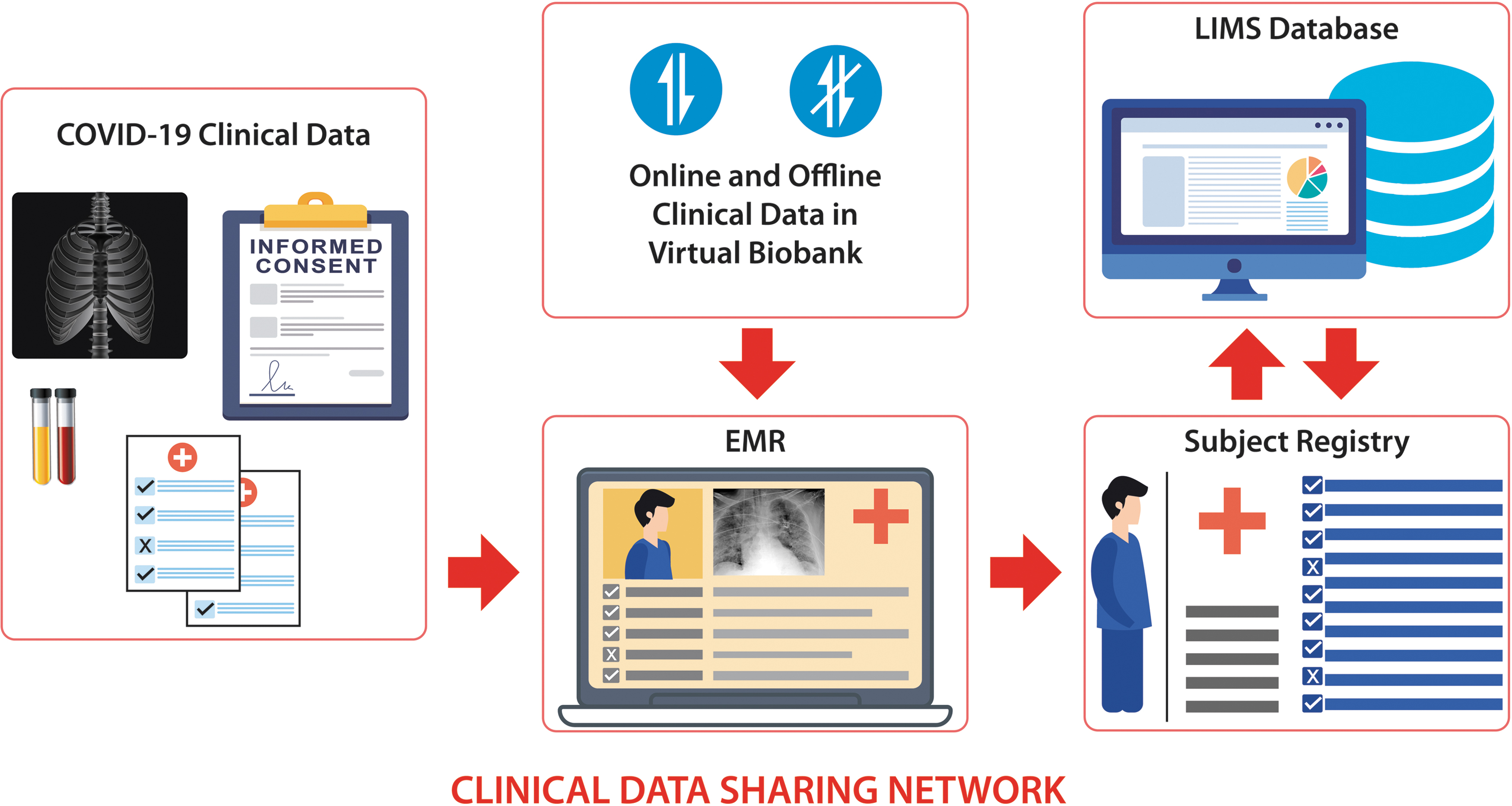
A schematic representation of clinical data sharing network.
Materials and Methods
Virtual biobanks enable easy information sharing without the need to physically use biological samples, permitting sharing of medical data and allowing the development of networks for better cooperation between national and international biobanks. 18 As the world has been impacted by COVID-19, researchers across the globe must immediately have a virtual tool that will allow them to collaborate and analyze data based upon collected specimens along with the corresponding demographic data, clinical data collected from each case, and initial/follow-up XRT and CT scans.
Virtual biobanks across the globe
National Cancer Institute's Specimen Resource Locator
The SRL is a publicly searchable virtual biobank that provides investigators access to biospecimens needed for research. 10 The SRL includes detailed specimen data, such as specimen type, preservation type, eligibility to apply for samples, the contact information of resource owner, and URL links for each resource. It does not contain Protected Health Information (PHI) of patients to safeguard sensitive patient data. The database search can be refined using various available filters, such as organ site, histology, specimen type, method of preservation. Furthermore, the database allows the use of other search criteria including specimen annotation, such as demographic information, risk factors, epidemiology, and type of organization such as academia, government, nonprofit, and the number of specimens available. Each resource specifies if investigators need to pay a fee to procure the specimens or if there is a shipping fee. 10
UK Biobank
The UK Biobank is an open access, EU GDPR compliant, virtual biobank for scientists involved in health-related research that is in the public interest. 20 It was established by the Wellcome Trust medical charity, Medical Research Council, Department of Health, Scottish Government and the Northwest Regional Development Agency. UK Biobank currently includes data collected from participants at the assessment centers, data obtained from online questionnaires on cognitive function, mental health, and so on, imaging studies, genome-wide genetic data, and health-related records. The data are organized into various categories based on the origin of data for easy navigation and searching. Some of the main categories are population characteristics, UK Biobank assessment center, biological samples, genomics, online follow-up, health-related outcomes, and returned datasets. Each category includes several subcategories. The objective of the virtual biobank is to improve the diagnosis and treatment of various life-threatening diseases, such as cancer, heart diseases, and so on. 20
Other virtual biobanks
Some other virtual biobanks across the globe are EuroBioBank, Specimen Central, the UCL Virtual Biobank, and CHRISTUS Virtual Biobank (CVB).11,21
The existing virtual biobanks should consider increasing their scope to collect and index COVID-19 specimens and associated data to their database. They should encourage researchers across the globe to provide COVID-19 specimens to facilitate further research on COVID-19.
Because of the urgency of the need for a global data sharing network, this review includes articles published within recent years. This article relates to efficient, large, data sharing biobanking networks, importance of imaging scans of COVID-19 patients, regulatory, ethical, and financial challenges in establishing virtual biobanks, and strategies to overcome the challenges.
Regulatory and ethical concerns in setting up virtual COVID-19 biobanks
The protection of the identity of patients or donors is a fundamental ethical issue that needs to be addressed. 19 While setting up virtual COVID-19 biobanks, it is important to safeguard patient identity to prevent a breach of patient privacy and to comply with the regulatory guidelines such as HIPAA (Health Insurance Portability and Accountability Act). Most virtual biobanks are open access platforms and are accessed by researchers across the globe. Hence, the participating biobanks must refrain from sharing PHI of donors over the virtual network to protect patient identity. Furthermore, the participating biobanks should ensure that they register only those specimens in the virtual network for which donors have provided consent. The virtual biobanks should have appropriate guidelines, transparent policies, Standard Operating Procedures (SOPs) in place, and appropriate regulatory oversight. 19 For the ethical sharing of specimens to researchers internationally, the biobanks participating in virtual biobanking networks should have a Material Transfer Agreement (MTA) in place to prevent unauthorized use of samples. 22
Another ethical concern that needs to be addressed is the ownership of COVID-19 specimens. In most instances, donors retain the ownership of the specimens donated by them and they should have the right to withdraw their consent and their specimens donated to the biobank. However, some researchers believe that the ownership of specimens should be shared among donors, researchers, and institutions. Most biobanks unanimously agree to be custodians of samples, rather than owners because it is unethical for a human being to own body parts of another human being. However, as of now, the topic of ownership of biospecimens is still under discussion. 23 The COVID-19 biobanks sharing specimen data in the virtual biobanking network should assign custodianship of specimens based on institutional, national, and institutional guidelines.
Financial considerations in setting up virtual biobanks
One of the important considerations while establishing virtual COVID-19 biobanks is the financial aspects. It is important to determine which entity would provide the necessary resources, infrastructure, and bear the costs for setting up virtual COVID-19 biobanks. The cost can be divided between the collaborating biobanks if they agree to share the cost. Alternatively, the participating biobanks can search for a funding agency. The second pressing question is how the biobanks, who are the original custodians of COVID-19 specimens, would be compensated and how much the researchers should pay for accessing the specimens. 19 The participating biobanks can determine the amount researchers need to pay to procure specimens from their biobank. The compensation may depend on several factors, such as the physical location of the biobanks, type of COVID-19 specimens, the infrastructure required to physically store the specimens, factor in local establishment costs, and so on. 19
Results
Embedding a data biobank in clinical care can ensure the collection of high-quality data. 25 The data sharing network will need to design a survey tool for COVID-19 patients and/or research coordinators to complete. All COVID-19 patients and/or the next of kin should sign an informed consent form (ICF); the next of kin should sign when applicable. It is important to have one centralized ICF document per the native language of the consented human subject. The rights of all human subjects must be protected even if he/she is deceased. All data utilized in the data sharing network should be de-identified.
Data sharing is becoming inevitable owing to the collaborative efforts of researchers, pharmaceutical companies, and regulators.25,26 Large-scale data analyses and the creation of comprehensive databases utilized for the hosting and exchange of genetic and clinical data has allowed researchers to learn and discover more about the pathogenetic mechanisms related to the illness in question, the overall response to drugs, and review of the cause of adverse events.25,27 Researchers must remember that clinical trials focused on research involving infectious diseases or pandemic causing illnesses will deal with the geographic spread of patients and the high heterogeneity within the same disease (Fig. 2). 27
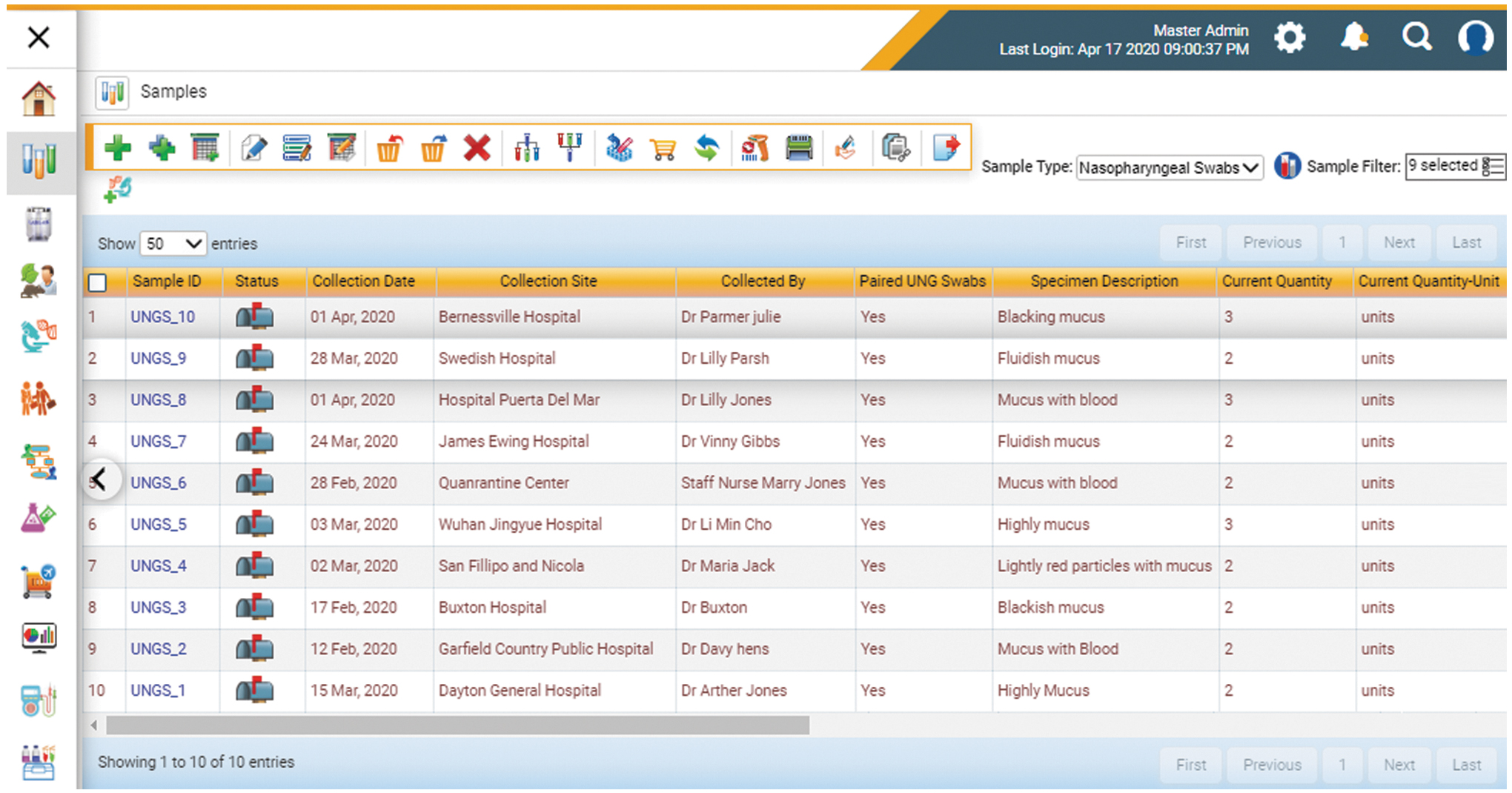
A Biobanking LIMS to manage COVID-19 specimens and associated clinical data. COVID-19, coronavirus disease 2019; LIMS, Laboratory Information Management System.
Discussion
All countries impacted by COVID-19 may or may not be included in this global data virtual biobanking network. However, experienced researchers know how to select which countries that will be involved to participate based upon (1) total number of confirmed COVID-19 patients, (2) total number of confirmed deaths related to it, (3) total number of citizens within a specified country that can be at risk, (4) high, at-risk populations/preexisting illnesses, and (5) specific gender and/or ethnic backgrounds heavily impacted by COVID-19. Other criteria for inclusion/exclusion can be included based upon the needs of the proposed data sharing network and clinical trial.
No one knows what the overall, long-term health outcomes will be for those who recover from COVID-19; therefore, a global, virtual tool is vital for future outcomes research studies. It is essential to design surveys that will capture intermittent data and long-term outcomes data. The data collected can be entered into the subject registry or cloud-based biobanking LIMS. High-quality data is one of the most essential elements when establishing any subject registry. 26
Data heterogeneity
Data heterogeneity is a potential barrier in the process of establishing a virtual COVID-19 biobank. Different biobanks across the globe follow different methods for collection, storage, and qualification of basic data. Furthermore, the governing bodies in different countries enforce different data protection rules and directives that further attribute to data heterogeneity. 23 The various stages of the sample life cycle, including collection, acquisition, identification, preservation, storage, quality control, transport, and sample disposal, are potential sources of data heterogeneity. To address data heterogeneity issues, virtual biobanks need to establish standards and use informatics systems that are interoperable. Virtual COVID-19 biobanks should ensure that the participating biobanks register only those samples in the network that are collected using standardized and validated protocols. The participating biobanks should also ensure procedure harmonization, which involves the harmonization of sample collection, processing, and storage protocols for COVID-19 specimens. For the procedural, legal, and ethical harmonization at an international level, the participating biobanks should follow international standards and guidelines, such as ISO 20387:2018, NCI and ISBER Best Practices. The objective of standardization of practices and data harmonization is to facilitate high-quality data sharing, enabling researchers to increase sample size, compare results, and statistically support results obtained from research and studies on COVID-19. 23
Intellectual property
The results obtained from research on COVID-19 would be intellectual property. While establishing virtual COVID-19 biobanks, it is important to define the recipients of the financial benefits received from research results. There is a high level of agreement that the donors of biological samples should not be compensated. The financial benefit arising from the extensive research of the collaborators could be shared between the major stakeholders, such as biobanks, researchers, their institutions, and others involved in the research. 24 The financial benefit may or may not be shared with the specimen donors and is usually outlined in the consent form. However, there is a broad consensus in the research community, that the donors should be educated about the research process and should be informed about the research outcomes, including discoveries, and the knowledge gained. It is important to maintain complete transparency regarding the income originating from intellectual property and its distribution with them. 24
Data security
To ensure data security, the transfer of data from the participating COVID-19 biobanks to the virtual biobanking network should be encrypted. In addition, the virtual biobanks should be hosted on a highly secure server with firewalls and encryption of data at rest to protect the login information of the participating biobanks, as well as data from patient and donor samples, from a potential data breach.
Data sharing registry for COVID-19
It is important to create a global data sharing registry geared solely toward COVID-19. This will benefit researchers across the globe because this tool will allow for the sharing of knowledge, clinical expertise, lessons learned, and foster research integration of high-quality patient registries, biobanks, and bioinformatics support, as key infrastructure tools addressing research and health care needs. 27 The multidisciplinary, diverse group of researchers must study all aspects related to COVID-19 to eradicate this global pandemic. It is also valuable for radiologists to remember that the CT interpretations of COVID-19 patients may overlap with the CT findings of diseases caused by other viruses from a different family, such as adenovirus, SARS-CoV (severe acute respiratory syndrome coronavirus) and MERS-CoV (Middle East respiratory syndrome coronavirus). 28
It will be in the best interest for biorepositories of data and samples from human subjects to operate under managed access, to protect privacy, align with the human subject's consent, and ensure that the resource can be managed in a sustainable way. 29 It is important for medical ethics committees to approve a global data sharing network, especially because some countries do not have governing guidelines with regards to biobanking and data sharing. Ethical, compliant research must be carried out and no patient should be forced or coerced to participate because this is not ethical. If specimens will be distributed to a central biorepository, this must be explained during the ICF discussion and this information must be included within the written content of the ICF. 26
Footnotes
Author Disclosure Statement
S.P. is the COO of  . M.K.C. is an Assistant Manager at CloudLIMS.com. The authors have disclosed that they have no significant relationships with, or financial interest in, any other commercial company pertaining to this article.
Funding Information
The authors received no financial support for the research, authorship, and/or publication of this article.