




Abstract
The era of COVID-19 has brought about a number of novel challenges for the global biobanking community. To better position the biobanking community to cope with current and future challenges, the International Society for Biological and Environmental Repositories (ISBER) COVID-19 Response Task Force was convened to identify needs and gaps in biobanking tools (existing resources that support good practice), for example, standards, best practices, business, etc. and to make recommendations to benefit the community. Toward these goals, the Task Force assembled a set of questions to explore individual biobanks' experiences, with emphasis on identification of key challenges and approaches, including tools employed. A survey was designed with the use of these questions and administered by ISBER. This article presents a summary of the aggregated data obtained from the survey responses, illustrating some of the major issues encountered and identifying which tools the survey respondents found most useful. In particular, this article focuses on the challenges identified during the early months of the COVID-19 era. Recommendations are provided to support biobank emergency preparedness for the future, address lessons learned, and propose solutions to bridge identified gaps. The analysis and the complete survey dataset will also inform the larger Task Force goal to develop specific tool recommendations.
Introduction
COVID-19
To assess the initial impact of the pandemic on biobanking, a survey was developed (Appendix A1) by the International Society for Biological and Environmental Repositories (ISBER 5 ) COVID-19 Response Task Force, via the ISBER Standards Committee, 6 with the purpose of better understanding the major challenges. The survey would also inform recommendations and actions for a more robust next generation of tools, resulting in a more prepared and adaptable biobanking community.
A diverse suite of biobanking tools exists to help enhance quality and fitness-for-purpose. These tools have already been useful to some biobanks in responding to emergency situations such as the COVID-19 pandemic. Although a companion paper will provide a deeper exploration of the relationship between challenges and tools, 7 it is important to understand what is meant by tools in the context of the analysis of challenges identified as part of the survey. The tools generally align to four categories: (1) institutional/network, or biobank-specific plans (e.g., business, continuity, or emergency preparedness plans), which may offer guidance for biobank planning; (2) best practices (e.g., ISBER, 8 the National Cancer Institute 9 [NCI], and the Organization for Economic Co-operation and Development 10 [OECD]), which offer detailed recommendations for optimal biobank operation; (3) targeted tools (e.g., auditing tools, qualifications, etc.11–14 ); and (4) standards, such as ISO 20387:2018 General requirements for biobanking, that include requirements and recommendations, as well as opportunities to demonstrate technical or specific competence. 15
The COVID-19 pandemic has been a test of the level of responsiveness and preparedness a biobank may have attained through use of existing biobanking tools. The Task Force's ultimate objective is to understand the varied approaches and experiences of biobanks globally to address the challenges of the current crisis, and identify gaps and lessons learned as input for developing the next generation of biobanking tools. This article focuses on the identification of key challenges and gaps that will be significant in defining these tools.
Methodology
In March 2020, an ISBER COVID-19 Response Task Force was created, composed of members of the ISBER Standards Committee, 6 supplemented by other invited subject matter experts. Its 18 members represent 13 countries, biobanks that handle both human and other-than-human (i.e., environmental, plant, and animal) biological materials, biobank standards and best practices coauthors, and developers of targeted biobank tools. The Task Force's first activity was the creation of an exploratory survey that was distributed to biobanking professionals worldwide to assess experiences related to the early COVID-19 era within the first months after the emergence of the pandemic (February–April 2020). Survey questions were developed with the intention of aggregating data on the impacts of COVID-19 on biobanking to create a baseline for future information gathering. The survey also included a number of open-ended response questions so as not to constrain the biobanking community in their assessment of their greatest challenges.
The survey employed the Survey Monkey platform (SVMK, Inc.) and had four sections: (1) biobank location and biological material information, including geographical location, biobank-type, and COVID-19 biological material handling information; (2) challenges encountered as a result of the COVID-19 crisis; (3) usefulness of tools implemented; and (4) gaps, lessons learned, and future tool needs to serve as input for the next generation of these tools. All questions were completely voluntary. ISBER administered and disseminated the survey to its membership (via e-mail and on the ISBER Forum), and biobanking experts were also invited to share it globally. Microsoft Excel was employed by the Task Force analysis team to conduct raw data analyses.
The data analysis of challenge-related open-ended questions began with the identification, examination, and characterization of several hundred challenges within the individual survey responses. Relationships among these challenges were identified and grouped into a set of tags (Fig. 1). These tags were assigned to categories to further aggregate data. To ensure consistency throughout the analysis, tag definitions were created. Multiple analysis team members iteratively assigned, characterized, and separately validated the tags. Tag definitions evolved throughout the process as the team discussed and resolved discrepancies, converging to reflect the themes presented here. Much of the analysis is presented in terms of these defined categories and tags. As the analysis team continued to characterize responses related to tools, gaps, and lessons learned, these tags were also applied in an analogous fashion where appropriate, so that responses could be compared across questions.

Survey Analysis Methodology. Analysis of survey responses led to identification of 7 categories with 24 individual tags assigned, for a total of 330 challenges.
Although findings are supported by numerical data, there are insufficient data to perform a statistical analysis. Rather, the assigned tags and categories were identified and considered in relation to each other to assess and understand the relative importance of the findings.
Categorized data related to challenges are presented in tabular format, in Tables 1–7. These tables summarize findings for each category via the following elements:
COVID-19 Handling Category
Number of survey respondents noting a challenge related to the tag/total number of survey respondents (note: Percentages will not add up to % of total respondents, because multiple tags could be assigned to a single response).
Themes are only listed here when they were identified by at least 3 respondents.
Number of survey respondents noting a challenge related to a theme within a tag/total number of survey respondents (note: Percentages will not add up to % of total respondents, because multiple themes could be assigned to a single response).
Heading (first two rows)
This presents the number of survey respondents who have identified at least one challenge in the category, followed by the total number of challenges identified across the category.
Column headers
Tags: The first column contains the titles of each tag within a category, followed by the % of survey respondents noting a challenge related to the tag (percentages will not add up to % of total respondents because multiple tags could be assigned to a single response).
Challenge Themes within a Tag: The second column further describes some of the most frequently identified themes. Only those themes identified by three or more respondents are listed.
Percentage (%) of Total Respondents: The third column indicates the number of survey respondents, noting a challenge related to a theme within a tag/total number of survey respondents (percentages will not add up to % of total respondents because multiple themes could be assigned to a single response).
Results
Between April 6 and 26, 2020, 113 biobanking professionals responded to the survey.
Biobank location and materials
The first part of the survey gathered information about the respondents, including:
Location
The survey was completed by 113 biobanking professionals representing 6 continents and 31 countries (Fig. 2).

Geographical Distribution of Survey Respondents. These 113 respondents represent 6 continents and 31 countries (parentheses indicate number of respondents within a continent/country): North America (35): Canada (8), USA and Puerto Rico (27); Central and South America (5): Argentina (2), Brazil (2), Mexico (1); Europe/Asia (54): Belgium (3), China (2), Czech Republic (1), France (2), Germany (1), India (1), Ireland (1), Israel (1), Italy (9), Japan (8), Latvia (1), Luxembourg (2), Malaysia (1), Portugal (2), Russia (10), Spain (2), South Korea (1), Taiwan (1), Turkey (1), UK (3), Ukraine (1); Africa (2): Egypt (1), Nigeria (1); Australia/New Zealand (17): Australia (16), New Zealand (1).
Biobank type
Respondents were asked to declare the types of biological material with which they worked (multiple options were accommodated). The biobanks were categorized into human (99) and other-than-human (22) (i.e., environmental, animal, plant) domains for analysis (Fig. 3).
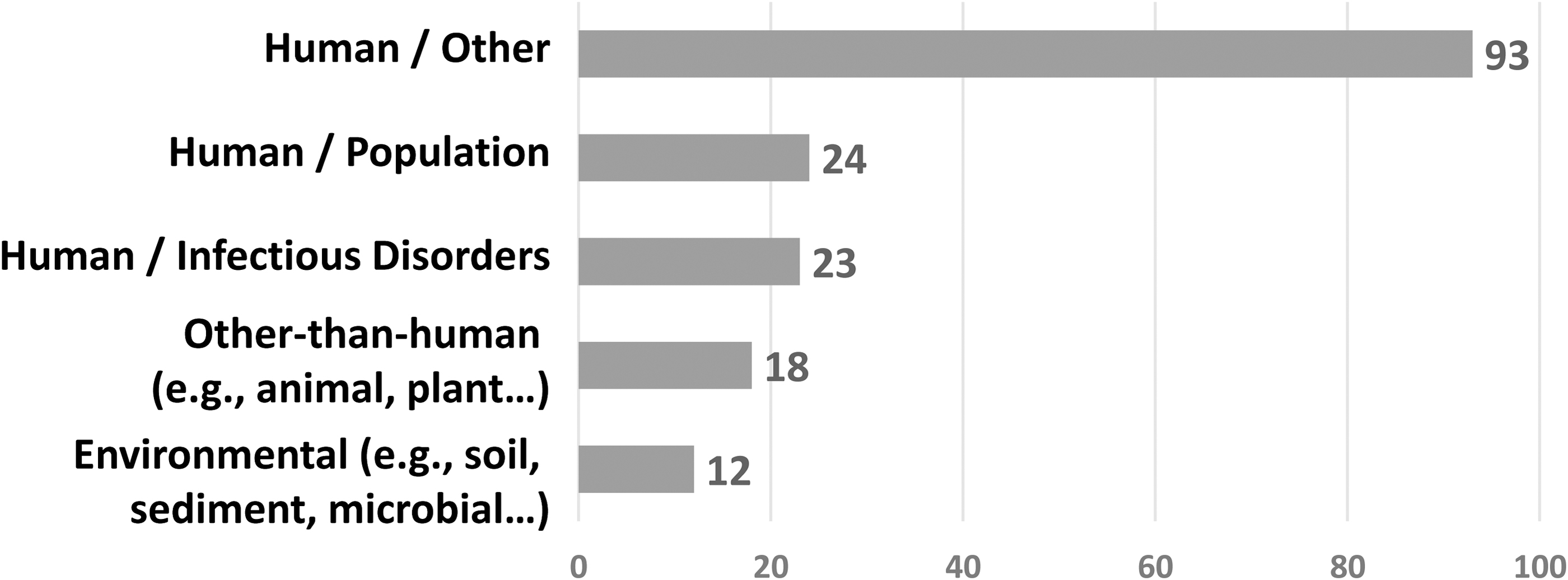
Biobank Types. The biobanks were categorized into human (99) and other-than-human (22) (i.e., environmental, animal, plant, etc.) domains for analysis. Note that biobanks were able to select multiple choices.
COVID-19 handling
The survey asked whether respondents were requested to handle COVID-19 samples, and whether or not they were able to accept. Note that 2 out of 113 did not respond to this question (Fig. 4). Thirty-four percent (38/111) of respondents handled COVID-19 samples. Of the 66% (73/111) of respondents that did not handle COVID-19 samples, 10% (11/113) had been asked but were unable to handle COVID-19 samples. The remaining 56% (62/111) of respondents were not asked to handle COVID-19 samples.
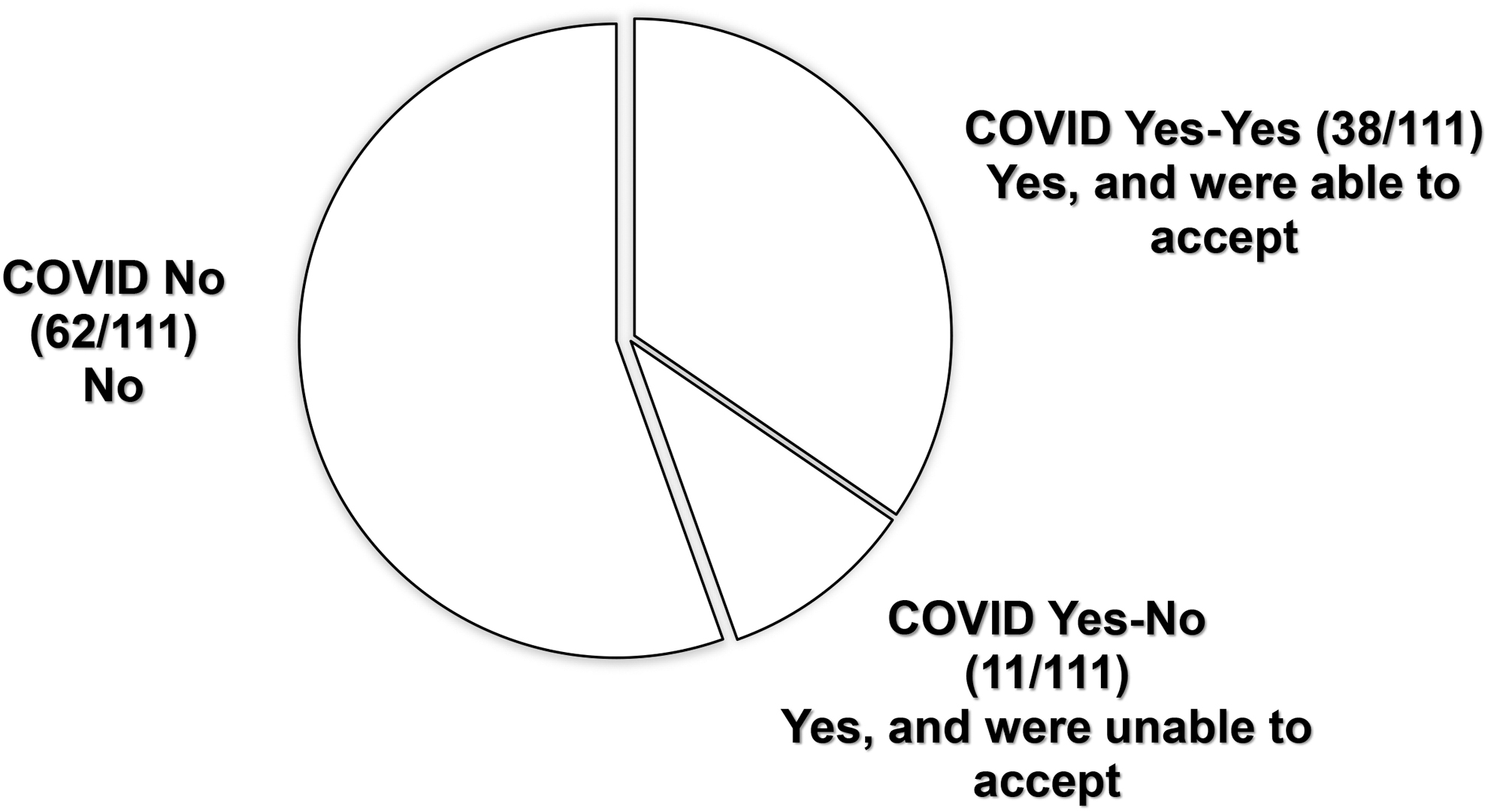
COVID-19 Handling Status of Survey Respondents. Thirty-four percent (38/111) of survey respondents were asked to handle and were able to accept COVID-19 samples. Ten percent (11/111) of survey respondents were asked to handle and were unable to accept COVID-19 samples. The remaining 56% (62/111) of respondents were not asked to handle COVID-19 samples.
Challenges
The second part of the survey posed the question: What have been your biggest challenges as a biobank with respect to the pandemic? The analysis team identified 330 challenges, to which 24 tags were applied across seven categories. These seven categories, shown in Figure 5, are listed from most to least frequently assigned. The analysis additionally identified many inter-relationships among tags and categories.
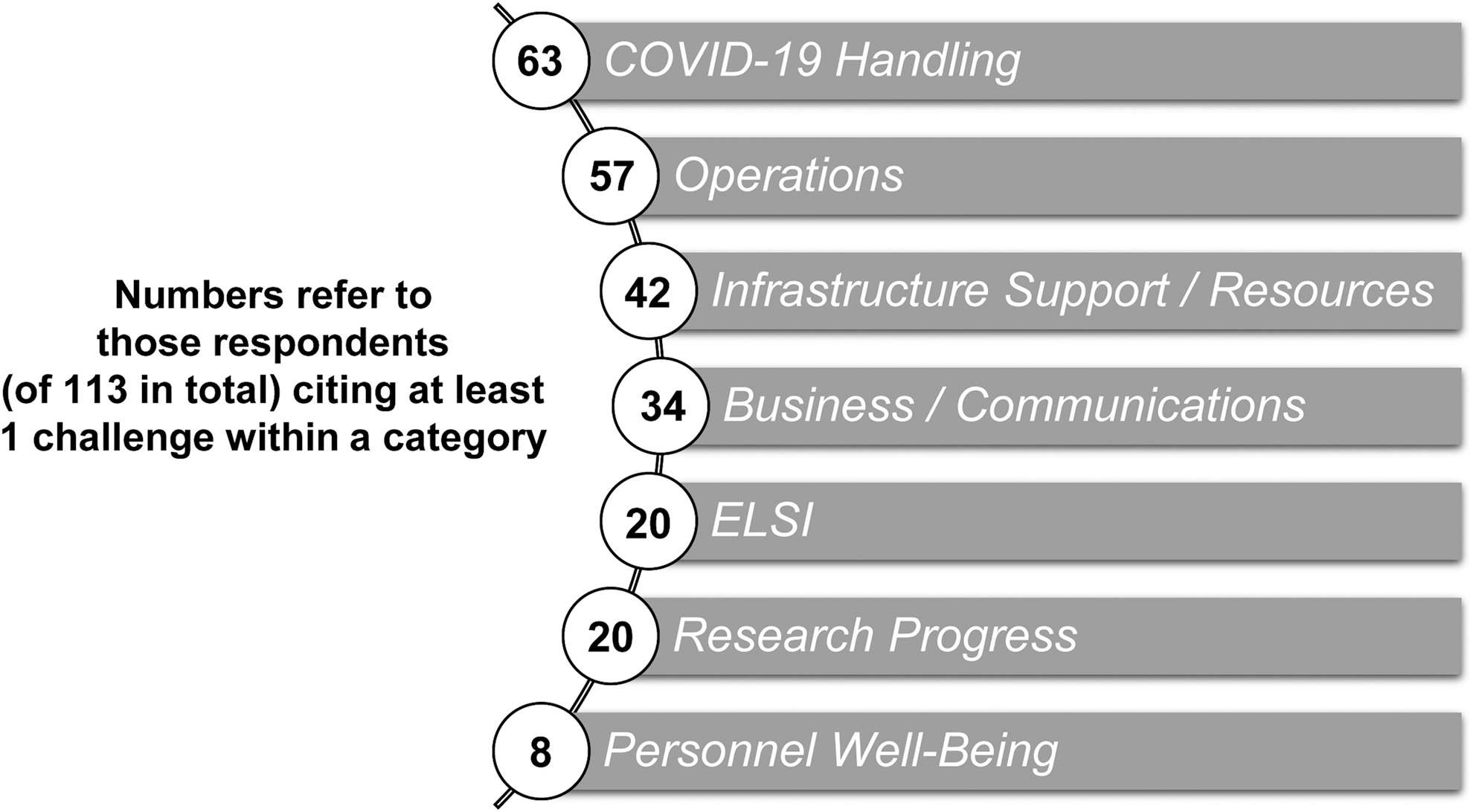
Categorization of Identified Biobanking Challenges. These are listed from highest to lowest numbers of survey respondents reporting at least one challenge in the category. Although COVID-19 Handling is the most frequently assigned category, there were many inter-relationships among tags and categories.
COVID-19 handling
The COVID-19 handling category refers to challenges associated with the handling or potential (whether intentional or nonintentional) handling of COVID-19. It encompasses the following four tags, as described in Table 1: sample handling other than COVID-19 (biobanks not intentionally collecting COVID-19 samples), COVID-19 collection (biobanks that are collecting COVID-19 samples), COVID-19 contamination, and labeling. The data in the first two tags have been aligned and analyzed in conjunction with survey responses regarding COVID-19 handling, as shown in Figure 4. It should also be noted that of the 38 COVID-19 handling biobanks referenced in Figure 4, 36 are biobanks that usually handle human biological material, whereas only two are biobanks that usually handle other-than-human biological material.
Frequent concerns of those respondents not formally accepting COVID-19 samples (sample handling other than COVID-19) included collection problems and personnel safety. Respondents not collecting COVID-19 samples reported four times as many collection problems, relating to the collection of any biological material, as respondents who did collect COVID-19 samples. This was often due to sudden changes in operation or ceasing of all nonessential activities. Examples of these disruptions included decreased routine/planned health care activities, cancellation or delays in medical procedures/surgeries, and complete redirection of hospitals to care for patients with COVID-19.
The primary concern for those handling COVID-19 biological material was personnel safety, followed closely by the lack of clarity of guidelines, reflecting the rapidly and continually evolving understanding of the coronavirus. A tenth of those handling/collecting COVID-19 biological material reported insufficient resources reflecting a variety of shortages, including lack of personnel, consumables, and space.
For those respondents not intentionally handling COVID-19 samples, concerns related to personnel safety were 60% higher than those collecting COVID-19 material. There were also more difficulties reported for continuing sample handling other than COVID-19.
COVID-19 contamination concerns were also featured, and they were not associated with those knowingly handling COVID-19 biological material. Labeling of samples was cited by a few respondents, primarily relating to biosafety and biosecurity for sample handling in the COVID-19 era and beyond, particularly for non-COVID-19 biobanks.
As stated by a survey respondent, “safety measures were not crystal clear from the start, therefore we needed several rounds of lab technician education. It took some time to get everything implemented.” (R54, Biobank Antwerp, UAntwerpen, UZA, Belgium).
Operations
Operations refers to general biobank activities such as biological material collection/acquisition, processing, labeling, storage, equipment maintenance, distribution, data annotation and data recording, interacting with partners and host institutions, etc. There are four tags associated with Operations, as shown in Table 2: sudden operations change, remote biobank operations, storage and maintenance only, and access to samples.
Operations Category
Number of survey respondents noting a challenge related to the tag/total number of survey respondents (note: Percentages will not add up to % of total respondents, because multiple tags could be assigned to a single response).
Themes are only listed here when they were identified by at least 3 respondents.
Number of survey respondents noting a challenge related to a theme within a tag/total number of survey respondents (note: Percentages will not add up to % of total respondents, because multiple themes could be assigned to a single response).
Half of all survey respondents experienced at least one operations-related challenge during the COVID-19 pandemic. Sudden operations change was the most frequently assigned tag—many respondents mentioned temporary closure of their biobank facilities and the need to quickly establish a shutdown process, suspend nonessential work, or postpone normal biobank activities. Some respondents called out external factors affecting sudden changes in operations, such as orders/instructions from their host institutions, causing interruption of routine activities. The speed of change, for example, with the rapid shutdown of biobanking operations, was particularly challenging for some.
The need for sudden changes in direction, such as having to quickly set up procedures to begin collecting COVID-19 samples, was also noted. As put by a survey respondent, “< 24 hours notice to prep and shutdown biorepository for an unknown amount of time” (R49, National Institute of Standards and Technology).
Challenges related to remote biobank operations were noted by more than one fifth of all survey respondents—specific themes are listed within Table 2. The need to quickly shift to remote biobank operations in response to stay-at-home orders or institutional restrictions was of significant note. Specific challenges included the need to: purchase laptops or other hardware for remote operations, set up internet connections, enable access to electronic medical records and databases via a firewall, and establish mechanisms for remote communication with staff.
Biobanks reported temporary interruption of collection and distribution activities—in some cases, activities were limited to storage and maintenance only. Lack of definite knowledge or instructions on how to continue pre-existing projects was also noted. Several biobanks cited challenges with physical access to samples in their collections.
Infrastructure support/resources
Infrastructure support/resources comprises the basic elements, systems, services, and facilities that are necessary for biobank operation. Its five tags include competent personnel availability, supply chain, logistics, information technology (IT), and intercommunication, with specific findings summarized in Table 3. More than one third of survey respondents expressed challenges corresponding to this category.
Infrastructure Support/Resources Category
Number of survey respondents noting a challenge related to the tag/total number of survey respondents (note: Percentages will not add up to % of total respondents, because multiple tags could be assigned to a single response).
Themes are only listed here when they were identified by at least 3 respondents.
Number of survey respondents noting a challenge related to a theme within a tag/total number of survey respondents (note: Percentages will not add up to % of total respondents, because multiple themes could be assigned to a single response).
Competent personnel availability and supply chain were equally the most frequently assigned tags. Challenges specific to competent personnel availability ranged from insufficient staff to cope with increased and/or altered workloads, to insufficient work for remote working personnel. A number of staff were diverted to COVID-19-related activities outside the biobank's pre-COVID-19 scope. In some cases, the limited staff in a biobank had to undertake tasks that they had never (or not recently) performed. For some biobanks, the imposition of requirements to limit staff onsite resulted in underutilization of expertise. Concerns expressed here frequently aligned with logistics issues, including shipping and physical distancing challenges that added to difficulties for competent personnel availability. Other competent personnel availability issues included changes to personnel roles and responsibilities to ensure continuity of operations, the need to provide roles for remote workers from biobanks with suspended activity, and the need to initiate scheduled staff shifts. As one survey respondent stated, “… we now have some staff members doing tasks that they have not done for many years. While they have SOPs and have been trained, the unfamiliarity is creating further stress …” (R22, no attribution by request).
Within the supply chain tag, liquid nitrogen supply concerns was pressing for a number of respondents, as was a lack of consumables for biobanking processes, particularly PPE, reflecting the global scarcity of same. Some biobanks made their PPE stocks available for clinical use in the treatment of those afflicted by COVID-19.
The IT issues were an impediment for some, particularly when staff were not experienced in teleworking, or when normal designated duties were directly tied to the actual biobank facilities. A number of biobanks were severely limited by their inability to remotely access clinical databases, biobank systems, and other IT resources. This exacerbated the ability of some to work remotely, as evidenced by parallel concerns within remote biobank operations.
Business/communications
Business/communications issues are those related to networking, planning, relevant guidelines, documentation, training, finance, and risk management. There were six tags included in this category: networking challenges/teamwork, guidelines, documentation & training, planning, finances, and risk management (Table 4). Challenges in business/communications that were most frequently cited were those related to networking and the need to ensure teamwork under altered circumstances. Variabilities among network sites created a misalignment of practices and communications in network operations. To maintain physical distancing in some biobanks, staggered schedules were employed. These alterations in operating processes required good communication among teams, documentation of new procedures, and opportunities to provide training for the new situations. A survey respondent stated, “The business plan would need to be improved in order to be able to identify activities that could be performed remotely. Implementing teleworking for people working full time in a lab is challenging when not well prepared.” (R25, no attribution by request).
Business/Communications Category
Number of survey respondents noting a challenge related to the tag/total number of survey respondents (note: Percentages will not add up to % of total respondents, because multiple tags could be assigned to a single response).
Themes are only listed here when they were identified by at least three respondents.
Number of survey respondents noting a challenge related to a theme within a tag/total number of survey respondents (note: Percentages will not add up to % of total respondents, because multiple themes could be assigned to a single response).
Respondents noted a lack of clarity in guidelines and Standard Operating Procedures (SOPs) for safe COVID-19 handling, biosafety, personal protective equipment (PPE), inventory management and appropriate labeling of samples, as well as dealing with supply chain issues, remote working by staff, and overall laboratory safety. Respondents also noted that new guidelines were needed in these areas. There were also concerns due to uncertainties about international guidelines, for example, the World Health Organization (WHO), for management of COVID-19 samples.
Other issues mentioned included planning issues, with regard to a paucity of plans for unique situations caused by the pandemic such as emergency preparedness and business continuity issues. One respondent also noted that risk management in response to the pandemic was, in some instances, stymied by issues within an institution's bureaucracy, which was not designed to respond rapidly to difficult new situations and challenges brought on by the pandemic.
A number of challenges were identified related to finances. These challenges included lack/loss of funding support, loss of fee-for-service income, and delayed receipt of payment for COVID-19 work.
Ethical, legal, and social issues
Ethical, Legal, and Social Issues (ELSI), refers to a broad group of considerations that contribute to the integrity of biobanking—examples include informed consent, accountability, data sharing, policy, ethics review committees, security, and privacy. Its tags include informed consent issues and other ELSI issues. Survey findings are summarized in Table 5 and demonstrate that 18% (20/113) of the total number of respondents noted challenges related to ELSI. Of those who cited ELSI challenges, the majority (80%) were related to informed consent. Identified difficulties with consent included the inability to consent participants in the usual way, leading to the need to change consent procedures for non-COVID biobanking, ceasing consent for non-COVID biobanking, and other challenges associated with obtaining consent for collection of biospecimens from patients with COVID-19.
Ethical, Legal, and Social Issues Category
Number of survey respondents noting a challenge related to the tag/total number of survey respondents (note: Percentages will not add up to % of total respondents, because multiple tags could be assigned to a single response).
Themes are only listed here when they were identified by at least three respondents.
Number of survey respondents noting a challenge related to a theme within a tag/total number of survey respondents (note: Percentages will not add up to % of total respondents, because multiple themes could be assigned to a single response).
ELSI, ethical, legal, and social issues.
Other ELSI issues that were identified by respondents in 30% of these cases include those related to obtaining ethics review board approvals (e.g., for approval of COVID-19 work or delays in reviewing non-COVID-19-related work), national regulations regarding infectious sample handling, and problems associated with local regulatory, governance, and oversight systems.
Research progress
The research progress tag (Table 6) was very narrowly assigned and used when there was specific mention of the impact on research progress either by the biobank or by potential biobank users, and/or the impact on sample preparation, retrieval, and distribution to researchers for upcoming studies. There were two tags in this category: general research progress and donor recruitment. It was also of interest that the majority of those citing challenges in this category were those not collecting COVID-19 samples.
Research Progress Category
Number of survey respondents noting a challenge related to the tag/total number of survey respondents (note: Percentages will not add up to % of total respondents, because multiple tags could be assigned to a single response).
Themes are only listed here when they were identified by at least three respondents.
Number of survey respondents noting a challenge related to a theme within a tag/total number of survey respondents (note: Percentages will not add up to % of total respondents, because multiple themes could be assigned to a single response).
In the general research progress category, 45% (9/14) of category respondents noted an impact on biobank research, 20% missed performance targets or milestones, and 20% cited issues with external researcher access. Some respondents also noted disruptions in sample collection, preparation, retrieval, and distribution to researchers. Overall, these problems comprised 70% of the issues in this category and were noted by 12% of all the respondents.
Some survey respondents (5% of total respondents) mentioned issues with donor recruitment. This was a result of not having access to donors because of a lockdown and the inability to obtain consent because of the need for physical distancing.
Personnel well-being
The category personnel well-being (distinct from the tag, personnel safety) contains only one tag: personnel well-being (Table 7). It refers to a group of considerations that includes a decrease in social interaction with colleagues, concerns about job security, family and childcare, as well as biobank managements' concern about the potential for infection of staff in public environments and that a lack of work could result in layoff of staff.
Personnel Well-Being
Number of survey respondents noting a challenge related to the tag/total number of survey respondents (note: Percentages will not add up to % of total respondents, because multiple tags could be assigned to a single response).
Themes are only listed here when they were identified by at least three respondents.
Number of survey respondents noting a challenge related to a theme within a tag/total number of survey respondents (note: Percentages will not add up to % of total respondents, because multiple themes could be assigned to a single response).
Issues related to personnel well-being included concerns regarding the health and safety of personnel due to sample handling, challenges of working from home such as reduced social interactions and family distractions, and concerns about job continuity given the uncertainty regarding how long stay-at-home orders would remain in place.
Tools
The third part of the survey was intended to complement the understanding of biobank challenges with information regarding the current implementation and usefulness of biobanking tools. Two questions in the survey addressed this topic. In identifying needs and gaps for next generation tools, a first step is to establish a baseline assessment of current tools. The 11 most frequent tools cited as useful (defined as fairly, very, or extremely useful) are shown in Figure 6, and they are separated into types. The biobank's Quality Management System (QMS), and Institutional documents, especially the emergency preparedness plan, were the most frequently cited tools. Other standards and best practices were also cited, particularly ISO 20387 general requirements for biobanks and the ISBER Best Practices. The interrelationships among tools, and their potential usefulness in overcoming challenges such as those identified in the survey, are addressed in a companion paper. 7
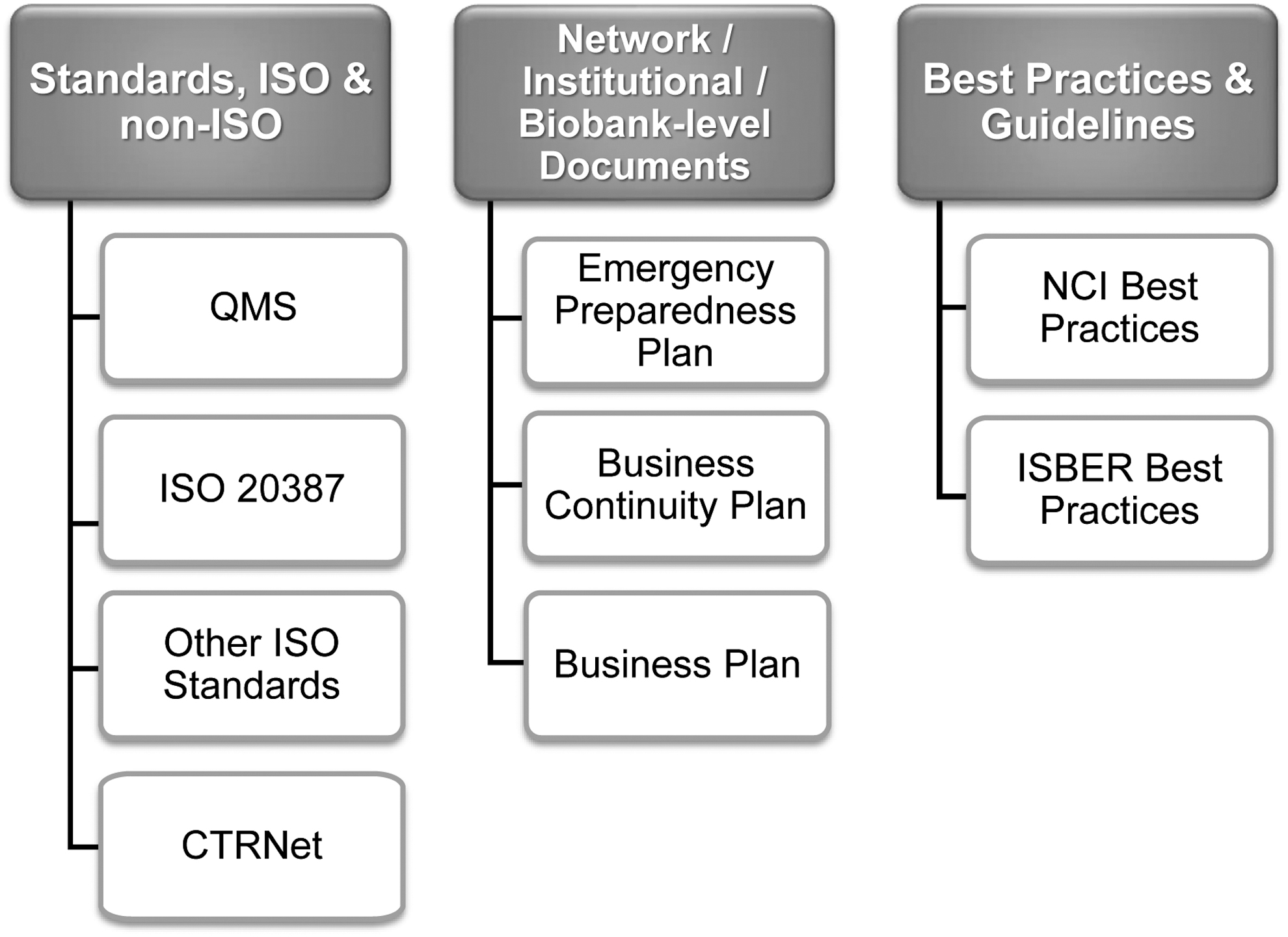
Tools Most Frequently Cited as Useful by the Survey Respondents. The Standards, ISO & non-ISO theme includes Quality Management System (QMS), ISO 20387:2018 General requirements for biobanking, other ISO standards, and Canadian Tissue Repository Network (CTRNet).
Gaps/lessons learned and additional resources/tools needed
The fourth and final part of the survey asked respondents to identify gaps/lessons learned and then to comment on additional resources/tools needed to address gaps. Figure 7 ranks categories, in which 80 out of 113 survey respondents identified gaps/lessons learned; Figure 8 ranks categories in which 67 out of 113 survey respondents identified at least one additional resource/tool that would be helpful.

Categorization of Identified Gaps and Lessons Learned. These are listed from highest to lowest numbers of survey respondents reporting at least one gap or lesson learned in the category. Business/communications is the most frequently reported category.
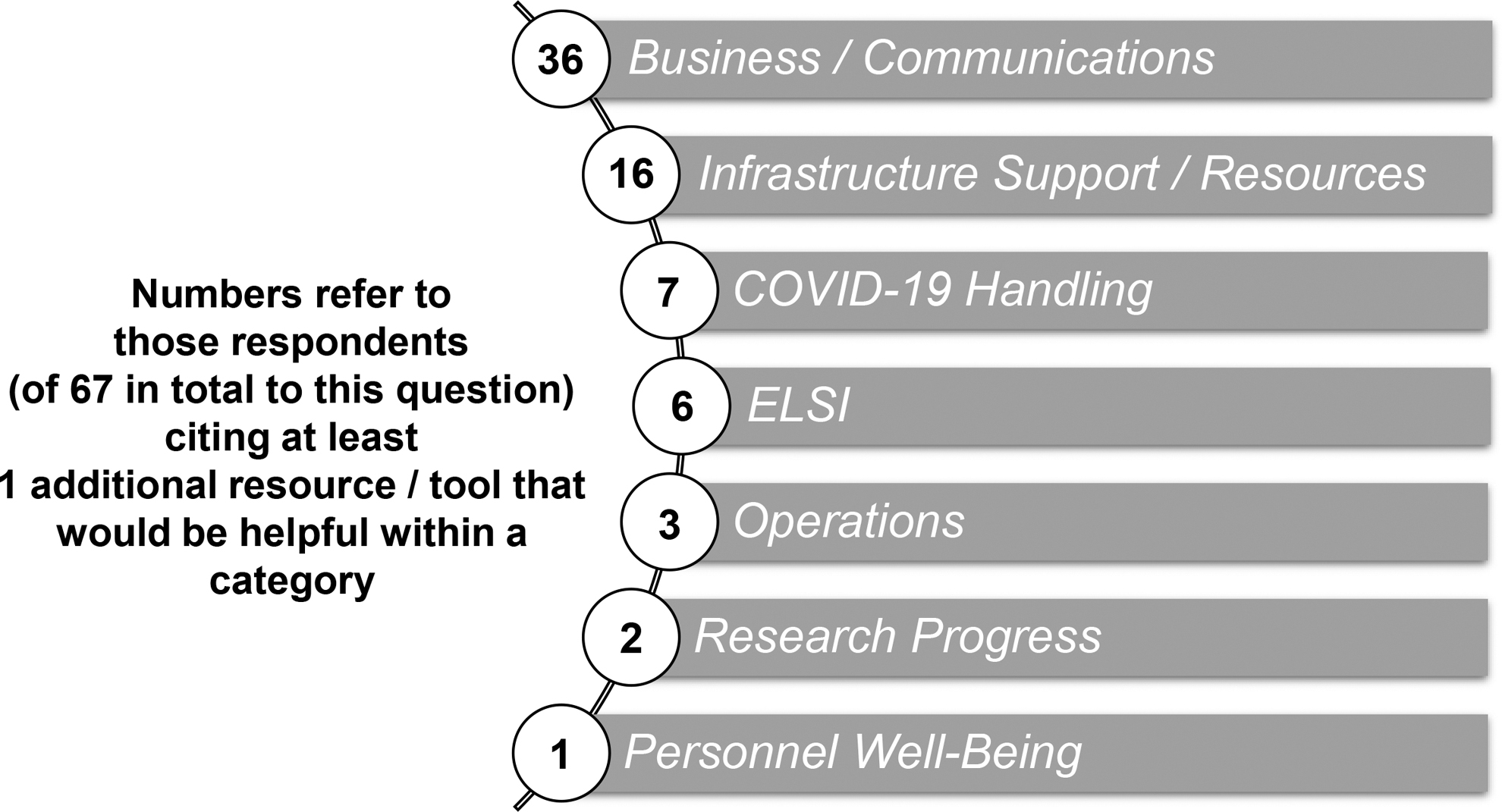
Categorization of Additional Resources/Tools Identified as Helpful in the Future by Survey Respondents. These are listed from highest to lowest numbers of survey respondents reporting at least one additional resource/tool in the category. Business/communications is the most frequently reported category.
Business/communications was the most frequently assigned category by the analysis team for responses (60%, or 48/80) regarding gaps/lessons learned (as shown in Fig. 7). Although many biobanks had emergency preparedness and business continuity plans in place, they were generally focused on natural disasters or network/power failures. A number of respondents reported either no plans (4% or 3/80) or inadequate plans (19% or 15/80), sometimes resulting in insufficient preparation for a sudden operations change.
The most frequently cited need for additional resources/tools among the 67 respondents to this question is also in the category of business/communications (Fig. 8). Within this category, planning is most frequently mentioned by respondents (26%, 17/67). Plans were generally identified as helpful tools (24%, 16/67), and respondents also indicated a high demand for guidance as well as the development of a go-to platform facilitating sharing of emergency plans and business continuity plans. Networks were also seen as helpful resources for information sharing (14%, 9/67).
The final question in the survey was completely open-ended to solicit other comments. Identified themes were aligned with other question responses, and they included challenges related to documents and training, and communication and harmonization.
Discussion
In the following discussion section, recommendations are proposed to address the myriad of challenges, gaps, lessons learned, and future needs identified by survey respondents. These recommendations are based on specific solutions proposed or implied by respondents to the challenges and gaps they identified, as well as suggestions proposed by the analysis team.
COVID-19 handling
Personnel safety concerns included fears and uncertainties related to the safe handling of samples. For those respondents not directly handling COVID-19 biological material, concerns related to personnel safety were double those collecting COVID-19 material. One likely explanation is the difference in the degree of biobank preparedness for handling of COVID-19 samples (e.g., availability of appropriate PPE). Potential solutions include alignment of biobank-specific processes with those provided by widely recognized sources (e.g., WHO, 16 Centers for Disease Control and Prevention [CDC] 17 ). Subsequent establishment and dissemination of clear guidelines for sample handling in the COVID-19 era is needed to mitigate biosafety/biosecurity risks. Such guidelines should also include best practices for labeling infectious/potentially infectious samples. Although only referred to by a small number of respondents, the issue of labeling is potentially a larger discussion in the future, even for those biobanks not intentionally handling COVID-19 biological material. A survey respondent puts it in succinct terms: “ … stored samples need to be marked as belonging to a ‘COVID-19 era’ for when they are given out for research use” (R100, UNSW Biorepository, Australia). The use of agile labeling and tracking systems will greatly assist with updates and improvements reflecting emerging information.
Operations
A number of approaches exist to address challenges in operations. The ability to effectively respond to the pandemic was influenced for some by previous experience of major disasters, such as floods or earthquakes.18,19 Lack of specific emergency preparedness plans for pandemics sometimes led to a reliance on more general emergency preparedness and business continuity plans of the institution or the biobank. Organizations need to be able to respond quickly to sudden changes in operations, with a revised set of workflows within short time frames. The development and continual review of a biobank emergency plan (to include long-term shutdowns due to pandemics or other causes) that addresses unanticipated environmental and specific emergencies can address this problem.20,21
Pandemics can force a transition to remote operations 22 —for that reason, the biobank emergency preparedness plan should consider and address the potential for remote biobank operations as a priority to minimize disruptions via the establishment of new processes and documentation relevant to the emergency environment. In addition, all of this needs to be remotely accessible, enabling remote training, auditing, etc. 7 One survey respondent stated, “The pandemic has introduced a new normal for working from home that is heavily relying on established IT infrastructure and networks at work and home.” (R97, no attribution by request).
Infrastructure support/resources
A number of strategies can help to mitigate infrastructure support/resources challenges. A particular challenge during the pandemic was the loss of personnel, including those identified as at-risk or other personnel who could not work onsite, and those diverted to COVID-19-related duties. Multi-skilling (i.e., individual staff that are trained in multiple skill sets) can effectively increases a biobank's agility/flexibility to respond to workforce disruptions in the face of an emergency. Staff with broader competencies are more likely to be able to successfully carry out key biobanking operations during staff shortages (e.g., those created by a lockdown).
Other strategies to cope with onsite personnel disruptions, where resources permit, might include:
Developing responsibility matrices, or other means of ensuring a mutual understanding of skills and responsibilities distributed among the staff, including back-up responsibilities and a plan for redistribution of critical activities during emergencies; Identifying activities for all staff that can be performed remotely (e.g., producing documentation); and Additional training, including accessible documentation and training designed to quickly reestablish and/or augment skills for situations requiring multi-skilling and remote work, for example, advanced IT.
Risks from disruption of the supply chain for items such as liquid nitrogen, laboratory consumables, and PPE can be mitigated by establishing increased flexibility in purchasing terms or relationships with multiple vendors and suppliers, to better assure access in times of shortage. One survey respondent prepared documentation and storage space to assist biobanks to mitigate any liquid nitrogen supply chain problems. Other strategies to optimize the availability of consumables/supplies include careful biobank inventory management and approaches for preservation and monitoring of inappropriate use, for example, for PPE. 23 In addition, back-up plans can be implemented to assist the biobank in ensuring availability of consumables/supplies. One possible approach is to reach out to colleagues or a network, for example, a biobank community of practice, to identify alternative sources or unused inventory of supplies.
Logistics issues frequently exacerbate other biobank challenges. The need for physical distancing frequently defined staffing limitations, for example, requiring the establishment of staggered/alternate schedules, and reduced use of equipment that could not be spaced appropriately. Where possible, consideration should be given to adaptation of physical workspaces to allow for new measures, such as physical distancing. For example, modular systems could be incorporated into laboratory spaces to facilitate physical distancing and workflow design to ensure personnel safety. 7
The IT is vital to facilitate the required level of safe, secure, and efficient communication and connectivity to serve dispersed work locations during a pandemic. Some biobank-related systems in use were originally designed with the expectation of a minimal need to communicate outside of a network/firewall/physical location—the pandemic altered this reality. Rather, a biobank that thoroughly considers remote accessibility to its systems and keeps in practice with them during nonemergency times, will be better prepared to handle unanticipated remote work necessity. 7 Key issues include biobank and health care system information access and remote monitoring systems. Access to health data is central for many biobanks. However, existing constraints associated with health information systems, such as policy, firewalls, and other cybersecurity controls, often restrict internal and remote access. Exploration of mechanisms for facilitating authorized controlled access for critical biobank activities while still protecting the privacy and security of the data is encouraged. 24 Success in this endeavor requires the engagement of multiple stakeholders, such as biobanking experts, institutional officials, IT and privacy professionals, and policy makers.
Remote monitoring systems can provide confidence to support biobanking operations offsite where needed. Successful use of remote monitoring requires practiced understanding of the system, as well as awareness of access limitations during emergencies.
Business/communications
A variety of strategies can be used to address challenges in business/communications resulting from a pandemic. While business/communications was cited frequently by respondents in the identification of challenges, it was the most cited category in the identification of gaps and future needs. A successful response to these challenges requires a strong relationship and effective communication between the parent organization (e.g., hospital) and the biobank, including increased communication with staff.
With regard to networking/teamwork challenges, respondents noted that formal and informal collaboration and communication across networks enabled sharing of lessons learned. Respondents found it particularly valuable to share observed experiences and responses of those who were among the first to confront the challenges. 25 Communication strategies and platforms are important for all during times of remote operations, but particularly so for networks and/or federated biobanks, where mutual understanding is critical to successful collaboration.
Many biobanks were severely restricted in sample distribution as well as noncore services during the pandemic. Prompt communication with (potential) users regarding such changes is critical. Identification and prioritization of core activities and processes, for example, to maintain existing collections, was found to inform required initial actions. 22 Biobanks planning to continue research and related services as circumstances allow, for example by managing pre-existing projects during the pandemic, or by providing new services to COVID-19 researchers, should address this.
Respondents cited challenges and resource/tool needs related to the guidelines and planning. Biobanking organizations, for example, ISBER, could potentially host a platform to collect and share relevant guidelines and plans. Lessons learned from this entire process can also inform future best practices documents to serve the global biobanking community. Information regarding challenges and lessons learned can also inform the development of general and targeted biobanking tools, including training modules.
Risk management is a critical business issue during a pandemic. Environmental scans can be very useful to alert the biobank to threats such as potential emergencies. One survey respondent noted and commented about the following challenge, “Changing requirements, in a short period of time, for activities leading to research biobanking closure. Watching the trend in other countries allowed us to predict potential limited service of closure, so we were able to prepare somewhat in advance.” (R2, MD Anderson Cancer Center (MDACC)). Some respondents related that initial guidelines and documentation were insufficient or unclear to guide direction and contend with rapidly evolving needs caused by the pandemic shutdown. It is important for biobanks to repeatedly access credible local, regional, and international sources for up-to-date guidance, for example, hazard information. Biobank risk management can also benefit from this guidance. Though very important to business operations, it is notable that risk management was only identified by 4% of respondents as a challenge. Additional exploration is needed to determine why risk management was not identified more frequently.
To enhance sustainability and address finances issues, new revenue streams can be generated by adapting competencies or infrastructure to offer an altered menu of available services. Examples could include temporary storage of biological materials, pandemic-related testing, and document development expertise for the service of others.
Ethical, legal, and social issues
Obtaining informed consent was a common challenge identified by survey respondents because of the need for physical distancing and concerns about COVID-19 transmission. 26 Several respondents identified teleconsenting as a potential solution: “Consenting patients in conventional ways has been challenging because telehealth or social distancing practices are in place for most of the venues that the consents are usually obtained. The use of telehealth consulting can be an inspiration for biobanking to conduct teleconsenting” (R97, no attribution by request).
Donor recruitment strategies will need to be completely rethought for the pandemic era and beyond. To better prepare in the future, biobanks should anticipate different scenarios where access to donors is restricted or where physical distancing is required. Plans should be developed, if possible, for alternative consenting procedures. Some alternative approaches for biobanking during the COVID-19 era have been described elsewhere. 27 Approaches might include the use of e-signatures 28 instead of signed forms for consent; or the use of e-consent 29 for biobanking of residual human biological material obtained during routine clinical care. Ethics committees and researchers should explore the ethical implications of novel consent approaches that could be used during similar emergencies in the future.
Research progress
As has been demonstrated in the results section, COVID-19 presented a diverse array of challenges to the biobanking community. Although only a small percentage of respondents specifically cited research progress as an issue, all of the challenges in each category identified could potentially affect research progress. Although the full impact on research progress could not be ascertained by the results of this survey, these issues can be further explored during future surveys after biobanks have had an opportunity to look back at their experiences during the pandemic.
Personnel well-being
Although personnel well-being was the least frequently cited category, this area plays a role in each of the other categories. The implied health and safety issues were addressed within the COVID-19 handling category, whereas social challenges were addressed within the remote biobanking operations tag. This category also reflects the many fears and uncertainties associated with the pandemic.
Strengths and limitations of the survey and its analysis
This study was intended to be an exploratory survey of biobanking professionals to create a baseline for a follow-up survey and associated efforts. The survey design targeted the collection of a broad range of responses regarding challenges to the business practices and operations of biobanks. The intent was to avoid prompting respondents by providing an open forum to recount challenges. In addition, the design provided the ability to collect data from a large number of biobanks within a limited timeframe. The result was a rich and meaningful information set that enhanced data analysis—in fact, a number of the responses included proposed solutions.
The primary limitation of this survey was the subjective nature of the analysis. Data analysis required categorization, and extensive efforts (see Methodology section) were undertaken to avoid or minimize interpretations and inferences. Other aspects included limited survey distribution channels, the timing of the survey relative to the uneven pandemic progression (some input was necessarily prognostic), the conduct of the survey solely in English, and the self-selecting nature of a voluntary survey. In addition, some 8% (9/113) of the survey respondents were members of the Task Force (9/113). Finally, there are limits associated with the use of language and interpretation of terminology, which may have created unintended bias and/or inadvertently influenced the interpretation of responses from non-English-speaking regions.
What is next?
This article is one of a series of activities underway to achieve our overall objective of providing input for development of the next generation of biobanking tools (Fig. 9). During 2020, the survey yielded a large amount of information related to challenges, tools, needs, gaps, and lessons learned, and proffered some initial solutions—this information is summarized in the current article. Much of this information also serves to create a baseline from which to further identify and bridge gaps that will improve existing biobank tools to enhance their fitness for purpose.
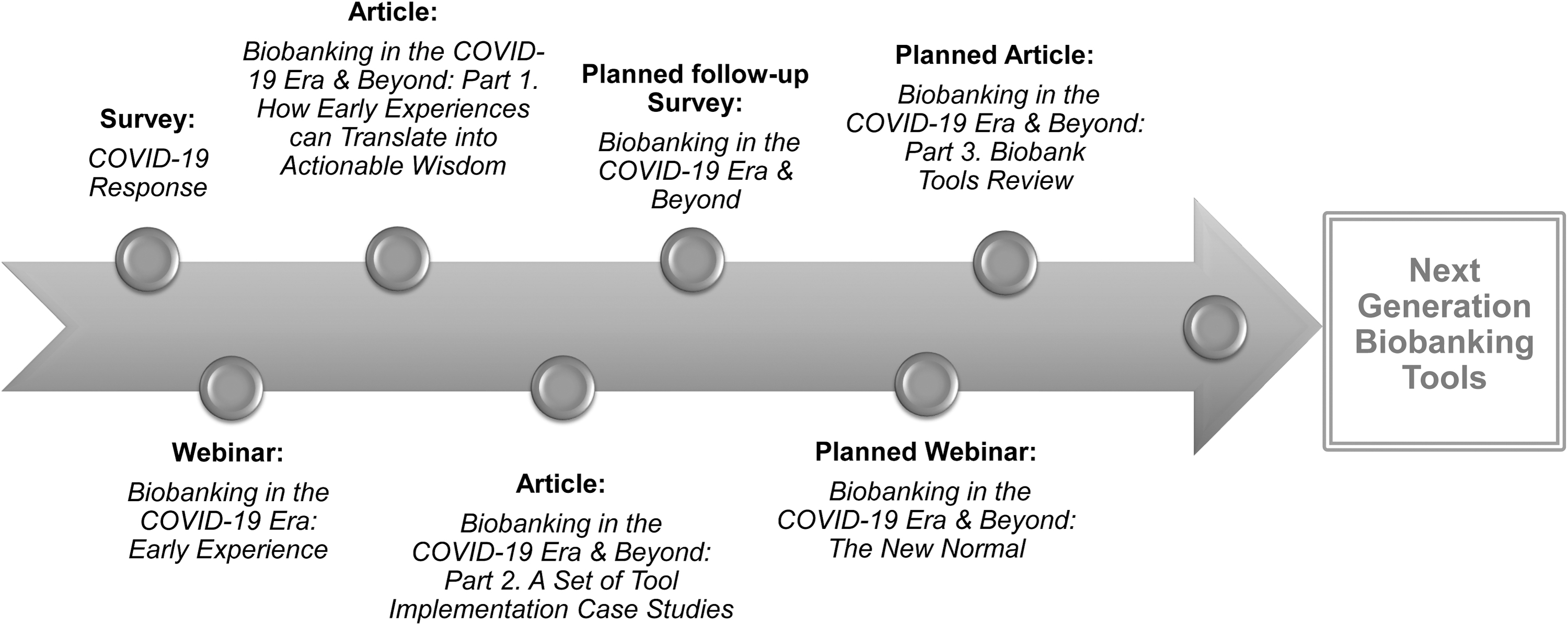
Future Directions. A planned series of surveys, articles, and webinars will lay a foundation to the development of next-generation biobanking tools.
A second and more robust survey, planned for the first half of 2021, will seek more detailed information on the usefulness of existing tools, and their gaps. A higher participation goal will be targeted, both in number and in diversity. The combined results of the two surveys are intended to present a measured view based on an understanding of challenges, gaps, and lessons learned both during the early pandemic situation (baseline) and subsequently.
Also during 2021, one or more review articles will be developed as a compendium on the use of different types of tools for biobanking—these will most likely be developed by type, that is, standards, best practices, plans, and targeted tools. Their current uses and potentials for the future will be examined.
Conclusion
The results of this survey identified a wide range of challenges for biobanks globally, including those related to COVID-19 handling, operations, infrastructure support/resources, business/communications, ELSI, research progress, and personnel well-being. Many biobanks were unprepared for the full force and effects of the pandemic. Although many biobanks had prepared an emergency preparedness plan, it is clear that the majority of these plans were insufficient for responding to a pandemic with such profound and long-lasting effects. The development and continual revision of such a biobank emergency preparedness plan, to include long-term shutdowns due to pandemics or other causes, can better position biobanks to address this problem.
In addition, the use of other biobanking tools can enable an effective response, helping to ensure sustainability for both the biobank and its personnel. In formulating emergency management strategies, advance planning, risk awareness, preparedness, mitigation, and crisis management for response and recovery are essential. The challenges, gaps, and proposed solutions brought forward here may be helpful in better preparing the biobanking community for future emergencies, thereby underpinning the viability and sustainability of biobanks.
Footnotes
Acknowledgments
This study was performed by a Task Force organized by members of the International Society for Biological and Environmental Repositories (ISBER) Standards Advisory Committee. The authors gratefully acknowledge the insightful contributions of survey respondents within the global biobanking community through their sharing of experiences, knowledge, and lessons learned.
Disclaimer
Where authors are identified as personnel of the International Agency for Research on Cancer/WHO, the authors alone are responsible for the views expressed in this article and they do not necessarily represent the decisions, policy, or views of the International Agency for Research on Cancer/WHO.
Author Disclosure Statement
No competing financial interests exist.
Funding Information
No funding was received for this work.