




Abstract
Semen preservation is a significant biotechnology used to safeguard the genetic material of birds, especially those with declining populations, through biobanking. However, there are limited reports on the successful chilling or cryopreservation of wild bird semen. In general, these techniques are not yet well-established for several species of wild birds and pose several challenges such as the need for bird handling and training, contamination of semen samples, low volume of semen collected, and inefficient preservation protocols. To address these challenges and improve post-thawing outcomes, new possibilities are being investigated, including alternative collection methods to traditional digital massage, the use of antioxidants and enzymes in the medium for chilling or freezing, storage methods using different straws from the usual pellet, and slower freezing rates. This review aims to discuss the various aspects of applying semen preservation in wild birds to create germplasm banks, highlighting the primary results obtained and the challenges that need to be addressed.
Introduction
Birds fulfill critical ecological functions, such as controlling pests, dispersing seeds, pollinating, and scavenging animal carcasses, thereby playing a vital role in the planet's life. 1 In addition, they contribute to the economy by providing meat, eggs, and feathers and exert an impact on religious, artistic, and cultural practices globally. 2 However, around eleven thousand bird species have been identified as endangered, with nearly half of them facing a decline in population, and one in eight species is at risk of extinction. 3 Agricultural activities, logging, hunting, and climate change are among the leading causes of this decline. 3
In this context, the development of strategies aimed at the conservation of species is of utmost importance. For example, the Alagoas Curassow (Mitu mitu) underwent a severe population decline and genetic bottleneck, with only three individuals in captivity in the 1980s, ultimately being classified as extinct in the wild. However, through intensive captive breeding efforts, the first pairs have been successfully reintroduced into their natural habitat.4–6
Thus, the preservation of genetic material serves as a valuable complement to in situ conservation. It facilitates the establishment of germplasm banks of various species. 7 Among the biotechnological methods used to protect avian genetic material, the cryopreservation of semen is particularly noteworthy because freezing oocytes and embryos is challenging due to the large amount of yolk present in eggs. 8 However, in birds, the fertility rate using cryopreserved semen is still limited. 7 To produce high-quality frozen semen straws, several obstacles must be surmounted, from successful semen collection to the selection of the best cryoprotectant. As a result, research has been conducted to enhance the preservation of avian semen. Consequently, the purpose of this review is to examine aspects associated with the cooling and cryopreservation of wild bird semen, highlighting the primary difficulties and outcomes achieved.
The Male Reproductive System of Wild Birds
The initial stage of the semen production process involves collecting a sample. However, for optimal results, it is essential to understand the specificities of the reproductive system and semen formation in birds. Nearly 50% of bird species are members of the order Passeriformes and these typically reach sexual maturity within 1 year. 9 Although this is the puberty pattern for most birds, some can reach sexual maturity in less than a year as is the case with the zebra finch (Taeniopygia guttata) and other estrildid finches. In larger long-lived species such as member of the Charadriiformes, the Procellariiformes, the Pelecaniformes or the Ciconiiformes, the attainment of sexual maturity can be delayed 2, 3 years or even more (Diomedia albatrosses usually require 7 years, e.g.). 9
When males reach sexual maturity, they begin to produce sperm. Avian sperm production occurs in the paired testes located within the coelomic cavity. The sperm and fluids are released into the lumen of the seminiferous tubules, with most of the fluid being reabsorbed in the epididymis (Fig. 1). The ejaculate comprises a large number of sperm cells suspended in a small volume of seminal plasma due to the absence of accessory glands. 10 As verified for roosters, the transportation of the sperm from the testes to the vas deferens (Fig. 1) results in morphological, biochemical, and regulatory changes,11,12 in addition to conferring motility and fertilization potential. 13 Unlike mammals, where sperm storage occurs in the epididymis, the vas deferens serves as the extragonadal reservoir for sperm in birds. 14
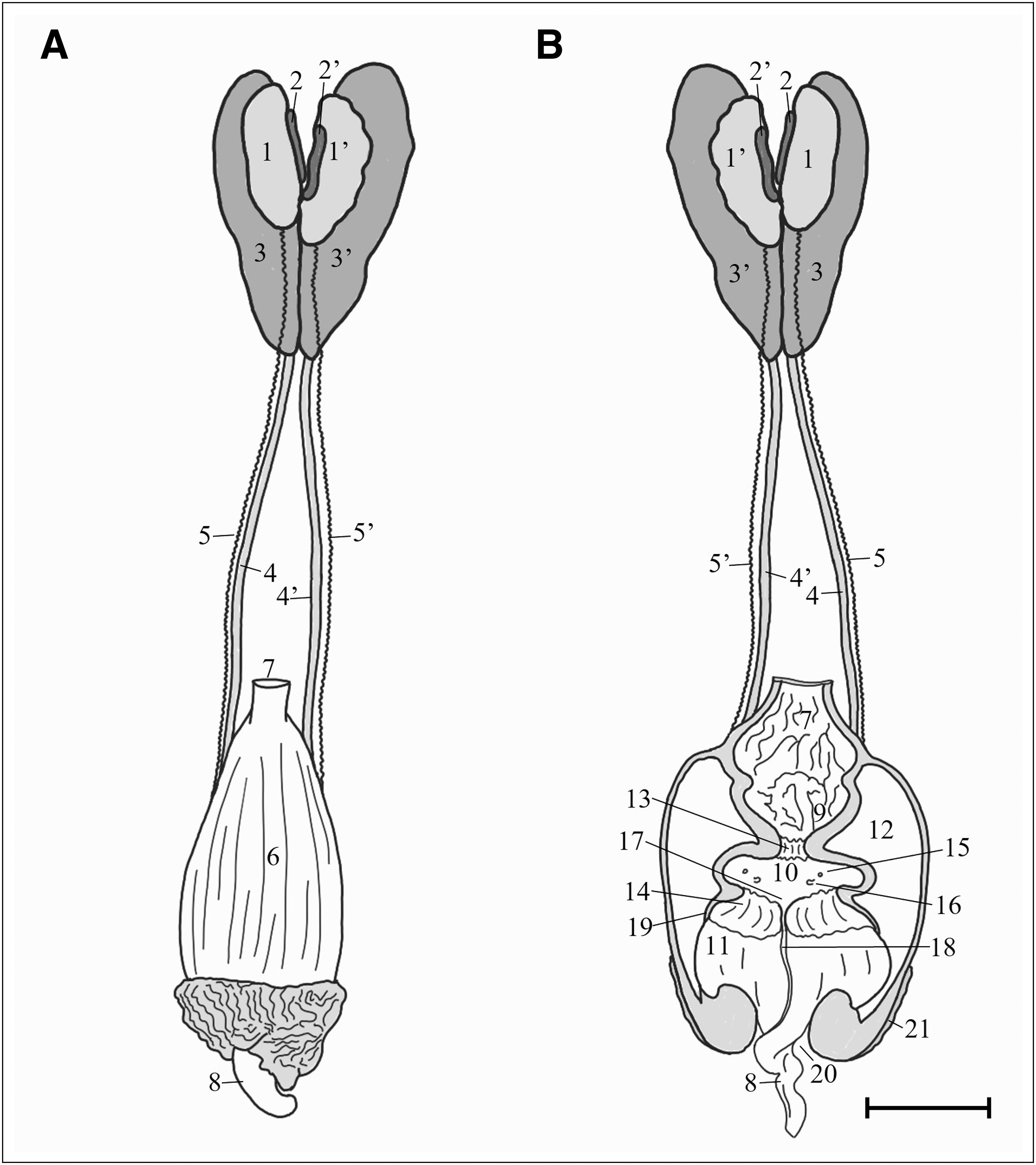
Schematic drawing of the urogenital apparatus of male rhea (Rhea americana) at 12 months of age.
Due to the distinctive genital anatomy of birds, obtaining semen from these species presents unique challenges compared with mammals. For instance, the coprodeum (receiving digestive residues), urodeum (receiving urinary residues), and proctodeum (responsible for copulation) regions in birds' cloaca are situated in close proximity (Fig. 1), increasing the possibility of collecting semen contaminated with feces, urates, and harmful bacteria that can affect the semen quality. 15
Wild Bird Semen Collection
In avian species, three primary methods for semen collection have been documented, which include digital or abdominal massage, cooperative collection, and electrostimulation (Table 1). The choice of collection method depends on the specific species under consideration.
Main Characteristics of Bird Semen Collected by Different Methods
The abdominal massage technique involves immobilizing the male bird on a supportive surface while holding its legs, beak, claws, and wings to prevent any injury to both the bird and the handler. A second technician then rhythmically massages the bird's abdomen and belly toward the caudal portion of the body, resulting in an ejaculatory reflex in most cases. This reflex is characterized by the elevation of the tail and cloacal stimulus, leading to the swelling of the proctodeum. The semen collection process is completed by exerting slight pressure on the sides of the cloaca using the index and thumb of one hand. 7 In ratites, due to their large size, massage is performed in the papilla of the vas deferens (Fig. 1).
Generally, the manual massage technique provides the operator with control over the collection time, independent of the bird's sexual motivation. However, this method also has certain drawbacks, including the potential for stimulating the ejaculatory response and defecation, leading to contamination of semen samples. 7 In Aleutian Canada Geese (Branta canadensis leucopareia), semen contaminated with fecal matter and urate resulted in a reduction in motility scores from 3.2 ± 0.6 to 2.7 ± 0.7 and viability from 49% ± 9% to 24% ± 18% in frozen–thawed samples. 28 Moreover, there may be difficulties in acquiring the technique and requiring prior conditioning, which can be challenging in wild bird populations. 29 Table 1 presents the semen characteristics of wild bird species collected by massage as well as other collection methods.
The process of cooperative semen collection in birds involves the voluntary ejaculation of semen into specialized devices, such as hats, mannequins, and perches, in response to specific behavioral stimuli, including vocalization, feeding, and material transfer to the nest.5,30 This technique offers various advantages, including reduced stress and trauma for the bird and the handler, as it does not involve physical restraint and is less likely to result in semen contamination by urine or feces. However, seminal volume may vary among individuals, and some birds may exhibit copulatory behavior but are unable to ejaculate or produce a minimal amount of sperm. In addition, cooperative collection requires hand-raised males that are imprinted and maintain a close relationship with humans, recognizing them as sexual partners.
This process demands a significant amount of effort and workforce for the constant management of individuals. In the case of the Golden eagle (Aquila chrysaetos), cooperative semen collection has been reported, with no urine contamination in the collected samples. The average volume of semen collected was 42.2 ± 31.8 μL, with a concentration of 467.7 ± 392 × 106 sperm/mL. 31
Electrostimulation is a technique that may provide a viable option for handling challenging species, such as larger psittacines. Recent studies have demonstrated the successful application of this technique in Piciformes, Strigiformes, Accipitriformes, Cathartiformes, Galliformes, and Anseriformes, with success rates varying between 0% and 50%. 16 This technique does not require prior conditioning of the birds or specialized operator training, 16 but does require specialized equipment tailored to the specific species, including probes. Some protocols may also require anesthesia, and there is a risk of contamination during sample collection due to stimulation of the digestive tract, resulting in the release of feces and urates. 16 Despite these challenges, electrostimulation shows promise and further research is needed to optimize the technique. This may include testing different electrostimulation protocols in various bird species to determine the most effective method for stimulating ejaculation.
In addition, it is possible to collect sperm cells from the epididymis and vas deferens of valuable birds that have suddenly died, using the flotation or flushing methods with satisfactory results.32,33 Figure 2 shows the flotation method applied to rheas (Rhea americana).

Collection of spermatozoa from the vas deferens of rhea (Rhea americana) using the flotation technique.
Peculiarities Related to the Wild Bird Semen Preservation
Since 1949, numerous studies have been conducted with the objective of establishing improved protocols for sperm preservation in various species, including avian species. 34 Initially, the methods focused on chicken sperm 35 and were later applied to turkey sperm. 36 Presently, research efforts have been directed toward the cryopreservation of semen from various wild avian species. Nevertheless, despite advancements and applications in multiple species, bird semen cryopreservation encounters certain obstacles. Most wild species have seasonal reproduction, which limits the use of such techniques to restricted periods. 37 Furthermore, the constant handling of semen collection causes high stress susceptibility in wild species, making it difficult to obtain samples. 38
Bird semen possesses unique physiological characteristics that make its processing more difficult and making it more prone to damage during the cryopreservation process. One of these characteristics is the small volume of the ejaculate (Table 1), which limits studies. Furthermore, high sperm concentrations observed in some species (Table 1) can lead to excessive dilution. 39 This dilution leads to a temporary increase in activity followed by permanent loss of viability. 40 There is still speculation about the role of seminal plasma in the in vitro storage of bird semen, since inhibitory and stimulant effects have already been reported. 41 In turkeys, sperm membrane integrity, sperm motility, energy status, and fertility were lower in semen samples stored in the presence of seminal plasma. 42 Seminal plasma components are thought to be involved in sperm phospholipid metabolism; thus, phospholipases present in plasma may be responsible for the early catabolism of sperm phospholipids. 42
On the contrary, seminal plasma contains antioxidants that have protective actions during in vitro storage. 43 In the American flamingo (Phoenicopterus ruber), better post-thawing motility results were obtained in the presence of seminal plasma. 44
Another factor is the filiform shape of avian spermatozoa, which gives them a smaller surface-to-volume ratio and a very condensed nucleus, making them less tolerant to critical osmolarity imposed during cryopreservation. The longer length of avian spermatozoa also makes them more vulnerable to mechanical manipulations such as pipetting and centrifugation, which are common during semen cryopreservation. Freeze/thawing processes can cause significant morphological disturbances, such as an increased percentage of crooked neck sperm in gander (Anser anser L.). 45 These factors must be considered when developing protocols for the successful cryopreservation of avian sperm.
Additional features of sperm include a high concentration of polyunsaturated fatty acids within the sperm membrane, rendering it prone to peroxidation and leading to potential damage to the cellular structure. 46 Sperm also exhibit low antioxidant potential, leading to oxidative stress and negatively impacting motility, mitochondrial activity, membrane lipid peroxidation, and DNA fragmentation. 47
Currently, optimization of preservation protocols is underway to reduce damage caused during the process, including the identification of optimal extenders and cryoprotectants at specific concentrations, tailored to each bird species. However, it is crucial to elucidate the physiology of spermatozoa, with a focus on understanding biochemical, cellular, and molecular changes, to aid the development of more effective methods.
Extenders Used for Wild Bird Semen
The dilution of avian semen is a crucial step in artificial insemination and preservation techniques, as it reduces semen viscosity, which facilitates handling and guarantees a greater number of inseminating doses. 48 Extenders used in semen dilution are buffered saline solutions that help maintain pH and osmolarity, provide energy to the sperm, and prevent clumping by decreasing sperm concentration. 48 In birds, variations in the pH of the extender can affect the metabolic rate and motility of sperm. Generally, sperm from roosters and turkeys can tolerate pH ranges between 6.0 and 8.0, while an extender osmolarity varying between 250 and 460 mOsm/kg H2O is reported as adequate to maintain fertilization capacity. 15
However, information related to pH and osmolarity ranges is not available for every wild bird species, which can pose a challenge in determining the ideal extender for semen. For example, Blue Rock pigeon (Columba livia) semen has a pH of 6–7.3 and an osmolarity of 338–352 mOsm, similar to that reported for domestic birds. 49 On the contrary, Northern pintail duck (Anas acuta) semen has a higher pH of 8.5 ± 0.1 and a lower osmolarity of 275 ± 8.2. 50
A suitable extender for avian semen should contain multiple energy substrates enriched with carbohydrates such as glucose or fructose, as well as other components that provide energy in the form of citrate, glutamate, or acetate. 51 While there is no standardized extender for domesticated or wild bird species, glutamic acid, which is the most prominent anionic constituent of seminal avian plasma, is a standard component of avian extenders. 30 Experimental designs in studies related to the preservation of avian semen are highly variable. Beltsville Poultry Semen Extender (BPSE) and Lake extender are among the most commonly reported extenders for preserving avian semen (Table 2). BPSE is a phosphate-buffered extender containing several salts, and its energy source is fructose. It has shown promising results in maintaining sperm parameters after 24 hours of cold storage, making it suitable for artificial insemination with King penguin semen. 55
Chemical Composition of the Main Extenders Used in the Cryopreservation of Wild Bird Semen
The Lake extender is composed of salts of potassium, sodium, and magnesium, as well as fructose as a source of energy, which contributes significantly to increased fertilization capacity of stored semen, and its properties are similar to the fluid found in the ducts of domestic birds. 56 Other alternative extenders such as Tyrode's albumin lactate pyruvate medium, Ovodyl™, and noncommercial extenders were tested for the preservation of wild bird semen such as Blue Rock pigeon (C. livia), Black grouse (Tetrao tetrix), and Capercaillie (Tetrao urogallus), and the main results are presented in Table 3.
Cryopreservation Studies of Wild Bird Semen and Artificial Insemination
UWA-E4: glucose 10 g/L; MgCl2.6H2O 0.37 g/L; K3 citrate, H2O 8.93 g/L; Na acetate, 3H2O 6.2 g/L; and Na glutamate, H2O 10.2 g/L; containing polyvinyl pyrrolidone 3 g/L.
BPSE, Beltsville Poultry Semen Extender; DMA, dimethylacetamide; DMF, dimethyl-formamide; DMSO, dimethyl sulfoxide; EG, ethylene glycol; LIN, Linearity; MBE, modified Blanco's semen extender; PEG, polyethylene glycol; PVP, polyvinylpyrrolidone; RSL, Ringer's solution; STR, Straightness; TALP, Tyrode's albumin lactate pyruvate medium; VAP, velocity average pathway; VCL, velocity curvilinear; VSL, velocity straightline.
Cryoprotectants Used for Wild Bird Semen
In an effort to mitigate the deleterious effects of low temperatures during semen preservation, cryoprotective agents are added to the extender (Table 3). In the case of wild birds, sugars such as trehalose, 64 sucrose, 23 and glucose, 65 as well as polyvinylpyrrolidone 68 and egg chicken yolk, 49 have been reported as external cryoprotectants at different concentrations, as indicated in Table 3. To our knowledge, the use of skimmed milk has not been reported in wild birds. However, Sexton and Fewlass 72 reported the use of pasteurized milk in chicken and found that it did not improve the fertilizing capacity of chilled semen at 5°C for 24 hours. In addition, Mehdipour et al. 73 found that the use of 1% soy lectin improved sperm parameters after the thawing of rooster semen, but there are no reports of its use in wild birds.
Although sugars are naturally present in extenders as an energy source, some researchers supplement extenders with sugars that also have a cryoprotective function. For instance, trehalose, when combined with glycerol, has been shown to be an effective cryoprotectant option for chicken semen. 74 However, in Barbary partridge (Alectoris barbara), the addition of trehalose to glycerol or dimethylacetamide (DMA) did not improve viability, ATP levels, or DNA integrity after thawing. 64 Similarly, there is debate over the use of egg yolk in semen extenders for avian preservation. In Indian red hen (Gallus gallus murghi), cryopreserved semen exhibited superior post-thawing seminal parameters when an extender containing 15% egg yolk was used, compared with the control containing only 20% glycerol. 75 Conversely, the addition of egg yolk did not affect the post-thawing results in Blue Rock pigeon (Table 3). 49
It is believed that the decrease in semen quality observed at high egg yolk concentrations may be due to changes in extender osmolarity beyond the optimal range for sperm, which can cause physical and chemical damage to sperm. 75 Furthermore, the chemical composition of avian egg yolk and the biochemical characteristics of sperm plasma membrane have a significant impact on the post-thawing quality, which varies from one species to another. 76 It is also worth noting the contraceptive effect of the egg yolk on the female's genital tract, as it would need to be removed before insemination. 77 The biochemical mechanism involving the contraceptive effect of egg yolk is not yet understood, but a low fertility rate has been shown in chickens with the use of this component in extender formulation. 77
In terms of internal cryoprotectants, it is commonly known that glycerol is widely used for mammalian semen cryopreservation, but is not commonly used for bird cryopreservation due to its contraceptive effects on the female reproductive tract. 34 It is thought that the contraceptive effect of glycerol is related to osmotic shock within the oviduct, where the influx of water into hyperosmotic cells is faster than the efflux of glycerol, causing sperm membrane rupture. 78 Therefore, it is necessary to remove glycerol before artificial insemination. However, methods such as dialysis, Percoll gradient centrifugation, or Accudenz washing can damage the sperm cell.79,80 As a result, alternative cryoprotectants such as dimethyl sulfoxide (DMSO), DMA, dimethyl-formamide (DMF), and polyethylene glycol are being used for the cryopreservation of wild bird semen (Table 3).
The efficacy of DMSO in cryopreservation of wild bird semen has been demonstrated to be superior to other cryoprotectants in certain avian species (Table 3). DMSO exhibits different effects depending on the concentration used. At lower concentrations, it causes membrane thinning, which facilitates the flow of water and cryoprotectant. 81 However, at higher concentrations, DMSO can create pores in the membrane that may result in destruction of the entire cell. 81 Thus, determining the optimal concentration of DMSO is crucial for each species. A range of concentrations between 1% and 16% has been reported in birds with varying results. In general, concentrations close to 6% exhibit good outcomes in the majority of species (Table 3).
DMA is one of the amides used in avian semen cryopreservation and stands out among others (Table 3). In the cryopreservation of Golden eagle semen, DMA (6%) and glycerol (11%) were compared in an extender based on polyvinylpyrrolidone. No significant differences were observed between the effects of the two cryoprotectants (Table 3). 31 However, it is noteworthy that DMA is less toxic than glycerol. DMF is not a commonly used cryoprotectant in wild bird semen cryopreservation. Nonetheless, its use at 6% was reported in the cryopreservation of A. anser L. goose semen, exhibiting promising results compared with fresh semen. On average, 57.2%–63.2% of sperm survived the freezing process, and 23.9%–38.5% remained morphologically intact. 45
Another important factor to consider in semen cryopreservation, particularly when using cryoprotectants, is the exposure time, as prolonged exposure can be detrimental to cells. 82 In the case of wild birds, cryoprotectants are typically added at the beginning of the freezing process, especially when using automatic refrigerators, as in the case of Blue Rock pigeons. 49
Additives Used for Wild Bird Semen Preservation
Currently, there is limited research examining the use of additives, such as antibiotics, in extenders for cryopreserving semen from wild birds. Previous studies have primarily focused on the addition of antioxidants for preserving domestic bird semen. However, a report by Sexton et al. 83 documented the effectiveness of antibiotics in controlling aerobic bacterial contamination in refrigerated chicken semen stored at 5°C for up to 72 hours. Specifically, gentamicin (2.5 mg/mL), kanamycin (31.2 μg/mL), neomycin (62.5 mg/mL), and tobramycin (2.5 mg/mL) were tested and found to successfully inhibit microbial growth without negatively impacting sperm viability for the first 24 hours of storage. The authors concluded that aerobic bacterial contamination is unlikely to impact the fertilizing ability of chicken sperm at 5°C.
Numerous bacterial species can adversely affect the morphology and function of sperm cells in various species, leading to reduced motility and viability. However, birds' sperm appear to be well adapted to withstand contamination due to the dual function of the cloaca, which can excrete and transfer sperm. Antibacterial substances found in animal ejaculates have been identified as serving the purpose of safeguarding sperm from bacterial-induced damage. For example, lysozymes have been reported in the ejaculates of domestic turkeys (Meleagris gallopavo) and superb fairy wrens (Malurus cyaneus), which are part of the constitutive innate immune system and can mount an immediate response to bacterial infections.84,85
Incorporating antioxidants into the freezing medium represents a potential strategy to mitigate the negative impacts of excessive reactive oxygen species (ROS) on sperm following thawing. Antioxidants act by blocking or inhibiting oxidative stress and improving sperm parameters, including motility and membrane integrity. 86 Among the antioxidants that are naturally present in poultry semen are vitamins E and C, glutathione, and the enzymes glutathione peroxidase and superoxide dismutase. 87 Although limited studies have been conducted with birds, particularly wild birds, amino acids such as glutamine have been successfully used in roosters, and the addition of valine has been shown to have positive effects on DNA fragmentation and the fertilization capacity of thawed chicken sperm. 88
In rooster semen, the addition of 1 and 2 mmol hyaluronic acid (HA) to the Beltsville extender for cryopreservation resulted in improved seminal quality. 89 Alpha-lipoic acid, a natural nonvitamin present in mitochondria, plays a crucial role in cells as an antioxidant. 90 Adding 30 μM of alpha-lipoic acid in lipid nanoparticles to the semen extender for cryopreservation of roosters resulted in improved motility, viability, mitochondrial activity, membrane functionality, and fertility, with less lipid peroxidation and reduced expression of caspase-3 observed after the freezing and thawing process. 86 However, adding vitamin E (5 or 10 μg/mL) to the semen extender for cryopreservation of Whooping and White-naped cranes only moderately improved certain movement characteristics of Whooping crane sperm, but did not enhance overall sperm survival. 23
Wild Bird Semen Chilling
Although semen cryopreservation is the most extensively researched method for conserving avian genetic material, refrigeration offers certain advantages over cryopreservation. Chilling is a more practical and cost-effective process than cryopreservation, and it allows for the optimization of male ejaculate, which typically exhibits low resistance to cryopreservation. 91 Furthermore, semen can be collected from wild individuals and subsequently transported under refrigeration to laboratories that can cryopreserve and store the samples in a biobank. 91
According to Blesbois, 92 for poultry, as the chilling time increases, the temperature should be lowered. However, the temperature should not go below 2°C–5°C during scheduled storage of 24 hours to prevent local freezing points in the vials. Some studies have compared the effects of different temperatures (4°C, 5°C, and 21°C) on sperm survival (Table 3). It has been observed that the duration of sperm survival during chilling varies significantly among different species. For example, in Magellanic penguin (Spheniscus magellanicus), good sperm parameters were maintained for less than 3 hours (77.8% ± 5.4% viable sperm) at either 4°C or 21°C, with decreased sperm motility index and viability and an increase in bent head or midpiece spermatozoa after 1 hour of storage. 70
In Northern Pintail duck, after storage in the same extender at 4°C for 0, 24, 48, or 72 hours, the sperm motility values were 83.1 ± 2.3, 80.4 ± 2.4, 70.0 ± 3.3, and 63.9 ± 4.0, respectively. 50 In addition, red-footed partridge (Alectoris rufa) semen was cooled for 3 hours at 5°C in different diluents, which provided promising results in the conservation of sperm motility, being 30.1% ± 1.2% for Lake and Ravie extender, and 46.0% ± 2.6% for Lake 7.1. It is worth mentioning that the results of curvilinear velocity, straight-line velocity, velocity average pathway, linearity, straightness, and wobble were better in the Lake and Ravie extender, which also provided an acceptable fertility rate of 29.8% ± 10.9%. 93
Wild Bird Semen Freezing
In avian species, semen cryopreservation can be achieved using slow, moderate, or fast cooling rates (Table 3), which involve a period of equilibration and temperature reduction. The equilibration process is typically conducted using refrigerators, thermal boxes, biological demand ovens, or programmable freezing machines, followed by exposure of the samples to liquid nitrogen vapor and immersion in liquid nitrogen. An alternative method involves the use of ultrafast cooling rates, which results in vitrification of the spermatozoa. The packaging of the samples may vary depending on the chosen method, with options including straws, pellets, or cryovials (Table 3). The thawing temperature may also differ based on the method used.
Semen packaging methods
In the freezing process of poultry semen, straws of 0.25 and 0.5 mL are commonly utilized along with pellet freezing. However, cryovials have also been reported to be used (Table 3). Straws provide a more uniform control of the freezing and thawing process, resulting in better sperm recovery. 30 They are also convenient to handle and require less storage space.
Pellet freezing allows for quicker freezing and is used for samples that will undergo vitrification. The diluted semen is directly pipetted into liquid nitrogen in small drops of up to 50–70 μL, after which the globules are stored in cryovials. 94 The pellet procedure is cost-effective, easily adaptable to field conditions, applicable to wild birds, and takes only a few seconds to cool and warm up. 95 Although straws are widely used (Table 3), the pellet method has also been extensively reported (Table 3).
Freezing rates
Generally, in avian semen cryopreservation with slow cooling, samples are first diluted and cooled from room temperature (∼25°C) to 4°C–5°C for a duration ranging from 0.5 to 3 hours. Next, a cryoprotectant is added and equilibrated at 4°C–5°C until the temperature is lowered to −20°C. The temperature then decreases at a higher rate from −20°C to −80°C, at a rate of −50°C/min, and finally from −80°C to −196°C, at a rate of −160°C/min. This freezing rate has been reported for species such as the Greater Sandhill Crane (Grus canadensis tabida), 68 Aleutian Canada Geese, 28 and American Kestrel (Falco sparverius). 62
In Sandhill cranes, the use of a moderate freezing rate has been reported, in which the temperature is reduced at a rate of up to 5°C/min from 4°C to −70°C, followed by rapid immersion into liquid nitrogen. 68 Similarly, Blue Rock pigeons have been subjected to a cooling process where the samples were gradually cooled from 24°C to 4°C at a rate of −1°C/min, subsequently to −80°C at 8°C/min, and then plunged into liquid nitrogen. 49
Although conventional slow freezing methods are widely utilized and have exhibited satisfactory outcomes, fast freezing techniques have been found to be more effective for some species. In the case of the imperial eagle (Aquila adalberti), Blanco et al. 96 discovered that fast freezing resulted in a significantly greater amount of viable sperm after thawing compared with slow freezing (p < 0.05). The authors of this study established a rapid freezing protocol that entailed equilibrating the samples at 4°C for 1 hour, transferring them to cryotubes, and then plunging the tubes into liquid nitrogen (−50°C/min).
The cryopreservation technique of vitrification is an ultrafast method that accelerates the cooling process. This method offers several advantages, such as reducing the formation of ice crystals inside the cell by increasing the temperature conduction velocity, which provides a higher cooling rate. 97 The rapid cooling process bypasses the formation of crystalline ice and converts solutions or water into an amorphous, glass-like solid. 97 Vitrification also offers economic benefits because it does not require freezing machines. However, to achieve a glass-like state, extremely high concentrations of cryoprotectants are required inside the cell, which can be toxic to the cells. 97 Moreover, the size of the sperm head in birds could make it difficult for the cryoprotectant to enter the interior because of its smaller size and cytoplasmic volume compared with mammalian species. 15
Although vitrification reduces the production of ice crystals inside the cell, there is a possibility of vitrified samples crystallizing during the heating process or ice crystal formation in the extracellular medium during ultrarapid freezing, which could damage sperm membranes as reported in mammals. 98 Nonetheless, vitrification has been successful in domestic birds such as roosters 99 and could serve as an alternative when slow freezing in liquid nitrogen vapor or freezing machines, or −80 freezers are not available in the field.
Thawing temperatures
Maintaining a balance between the rates of freezing and thawing helps to minimize damage to sperm cells, which is primarily caused by intracellular crystal formation. 100 Avian spermatozoa are known to be susceptible to crystal formation and suffer more cellular damage as a result. 100 Higher thawing temperatures had a more harmful effect on sperm of the Black-footed penguin (Spheniscus demersus), with a thawing temperature of 5°C being more appropriate for this species. 101 Santiago-Moreno et al. 101 also reported that there was no difference in the seminal patterns of Gentoo penguins (Pygoscelis papua) when thawing occurred at either 37°C or 5°C. Furthermore, no significant differences were found in seminal parameters when Peregrine falcon sperm samples were thawed at 37°C for 30 seconds or at 5°C for 1 minute. 21
Table 3 shows other thawing temperatures. These data highlight the importance of conducting species-specific studies to optimize cryopreservation protocols, as there are species-specific differences in the cryobiology of bird spermatozoa.
Perspectives and Considerations
The preservation of avian sperm is a complex process that requires adaptation to wild bird species, particularly those that are endangered, for the purpose of creating biobanks to conserve these species. Many challenges are faced in developing effective protocols for chilling and cryopreserving avian semen, ranging from sample collection, due to high levels of contamination, to selecting appropriate thawing methods. Nevertheless, successful application of these biotechnologies can be observed in wild species, as demonstrated in the American Kestrel,61,62 Greater Sandhill Crane, 67 and Aleutian Canada Goose, 28 with chicks born from artificial insemination using cryopreserved semen.
Researchers generally seek to adapt semen collection methods for each species to ensure animal welfare and researcher safety, achieve successful sample collection, and avoid contamination. Although BPSE is a commonly used extender in birds, alternatives have been emerging showing promising results for various species. Understanding the biochemical composition of semen for each species is essential to direct extender development. Nanotechnology can also be promising in extenders, improving nutrient absorption by cells.
Research is ongoing to find alternative intracellular and extracellular cryoprotectants and determine their ideal concentrations to ensure cryoprotection without toxicity. In general, DMSO and DMA are the most commonly used intracellular cryoprotectants in avian sperm. Few studies have investigated the addition of antioxidants to the extender for cryopreservation of wild bird semen, although their use can promote greater cell survival by combating ROS, requiring further research.
Freezing and thawing methods vary widely among birds, with fast freezing in pellets being a common, practical, and cost-effective way of cryopreserving avian semen. However, new technologies such as lyophilization can also be considered an alternative for preserving avian semen samples, as it does not require conditioning in liquid nitrogen.
Footnotes
Authors' Contributions
The listed authors meet the criteria for authorship of the work, and all contributed sufficiently to the elaboration of the study in question, in addition to assuming public responsibility for the content. L.G.P.B. wrote and R.E.M.O was responsible for the illustrations. P.C. and A.R.S. performed a critical review of the article.
Author Disclosure Statement
The authors declare no conflicts of interest.
Funding Information
This study was supported by Coordenação de Aperfeiçoamento de Pessoal de Nível Superior—Brazil (CAPES, Financial Code 001) A.R.S. is an investigator of the National Council for Scientific and Technological Development (CNPq Funding Number is 306409/2022-4).