




Abstract
Density gradient centrifugation is a conventional technique widely utilized to isolate bone marrow mononuclear cells (BM-MNC) from bone marrow (BM) aspirates obtained from pediatric B-cell acute lymphoblastic leukemia (B-ALL) patients. Nevertheless, this technique achieves incomplete recovery of mononuclear cells and is relatively time-consuming and expensive. Given that B-ALL is the most common childhood malignancy, alternative methods for processing B-ALL samples may be more cost-effective. In this pilot study, we use several readouts, including immune phenotype, cell viability, and leukemia-initiating capacity in immune-deficient mice, to directly compare the density gradient centrifugation and buffy coat processing methods. Our findings indicate that buffy coat isolation yields comparable BM-MNC product in terms of both immune and leukemia cell content and could provide a viable, lower cost alternative for biobanks processing pediatric leukemia samples.
Introduction
Despite considerable advances in the treatment of pediatric B-cell acute lymphoblastic leukemia (B-ALL), current therapies are associated with long-term toxicity and the prognosis for patients who experience disease relapse is poor.1,2 With the advent of precision oncology and immunotherapy, an improvement in cure rates is anticipated. Accelerating and optimizing these new therapies will require more stringent preclinical models that fully recapitulate intra- and inter-tumoral heterogeneity. 3 B-ALL samples that are highly enriched for leukemic blasts are the foundation of such models. Further, given the limited survival of patient-derived B-ALL cells in vitro, there has been an increase in the use of patient-derived xenograft (PDX) models for pre-clinical research because of their retention of genomic, phenotypic, and molecular complexity.4–7 Biobanking viable patient B-ALL samples that retain the characteristics of the clinical disease is critical for all downstream modeling studies, including primary cell drug response assays and the generation of cell lines, organoid cultures, or PDX.
Diagnostic bone marrow mononuclear cells (BM-MNC) serve as a valuable resource in cancer research and are used as the primary source of leukemia cells for a wide range of experimental investigations, such as drug development, biomarker discovery, disease progression studies, and immunotherapy research.8–11 The most commonly used method to isolate BM-MNC from bone marrow aspirates is density gradient centrifugation using Ficoll-Paque. Although this method effectively eliminates many myeloid cells, it achieves incomplete recovery of mononuclear cells. 12 Also, the process can be time-consuming and relatively expensive. The identification of simpler techniques for cell isolation could enhance the capture of patient samples for biobanking.
Buffy coat offers an alternative method for mononuclear cell isolation,13,14 but the applicability of this method for primary leukemia samples has not been established. In this proof of principle study, we compare the ability of the density gradient centrifugation and buffy coat methods to provide viable B-ALL blasts that are amenable to preclinical modeling studies. Overall, our findings indicate that the BM buffy coat isolation method is a feasible alternative to traditional density gradient-based cell isolation methods. The cells obtained using the protocol described can be used for an array of cellular, immunological, molecular, and functional assays. Additionally, these cells can be cryopreserved and biobanked for future research studies.
Materials and Methods
Ethics and informed consent
Informed consent/assent from B-ALL patients was obtained in accordance with the Declaration of Helsinki and the study performed under a University of British Columbia (UBC) Children’s & Women’s Research Ethics Board-approved protocol (REB H17-01860). All animal experiments were conducted in accordance with an UBC Animal Care Committee-approved protocol (A19-0197).
Cell isolation
Pre-treatment diagnostic bone marrow aspirates were collected from pediatric B-ALL patients diagnosed at BC Children’s Hospital. Patient characteristics are depicted in Table 1, including the variability in number of blasts in their respective BM aspirates that results from differences in the biology of the individual leukemias (Table 1). Bone marrow aspirates were divided prior to cell isolation. Cells were isolated simultaneously, using LymphoprepTM density gradient medium or buffy coat protocol, within an hour of blood collection. Isolation protocols are summarized in Figure 1. Isolated cells from each method were cryopreserved in liquid nitrogen until further use.
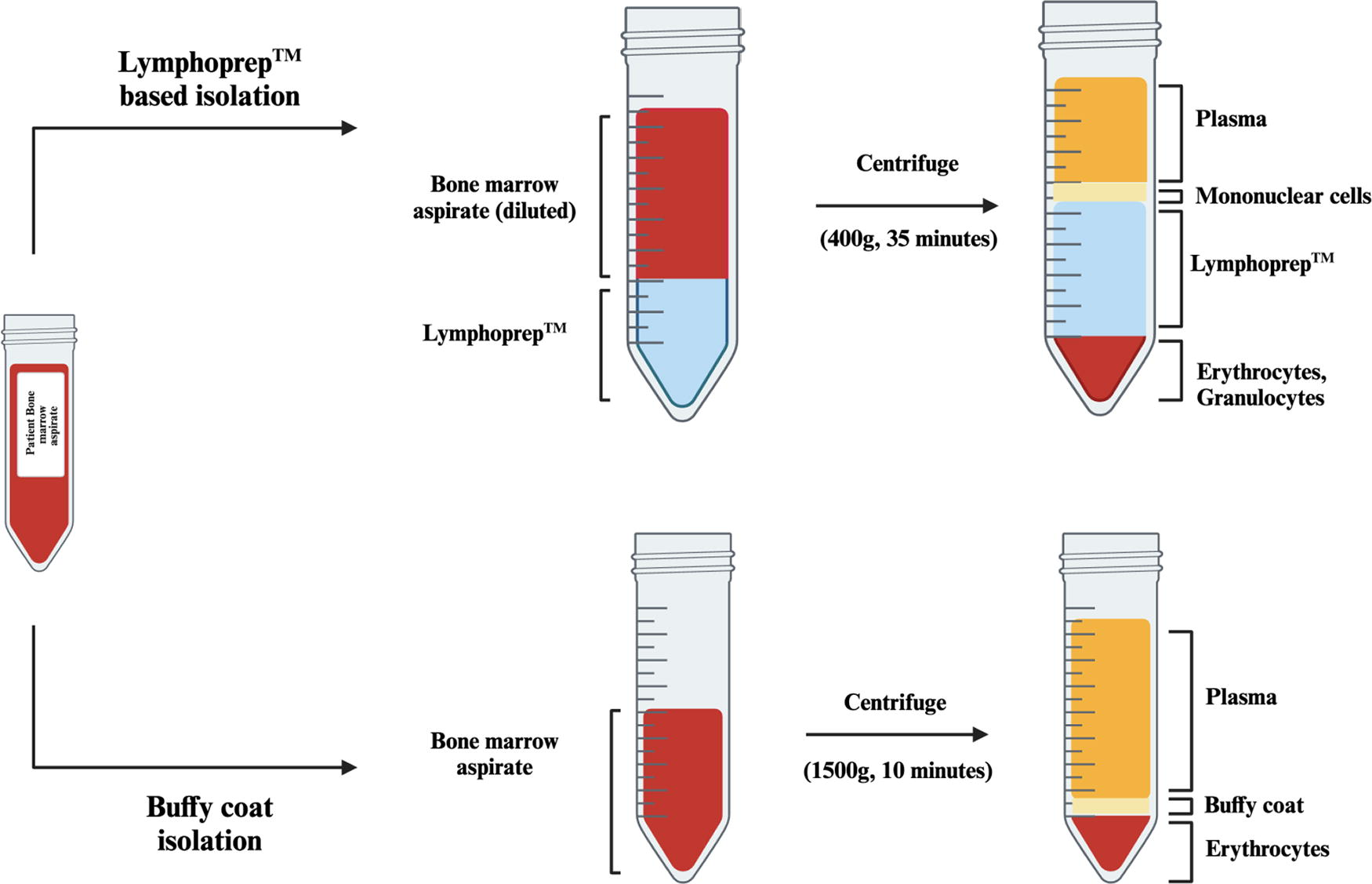
Schematic representation of the two isolation methods. Bone marrow aspirate from B-ALL patients was diluted twofold for the LymphoprepTM technique. Centrifugation speed and duration vary between the two techniques.
Patient Cohort and Disease Characteristics
Abbreviations: F, female; M, male; CNS, central nervous system.
For density gradient centrifugation-based isolation, BM aspirates were diluted with a buffer solution of phosphate buffer saline (PBS) containing 2% fetal bovine serum (FBS) and layered over LymphoprepTM density gradient medium (StemCell Technologies, Vancouver, BC). The sample was centrifuged with the brake off at 400 g for 35 minutes at room temperature. After centrifugation, mononuclear cells were collected, and a subsequent centrifugation (100 g for 10 minutes at room temperature) step performed to remove platelets.
For buffy coat isolation, BM aspirates were centrifuged (1500 g for 10 minutes at room temperature). A transfer pipette was used to collect and transfer nucleated cells from the buffy coat, including lymphocytes, monocytes, and granulocytes, into a cryovial.
Cell cryopreservation
Cells were cryopreserved using freezing solution consisting of a 9:1 mixture of FBS and Dimethylsulfoxide (DMSO). For density gradient-isolated mononuclear cells, aliquots containing 5–10 million cells per milliliter of freezing solution were prepared. For buffy coat isolation, all cells collected were frozen in a single vial. All vials were stored in liquid nitrogen until needed.
Cell culture and viability
Cryopreserved samples were thawed and washed with sterile PBS +2%FBS. Cells were resuspended in DMEM supplemented with 20% FBS, Hepes, Penicillin/Streptomycin, non-essential amino acids,
Flow cytometry
Cells were stained with fluorochrome-conjugated antibodies for CD3 (APC H7), CD19 (FITC), CD10 (APC), CD14 (PE), and CD33 (PerCP) (BD Biosciences, San Jose, CA). Samples were run on BD LSRII cytometer (BD Biosciences). Data were analyzed using FlowJo software v10.8 (BD Biosciences) using established gating strategies (Fig. 2).
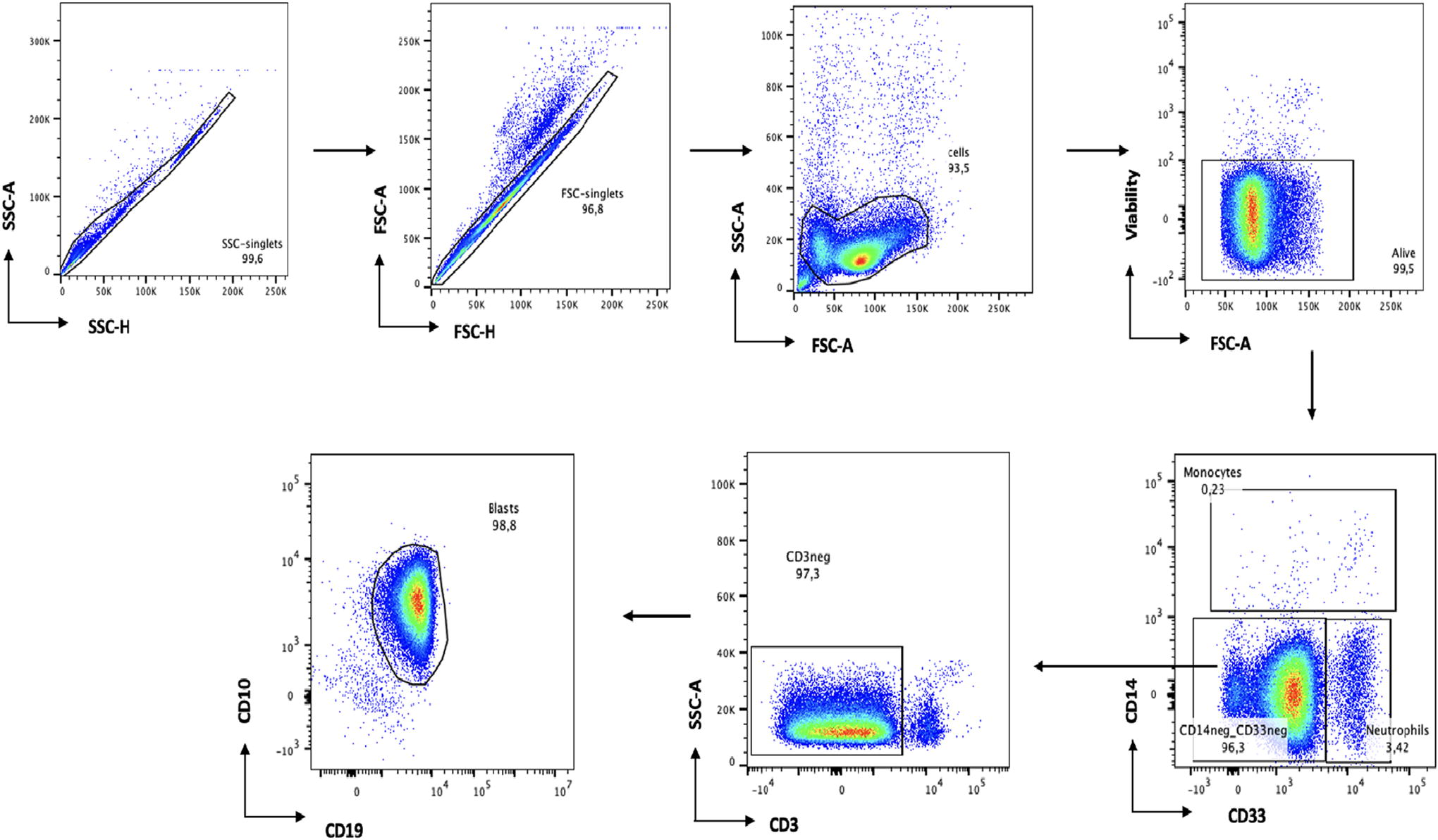
Representive flow cytometry plots depicting gating strategy. B-ALL blasts were identified based on the expression of CD10 and CD19.
Patient-derived xenografts
Non-preconditioned 4- to 8-week-old NOD.Cg-Prkdcscid/IL2rgtm1Wjl/SzJ (NSG) mice (Jackson Laboratory, Bar Harbor, ME) were injected via tail vein with 1–5 × 10⁵ thawed viable cells isolated from leukemic BM aspirates using the two isolation methods. All mice were monitored weekly for disease progression. Upon presentation of leukemia symptoms (palpable lymph nodes, weight loss, WBC >20,000), mice were euthanized, and spleen and bone marrow cells harvested. Human cells were identified by flow cytometry using antibodies for human CD19 (APC), CD45 (PE) and HLA-ABC (PE); each patient B-ALL sample used in the study was positive for all 3 markers. Mouse CD45 (FITC) antibody was included to identify mouse hematopoietic cells.
Statistical analysis
GraphPad Prism 9 for Mac OS software (GraphPad, San Diego, CA) was used for all statistical analysis.
Results
Cell isolation efficiency and composition
We used four diagnostic pediatric B-ALL samples in this proof of principle study. First, we compared the number, viability, and composition of BM-MNCs and buffy coat cells in cryopreserved samples generated by the different isolation methods (Table 2). Although cell viability upon thawing of each cryopreserved sample was comparable between methods, the number of cells recovered from patient-matched samples varied (Table 2). As the direction of this variation is different between patients, this likely reflects the non-identical freezing protocol used rather than differences in the condition of the blasts introduced by the different enrichment methods. We next measured cell composition of the BM-MNC and buffy coat isolates using flow cytometry to determine the proportion of monocytes, lymphocytes, and granulocytes (Fig. 3A). As expected, the lymphocyte subpopulation was predominantly composed of cells matching the phenotype of B-ALL blasts (Fig. 3B). The percentage of B-ALL blasts was found to be comparable, exceeding 95% of total cells for both techniques. Immune cell subset composition did not significantly differ between the methods, with only small populations of monocytes and neutrophils present in each sample (Fig. 3C).
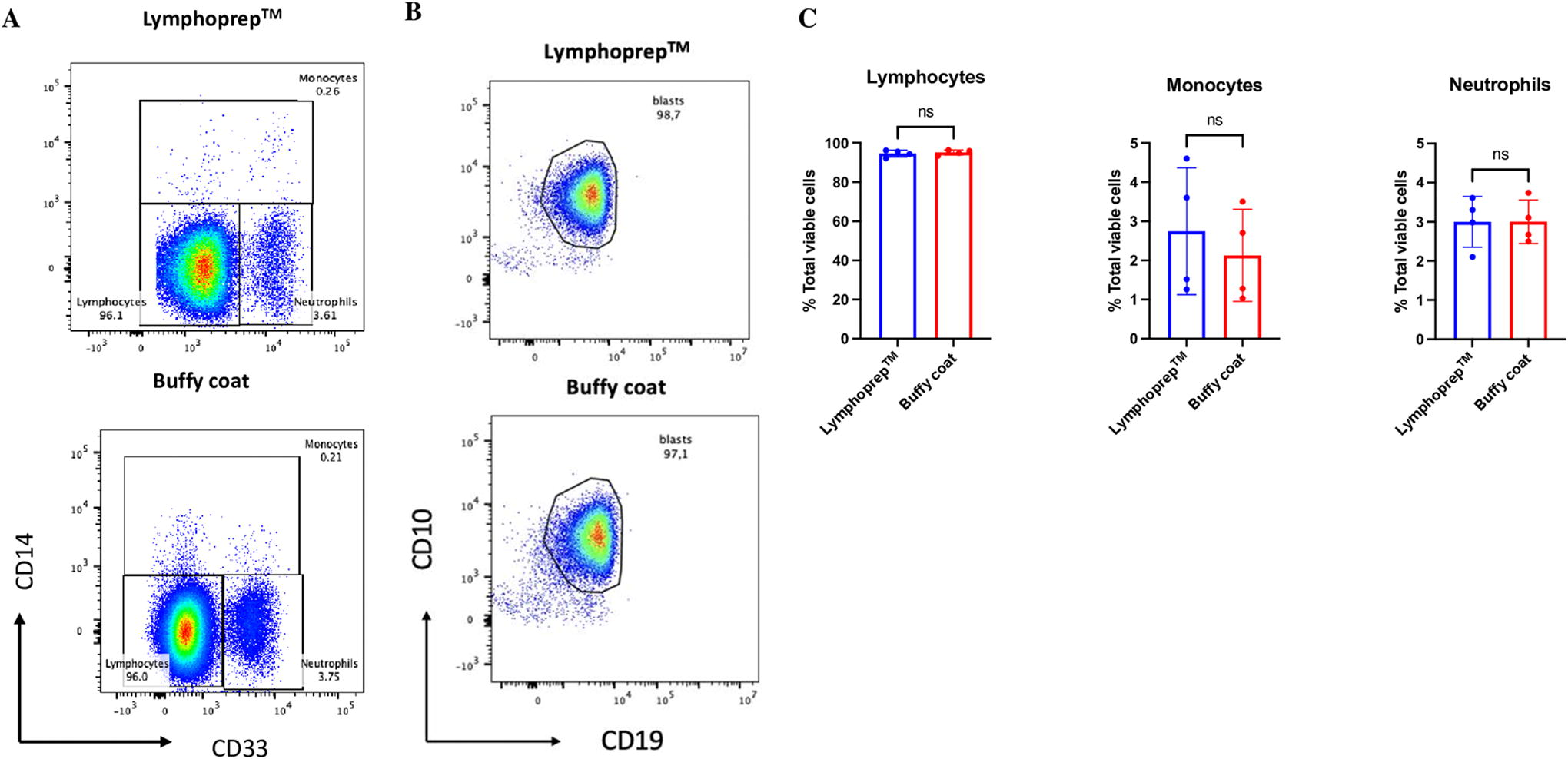
Cell composition of isolated cells.
Cell Isolation Efficiency
Viability and capacity for proliferation
To assess their capacity for prolonged survival, thawed BM-MNC and buffy coat cell samples were cultured for 72 hours. Viability was assessed by trypan blue exclusion at the indicated time points (Fig. 4A). Upon thawing (0 hours), the viability of all samples was >75%. Although there was considerable variation between patient samples, no consistent differences in viability were detected between cell isolates from matched samples over 72 hours in culture. To compare the long-term viability of cryopreserved samples prepared using each method, samples were thawed after >2 years in storage. No discernible differences in cell viability over time were seen between LymphoprepTM and buffy coat samples: CO5122, 77% vs. 79% at 968 days; CO5130, 81% vs. 77% at 955 days; CO5224, 80% vs. 83% at 738 days; and CO5129, 90% vs. 84% at 966 days. These results revealed that sustained cell viability was comparable between the two cell isolation methods over time.
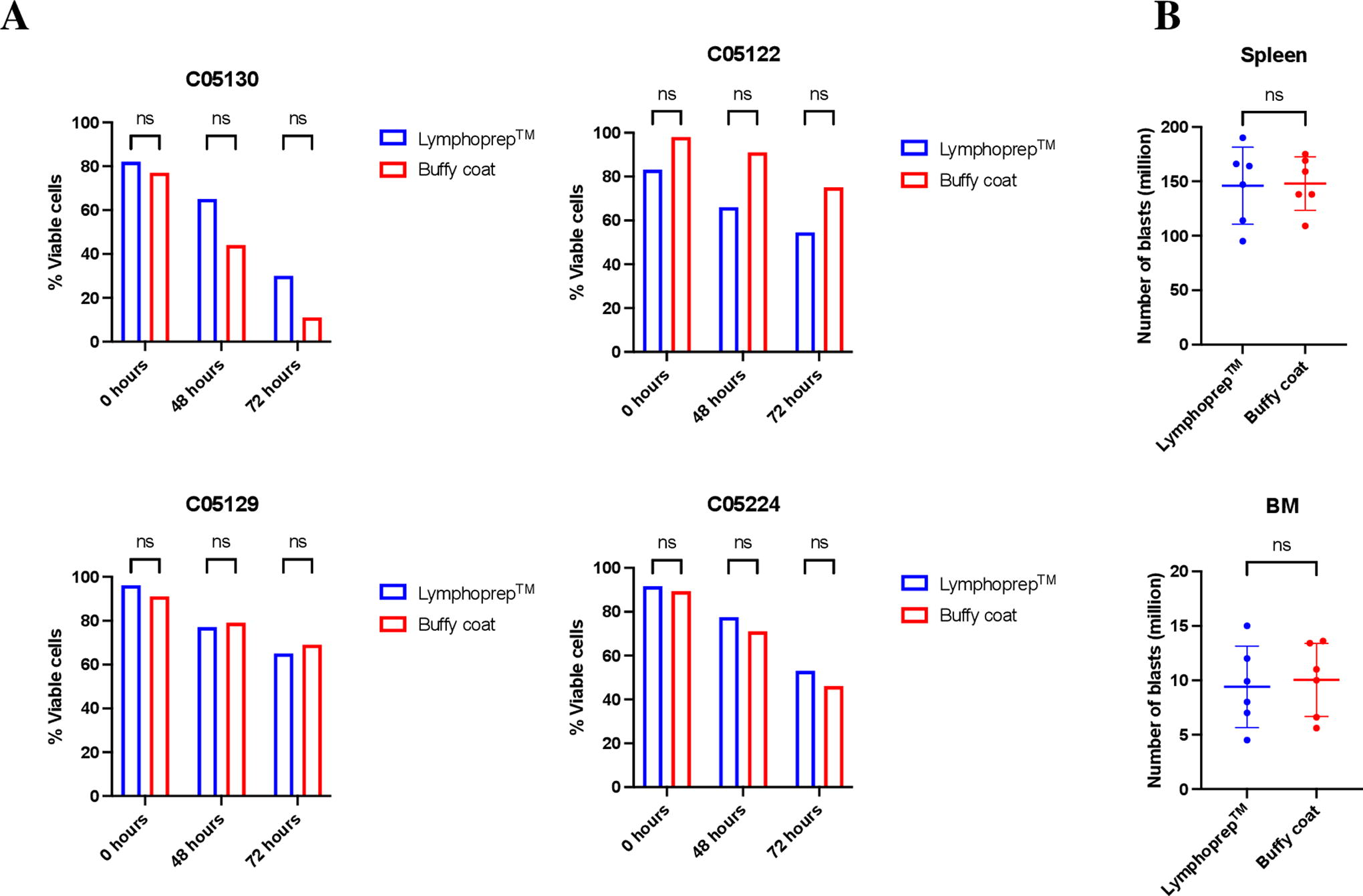
Measurement of sustained viability in vitro.
Maintenance of leukemia-propagating potential
Lastly, we compared the leukemia-initiating potential of B-ALL cells isolated by each method by establishing PDX in NSG mice. Frozen samples were thawed, and an equal number of viable cells injected intravenously into recipient NSG mice. The viable cell recovery from each sample determined the number of mice for each patient sample (Table 3). All mice were routinely followed for leukemia progression and sacrificed when any defined experimental endpoint was reached. Leukemia engraftment in the bone marrow and spleen was confirmed using flow cytometry. As shown in Table 3, there was no discernible distinction in the leukemia-initiating potential of cells obtained from LymphoprepTM or buffy coat. Further, comparable numbers of B-ALL cells were acquired from buffy coat and BM-MNC recipient mice, achieving sufficient expansion in both cases to facilitate further downstream applications (Fig. 4B). Thus, despite the potential for RBC contamination with the buffy coat method, the behavior of B-ALL blasts in xenografts was unaffected.
Maintenance of Leukemia Propagating Potential
Discussion
Biobanks are valuable resources for research institutes and pharmaceutical companies, providing high quality biological samples and associated data. The operating costs of biobanks, of which human resources are a significant portion, often far exceed cost recovery.15–17 Efficiency and cost-effectiveness are, therefore, essential to their sustainability. As the most common childhood malignancy, ALL consumes a significant portion of pediatric biobank activity and resources. This study indicates that buffy coat-based processing generates ALL samples of the quality needed for preclinical studies: the distinct isolation methods achieved comparable levels of sustained viability over both short-term (<5 days) and long-term (>2years) duration, as well as leukemia-propagation capacity, two critical variables for laboratory-based experimentation. The consistent results across samples for each experimental comparison suggests a generality of results across B-ALL sub-types and supports evaluation of their relevance to the entire ALL patient population.
PDX models have become the gold standard for pediatric leukemia modeling,18,19 as they successfully expand the wide range of patient-specific leukemia immunophenotypes and genomic clones seen in the pediatric ALL cohort. Considering the diverse landscape of acute leukemia with respect to genetic abnormalities20,21 and phenotypic heterogeneity,22,23 the capacity of blasts from many ALL subtypes to engraft in immunodeficient hosts allows investigation of fundamental questions of disease biology and also serves as a platform for the development of targeted therapies. 24 Appropriately handling and processing patient leukemia samples, ensuring maximum cell recovery and cell functionality, is vital to establish successful xenografts. Although differences were noted between isolation methods for individual samples, no consistent pattern was observed and both techniques provided ample cell numbers for downstream applications. Biological differences between patients’ samples (e.g., PDX outgrowth kinetics) were shared by both isolates from each patient and likely reflect the heterogeneity of ALL. Our results indicate that the buffy coat method yields ALL blasts of similar quality from high leukemia burden samples, making it a suitable method for pediatric leukemia biobanks. However, whether the buffy coat method is also comparable to Ficoll-Paque processing for bone marrow aspirate samples with lower leukemia burden needs to be studied, as do normal bone marrow aspirates and bone marrow aspirates from patients with other diseases.
Buffy coat cell isolation is a straightforward method and involves limited sample handling. Although excessive centrifugation has been shown to effect PBMC yield, 12 our protocol required a single centrifugation step to isolate the buffy coat, as compared with two times for the LymphoprepTM protocol. Our findings support that Ficoll based isolation of BM-MNC from B-ALL patients could be effectively replaced by the more time- and cost-effective buffy coat method. However, with only four samples evaluated, our study is not definitive. Although there was notable consistency across samples for several important read-outs, including blast content, viability, and leukemia-initiating activity, variation in total viable cell recovery was apparent. Although we believe this divergence was likely introduced by post-isolation sample handling, it will be important to perform a larger study, ideally including samples generated using both methods at additional biobanks, in order to demonstrate the reproducibility and generality of our findings. If validated, the utility of this simpler isolation could reduce barriers to the biobanking of the primary B-ALL samples, enabling patient-relevant preclinical research.
Footnotes
Acknowledgments

Authors’ Contributions
T.A.: Conceptualization, methodology, formal analysis, visualization, writing-original draft, writing—review and edit. V.N.: Conceptualization, methodology, writing—review and edit. V.C.: Conceptualization, methodology, writing—review and edit. G.S.D.R.: Conceptualization, methodology, formal analysis, funding acquisition, visualization, resources, supervision, writing—original draft, writing—review and edit. S.V.: Conceptualization, methodology, formal analysis, funding acquisition, visualization, resources, supervision, writing—original draft, writing—review and edit.
Author Disclosure Statement
The authors declare no conflict of interest.
Funding Information
This work was supported by the Michael Cuccione Foundation (MCF) and the BC Children’s Hospital Foundation.