




Abstract
The 32nd Ion Channel Meetings were organized by the Ion Channels Association from September 17 to 20, 2023 in the Occitanie region (Sète). Researchers, post-docs and students from France, Europe and non-European countries came together to present and discuss their work on various themes covering the field of neuroscience, stem cells, hypoxia and pathophysiology cardiac. Through the plenary conference given by Professor Emilio Carbone and the 5 conferences organized by the scientific committee, attention was paid this year to autism, neuromotor and cardiac disorders and tumor aggressive processes. The scientific exchanges were enriched by two general conferences on the biometric analysis of publications related to ion channels and a retrospective presentation of proven cases of scientific fraud. These presentations are summarized in this meeting report.
Introduction
The Ion Channel Meeting is an international scientific congress that takes place each year in France since 1989. The 32nd Ion Channel Meeting brought together in Sète experienced researchers, postdoctoral scientists, and students who work on ion channels in different fields of biology (neurosciences, stem cells, hypoxia, cardiac physiology, etc.) and pathophysiology (cancer and metastases, autism, neuromotor, and cardiac disorders…). As in each edition, five thematic symposia were organized by the Ion Channels Association committee, who invited 16 speakers, and selected 10 posters and 29 oral communications. Among all the participants, 10 nationalities were present (from France, Germany, England, Belgium, China, Denmark, Italy, Mexico, Switzerland, and Tunisia). Particular attention was given to young researchers with 13 of them selected (9 national, 2 European, 1 international) to present their work in English in front of world-renowned experts. Furthermore, 2 oral communications sections with 8 young researchers, as well as one poster session (together with 1-min flash oral presentation) were included in the program.
The best poster and oral presentations were awarded the last day of the meeting. These 3 days of congress were dedicated to scientific exchanges and constructive discussions, allowing students to benefit from a privileged opportunity to interact with scientists internationally recognized in their field of research.
Plenary Lecture
Highlights on common gating changes in Cav1.2 and Cav1.3 channelopathies causing autism (by Prof. Emilio Carbone).
We had the honor this year to listen to Prof. Emilio Carbone from the Department of Drug Science at the University of Torino (Italy). His laboratory focuses on the involvement of L-type calcium (Ca2+) channels in mental deficiencies and autism spectrum disorder (ASD). Highly expressed in neurons, gain of function mutations in the gene encoding Cav1.2 (CACNA1C) and Cav1.3 (CACNA1D) α1 subunits cause various forms of syndromes including mental retardation and ASD. In 2005, Mark Keating's group identified a mutation of Glycine 406 into Arginine (G406R) at the end of exon 8 in the IS6 helix of CACNA1C α1-subunit that was associated with patient with arrhythmias, congenital heart disease, immune depression, and ASD. The G406R missense mutation causes a delay of Cav1.2 channel inactivation and is responsible for the type-2 Timothy syndrome (TS2). The channel is less inactivated during depolarization and, consequently, more calcium enters the cell during activity. Although the cardiac consequences of this delay were well characterized, almost nothing was found to explain the origin of ASD in TS2 patients.
Using autistic mouse models (Cav1.2 TS2-neo and Cav1.3AG/WT), the group in Torino found that the Cav1.2 mutation (G406R on exon 8) reduces the rate of channel inactivation, while the Cav1.3 mutation (A479G) increases the rate of channel inactivation in mouse chromaffin cells (MCCs). Both missense mutations, however, produce similar leftward shifts of voltage-dependent activation and steady-state inactivation (SSI) that are responsible for a robust increase of the window calcium current at rest (a small tiny inward current of few pA that enters the cell continuously). That current drives the basal activity of mutated MCCs and alters cell excitability.
Concerning the Cav1.2 TS2-neo mutation, the resting potential in MCCs is not affected, but it is evident a change in the ratio of firing/nonfiring cells and a change in the action potential shape (decrease of the peak amplitude and a decrease in −dV/dt). This implies that Nav channels are less expressed and the density of Nav currents is decreased. Interestingly, overnight incubations with 0.3 μM nifedipine (a therapeutic L-type channel blocker) rescue the normal firing in TS2-neo MCCs.
Altogether the available data indicate that Cav1.2 (G406R) and Cav1.3 (A479G) mutations are characterized by specific hallmarks of channel gating: they both shift to the left channel activation and SSI but affect in the opposite way the time course of channel inactivation, suggesting that fast inactivation of L-type channels is not the crucial parameter causing autism. Preliminary experiments in cultured mouse hippocampal neurons suggest that the Cav1.2 G406R mutation potentiates GABAergic synapses, likely altering the Excitation/Inhibition balance of hippocampal microcircuits. No data are yet available on neuronal synapses for the Cav1.3 A479G mutation.
Interestingly, the work suggests that better than L-type channel blockers, new compounds shifting rightward Cav1.2 and Cav1.3 channel activation may work better as therapeutics for various forms of ASD.
Symposium I
Ion Channels as Therapeutic Targets in Motor Diseases (organized by Ines ElBini, LBVAT, Institut Pasteur de Tunis, Université Tunis-ELManar, Tunis, Tunisia). This symposium showcased three distinct yet interconnected areas of research, each shedding light on crucial aspects of motor diseases and their potential treatments. The first speaker, Pr. Riadh Gouider (Neurology Department, LR18SP03, Clinical Investigation Center Neurosciences and Mental Health—University Razi hospital—La Manouba, Tunis, Tunisia) introduced a lecture titled “Paramyotonia congenita: from bench to bedside.” This presentation involved a comprehensive exploration of the correlation between the phenotype and genotype of this disease, a work that was achieved in collaboration with Dr. Youssef Abida of the same department.
The second speaker, Pr. Hilal Lashuel (LMNN, EPFL, Lausanne, Switzerland), steered our focus toward Parkinson's disease (PD), a prevailing neurodegenerative challenge. Lashuel's exploration revolved around the pivotal role played by alpha-synuclein (α-Syn) in PD. Building on previous studies revealing the toxic nature of extracellular α-Syn aggregates, Lashuel's work delved into the intricate mechanisms by which these aggregates bind to cell surface receptors, including ion channels on neurons and/or microglia. This binding cascade triggers chronic neuroinflammation and neuronal damage, intensifying the impact of PD. The hypothesis that specific ligands with high affinity to cell surface receptors could have a therapeutic effect on PD was put forth.
Drawing inspiration from nature, Lashuel and his collaborators explored active biomolecules from animal venom, known for their targeting capabilities. To test this model, they employed a neuronal model that faithfully recapitulates the process of pathology formation, including the development of Lewy bodies and Lewy neurites, coupled with α-Syn aggregation linked neuronal dysfunction and degeneration. This study is funded by Excellence in Africa initiative EXAF (EPFL, UM6P).
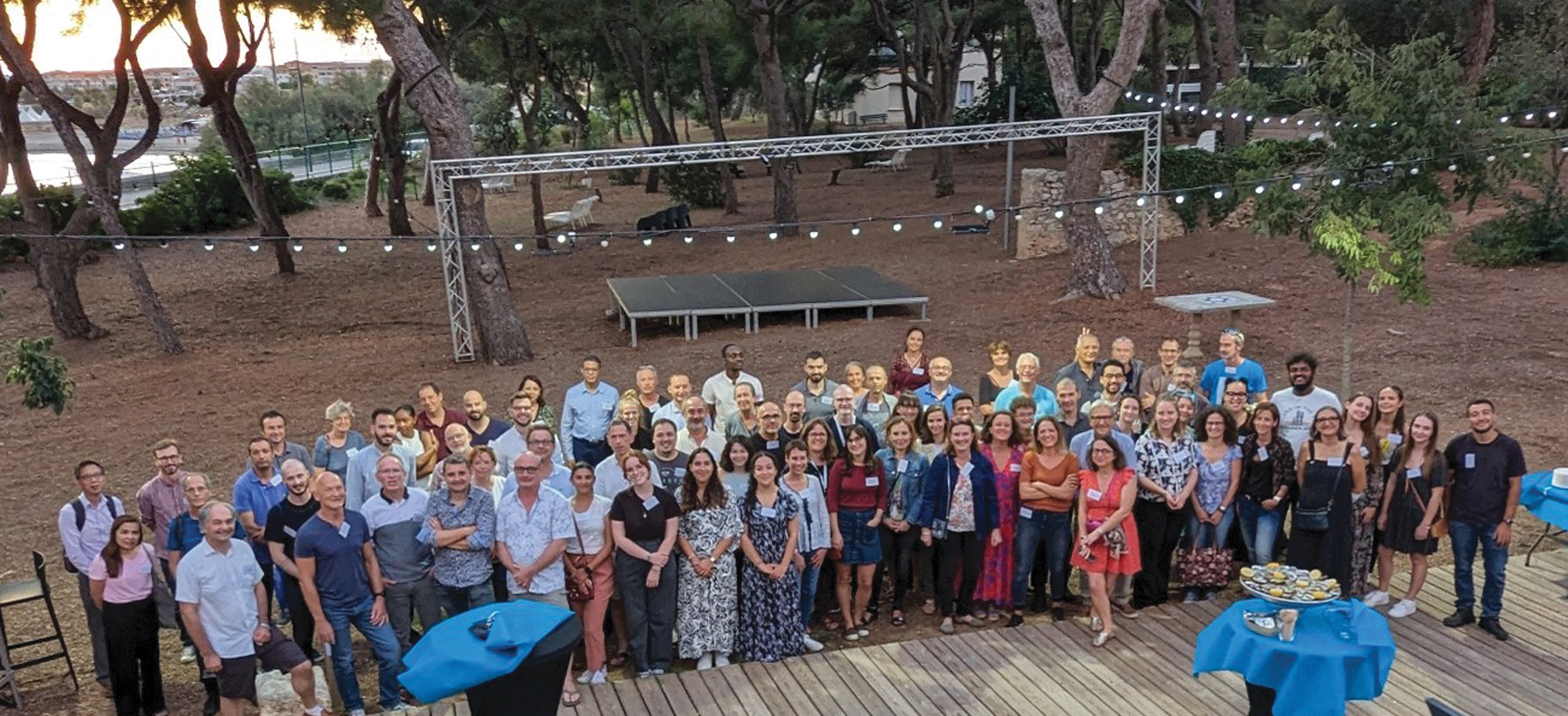
Picture of the researchers during the traditional Setois dinner aperitif.
The third speaker was Dr. Eric Boué-Grabot (Institute for Neurodegenerative diseases, IMN, CNRS and university of Bordeaux, France) who casted a bright spotlight on the relevance of ATP P2X4 receptors within the realm of Amyotrophic Lateral Sclerosis (ALS). Traditionally residing intracellularly, P2X4 receptors exhibit a surprising increase in surface trafficking in ALS, a phenomenon that may position them as potential early biomarkers. This unexpected upregulation of surface P2X4 receptors has been observed in various pathophysiological contexts, including neurodegenerative disorders such as ALS. Boué-Grabot's comprehensive study delved into the intricate dynamics of P2X4 in ALS pathogenesis, offering valuable insights into the interplay between neurons and microglia. Research results demonstrated how misfolded proteins, such as mutant SOD1, contribute to the increased surface trafficking of P2X4 in the spinal cord of ALS SOD1G93A mice. Additionally, surface elevation of P2X4 was observed in peripheral macrophages of SOD1 mice at presymptomatic stages, further suggesting the potential of P2X4 as an early biomarker for ALS.
To unravel the complex role of P2X4 in ALS, Boué-Grabot utilized innovative mouse models, including double transgenic SOD1 mice expressing an internalization-defective P2X4mCherryIN knock-in gene (P2X4KI) and those invalidated for P2X4 (P2X4KO). Preliminary data investigating the specific roles of P2X4 in neurons versus microglia in ALS were also presented, utilizing triple transgenic SOD1 mice expressing either P2X4KI or P2X4KO selectively in macrophage/microglia or neurons. This innovative research not only enhances our understanding of ALS pathogenesis but also paves the way for innovative therapeutic strategies. This project is supported by grants from Association pour la recherche sur la SLA, Fédération pour la recherche sur le cerveau and Agence nationale de la recherche.
The selected speaker was Ophélie Molton and her team (Department of Biomedical Sciences, University of Lausanne, Switzerland) who have determined the Ca2+ binding sites of acid-sensing ion channel 1a (ASIC1a) which is involved in pain sensation and neurodegeneration after ischemia. Collectively, the symposium showcased the multidisciplinary tapestry of motor disease research, enmeshing the intricate threads of genetics, protein misfolding, and ion channel modulation. These presentations served as an eloquent testament to the paramount importance of ion channels as coveted therapeutic targets, offering a beacon of hope for the refinement of treatments and an improved quality of life for those grappling with motor diseases.
Symposium II
Hypoxia and Ion Channels (organized by Alban Girault, Laboratoire de Physiologie Cellulaire et Moléculaire UR-UPJV 4667, Université de Picardie, Amiens, France).
Hypoxia is a component of the microenvironment that occurs when oxygen is not sufficiently available to maintain homeostasis. This phenomenon can occur in different pathological conditions such as cancer, cystic fibrosis (CF), or pulmonary arterial hypertension. Ion channels are regulators of numerous physiological parameters such as cell excitability, cell volume control, and their functions or expressions can be altered due to this modification of the environment.
The first speaker of the session was Dr. Luigi Catacuzzeno from Perugia (Dipartimentento di Chimica, Biologia E Biotecnologie, University of Perugia, Italy) who presented the role of the ion channel in the hypoxia-induced aggressiveness of glioblastoma. After a short introduction on the severity of the glioblastoma, Luigi described how low oxygen areas largely present in tumors are crucial promoters of cell invasion and resistance to death. In addition, he discussed different works showing changes in ion channels in glioblastoma cells. Dr. Catacuzzeno thus described the beautiful progression of his work concerning the involvement of the volume-regulated anion channels (VRAC) and the large-conductance Ca2+-activated K+ channels (BKCa) in the context of hypoxia. After having demonstrated the molecular identification and the activity of VRAC in his models, he deciphered its role in glioblastoma cells exposed to hypoxia. His group demonstrated that hypoxia conditions activate a chloride current presenting the major features of VRAC and that hypoxia induce swelling of the glioblastoma cells. In addition, they demonstrated that the volume increase activates the regulatory volume decrease (RVD) process mainly driven by VRAC.
They then evaluated the hypothesis that VRAC-dependent RVD could be a survival process developed by glioblastoma cells, and they identified this current as a promoter of aggressiveness of cancer cells. In a follow-up study, Catacuzzeno group demonstrated that BKCa channel activity is also increased by hypoxia. This pathological activation has been associated to different parameters of cancer cells such as migration, chemotherapy resistance, and de-differentiation. Finally, Dr. Catacuzzeno discussed the hypothesis on the Ca2+ link connecting volume variation, VRAC, and BKCa current based on the involvement of mechanosensitive Ca2+ channels. All these results were supported by immunochemistry indicating the expression of the different actors in glioblastoma brain slices with hypoxia regions.
The second presentation was given by Killian Pascarel from the group of Dr. Vandebrouck, PRéTI laboratory (UR24184, University of Poitiers, France). In the context of airway pathologies such as chronic obstructive pulmonary disease and CF, the oxygen used is largely altered. In these pathological contexts, the airway epithelium produces more mucus obstructing the oxygen availability to the tissue and altering the cell physiology. Killian focused his lecture on the impact of hypoxia in CF transmembrane conductance regulator (CFTR) especially in the context of the Elexacaftor/Tezacaftor/Ivacaftor (ETI) treated cells. First, CFTR has been shown to be downregulated at mRNA and protein levels in conditions mimicking hypoxia. In addition, hypoxia reduced CFTR activity measured by transepithelial short current assays.
In the context of CF presenting mutated CFTR, hypoxia has also been shown to alter the activity of different ion channels including CFTR itself, Ca2+-activated chloride channel and the epithelial sodium channel (ENaC). In their model, the team of K. Pascarel not only demonstrated that hypoxia reversed the positive effect of the ETI treatment (supposed to promote CFTR function) but also affected TRPA1 channel activity without effect on its expression. The presentation of Killian finally suggested that it is important to take in account the hypoxia in the context of CF to improve patient's lung function.
The last invited speaker was Dr. Bastien Masson (F. Antigny group from INSERM UMR_S999, Paris, France). The subject of his presentation was about the involvement of the Orai1 Ca2+ channel in the context of pulmonary arterial hypertension. Bastien presented the results obtained in his lab concerning the expression and the function of Orai1 channel in pulmonary endothelial cells (ECs) and in pulmonary artery smooth muscle cells (PASMC). His talk focused on the role of Orai1 in PASMC where the channel is overexpressed and overactivated in pathological context and without effect on ECs. He demonstrated by in vitro approach that the channel regulates the progression of the pathology by controlling the proliferation, the migration, and the apoptosis resistance of these cells.
B. Masson pursued his presentation by deciphering the role of the channel in a more integrative animal model. In in vivo approaches, he validated the previous results obtained in cells and suggested that the inhibition of Orai1 may be a therapeutic strategy to slow down the development of pulmonary arterial hypertension. Finally, his work was centered on another aspect of this pathology, the right ventricular failure. After demonstrating a modification of Orai1 expression in the right ventricular of a rat model exposed to monocrotaline, he showed the modification of STIM1 long isoform in the same tissue. Based on these results and additional data from the literature, it has thus been suggested that Orai1 and Ca2+ signaling may be a therapeutic target to prevent the pulmonary arterial hypertension.
Finally, Anaïs Saint-Martin Willer, a PhD student from the laboratory of Dr F. Antigny (INSERM UMR_S999, Paris, France) presented her work on CRACR2A, a RabGTPase regulating Orai1 in pulmonary arterial hypertension. By using complementary pharmacological and molecular biology approaches, she demonstrated that this protein participates into the regulation of PASMC proliferation through Orai1 expression regulation, as well as altered ECs migration. All these results suggest that CRACR2A may be an interesting target in the development of pulmonary arterial hypertension.
Symposium III
Role of ion channels in stem/progenitor cells (organized by Valérie Coronas, Laboratoire 4CS, CNRS UMR 6041, Université de Poitiers, Poitiers, France). Stem/progenitor cells ensure the homeostasis and repair of the tissues in which they reside by producing differentiated cells required for organ function. Over the past decades, ion channels have emerged as important regulators of somatic stem/progenitor cell activities in the adult organism and also in cancer stem cells that may arise from stem/progenitor cells following accumulation of oncogenic mutations.
In this symposium, Prof. Francesco Moccia (Department of Biology & Biotechnology Lazzaro Spallanzani, Laboratory of General Physiology, University of Pavia, Italy), first, showed how geneless optical stimulation can be used to generate and modulate pro-angiogenic Ca2+ signals in endothelial progenitors. The data presented were based on the exploitation of light-sensitive conjugated polymers, namely poly(3-hexylthiophene-2,5-diyl) also known as P3HT. Upon exposure to light, these polymers induce light-controlled Ca2+ signals with specific spatiotemporal resolution in endothelial progenitors which, in turn, control cellular activities such as proliferation and vasculogenesis of the endothelial progenitors. From a mechanistic point of view, photoexcitation of the light-sensitive conjugated polymers stimulates extracellular Ca2+ entry through Transient Receptor Potential Vanilloid 1 (TRPV1) channels upon the production of hydrogen peroxide (H2O2) in the cleft between the nanomaterial and the plasma membrane. This optical stimulation-induced Ca2+ influx can then recruit IP3 receptors and store-operated channels to maintain oscillatory Ca2+ signals and induce the pro-angiogenic activity in the endothelial progenitors.
Francesco Moccia concluded his presentation by discussing the advantage of applying a strategy based on the use of these biocompatible organic semiconductors to stimulate endothelial progenitor-dependent neovascularization in cardiovascular disorders.
The next speaker, Dr. Lin-Hua Jiang (School of Biomedical Sciences, University of Leeds, UK Department of Physiology and Pathophysiology, Xinxiang Medical University, China), presented a critical overview of his studies on the distinctive roles of ATP-induced purinergic Ca2+ signaling in mesenchymal stem cells (MSCs) derived from human dental pulp tissues. Extracellular ATP is sensed by ionotropic P2X and metabotropic P2Y purinergic receptors. While ionotropic P2X receptors mediate extracellular Ca2+ entry, metabotropic P2Y receptors stimulate the Gq/phospholipase C/inositol triphosphate receptor (IP3R) pathway that leads to Ca2+ release from endoplasmic reticulum. LH Jiang and his team discovered that tooth-derived MSCs express specific sets of purinergic receptors (P2X and P2Y receptors) whose specific activation leads to a specific Ca2+ response that controls MSC migration and differentiation.
In addition, the mechanosensitive Piezo1 channels are also expressed in MSCs and participate in ATP release from MSCs. This talk illustrated how ion channels can coordinate and specify Ca2+ responses and downstream signaling to regulate MSC functions.
These properties of ion channels are not limited to physiological stem cells, but they are also used by cancer stem cells to promote resistance to treatment, as elegantly demonstrated by Dr. Loïc Lemonnier (INSERMU1003, Laboratory of Cell Physiology, Lille, France). To explore possible functions of store-operated channels in cancer resistance, his team examined this question in the acute myeloid leukemia (AML) model. AML is a hematological malignancy in which resistance to treatment is important, leading to a high risk of relapse. Dr. Loic Lemonnier and his team have specifically isolated a population of cells retaining long-term labelling (i.e., with quiescent stem cells properties/cells with low levels of cell division) to study their properties.
Using two cell lines representative of human AML, KG1 cells which are highly quiescent and U937 cells which show higher levels of proliferation and are more differentiated, as well as primary cells isolated from patients, they found that ORAI1 Ca2+ channels are downregulated in the quiescent long-term label retaining cells, resulting in reduced store-operated calcium entry (SOCE). Pharmacological inhibition of SOCE increased the proportion of cells with stem cell properties. Finally, he demonstrated that chemotherapeutic drugs regulate ORAI1 expression and SOCE amplitude during the onset of drug resistance.
The final speaker, Arnaud Delafenetre (PhD student, PRéTI laboratory UR24184, Poitiers, France), convincingly demonstrated that induced pluripotent stem cells (iPSC) can be used to produce muscle cells from patients with Duchenne muscular dystrophy, which faithfully recapitulate the physiopathological features of the disease.
Symposium IV
Ion Channels and Development (organized by Marie Demion, Physiologie et Médecine Expérimentale du Cœur et des Muscles, U1046 Inserm, UMR CNRS 9412, Montpellier, France). This symposium showcased three distinct unusual animal models as original tools to study ionic channel function, each animal model allowing to understand a crucial aspect of excitability.
The first speaker, Dr Lucile MIQUEROL (Institut de Biologie du développement de Marseille, UMR CNRS 7288 Marseille, France), introduced the session with a talk untitled “Morphogenesis of the ventricular Purkinje network: linking architecture and function.” In this presentation, she focused on the spatiotemporal development of ventricular conduction system (VCS) during embryogenesis to decipher the etiology of conduction disturbances in adults. During embryogenesis, the VCS, consisting of the His bundle, bundle branches, and the distal Purkinje network, originates from two independent progenitor populations in the primary ring and the ventricular trabeculae. She highlighted the structure/function relationship between VCS morphogenesis and conduction defects and discussed her recent data on the origin and development of the VCS with a focus on the distal Purkinje fiber network.
The second speaker, Dr. Adèle FAUCHERRE (Institut de Génomique Fonctionnelle, Inserm U1191, CNRS UMR 5203, Montpellier, France) works on the PIEZO family, a class of mechanosensitive channels. Her lab has identified 3 piezo homologs in zebrafish namely piezo1a, piezo1b, and piezo2. Her results showed that the zebrafish piezo1b homolog is expressed in the ECs lining the heart and vasculature with a particularly strong expression in the outflow tract (OFT). Consequently, disrupting piezo1 signaling led to defective OFT and aortic valve development, suggesting that this gene may be involved in the etiology of congenital heart diseases. They analyzed genomic data generated from patients who suffer from bicuspid aortic valve and identified probands that each harbored potentially pathogenic variants in PIEZO1.
Subsequent in vitro and in vivo assays indicated that these variants behave as dominant negatives leading to an inhibition of normal PIEZO1 mechanosensory activity. They also demonstrated that Piezo1 is expressed in zebrafish cardiomyocytes. Furthermore, chemically prolonging Piezo1 activation in zebrafish resulted in cardiac arrhythmias, indicating that this ion channel plays an important role in mechanoelectric feedback. This also raised the possibility that PIEZO1 gain-of-function mutations could be linked to heritable cardiac arrhythmias in humans.
The third speaker, Dr. Olga ANDRINI (Institut NeuroMyoGène, CNRS UMR5310 – Inserm U1217, Université de Lyon, France) detailed some “TREK-1 on Caenorhabditis elegans/mutations gain of function.” Based on the divergence of canonical selectivity filter sequences, she focused her study on UNC-58, a K2P channel that is expressed in muscles and neurons. Surprisingly, UNC-58 gain-of-function led to hyper-excitability of touch neurons and striated muscle cells. Indeed, these physiological responses are not consistent with the expected hyperpolarizing effect of a hyperactive K+ channel. By investigating its ion selectivity, she demonstrated that UNC-58 is actually permeable to sodium. Using electrophysiological and Ca2+ imaging approaches, they showed that this single amino acid change causes UNC-58 to become a constitutively nonselective K2P channel that therefore increases cellular excitability.
Finally, as a selected speaker, Dr. Eleonora TORRE (Institut de Génomique Fonctionnelle, Inserm U1191, CNRS UMR 5203, Montpellier, France) presented her data on the “Validation of differentiated sinoatrial-like hiPSCs as a model of native sinus node myocytes.” In this presentation, she showed the characterization of human hiPSC-derived cardiomyocytes (hiPSC-CMs) mostly on patient-derived sinoatrial node-like pacemaker myocytes (PMhiPSC-CMs) and detailed different protocols, through a 2D matrix-sandwich approach and a cocktail incubation to improve her model. In addition, she measured the pacemaker activity in response to both β-adrenergic and muscarinic stimulation. This latter protocol may be useful as a potential approach to generate PM-hiPSC-CMs from patients with a history of sinoatrial node dysfunction and carrying different mutations in ion channels underlying pacemaking.
Symposium V
Ionic channels in nonexcitable cells (organized by Isabelle Rubera, LP2M UMR-CNRS 7370, University of Nice Côte d'Azur, France).
Ion channels have been first associated with regulation of electrical activity in excitable cells, but their roles have been extended to other tissues. This symposium highlighted the role of ion channels and transporters in nonexcitable cells in ion homeostasis during normal and pathological states.
The first illustration was given by Dr. Gilles Crambert (Centre de recherche des Cordeliers, Sorbonne University, Paris, France), whose talk focused on membrane proteins involved in sodium reabsorption in the kidney, more particularly during idiopathic nephrotic syndrome (INS). This tubulopathy is characterized by a strong retention of salt and water leading to edema and ascites despite the absence of hyperaldosteronemia.
To decipher this mechanism of abnormal sodium retention, he used a rat model of INS with plasma level of corticosteroids clamped to basal level (CC-PAN) and cutting-edge technologies for which his lab has a unique expertise such as ex vivo micro perfusion and patch-clamp recordings of isolated microdissected renal tubules. He demonstrated that the electrogenic and amiloride-sensitive sodium retention in cortical collecting ducts from CC-PAN rats was not driven by the overexpression and activity of the well-described ENaC, but rather dependent on the expression of a truncated variant of the acid-sensing ion channel 2b (ASIC2b) isoform. This ASIC2b variant provided characteristics of a sustained transepithelial sodium channel to the transiently active ASIC2a when coexpressed in X. laevis oocyte. Interestingly, some nephrotic patients exhibit increased renal mRNA and protein expression levels of ASIC2b compared to nonnephrotic patients. This original work unraveled a newly identified pathway for sodium reabsorption in the kidney in pathological conditions.
The second invited speaker, Laurent Beck (Institut du Thorax, University of Nantes) discussed an overview of the different phosphate transporters underlining their roles, mechanisms of action and physiological importance. Among the phosphate transporters involved in phosphate uptake, the solute carrier SLC34 family comprises high-capacity/low-affinity sodium-dependent phosphate cotransporters: the SLC34A1 (NPT2a) plays a key role in renal phosphate reabsorption; its hormone-regulated expression in the apical membrane of proximal tubule cells by fibroblast growth factor 23 (FGF23), and parathyroid hormone is a crucial mechanism for phosphate homeostasis. SLC34A2 (NPT2b) is a major actor in intestinal phosphate absorption and homeostasis. The SLC20 family comprises widely expressed high-affinity/low-capacity sodium-coupled phosphate cotransporters SLC20A1 (PiT1) and SLC20A2 (PiT2). The functional unit of PiT-mediated phosphate uptake is a dimer.
Moreover, PiT1-PiT2 heterodimer is a phosphate sensor controlling FGF23 secretion from bone independently of phosphate transport. SLC53A1 (XPR1, xenotropic and polytropic retrovirus receptor 1) is ubiquitously expressed and described as a phosphate exporter. Finally, the pathophysiological consequences of phosphate transporters disturbance were addressed emphasizing that PiT1 is dispensable for normal bone mineralization in vivo in murine models but involved in cancers. Furthermore, PiT2 is an important player in physiological mineralization and pathological ectopic calcification in vivo. Interestingly, mutations in PiT2 and XPR1 cause Primary Familial Brain Calcification.
The third speaker, Dr. Isabelle Callebaut (Institut de Minéralogie, de Physique des Matériaux et de Cosmochimie, Sorbonne University, Paris, France) shed light on a particular membrane protein, expressed in epithelial cells, the CFTR, whose gene mutations cause CF. She outlined the recent advances in the field of CF; on the one hand, the discoveries of small-molecule CFTR modulators enabling the development of highly effective combination therapies that revolutionized the treatment of CF patients; on the other hand, the successes in solving the high-resolution, three-dimensional structure of CFTR in different conformations. Interestingly, CFTR, also called ABCC7, is the only member of the ATP-Binding Cassette (ABC) transporter superfamily that functions as a phosphorylation-activated, ATP-gated anion channel.
Structural information, both experimental and computational, focusing on the striking features of this ABC transporter-derived channel were described: emergence of the R domain with several PKA-phosphorylation sites, a noncanonical ATP-binding site, a partially broken transmembrane helix TM8, appearance of lateral portal (TM4-TM6), and presence of a N-terminal “lasso” motif which potentially interacts with the regulatory domain. A view of CFTR anion permeation pathway and the modulators biding sites was also provided. This structural information is crucial to understand how the channel folds and functions, the impact of mutations, and also to elucidate the molecular mechanisms underlying the action of modulators.
Finally, the selected young speaker, Mete Kayatekin from Laboratoire de Physio-Médecine Moléculaire (LP2M, Nice, France), a PhD student of the Laboratory of Excellence in Ion Channel Science and Therapeutics, presented his recent investigations describing the novel and central role of the VRACs LRRC8/VRAC in macrophages in microcrystal-mediated inflammation. Microcrystal depositions in joints and surrounding soft tissues are responsible for painful and recurrent inflammation flares in human inflammatory joint diseases (gout and chondrocalcinosis). With patch-clamp technique, Mete nicely showed that LRRC8/VRAC exhibited an ATP conductance in macrophages, thus supporting the role of the channel in crystal-mediated inflammation through its ability to trigger ATP release, leading to the activation of purinergic receptor and subsequent inflammasome activation and interleukin release.
Conclusion
Like every year, the congress was synonymous with quality scientific exchanges between researchers and students. Conviviality remains the signature of this congress, thanks to free discussions, the setting of the site on the edge of the Mediterranean, as well as the social events organized by the committee (boat trip, Sète aperitif dinner…) (Figure 1). This year, the congress was also enriched with two more general conferences on, on the one hand, a biometric analysis of publications relating to ion channels by Artem Kondratskyi of the Nanion company; and on the other hand, a retrospective of proven cases of scientific fraud throughout the history of science by Caroline Strube. These two conferences sparked very lively and enriching debates and also opened up new conference themes. In view of these very actual issues, particularly scientific fraud, the organizing committee wishes to add to the next program a conference on the statistical processing of data in biology. This conference/debate will certainly be for students and researchers alike, a moment of constructive exchanges reflecting the philosophy of this meeting.
The organizing committee is pleased to inform you that the 33rd Edition of the Ion Channels Meeting will take place on September 8–11, 2024, in Sète (Domaine du Lazaret) on the French Mediterranean Riviera. Information can be found on www.canaux-ioniques.fr/
Footnotes
Acknowledgments
We would like to thank all the sponsors who helped us making this congress possible: Labex ICST, Université de Montpellier, Cancéropôle Grand Sud-Ouest, EpiGenMed, French Society for Cell Biology, Sophion Bioscience, Harvard Bioscience, SCOPPro, World Precision Instruments (WPI), Elements, Micromecanique SAS, Electrophysiologie.fr, Nanion.
We are grateful to Dr. Caroline Strube and Dr. Arnaud Monteil, who take care to preserve since 20 years the soul of this meeting which is above all a convivial moment of quality scientific exchange.
Author Disclosure Statement
The authors declare no conflict of interest.
Funding Information
Labex ICST(Laboratoire d'excellence Canaux ioniques d'intérét thérapeutique), Université de Montpellier, Cancéropôle Grand Sud-Ouest, EpiGenMed, French Society For Cell Biology, Sophion Bioscience, Harvard Bioscience, SCOPPro, World Precision Instruments (WPI), Elements, Micromecanique SAS, Electrophysiologie.fr, Nanion.