




Abstract
The interrelationship between genetic resources and traditional knowledge under the Convention on Biological Diversity (CBD) has seldom been discussed. However, this interrelationship affects the application of access and benefit sharing (ABS) rules under CBD. Earthworms, a traditional medicine in China and some other regions in Asia, have been established to contain special fibrinolytic enzymes, which can be used to treat cardiovascular and cerebrovascular diseases. The results from experiments on five earthworm species show the possibility of coupling traditional knowledge with multiple genetic resources from different communities or countries, which will complicate the application of ABS rules. If several communities share the same genetic resources or independently develop the same traditional knowledge, users may conduct forum shopping and avoid the ABS policies in certain jurisdictions. Also, with the assistance of biotechnology, users may benefit from the sequence information of a species without utilizing or accessing its tangible biomaterials. Therefore, more clarifications and regulations of the interrelationship between genetic resources and traditional knowledge are needed.
1. Introduction
With the rapid development of biotechnology over the last few decades, many patents and intellectual properties associated with genetic resources (GR) have been applied and used in the cosmetic, pharmaceutical, chemical, and agricultural industries. As a strategy for discovering more potential bioactive materials, the commercial exploitation of the traditional knowledge (TK) and GR in developing countries has been widely adopted by many international corporations. 1 However, this so-called “bioprospecting” behavior might raise serious ethical concerns and constitute “biopiracy” 2 if it misappropriates the TK and GR to gain exclusive intellectual property rights without prior informed consent and benefit sharing with the indigenous or local communities. 3 One of the well-known biopiracy cases involves the hoodia cactus, which has been traditionally used by the indigenous communities in South Africa and later patented and commercialized by a biotechnology company as a slimming drug and cure for obesity. 4
Therefore, many developing countries which are GR-rich nations adopt various approaches to safeguard their GR with different national policies and legislation. In 1992, the United Nations Environment Program implemented the Convention on Biological Diversity (CBD) to conserve biodiversity, promote its sustainable use, and share the benefits from the utilization of GR fairly and equitably. CBD recognizes states' sovereign rights over their GR and the indigenous and local communities' rights to share equitably benefits arising from the use of TK. 5 Further, the Nagoya Protocol, effective on October 12, 2014, advances the implementation of CBD and regulates the access and benefit sharing (ABS) of the utilization of GR and the associated TK. Before accessing the GR or TK, the user should acquire the prior informed consent from the rightful provider and share the benefit arising from the utilization of such GR or TK.
In its preamble, the Nagoya Protocol notes the interrelationship between GR and TK as well as and their “inseparable” nature for indigenous and local communities. However, the interrelationship between GR and TK is more complicated than we thought in reality. Should the TK only be associated with GR in the indigenous or local community that holds such TK? Is it possible to couple TK with GR out of the community? In this article, we conducted a series of experiments regarding a Chinese TK and the GR of earthworms. The results show that there are many circumstances in which TK may be associated with GR, and the interrelationship between GR and TK is not always as inseparable as what the Nagoya Protocol says.
2. Issues
Even decades after the implementation of CBD, the definitions of GR and TK are still unclear, which makes it difficult to interpret the interrelationship between GR and TK. Also, due to this unclear interrelationship, the user of GR or TK may encounter tremendous difficulties in complying with the obligations and requirements under CBD and the Nagoya Protocol. This will encourage the user to avoid the application of ABS rules and conduct biopiracy. These issues seem to be more serious with the most recent developments in molecular biology, especially gene cloning and gene-editing technologies.
2.1. Broad and unclarified definitions of GR and TK
According to Article 2 of CBD, GR means any genetic material of actual or potential value, which includes not only the plant, animal, and microbial material, but also material with other origins containing functional units of heredity. The genetic material usually contains the genetic information which may be used for research or development of valuable products. Such genetic information is expressed by the order of the nucleotides in DNA or RNA and has been named as “genetic sequence data” or “sequence information” in the relevant discussions under CBD and the Nagoya Protocol. 6
With the help of information technology, the sequence information can be stored, edited, or transferred digitally. However, the opinions regarding whether the definition of GR under CBD or the Nagoya Protocol includes the genetic information, especially when it is digitalized in a public or private database, seem to diverge between developed countries and developing countries, as well as among academic groups. Some assert that the Nagoya Protocol does not contemplate the prevention of “digital” biopiracy, which may be supported by the GR-user countries, while others argue that the broad definition of GR in the Nagoya Protocol should already include the sequence information, which is usually supported by the GR-provider countries. 7 Brazil, for example, which has rich nature resources, has stipulated relevant legal instruments to include digital genetic information as one of the GR protected by its legal system. 8
As to TK, neither CBD nor the Nagoya Protocol explicitly addresses its definition. Although the European Union adopts the Nagoya Protocol and stipulates a definition of TK in its regulation, it is still very ambiguous. 9 The World Intellectual Property Organization (WIPO), also tries to illustrate the definition of TK in both general and narrow senses, which emphasizes the knowledge developed, sustained, and passed on from generation to generation. 10 Some even suggest the “novel development” and “collective property” features of TK, but there is still no generally accepted definition yet. 11 Perhaps the current international consensus of TK is that no single definition would be able to cover the diverse forms of knowledge held by traditional communities. Subject to these broad and uncertain definitions of GR and TK, different jurisdictions or communities may adopt different policies and perspectives to protect their TK, and the user of TK may suffer from the difficulties to confirm whether its obligations under the ABS rules of the Nagoya Protocol have been completed or not.
2.2. Earthworms and possibly associated traditional knowledge
Earthworms, which certainly meet the definition of GR under CBD, have long been used as a Chinese traditional medicine to treat antipyretic and diuretic diseases. In the sixteenth century, Shizhen Li, a naturalist in China, codified the medical use of earthworms by the name of Dilong (earth dragon). Nowadays, dried earthworm powder is still an important traditional medicine in China. In 1879, Fredericq might be the first one who studied and published the scientific research of the earthworm fibrinolytic enzyme. 12 Later, some scientists realized that antipyretics generally have anti-inflammatory functions and conducted research on the bioactive components of earthworms. 13 In 1991, a group of novel fibrinolytic enzymes were successfully extracted from earthworms and identified as the bioactive components capable of digesting fibrin clots. These enzymes, named lumbrokinase, are heat-stable and active in broad pH range; they have been proved to be the functional materials in earthworms as Chinese traditional medicine. 14 , 15
Due to the capability of dissolving fibrin clots in blood vessels without adverse effects on human health, earthworm fibrinolytic enzymes have been used to lower blood viscosity and treat cardiovascular and cerebrovascular diseases. 16
Although modern medical terminology is not used in ancient China, the description of the earthworm's antipyretic functions in Chinese TK already revealed the biological mechanism of such enzymes in blood vessels and guided the relevant studies on the medical uses of earthworms. Therefore, utilization of this Chinese TK and the GR of earthworms should certainly comply with the ABS rules under CBD and the Nagoya Protocol. However, patents related to this Chinese TK of earthworm have been applied and commercialized by Japanese applicants, which may raise the biopiracy concerns. In addition, some of these patents were granted before the effective date of CBD. 17
At present, the Han people in Taiwan who originally migrated from Mainland China still practice the knowledge of Chinese traditional medicine, including the utilization of earthworms. 18 Also, with its unique flora and fauna, Taiwan has extremely rich GR for medical use. 19 In the past decades, many new species of earthworms were found in the forested mountains areas; those earthworms are endemic to Taiwan. 20 Therefore, the GR of these endemic earthworms may be associated with the Chinese TK possessed by Han people in Taiwan, which raises certain issues regarding the interrelationship between GR and TK, especially the identification of the rightful provider of GR and TK under the Nagoya Protocol.
Except for China, it is said that people who practice folk medicine in Burma and Laos also use earthworms as a treatment for fever or certain diseases. 21 Although we do not know whether their TK was originally from China or other countries, it is possible that the TK regrading earthworms might have been independently developed, sustained, and passed on from generation to generation in multiple local communities and countries. However, it is not clear under the Nagoya Protocol whether these communities or countries which independently developed the same TK should jointly or individually exercise their rights to such TK.
In addition, many indigenous or local communities in Southeast Asia, Middle East, Africa, North America, South America, Australia, and New Zealand view earthworms as an important protein supplement as well as a source of fatty acids. 22 Although the TK of utilizing earthworms as medicine is different from the TK which deems earthworms as food supply, people may argue that food, as nutritional supplements, may serve similar functions as medicine does, and there should be no clear difference between both types of TK. Therefore, the next question is whether the local communities utilizing earthworms as medicine and food should share the equal rights under ABS rules. We will be able to see this controversy in the following experiments and discussions.
2.3. Biotechnology influence on utilization of earthworms
Even though the TK of earthworms as Chinese medicine has been passed on through generations in China for several thousand years, scientists are continually studying the earthworm fibrinolytic enzymes and trying to purify and produce such enzymes through various approaches because these enzymes are easily absorbed from the intestinal mucosa of animals with significant fibrinolytic activity to dissolve the fibrin in blood vessels. According to clinical research, the formation of a blood clot in a blood vessel is one of the main causes of cardiovascular diseases, and the major component of blood clots is fibrin. 23 Therefore, earthworm fibrinolytic enzymes are expected to have a preventive effect on blood clot formation and offer an efficient cure to cardiovascular and cerebrovascular diseases.
However, it is not easy to isolate and purify a single protein of earthworm fibrinolytic enzyme with conventional methods. The bioactivity of final products also varies in different extraction and purification approaches. In addition, the purified products usually contain multiple components, which makes it difficult to control the product quality and safety. Therefore, many researchers have started to use recombinant DNA technology, such as gene cloning and gene editing, to express the earthworm gene capable of producing a single fibrinolytic enzyme protein. 24
With the assistance of gene-cloning technology, the fibrinolytic enzyme genes of earthworms have been successfully inserted and expressed in the bacteria Escherichia coli. The gene expression products of E. coli showed a significant activity of dissolving the blood clots in the mouse blood. 25 The genes of earthworm fibrinolytic enzymes were also successfully expressed in goat mammary glands by a genetic engineering approach, which offers an alternative way to produce and commercialize such enzyme through the vertebrate animal cell system. 26 Even tobacco, a plant cell system, can be used to express the earthworm genes and produce fibrinolytic enzymes. 27 Moreover, a genome-editing technology, named clustered, regularly interspaced, short palindromic repeats (CRISPR), is said to be capable of specifically breaking or nicking the targeted DNA with high efficiency. 28 CRISPR has a great potential to edit the functional sequence of genes and facilitate the production of earthworm fibrinolytic enzymes without accessing the biomaterial of earthworms.
Due to the above rapidly developed biotechnology, the way of “accessing” GR and TK can be very diverse and creative. Scientists have already developed numerous approaches to utilize GR without accessing the tangible biomaterials of GR. As mentioned above, the parties to CBD started to consider how sequence information should be included and protected under the current ABS rules. However, based on the experiments in this article, it is doubtful that all the problems raised by biotechnology will be solved by merely including sequence information in the definition of GR.
3. Materials and Methods
To illustrate the above issues and address further questions under the ABS rules of the Nagoya Protocol, this article discussed experiments conducted on five different earthworm species. One of these species, Metaphire yuhsii, is an endemic earthworm in Taiwan, which, in other words, only inhabits the geographical region of Taiwan and cannot be found in other territories without the involvement of human beings. 29 Another species, Pontoscolex corethrurus, whose original habitat is South America, is now an invasive species in the tropic regions of Asia. 30 Other species, such as Amynthas robustus, are cosmopolitan earthworms or have spread out in many countries a long time ago. The experiments with these earthworm species may offer us a different perspective to clarify the interrelationship between GR and TK.
3.1. Earthworms
The experiments were carried out with five earthworm species, including Metaphire yuhsii, Pontoscolex corethrurus, Eisenia andrei, Perionyx excavates, and Amynthas robustus. All the earthworms were collected around the south area of Taipei City, Taiwan, or were purchased from the local fishing shops.
3.2. Sample preparation
Earthworms were starved for 72 hours and washed with distilled purified water. A manually homogenized sample of each earthworm was weighed and dissolved in Ringer solution. The solution with sample was stored at -80°C for 20 minutes and 4°C for 20 minutes repeatedly (three times) and then centrifuged at 13,000 rpm and 4°C for 20 minutes. The supernatant of the solution, which contained the earthworm fibrinolytic enzymes according to the prior research, was collected and stored at -80°C for further experiments. 31 , 32 The protein content of the supernatant was determined by the Bradford protein assay method using the commercially available bovine serum albumin (BSA) as a protein standard. 33 Changes in optical density were monitored at 595nm. All other chemicals were obtained from commercial sources and were of the best grades available.
3.3. Measurement of enzymatic activity
The fibrinolytic activity of each sample extracted from earthworms was measured by the fibrin plate method. 34 Briefly, 0.15 g of fibrinogen from bovine plasma (Sigma-Aldrich, Missouri) was dissolved in 15 ml buffer (50mM Sodium barbital, 93mM NaCl, 1.66mM CaCl2 and 0.96 mM MgCl2; pH 7.8) and then mixed with 1U thrombin (Sigma-Aldrich, Missouri) in a 90mm Petri dish (plate). The solution was kept and solidified at room temperature for one hour. The solidified solution gradually formed fibrin in the plate which imitated the blood clots of animals for enzyme activity assay.
2μl of the supernatant of each sample was spotted on the fibrin plates and incubated at 37°C for 3.5 hours. An equal volume of trypsin (2.5 mg/ml) was incubated on the same plate as a positive control. The fibrinolytic activity was determined by measuring the diameter of the hydrolyzed clear zones. All experiments were performed in triplicate.
3.4. RT-PCR, cloning and sequence analysis
Reverse transcription-polymerase chain reaction (RT-PCR) 35 was used to obtain the gene fragment encoding earthworm fibrinolytic enzymes in M. yuhsii. Total RNA was extracted from the earthworm with Trizol reagents (Invitrogen, California) according to the manufacturer's protocol. The integrity of RNA samples was verified by electrophoresis on 1% agarose gels stained with FluoroStain™ DNA Fluorescent Staining Dye. The cDNA was prepared by mixing total RNA and reverse transcriptase (SuperScript III™, Invitrogen, California), which were incubated for five minutes at 65°C, reverse transcribed for one hour at 50°C, and inactivated for 15 minutes at 70°C. The final product, cDNA, was stored at -80°C for further experiments. The RT-PCR amplification of the earthworm genes was performed with Super-Therm Taq polymerase and PCR machine through the following processes: (1) mixing cDNA, primers, buffers, and relevant components provided by the manufacturer; (2) denaturing the mixture at 94°C for five minutes; and (3) programing 35 cycles of melting at 94°C for 30 seconds, annealing at 55°C for 40 seconds, and extending at 72°C for seven minutes.
However, due to no available enzyme sequence information for M. yuhsii in prior research, we only could use the primers 36 designed for other earthworm species according to prior research papers to conduct the above RT-PCR amplification. In this trial, more than 10 pairs of primers were purchased and tested, 37 but only one of them, which was designed for Eisenia fetida, successfully accomplished the RT-PCR amplification. 38 This specific pair of primer sequences were forward primer (5'-CGGAATTCACCAAATATAATTATGATGAAGTTC-3') and reverse primer (5'-GCTCTAGAGCCTTGCCGTCTCTCAGCTG-3'), respectively. The RT-PCR products were visualized on 1% agarose gel and then extracted and purified. The purified RT-PCR product, DNA fragment, was ligated into a TA cloning vector and transformed into E. coli DH5α, which produced plasmid containing the target sequence of M. yuhsii. The resulting sequence was analyzed and sequenced by TechComm (Taipei, Taiwan).
4. Results
4.1. Fibrinolytic activity assay
After each of the earthworm extracts was spotted on the fibrin plate and incubated at 37°C for 3.5 hours, the extracts started to dissolve the fibrin, and a hydrolyzed clear zone was displayed gradually on the spot of each sample (Figure1(a)). This result demonstrated that each earthworm sample clearly dissolved the fibrin and, thus, its capability of degrading blood clots in vitro. The diameter of each clear zone was measured, which represented the fibrinolytic activity of five earthworm species. In Figure1(b), the fibrinolytic activity of P. corethrurus and M. yuhsii was significantly higher than the other three species.
Although the medical value of all five earthworm species was observed, the efficiency of P. corethrurus and M. yuhsii appeared significantly higher than the others. During the commercialization of GR, its medical efficiency certainly would be considered. Therefore, both P. corethrurus and M. yuhsii would be better options for medical use compared with the other three species. In addition, users of GR may select the species which require less effort and expense under the ABS rules. P. corethrurus, an invasive species in the tropical region of Asia, might provide an alternative approach to avoid or release the user's obligations under the ABS rules. The relevant problems will be further discussed in the next section.
4.2. Cloning of enzyme gene
With the reference from a pair of primers designed for E. fetida, a specific cDNA fragment from another earthworm species, M. yushii, was obtained and amplified by RT-PCR. Then, this cDNA fragment with the size of approximately 700 bps was cloned into E. coli for gene sequencing (Figure 2). 39
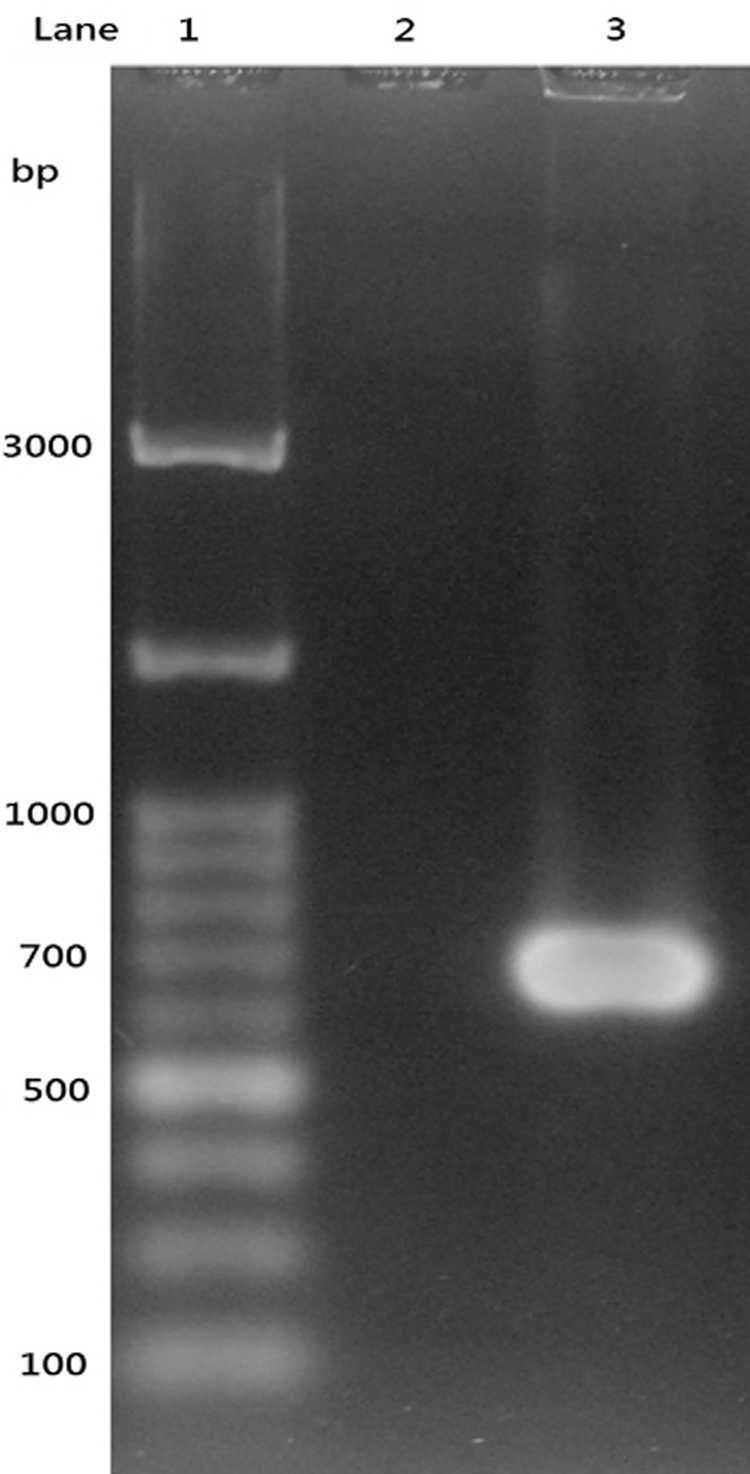
The M. yuhsii gene cloned by RT-PCR with the primers originally designed for E. fetida. Lane 1, 100bp DNA marker; lane 2, negative control; and lane 3, cloning gene of M. yuhsii.
According to prior research, these primers were used to obtain the gene fragment of E. fetida, which is capable of expressing and reproducing the earthworm fibrinolytic enzymes. Therefore, the aforesaid cDNA fragment from M. yushii might possibly have the same function of reproducing earthworm fibrinolytic enzymes.
Theoretically, it is not necessary to obtain the biomaterials of E. fetida. People just need to take reference from the primers designed for its functional sequence. They may then design a similar pair of primers and discover the functional sequences of another GR, M. yushii, through RT-PCR amplification. Based on the sequence information from E. fetida, the cDNA fragment obtained from M. yushii may be used to reproduce the fibrinolytic enzymes by introducing the fragment into the system of E. coli, goat mammary glands, or tobacco. 40 Thus, with the assistance of RT-PCR and gene-cloning technology, a user of GR may “benefit” from the sequence information of one species or GR without physically accessing its biomaterials. In this way, users of GR may easily avoid the obligations under ABS rules.
5. Discussion
According to the above issue analysis and earthworm experiments, we may further conclude that the current ABS rules under CBD and the Nagoya Protocol need more clarification. First, the interrelationship between GR and TK should be clarified, including the possibility of coupling TK with different GR. Second, the current framework of the Nagoya Protocol may cause forum shopping of ABS rules, which should be regulated properly. Third, ABS rules should be modified according to the new development of biotechnology, especially the technologies related to sequence information. Failing to solve these issues, users of GR or TK may either suffer from the uncertainty of ABS application or take advantage of its ambiguity and conduct biopiracy.
5.1. Interrelationship between GR and TK should be clarified
As mentioned above, due to the broad definitions of GR and TK in the Nagoya Protocol, the interrelationship between GR and TK requires more clarification. In Article 7 of the Nagoya Protocol, parties to CBD should take measures to protect “traditional knowledge ‘associated’ with genetic resources held by indigenous or local communities.” However, it is unclear how TK is associated with GR. Should TK only be associated with GR which exists in the same region where the indigenous or local community lives? Take earthworms as an example: if a user desires to commercialize P. corethrurus, the species originally from South America, 41 as Chinese medicine to treat cardiovascular diseases, can we say that the Chinese TK is only associated with the earthworm species in China, not South America? If so, the user may claim that by using a South America species, it is not required to obtain the consent from the communities in China because the Chinese TK is not associated with the South America earthworms.
In addition, if another user desires to commercialize M. yuhsii, an endemic species to Taiwan, as medicine, which local community is entitled to share the benefit? The Han people who migrated from Mainland China to Taiwan a long time ago, or the local communities in Mainland China? The Taiwan endemic earthworms, M. yuhsii, seem to be more associated with the Han people in Taiwan.
Furthermore, in accordance with the Nagoya Protocol, Article 6, Paragraph 1, “the country of origin of such GR” should be entitled to the sovereign rights over natural resources. Any utilization of GR should acquire the prior informed consent from the “country of origin of such GR.” Also, in Article 7 of the Nagoya Protocol, when it comes to the utilization of TK, it is required to obtain the consent from the indigenous or local communities holding such TK. Therefore, both the original country of GR and the communities holding TK have their individual rights under the Nagoya Protocol. However, what if the original country of GR is not the same as the country whose communities hold TK?
Again, we may use the above earthworm experiments as an example to illustrate the interrelationship between GR and TK. The fibrinolytic enzyme activity of P. corethrurus, whose original habitat is South America, is significantly higher than three other species (Figure 1). When a user desires to use P. corethrurus to produce Chinese medicine to treat cardiovascular diseases, it will involve Chinese TK and South American GR. Thus, subject to the Nagoya Protocol, it is required to negotiate with and acquire consents from China and South America respectively, which will certainly increase the difficulty, time, costs and benefits shared. However, due to its extreme tolerance and quick breeding ability, P. corethrurus has become an invasive species in most tropical regions, including south China. 42 The next question is whether the user may acquire P. corethrurus in China without the consent of and benefit sharing with South America (Table 1). The meaning of “the country of ‘origin’ of such GR” in Article 6 of the Nagoya Protocol is debatable. In this example. South America might be the “original habitat” of P. corethrurus, but the user may acquire this invasive earthworm “originally” in China. Even though invasive species are usually spread by human activities intentionally and unintentionally, people may argue that it is a matter of time for these species to travel all over the world. May we insist that the original habitat shall apply in this case? Defining and applying the “country of origin” under the Nagoya Protocol will be subject to debate. Considering the above examples and illustrations, the interrelationship between GR and TK might be more complicated than we thought and not as inseparable as the Nagoya Protocol describes in its preamble.
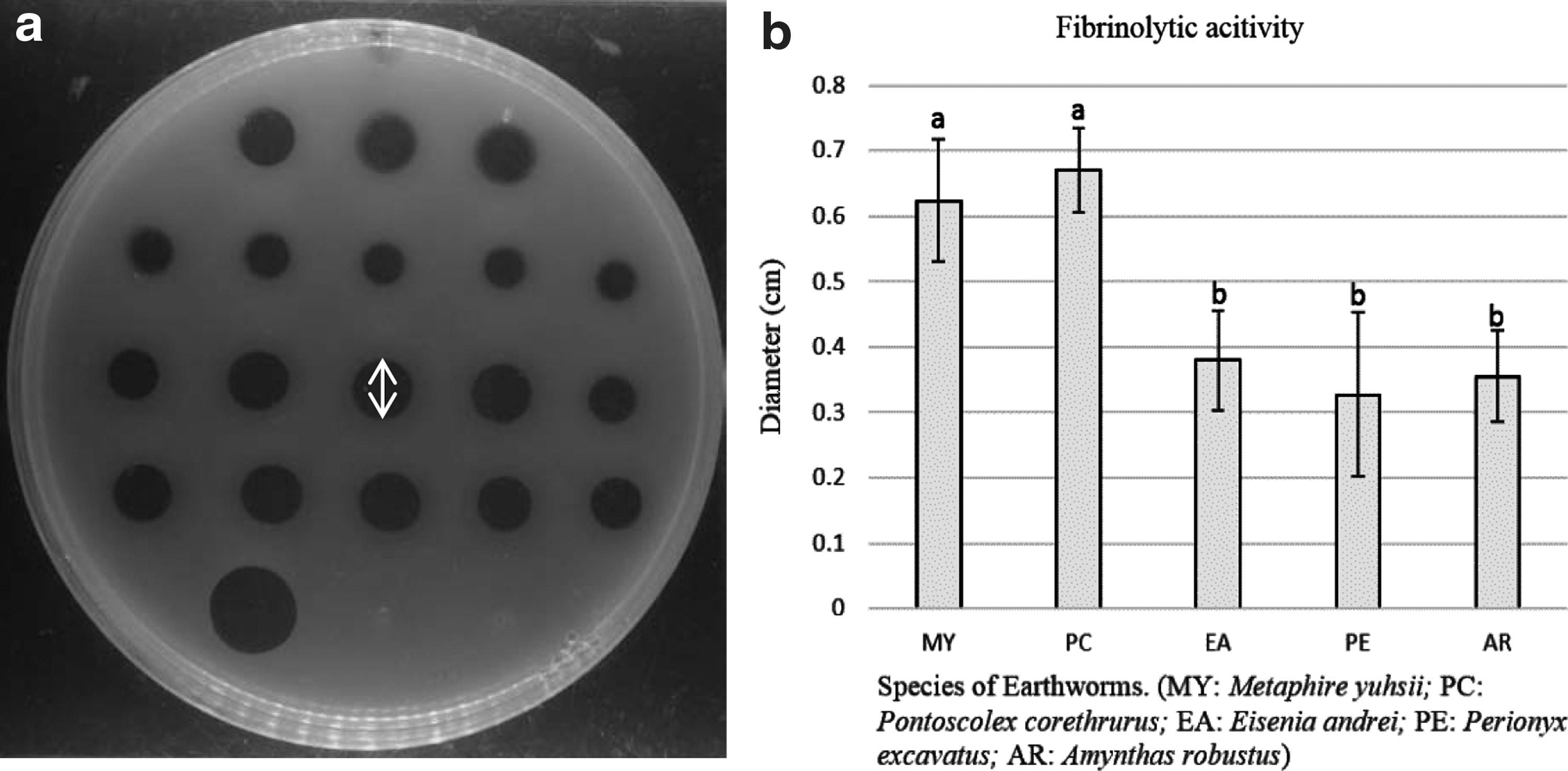
Fibrinolytic activity assay
Issues Arising from Coupling Different Genetic Resources (GR) and Traditional Knowledge (TK) of Earthworms
Cosmopolitan species; **Endemic species to Taiwan; ***South American species invasive to tropical Asia
+: Access and benefit sharing (ABS) rules applied
–: Lack of detailed regulations under Convention on Biological Diversity (CBD) or Nagoya Protocol
a: Issue of the same TK
b: Issue of forum shopping
c: Issue of country of origin
5.2. Forum shopping of ABS rules should be regulated
In civil procedure, the term, “forum shopping,” describes the circumstance where a plaintiff bypasses the natural forum and brings legal action in another forum which provides relief or benefits unavailable in the natural forum. 43 We can imagine that users of GR or TK may conduct the same behavior while complying with the obligations under the ABS rules of the Nagoya Protocol.
According to the Nagoya Protocol, Article 11, Paragraphs 1 and 2, if the same GR are found within multiple territories of several parties, or the same TK is shared by multiple indigenous or local communities in several parties, the cooperation between those parties is required. However, if one of those parties decides to consent to access and benefit sharing of its TK and GR without the cooperation with others, will this consent be valid? In the copyright legal system, two authors who independently create the same or similar works of art or music are both entitled to the copyright protection and may use independent creation as a defense to infringement. 44 Will the same apply to the rights to TK if the communities in different countries have independently developed the same TK? Can these communities independently decide how to exercise their rights?
If it is valid to acquire consent from only one of those parties or communities that share the same TK, a forum shopping issue will show up. The user only needs to enter into an agreement with one of the parties or communities and use “independent creation” as a defense to the claims from other parties or communities. This circumstance may actually happen in the example of earthworms. As described in the above sections, some literature records the medical use of earthworms in China, Burma, and Laos. If, for example, the local community in Burma requests a lower benefit from the user compared to communities in China, and the user enters into an agreement with such a community in Burma, has the user already fulfilled the obligations or requirements under the ABS rules? If this “forum shopping” of ABS rules is admitted under the Nagoya Protocol, the user may also pair up such TK with different GR in different communities to find out the best deal (Figure 3, Table 1). Australia, which signed the Nagoya Protocol, may have already encountered a similar situation. Because not all of its states and territories have adopted the ABS rules of the Nagoya Protocol, users may access and utilize all the TK or GR in Australia by entering an agreement with one provider in one of states or territories, which requires less effort or cost. 45
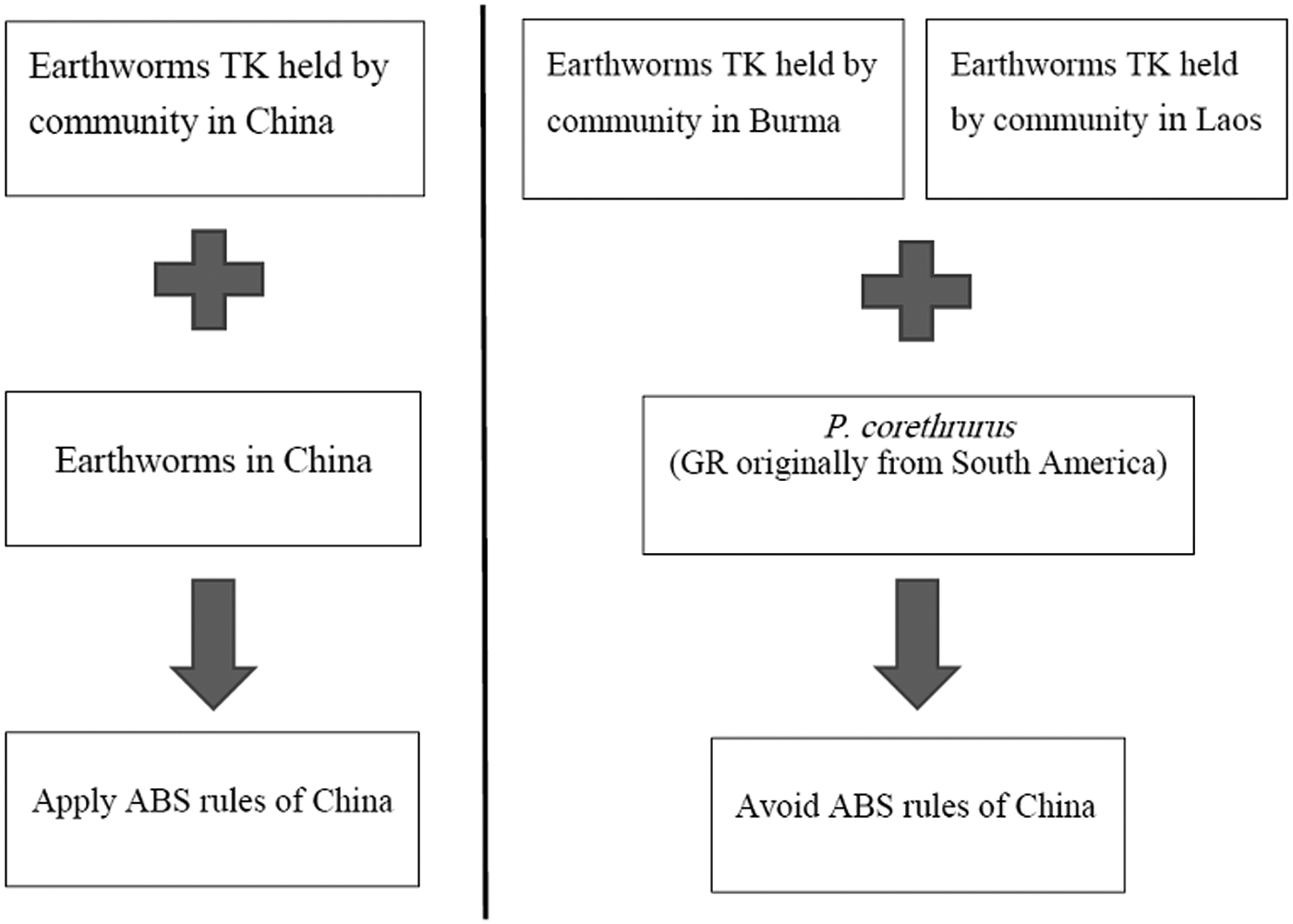
Forum shopping of access and benefit sharing (ABS) rules.
Another concern is how to verify the “same” TK described in Article 11 of the Nagoya Protocol. In certain perspectives, it is not always easy to distinguish the difference between the medical use of earthworms in China, Burma, or Laos and the use of earthworms as food supply in South America and other countries. It is arguable that food with various nutrients necessary for human health serves the same function of preventing diseases as medicine does. The local community in South America that holds the TK of earthworms as food supply may request to participate the ABS negotiation regarding the earthworm-related TK because they share the “same” TK under the Nagoya Protocol.
Once we admit the TK of earthworms as food supply is the same as or similar to the TK of earthworms as medicine, the above “forum shopping” issue will show up again. Both “earthworm medicine communities” and “earthworm food communities” become options for the user. A potential user may compare different ABS terms and requirements from all these communities and only choose one that requires less benefit sharing to enter into an agreement. P. corethrurus, the species from South America with significantly higher fibrinolytic enzyme activity in the above experiments, may be paired up with the TK of earthworm as food supply in South America, and the user may produce the more-powerful medicine without any negotiation and benefit sharing with China (Figure 3, Table 1).
In conclusion, Article 11 of the Nagoya Protocol does not stipulate the effect of failing to acquire consent from all those parties that share the same TK or GR. It seems that a user may fulfil its ABS obligations by entering an agreement with one of the communities or parties. Users may also pair different GR with TK to find the best offer. Such “forum shopping” of ABS rules may cause inequity and unfairness to other communities that share the same TK or GR (Table 1). The detailed requirements, mechanisms, and effects of the cooperation between parties in the Nagoya Protocol should be clarified and stipulated to solve the forum shopping issue.
5.3. Digital sequence information on GR remains an unsolved issue
With the recent development and application of novel genome-editing technologies, big data analysis, and synthetic biology, utilization of GR is not necessary to access its tangible biomaterials. DNA, RNA, and other sequence information may be digitalized and accessible to everyone through public databases, like GenBank. 46 In November 2018, the 14th meeting of the Conference of Parties to CBD released the draft decision of digital sequence information on GR and requested four studies on the relevant issues of digital sequence information. 47 In January 2020, a series of studies were released as requested by the 14th meeting of the Conference. 48 Although digital sequence information has been noticed by the parties to CBD, the relevant regulations and applicable ABS rules have not been decided yet. Even the term, “digital sequence information,” is used as a placeholder until the most appropriate term is agreed by the parties. 49 There seems to be more effort required to solve the questions raised by modern biotechnology.
However, under the current rules of CBD and the Nagoya Protocol, even if we recognize that the definition of GR includes the digital sequence information, there are unresolved issues. In the previous earthworm experiments, we used one pair of primers originally designed for E. fetida to amplify the cDNA fragment of another earthworm species, M. yuhsii, a species endemic to Taiwan (Figure 2). Considering the fact that these primers were used to obtain E. fetida's gene fragment capable of reproducing fibrinolytic enzyme, this cDNA fragment or sequence of M. yuhsii might possibly have the same function. Although it requires more experimental steps to verify the sequence's capability of producing fibrinolytic enzymes, the activity of the enzymes produced, and the product safety, this result already shows a possibility of utilizing the GR without capturing or accessing to such GR, but just taking “reference” from its sequence information instead.
Suppose a user desires to commercialize the fibrinolytic enzyme of E. fetida but foresees the time-consuming procedures and relevant costs to fulfil the obligations under ABS rules in many countries. This user may instead find a country that does not request any ABS rules under CBD, and then, retrieve the endemic earthworm in such country for further utilization. It is also convenient to avoid the ABS rules by gene cloning or genetic modification technology. First, take a reference from the functional sequence information of E. fetida and the primers designed for amplifying its enzyme sequence. Second, use the same, or design similar, primers in the laboratory to clone and amplify the functional sequence of an endemic species whose territory does not apply any ABS rules. Then, insert such sequence into the bacteria, E. coli, to reproduce the fibrinolytic enzyme for further production. In this way, the user only takes a reference from the primers, and no sequence of E. fetida is used. The whole sequence for production or commercialization is solely from the endemic earthworm whose territory has no ABS rules. Therefore, in this case, even if the definition of GR includes sequence information, the user may claim that he only accessed and used the sequence of the endemic species, not E. fetida (Table 1). We may see from this example how modern biotechnology offers various approaches to avoid the application of ABS rules.
6. Conclusion
The interrelationship between GR and TK is not obvious under CBD or the Nagoya Protocol and has been seldom discussed. Article 7 of the Nagoya Protocol requires parties to protect TK “associated” with GR held by indigenous or local communities. However, it is unclear how TK should be associated with GR, and whether the indigenous or local communities may claim any rights from the GR outside of the regions of the communities. In the example of the Chinese earthworm TK, if a user desires to commercialize the earthworm, M. yuhsii, an endemic species to Taiwan with significant fibrinolytic activity, which local community is entitled to provide access consents and share the relevant benefits? Should the user acquire prior informed consents from the Han people in Taiwan who originally migrated from mainland China and still practice the Chinese TK now, or the local communities in mainland China? The Han people in Taiwan seem to be more associated with the Taiwan endemic earthworms, but it also seems unfair to prohibit other communities in mainland China from benefit sharing.
The meaning of “the country of origin of such GR” in Article 6 of the Nagoya Protocol is not clearly defined as well. This issue will be more problematic in the earthworm example. The earthworms, P. corethrurus, whose original habitat is South America, have become an invasive species in tropical Asia. South America might be the “original habitat” of P. corethrurus, but a user may acquire this invasive earthworm “originally” in south China now. It is not clear which country is the country of origin under the Nagoya Protocol when the user acquires P. corethrurus in China to manufacture medicine for cardiovascular and cerebrovascular diseases. Then, the interrelationship issue shows up again. Should the Chinese TK only be associated with Chinese earthworm species, or, under the Nagoya Protocol, is it allowed to be associated with South American earthworm species?
In addition, although the Nagoya Protocol, Article 11, requires parties and communities that share the same GR or TK to cooperate with each other, the effect of failing to cooperate is not stipulated. If multiple communities in different countries have independently developed the same TK, it seems unfair to forbid these communities to independently decide how to exercise their rights to TK. On the contrary, if we admit the validity of consent from only one of the parties or communities that share the same TK, the issue of forum shopping will occur. The user may just find a country or community that requires less benefit or does not request any ABS rules, and then, retrieve the GR in such country or community for further utilization.
The undefined terms “the same” GR or TK in Article 11 of the Nagoya Protocol also add to the debate. People may argue that food, as the nutrition for human health, serves the same function as medicines do. Therefore, while commercializing earthworms as medicine, users may wonder whether, under the Nagoya Protocol, it is necessary to acquire consent from both the Chinese community who holds the TK of earthworm as medicine and the South American community who holds the TK of earthworm as food supply.
Furthermore, while the debates about how digital sequence information should be protected under CBD are still ongoing, scientists have already developed numerous approaches to utilize GR without accessing its tangible biomaterials. According to the gene cloning experiments with M. yuhsii, a user may only take a “reference” from the sequence information of one earthworm species and then utilize the GR of another endemic earthworm whose territory does not apply any ABS rules. It is doubtful that all the problems arising from the rapidly developed biotechnology will be solved by merely including digital sequence information in the definition of GR.
Thus, the definitions and interrelationship between GR and TK under CBD and the Nagoya Protocol need more clarification to reduce the uncertainty of applying ABS rules and prevent the issues of forum shopping.