




Abstract
Aging has been associated with decreased intra- and internetwork connectivity during rest and task. Recent work has shown the influential role of the salience network over the default mode network (DMN) and executive control network (ECN). This study comprehensively investigates age-related changes in intra- and internetwork connectivity and effective connectivity between the DMN, ECN, and salience network across the adult life span. Two hundred ten participants completed a working memory task, an inhibition task, and a resting-state functional magnetic resonance imaging scan. Networks were extracted using independent component analysis; then, regression analyses and t-tests between three age groups, 21–40 (younger), 41–60 (middle), and 61–80 (older), were conducted. Older age was associated with decreased intranetwork connectivity. Functional network connectivity analyses revealed older age was associated with increased internetwork connectivity between the salience network and the ECNs and DMNs. In both cases, the effects were more pronounced in the tasks compared to resting state. Granger causality analyses indicated the salience network was influenced by the DMN and ECN in all age groups during both tasks, but not rest. However, middle adults showed increased influence from the salience network to the right ECN compared to younger adults during the flanker task. Taking everything into account, these findings indicate the role of the salience network changes over the life span, which may have implications for the early detection of pathophysiology in older adults.
Introduction
Cognitive performance has been shown to decrease in healthy aging (Salthouse, 2010) and may be a risk factor for dementia (Amieva et al., 2005). Interestingly, reduced resting-state intranetwork connectivity in the default mode network (DMN) has been associated with poorer task performance on some neuropsychological tasks in older (Damoiseaux et al., 2008) and younger (Hampson et al., 2006; Stevens et al., 2012) adults. In addition, resting-state connectivity can predict task activity (Mennes et al., 2010). Accordingly, there have been reports of age-related decreases in within- and between-network connectivity in resting-state (Allen et al., 2011; He et al., 2013). Decreased internetwork connectivity has also been associated with poorer working memory task performance (Steffener et al., 2012).
The above findings indicate that some of the age-related changes in cognitive performance may be related to changes in connectivity. However, while these findings have been reported in resting-state, less is known about the effect of age on network connectivity during tasks, and few studies have compared within- and between-network connectivity during resting-state and task across the full adult life span.
Many studies have focused on the DMN, and differences in DMN connectivity have been associated with different types of dementia (Zhou et al., 2010), although recently, the importance of the salience network in cognition has begun to emerge. The DMN comprises the medial prefrontal cortex, posterior cingulate, and precuneus, areas commonly deactivated during tasks (Raichle et al., 2001). The salience network comprises the insula and anterior cingulate cortex (ACC), areas that have been implicated in the identification of salient internal and external stimuli (Menon and Uddin, 2010).
More recently, studies have implicated the salience network as an important switch between the DMN and task-related networks, such as the left executive control network (LECN) and right executive control network (RECN) (Chiong et al., 2013; Doll et al., 2013; Sridharan et al., 2008). The ECNs comprise the dorsolateral prefrontal and posterior parietal cortices, which are frequently activated in the performance of a cognitively demanding task (Menon and Uddin, 2010). Sridharan and colleagues (2008) reported that the right frontal insula node was consistently associated with a directive influence on the ACC and dorsolateral prefrontal and posterior parietal cortices, key areas of the DMN and ECNs, in task and resting-state data. These findings have been further corroborated by studies replicating the influential role of the salience network on the DMN in moral reasoning in older adults (Chiong et al., 2013) during resting-state (Liao et al., 2010) and by dynamic causal modeling (Goulden et al., 2014).
As the ability to recruit task-related networks and suppress the DMN during tasks is important for good performance (Anticevic et al., 2010; Uddin et al., 2009), age-related changes in the role of the salience network may have implications for age-related cognitive decline. For instance, decreased connectivity in the salience network has also been reported to be associated with poorer cognitive performance (Duchek et al., 2013). Moreover, decreased internetwork connectivity from the salience network may lead to less efficient transition to task networks; thus, if age is related to decreased connectivity and less directive influence from the salience network, then that may explain why older adults have also been reported to show less DMN deactivation during tasks compared to younger adults (Prakash et al., 2012).
The majority of studies investigating differences in intranetwork connectivity between young (<40 years) and older (>60 years) adults have used resting-state data. Past graph analysis studies that included samples spanning the adult or full life span have shown decreased connectivity between short-distance functional connections with increasing age, but the exact pattern varies slightly depending on the sample age span and parcellation choices (Betzel et al., 2014; Cao et al., 2014; Chan et al., 2014; Fjell et al., 2010). Similarly, most studies using independent component analysis (ICA) report decreased DMN connectivity with older age (Allen et al., 2011; Ferreira and Busatto, 2013). Decreased connectivity within the salience network in older adults compared to younger adults has also been reported (Onoda et al., 2012). In keeping with the resting-state findings, decreased intranetwork connectivity has also been reported in older compared to younger adults across many tasks (Chou et al., 2013; Geerligs et al., 2014; Voss et al., 2010).
In contrast to the association between greater age and decreased short-distance functional connectivity, the majority of life span graph analysis studies on resting-state data show that older age is associated with increases in long-distance functional connectivity (Betzel et al., 2014; Cao et al., 2014; Chan et al., 2014). However, in keeping with the within-network findings, the trajectory varies depending on the choice of networks and sample age span (Betzel et al., 2014; Cao et al., 2014; Chan et al., 2014; Fjell et al., 2010). This may explain why there have been some mixed findings, for instance, decreases in internetwork functional connectivity between the right insula, one of the key nodes of the salience network, and the ECN and DMN with age have been reported in resting-state data (Allen et al., 2011; He et al., 2013).
Similar results to the resting-state findings have been reported based on task data, for instance, one study found decreased internode connectivity in older adults compared to younger adults during verbal working memory task, but there were no significant differences between the salience network and DMN nodes (Steffener et al., 2012). Notably, Geerligs and colleagues (2014) reported decreased internetwork connectivity in older adults compared to younger adults during rest but increased internetwork connectivity in older compared to younger adults during task. This was explained by an increase between somatosensory, precuneus, and ECN nodes in task compared to resting-state in older adults, which was not apparent in younger adults. This implies that the level of task demand moderates the effect of age on internetwork connectivity. However, the effect of age on the effective connectivity between the salience network and other networks during tasks has yet to be fully investigated.
In summary, functional connectivity has been associated with cognitive performance. Past studies indicate that age is associated with decreased intranetwork connectivity during rest and task, but the effect of age on internetwork connectivity may be moderated by task demands. However, few studies have included both rest and task conditions. Moreover, there has been little research on age-related changes in effective connectivity between key networks. The salience network has been reported to be an influential hub for switching between the ECN and DMN. Decreased effective connectivity from the salience network may lead to less efficient transition to task networks, affecting task performance; thus, age-related changes in effective connectivity may be implicated in age-related cognitive decline.
This study aims to fully characterize age-related connectivity differences using resting-state and task functional magnetic resonance imaging (fMRI) data, including younger, middle, and older adults, to assess the progression of change over the full adult life span in a healthy community sample. We investigated age-related differences in (1) intranetwork connectivity, (2) internetwork connectivity, and (3) effective connectivity between the salience network and the DMN and ECNs in two tasks—a block design visual spatial working memory task and an inhibition task requiring switching—as well as resting-state data.
Methods
Participants
This study was granted ethical approval by the National University of Singapore Institutional Review Board in accordance with the Declaration of Helsinki 1975, and all participants provided informed written consent. Two hundred ten healthy Singaporean Chinese adults (89 males and 121 females) aged 21–79 years with no major physical illness, neurological or psychiatric disorder, and no history of head injury resulting in loss of consciousness were recruited. All participants had a Mini-Mental State Examination (MMSE) score greater than or equal to 24, which has been reported as the most appropriate threshold to screen for cognitive impairment in the Singaporean population (Ng et al., 2007). Eighty-seven percent was right-handed, 5% left-handed, and the remaining participants were ambidextrous based on the Edinburgh Handedness Inventory (Oldfield, 1971). Participants were grouped into three age groups: younger adults aged 21–40 years, middle adults aged 41–60 years, and older adults aged 61–80 years. The groups were chosen based on past studies investigating the middle groups (Evers et al., 2012; Westlye et al., 2011) and for equal age span in each group.
Procedure
Participants completed two tasks and one resting-state scan in one session. The resting-state scan was conducted after the structural scans and before the tasks. The task order was counterbalanced across age and gender. The spatial addition task (SAT) assessed visuospatial working memory, and the flanker task assessed inhibition and attention. The SAT was chosen as a nonsalience dominant but demanding cognitive task. The flanker task is more likely to involve the salience network as it has been reported to activate key salience network nodes (Nee et al., 2007) but is less cognitively demanding than the SAT. Stimuli were presented using E-Prime v2.0 (Psychology Software Tools), and accuracy and response times (RTs) were recorded. Participants completed practice tasks, which included feedback before entering the scanner.
The SAT is a visuospatial block fMRI working memory task that allows evaluation of processes involved in maintenance only and maintenance plus processing. There were four conditions in this task: low load (LL), high load (HL), low maintenance (LM), and high maintenance (HM; Fig. 1a). Half of the trials in each condition were correct and the other half were incorrect, and their presentation (correct or incorrect) was randomized. Each trial lasted for eight seconds, and each block had two trials. Each run had three cycles lasting for a total of 192 sec. Most participants completed three runs, although 10 subjects only completed two runs.
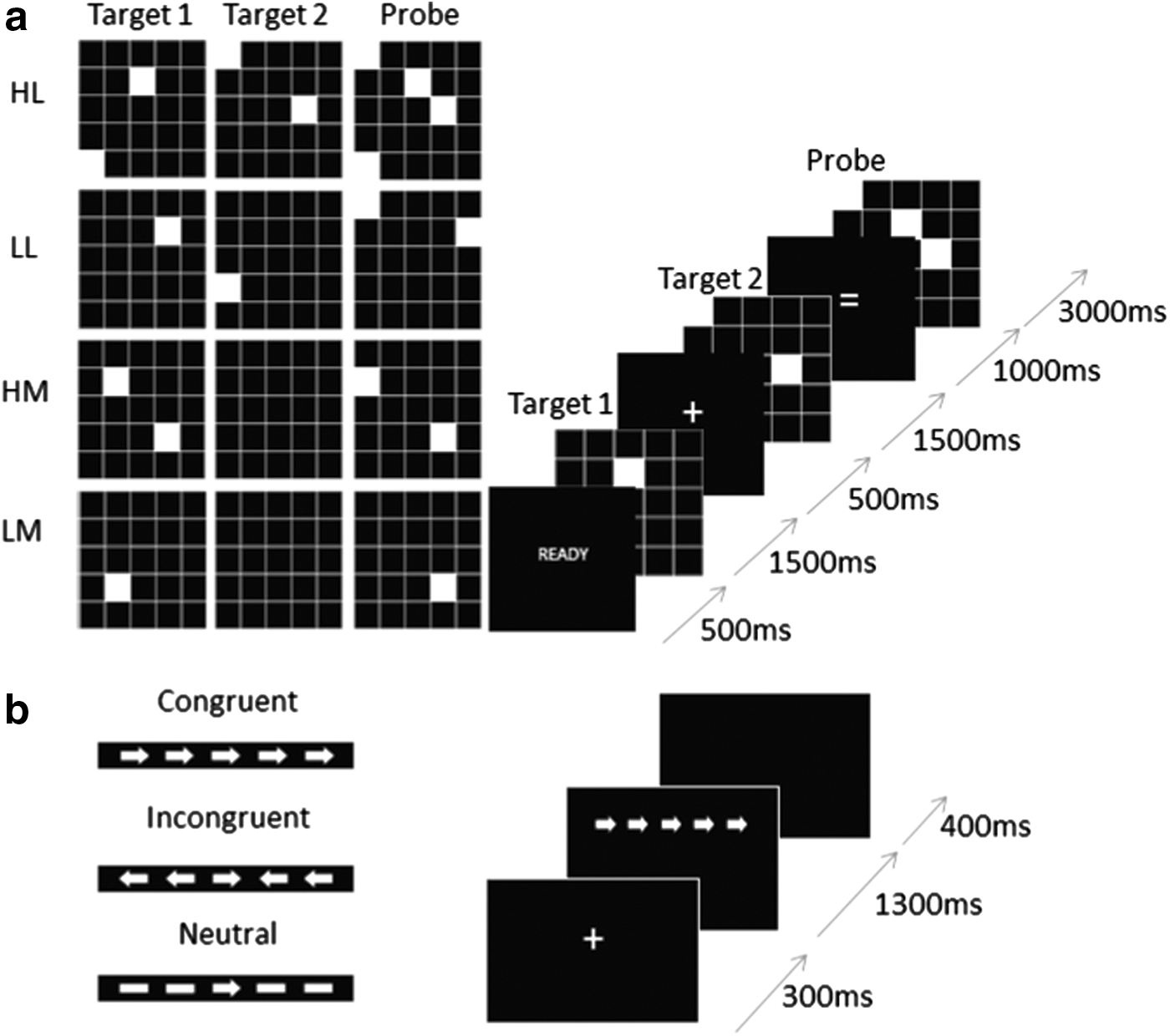
Task descriptions.
The flanker task (Fig. 1b) is an event-related inhibition task based on the original Eriksen and Eriksen (1974) letter flanking task. It relies on limiting interference and activates areas in the salience network (Nee et al., 2007). There were three conditions in this task: congruent, incongruent, and neutral. Participants were required to press the left or right button consistent with the direction of the middle arrow. The order of conditions was randomized. Each run consisted of 24 trials of each condition, resulting in a total run of 144 sec. As with the SAT, most participants completed three runs, although 10 subjects only completed two runs.
During the resting-state scan, participants were instructed to close their eyes and rest for 8 min.
MRI data acquisition
Participants were imaged in a Siemens 3T Trio scanner using a 32-channel quadrature headcoil. Image acquisition in the anterior commissure–posterior commissure plane consisted of a high-resolution MP-RAGE anatomical sequence (192 axial slices of 1 mm thickness, repetition time [TR] = 2300 msec, echo time [TE] = 1.9 msec, flip angle [FA] = 9°, field of view [FOV] = 256 mm, and matrix = 256 × 256, interleaved acquisition) and a whole-brain echo planar imaging (EPI) sequence (48 axial slices of 3 mm thickness with no gap, TR = 2400 msec, TE = 25 msec, FA = 90°, FOV = 192 mm, and matrix = 64 × 64, interleaved acquisition) for the task data and a functional EPI whole-brain sequence (48 axial slices of 3 mm thickness with no gap, TR = 2300 msec, TE = 25 msec, FA = 90°, FOV = 192 mm, and matrix = 64 × 64, interleaved acquisition) for the resting-state data. A total of 206 volumes were obtained during the resting-state scan, 80 volumes were acquired for each SAT run, and 60 volumes for each flanker run.
MRI data preprocessing
Images were preprocessed in Statistical Parametric Mapping 8 (Wellcome Department of Imaging Neuroscience, London, UK;
Behavioral analysis
Mean accuracy and RTs for the SAT and flanker task were subjected to one-way analyses of variance (ANOVAs) to investigate the effect of age group and regression analyses to investigate the linear effect of age using Stata v11.2 (StataCorp).
Independent component analysis
ICA was used to obtain network maps. Spatial ICA was conducted using the Group ICA fMRI Toolbox (GIFT;
Effect of age on intranetwork connectivity
The t-tests between the age groups, younger versus middle and middle versus older adults, and linear regression models were conducted in biological parametric mapping (Yang et al., 2011) using the subject-specific components: aSA, dDMN, vDMN, LECN, and RECN for resting-state, the SAT, and the flanker task to assess age differences in intranetwork connectivity. The respective network was used as a mask at p < 0.001, with a cluster significance threshold of p < 0.05 familywise error (FWE) corrected. Results are reported at p < 0.001, with a cluster threshold of p < 0.05 FWE.
Functional network connectivity analysis
Internetwork correlation
The functional network connectivity toolbox (
Effective connectivity
Effective internetwork connectivity was assessed using Granger causality analyses in the functional network connectivity toolbox. Granger causality (Granger, 1969) was originally derived to investigate causality between variables in economics. Since then, the algorithm has been modified to generalized partial directed coherence (GPDC) measures of effective connectivity more suited to multivariate fMRI data (Havlicek et al., 2010). If the previous activity of a network (network A) explains the current activities of another network (network B) more than the previous activities of the network B, then network A could be considered to have an influence on network B. Model order for the GPDC analysis was selected using the Bayesian information criterion at the subject level. Results are reported at p < 0.05 FDR.
Results
Participants
Runs where participants achieved less than 60% accuracy for any condition were excluded from the analyses, as were runs with more than 1.5-mm translation or 2° rotation. The resulting sample included 184 participants with 484 runs for the SAT, 191 participants with 531 runs for the flanker task, and 173 participants for the resting-state analyses (Table 1).
Participant Age and Gender by Task
SAT, spatial addition task.
Behavioral results
ANOVAs showed a significant effect of age group on accuracy and reaction time in both tasks [SAT accuracy, F(2, 181) = 13.18, p < 0.001; SAT RT, F(2, 181) = 13.91, p < 0.001; flanker accuracy, F(2, 188) = 3.34, p < 0.05; flanker RT, F(2, 188) = 49.89, p < 0.001]. Bonferroni post-hoc test results are presented in Figure 2. For the SAT, there was a significant association between increasing age and decreasing accuracy and slower reaction time (n = 184, β [95% confidence interval, CI] = −0.001 [−0.002, −0.001], p < 0.001; β [CI] = 4.80 [3.23, 6.37], p < 0.001, respectively). There was no significant effect of flanker accuracy, but there was a significant association between increasing age and slower reaction time (n = 191, β [CI] = −0.0001 [−0.0004, 0.0002], p = 0.337; β [CI] = 3.25 [2.64, 3.86], p < 0.001, respectively).
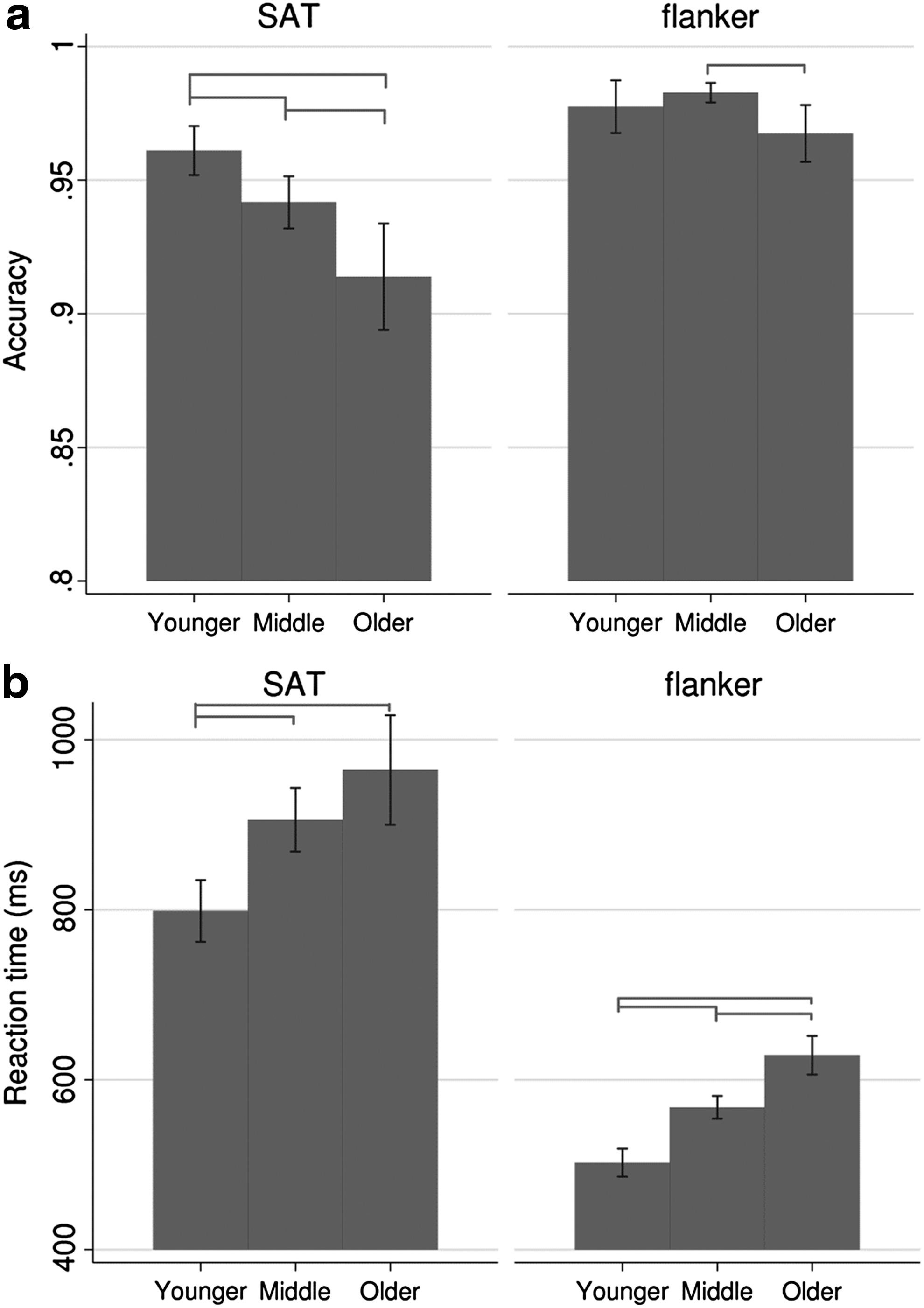
Accuracy
ICA results
Components
The ICA resulted in strong component maps for the anterior and posterior DMN, aSA, LECN, and RECN for resting-state and the two tasks (Table 2 and Fig. 3).
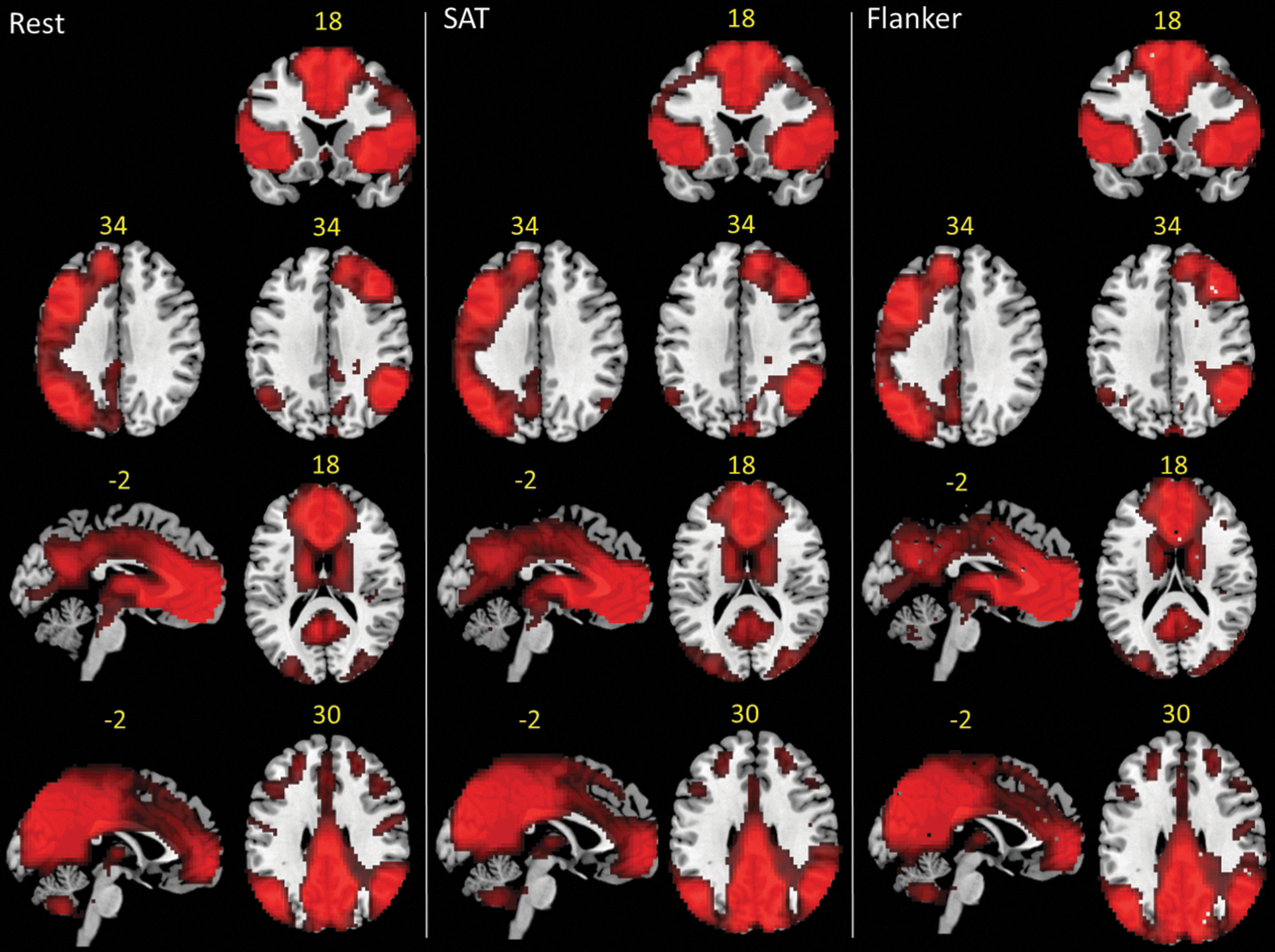
Components for whole group by task condition. Top row, salience network; second row, LECN and RECN, respectively; third row, dDMN; bottom row, vDMN. Yellow numbers above image represent slice number in MNI space. All results reported at voxel p < 0.001, cluster p < 0.05 FWE corrected. dDMN, dorsal default mode network; FWE, familywise error; LECN, left executive control network; MNI, Montreal Neurological Institute 152 space; RECN, right executive control network; vDMN, ventral default mode network.
Peak Independent Component Analysis Coordinates
Coordinates of local maxima within significant clusters in MNI space are reported. Results presented to p < 0.001, cluster p < 0.05 FWE corrected.
aSA, anterior salience; BA, Brodmann area; dDMN, dorsal default mode network; FEW, familywise error; LECN, left executive control network; MNI, Montreal Neurological Institute 152 space; RECN, right executive control network; vDMN, ventral default mode network.
Effect of age on intranetwork connectivity
Intranetwork connectivity decreased with age in the majority of networks in resting-state and both tasks, although the differences were not as pronounced for the resting-state data as they were in the tasks. The differences were also more consistent in the regression analyses compared to the group analyses (Tables 3 –5 and Figs. 4 –6).
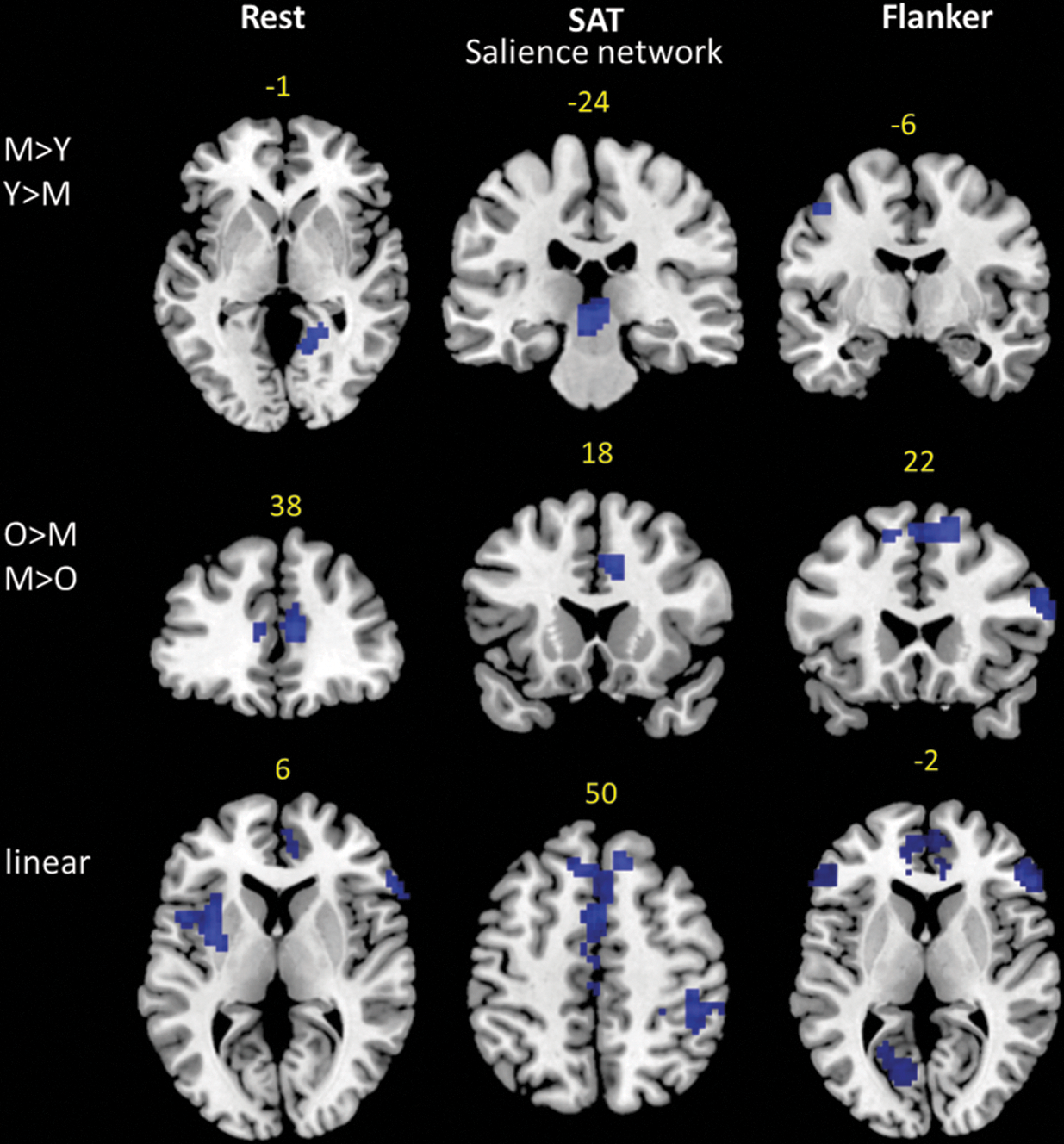
Age differences in intranetwork connectivity for aSA network. Blue, less connectivity in older age; blank spaces indicate no significant differences. Yellow numbers above image represent slice number in MNI space. All results reported at voxel p < 0.001, cluster p < 0.05 FWE corrected. aSA, anterior salience; M, middle adults; O, older adults; Y, younger adults.
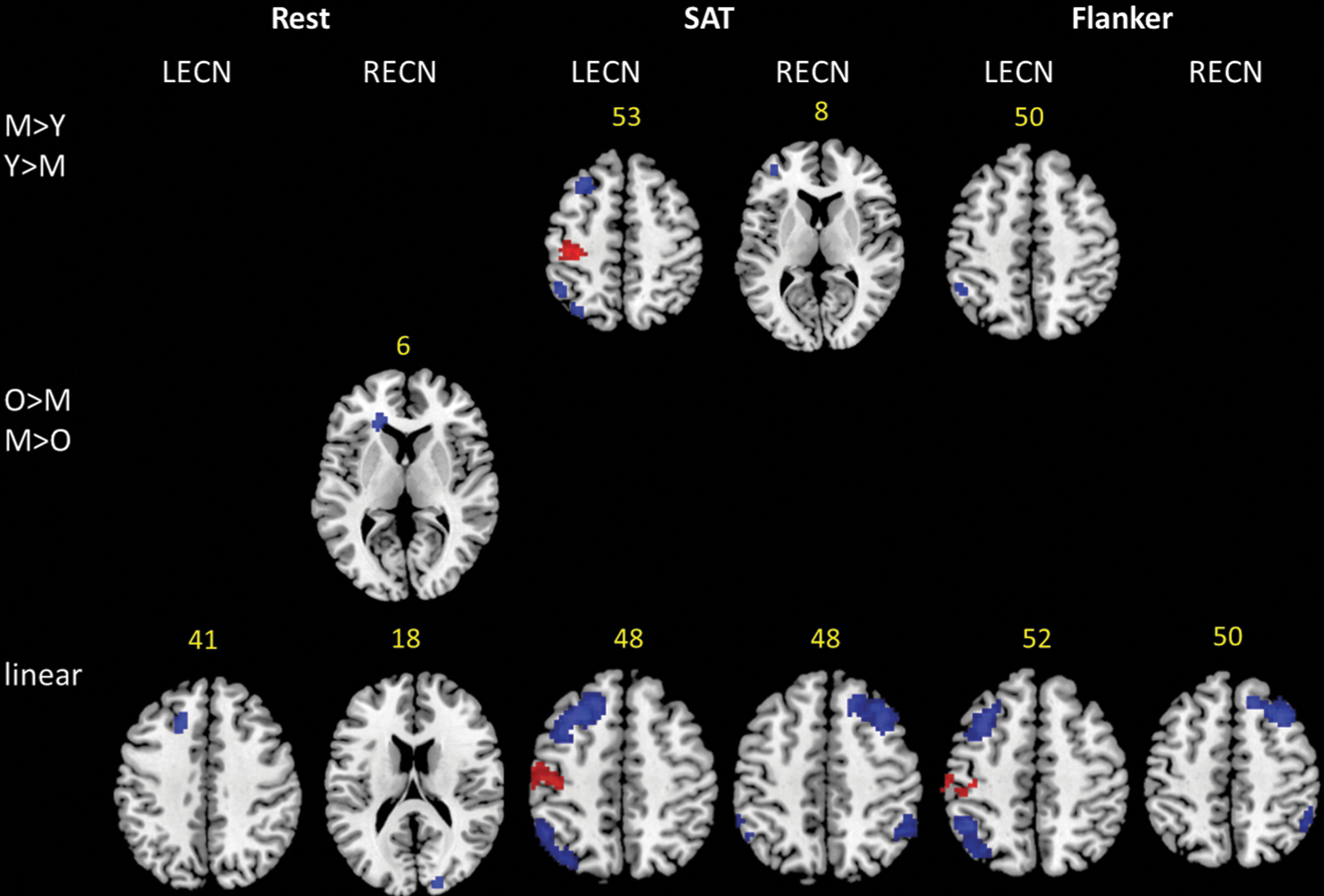
Age differences in intranetwork connectivity for ECNs. Red, greater connectivity in older age; blue, less connectivity in older age; blank spaces indicate no significant differences. Yellow numbers above image represent slice number in MNI space. All results reported at voxel p < 0.001, cluster p < 0.05 FWE corrected. M, middle adults; O, older adults; Y, younger adults.
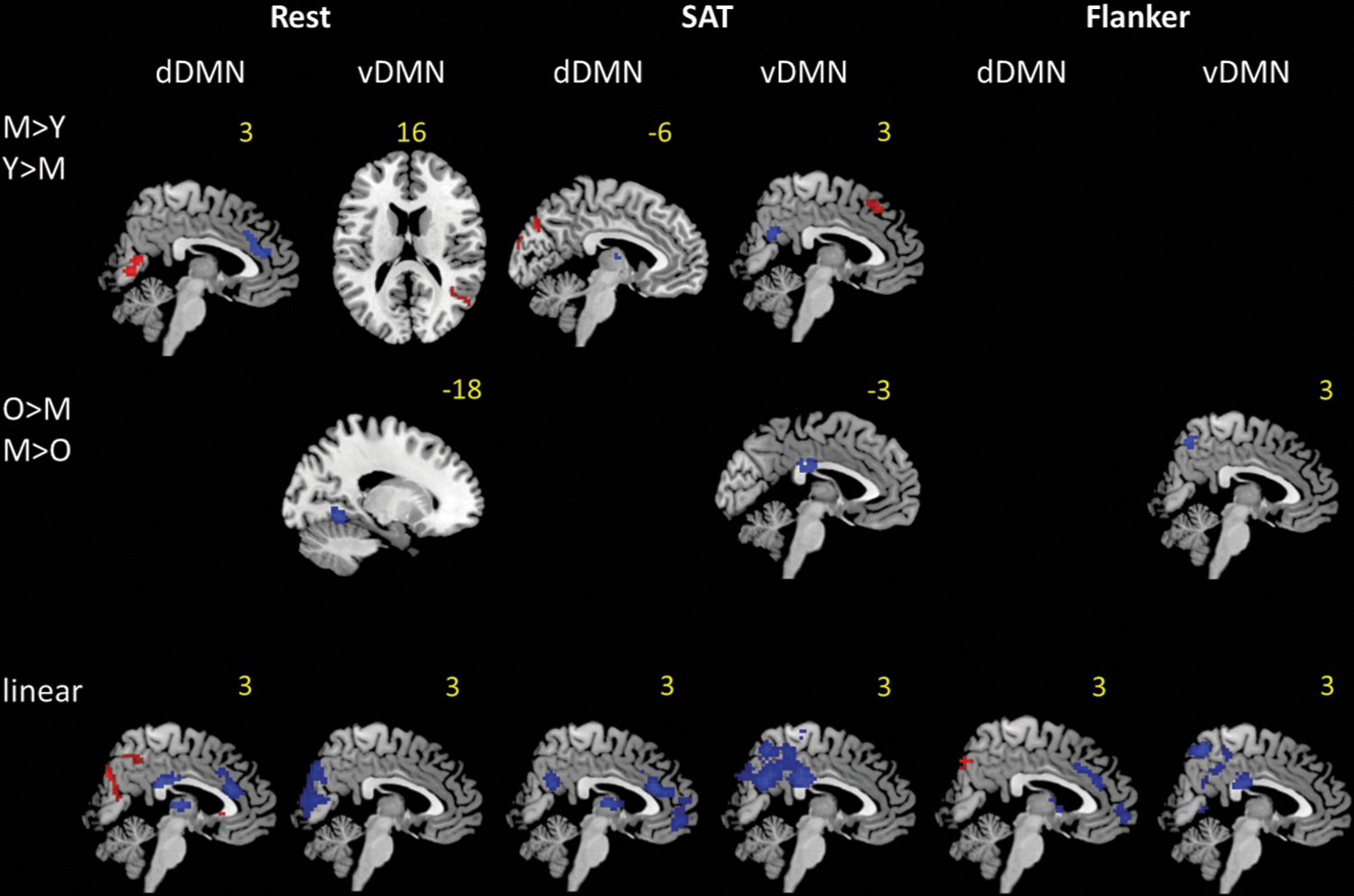
Age differences in intranetwork connectivity for DMNs. Red, greater connectivity in older age; blue, less connectivity in older age; blank spaces indicate no significant differences. Yellow numbers above image represent slice number in MNI space. All results reported at voxel p < 0.001, cluster p < 0.05 FWE corrected. M, middle adults; O, older adults; Y, younger adults.
Age Differences in Resting-State Independent Component Analysis-Derived Networks
Coordinates of local maxima within significant clusters in MNI space are reported. Results presented to p < 0.001, cluster p < 0.05 FWE corrected.
Age Differences in Spatial Addition Task Independent Component Analysis-Derived Networks
Coordinates of local maxima within significant clusters in MNI space are reported. Results presented to p < 0.001, cluster p < 0.05 FWE corrected.
Age Differences in Flanker Independent Component Analysis-Derived Networks
Coordinates of local maxima within significant clusters in MNI space are reported. Results presented to p < 0.001, cluster p < 0.05 FWE corrected.
Functional network connectivity results
Internetwork connectivity
There were significant correlations between all the network components for the SAT, the flanker task, and resting-state (Fig. 7 and Supplementary Table S1; Supplementary Data are available online at
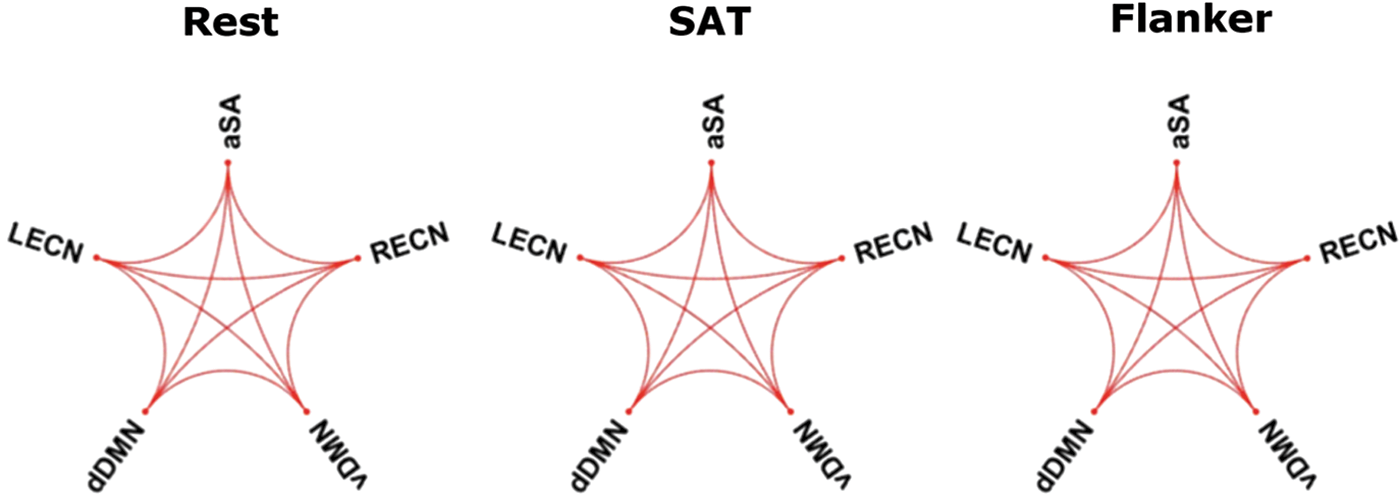
Whole-sample functional network connectivity results. Red lines indicate significant positive internetwork connectivity at p < 0.05 FDR. FDR, false discovery rate.
Resting-state
There was a decrease in internetwork connectivity with older age between the dDMN and vDMN and the LECN and vDMN. There was an increase in connectivity between the aSA and RECN with older age. There were no between-group differences.
Spatial addition task
There was a decrease in connectivity between the vDMN and dDMN and the vDMN and LECN with increasing age. There was also an increase in connectivity between the aSA and the dDMN, vDMN, and RECN and between the dDMN and RECN with increasing age. Group results showed a decreased connectivity between the dDMN and vDMN in middle compared to younger adults and older compared to middle adults. Older adults also showed decreased connectivity between the vDMN and LECN and increased connectivity between the RECN and aSA network compared to middle adults.
Flanker
There was a decrease in connectivity between the vDMN and dDMN and the vDMN and LECN with increasing age. There was also an increase in connectivity between the aSA and the dDMN, vDMN, LECN, and RECN and between the dDMN and RECN with increasing age. Group findings were similar to the regression results in the young versus middle group: significantly greater connectivity between the aSA network and all other networks and between the RECN and dDMN and a significantly less connectivity between the vDMN and dDMN in middle compared to younger adults. In the older versus middle group, the only significant difference was decreased connectivity between the vDMN and dDMN in the older group. Age-related differences in internetwork connectivity for all tasks are shown in Figure 8 and Supplementary Table S2.
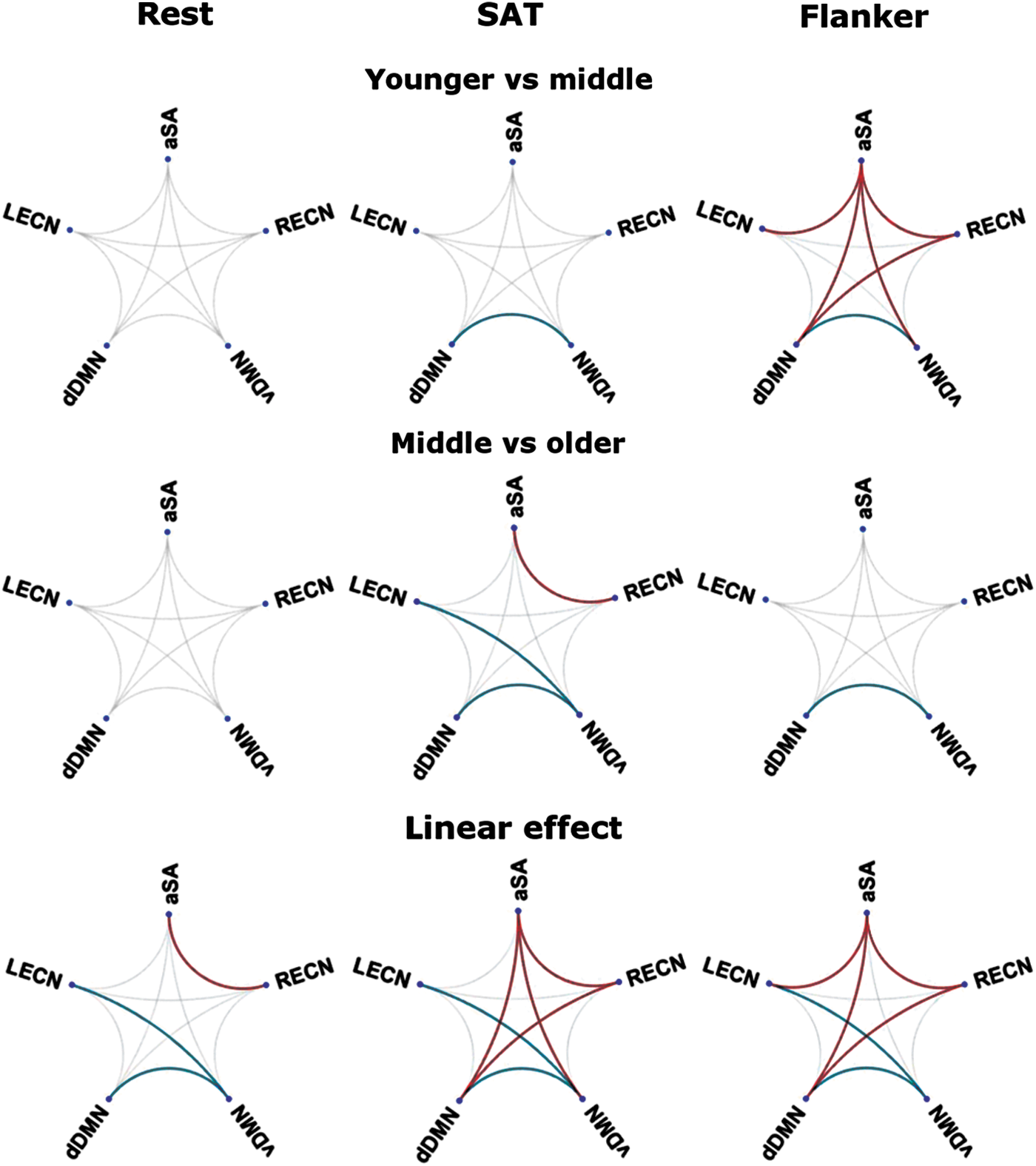
Effect of age on internetwork connectivity. Red indicates greater between-network connectivity in older age; blue indicates decreased between-network connectivity in older age, and blank indicates no significant difference. All results reported at p < 0.05 FDR.
Effective connectivity
Resting-state
In younger adults, the LECN influenced the aSA network (Fig. 9a). In middle adults, the dDMN and LECN influenced the aSA network, and both the LECN and RECN influenced the dDMN and vDMN, and the vDMN influenced the dDMN (Fig. 9b). In older adults, the RECN influenced the aSA network (Fig. 9c).
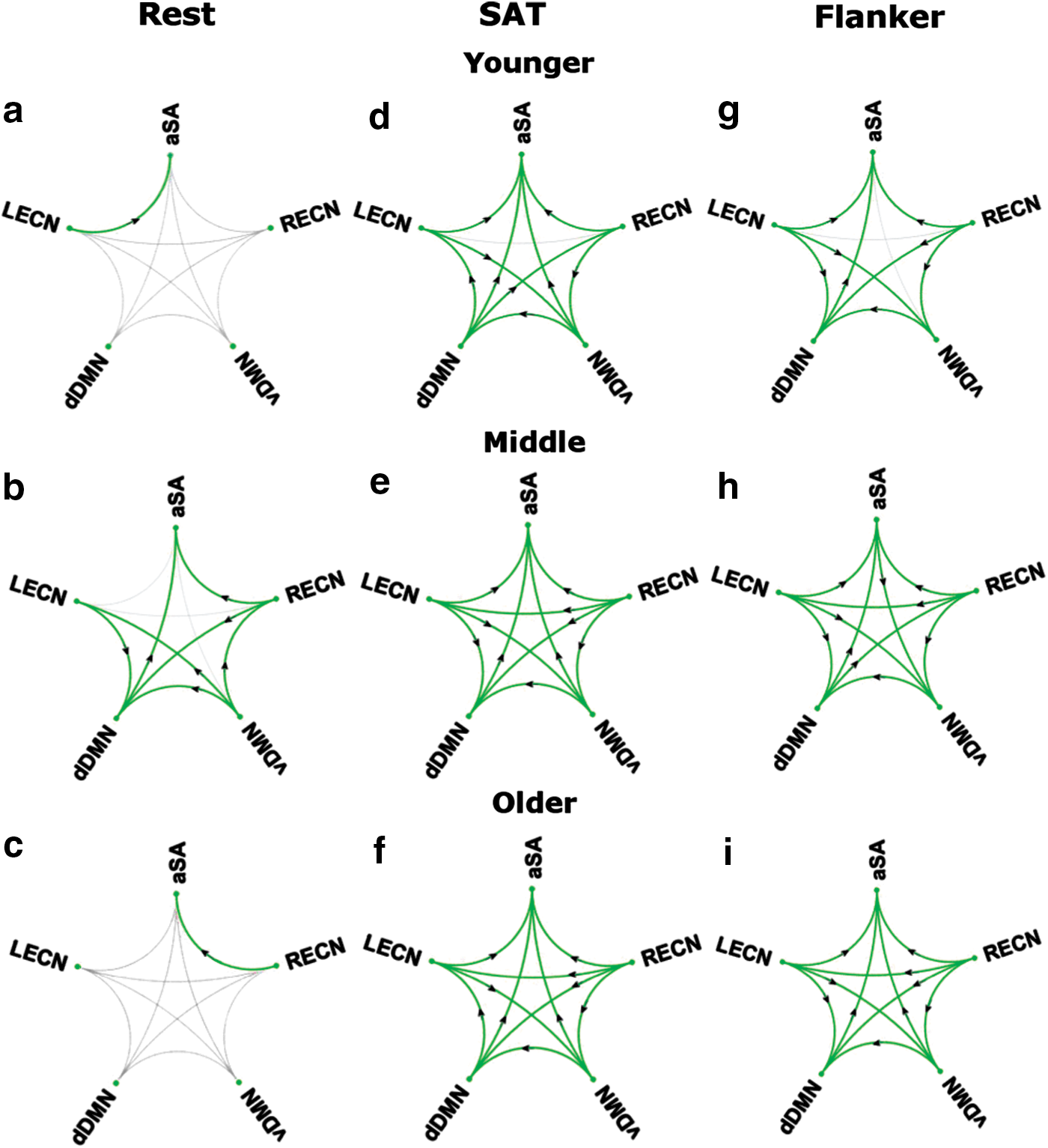
Effective connectivity results for each age group.
Spatial addition task
All networks influenced the aSA network, and the vDMN influenced the dDMN across all age groups. In addition, the RECN and LECN influenced the vDMN across all age groups (Fig. 9d–f). The LECN influenced the dDMN in younger and middle adults (Fig. 9d and e, respectively), but the dDMN influenced the LECN in older adults (Fig. 9f). In contrast, the RECN influenced the dDMN in middle and older adults, but the dDMN influenced the RECN in younger adults. The RECN influenced the LECN in both middle and older adults, but there was no significant influence between the ECNs in younger adults.
Flanker
The LECN, RECN, and dDMN influenced the aSA network across all age groups (Fig. 9g–i). In addition, the vDMN influenced the dDMN, and the RECN influenced the dDMN and vDMN across all age groups. The LECN influenced the dDMN and aSA network across all age groups. However, the LECN influenced the vDMN in younger adults (Fig. 9g), but the vDMN influenced the LECN in both middle and older adults (Fig. 9h and i, respectively). The vDMN influenced the aSA and the RECN influenced the LECN in middle and older adults only. Granger causality results for each age group and task are shown in Figure 9 and Supplementary Table S3.
Older adults showed significantly more influence from the aSA to the RECN compared to middle adults in the flanker task (Fig. 10 and Supplementary Table S4). There were no other significant differences.
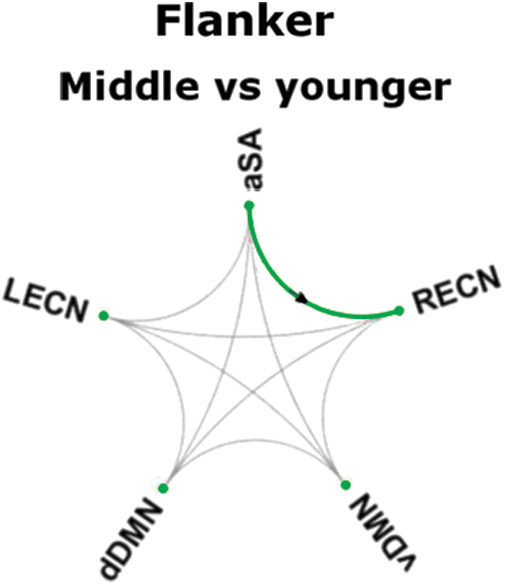
Age group differences in effective connectivity. Arrow indicates greater influence in the direction of the arrow in the older group compared to younger group; blank indicates no significant difference. All results reported at p < 0.05 FDR.
Discussion
The objective of this study was to systematically assess intra- and internetwork connectivity in task and resting-state fMRI data. ICA was applied to analyze a large adult life span data set, which resulted in robust networks for the aSA, LECN, RECN, dDMN, and vDMN for both tasks and resting-state for younger, middle, and older adults with which to test for age-related differences in intra- and internetwork connectivity. The first aim, to investigate age-related differences in intranetwork connectivity, revealed predominantly decreases in intranetwork connectivity with increasing age for all the networks in both resting-state and task, as with previous studies (Allen et al., 2011; Betzel et al., 2014; Cao et al., 2014; Chan et al., 2014; Chou et al., 2013; Ferreira and Busatto, 2013; Onoda et al., 2012). Notably, there were more significant results across tasks and resting-state in the regression analyses compared to the between-group analyses. Qualitatively, the DMN appeared to show the most robust decrease in intranetwork connectivity regardless of the condition, whereas the decreases in intra-ECN connectivity were more robust during both tasks compared to resting-state.
The second aim was to investigate age-related changes in internetwork connectivity between the salience network and the DMN and ECNs. First, the internetwork connectivity analyses revealed that these networks were strongly intercorrelated in both task and resting-state, as with previous studies (Doll et al., 2013; Sridharan et al., 2008). However, others have reported an anticorrelation between the DMN and task networks (Uddin et al., 2009), which was not replicated in this data set, and is discussed later. With respect to age-related differences, increasing age was generally associated with decreased connectivity between the two DMNs but greater connectivity between the aSA network and the ECNs and DMN. As with the intranetwork connectivity findings, more age-related differences were significant in the task data than in the resting-state data, and the linear analysis yielded more significant differences than the group analysis. However, there were many significant differences in internetwork connectivity between younger and middle adults and was only one significant difference between middle and older adults in the flanker task. Thus, for the flanker task, it may be that the linear effect is due to changes earlier on in the adult life span, although this is also the only group pairing with a nonsignificant difference in accuracy, which may impact on the results.
The third aim was to investigate age-related differences in effective connectivity between the salience network, DMN, and ECNs. First, in contrast to the findings of Sridharan and colleagues (2008), where the salience network influenced the DMN and ECNs, we found the salience network to be consistently influenced by the DMN and ECN components during both tasks in all age groups. The resting-state analysis yielded similar results, but as with the intra- and internetwork analyses, there were fewer significant findings. Nevertheless, there were very few significant age-related differences in effective connectivity between the networks; no differences in effective connectivity were observed in the SAT or resting-state conditions. However, middle adults showed an increased influence from the aSA to the RECN in comparison to younger adults. The within-group contrasts indicate a directive influence from the RECN to the aSA across all age groups, and as stated before, there was a significant linear increase in connectivity between these two networks with age (but no difference between middle and older adults in the group analyses). This suggests that while the aSA still exerts a directive influence on the RECN in older adults, the influence is not as strong compared to middle adults, despite greater connectivity. This may relate to the level of cognitive demand or cognitive processes involved in the flanker task compared to resting-state and the working memory task as discussed below.
There were some discrepancies between the group results in this study and previous studies; first, no anticorrelations between the DMNs and ECNs or aSA network were apparent, and second, the aSA network was influenced by other networks rather than the hypothesized influential role. In the first discrepancy, not all studies have shown the anticorrelations (Doll et al., 2013) such that it is feasible that some data sets will show positive correlations between networks. For the second discrepancy, those studies that have investigated the influential role of the salience network often separate the right insula from the ACC, and the right insula dominates the influential role (Chiong et al., 2013; Sridharan et al., 2008). Thus, it is possible that by combining many regions of the salience network in this study, the influential role of the insula within the salience network has been masked.
Despite the differences between these results and past studies, the age-related findings are in keeping with the general trend for decreases in intranetwork connectivity and increases in internetwork connectivity with increasing age. In addition, there were some notable qualitative differences between the results in the two tasks and resting-state. When comparing age-related differences in intranetwork connectivity between the two tasks and resting-state data, qualitatively the differences are less pronounced in resting-state compared to task data, especially in the ECNs—a similar pattern emerged in the internetwork connectivity analyses. This may be due to the effects of task demands resulting in stronger intranetwork connectivity in some task-relevant networks (Arbabshirani et al., 2013).
The above findings may be compared to those of Geerligs and colleagues (2014) that showed age-related differences in internetwork connectivity were moderated by task demand as internetwork connectivity increased in older adults during more demanding tasks but not in younger adults. Furthermore, the only significant age-related differences in effective connectivity were in the flanker task. This is unlikely to be due to differences in accuracy as the older adults showed significantly lower accuracy than the middle adults in both tasks, so the most likely explanations for this are either age-related differences in connectivity between the salience network and other networks are more pronounced in the flanker task because the processing demands of the flanker task are key to the salience network (Nee et al., 2007) or age-related differences in effective connectivity are more pronounced in event-related design tasks. Nonetheless, these results indicate that age-related differences in connectivity vary depending on the type of cognitive demand. Moreover, these results show the role of the salience network changes over the life span. Given the influential role of the salience network over the DMN and ECN, this may have implications for task performance.
Limitations
This study has provided a comprehensive assessment of age-related changes in connectivity, but there are some limitations based on compromises made to accommodate the full set of analyses. First, age groups were decided upon to enhance comparison with past aging studies (Evers et al., 2012; Westlye et al., 2011) and to provide equal age bands, but there could be a critical age for a change in connectivity that is not detected due to the choice of age group threshold. Second, the data set is large for such a comprehensive task battery, but it is cross sectional; thus, the findings are likely to be confounded by cohort effects. Third, the number of runs between age groups and tasks varies, which may have power implications for the statistical tests, but there were similar number of total volumes across all the tasks and only slightly fewer participants in the older adult sample compared to younger and middle adults. Fourth, this study is showing normative differences and does not account for differences in cognitive performance for the tasks; thus, the results are more likely to be comparable to previous normative resting-state studies.
This study did not adjust for age-related structural or hemodynamic differences. However, those that have adjusted for gray matter differences when assessing functional connectivity found little evidence to suggest that gray matter volume affected functional connectivity differences (Steffener et al., 2012). While results from a modeling study suggest that Granger causality susceptibility to hemodynamic variation may be minimal (Schippers et al., 2011), others have contested this conclusion (Smith et al., 2012). Thus, some of the Granger causality findings may be affected by well-founded age-related differences in hemodynamic function (Gauthier et al., 2013). Nonetheless, Granger causality analysis was considered the most appropriate analysis for this study given this is one of the first studies investigating age differences in effective connectivity between these networks and no previous models have been proposed (Friston, 2011). However, this study should contribute to the development of evidence-based models, which could be tested using dynamic causality modeling in future studies (Friston et al., 2011, 2014; Razi et al., 2015).
Finally, past studies in this area have used a number of different analysis approaches—ICA was chosen here as it has been shown to have greater sensitivity to aging (Koch et al., 2010). Further analyses were restricted to five complete networks to focus on the aim of investigating dynamics in the role of the salience network change over age and to restrict the number of tests. This was thought to be the simplest way to test for changes in the salience network over the life span for which the data were suited to address. However, even restricting the analyses to five networks involves many tests given the comprehensive analysis and no statistical adjustment has been made given the tests are interrelated.
Conclusions
In summary, we have shown (1) consistent age-related decrease in intranetwork connectivity in five key networks, and this decrease appears to occur gradually across age group; (2) age-related decreases in internetwork connectivity in rest and tasks; and (3) age-related changes in effective connectivity from the salience network in an inhibition task. These results may indicate that while resting-state data are useful in researching age-related changes in connectivity, task-related data can be more sensitive to intranetwork connectivity for task-related networks and effective connectivity and thus may provide additional information when possible. In addition, the role of the salience network changes over the life span, which may have implications for task performance. Given the association that connectivity has with task performance (Damoiseaux et al., 2008; Stevens et al., 2012) and age-related dementias (Zhou et al., 2010), these findings may have implications for the early detection of pathophysiology.
Footnotes
Acknowledgments
The authors would like to thank Oei Chie Ming (Adam) for the initial conceptualization and development of the SAT. This study was made possible thanks to the following funding: Singapore Ministry of Education AcRF Tier 1 grant (RG41/08), Singapore Ministry of Education Academic Research Fund Tier 2 (MOE2012-T2-2-130), the Young Investigator Award at the National University of Singapore (NUSYIA FY10 P07), and the Singapore Ministry of Health's National Medical Research Council (NMRC; NMRC/CBRG/0039/2013). J.A. was funded by the NTU Humanities and Social Sciences postdoctoral fellowship.
Author Disclosure Statement
No competing financial interests exist.
References
Supplementary Material
Please find the following supplemental material available below.
For Open Access articles published under a Creative Commons License, all supplemental material carries the same license as the article it is associated with.
For non-Open Access articles published, all supplemental material carries a non-exclusive license, and permission requests for re-use of supplemental material or any part of supplemental material shall be sent directly to the copyright owner as specified in the copyright notice associated with the article.
