




Abstract
Antibiotic resistance poses serious challenges to health and national security, and policy changes will be required to mitigate the consequences of antibiotic resistance. Resistance can arise in disease-causing bacteria naturally, or it can be deliberately introduced to a biological weapon. In either case, life-saving drugs are rendered ineffective. Resistant bacterial infections are difficult to treat, and there are few new antibiotics in the drug development pipeline. This article describes how antibiotic resistance affects health and national security, how bacteria become antibiotic resistant, and what should be done now so antibiotics will be available to save lives in the future.
Antibiotic Resistance: A Problem for Health and National Security
Many common disease-causing bacteria have become antibiotic resistant, so antibiotics have little or no effect. Patients may take the drugs, but the bacteria continue to divide and proliferate, with life-threatening consequences. For example, in 1999, fatalities in New York City were found to be 2.5 times higher for methicillin-resistant Staphylococcus aureus (MRSA) than for regular (methicillin susceptible) Staphylococcus aureus. 1 Even when patients survive the infections, there are increased costs because of the expensive treatments and longer hospital stays that are required. 2
Few New Antibiotics in the Pipeline
A clear medical need for more treatment options has not, unfortunately, spurred the development of new antibiotics. The profit margin for antibiotics can be 10 times less than for drugs to treat chronic diseases: antibiotics are typically taken for a week or 2, but treatments for chronic diseases may be taken every day for the rest of a person's life.3,4 Antibiotics are near the cutoff for what pharmaceutical companies calculate to be the minimum profit of a drug, which is used to determine whether or not to develop a product. 5 The problem of antibiotic resistance makes that slim profit margin even more uncertain. The process of developing an antibiotic and getting FDA approval costs approximately $500 to $800 million; few pharmaceutical companies would invest those millions on drugs that can quickly become useless. 6
As a result, fewer antibiotics are being developed than ever before. Between 1940 and 1970, 10 classes of antibiotics were identified. A “class” of antibiotics is defined by how it works or the type of bacteria it kills. In the years that followed and up until the late 1990s, only derivatives of those 10 classes were developed, and no new classes were identified. 7 Between 1998 and 2004, only 2 antibiotics with a novel mechanism were approved by the FDA. 8 Many large pharmaceutical companies have left the business of making antibiotics altogether. As recently as 2004, only 1.6% of drugs in development at the 15 largest pharmaceutical companies in the world were antibiotics, and none of them were new classes of antibiotics. 5
How Bacteria Become Resistant to Antibiotics
Antibiotics generally work in 2 ways. Some antibiotics prevent bacteria from reproducing and growing—these are called bacteriostatic. This interruption in bacterial growth gives a person's immune system time to target and fight the bacteria, without being overwhelmed. 9 Other types of antibiotics kill bacteria directly by interrupting a function that is critical to their survival. Regardless of how they work, some antibiotics are effective against only certain types of bacteria, while others target a wide range; these are said to be “broad spectrum” antibiotics.
Resistance to Antibiotics Occurs through Several Pathways
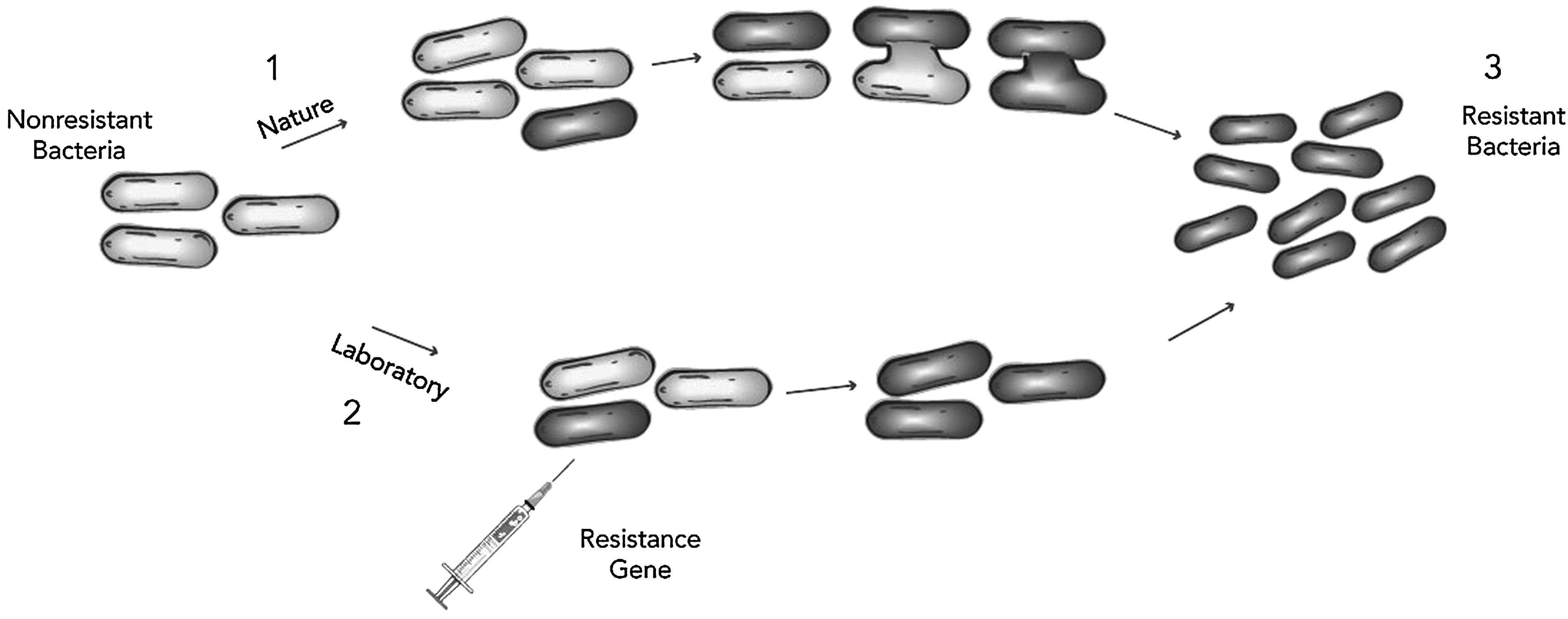
Gene Transfer
Selective Pressure
Bacteria in the environment and in humans exist in large numbers—sometimes up to millions of individual cells of a particular species—with each cell being slightly different. If bacteria are exposed to an antibiotic, most will die. However, some bacteria may survive, particularly if the antibiotic is present in a small amount or if it is removed before it can kill all of the bacteria. 10 When the bacteria are not overwhelmed with the drug, they will survive and are more likely to have genes that confer resistance. As these bacteria grow and proliferate, they transmit resistance to their progeny (see Figure 2).
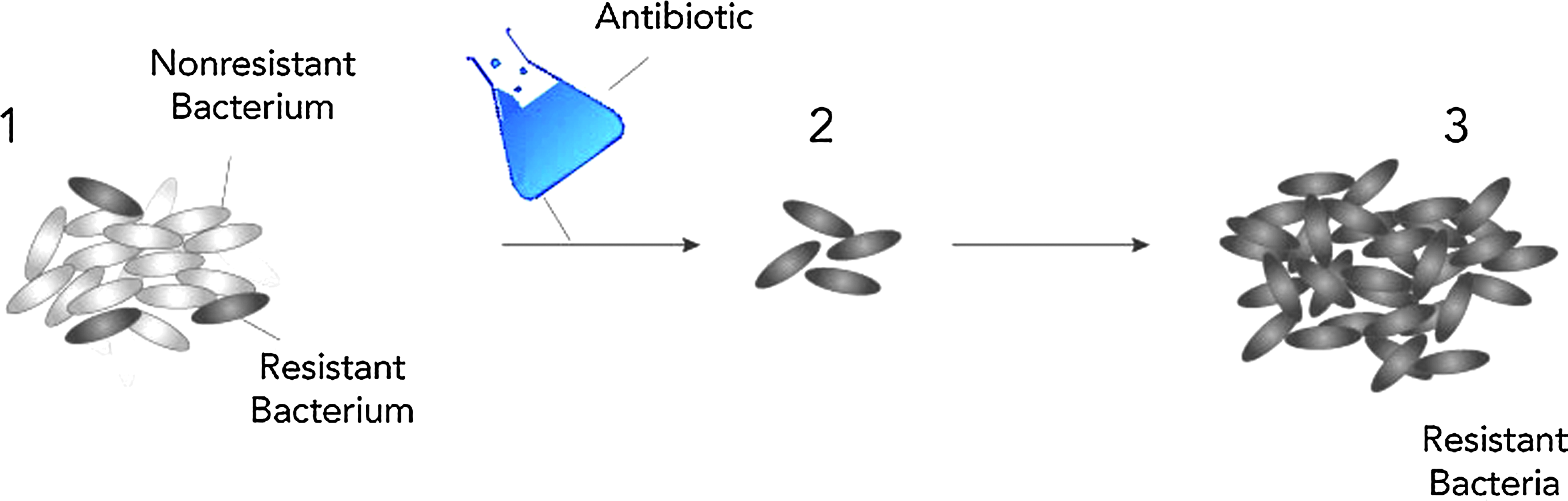
Selective Pressure. Color images available online at www.liebertonline.com/bsp.
Antibiotic Resistance and Biological Weapons
If antibiotics were not available, a biological attack with a disease-causing bacterium would be much more lethal. Following a biological attack, antibiotics are currently the only line of defense against the bacteria that cause anthrax, plague, or tularemia. If antibiotic-resistant bacteria are used as a weapon, however, it would be the same as having no antibiotics at all, and it would not be possible to develop and use a new antibiotic in response to an emergency.
Following the 2001 anthrax attacks, 32,000 people began antibiotic treatment as cases of anthrax infection were identified. A study of the medical response to these attacks concluded that immediate use of antibiotics was effective in preventing disease. 11 The Department of Homeland Security's National Planning Scenario for anthrax calls for communities to plan for 300,000 people to be exposed in an aerosolized anthrax attack in a city the size of Washington, DC. According to that scenario, approximately 13,000 people would develop inhalational anthrax and would need hospitalization, but all exposed would require antibiotics.
There are 3 antibiotics that are approved by the Food and Drug Administration (FDA) for treatment of anthrax infection. Two commonly used antibiotics, ciprofloxacin and doxycycline, are part of the federal plans for response to a bioterrorist attack using anthrax. Millions of doses are part of the Strategic National Stockpile (SNS) to be distributed to the exposed population. 12 Penicillin is the only other FDA-approved antibiotic for treatment of anthrax infection. 13 Antibiotics in the tetracycline or fluoroquinolone classes, as well as linezolid or macrolides, might be effective in the treatment of anthrax infection, but they are not approved by the FDA for this indication.13,14 Without antibiotics to distribute from the SNS, far more people with anthrax infection would require hospitalization, and far fewer could be saved. There is concern and awareness both within and outside of government about resistant bacteria being used as biological weapons, but there are few options for responding to such an attack.
Antibiotic resistance in anthrax bacteria has been demonstrated in the laboratory, and some strains of plague and anthrax have been shown to be naturally resistant.15-18 Even in legitimate research, scientists commonly use antibiotic resistance as a scientific tool, though they rarely use the same antibiotics that are used for humans. Furthermore, the technologies to create antibiotic resistance in bacteria, including anthrax bacteria, are well known all over the world. Soviet scientists developed antibiotic-resistant biological weapons between 1972 and 1992. 19
Antibiotics in Clinical Medicine: Antibiotic Resistance Is Inevitable
Antibiotics have revolutionized clinical medicine and have saved countless lives. However, even when used properly, the consumption of antibiotics leads to resistant bacteria. 6 While this process can be slowed, it cannot be not prevented.
Improper Use Hastens Resistance
Physicians prescribe a specific dose and duration of antibiotic treatment to completely eliminate a bacterial infection. While resistant infections can develop regardless of the dose, they are more likely to develop when bacteria are exposed to low doses—which often occurs when patients do not take the full amount prescribed, or if they do not take the antibiotics as prescribed.10,20,21
Unnecessary Prescriptions Hasten Resistance
Antibiotics are often improperly prescribed. It has been estimated that more than half of every 100 million prescriptions for antibiotics to treat respiratory infections may be unnecessary. 22 Antibiotics do not work against viruses, but the symptoms of viral infections may be similar to bacterial infections. While mistaken antibiotic use may be unavoidable, it nonetheless increases the numbers of people taking antibiotics, leading to more opportunities for resistant bacteria to develop. Additionally, the improper disposal of leftover or expired antibiotics in the toilet or sink leads to increased levels of antibiotics in the environment, contributing to the development of resistant bacteria.
Agricultural Use of Antibiotics: Not Harmless to People
In the U.S., most antibiotics—approximately 70%—are used for poultry and livestock. 23 Generally, they are not administered to fight infections but to prevent disease and to produce larger, healthier animals for meat production while using as little feed and time as possible. In the animal, antibiotics that are applied at a low but constant dose apply pressure, which has been shown to select for bacterial resistance.24,25 These resistant organisms in the animal can be deposited into the environment through animal waste. Humans have acquired resistant infections directly from meat contaminated by antibiotic-resistant bacteria, which may be partially caused by the inevitable contact of meat and animal waste products.26-28
In addition to the resistant bacteria, some level of chemically active antibiotics also remains in the animal as it is processed into food. 28 Furthermore, massive amounts of antibiotics, between 25% and 75%, pass unaltered through the animals and end up in groundwater and plants grown on manure-fertilized fields. 29 The presence of these drugs at low levels in the environment creates additional pressure to select for resistant bacteria. 24
Using Different Antibiotics for Agriculture Still Affects Humans
A standard precaution to prevent antibiotic resistance crossover is to use different antibiotics in agriculture than are used to treat people. However, bacteria often develop resistance to entire classes of antibiotics, including those used for people. Almost all of the drugs used for nontherapeutic purposes in agriculture are in a class of antibiotics used in clinical medicine.28,30 Therefore, agricultural use of antibiotics still has an impact on human health even if the antibiotic itself is not specifically prescribed for humans.
Reducing Use Has a Positive Effect
Reducing the use of antibiotics in agriculture appears to slow the development of resistance. In 1998, the European Union (EU) banned agricultural use of antibiotics deemed valuable for human health, and in 2006, the EU banned the use of all antibiotics in livestock for growth promotion. The U.S. banned the use of 1 type of antibiotic, fluoroquinolones, in poultry in 2005. 31 Initial studies indicate that there is a significant reduction in resistance among bacteria treated by the banned antibiotics.6,32 A study of Campylobacter, a leading cause of foodborne illness in the U.S., found that Australia's agricultural ban on fluoroquinolones led to lower prevalence of resistant bacteria compared with other countries that do not have a ban. 32
Political Action on Resistance
A bill (H.R. 1549) introduced in the 111th Congress by Representative Louise Slaughter aims to “preserve the effectiveness of medically important antibiotics used in the treatment of human and animal diseases by reviewing the safety of certain antibiotics for nontherapeutic purposes in food-producing animals.” 33 This bill, titled the Preservation of Antibiotics for Medical Treatment Act of 2009, was also introduced in the Senate (S. 619). This legislation could be an important first step in preserving the remaining useful antibiotics.
Following a July 13, 2009, hearing in the U.S. House of Representatives Committee on Rules on H.R. 1549, Representative Slaughter wrote a letter to the U.S. Government Accountability Office (GAO) requesting a review of federal efforts to track and monitor antibiotic resistance and calling for an assessment of progress to mitigate the human health impact of antibiotic resistance. 34 On October 7, Representative Slaughter addressed the House of Representatives to urge support of this legislation, and on October 8, she wrote a letter to the President encouraging him to support the ban on nontherapeutic antibiotics in livestock production.35,36
Dr. Joshua Sharfstein, Principal Deputy Commissioner of Food and Drugs at the FDA, supported the elimination of nontherapeutic use of antibiotics in agriculture in his testimony before the House Committee on Rules. He also indicated that the U.S. Interagency Task Force on Antimicrobial Resistance would be releasing a revised Public Health Action Plan to Combat Antimicrobial Resistance in late 2009. This revised Action Plan will replace a 2001 Action Plan, which established 4 areas of focus for combating antimicrobial resistance: surveillance, prevention and control, research, and product development. Federal partners in this plan include the FDA, the Centers for Disease Control and Prevention (CDC), the National Institutes of Health (NIH), the Agency for Health Research and Quality (AHRQ), the Centers for Medicare and Medicaid Services (CMS), the Health Resources and Services Agency (HRSA), the U.S. Department of Agriculture (USDA), the Department of Defense (DoD), the Department of Veterans Affairs (VA), the Environmental Protection Agency (EPA), and the U.S. Agency for International Development (USAID). 37
Conclusion: More Antibiotics Need to Be Developed
Unfortunately, although reducing the use of antibiotics can delay resistance, it cannot prevent it. Once resistance has taken hold, stopping the use of an antibiotic does not necessarily cause the bacteria to revert to a treatable form. 27 Stopping the use of antibiotics is also difficult in practice: while many bacterial infections may resolve themselves without treatment, it is unlikely that physicians will not prescribe them if they think it would cure their patients. 6
This makes the development of new antibiotics critical to being able to continue to fight infections. 6 The long-term strategy should be to develop new classes of antibiotics that are effective against a wide range of bacteria—so-called broad spectrum antibiotics—as well as antibiotics that are less susceptible to resistance. As part of this effort, it will be important to learn more about how antibiotic resistance develops. Studies have shown that bacteria develop resistance to some drugs faster than others. 10 Understanding why this occurs may lead to the development of new antibiotics that are less prone to resistance.
Footnotes
Acknowledgments
The authors thank Richard Messick and Davia Lilly for producing the figures and Molly D'Esopo, Brad Smith, and Nidhi Bouri for their review of this article.