




Abstract
Native air sampling (NAS) is distinguished from dedicated air sampling (DAS) devices (eg, BioWatch) that are deployed to detect aerosol disseminations of biological threat agents. NAS uses filter samples from heating, ventilation, and air conditioning (HVAC) systems in commercial properties for environmental sampling after DAS detection of biological threat agent incidents. It represents an untapped, scientifically sound, efficient, widely distributed, and comparably inexpensive resource for postevent environmental sampling. Calculations predict that postevent NAS would be more efficient than environmental surface sampling by orders of magnitude. HVAC filter samples could be collected from pre-identified surrounding NAS facilities to corroborate the DAS alarm and delineate the path taken by the bioaerosol plume. The New York City (NYC) Native Air Sampling Pilot Project explored whether native air sampling would be acceptable to private sector stakeholders and could be implemented successfully in NYC. Building trade associations facilitated outreach to and discussions with property owners and managers, who expedited contact with building managers of candidate NAS properties that they managed or owned. Nominal NAS building requirements were determined; procedures to identify and evaluate candidate NAS facilities were developed; data collection tools and other resources were designed and used to expedite candidate NAS building selection and evaluation in Manhattan; and exemplar environmental sampling playbooks for emergency responders were completed. In this sample, modern buildings with single or few corporate tenants were the best NAS candidate facilities. The Pilot Project successfully demonstrated that in one urban setting a native air sampling strategy could be implemented with effective public-private collaboration.
Native air sampling can use the HVAC systems in commercial properties to confirm the findings of systems such as BioWatch in the event of a release of a biological threat agent. This pilot project explored whether native air sampling would be acceptable to building owners and whether it could be implemented successfully in NYC.
To respond effectively during emergencies, government leaders and the lay public must be informed by increasingly accurate situation assessments. If BioWatch's polymerase chain reaction (PCR)–based laboratory tests identified DNA sequences from a biological threat agent from the air sampler's dry filter, a number of basic questions could be anticipated from people inside and outside government: Had a biological threat agent been disseminated effectively and with potential to cause human disease? If so, who was at risk from inhalational exposure to the agent? For public health interventions to be directed most effectively and to convince people outside government that their immediate uncertainties were being addressed, credible answers to those questions—with iterative risk estimates—would be needed in hours, if possible, not days or weeks.
BioWatch end-users—local and state government agencies—engaged with federal partners to address these and other key questions. They designed operational responses to a BioWatch signal (now referred to as a BioWatch Actionable Result, or BAR) that could begin to characterize the incident and distinguish potentially at-risk populations and latent environmental hazards. Federal BioWatch guidance documents outlined how environmental surface sampling with wipes, swabs, and high-efficiency particulate air (HEPA) vacuums could be used to assess biological threat agent hazards and their risks to the public following BARs.2,3 These recommendations drew largely from the knowledge gained during the assessment and mitigation of indoor environmental hazards from the anthrax attacks in fall 2001.4–7
Could these environmental sampling strategies and methods answer the immediate questions that could be anticipated after a BAR? The U.S. Government Accountability Office found that the indoor 2001 anthrax investigations relied on unvalidated sample collection and laboratory analytic methods. 8 To what extent could similar methods be used reliably outdoors, where complex environmental matrices, weather conditions, and ultraviolet radiation may affect the quality of the samples collected, the results, and their interpretation?
False-negative test results from outdoor sampling—that is, the failure to detect a deposited biological threat agent on an environmental surface—could occur if any of the following conditions were met, regardless of PCR assay sensitivity, and even when assuming conservatively that collection and extraction efficiencies for indoor and outdoor environmental sampling methods were similar:
• The concentration of deposited biological threat agent was insufficient to be detected due to the product of the efficiencies of the sampling methods and test procedures; • Weather conditions (eg, wind and/or rain) occurred after the biological threat agent had been deposited, leading to dispersal, washout, or degradation of the agent or to decreased sampling recovery efficiencies; • Nonuniform bioaerosol flow and deposition occurred in the area where environmental surface samples were collected; or • An environmental contaminant interfered with the PCR testing.
Any of these circumstances, and others, could lead to negative post-BAR environmental sampling test results and the potential for erroneous underestimates of biological hazards and their risks, even in settings where thousands of people had inhaled sufficient biological threat agent aerosol to cause infection. 9
If a BAR were declared, enormous resources would be directed to answer the aforementioned questions. However, local and state laboratory testing capacities would be limited; dozens, not hundreds, of samples could be analyzed in the immediate aftermath of a BAR. It will be crucial for responsible authorities to prioritize the collection of environmental samples using methods most likely to yield positive results if a biological threat agent dissemination truly occurred.
The filters used in commercial property HVAC systems offer an alternative, scientifically sound, widely distributed, and comparably inexpensive source of environmental samples for these analyses. Air filters in HVAC systems are primarily used to trap particulate matter, including dust, natural organic debris, and allergens (eg, pollens, mold spores, bacteria, etc) entering the air supply of modern buildings. Filtration of fresh air entering the HVAC system maintains cleanliness of the circulation system and enhances the quality of interior air; filtration of recirculated air also contributes to indoor air quality.
If particles from a disseminated biological threat agent aerosol plume were mixed with the air drawn into a building's HVAC system, a significant fraction could be retained on HVAC filters, which could yield reliable corroborative environmental samples. Assuming a sufficient density of buildings with modern HVAC systems, this low-cost network of preexisting, high-volume air samplers could be used to meet emergency response environmental characterization needs. HVAC filter air sampling compares favorably with other bioaerosol volumetric sampling methods:
• Adult human breathing: roughly 10 liters per min (Lpm); • Air sample–based biodetection: approximately 100-200 Lpm; and • HVAC units operating at 500 feet per minute (fpm), or roughly 14,200 Lpm of air per square foot of filter area.
Experiments in an HVAC test facility demonstrated that a B. anthracis surrogate could be released as an aerosolized spore preparation in a test duct, eluted from HVAC filter cutouts, inoculated onto agar plates, and successfully enumerated. 10 There also is evidence that HVAC systems yielded viable anthrax isolates or DNA during the 2001 Hart Senate Office Building investigation.11,12
The New York City Native Air Sampling Pilot Project (or “Pilot Project”) was conducted in 2006-07 to determine if native air sampling would be acceptable to private sector stakeholders in New York City and whether it could be implemented successfully in their buildings. Toward this end, operational strategies and initial planning templates were developed that could be used to evaluate prospective native air sampling sites and HVAC systems. 13
Theoretical Considerations and Rationale
Mathematical calculations can be used to predict whether HVAC system air filters would be more likely than nonporous environmental surface wipes to yield positive laboratory results following a biological threat agent dissemination, assuming that the HVAC system air intakes and surface locations were exposed to the same uniformly concentrated bioaerosol. The integral mass concentration, IC, of particles passing over a given location in the aerosol can be defined as:
The integral refers to the duration of time that the aerosol was present at the location. IC is expressed as units of mass-time per volume, C(t) is the mass concentration of particles (expressed as mass per volume) as a function of time, and t is time.
The mass of material, mS, deposited on a surface per unit area is then given as:
where vd is the particle deposition velocity onto the surface (assumed to be uniform for the particles of interest) and is expressed as units of length per time, and mS as units of mass per area.
The mass of material, mF, deposited onto an HVAC filter per unit area exposed to the same aerosol is:
where ηF is the filtration efficiency for the airborne particulate matter (assumed to be uniform for the particles of interest), and va is the flow velocity of air through the filter, expressed as units of length per time (also assumed to be uniform), and mF has units of mass per area.
To understand how the mass of material collected on an HVAC filter compares with that collected on a surface exposed to the same aerosol, it is useful to calculate the ratio of material deposited in these two cases:
A primary advantage of the native air sampling approach is that HVAC air flow velocities are typically several orders of magnitude greater than passive surface deposition velocities, resulting in significantly more material being deposited per unit area onto an HVAC filter than onto surfaces exposed to the same aerosol. For example, if vd=0.03 cm/sec (ie, typical deposition velocity for 3 μm particles),
14
va=200 cm/sec (equivalent to 400 fpm, which is at the low end of typical HVAC flow speeds), and ηF=25%, the ratio of material deposited per unit area of the HVAC filter to that deposited per unit surface area is:
That is, for this example, one would expect approximately 2,000 times as much material to be deposited per cm2 of HVAC filter area as would be deposited per cm2 of a typical surface exposed to the same aerosol. If HVAC air flow speed or filtration efficiency were increased, the relative deposition of particles on the HVAC filter compared with the passive surface deposition would become even more pronounced.
Native Air Sampling Pilot Project
Background
Native air sampling is distinguished from dedicated air sampling (DAS) devices that are deployed, operated, and maintained by government or the private sector. 15 DAS devices are configured to actively sample at predetermined intervals and to detect evidence of a biological threat agent release (eg, BioWatch). They are currently limited by technical feasibility and costs. Native air sampling, in contrast, relies on preexisting air sampling capacity in modern building HVAC systems to corroborate a DAS signal(s). Used thoughtfully, it could facilitate more efficient and effective post-BAR environmental sampling, which could lead to more rapid and reliable biological hazard assessments (ie, incident characterization) and situational awareness.
Native air sampling resources are largely owned, maintained, and operated daily by the private sector for the safety and comfort of their buildings' occupants, and they would be accessed only when government suspected that a biological threat agent release had occurred in the area (eg, following a BAR). It was not known to what extent building managers and property owners would support and collaborate with a native air sampling initiative.
Methods
Local Assessment of Candidate NAS Buildings
A reference facility in Manhattan (Building A) was selected as the hypothetical location for placement of a BioWatch DAS unit for routine monitoring and detection of a suspected biological threat agent release. Two rings of potential NAS properties associated with Building A were delineated on city building maps: (1) an inner ring of immediately adjacent buildings that could provide HVAC filter samples to corroborate a BAR in Building A, and (2) an outer ring approximately ½ km (500 meters) radial distance from Building A. NAS data collected from outer ring buildings could be used to refine estimates of the dispersion path taken by the bioaerosol plume causing the BAR (Figure 1).
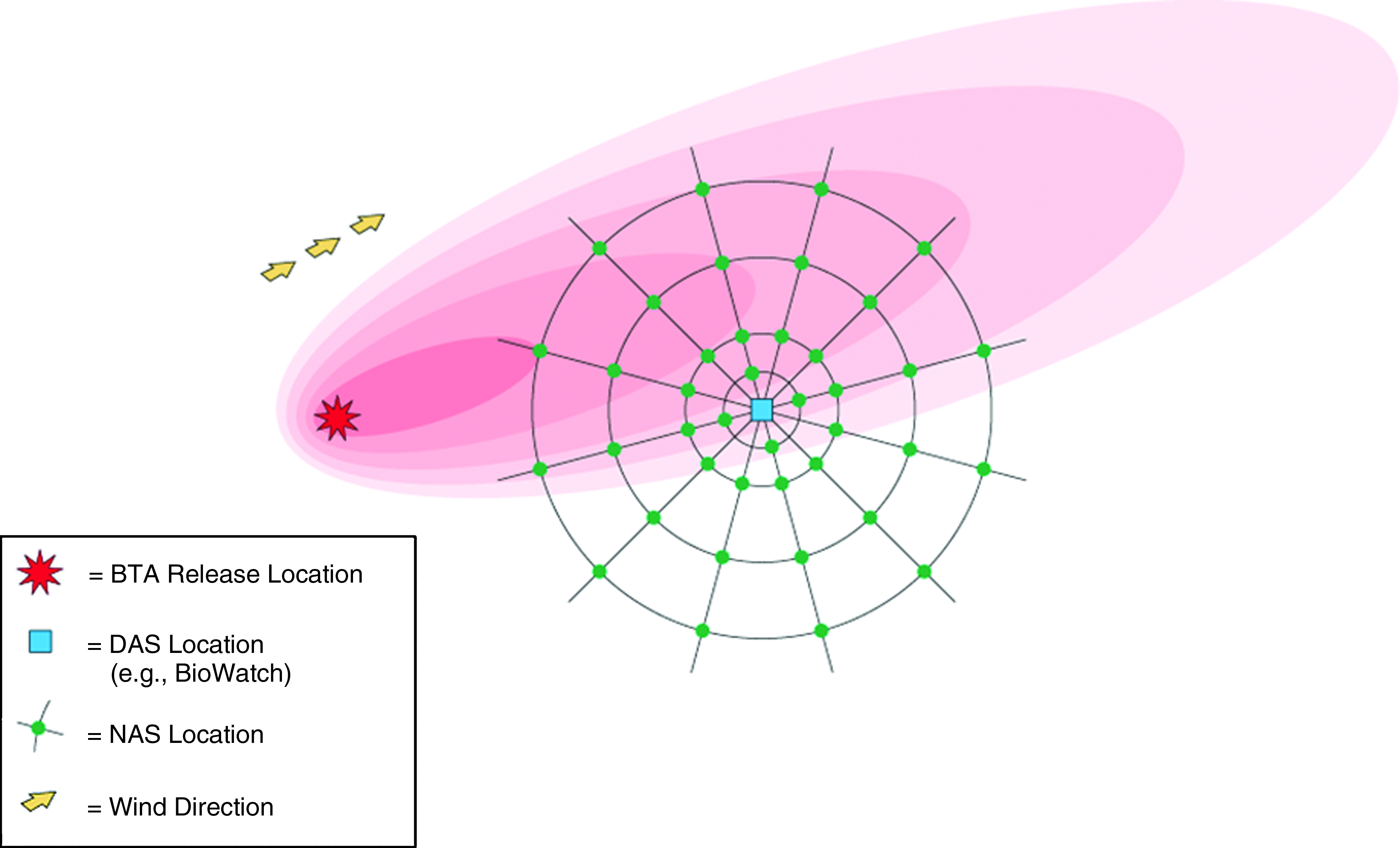
Radial ray sampling around a BioWatch sampler (blue square) following a BioWatch Actionable Result (BAR). 14 Color images available online at www.liebertonline.com/bsp
Project team members visually assessed all properties in both rings during a ground survey that was conducted on foot. Buildings with window-mounted air conditioning units or with air intakes more than 200 feet above street level were considered unsuitable for NAS. The intent of the latter requirement was to increase the likelihood that NAS filters would sample biological threat agent from nearby ground-level releases.
Private Sector Engagement and Participation
Key building management and property owner associations were contacted by project team members representing NYC government agencies, including law enforcement and emergency management. The owner and management associations facilitated multiple discussions between project team members and industry representatives to review the importance and objectives of the Pilot Project and whether they would consider taking part in it. Interested industry representatives discussed with the project team a list of candidate NAS properties identified during the ground survey. After approving their corporation's participation in the Pilot Program, they expedited contact with building managers of candidate NAS properties that they managed or owned.
Project team members reviewed Pilot Project rationale, objectives, and needs with the building managers, and NAS building surveys were scheduled. Prior to the survey, a letter was sent to each building manager outlining the information and documents needed by the evaluation team and the anticipated survey procedure (Figure 2).
Information Requested from Facility Managers Prior to NAS Building Survey
Candidate NAS Building Surveys
The survey team first reviewed the Pilot Project objectives with the facility's chief and/or assistant engineer and the building or property manager. Preferred characteristics for an NAS building air handling system were discussed (Figure 3). Facility-specific technical information was reviewed, including the configuration of the major air handling systems, HVAC filters used, HVAC operational schedules and air handling units that ran 24/7/365, operational procedures (eg, frequency of filter changes), and location of fresh air intakes. Maps and drawings of the HVAC system were reviewed as needed. The survey team and building personnel then selected for further physical inspection and technical evaluation those air handling units with desired NAS attributes.
Nominal Characteristics of Air Handling Units in NAS Facility (interim list; qualitative ranking not used to order list)
The inspection process involved direct examination of the fresh air intake locations, filters, and configuration of the selected units. Measurements of nominal airflow were taken with a handheld anemometer (Extech Mini Thermo-Anemometer, Model 45158). The route to each survey equipment room and physical access to the filter banks were evaluated for potential impediments to NYC emergency responders who would retrieve filter samples. Digital photographs were taken to document routes. Data were collected and incorporated into a final building survey report (Figure 4).
Template for NAS Building Survey Report
Sample NAS Filter Retrieval Playbooks
Sample playbooks for emergency responders were constructed for a subset of properties that were considered viable NAS facilities. The playbooks included data collected during the evaluation surveys that would be required by emergency responders to carry out environmental sampling operations.
Results
Local Assessment of Candidate NAS Buildings
Of the 27 potential inner-ring properties identified from city maps, 6 candidate NAS locations were selected for further evaluation. City maps yielded dozens of potential outer-ring NAS locations. Along one route that contained a high percentage of modern commercial structures, virtually all locations appeared to be NAS candidates. In contrast, in another area where residential structures predominated, few suitable buildings were found. Eighteen prospective outer-ring NAS facilities were selected. The ground surveys for potential inner- and outer-ring facilities took 1 and approximately 2½ hours, respectively.
Private Sector Engagement and Participation
The building management and property owner associations responded positively to NYC's outreach and request for engagement on the NAS project. They hosted multiple meetings during which project team members articulated the rationale, purpose, and importance of the Pilot Project, and they facilitated ongoing contact with interested parties. Of note, a number of corporate representatives explained that they were responsible for multiple properties throughout NYC, and they offered to contact the building managers if any additional surveys were needed.
The meetings also identified key private sector requirements if an NAS strategy were implemented in NYC. There was concern whether participation might place property owners or managers in legal jeopardy if samples collected from their HVAC filters yielded evidence of potential exposure to biological threat agents within their facilities. Also, building owners and managers wanted assurance that NYC would collect and test samples from their buildings only in emergencies, not routinely, and that normal operations would not be disrupted by their involvement in NAS planning. On multiple occasions, project team members were told that risk managers would likely insist on legal memoranda with NYC that addressed those concerns as a prerequisite for their participation in a formal NAS program.
Candidate NAS Building Surveys
Five inner-ring and 7 outer-ring candidate building surveys were completed. With experience, survey teams were able to complete a building evaluation in approximately 90 to 120 minutes.
Of the 12 buildings evaluated, 8 (67%) were deemed viable NAS locations. However, because of energy conservation and energy cost considerations, only 4 (33%) operated suitable air handling units 24 hours per day (6:00
Of the 8 viable NAS locations, there were single tenants in 2 buildings and multiple tenants in 6 buildings. In this sample, buildings with multiple tenants presented more NAS challenges than those with single tenants: Building managers' access to leased areas of a building was more restricted. If companies installed customized air handling units in the areas they leased, building managers had less control over them.
In most cases, the routine pathways to the air handling units by building operations/maintenance personnel would not hinder emergency response personnel in protective gear. Rarely, ladders were required for access, or entry doors were judged to be too restrictive for retrieval by emergency responders without assistance from building personnel. In these circumstances, alternative air handling units were identified or the building was considered unsuitable for NAS.
Sample NAS Filter Retrieval Playbooks
Three emergency responder playbooks were completed for demonstration purposes. Each consisted of 11 or 12 pages with fewer than 75 words per page in large font text and included contact information, procedures, maps, and photographs (Figure 5).
Template for NAS Retrieval Playbook
Discussion
The Pilot Project successfully demonstrated that in one urban setting a native air sampling strategy could be implemented effectively. Candidate NAS facilities were identified and assessed, and exemplar emergency responder playbooks were completed. The project team also developed data collection tools and other templates that could be used by government planners to facilitate NAS building selection, assessment procedures, and documentation.
Once team members became accustomed to the process, building evaluations were completed within 2 hours. In a larger NAS planning operation using multiple survey teams, data from buildings in large urban sectors could be collected, reviewed, and converted into operational procedures efficiently and expeditiously.
In this small sample, only one-third of surveyed buildings contained suitable air handling units that operated 24 hours per day. Facilities with single tenants presented fewer NAS challenges than those with multiple tenants.
Ideal HVAC system characteristics for NAS facilities have not been determined. Potential standards might include:
• 24/7/365 operation; • properly maintained air handling units that sampled outdoor air from multiple directions and elevations; • minimum mass flow capacity and air flow velocity; • air sampling from key building entrance and exit areas; and • easy accessibility by emergency responders in protective gear (Figure 3).
We found that building managers had less access to work areas and limited control over ventilation decisions and equipment in facilities with multiple tenants. Buildings with single or few corporate tenants might be prioritized for consideration and evaluation.
Most modern office buildings contain large air handlers that operate with air flow velocities between 400 and 550 fpm. At 400-fpm velocity, the approximate volumetric flow rate through a standard 2-foot by 2-foot HVAC filter would be 1,600 cubic feet per minute (cfm), or 45,300 Lpm. For a 2-inch-square filter sample (ie, 4-square-inch), the flow rate would be about 300 Lpm. At 500 fpm, the corresponding volumetric flow would be 2,000 cfm for the HVAC filter (ie, 56,600 Lpm) and 390 Lpm through a 4-square-inch HVAC filter sample. Assuming that standard commercial building HVAC filters were used (filtration efficiency approximately 30% for particles with a mean geometric diameter of 1-5 μm), NAS performance should approximate that of DAS (flow rate: 100-200 Lpm) for a given bioaerosol concentration. We therefore propose a nominal NAS air flow velocity standard of approximately 450 fpm (minimum: 400 fpm). Many modern buildings have HVAC systems with the capacity to efficiently filter particles smaller than 10 μm in diameter. They could be specifically considered as candidate NAS facilities.
To minimize edge effects and other nonuniform air flow issues, we suggest that the smallest acceptable filter bank for large office buildings would contain 6 standard 2-×-2-foot filters. At the minimum recommended flow velocity of 400 fpm through the 6 filters (ie, 24 square feet), approximately 9,600 cfm of air would be sampled. At 450 fpm, this would increase to 12,000 cfm. A nominal ideal air handling unit would contain a bank with 9 2-×-2-foot HVAC filters that would sample 18,000 cfm at 450 fpm. These estimates should be considered provisional first efforts to identify desirable HVAC system attributes needed to support NAS.
Private sector stakeholders were interested in and supportive of the Pilot Project. In some cases, they even offered to arrange building surveys in other properties that they owned or managed. Access to this corporate sector can be expedited by partnering with local building owner and management associations. Participation by law enforcement and emergency management representatives in the initial outreach to these organizations was helpful.
Templates for data collection, survey team reports, and emergency responder playbooks were developed. In an operational system, additional information would need to be included (eg, locations for staging area and decontamination).
Some potential barriers were identified that could challenge local implementation of NAS. In neighborhoods with older buildings and predominantly residential structures, candidate NAS facilities may not be readily available. Property owners and managers also may be reluctant to take part in a formal NAS program unless all risk management concerns were satisfactorily addressed by local authorities.
These Pilot Project findings may not be generalizable to other settings. Only a small number of candidate NAS buildings were evaluated, which may have skewed project team impressions. Manhattan arguably contains a greater proportion of candidate NAS buildings than other urban areas. If an NAS network were implemented on a larger scale, a smaller proportion of private sector partners might collaborate with local authorities. Private sector interest also might wane over time if foreign and domestic threats were no longer perceived to be salient.
Lastly, the project team did not estimate the number of candidate NAS buildings needed to reach a specific NAS facility target in NYC or the cost for carrying out the pre-event assessments, developing playbooks, and training emergency responders and facility personnel. Ongoing maintenance costs (eg, updating contact information and playbooks, training facility and emergency responder personnel, conducting field exercises) also would need to be considered.
Public Health Risk Assessments After a Bioterrorism Event
Incident Characterization: Current Limitations
The moment that an intentional or accidental biological threat agent release is detected, time will work against those responding to the incident. As the hours pass, more would be expected from government, yet less could be done to prevent infections in those already exposed and potentially incubating disease.
If the government is unable to determine the facts on the ground expeditiously and to reliably estimate which neighborhoods face the greatest risks, it will lose the potential strategic gain—in saved lives—offered by early detection. By default, everyone would be considered at equal risk. An overly broad mass prophylaxis campaign might be set into motion when a more focused one—directed at those people who were likely to have inhaled an infectious agent dose—would be the more effective strategy.
BioWatch, a DAS system currently deployed in the U.S. for nonmilitary government use in civilian areas, was meant to enhance the timeliness of postrelease biological threat agent detection. It was expected to lead to enhanced and more effective local and regional responses, functioning as a biological early warning system, and operating much like a fire alarm by giving government sufficient time to support rapid and effective citywide or regional interventions by emergency responders. However, it is questionable whether available tools will be capable of reliably characterizing—let alone within a timeframe relevant to those exposed—the true scale and scope of an incident that could range from insignificance to being potentially catastrophic to public health. A recent congressionally mandated third party evaluation of BioWatch urged the development of new, validated post-BAR incident characterization methods, including low technology approaches. 16 We suggest serious consideration of NAS for this purpose.
The methods recommended in current federal BioWatch guidance documents for post-BAR incident characterization are based on procedures that were developed to characterize indoor surface contamination following biological threat agent releases. They have not been validated for outdoor use and have not evolved substantially since 2004. Furthermore, in the hours immediately following an indoor or outdoor biological threat agent release, public health investigators will be less concerned about surface contamination, which would become more salient during remediation and recovery operations. Rather, their primary objective will be more elusive: estimating the path taken by a disseminated agent in a complex urban setting and the people who were potentially exposed to and inhaled the ambient bioaerosol. Reason dictates that this sampling should rely on methods most likely to detect the DNA from a deposited biological threat agent.
Capacities of outdoor environmental sampling methods to detect the presence of deposited biological threat agent particles could be detrimentally affected by inclement weather, nonuniform dispersion of the bioaerosol, and biological threat agent surface deposition that was below the detection limit of these collection methods or unanticipated interference with PCR by environmental contaminants. Sample quality also would depend on effective training and quality control procedures for these operations. Given these uncertainties, how confident could government be that people had not been exposed to an inhaled bioaerosol if post-BAR environmental samples yielded negative test results?
Federal biodefense planners have long anticipated that a new generation of autonomous biodetectors would revolutionize, if not render obsolete, the manner in which post-BAR environmental sampling and laboratory testing would be conducted for incident characterization. With a network of technologically sophisticated instruments sampling directly from bioaerosols and deployed in a dense urban array,17,18 more reliable information from multiple sources would be generated in near real-time, leading to greatly enhanced situational awareness for decision makers. However, serious concerns have been articulated recently by scientific experts that a host of technical challenges make current timelines for deployment of next-generation technology unrealistic. 16
Reconfigured Incident Characterization
Public health agencies need new, validated, and reliable environmental sampling strategies that can generate testable hypotheses after detection of a biological threat agent release and direct investigators to locations where collected samples are likely to yield positive, corroborative test results. Desktop tools, comparing all known information (eg, prior sample results, meteorological or indoor air flow conditions, mass fate and transport models) with data stored in large archives of simulated biological threat agent releases, are being customized for local indoor use by a consortium of national laboratories. 19 When completed, the technology will estimate within hours—in specific, modeled facilities—high-probability locations where a biological threat agent dissemination occurred and where environmental sampling would likely yield corroborative test results. With this sampling strategy tool, an iterative approach—assessing what is known, generating hypotheses, and testing them with high-yield environmental sampling, then reassessing and retesting—could be used to progressively refine initial scale and scope estimates for indoor biological threat agent incidents. Building similar, locally customized tools for outdoor incident characterization—where variables are much more complex, dynamic, and difficult to monitor—will be that much more challenging.
In addition to new sampling strategies, government investigators need enhanced and timely environmental sampling methods. Native air sampling represents an untapped source of potentially high-yield, low technology air samples that could complement other post-BAR environmental sampling and incident characterization methods. During dispersion of a bioaerosol, particles would be drawn into building HVAC systems through air intakes, into air handling units, and then across HVAC filter surfaces. Integrated and concentrated air samples spanning the time period of the dissemination would be archived on these filters—unaffected by changing environmental conditions—and available to government responders for laboratory analysis.
A network of native air samplers could be identified and sampling procedures determined before a biological threat agent incident at nominal cost. New office buildings with modern HVAC systems and single or few tenants and suitable government facilities (ie, without private sector liability concerns) could be prioritized for consideration. In BioWatch jurisdictions, a reasonable initial preparedness strategy could be to establish 3 or more concentric rings of NAS locations around each biodetection unit (Figure 1). Ultimately, densities of NAS networks could be guided by local security and threat considerations and/or weighted toward areas that were considered at greatest risk (Figure 6).
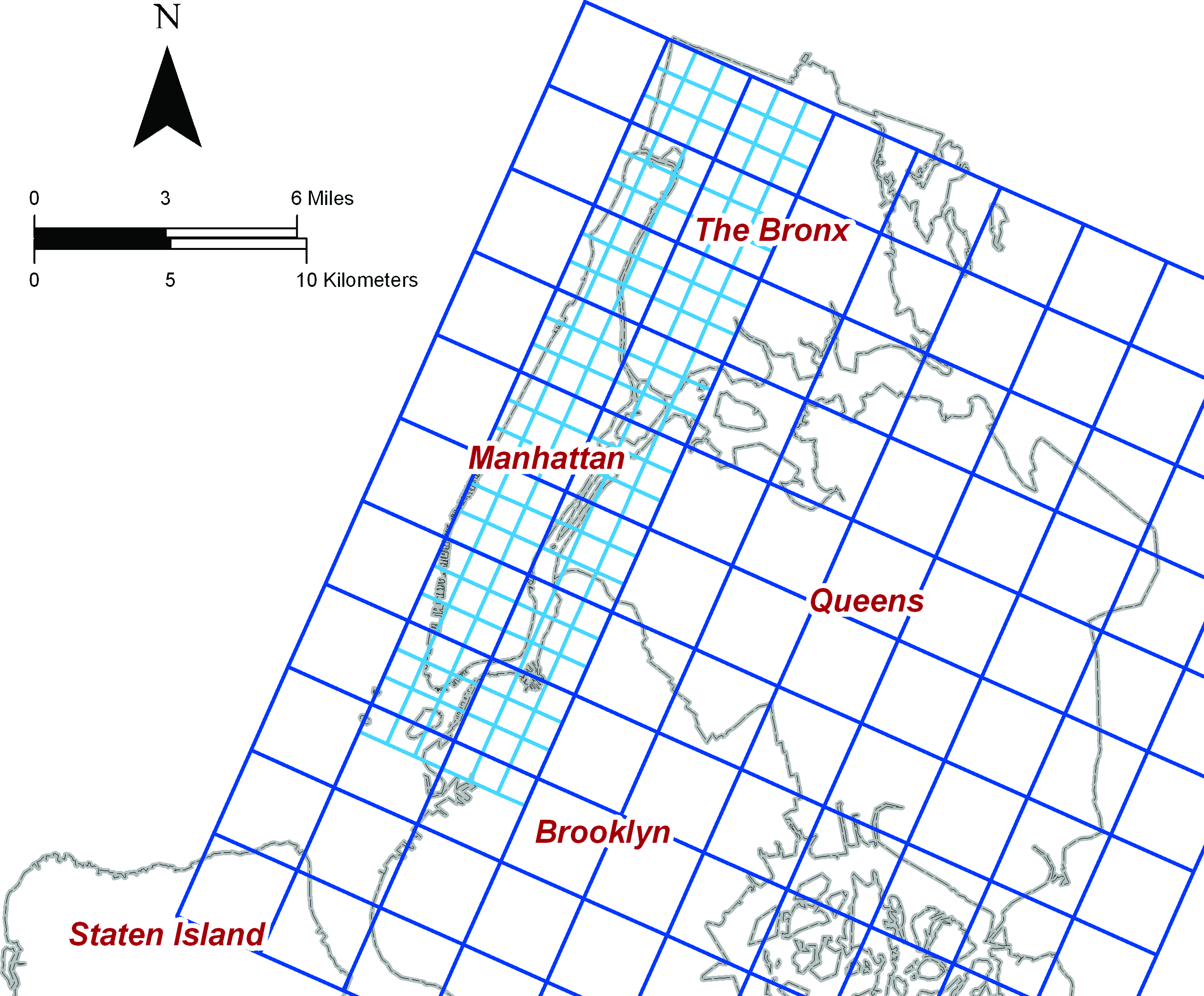
Conceptual NAS Grid in New York City. NAS facilities could be established within each cell of a grid with graduated densities, according to threat assessments and other considerations. Color images available online at www.liebertonline.com/bsp
To improve on current BioWatch incident characterization methods, all operational steps—determining which NAS locations to sample; deploying emergency response teams to those facilities; and collecting, transporting, testing, and interpreting results—must be completed within hours, not days. Significant pre-event planning, training, and exercises would be required to reach this level of operational capability.
For NAS to be implemented, validated operational protocols and procedures would be needed for the following:
• sampling methods for HVAC filter banks of various sizes; • safe and efficient protocols for sample collection, packaging, and transport; • DNA extraction methods from a range of filter matrices; and • protocols for PCR testing using Laboratory Response Network (LRN) assays.
Ultimately, once suitable NAS practices were determined, voluntary consensus standards and guidance could be established, enabling architects and engineers to consider them, as appropriate, during the design of new buildings. 20
Following detection of a potentially disseminated biological threat agent, all public health surveillance methods—environmental sampling and testing, syndromic surveillance, and traditional healthcare provider/laboratory disease reporting—would be mobilized, regardless of which surveillance arm first detected the incident. By improving the capacity, reliability, and timeliness of wide-area, post-BAR environmental sampling, synergisms between these detection modalities would be enhanced. Native air sampling and syndromic surveillance could be used to corroborate and characterize BARs as well as disease clusters that were suspected to have been caused by aerosolized biological threat agents. NAS also could be employed if a biological threat agent aerosol was suspected to have been transported within a subway or similar commuter rail system. Computer modeling and simulations have suggested that train car filters could be tested to efficiently detect bioaerosols in these systems. 21
If reliable, scientifically sound environmental sampling strategies and methods were in place, political leadership might be inclined to consider more nuanced local responses if initial post-BAR PCR results were negative. Actions that might later be regretted could be avoided. Current responses to BARs, in contrast, might not allow for this degree of flexibility because credible, explainable, and timely data would not be available. Decision makers might be compelled to assume a worst-case scenario.
Building Owners and Managers as Collaborators
Without the full cooperation of building managers and property owners, this project would have been impossible. Once engaged, the private sector supported the Pilot Project enthusiastically.
Property owners and managers are acutely sensitive to their potential vulnerabilities if urban terrorism were to occur and to the losses that they might incur. The private sector has taken its own steps to enhance building security and identify strategies to maintain business operations during disasters. 22 In the Seattle area, private sector and government representatives have identified business continuity strategies that could facilitate community resilience after a catastrophic outdoor anthrax release. 23
With that in mind, it was not surprising that NYC building managers and property owners chose to participate in this initiative as long as conditions were met that addressed their specific needs and interests (eg, potential legal exposure and impacts that the program might have on routine building operations). Might the private sector in a different urban setting react differently to a proposed NAS project? Perhaps. NYC's personal encounter with terrorism—like the national capital region and Oklahoma City—sets it apart from other cities that have not felt threatened as directly and viscerally by terrorism. However, of all private sector interests, it may be the building management and property owner corporations that most appreciate how a successful terrorism attack could put their long-term viabilities at risk. As such, they represent logical private sector collaborators for enhanced biological security initiatives.
The Pilot Project was conducted to assess whether NAS would be acceptable to property owners and managers in NYC and whether it could be implemented successfully in their buildings. It clearly demonstrated that in one urban setting, a public health–based NAS strategy could attract significant private sector support that could be directed toward building a mutually beneficial and practical public-private NAS initiative.
Footnotes
Acknowledgments
The Pilot Project team thanks Captain Raymond Martinez (New York Police Department) and Noël Kepler (formerly of the New York City Office of Emergency Management) for their vital assistance when introducing this effort to the New York City building management and property owner community. We also note the generous support afforded by Marolyn Davenport from the Real Estate Board of New York, who offered invaluable facilitation with industry representatives, and to the Building Owners and Management Association of Greater New York. Tracie Durbin, Sandia National Laboratories, oversaw a series of valuable proof-of-concept NAS experiments that were not described here. Joseph Leykam, Michigan State University, contributed time and effort to participate in building surveys and to determine whether PCR could identify Bacillus spores that had been deposited on HVAC filters. Ray Pollock's calculations guided considerations of appropriate heights for building HVAC system air intakes. Richard Danzig offered encouragement and advice and graciously critiqued the manuscript. Seth Carus, the late William Patrick, and Randall Murch provided valuable insights during the initial development of the NAS concept. The late Christine Wright, the project's senior contract representative at Sandia National Laboratories, helped to navigate unexpected, challenging obstacles, and her assistance is remembered with gratitude. Pete Estacio merits special appreciation. As BioWatch Program Manager, he consistently facilitated initiatives that addressed the public health community's programmatic needs and requirements. We are grateful for his vision. Lastly, for the many private sector partners who opened their facilities and graciously supported this effort with a spirit of shared civic responsibility, we are profoundly grateful. Funding for the NYC Native Air Sampling Pilot Program was provided by the U.S. Department of Homeland Security through an interagency agreement (#HSHQPB-05-X-00191) with Sandia National Laboratories (CA).