




Abstract
On March 11, 2011, the eastern portion of Japan was struck by a massive earthquake and tsunami that killed more than 15,700 people, left thousands of others hurt or missing, and caused widespread destruction. In addition, the Great East Japan Disaster seriously damaged the Fukushima Dai-ichi nuclear power station, knocking out power, severely affecting communications, and causing a loss of cooling to some reactor cores. Significant quantities of radioactive materials were released, a “no go” zone was created around the crippled reactors, and thousands of people were evacuated. With concern about the radiological emergency growing, one of Japan's largest hospital and healthcare groups issued a request for assistance to a U.S.-based international disaster relief organization. After consultations with the Japanese, a special Radiological Emergency Assistance Mission was assembled. The mission, which traveled to Japan in April 2011, had several aims: (1) to rapidly assess the situation on the ground, (2) to exchange information, experiences, and insights with Japanese colleagues, and (3) to provide radiological information and practical refresher training to Japanese healthcare professionals and first responders. In addition to achieving these aims and laying the groundwork for future cooperation, the mission produced dozens of insights and lessons. These have potential relevance not only for future large-scale radiation accidents, but also for radiological and nuclear terrorism situations. They also have more general relevance for emergency planning, preparedness, and response. In this article, several of the most salient insights and lessons are highlighted.
In addition to the direct effects of the earthquake, the seismic event unleashed an immense, destructive tsunami. Pushing deep inland, the tsunami swept through populated areas, wiping away entire communities and leaving others in ruins. In some places, damage from the wall of water was compounded by fires that broke out when hazardous materials were released. The tsunami also left behind vast pools of muddy water, along with scattered pieces of buildings and large numbers of fishing ships that had been picked up and carried inland. The disaster affected a large area of the coast in Miyagi, Iwate, and Fukushima Prefectures, including ports, airports, cities, towns, and villages. Figures compiled by Japanese authorities indicate that the earthquake-tsunami killed more than 15,700 people, injured more than 5,900 others, and left thousands missing. In addition, hundreds of thousands of buildings were destroyed or damaged, and economic losses were expected to substantially exceed those from previous mega-disasters such as Hurricane Katrina. 4

Police guarding the entrance to the 20-kilometer “no go” zone around the damaged Fukushima Dai-ichi nuclear generating station. (SM Becker)

Fukushima Dai-ichi
The March 11 earthquake-tsunami also had a devastating impact on the Fukushima Dai-ichi nuclear power facility on the coast of Fukushima Prefecture. Operated by Tokyo Electric Power Company (TEPCO), and incorporating 6 boiling water reactors, Fukushima Dai-ichi was one of the world's largest nuclear generating stations. Forty-six minutes after the earthquake, the first of a series of tsunami waves reached the power station. Eventually reaching a height of more than 14 meters, the waves easily overwhelmed the facility's tsunami barriers. Water reached areas “deep within the units causing the loss of all power sources except for one emergency diesel generator, with no other significant power source available on or off the site, and little hope of outside assistance.” 5 Instrumentation and control systems were knocked out, and “the tsunami and associated large debris caused widespread destruction of many buildings, doors, roads, tanks and other site infrastructure.” 5 In the words of the International Atomic Energy Agency (IAEA), “The operators were faced with a catastrophic, unprecedented emergency scenario with no power, reactor control or instrumentation, and in addition to this, severely affected communications systems both within and external to the site.” 5 Cooling was lost, some of the reactor cores were heavily damaged, and significant quantities of radioactive materials (including iodine, strontium, and cesium) were released. Authorities created a 20-kilometer “no go” zone around the crippled reactors, and thousands of people were evacuated.
Request for Assistance
With the situation still developing, a request for assistance was issued by the Tokushukai Medical Group, one of Japan's largest healthcare organizations. Tokushukai operates 67 hospitals with some 19,000 beds, as well as numerous clinics, visiting nurse stations, and other healthcare facilities. In addition, Tokushukai has made a major commitment to disaster assistance, supporting a nonprofit disaster relief arm called the Tokushukai Medical Assistance Team (TMAT). TMAT's healthcare professionals have wide-ranging experience gained from responding to disasters in Japan, throughout the region (eg, Taiwan, Sumatra), and even as far away as the Americas (eg, Haiti). TMAT was also heavily involved in the response to the March 11 disaster.
At the same time, TMAT and its parent organization have had less experience dealing with large-scale radiological emergencies. With concern about Fukushima Dai-ichi growing, and with no one certain what the dimensions and challenges of the situation would be, Tokushukai/TMAT decided to issue a request for outside assistance in connection with the radiological aspects of the crisis. The request was sent to NYC Medics (NYCM), a New York–based international disaster relief and humanitarian aid organization known for its ability to rapidly deploy assistance teams to disaster zones. NYC Medics had already sent a 2-person advance team (Executive Director Katherine Bequary and Dr. Rob Bristow, a disaster medicine expert) to Japan in March to identify critical needs. Drawing on that assessment, and after discussions with Tokushukai Medical Group's Chief Executive Officer Dr. Takao Suzuki, NYCM moved to rapidly assemble a special Radiological Emergency Assistance Mission.
Radiological Emergency Assistance Mission
Three individuals with long track records in radiation incident response were chosen for the mission: Dr. Katherine Uraneck, Dr. P. Andrew Karam, and Dr. Steven M. Becker [the author]. Dr. Uraneck, a board-certified emergency physician, is Senior Medical Coordinator for the Healthcare Emergency Preparedness Program, New York City Department of Health and Mental Hygiene (NYC DOHMH). She has had extensive experience with radiation incident planning and response, surge capacity, pediatric preparedness, and mass fatality planning. Dr. Karam, a certified health physicist with international experience, is Director of Radiological Operations, Bureau of Environmental Emergency Preparedness and Response, NYC DOHMH. He has also been a consultant to the IAEA. Drs. Karam and Uraneck participated in the mission as private citizens. Dr. Becker, a university-based researcher with extensive on-site disaster experience, specializes in the public health, community response, and communication issues associated with radiation emergencies. My past experience includes fieldwork in Ukraine and Belarus on the continuing impacts of the Chernobyl disaster, and on-site work in Japan after the 1999 Tokaimura nuclear accident. The 3 of us had previously worked together on disaster and terrorism issues, which helped to facilitate the speedy creation of this new mission. 6
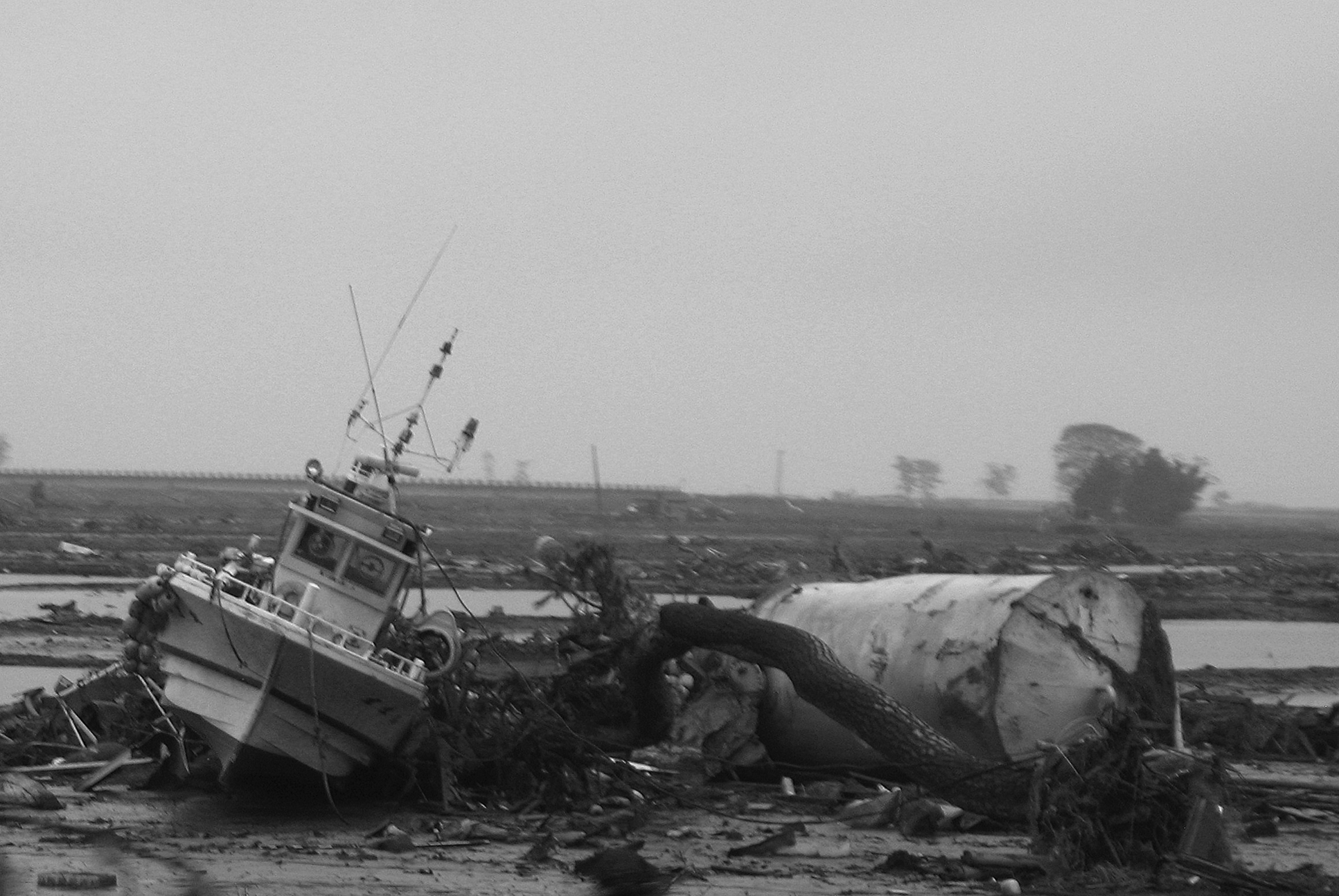
Vast numbers of ships and boats were carried deep inland by the tsunami. This photo is from Fukushima Prefecture. (SM Becker)
Following a planning meeting in Tokyo with senior officials from Tokushukai/TMAT, members of the mission team went into the field. We spent 10 days on the ground, from April 20 to 30. Like much of the Japanese population, members of the assistance team experienced firsthand some of the hundreds of aftershocks that have occurred since the March 11 quake, including a magnitude 6.2 aftershock while working in Fukushima. For work in areas affected by the radiation emergency, we carried dosimeters, Geiger counters, and isotope identifiers. We also benefited from extensive support provided by our Japanese hosts, including vehicles and drivers, planning and logistical assistance, and the services of a dozen expert translators.
The mission had several interrelated aims, which were developed in close consultation with the Japanese: (1) to rapidly assess the situation on the ground, (2) to exchange information, experiences, and insights with Japanese healthcare and disaster response partners, and (3) to provide radiological information and practical refresher training to Japanese healthcare professionals and first responders.
Rapid Situation Assessment
The 3-person team, accompanied by colleagues from Tokushukai/TMAT, began the mission with a rapid assessment of affected areas. This included severely affected commercial and residential areas in Sendai, the capital of Miyagi Prefecture, as well as hard hit portions of Fukushima Prefecture. Mission members had the opportunity to see close up the damage to homes, schools, industrial facilities, and infrastructure and to observe continuing search operations for bodies being carried out by the Japan Self-Defense Forces. The Self-Defense Forces played a major role in the overall response to the disaster, mobilizing more than 100,000 personnel.
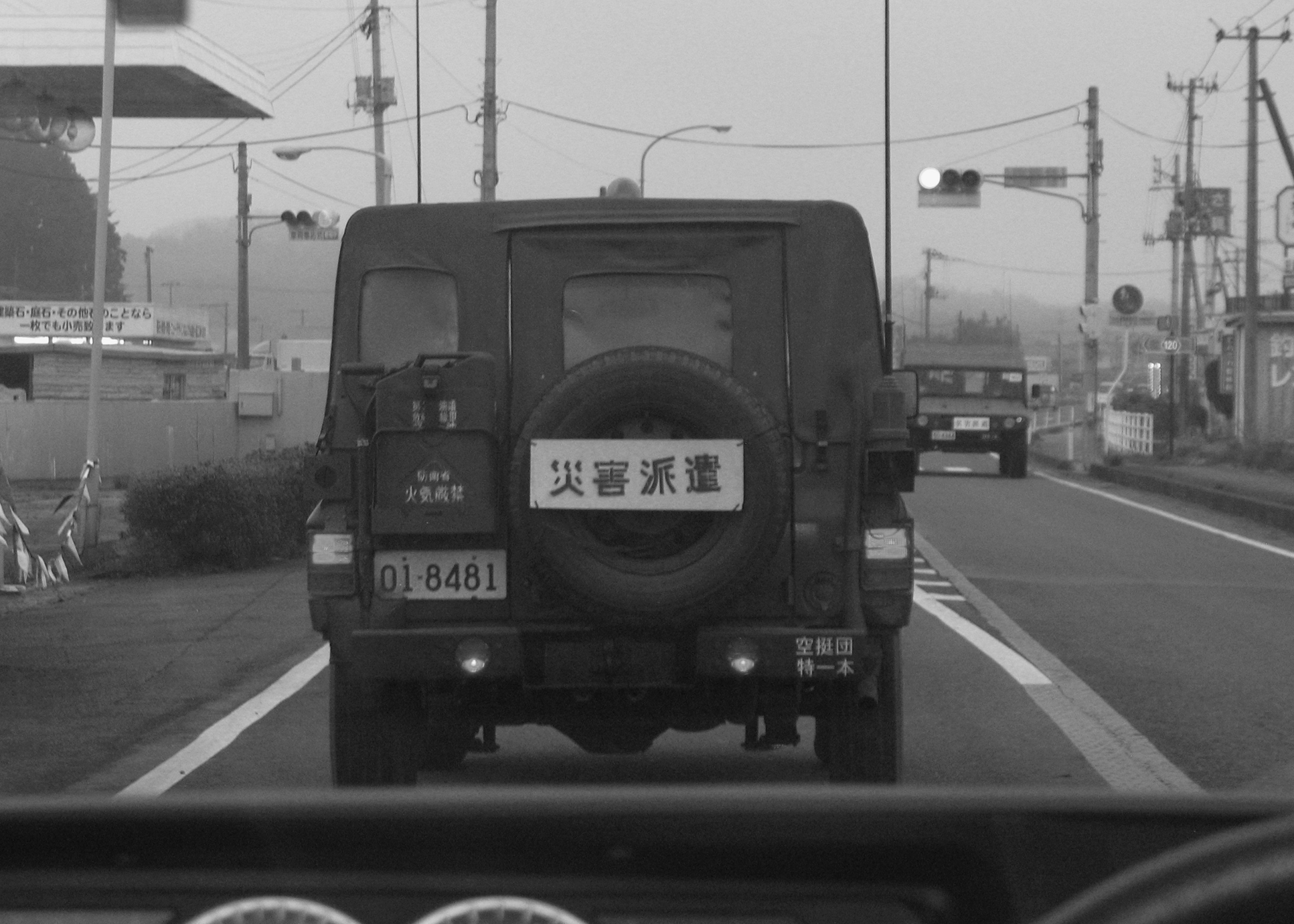
Military vehicles on a road in Fukushima Prefecture. The Self-Defense Forces played a major role in the disaster response. (SM Becker)
The mission team also traveled widely in the 20- to 30-kilometer zone around the damaged nuclear plant. Whereas the first zone (from 0 to 20 kilometers) was a “no go” area from which people had been evacuated, the second ring (from 20 to 30 kilometers) was still partially populated. However, the area was designated an “emergency evacuation preparation zone,” meaning that people were required at all times to be ready to shelter or evacuate if the situation at the nuclear station deteriorated. Not surprisingly, the crisis atmosphere, and the need to be ready to go on short notice, affected many aspects of life in the area. Numerous shops and other facilities closed, and shortages of supplies were not uncommon. In addition, because it can take considerable time and preparation to move inpatients from a medical facility, area hospitals—even major hospitals—were restricted from taking inpatients and effectively became only outpatient facilities.
Hospitals, Shelters, Local and Central Government
The mission team participated in information-sharing sessions with officials and clinicians at several hospitals, with topics ranging from the radiation readings taken by hospital staff to the concerns and information needs of patients and families. Additionally, we observed hospital decontamination facilities and treatment facilities for potentially contaminated patients.
We also spent time at 2 large shelters, including 1 where radiation screening was being conducted outside. Shelter space was at a premium, partly because many people needed to be sheltered and partly because some facilities designated in emergency plans as potential shelter locations were not available due to earthquake and tsunami damage. Thus, the living spaces in the shelters tended to be very small, with people staying in rooms filled with rows of open, corrugated cardboard containers. Individuals and couples had less space, and it was not unusual to see older evacuees sitting alone and keeping to themselves. Families with children had more space and privacy, staying in corrugated containers with higher walls. Many drawings and paintings by children could be seen, including some on the cardboard living areas inhabited by families.

Tsunami damage in the city of Sendai, the capital of Miyagi Prefecture. (SM Becker)
Despite the obvious difficulties inherent in a situation where people face an evacuation of uncertain duration, the environment was marked by politeness and courtesy. Shelter staff and the evacuees themselves kept the shelters clean and orderly. Food, drinks, and supplies (including baby needs and children's toys) were readily available, with people taking only what they needed from supply stations operating on the honor system. Various efforts were also undertaken to provide activities, especially for children. In one shelter, a library and computer area had been set up, and in another shelter, there was a playroom with large colorful blocks and tubes to climb on. Cultural life also benefited from outside visitors, including celebrities and a youth orchestra.
A novel shelter feature involved the reconstitution of local government. When a whole village was moved to a shelter, the community's local government was set up in a room inside the same facility. Having the village's local government functioning and on-scene helped to provide continuity, ensured that officials familiar with the village's specific needs were present, and helped maintain a sense of community.
Members of the mission team also traveled to disaster-affected communities to meet with local mayors. Mayor Hidekiyo Tachiya of Soma (pop. 37,000) reviewed the tsunami's local impacts and discussed efforts to assist families of emergency responders who had perished in the line of duty. Another meeting was held with Mayor Norio Kanno from Iitate (pop. 6,200). Located 40 kilometers from the Fukushima Dai-ichi plant, Iitate falls outside not only the 0- to 20-kilometer “no go” zone but also the 20- to 30-kilometer zone. Yet this small community, which was once voted one of Japan's most beautiful villages, belatedly learned that there were elevated radiation levels in the area. As a result, on April 22—more than 5 weeks after the disaster began—the community was designated an evacuation area and residents were given a month to leave.
We also met with Mayor Katsunobu Sakurai of Minamisoma (pop. 71,000), who had become a well-known figure because of a YouTube video he had posted. In the video, the mayor appealed for help for his city, saying that a lack of deliveries and other problems had left people isolated, abandoned, and without needed supplies. The video was widely viewed, and in May 2011, Time magazine named the mayor one of the world's 100 most influential people.
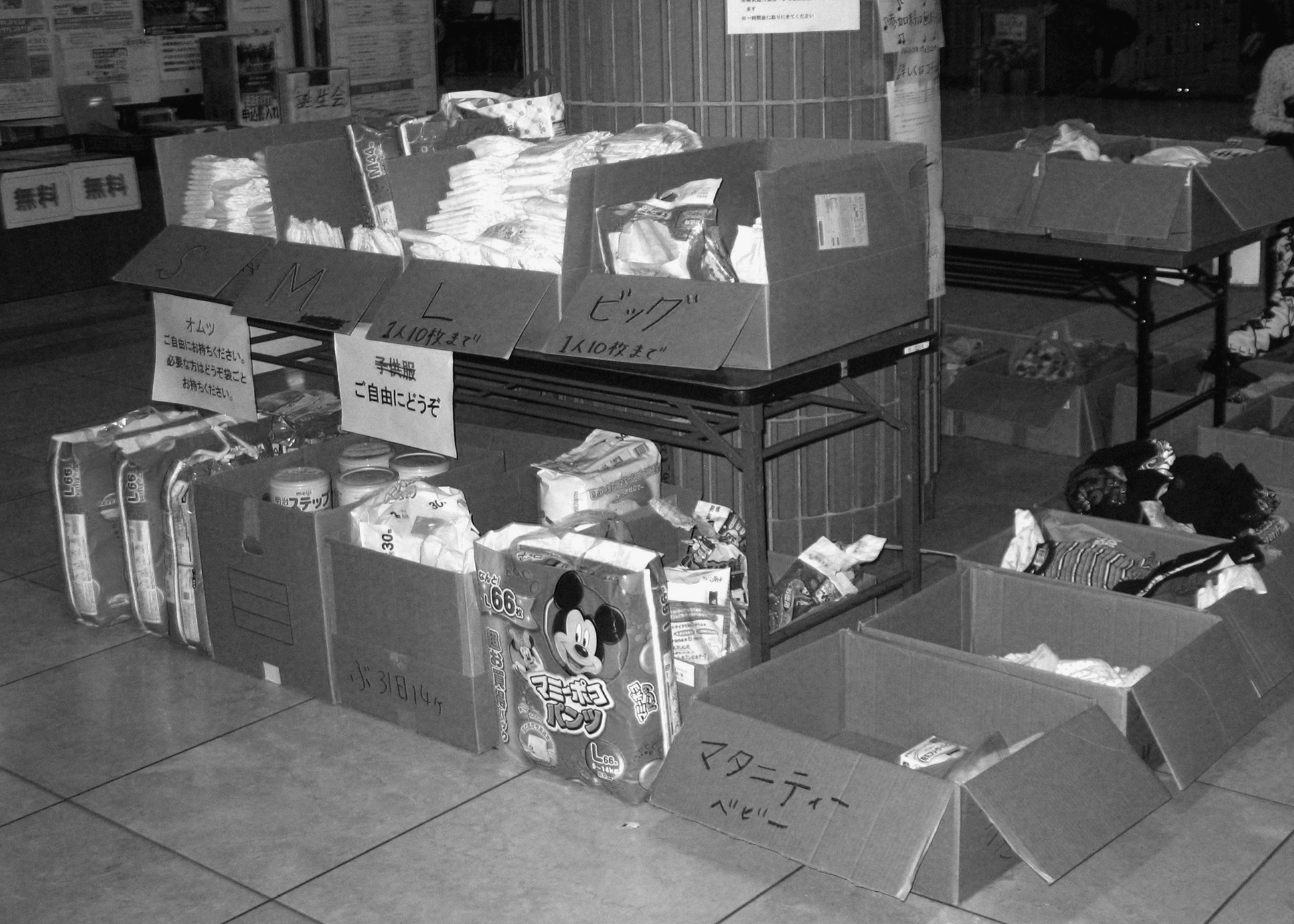
A self-serve supply station at an evacuation shelter in Fukushima. This one includes diapers and various baby supplies. People helped themselves and took only what they needed. (SM Becker)
Finally, complementing the discussions with local officials were 2 meetings in Tokyo. One was with representatives of the Tokyo metropolitan government, and the second was with representatives of the Japanese central government. Both helped us to gain an overall picture of the national impacts and continuing challenges associated with the earthquake-tsunami and nuclear emergency.
Information and Training
The final part of the mission involved developing information and refresher training for healthcare professionals and emergency responders. Drawing on what had been learned on the ground, the mission team prepared presentations that could be adapted for the various audiences and venues. Six presentations/training sessions were given, with most sessions held at hospitals. The information/training sessions employed an integrated approach, covering a broad range of real-world concerns and issues. Uraneck covered hospital and medical issues, including biological effects of radiation, isotopes of concern and their behavior in the body, age-dependent radiation sensitivity, patient care, and issues related to pregnant women and the developing fetus. Karam discussed radiation safety practices, working with patients, contamination control, and decontamination practices. Becker covered community reactions to radiation disasters, groups at risk for psychological impact, concerns and information needs of healthcare professionals and responders, social stigma, and risk communication lessons from past radiation incidents.
In all cases, the content was tailored to the questions and concerns of the audience and presented so as to make it useful. In some cases, that meant detailed consideration of medical issues, while in others it meant discussions of the information needs of families and children. Although basics were briefly covered, the main aim was to serve as refresher training and to highlight key planning, response, and care issues. By the end of the 10-day mission, the information/training sessions had reached an aggregate audience of approximately 1,100 Japanese healthcare professionals and emergency responders. Prior to returning to the U.S., the mission team held a final debriefing session and information exchange with Tokushukai/TMAT, laying the groundwork for future collaboration.
Key Insights from the Mission
In addition to achieving its aims, the mission produced dozens of insights and lessons learned. These have potential relevance not only for future large-scale radiation accidents, but also for radiological terrorism incidents (eg, a “dirty bomb”) and even nuclear terrorism situations (eg, an improvised nuclear device, or IND). They also have more general relevance for emergency planning, preparedness, and response. Some of the insights grew from the preparatory work done before the mission, others derived from time on the ground in Japan, and still others came from continuing communications and information exchanges since the completion of the mission. Some of the most salient insights and lessons learned are discussed below.
People have faced the disaster with remarkable courage
Nearly everywhere we traveled, deep pain inflicted by the disaster was evident, but so, too, were remarkable courage and a spirit of helping. As noted earlier, in evacuation shelters we visited, an atmosphere of civility prevailed despite difficult conditions and deep uncertainty about the future. In other locations, people organized campaigns to help farmers whose livelihoods had been damaged, or collected food and other necessities for evacuees. In a Miyagi shelter, children produced a wall newspaper called “Fight” to cheer people up. Throughout Japan, individuals volunteered by the tens of thousands to do everything from cleaning up disaster damage to providing health care. The words on a children's painting on a shelter wall spoke volumes about the courage seen so often after the disaster: “Hoping smiles will return.” Thus, the first and most notable lesson is that large numbers of people in Japan—even in the face of a triple disaster, horrendous losses, and difficult long-term challenges—have exhibited dignity, resolve, and compassion.
When a radiation emergency occurs, there is a major need for practical, integrated, experience-based refresher training
A large number of healthcare professionals and emergency responders participated in the 6 refresher training sessions in Japan, and the demand for training was far greater than what we could provide. In some cases, individuals participated because they had relatively little experience with radiation emergency preparedness and response issues and wanted to learn more. In other cases, participants who were already dealing with the situation had practical questions they wanted to discuss. Even experienced personnel, including those who had been through preparedness courses and drills, felt a powerful need to participate. This is because even the most useful course, and the most realistic drill, is not the same thing as being in the middle of an unfolding disaster—particularly one that is in many ways unprecedented. The stress of the situation, and the challenges that can arise, make even experienced professionals want to review critical information and revisit key issues.
In providing training for healthcare professionals and emergency responders, do not forget to include dentists
Many physicians, nurses, and other hospital personnel participated in the training sessions, as did EMTs and other responders. But another group of professionals was also present in significant numbers: dentists. This is because many dentists had volunteered to assist with identification of the dead from the earthquake-tsunami. Tallying the missing and identifying the dead after the March disaster has been remarkably difficult. Many records were destroyed, entire extended families were wiped out, and many bodies were left buried or disfigured. Still other bodies were left in place for weeks due to their location in contaminated areas, resulting in decomposition. Two and a half months after the disaster, more than 1,600 bodies remained unidentified. 7
Dentists volunteered to assist with identification efforts, but because significant numbers of bodies were found in radiologically contaminated areas, there were often questions about potential risks, the use of personal protective equipment, and other issues. The lesson is clear: After any future disaster where there are large numbers of bodies and where there is a radiological dimension to the situation, refresher training needs to include dentists and address their specific concerns.
There is a significant need for information materials in hospitals
In the face of a radiation disaster, nearly every group of people connected with a hospital has its own set of questions and concerns. Newly arriving patients want to know about their own situation, and patients already at the hospital want to know whether the arrival of potentially contaminated individuals poses any risks to them. Visitors and family members of patients may have their own questions. People working at the hospital also have questions and concerns—including some about their own safety.
Hospitals in Japan used different approaches to meet the demand for information. At Minamisoma Municipal Hospital, the staff ended up regularly taking radiation measurements and keeping people informed via announcements over the public address system. Other hospitals hurriedly prepared fact sheets or web content to inform people and to answer questions. But regardless of approach, the lesson is clear: Demand for information and informational materials is high after a radiation emergency, and hospitals need to be prepared to meet the information needs of patients, families, and staff. Furthermore, staff information needs can extend well beyond physicians and nurses; other employees who are essential to the operation of a hospital (eg, housekeeping, maintenance, dietary workers) may also have concerns that need to be addressed.
Dealing with radioactively contaminated rubble is an enormous challenge
The earthquake-tsunami left almost unimaginable quantities of rubble behind—something on the order of 25 millions tons (excluding wrecked vehicles and ships). With the Fukushima Dai-ichi accident releasing radioactive materials into the environment, significant quantities of rubble became radioactively contaminated. What to do with that rubble, including how and where to dispose of it, has created huge challenges for authorities and the nation as a whole. Various plans and steps have been undertaken, but each has run into difficulties. For example, authorities permitted some rubble to be incinerated, but elevated cesium levels were found in the ash. As a result, local governments have had to store the dust and ash until a decision can be made about what to do with it. One idea being circulated is to bind the ash in concrete that would then be buried.
Meanwhile, though, attempts to find or construct temporary burial facilities have been met with staunch opposition. Many people living in areas affected by the nuclear accident view the idea of locating waste facilities there as unfairly adding to the burdens they already face, and people living elsewhere do not want radioactively contaminated materials brought in. Officials had originally hoped to dispose of all of the rubble from the disaster within 3 years, but the challenges encountered make meeting that goal unlikely.
Further compounding the problem is the fact that authorities will need to find a way to dispose of not only the rubble created initially by the disaster, but also growing quantities of topsoil that are being removed as part of efforts to decontaminate villages and towns. Because of a lack of disposal options, some locations (including schools) are temporarily storing the contaminated topsoil on-site and covering it with tarps. Capturing just how difficult the overall disposal situation remains, an article in the Japanese press reported that a temple priest in Fukushima had started storing contaminated soil from the properties of area residents on the temple's grounds to try to help his neighbors. 8
Thus, another lesson from the Japan disaster is that disposal of large quantities of radioactively contaminated debris poses enormous, potentially intractable difficulties and could even impede recovery efforts. Similar issues could easily arise in future accidents or in the case of terrorism (eg, after a dirty bomb or a nuclear detonation). While no easy solutions will be possible, addressing such future incidents may benefit from advance planning, including the development of mechanisms for engaging and partnering with stakeholders.
Stigma is a huge continuing problem
Stigma is a serious problem after nearly every radiological/nuclear incident, with products, places, and people perceived as connected to the incident often being seen by others as tainted or dangerous. 9 The accident at Fukushima Dai-ichi has been no exception, with fears of radiation translating into a host of manifestations of stigma. Fukushima Prefecture is known for its peaches and other produce, but this year, Japanese store catalogs have reportedly left such items out. People are also avoiding produce shops and orchards. The net result is that sales have dropped precipitously. 10 Meanwhile, fishing boats have opted to unload their catches at ports in other prefectures because of fears that consumers would not buy fish perceived as being from Fukushima. 11
Similarly, tourism has all but disappeared in some areas. In Miyagi Prefecture, a famous temple with rose gardens that used to have an average of 1,000 visitors a day now only sees a fraction of that number. “Now there are days when we only receive a few dozen visitors,” explained a priest, citing radiation fears as the main reason. 12 In Fukushima Prefecture, the decline in tourism has been devastating, even in areas far from the nuclear accident.
Normally, through educational field trips, Fukushima Prefecture is visited by about 8,000 groups a year for a total of around 700,000 visitors (counting repeat visitors as separate people). However, the Fukushima Prefecture Tourism & Local Products Association expects a 95 percent drop in those visitors this fiscal year. They say that even reservations for two to three years in the future are starting to be canceled. 11
There have even been some instances of people from Fukushima being harassed, excluded, or discriminated against because of radiation fears. The manifestations of stigma after the March 11 disaster are not unique. As noted earlier, stigma occurs after nearly every major radiological/nuclear incident. But the events in Japan serve as a strong reminder of just how serious a problem stigma can be. Stigma creates a secondary social disaster that adds greatly to the psychological, social, and economic woes of people and regions affected by a radiological/nuclear incident. The lesson is that every nation that could potentially be affected by a radiological/nuclear incident needs to utilize research and experience to develop, in advance, plans for preventing, reducing, and ameliorating stigma. No nation has done so to date.
Physical security in radiation evacuation zones is both difficult and vital
One fear that people evacuating from areas with elevated radiation levels expressed in Japan was that their homes, businesses, and belongings would not be secure. Japanese law enforcement personnel have maintained a very visible presence, and they have worked hard to protect evacuated villages and towns. They have even made arrests. But it is not easy to maintain security in large empty areas, particularly at night. Perimeter security helps; so, too, do vehicular patrols. But protecting the health of police and security personnel necessarily limits the amount of time that can be spent in “no go” areas. In addition, law enforcement agencies may have competing responsibilities (eg, looking for missing people or searching for bodies).
In the aftermath of the earthquake-tsunami and nuclear emergency, criminals have taken advantage of the evacuations to steal money and property. From March 11 to the end of June, dozens of thefts from ATM machines took place in deserted areas of the 20-kilometer zone. ATMs in convenience stores appear to have been especially hard hit. Meanwhile, during the same period, 169 empty homes and 25 empty offices in the zone were reported to have been burglarized. The actual numbers, however, could be much higher since burglaries are usually only discovered when evacuees make very brief visits to their homes—a process that has so far been limited to small numbers of people.13,14
Fearing these kinds of thefts and burglaries greatly adds to people's emotional distress as they sit in evacuation centers many miles away. In addition, concerns about the security of homes and belongings can make people slated to evacuate not want to comply. Thus, the issue of how evacuation zones will be secured is a vital one.
Radiological screening is an ongoing process rather than a one-time effort
The process of screening populations for internal or external radiological contamination has been the focus of increasing attention in recent years, with U.S. agencies and scientific bodies developing new guidelines and tools to facilitate this crucial aspect of radiation emergency preparedness and response.6,15 By and large, population monitoring has been thought of in terms of the need to screen large numbers of people as soon as possible after an incident. That remains a key objective. But from what the mission team saw in Japan, it is also now apparent that there can be smaller-scale screening needs long afterwards.
Outside of one shelter, we had the opportunity to observe a radiation screening station in operation. Although large-scale population screening had been carried out much earlier in connection with the evacuations, additional small-scale screening efforts were still being conducted. The purpose was to check people newly arriving at shelters and those going out and returning later.
This process of small-scale monitoring well after the initial event has received far less attention in planning than the early large-scale population monitoring process. Agencies may wish to develop specific guidelines for such ongoing screening. At present, the Radiation Studies Branch at the Centers for Disease Control and Prevention (CDC) is reviewing this issue with an eye toward addressing it in future radiological population monitoring documents.
Regardless of policy, screening certificates can become central in people's lives
Another important insight from the mission relates to screening certificates: pieces of paper saying that someone has been checked for radioactive contamination and is “clean.” Central government officials stated early on that shelters and other facilities should not require such certificates as a condition for accommodating people. Yet, the reality on the ground evolved completely differently. Some shelters began demanding certificates as a condition for admission. Other places, including medical check-up and lodging facilities located away from Fukushima, reportedly began asking for such certificates as well. Meanwhile, growing numbers of people, concerned about their own health and also fearing stigma and discrimination, began seeking certificates. In response, officials at the local level provided them. At first, certificates were put together in a somewhat ad hoc way. Later, prefectural officials sought to standardize the forms (eg, with an official seal). In the end, the certificates have come to be central in people's lives.16,17
Around the world, very few agencies have carefully thought through the issue of screening certificates. Should they be issued? Should they not? If the answer is yes, who needs them and who should issue them? Do such certificates reduce stigma for some people and communities but increase it for others? If certificates are not to be issued by government, will this stop the demand for them? Will other organizations simply step in to provide certificates?
These are critically important issues, with important implications for the management of a large-scale radiological or nuclear event. At the present time, however, few (if any) governments around the world have grappled with the topic in a systematic way. It is clearly best for the issue of screening certificates to be carefully considered in advance and for a coordinated policy to be developed. That policy should be informed by past experience with radiation disasters, current research, and input from stakeholders.
Conclusion
The March 11 disaster that struck Japan killed thousands and left a vast amount of destruction in its wake. It also caused one of the world's most serious nuclear accidents to date. Many of the challenges posed by this triple disaster were unprecedented. In the face of such challenges, people in Japan have exhibited civility, compassion, and courage.
Members of the Radiological Emergency Assistance Mission were privileged to be able to contribute in some small way to the response effort. After conducting a rapid situation assessment and participating in information exchanges and meetings in affected areas, we prepared and presented refresher training for healthcare professionals and emergency responders.
In a sense, the mission broke new ground: Whereas government-to-government assistance requests and aid missions occur regularly after disasters, an NGO-to-NGO arranged mission with a specific focus on radiological issues is unusual. Many insights and lessons have also been identified. Several of the most salient were highlighted here. Others—including issues related to combined natural-technological disasters, mental health, and potassium iodide—have been identified in other publications by team members.18,19 In future articles, public information and risk communication issues, which were central in the disaster, will be discussed. It is hoped that all such insights and lessons will contribute to improved preparedness for future disasters.
Footnotes
Acknowledgments
Special thanks to the Tokushukai Medical Assistance Team, Tokushukai Medical Group, and NYC Medics for organizing the disaster assistance mission; ANA Airlines for providing special disaster relief flights; the expert translators who assisted with the site assessment and the training sessions; and the following individuals whose dedication, time, and energy helped make the mission to Japan possible: Dr. Torao Tokuda, Dr. Takao Suzuki, Mr. Ichiji Ishii, Dr. Tetsu Tokuda, Dr. Narumi Koshizawa, Mr. Giichiro Oketani, Ms. Fumika Ezawa, Mr. Kenta Ebisawa, Mr. Kato Takurou, Mr. Phil Suarez, and Ms. Katherine Bequary.