




Abstract
Objective:
Pediatric acute-onset neuropsychiatric syndrome (PANS) is a subtype of obsessive compulsive disorder (OCD) marked by an abrupt onset or exacerbation of neuropsychiatric symptoms. We aim to characterize the phenotypic presentation of youth with PANS.
Methods:
Forty-three youth (ages 4–14 years) meeting criteria for PANS were assessed using self-report and clinician-administered measures, medical record reviews, comprehensive clinical evaluation, and laboratory measures.
Results:
Youth with PANS presented with an early age of OCD onset (mean=7.84 years) and exhibited moderate to severe obsessive compulsive symptoms upon evaluation. All had comorbid anxiety and emotional lability, and scored well below normative means on all quality of life subscales. Youth with elevated streptococcal antibody titers trended toward having higher OCD severity, and presented more frequently with dilated pupils relative to youth without elevated titers. A cluster analysis of core PANS symptoms revealed three distinct symptom clusters that included core characteristic PANS symptoms, streptococcal-related symptoms, and cytokine-driven/physiological symptoms. Youth with PANS who had comorbid tics were more likely to exhibit a decline in school performance, visuomotor impairment, food restriction symptoms, and handwriting deterioration, and they reported lower quality of life relative to youth without tics.
Conclusions:
The sudden, acute onset of neuropsychiatric symptoms, high frequency of comorbidities (i.e., anxiety, behavioral regression, depression, and suicidality), and poor quality of life capture the PANS subgroup as suddenly and severely impaired youth. Identifying clinical characteristics of youth with PANS will allow clinicians to diagnose and treat this subtype of OCD with a more strategized and effective approach.
Introduction
S
Collectively, findings suggest associations between PANDAS and the presence of comorbid ADHD (Swedo et al. 1998; Murphy et al. 2007; Leslie et al. 2008; Murphy et al. 2012), separation anxiety (Swedo et al. 1998; Murphy and Pichichero 2002; Bernstein et al. 2010,), vocal and motor tics (Bernstein et al. 2010; Swedo et al. 2012), frequent urination (Murphy and Pichichero 2002; Bernstein et al. 2010; Murphy et al. 2012), handwriting deterioration (Bernstein et al. 2010; Murphy et al. 2012), and decline in school performance (Bernstein et al. 2010; Murphy et al. 2012). Additionally, Murphy et al. (2012) found that children with PANDAS were more likely to present with dramatic onset of symptoms, complete remissions, temporal association of symptoms with GAS infection, and clumsiness. For youth with PANDAS, the presence of elevated streptococcal titers has been linked with greater OCD symptom severity (Murphy et al. 2004; Lewin et al. 2011), visual-spatial memory deficits (Hirschtritt et al. 2009; Lewin et al. 2011), impaired executing functioning, lower speeded dexterity (Lewin et al. 2011), and an ADHD diagnosis (Peterson et al. 2000).
While these studies have documented and characterized the presence of PANDAS among youth with OCD and/or tics, there are several challenges confronting a comprehensive investigation of youth who experience a sudden onset of obsessive compulsive symptoms (e.g. small sample size, varied methodology, narrow diagnostic criteria). Most notably, clinicians are confronted with the difficulty of diagnosing youth who meet all but one criterion of the PANDAS subtype, namely evidence of GAS infection before symptom onset. For example, Swedo et al. (1998) and Murphy et al. (2012) excluded 27 and 15 youth, respectively, with acute-onset OCD because of lack of evidence of GAS infection. In response to these concerns, pediatric acute-onset neuropsychiatric syndrome (PANS) was proposed as a broader term that encompasses acute-onset neuropsychiatric symptoms without a specified environmental or immune-related trigger (Swedo et al. 2012). This newly minted PANS criteria encompass youth who experienced an abrupt onset of OCD and/or food restriction with at least two neuropsychiatric symptoms (e.g., sensory symptoms, handwriting deterioration, separation anxiety, and emotional lability) whose collective presentation cannot be better explained by another neurological or medical disorder.
Given that prior research to date has only focused on youth meeting full PANDAS criteria, this narrow perspective may have limited our understanding of acute-onset OCD by overlooking youth with neuropsychiatric symptoms brought on by other exposures, including viral illnesses (Hoekstra et al. 2005), mycoplasma (Müller et al. 2004), environmental triggers (Molina and Shoenfeld 2005), or no immune-related dysfunction at all. This study examined the phenotypic presentation of 43 youth who met the proposed PANS criteria, making it one of the largest cohorts to examine for factors influencing PANS presentation to date. Based on prior reports, we hypothesized that differences in presentation may exist secondary to the presence or absence of tics and/or evidence of infectious trigger. Additionally, given that acute-onset food restriction is a primary diagnostic criterion for PANS, we hypothesized that this presentation may have characteristics that distinguish it from non-food restriction OCD.
Methods
Participants
Participants were recruited at the University of South Florida's pediatric neuropsychiatry clinic, into an ongoing study investigating azithromycin as a PANS treatment. Youth were briefly prescreened (n=202) for approximate eligibility via a telephone interview that assessed onset characteristics, presence of OCD, and relevant medical history (e.g., rheumatic fever, autism diagnosis, chronic degenerative neurological disease). Among the youth that met screen criteria but did not participate in the study (n=97), most could not commit because of the long travel distance and a preference to pursue treatment locally.
Youth were eligible to participate in the study if they met the following criteria: Having an acute-onset or relapse of moderate to severe OCD symptoms (Children's Yale-Brown Obsessive Compulsive Scale [CY-BOCS] Total Severity Score ≥16; Lewin et al. 2013) within 6 months of evaluation; having a sudden and severe co-occurrence of at least two neuropsychiatric symptoms (e.g., anxiety, emotional lability, tics, frequent urination, food restrictive symptoms; Swedo et al. 2012); being between the ages of 4 and 14 years; and being either medication free or on a stable dose of a neuropsychiatric medication (4 weeks for most medications and 8 weeks for selective serotonin reuptake inhibitors [SSRIs]). Youth were excluded from participation if any of the following criteria were met: Gradual onset or duration of OCD symptoms >6 months; receiving extended course antibiotics and/or other immune therapy for PANS; a primary diagnosis of tics (rather than OCD); receiving exposure-based cognitive behavioral therapy (CBT); a history of nonresponse to a prior antibiotic trial; or a diagnosis of autism spectrum disorder, intellectual deficiency, and/or chronic neurological disease. Forty-three youth between 4 and 14 years of age (mean=8.06, SD=2.72) were enrolled, and 42 met inclusion criteria. One participant had a severe onset of OCD 6 weeks before baseline, and was placed on amoxicillin/clavulanic acid 8 days before assessment. He showed dramatic improvement within 3 days of starting the antibiotic course, and had mostly remitted by the time of consent. Therefore, his reported symptoms are included in phenotype characteristics but excluded for severity analysis. Approximately half of participating youth were male (n=24, 56%), with race and ethnicity being represented as follows: Caucasian (n=40, 93%), Hispanic (n=1, 2%), Asian American (n=1, 2%), and African American (n=1, 2%).
Measures
Clinician ratings
Raters were trained using the same training videos, and rater training was overseen by the first author (T.K.M).
The Infection-related OCD/Tic Evaluation (I-ROTE) (Murphy et al. 2012) was created and administered by first author (T.K.M.), to the parents of each participant. This measure provided information that was relevant to diagnosis, including the nature of symptom onset and temporal association with infectious trigger, symptom course from onset to baseline assessment, presence of comorbidities, and descriptive information about the participant's presenting problems. The I-ROTE has demonstrated high interrater reliability (intraclass correlation coefficient=0.86) when used to determine PANS/PANDAS caseness (Murphy et al. 2012).
The CY-BOCS (Scahill et al. 1997) is a clinician-rated measure to assess the severity of a child's obsessions and compulsions. Children and parents were asked to indicate the presence of specific obsessions and compulsions and rate overall severity based on frequency, interference, distress, resistance, and control over symptoms. The CY-BOCS Total Score has demonstrated good reliability and validity (Scahill et al. 1997; Storch et al. 2004; Lewin et al. 2013).
The study physician used the Clinical Global Impressions-Severity (CGI-S) scale (Guy 1976) to assess the severity of OCD, tics, mood, and neurocognitive symptoms for each of the symptom domains. This is a seven item scale that ranges from no illness/remitted (0 points) to extremely severe/completely nonfunctional (6 points).
The CGI-PANS (CGI-P), an adapted version of the CGI-S created by the first author (T.K.M.), assessed the severity and presence of core PANS symptoms Core PANS symptoms were chosen based on the criteria described by the PANS Consortium (Swedo et al. 2012). Validity support for the measure has come from positive associations with relevant PANS criteria.
The Child-Global Assessment Scale (C-GAS) (Shaffer et al. 1983) was used to assess a child's overall level of psychological functioning based on clinical information obtained from the parent and child. Scores range from 0 to 100, with higher scores indicating better functioning at home and school, and with peers.
The Yale Global Tic Severity Scale (YGTSS) (Leckman et al. 1989) is a psychometrically sound clinician-rated measure designed to assess the presence and severity of a child's tics. Children and parents were asked to indicate the presence of motor and/or vocal tics, and rate the overall severity based on number, frequency, intensity, complexity, and interference of symptoms. The YGTSS Total Tic score ranges from 0 to 50, with higher scores representing greater tic severity.
The Rey-Osterrieth Complex Figure Test (REY-O) (Meyers and Meyers 1995) is a test of visuospatial constructional ability, organizational skill, planning, and memory for complex information. The measure consists of four subtests: Copy, immediate recall, delayed recall, and recognition tasks. Strong psychometric properties have been observed for individuals between 6 and 89 years of age and it has been used extensively among youth with OCD (Lewin et al. 2014). Age-corrected t scores were provided, except in the case of the copy task, where an age-based percentile was utilized. Normative data for children ≥6 years of age are available (Meyers and Meyers 1995), with no normative data available for youth <6 years of age. Youth scoring <1% on the copy task were classified as having significant visuospatial/motor impairment.
The Beery-Buktenica Developmental Test of Visual-Motor Integration, Sixth Edition (BEERY VMI) (Beery 1997) is a test of visual-motor abilities that consists of 24 geometric forms arranged in order of increasing difficulty, particularly targeted to preschool populations (Klein 1978). The scores are determined by the number of figures that are copied successfully prior to three consecutive failures. This assessment was conducted in youth ages 4–7 in lieu of the Rey-O. Youth were classified as having significant visuospatial/motor impairment when scoring in the 37th percentile or below (approximately one standard deviation or greater below the mean).
Parent/child ratings
The PANDAS/PANS Scale is a parent self-report form developed by the first author (T.K.M.) to assess common PANDAS/PANS symptoms (i.e., frequent urination, obsessions, compulsions, tics, and separation anxiety), based on the criteria proposed by the PANS Consortium (Swedo et al. 2012). This measure is also effective in capturing PANS exacerbation, as it asks the rater whether each current symptom had been possibly worse (1 point), dramatically worse (2 points), new (3 points), or better/same (0 points) within the past week. The maximum score possible is 54.
The Swanson, Nolan, and Pelham-IV Scale (SNAP-IV) (Swanson 1995) is a parent-rated measure to assess for the presence of ADHD-related symptoms, including inattention, impulsivity/hyperactivity, and oppositionality. Each item is scored for severity on a four point scale, ranging from not at all (0 points) to very much (3 points). Total scores were averaged to assess overall severity of the sample, and individual item scores were assessed to identify participants who met cutoffs for each ADHD-related symptom (see Table 1 for cutoff values).
Symptom headings are proposed core PANS diagnostic criteria symptoms.
As measured by the Screen for Childhood Anxiety Related Emotional Disorders (SCARED) subscales.
As measured by the Child Behavior Checklist (CBCL) subscales (n=41). T scores >70 were considered clinically significant.
Measured by the Swanson, Nolan, and Pelham-IV Scale (SNAP-IV) inattention (cutoff=1.78), impulsivity/hyperactivity (cutoff=1.44), and oppositionality (cutoff=1.88).
Participants visuospatial/motor impairment if they scored <1% on the Rey-Osterrieth Complex Figure Test (REY-O) copy subtest or <37% on the Beery-Buktenica Developmental Test of Visual-Motor Integration (BEERY VMI).
ADHD, attention deficit hyperactivity disorder; OCD, obsessive compulsive disorder; PANS, pediatric acute-onset neuropsychiatric syndrome.
The Screen for Child Anxiety Related Emotional Disorders-Child and Parent (SCARED) (Birmaher et al. 1997) is a child and parent self-report form to measure severity of child anxiety symptoms, including general anxiety, separation anxiety, panic disorder, social anxiety, and school anxiety. Each item is scored for severity on a three point scale, ranging from not true or hardly ever true (0 points) to very true or often true (2 points). The SCARED total scores were averaged to assess overall anxiety severity of the sample, and individual item scores were used to identify presence of anxiety subtypes.
The Child Behavior Checklist (CBCL) (Achenbach and Rescorla 2001) is a 118 item parent self-report form that assesses child behaviors (i.e., hobbies, responsibilities, friendships) and items that describe children's tendencies. The CBCL provides a Total Behavior Problem Score and several subscales, including: Anxious/Depressed, Withdrawn/Depressed, Somatic Complaints, Social Problems, Thought Problems, Attention Problems, Rule-Breaking Behavior, and Aggressive Behavior. For each subscale, participants were considered to have clinically significant symptoms if they had a t score >70.
The Tourette's Disorder Scale (TODS) (Shytle et al. 2003) is a 15 item parent self-report form that measures the current severity of ADHD symptoms, mood, irritability, OCD, and tics. This measure provides a global assessment of many symptoms associated with PANS, and ranges in severity from 0 to 150.
The Child Health Questionnaire Parent Form 50 (CHQ-PF50) (Landgraf et al. 1996) is a parent-rated form to assess the child's quality of life. Measured domains include physical and role functioning, general health, bodily pain, mental health, self-esteem, and behavior, with scores less than the national norms for each subscale indicating clinically significant impairment. Summary scales, including psychosocial and physical, are calculated based on weighted combinations of certain subscales.
Laboratory tests
Anti-deoxyribonuclease B (anti-DNAse B), anti-streptolysin O (ASO), Mycoplasma pneumoniae immunoglobulin (Ig)G/IgM, antinuclear antibody (ANA), Raji cell (C3d-bound circulating immune complexes), and quantitative immunoglobulins were performed at a clinical laboratory (LabCorp). A comprehensive metabolic panel (CMP), complete blood count (CBC), and urinalysis were also conducted.
ASO titer elevations begin 1 week after an infection and peak after 2–3 weeks. Comparatively, anti-DNAse B titer elevations peak after 4–8 weeks. Titer elevations may persist for several months, decreasing the ability to determine if a result is related to close temporal proximity of the preceding GAS infection. Antibody reactions to the enzymatic proteins produced by GAS, including streptolysin O and deoxyribonucleases, are precipitated by the immune system after an infection. The use of two different streptococcal antibodies reduces the possibility of obtaining false negatives, and increases the likelihood of capturing evidence of GAS exposure regardless of the infection site. However, as titer elevations are common in children ages 7–12, the presence of elevated titers is not sufficient to prove correlation with symptom onset (Kaplan et al. 1998). The thresholds were >60 U/mL for ages 0–6 and >170 U/mL for ages 7–17 for anti-DNAse B, and >160 IU/mL for ages 0–6 and >200 IU/mL for ages 7–17 for ASO. Age-adjusted titers allow for greater accuracy in determining elevations for younger participants (Ayoub and Harden 2002). Support for a recent streptococcal infection was provided by documentation in medical records of a positive rapid streptococcal antigen, throat culture, detection of elevated streptococcal antibodies at the time of study enrollment, or temporal association of symptom onset and GAS exposure from close contact with an infected person (i.e., sibling or family member).
An enzyme immunoassay was performed on sera to detect elevations in M. pneumoniae IgM or IgG antibodies, which may suggest the presence of a recent infection and prior immunologic exposure, respectively. IgG antibodies remain elevated for long periods of time, and primarily reflect that an infection has occurred at some time in the individual's life. IgM antibodies peak 3–6 weeks after an infection, and typically persist for 2–3 months, but can remain elevated for several months. Positive mycoplasma IgM results ideally should be confirmed by polymerase chain reaction (PCR) analyses for a definitive diagnosis, as a positive IgM result does not equate to the presence of an acute infection (Nilsson et al. 2008). ANA testing was done by a multiplex immunoassay. Titers >1:80 indicated a positive result. C3d-bound circulating immune complexes were measured through enzyme immunoassay. Elevations in immune complexes may indicate presence of systemic diseases or infections that could potentially cause damage to organs and tissues. Quanititative Igs, including IgG, IgA, IgM, and IgE were tested. Low values of IgG, IgA, and IgM may indicate a greater risk for acquiring an infection, and elevated levels of IgE may suggest presence of allergies. Furthermore, a screen for Lyme disease (IgM/IgG) was performed by enzyme immunoassay (EIA) to identify a possible exposure to Borrelia burgdorferi. All positive or equivocal EIA results were confirmed with Western blot testing, as advised by the Centers for Disease Control and Prevention (Centers for Disease Control and Prevention 1995). Laboratory values were categorized as elevated and normal based on reference ranges determined by the clinical laboratory for each result.
Physical and neurological examination
A physical and neurological examination was conducted by the physician to assess for overall health and for any neurological abnormalities (i.e., in attention, activity, eye contact, language, and affect), reflexes and strength, cranial nerves, ambulation, cerebellar tasks, and movements (i.e., tremors, chorea, and tics). Height, weight, blood pressure, and heart rate were also measured. An electrocardiogram (ECG) was performed and subsequently read by a board-certified pediatric cardiologist (G.H.D) to determine presence of abnormalities that could suggest risk of rheumatic carditis or QT prolongation.
Procedures
All study procedures were approved by the All Children's Hospital Institutional Review Board. Written informed consent and assent was obtained from parents and participants, respectively. Afterward, youth underwent a comprehensive evaluation including a review of family and medical history, and the measures described previously. Blood was drawn utilizing aseptic techniques to obtain clinical laboratory measures. PANS diagnoses were determined by an experienced child psychiatrist (T.K.M.) based on clinical evaluation of symptoms.
Data analysis
First, descriptive statistics were used to characterize the sample and symptom presentation of youth with PANS. Second, Ward's hierarchical agglomerative cluster analysis was used to analyze the hypothesized symptoms and antibody titers associated with PANS based on expert consensus (Swedo et al. 2012). The absence/presence of these symptoms were determined using the I-ROTE (documented GAS infection, handwriting deterioration, ADHD diagnosis, urinary symptoms, hallucination and/or psychotic symptoms), PANS CGI-S (emotional lability and/or irritability, deterioration in school performance, anxiety symptoms, sleep disturbances, behavioral regression, sensory abnormalities, food restriction), Withdrawn/Depressed scale of the CBCL (depressive symptoms), YGTSS (simple tics, complex tics), Rey-O and BEERY (visuospatial/motor impairment), laboratory values (elevated ASO, elevated anti-DNAse B, elevated Mycoplasma IgM antibody), and medical evaluation (mydriasis, fatigue, gastrointestinal symptoms). This method progressively forms clusters of dichotomous variables until all are subsumed into a single unifying cluster. The stages of agglomerations are displayed as a dendrogram with the formation of clusters plotted along a scaled, between-stage distance axis at each stage (Borgen and Barnett 1987). Consistent with previous research (McGuire et al. 2013), symptoms were classified into a cluster when: 1) Their dendrogram lines converged within a 10 unit window on the dendrogram cluster distance axis; and 2) convergence occurred before 50 (0=individual symptoms, 100=unitary cluster of all symptoms). Afterward, cluster models that met the abovementioned criteria were evaluated using investigator experience and clinical interpretability. Third, χ2 and independent sample t tests were used to compare youth with and without tic symptoms, food restriction symptoms, and a streptococcal trigger. Finally, an independent sample t test compared OCD severity (CGI-S for OCD, CY-BOCS Total Score) between youth with and without elevated titers (e.g., anti-DNAse B and ASO). Given the exploratory nature of these comparisons, significance was set at p=0.05.
Results
Characteristics of youth with PANS
Participants experienced an onset of OCD at an early age (mean=7.84, SD=2.65), with an average duration of presenting OCD of ∼10 weeks (mean=10.14, SD=6.67), and symptoms in the moderate t-severe range (MCGI-S=3.98, SDCGI-S=0.83). Intrusive worries about “harm to self and/or others” and related compulsions were the most commonly reported OCD symptoms (see Table 1 for a list of endorsed PANS symptoms). Males more frequently reported having sexual and/or religious obsessions than females, (χ2=3.80, p=0.05), but no gender differences were found between other obsessions and compulsions indicated on the CY-BOCS checklist.
All participants presented with comorbid anxiety and emotional lability, satisfying the requirement for presence of two associated PANS symptoms. Most exhibited visuospatial impairment at evaluation (see Table 1). Separation anxiety (77%) was the most common type of anxiety seen in the sample, followed by generalized anxiety (47%) and school avoidance (47%). Clinically significant depressive symptoms were noted in nearly 25% of PANS youth.
Medical history
Concomitant medications at time of evaluation included anticonvulsants (n=2, 5%); SSRIs (n=6, 14%); and medications for sleep (n=12, 30%), allergy or asthma (n=8, 19%), and ADHD (n=2, 5%). All participants were stable for at least 4 weeks on psychotherapeutic medications (8 weeks for SSRIs) before evaluation. A history of frequent infections was commonly noted in PANS youth following review of medical records and parent report (see Table 2 for frequencies of prior illnesses and infection triggers). A majority of participants (72%) had a history of frequent streptococcal pharyngitis. Frequent upper respiratory infections (URIs) were also reported in a majority of the sample (58%), and 28% of children had had a tonsillectomy and/or adenoidectomy. Immune-based illnesses (i.e., Kawasaki's disease, Hashimoto's thyroiditis, psoriasis, Henoch–Schlolein purpura, neutropenia, asthma, and allergies) were noted in several participants. ECGs were performed on 41 children and were read as normal for age by a cardiologist. In our sample, two children had mild neutropenia and two had low white blood cell counts. Immunoglobulin A deficiency trended toward more significant presentation in youth with tics (χ2=3.35; p=0.08). Four children had mild liver enzyme elevations. Based on medical history and clinical evaluation, GAS was identified as the most common infectious trigger, followed by URI, and suspected M. pneumoniae (see Table 2). Several participants presented with more than one infectious trigger, and a few had unclear triggers including gastrointestinal illness, rash, and unknown exposures (i.e., undiagnosed illness in siblings). Furthermore, a few participants presented with no apparent infectious trigger. A majority of participants (91%) presented with elevated antibody titers, including M. pneumoniae IgM, anti-DNAse B, ASO, and/or Lyme IgG/IgM antibodies. Anti-DNAse B antibody was the most frequently elevated titer, with significantly more frequent elevation in males (n=20, 47%) than females (n=10, 23%) (χ2=6.00, p=0.01) All positive Lyme screens were found to be negative when confirmed with a Western blot test. See Table 3 for titer elevation frequencies.
Urinary tract infections, gastrointestinal illnesses, exposure to undiagnosed illness in sibling.
Pre-eclampsia, induction, prenatal exposures, postnatal complications, abnormal Apgar scores.
ADHD, attention deficit hyperactivity disorder; OCD, obsessive compulsive disorder; PANS, pediatric acute-onset neuropsychiatric syndrome.
Impairment and quality of life in PANS youth
More than half of all participants (51%) scored in the clinically significant range for thought problems on the CBCL, which assesses symptoms such as seeing or hearing things, strange ideas and behaviors, repeating compulsions, and thoughts or actions directed toward self-harm. For participants between the ages of 6 and 18, nearly one third (30%) checked suicidal items on the CBCL, including “talks about killing self” and/or “deliberately harms self or attempts suicide.” Average overall functioning, as measured by the C-GAS (mean=48.0), was found to be in the 41–50 range, indicating moderate social impairment in most areas or severe impairment in one area. Although C-GAS scores ranged from 30 (unable to function in almost all areas) to 65 (some difficulty in one area), most participants (n=30, 75%) scored between 41 and 60, and 20% (n=8) of participants scored ≤40, indicating major impairment or inability to function. Only 5% (n=2) of participants scored ≥61. Additionally, one third of children (33%) were put on a hospital/homebound program because of the severity of their symptoms. In regards to quality of life as measured by the CHQ-PF50, the average score for Mental Health (Well-Being) was well below the national mean (MSample=47.18, MNational=78.50), indicating a higher frequency of anxiety and depressive symptoms in this sample. Parental Impact-Emotional average score was the lowest of all the subscales (MSample=27.78, MNational=80.30), indicating the severity of parents' worries and concerns as a result of the child's physical and psychosocial impairment. The average score for Self-Esteem (MSample=51.00, MNational=79.80) revealed significant dissatisfaction in PANS youth regarding their abilities, appearance, family and peer relationships, and life overall. Three participants did not complete the CHQ-PF50 measure at baseline. Average scores for all quality of life subscales are shown in Table 4.
p<0.05.
PANS, pediatric acute-onset neuropsychiatric syndrome; CHQ-PF50, Child Health Questionnaire Parent Form 50.
Tic and non-tic PANS OCD
The majority of participants had co-occurring simple tics at time of onset or shortly after, and presented with mild tic severity (MYGTSS=15.50, SDYGTSS=7.81). A smaller portion of the sample had complex tics (28%) compared with simple tics (70%). Youth with tics were more likely to experience a decline in school performance (χ2=4.38, p=0.03), food restriction symptoms (χ2=4.11, p=0.04), and handwriting deterioration (χ2=6.92, p=0.01), and were more likely to be placed on a hospital/homebound program because of overall symptom severity (X2=5.23, p=0.02). Table 5 compares the symptom severity of tic and non-tic PANS OCD youth. Participants with tics exhibited significantly higher PANS symptom severity and visual-spatial memory impairment than those without tics (see Table 5). Additionally, participants with tics scored lower on all quality of life (CHQ-PF50) subscales except Family Cohesion, with significant group differences observed on the Self-Esteem, Role (Emotional/Behavioral), and Family Activities subscales (see Table 4).
REY-O was only completed by 29 of the 43 participants, with t scores being available for 27 participants.
BEERY was only completed by 13 participants.
BEERY VMI, Beery-Buktenica Developmental Test of Visual-Motor Integration; CY-BOCS, Children's Yale-Brown Obsessive Compulsive Scale; OCD, Obsessive Compulsive Disorder; PANDAS, pediatric autoimmune neuropsychiatric disorder associated with streptoccocus; PANS, PANS, pediatric acute-onset neuropsychiatric syndrome; REY-O, Rey-Osterrieth Complex Figure Test; SCARED-P, Screen for Child Anxiety Related Emotional Disorders - Parent; TODS, Tourette's Disorder Scale; YGTSS, Yale Global Tic Severity Scale.
Food restriction in PANS youth
Nearly half (47%) of all participants had food restriction symptoms at the time of evaluation. Ten participants experienced significant impairment related to food restriction (i.e., weight loss, dehydration, and/or hospitalizations), and also met diagnostic criteria for avoidant restrictive food intake disorder (ARFID). Of this subset, one participant presented with food-related OCD symptoms only, whereas the remaining nine participants met OCD criteria for food and nonfood-related symptoms. Contamination from germs and/or toxins, poison, fear of vomiting, choking, and fear of weight gain were the most common causes of restrictive eating behavior in PANS youth. Youth with food restriction behavior had significantly higher averages on the SCARED and lower averages on the following CHQ-PF50 subscales: Bodily Pain, Global Behavior Item, and Parental Impact-Emotional than youth without food restriction (see Tables 4 and 5). Youth with food restriction were also more likely to have mydriasis (χ2=9.91, p=0.002), tics (χ2=4.11, p=0.04), and choreiform movements (χ2=4.47, p=0.03) than youth without food restriction. No other significant differences were found in PANS symptoms for youth with and without food restriction.
Comparison of OCD symptoms and severity relative to GAS findings
Participants with elevated ASO titer (mean=4.25, SD=0.77) trended toward exhibiting greater OCD severity on the CGI-S relative to youth without elevated ASO titer (mean=3.80, SD=0.83), t(40)=−1.71, p=0.09. No significant difference was observed on the CY-BOCS Total Score between ASO titer groups, t(40)=−0.11, p=0.91. No significant differences were found between participants with elevated anti-DNAse relative to normal values on either the CGI-S (t[40]=−1.55, p=0.13) or CY-BOCS Total Score (t[40]=−0.48, p=0.63]. No significant differences were found for OCD severity on the CGI-S (t[40]=0.53, p=0.60) and CY-BOCS (t[40]=0.69, p=0.50) between youth with and without a GAS trigger. However, participants with a GAS trigger (58%) were more likely to present with ordering, arranging, and/or symmetry-related compulsions (n=22, 88%) than were participants without a GAS trigger (n=8, 44%) (χ2=9.41, p=0.002). No other differences in symptom presentation were observed between youth with and those without a GAS trigger. Figure 1 displays the proportion of youth with elevated ASO, elevated anti-DNAse B, and/or temporal GAS association or recorded exposure.
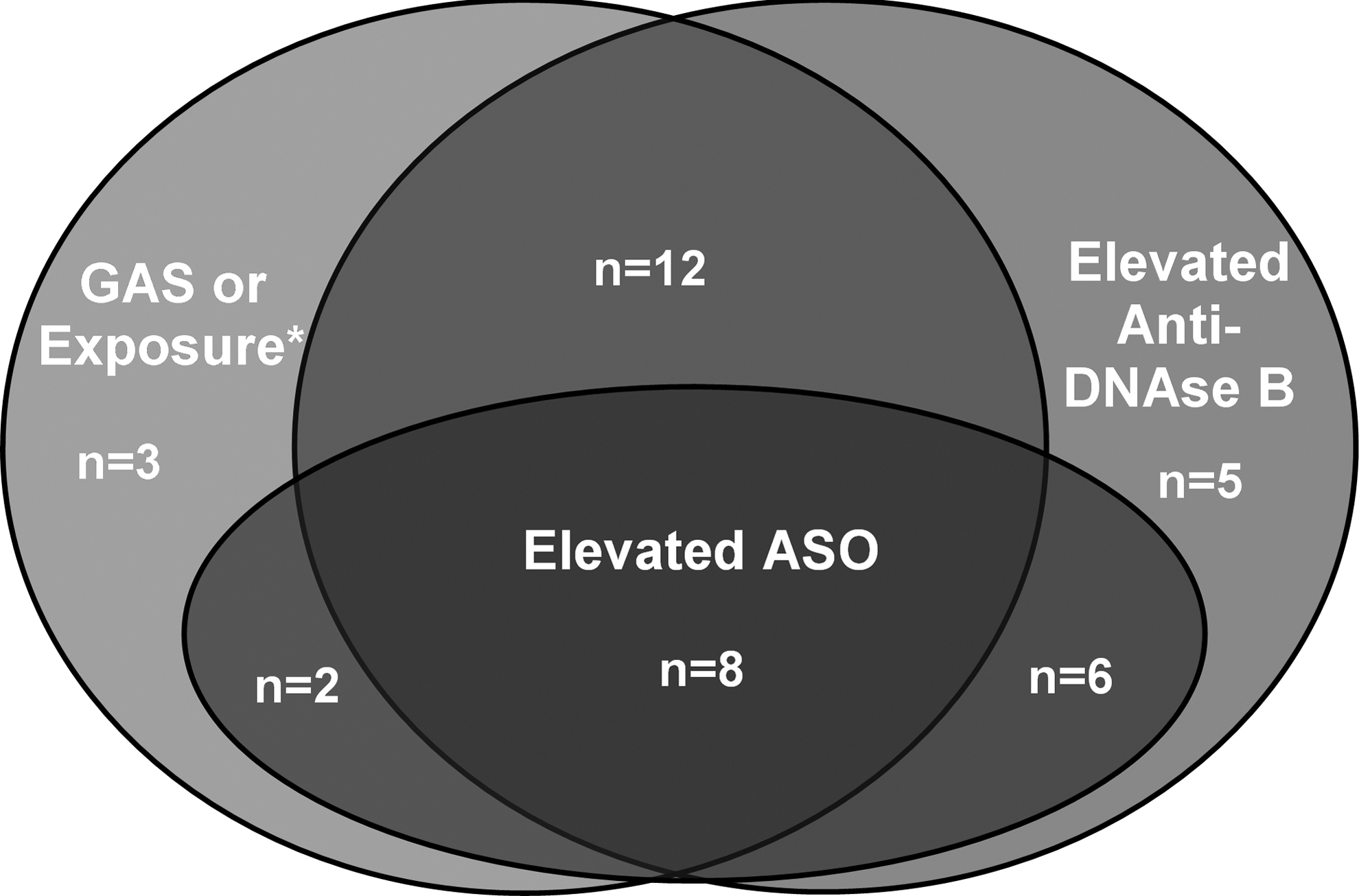
Proportion of total sample (n=36) with elevated anti-streptolysin O (ASO) titer, elevated anti-DNAse B titer, and/or temporal group A streptococcus (GAS) association or recorded exposure. Participants were included in the “GAS or exposure” group if they had a positive rapid streptococcal swab or culture, and/or report of exposure temporally associated with presenting symptoms.
PANS symptom clusters
A hierarchical cluster analysis using hypothesized PANS symptoms and antibody titers was conducted to identify symptom groupings. The dendrogram displays the results from the agglomerative hierarchical cluster analysis (see Fig. 2). These results suggest the presence of three distinct symptom clusters. Cluster 1 included five symptoms that were predominantly consistent with the hallmark symptoms of PANS (e.g., emotional lability, anxiety symptoms, sleep disturbances, deterioration in school, and behavioral regression), and was operationally defined as “core characteristic PANS symptoms.” Most participants had between four and five symptoms in this cluster (93%), with all participants having at least two symptoms in this cluster. Cluster 2 included eight symptoms that predominantly consisted of streptococcal titers, symptoms previously described as being associated with GAS infection (e.g., urinary symptoms, ADHD, handwriting deterioration) (Murphy and Pichichero 2002), sensory problems, and simple tics. This cluster was operationally defined as “streptococcal-related symptoms.” Most participants had three or more symptoms on this cluster (92%), with all participants having at least one symptom in this cluster. Cluster 3 predominantly included symptoms that are often described as part of cytokine sickness behavior (e.g., food restriction, mydriasis, fatigue, gastrointestinal problems, and depressive symptoms) (Dantzer and Kelley 2007), elevated mycoplasma, hallucinations and/or psychotic symptoms, and complex tics. Cluster 3 was operationally defined as “cytokine-driven/physiological symptoms.” Approximately half of the participants had two or more symptoms in this cluster (51%), with 76% of all participants having at least one symptom in this cluster.
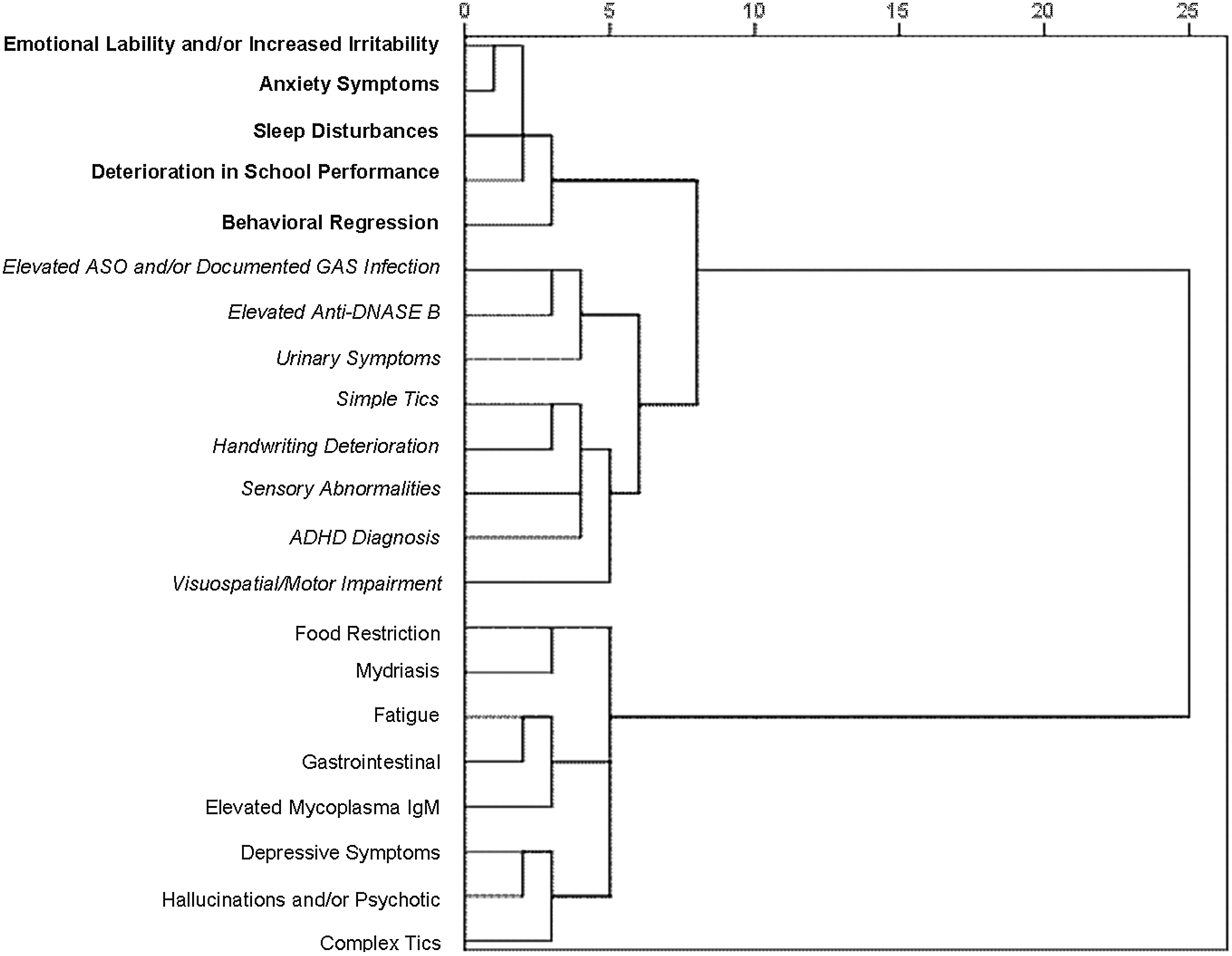
Hierarchical agglomerative cluster analysis of Pediatric acute-onset neuropsychiatric syndrome (PANS) symptoms and infectious triggers. Cluster 1, core characteristic PANS symptoms; cluster 2, strep-related symptoms; cluster 3, cytokine-driven physiological symptoms.
Discussion
This study aimed to characterize PANS through phenotypical analysis of 43 youth meeting the proposed diagnostic criteria for PANS (Swedo et al. 2012). All participants presented with several comorbid symptoms, most frequently anxiety and emotional lability. Although children with traditional OCD also commonly present with comorbidities such as anxiety, ADHD, and tics (Geller et al. 2003; Storch et al. 2008; Lewin et al. 2010), they do not typically exhibit these acutely and concurrently with OCD onset, nor do they exhibit the additional neuropsychiatric symptoms observed in our sample (i.e., behavioral regression, frequent urination, deterioration in handwriting). Furthermore, the mean age of OCD onset of our sample (Myears=7.84, SDyears=2.65) is ∼2 years younger than the mean age of onset for non-PANS presentations of OCD (Geller et al. 2012) and slightly younger than the mean age of onset identified in pediatric OCD at the University of South Florida's pediatric neuropsychiatry clinic (Myears=8.2, SDyears=3.0) (Lewin et al. 2014). All participants exhibited an abrupt onset of OCD and associated neuropsychiatric symptoms, in contrast to the gradual onset experienced by children with non-PANS OCD (Geller et al. 2012). Consistent with findings evaluating children with PANDAS (Lewin et al. 2011) and pediatric OCD (Abramovitch et al. 2012; Lewin et al. 2014), visuospatial and recall deficits were evident in our sample.
Although certain PANS symptoms (GAS-related and cytokine-related physiological symptoms) clustered together with elevated titers, χ2 analysis did not reveal any significant associations between immune findings and PANS symptoms, suggesting a more nuanced relationship between PANS symptoms and trigger type. However, we found a trend toward higher OCD symptom severity in youth with an elevated anti-DNAse antibody titer. The average OCD global severity of those who had this streptococcal titer elevated was closer to 5, indicating severe impairment and functioning mainly with assistance, whereas those who had normal levels of this antibody were closer to 3, indicating moderate impairment and functioning with effort. These findings suggest a direct relationship between titer elevations and OCD symptom severity that warrants further exploration.
In regard to demographic findings, gender and age of onset have not been known to predict obsessive/compulsive symptom type or severity in youth with traditional pediatric OCD (Geller et al. 2012). However, associations between gender and sexual or religious obsessions have been observed in samples of adults with OCD (Bogetto et al. 1999; Labad et al. 2008). Similarly, we found a strong association between gender and type of compulsion, particularly the elevated presence of sexual and/or religious obsessions in males. Elevated anti-DNAse antibodies were also significantly more prevalent in males.
In regard to quality of life, our findings demonstrate significant impairment in youth with PANS, which were consistent with previous studies that found strong associations between poor quality of life and pediatric psychopathology (Bastiaansen et al. 2005; Lack et al. 2009). We also found that youth with comorbid tics had lower self-esteem and poorer family functioning, and were more limited in their daily activities because of emotional and behavioral problems than youth without comorbid tics. Although previous studies in child psychopathology found girls to have overall worse quality of life than boys (Bastiaansen et al. 2005; Lack et al. 2009), we did not observe a significant gender association for most concepts. However, average physical functioning in girls (CHQ-PF mean=71.5) was significantly lower than in boys (mean=88.4), suggesting that girls felt more impaired in performance of physical activities (including self-care) because of their poor health. Additionally, we found that PANS youth with food restriction symptoms had lower quality of life than PANS youth without food restriction. Specifically, youth with food restriction experienced more severe, frequent, and limiting bodily pain, and their parents experienced a greater amount of emotional concern about their children's physical and psychosocial health. These findings suggest that the presence of food restriction in PANS is a major source of impairment in both child and family functioning.
Limitations
There are several limitations that are worthy of note. First, positive mycoplasma IgM antibody results were not confirmed with PCR analysis; therefore, a definite relationship of OCD onset caused by M. pneumoniae cannot be confirmed (Nilsson et al. 2008). Second, our sample of treatment-seeking youth and parents may not be representative of all children with PANS. Third, the retrospective nature of parent report of initial symptom onset as well as presence and type of infectious trigger needs to be considered. However, most histories were supported by medical record documentation. Fourth, the design of this study did not utilize a non-PANS OCD group or a healthy control group for comparative analyses, although the majority of measures used in this study are well standardized and provide age-corrected scores used for comparison. Fifth, because of the novel nature of the PANDAS/PANS scale, psychometric properties have not yet been determined. However, the PANS Consortium (Swedo et al. 2012) is currently assessing interrater reliability, validity, and treatment sensitivity for this measure.
Conclusion
Despite these limitations, this study presents the phenotypic presentation of 43 youth who met the proposed criteria for PANS diagnosis, making it one of the largest cohorts to examine factors influencing PANS presentation to date. Our findings indicated that youth with PANS presented with an early age of OCD onset (mean=7.84 years) and exhibited moderate to severe obsessive-compulsive symptoms. Most had evidence of a GAS trigger. All participants had comorbid anxiety and emotional lability, and reported low quality of life compared to normative samples. PANS youth with elevated streptococcal antibody titers were more likely to have more severe OCD and dilated pupils compared to youth without elevated titers. A cluster analysis of core PANS symptoms revealed three distinct symptom clusters that included core characteristic PANS symptoms, streptococcal-related symptoms, and cytokine-driven/physiological symptoms. Youth with PANS who had comorbid tics were more likely to exhibit a decline in school performance, visuomotor impairment, food restriction symptoms, handwriting deterioration, IgA deficiency, and reported lower quality of life relative to PANS youth without tics.
Clinical Significance
By identifying baseline characteristics of children with PANS, this study has important clinical implications in the diagnosis, treatment, and identification of positive treatment response predictors. Identifying clear differences in symptom presentation between PANS and non-PANS OCD will allow clinicians to correctly identify PANS and adapt treatment accordingly. This distinction is of particular importance as youth with PANS phenotype often have acute and severely impairing symptoms, and may respond to psychiatric medications and/or therapy differently than youth with classic presentations of OCD. As part of a larger randomized controlled trial evaluating the safety and efficacy of azithromycin in PANDAS/PANS youth, the present data will inform the predictors of antibiotic treatment response in future analyses.
Footnotes
Acknowledgments
The authors acknowledge the contributions of Laura Ramirez, Caroline DeOleo, Henry Storch, and all of the participating families.
Disclosures
Dr. Murphy has received research support in the past 3 years from All Children's Hospital Research Foundation, AstraZeneca Neuroscience iMED, Centers for Disease Control, International Obsessive Compulsive Disorder (OCD) Foundation, Massachusetts General Hospital, the National Institutes of Health, Ortho McNeil Scientific Affairs, Otsuka, Pfizer Pharmaceuticals, Roche Pharmaceuticals, Shire, Sunovion Pharmaceuticals Inc., Tourette Syndrome Association, and Transcept Pharmaceuticals, Inc. Dr. Murphy is on the Medical Advisory Board for Tourette Syndrome Association. She receives a textbook honorarium from Lawrence Erlbaum. Dr. Lewin receives grant funding from the Centers for Disease Control; International OCD Foundation; Joseph Drown Foundation; National Alliance for Research on Schizophrenia and Affective Disorders; National Institutes of Health, Agency for Healthcare Research and Quality; and the University of South Florida Research Council. He is a consultant for Prophase, Inc. and has received speaker's honoraria from the Tourette Syndrome Association. He received travel reimbursement from Roche Pharmaceuticals. Dr. Storch has received grant funding in the last 3 years from All Children's Hospital Research Foundation; Centers for Disease Control, Agency for Healthcare Research and Quality; International OCD Foundation; National Alliance for Research on Schizophrenia and Affective Disorders; National Institutes of Health; Ortho McNeil Scientific Affairs; and the Tourette Syndrome Association He receives textbook honoraria from American Psychological Association, Lawrence Erlbaum, and Springer publishers. He has been an educational consultant for Rogers Memorial Hospital, and is a consultant for CroNos, Inc., and Prophase, Inc., and is on the Speaker's Bureau and Scientific Advisory Board for the International OCD Foundation. Dr. Rodriguez receives grant funding from the American Academy of Pediatrics, Cepheid, Gilead Pharmaceuticals, the National Institute of Child Health and Human Development, and ViiV Pharmaceuticals. Drs. Mutch, Athill, Touflexis, and Dadlani, and D. Patel, J.F. McGuire, A. Kennel, and C.E. Hanks have no financial relationships to disclose.