




Abstract
Objectives:
The initiation of substance use at a young age increases one's likelihood of developing substance use disorders (SUDs). Understanding trends in youth substance-related risk behaviors is important in identification and prevention of SUDs. The objective of this study was to assess, in a nationally representative sample of U.S. high school students, how current electronic vapor product (EVP), cigarette, and dual-product usage as well as EVP usage frequency are related to other substance use behaviors.
Methods:
Respondents (N = 12,667) of the 2017 National Youth Risk Behavior Survey were categorized by previous 30-day EVP and cigarette usage into one of four groups: nonuse, cigarette only, EVP only, or dual use. Separately, respondents were categorized by 30-day EVP usage frequency: 0, 1–9, 10–29, or 30 days. Thirteen substance use behaviors were selected as dependent variables. Adjusted prevalence ratios (aPRs) were calculated using multivariable modified Poisson regression to determine associations between outcome behaviors and both current EVP/cigarette usage and EVP usage frequency. Linear contrasts were conducted to compare aPRs across categories.
Results:
Cigarette, EVP, and dual users were more likely to engage in 12 of 13 substance use behaviors compared to nonusers (p < 0.001). Dual-users were more likely than EVP-only users to engage in 12 of 13 behaviors. Past 30-day EVP users at any frequency were also more likely to engage in nearly all risk behaviors examined. Occasional EVP users were similarly likely as frequent and daily users to engage in 11 of 13 behaviors.
Conclusions:
Adolescent EVP use, with or without concurrent cigarette smoking, is associated with a higher likelihood of engagement in several substance use behaviors. Prevalence of risk behaviors is generally greater for dual users than EVP-only users, but prevalence proportions do not significantly differ among occasional, frequent, or daily EVP users for most behaviors.
Introduction
Electronic vapor products (EVPs) have been the most commonly utilized tobacco product among U.S. adolescents since 2014, and youth EVP use continues to rise (Wang et al. 2018). According to the 2018 National Youth Tobacco Survey, 20.8% of high school students used EVPs in the previous 30 days, representing a 78% increase from 2017 (Cullen et al. 2018). While traditional cigarette smoking among youth has reached a near-minimum since its peak in the mid-1990s (Miech et al. 2016), the trend of rising adolescent EVP usage has led to fears of smoking renormalization and nicotine addiction in young people (Farber et al. 2015; Hildick-Smith et al. 2015; U.S. Department of Health and Human Services 2016). In particular, an increase in youth EVP use may lead to a greater prevalence of substance use disorders (SUDs), since 90% of individuals with SUDs begin substance use behaviors before the age of 18 years. (National Center on Addiction and Substance Abuse 2011). Thus, the U.S. Surgeon General has described the rise in adolescent EVP usage as “a major public health concern” (U.S. Department of Health and Human Services 2016), and the U.S. Food and Drug Administration has announced a strategic effort to combat the current youth EVP “epidemic” (U.S. Food and Drug Administration 2018).
EVPs, also known as electronic nicotine delivery systems, typically consist of a fluid-filled cartridge, an electronic heating element, and a power source, such as a battery (Hildick-Smith et al. 2015). Common types of EVPs include e-cigarettes, e-cigars, e-hookahs, and vaping pens (Kann 2018). When activated, these devices heat the inserted fluid (“e-liquid”) to an aerosol, which is inhaled into the lungs (Farber et al. 2015; Hildick-Smith et al. 2015).
EVP use presents several health risks to young people. EVP e-liquids typically contain nicotine, which has been shown to induce lasting, unfavorable neurochemical and behavioral changes in developing adolescent brains (Lydon et al. 2014; England et al. 2015; Yuan et al. 2015). Nicotine is also a highly addictive substance, particularly when it acts on young brains most susceptible to its neurotoxicity (Office of the U.S. Surgeon General 1988; Lanza and Vasilenko 2015; Simerson 2018). The heightened sensitivity of adolescent brains to nicotine's harmful effects explains the increased risk of SUD development among youth nicotine users (National Center on Addiction and Substance Abuse 2011). In addition, e-liquids may contain various other harmful additives, including carcinogens and heavy metals (Farber et al. 2015).
Prior research has linked youth EVP use to other health risk behaviors. Multiple longitudinal studies have found that adolescents who use EVPs are more likely to initiate traditional cigarette smoking later in life (Leventhal et al. 2015; McCabe et al. 2017a; Miech et al. 2017; Soneji et al. 2017). In regional and international samples, adolescent EVP use has been associated with a greater likelihood of alcohol, marijuana, and other tobacco use (Kristjansson et al. 2015; Surís et al. 2015; Wills et al. 2015). Among the few nationally representative studies in the United States, an analysis of the 2015 National Youth Risk Behavior Survey (YRBS) found that past 30-day EVP use was associated with use of five substances: alcohol, marijuana, synthetic marijuana, nonmedical prescription drugs, and “other illicit drugs” (Demissie et al. 2017).
The continued growth of EVP use among adolescents necessitates up-to-date, nationally representative research regarding the relationships between youth EVP usage and engagement in a broad range of alcohol- and drug-related risk behaviors. In addition, it is important to examine whether these associations vary by frequency of youth EVP use. No current research addresses these two questions robustly. Therefore, the objective of this study was to assess, in a current, nationally representative sample of U.S. high school students, how previous 30-day EVP, cigarette, and dual-product usage as well as EVP usage frequency are related to 13 specific alcohol- and drug-related risk behaviors.
Methods
Sample
The cross-sectional National YRBS, conducted biannually by the U.S. Centers for Disease Control and Prevention (CDC), monitors health-risk behaviors among the U.S. high school student population. This study utilized data from the 2017 National YRBS, which used a three-stage cluster sample design to yield a nationally representative sample of American public and private school students in grades 9 through 12 (Kann 2018). Participation in the survey was anonymous and voluntary, and the questionnaire was self-administered. After the collection period, data were weighted by sex, race/ethnicity, and grade and adjusted for nonresponse and oversampling of black and Hispanic students (Kann 2018). Additional methodological details regarding YRBS design and weighting can be found in CDC documentation (Brener et al. 2013). Because this study used publicly available, de-identified data, it was exempt from Institutional Review Board approval.
Measures
Exposures
Current EVP and cigarette usage were determined by the following questions: “During the past 30 days, on how many days did you use an electronic vapor product?” and “During the past 30 days, on how many days did you smoke cigarettes?” The survey text offered examples of EVP products and brands to participants before they answered questions about their own EVP usage. Response options for both frequency questions were as follows: 0 days, 1 or 2 days, 3 to 5 days, 6 to 9 days, 10 to 19 days, 20 to 29 days, or all 30 days.
A combined 30-day EVP/cigarette usage variable was created by categorizing respondents into one of four mutually exclusive groups: did not use either EVPs or cigarettes (nonuse), used cigarettes on ≥1 day but did not use EVPs (cigarette use only), used EVPs on ≥1 day but did not use cigarettes (EVP use only), or used cigarettes on ≥1 day and EVPs on ≥1 day (dual use). A separate EVP usage frequency variable was created based upon the previous 30-day EVP usage question only. Respondents were categorized into one of four mutually exclusive groups: did not use EVPs (nonuse), used EVPs 1–9 days (occasional use), used EVPs 10–29 days (frequent use), and used EVPs all 30 days (daily use).
Outcomes
Thirteen common alcohol- and drug-related risk behaviors included in the 2017 YRBS were selected as dependent variables and dichotomized (Table 1).
Question Wording and Statistical Coding for Relevant Drug and Alcohol Risk Behaviors, 2017 National Youth Risk Behavior Survey
Covariates
The following demographic characteristics were included as confounders in regression models: sex (male or female), grade (9, 10, 11, or 12), and race and ethnicity. Respondents were categorized into one of four mutually exclusive race/ethnicity categories: white, non-Hispanic; black, non-Hispanic; Hispanic or Latino; Multiple, Hispanic; Multiple, non-Hispanic; or other. “Other” included groups for which the number of respondents was too small for meaningful analysis: Asian, Native American and Native Alaskan, and Native Hawaiian and Pacific Islander.
Respondents also indicated current usage of smokeless tobacco (chewing tobacco, snuff, dip, snus, or dissolvable tobacco) and cigars (including cigarillos and little cigars). Response options for both questions were as follows: 0 day, 1 or 2 days, 3 to 5 days, 6 to 9 days, 10 to 19 days, 20 to 29 days, or all 30 days. Categorical frequencies of current smokeless tobacco and cigar use were included as confounders in all models.
Statistical analysis
The percentage of respondents in each category for EVP/cigarette usage was calculated overall and by sex, race/ethnicity, and grade. A modified Poisson regression model, adjusted for the confounders previously mentioned and selected a priori, generated adjusted prevalence ratios (aPRs) and 95% confidence intervals (95% CIs) for the associations between EVP and/or cigarette usage and the 13 substance use risk behaviors. Nonusers of EVPs and cigarettes constituted the reference group. A second modified Poisson regression, adjusted for the confounders listed above as well as for categorical previous 30-day cigarette use, estimated aPRs and 95% CIs for associations between EVP usage frequency and the 13 substance use risk behaviors. Nonusers of EVPs constituted the reference group for this second regression.
Linear contrasts were performed to compare aPRs for each given outcome across categories of EVP and/or cigarette use and EVP usage frequency. Comparisons were made for the following EVP/cigarette use categories: EVP use only versus cigarette use only; dual use versus cigarette use only; and dual use versus EVP use only. The following comparisons were made for the EVP usage frequency categories: frequent use versus occasional use; daily use versus occasional use; and daily use versus frequent use. Contrasts at p < 0.05 level were considered statistically significant, and all statistical tests were two-tailed. The Bonferroni correction for multiple comparisons was used.
Analyses were performed using the “svy” suite of commands in STATA 14.2 (StataCorp LLC, College Station, TX). This software package accounted for the YRBSs complex sampling design and weighted data.
Results
The 2017 National YRBS sample included 14,765 students from 144 schools. The school response proportion was 75%, the student response proportion was 81%, and the overall response proportion was 60% (Kann 2018). Demographics of the National YRBS sample have been reported elsewhere (Kann 2018).
Summary of findings
A total of 12,667 students responded to both the current cigarette use and the current EVP use questions. Overall, in 2017, 84.2% of U.S. high school students did not use either EVPs or cigarettes in the previous 30 days, 2.8% used cigarettes only, 6.5% used EVPs only, and 6.5% used both products (Table 2). EVP-only use was more prevalent among males (8.2%) than females (4.8%), as was dual use. Non-Hispanic white respondents reported the highest prevalence of EVP-only use (7.1%) and dual use (8.3%). Prevalence of use of cigarettes, EVPs, and both products increased with grade.
Summary Statistics, Cigarette, and Electronic Vapor Product Usage in Past 30 Days by U.S. High School Student Demographics, 2017 National Youth Risk Behavior Survey (N = 12,667)
Total N for each subcategory may not sum to N = 12,667 due to missing data.
Asian (n = 587), Native American/Native Alaskan (n = 105), and Native Hawaiian/Other Pacific Islander (n = 93) subjects were grouped into “Other” category (not shown) due to small numbers precluding robust analysis.
“Ungraded or Other Grade” category not shown (n = 18).
CI, confidence interval; EVP, electronic vapor product.
The prevalence percentages of risk behavior engagement increased in relationship to both the type of EVP and/or cigarette use and the frequency of EVP use. In general, prevalence percentages of risk behavior engagement increased from nonusers to EVP-only users to cigarette-only users and finally to dual users (Fig. 1). Similarly, prevalence percentages of risk behavior engagement generally increased from nonusers to occasional to frequent and finally to daily users (Fig. 2). Adolescents who used cigarettes only, EVPs only, or both products in the previous 30 days were more likely than nonusers to engage in a wide variety of substance use risk behaviors (Table 3 and Supplementary Table S1). In addition, EVP use at any of the three frequency categories examined was associated with greater prevalence of engagement in 12 of the 13 risk behaviors examined (Table 4 and Supplementary Table S2). While cigarette-only and dual users were more likely than EVP-only users to engage in 12 of the 13 substance use behaviors, no difference in likelihood of risk behavior engagement was found among occasional, frequent, and daily EVP users for 9 of the 13 behaviors.
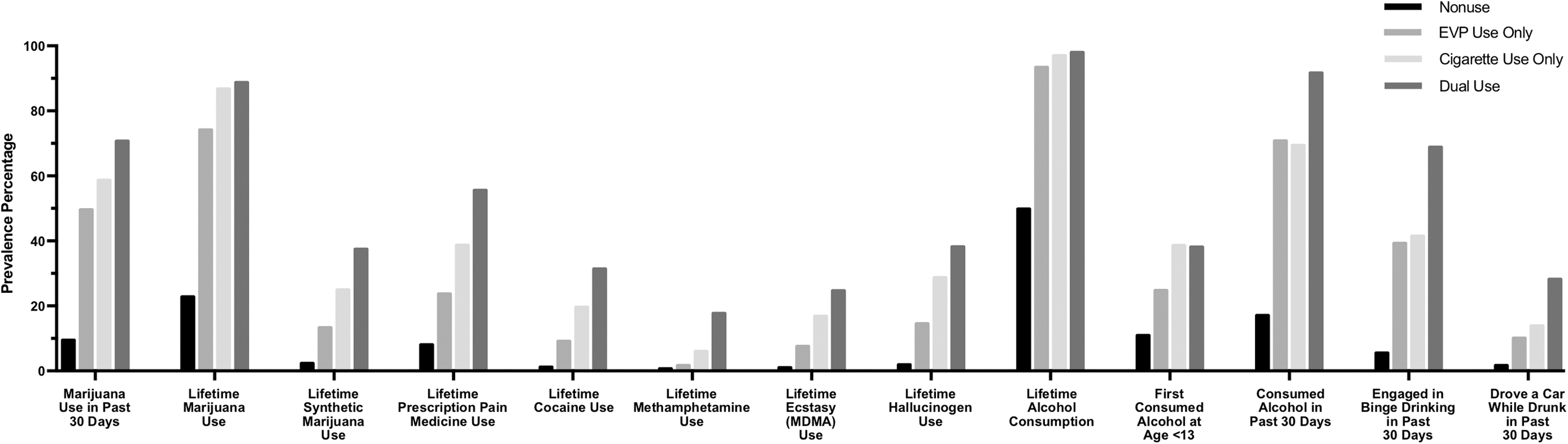
Prevalence percentage of substance use risk behaviors by cigarette and electronic vapor product usage in past 30 days among high school students in the United States, 2017 National Youth Risk Behavior Survey (N = 12,667).
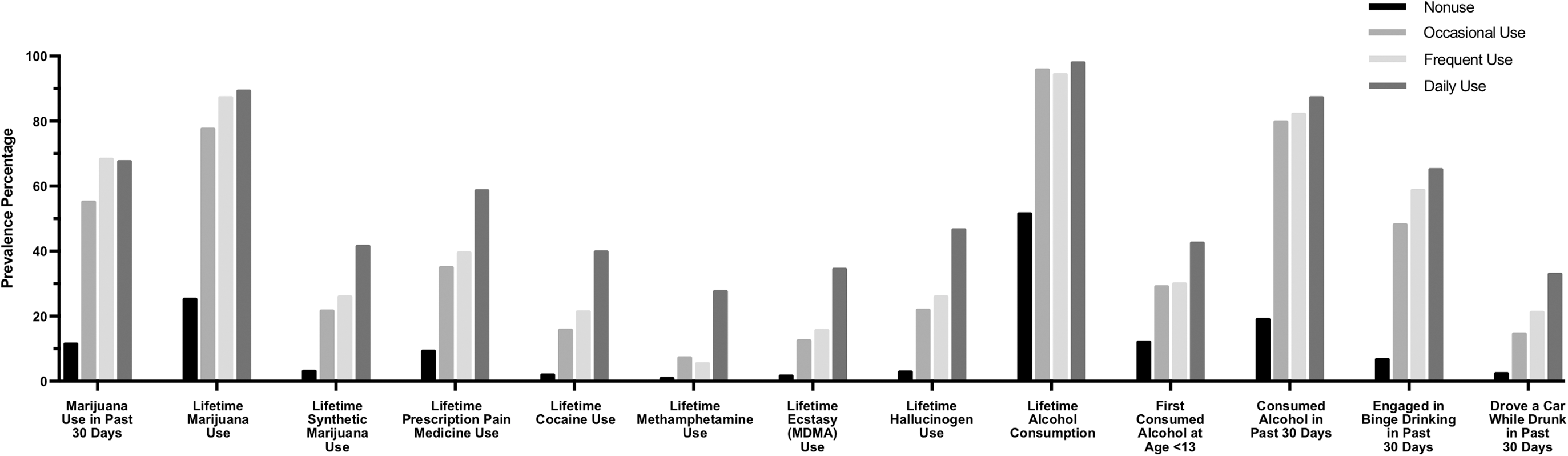
Prevalence percentage of substance use risk behaviors by electronic vapor product use frequency in past 30 days among high school students in the United States, 2017 National Youth Risk Behavior Survey (N = 12,667).
Prevalence of Drug and Alcohol Risk Behaviors by Cigarette and Electronic Vapor Product Use Among High School Students in the United States, 2017 National Youth Risk Behavior Survey (N = 12,667)
aPR: Prevalence ratio adjusted for grade, sex, current smokeless tobacco use, current cigar use, race, and ethnicity.
aPR significant at p < 0.001.
Linear contrast significant (p < 0.05) for dual use versus EVP use only.
Linear contrast significant (p < 0.05) for dual use versus cigarette use only.
Linear contrast significant (p < 0.05) for cigarette use only versus EVP use only.
CI, confidence interval; EVP, electronic vapor product.
Prevalence of Drug and Alcohol Risk Behaviors by Current Electronic Vapor Product Use Frequency Among High School Students in the United States, 2017 National Youth Risk Behavior Survey (N = 12,667)
aPR: Prevalence ratio adjusted for grade, sex, current smokeless tobacco use, current cigar use, current cigarette use, race, and ethnicity.
aPR significant at p < 0.001.
Linear contrast significant (p < 0.05) for daily EVP use versus frequent EVP use.
Linear contrast significant (p < 0.05) for frequent EVP use versus occasional EVP use.
aPR significant at p < 0.01.
Linear contrast significant (p < 0.05) for daily EVP use versus occasional EVP use.
CI, confidence interval; EVP, electronic vapor product.
Marijuana use
Cigarette-only, EVP-only, and dual users were each four times more likely to have used marijuana in the past 30 days (aPR range: 4.97–6.74), three times more likely to have used marijuana at least once in their lifetime (aPR range: 3.14–3.68), and five times more likely to have used synthetic marijuana at least once in their lifetime (aPR range: 5.31–11.93) compared with nonusers of either tobacco product (Table 3). Occasional, frequent, and daily users of EVPs were similarly more likely than nonusers to engage in the three marijuana risk behaviors studied (all aPR ≥2.4) (Table 4).
Other controlled substance use
Cigarette-only, EVP-only, and dual users were each at least 2.5 times more likely to have used prescription pain medicines (aPR range: 2.84–5.66), 6 times more likely to have used cocaine (aPR range: 6.24–16.60), 5 times more likely to have used ecstasy (aPR range: 5.61–14.72), and 6 times more likely to have used hallucinogens (aPR range: 6.42–13.53) at least once in their lifetime compared with nonusers (Table 3). Cigarette-only users (aPR = 6.45, 95% CI: 3.20, 12.99) and dual users (aPR = 13.73, 95% CI: 7.90, 23.87) were both more likely to have used methamphetamine, but not EVP-only users. Occasional, frequent, and daily users of EVPs were all similarly likely to engage in prescription pain medicine, cocaine, ecstasy, and hallucinogen use compared to nonusers. Occasional and daily EVP users were more likely than nonusers to engage in methamphetamine use, while frequent EVP users were not (Table 4).
Alcohol use
Cigarette-only, EVP-only, and dual users were more likely than nonusers to engage in the following alcohol-related risk behaviors: consumed alcohol at least once in their lifetime (aPR range: 1.74–1.77), consumed their first alcoholic beverage below 13 years of age (aPR range: 2.13–3.27), consumed alcohol in the previous 30 days (aPR range: 3.25–4.33), engaged in binge drinking in the previous 30 days (aPR range: 5.15–8.27), and drove a car while drunk in the previous 30 days (aPR range: 4.65–8.98) (Table 3). Occasional, frequent, and daily users of EVPs were all more likely than nonusers to engage in the five alcohol risk behaviors studied (Table 4).
Linear contrasts
Dual-user aPRs were greater than those of EVP-only users in all risk behaviors examined except lifetime alcohol consumption (Table 3). Dual users were also more likely than cigarette-only users to engage in 6 of 13 behaviors. In addition, cigarette-only users were more likely than EVP-only users to engage in 6 of 13 behaviors.
Frequent EVP users were more likely than daily users and occasional users to have used marijuana at least once in their lifetime. Frequent users were also more likely than daily users, but not occasional users, to engage in current marijuana use as well as current alcohol consumption. Occasional users were more likely than daily users, but not frequent users, to have consumed alcohol at least once in their lifetime. No differences in prevalence ratios were found among frequency categories for the nine other risk behavior outcomes examined (Table 4).
Discussion
Using a large, nationally representative sample of high school students, we investigated associations between EVP use (with and without concurrent cigarette use) and 13 specific alcohol- and drug-related risk behaviors. Our results indicate that adolescents' likelihood of engagement in numerous alcohol- and drug-use behaviors is greater for current users of EVPs only, cigarettes only, and both products, compared with nonusers.
Dual users of EVPs and cigarettes were more likely than nonusers to engage in all 13 risk behaviors examined, while EVP-only users were more likely than nonusers to engage in all risk behaviors except methamphetamine use. These findings are generally consistent with prior studies of the associations between EVP usage and substance use behaviors (Kristjansson et al. 2015; Surís et al. 2015; Wills et al. 2015; Demissie et al. 2017; McCabe et al. 2017b). The results of the linear contrasts for EVP and/or cigarette use categories indicate that cigarette-only users were more likely than EVP-only users to have engaged in 6 of the 13 behaviors, while dual users were more likely than EVP-only users to have engaged in all behaviors except lifetime alcohol use, a highly prevalent outcome. Thus, while EVP-only use was associated with higher likelihood of engagement in 12 substance use behaviors, our results suggest a gradient of risk for tobacco use behaviors, with nonusers at lowest risk, followed by EVP-only users, then cigarette-only users, and finally dual users, a pattern consistent with other analyses (Everett et al. 1998; Kristjansson et al. 2015; Wills et al. 2015; McCabe et al. 2017b).
However, since EVP use in adolescence is associated with greater likelihood of traditional cigarette smoking initiation (Leventhal et al. 2015; McCabe et al. 2017a; Miech et al. 2017; Soneji et al. 2017), many youth EVP-only users may later move up the risk gradient by switching to cigarette use or using both products concurrently. This finding is of particular concern because youth tobacco users, and especially youth polytobacco users, are significantly more likely to have co-occurring substance use and other mental health problems (Conway et al. 2018).
EVP users at any previous 30-day frequency were more likely than nonusers to engage in all risk behaviors examined except methamphetamine use. In 9 of 13 behaviors, there was no significant difference in likelihood of risk behavior engagement between occasional, frequent, and daily users. In the remaining four behaviors, daily EVP users were less likely than occasional and/or frequent users to engage in the risk behavior. These findings contrast with those from a 2014 national survey, which suggested that more frequent EVP users were more likely than lower frequency users to engage in four of the five substance use risk behaviors studied (McCabe et al. 2017b). Importantly, the present study suggests that adolescents who use EVPs at any frequency, even just a few times monthly, are more likely to engage in substance use compared with nonusers. Coupled with the finding that some nicotine dependence symptoms can be observed among youth who used tobacco products only one or two times in the previous month (Apelberg et al. 2014), the results of the present study provide robust supporting evidence for experts' calls to reduce and, ideally, prevent even infrequent or experimental use of EVPs in adolescents (American Academy of Pediatrics Section on Tobacco Control 2015; Farber et al. 2015; U.S. Food and Drug Administration 2018).
The strong associations noted between EVP use and various alcohol- and drug-related behaviors align with the EVP use model outlined by Wills et al. in which EVPs appeal to adolescents inclined to engage in risky behaviors (Wills et al. 2015). Furthermore, our results support the theory that EVP-only use clusters with other risky activities to create a “risk behavior syndrome” in adolescents, just as cigarette-only and multiple tobacco product use have been shown to do (Escobedo et al. 1997; Everett et al. 1998, 2000; McCabe et al. 2017b). Adolescents' heightened risk for developing clinical features of drug dependence has been demonstrated for all substances examined in this study except hallucinogens (Chen et al. 2009). Thus, reduction of youth EVP usage and the concomitant onset of risk behavior syndrome may play a role in preventing SUDs involving the other substances examined herein.
In 2017, the CDC introduced a new question to the YRBS regarding misuse of prescription pain medicines (Kann 2018), permitting examination of adolescent EVP usage in association with inappropriate prescription pain medicine use. Our results are the first to link EVP-only, cigarette-only, and dual usage to greater likelihood of opioid and other prescription pain medication misuse among adolescents. Prevalence of this risk behavior was high; for example, 55.6% of dual users reported at least one lifetime instance of prescription pain medicine abuse. Furthermore, there was no difference in prevalence of prescription pain medicine misuse between occasional, frequent, and daily EVP users. Thus, efforts to prevent adolescent tobacco and EVP usage at any frequency may play a role in combating prescription pain medicine abuse among American youth.
Despite the health and behavioral risks found to be associated with youth EVP use in the present study and others, EVPs remain the most commonly used tobacco product among adolescents, and their use is on the rise (Wang et al. 2018). Decreasing EVP use among young people through successful regulatory initiatives could also reduce the number of young people at risk for SUDs by limiting adolescent exposure to addictive nicotine and by preventing the onset of other substance use behaviors via the clustering effect.
Clinicians must also play an active role in addressing their patients' EVP use. Health care providers should ask patients and parents about EVP usage as a component of regular tobacco use screening and provide prevention counseling (Walley and Jenssen 2015). Furthermore, since many adolescents may view EVPs as less harmful and less addictive than cigarettes or other tobacco products (Johnston et al. 2018; Rohde et al. 2018; Tsai et al. 2018), special care should be taken to correct patient and parent misinformation about EVPs. Practitioners should inform families of the full range of health and behavioral risks associated with EVP use, including the potential for SUD development.
The strengths of this article include its thorough examination of EVP use frequency in relationship to risk behaviors as well as its large number of substance use outcomes studied. Notably, the 2017 YRBS offered the opportunity to investigate prescription pain medicine misuse in association with EVP use for the first time. This study also has several limitations. First, no causality can be determined due to the cross-sectional nature of the survey. Students may also be reluctant to admit to their engagement in substance use behaviors, and they may therefore underreport their actions. However, a 2002 study concluded that YRBS respondents tend to report their risk behaviors reliably (Brener et al. 2002). In addition, the YRBS questionnaire does not allow assessment of the temporal order of risk behavior engagement. This limitation is particularly salient for lifetime risk behaviors, which may have occurred before an individual's initiation of EVP use. Finally, the YRBS is only representative of high school students and thus does not provide information about U.S. youths who do not attend school (Kann 2018). However, in 2013, only 5% of all 16- and 17-year-olds in the United States were not enrolled in school (McFarland et al. 2016).
Conclusions
EVP use with and without concurrent cigarette use is associated with greater prevalence of other alcohol- and drug-related risk behaviors in U.S. adolescents. Likelihood of engagement in these substance use risk behaviors generally does not differ between occasional, frequent, and daily EVP users. Public health and clinical preventive initiatives to reduce youth consumption of alcohol and illicit drugs and to prevent the development of SUDs should include efforts to reduce adolescent EVP usage at all frequencies through policy reforms, patient and family education, and routine practitioner screening and counseling.
Clinical Significance
This study demonstrates the strong association between youth EVP usage (with and without concurrent cigarette smoking) and heightened engagement in 12 other substance use risk behaviors. Because individuals who initiate substance use before the age of 18 years are more likely to develop SUDs; reducing youth EVP usage and concomitant drug- and alcohol-related behaviors should be a priority for clinicians, families, and public health officials.
Footnotes
Disclosures
No competing financial interests exist.
Authors' Contributions
Ms. Rigsby conceptualized and designed the study, acquired the data, performed the statistical analyses, interpreted the data, and drafted the initial article. Dr. Keim conceptualized and designed the study, supervised data collection and analysis, performed the statistical analyses, interpreted the data, and critically reviewed and revised the article. Dr. Adesman conceptualized and designed the study, supervised data collection and analysis, interpreted the data, and critically reviewed and revised the article. All authors approved the final article as submitted, and they agree to be accountable for all aspects of the work.
Supplementary Material
Supplementary Table S1
Supplementary Table S2
References
Supplementary Material
Please find the following supplemental material available below.
For Open Access articles published under a Creative Commons License, all supplemental material carries the same license as the article it is associated with.
For non-Open Access articles published, all supplemental material carries a non-exclusive license, and permission requests for re-use of supplemental material or any part of supplemental material shall be sent directly to the copyright owner as specified in the copyright notice associated with the article.
