




Abstract
This study was aimed at developing a hydrophilic radioligand as an antiestrogen drug derivative to be used for imaging breast tumors. Toremifene [TOR; 4-chloro-1,2-diphenyl-1-(4-(2-(N,N-di-methylamino)ethoxy)phenyl)-1-butene, as citrate salt] was selected as the starting material to be derived, since it has been used extensively as an antiestrogen drug for treatment and prevention of human breast cancer. An antiestrogen drug derivative, TOR attached to diethylenetriamine pentaacetic acid (DTPA), was synthesized by two experimental treatments, including a purification and a reaction step. We described the synthesis of this TOR derivative, (3Z)-4-{4-[2-(dimethylamino) ethoxy] phenyl}-3,4-diphenylbut–3-en-1-ylN,N–bis[2-(2,6-dioxomorpholin-4-yl)ethyl]glycinate (TOR-DTPA), in detail. Mass spectroscopy confirmed the expected structures. TOR-DTPA was labeled with technetium-99m (99mTc), using stannous chloride (SnCl2) as the reducing agent. Biodistribution studies were performed on female Albino Wistar rats. Quality controls, radiochemical yield, and stability studies were done utilizing high-performance liquid chromatography, radioelectrophoresis, thin-layer chromatography, and thin-layer radiochromatography methods. The synthesized compound was found to be hydrophilic and anionic, with high stability for the duration of the testing period in vitro. The results indicated that the radiolabeled compound has estrogen-receptor specificity, especially for the breast tissue. It is highly possible that this compound could be used for imaging breast tumors as a novel technetium-labeled hydrophilic estrogen derivative radioligand.
Introduction
Breast cancer is the most common cancer type among women in developed countries and the second leading cause of cancer death in females from Western countries. Despite advances in early diagnosis and therapy, approximately one quarter of the patients who develop this type of cancer die from the disease, with drug resistance being the major source of treatment failure. 1,2 Selecting the most effective therapy for women with breast cancer requires early diagnosis and accurate evaluation of the disease status. This includes determining the ER status of the tumor, because hormone therapy with antiestrogens is beneficial only in tumors that are ER positive (ER+). Imaging of the ER in vivo, using an ER-binding radiopharmaceutical, has the potential for determining the ER status of all tumor sites simultaneously and noninvasively. 3 TOR is a chlorinated synthetic analog of tamoxifen (TAM) and, like TAM, is bound specifically to ER. 4 –6 It is an orally administered triphenylethylene derivative with antiestrogenic activity that is primarily used in the treatment of patients with metastatic breast cancer. 7 –11
The radiolabeled compounds of TAM and TAM derivatives specific to the ERs were prepared in numerous studies. Regarding the mechanism of action of the radiolabeled TOR, only 11C- and 3 H-related studies were performed, to today date. Spila et al. labeled TOR with tritium in positions 3 and 5 of the para-substituted phenyl ring with a high yield. 12 Simberg et al. determined the uterine uptake and subcellular distribution of [3H]TOR and [3H]TAM. They found very similar in vitro and in vivo binding affinities of 3H-labeled TOR and TAM in rat uterus. 13 Kangas et al. studied biodistribution and scintigraphy of 3H- and 11C-labeled TOR in rats bearing DMBA-induced mammary carcinoma. The results of their study showed that the coinjection of 3H-TOR with 11C- TOR made it possible to obtain information on the metabolism of the toremifene molecule. 14 White et al. compared the binding of labeled TOR with the binding of 14C-radiolabeled TAM and TOR to rat DNA by using accelerator mass spectrometry. 15
To our knowledge, there is no report about the synthesis of DTPA-attached TOR and 99mTc radiolabeling of TOR-DTPA in using SnCl2 as the reducing agent for imaging purposes. The aim of this study was the synthesis of a new hydrophilic radiopharmaceutical by the addition of DTPA to TOR and to investigate its radiopharmaceutical potential with biodistribution studies on animals.
Materials and Methods
Chemicals and reagents
Na99mTcO4 was obtained from a 99mTc/99Mo generator (Monrol, Gebze, Turkey). TOR was a gift from Abdi Ibrahim Ilaç Sanayi ve Ticaret A.ş. (Turkey). All reagents were of high-performance liquid chromatography (HPLC) grade and were purchased from Merck Chemical Co. (Darmstadt, Germany) and Aldrich Chemical Co. (Taufkirchen, Germany).
Chemical synthesis
Extraction of TOR
TOR citrate, which includes inactive ingredients, such as starch, lactose, povidone, sodium starch glycolate, magnesium stearate, microcrystalline cellulose, and colloidal silicon dioxide, is available only as a tablet for oral administration. To extract for freebase, 15 tablets of the drug were dissolved in methanol (3 mg/3 mL) and centrifuged at 2000 rpm for 3 minutes. The first supernatant (i.e., the upper organic phase) was separated and the same procedure was repeated for the remaining product. After decanting the second supernatant, both organic phases were put together and the solvent was evaporated to dryness. Upon the formation of the white precipitate, 30 mL of (pH = 10) buffer solution were added. Extraction from this mixture was performed by the addition of 10 mL of cyclohexane. Finally, the resulting supernatant (i.e., the organic phase) was separated and solvent was evaporated to dryness. The crude product (extracted TOR) was stored at −20°C until being used. Figure 1 shows the structure of the extracted TOR compound.

The structure of extracted TOR.
Synthesis of compound 2: (TOR-DTPA)
To obtain a hydrophilic antiestrogen compound, DTPA was added to TOR in an inert atmosphere (under nitrogen gas), and the mixture was mixed for 12 hours at room temperature with acetone and CaCl2 (Fig. 2). Then, 22 mg (0.05 mmol) of TOR and 42 mg (0.12 mmol) of DTPA (dianhydride) were dissolved in 34 mL of acetone in a two-neck, round-bottomed flask. To remove the HCl formed during the reaction, 10 mg (0.069 mmol) of K2CO3 were added to the mixture and were allowed to react at room temperature (under inert atmosphere) for 24 hours. The solution was stored at −20°C in the dark until the day of analysis.
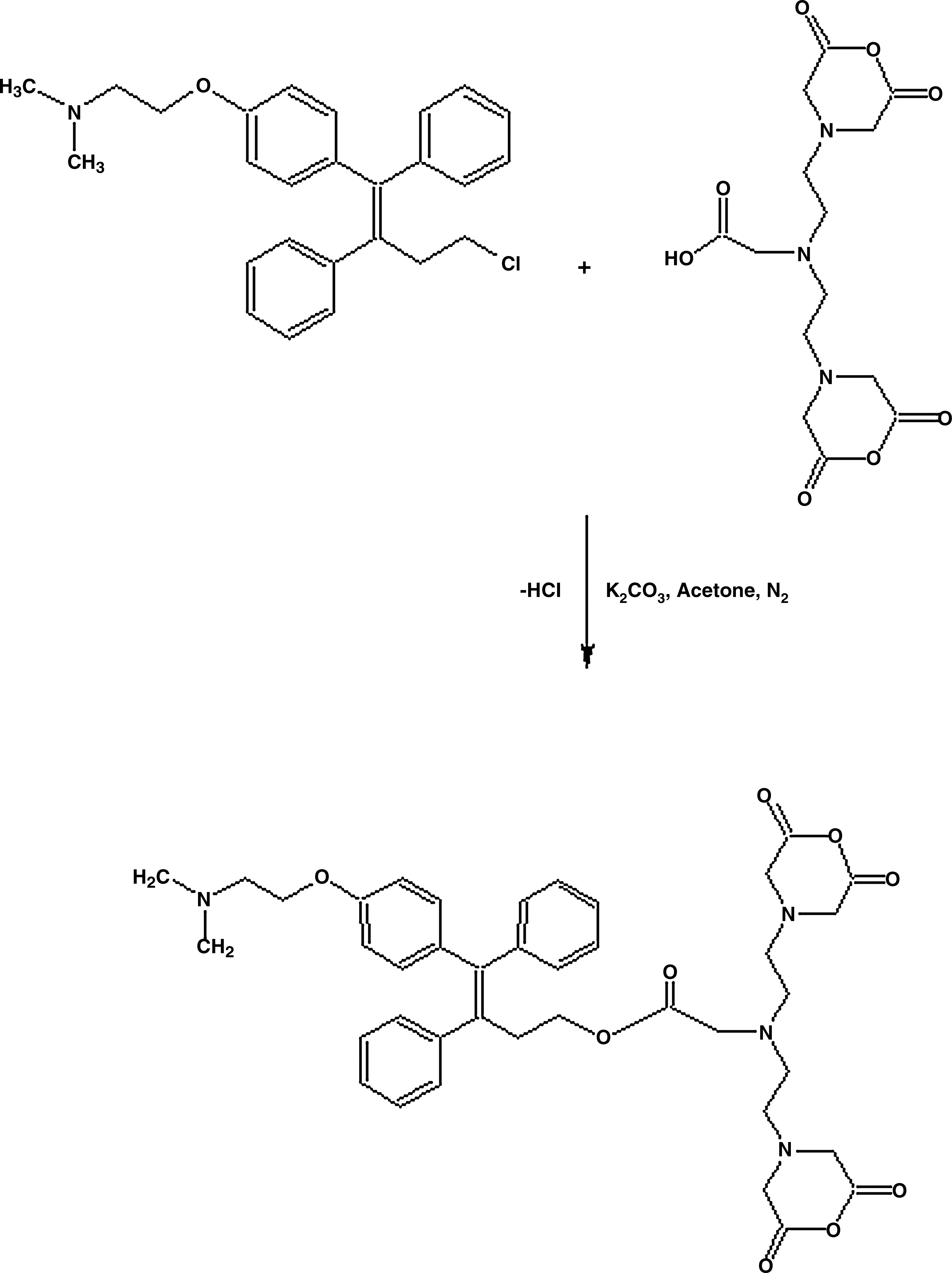
Synthesis of TOR-DTPA.
Determination of the structural parameters
Gas chromatography–mass spectrometry system (GC-MS/MS) spectra [for GC, Varian Star 3400 CX, Palo Alto, CA; for MS, Varian Saturn 2000 (GC-MS/MS (Ion Trap)] were used to determine the masses of the compounds. The spectra were taken in the Izmir Institute of Technology, Department of Chemistry (Izmir, Turkey). Mihailescu et al.'s method was used to identify the molecular structure. 16 Table 1 shows GC-MS/MS spectra (m/z) values for TOR-DTPA and for some different fragments. Also, the proposed structures of selected fragments are indicated.
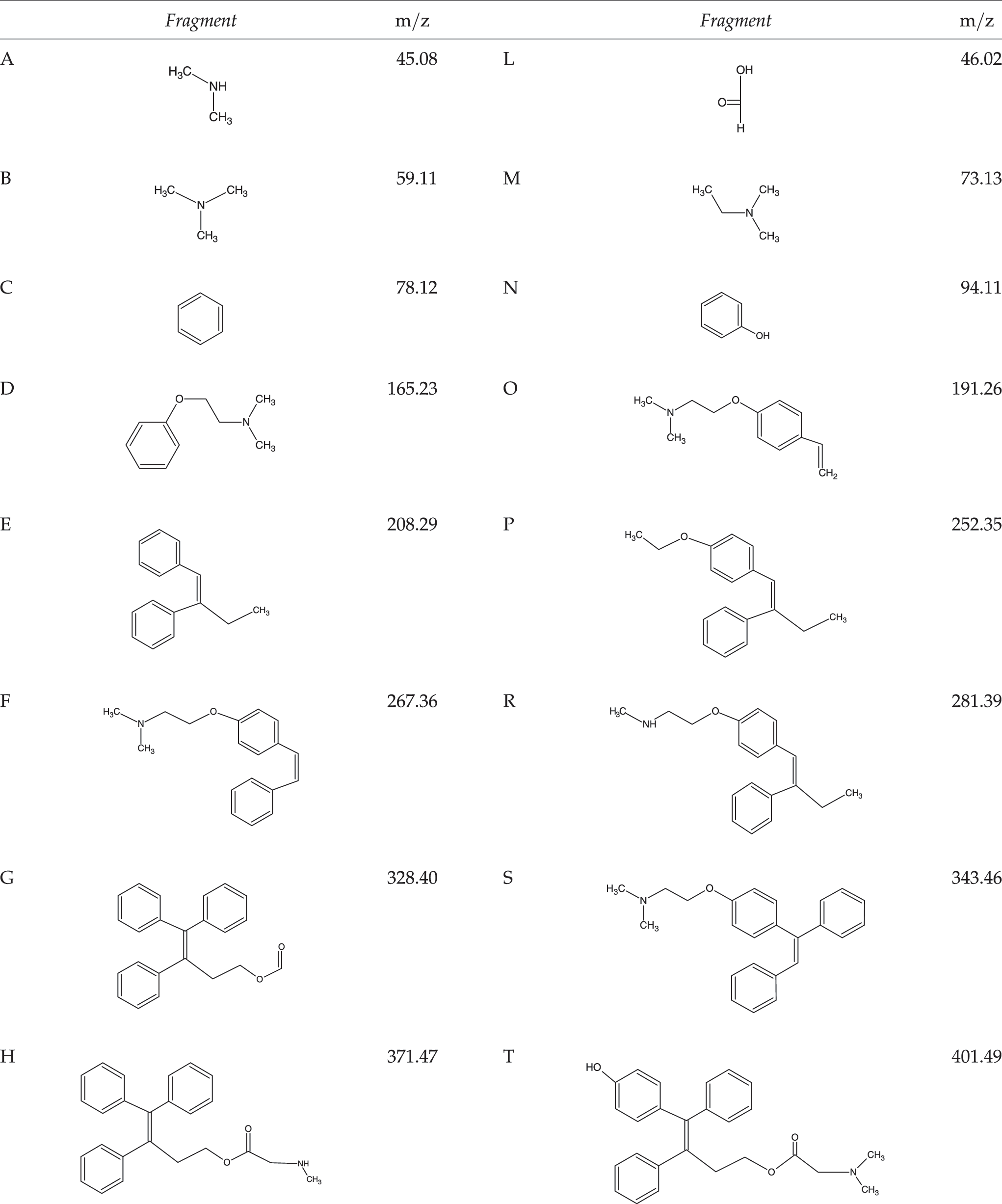

GC-MS/MS, gas chromatography–mass spectrometry.
Radiolabeling procedure with 99mTc
Radiolabeling studies were performed according Acar et al.'s radiolabeling method, with minor modifications. 17 First, 100 μg of TOR-DTPA were dissolved in 1 mL of acetone. To this solution, 40 μL of Tween-80, 740 MBq of (20 mCi)/0.6 mL 99mTcO4 −, and 100 μL of SnCl2 (1 mg SnCl2.2H2O in 1 mL HCl) were added. The pH was adjusted to 5 with 1 M of NaOH solution. The reaction mixture was shaken and was allowed to stand for 25 minutes at room temperature.
Chromatographic procedure
HPLC
A low-pressure gradient HPLC system (LC-10ATvp quaternary pump and SPD-10A/V UV detector and a syringe injector equipped with a 20-μL loop and 5-μm RP-C18 column (250 × 4.6 mm i.d.; Macharey-Nagel, Nucleodor, Germany) was used for analytic experiments. The column was maintained at 30°C, and samples were eluted at a flow rate of 1.5 mL/min. Ultraviolet (UV) detections were achieved at 240 and 280 nm. The mobile phase consisted of 80% acetonitrile (4/1; v/v) in distilled water.
Thin layer chromatography (TLC)
TLC was performed with ITLC-SG (Merck-5554) using 1.5 × 10-cm-sized plates. Samples (TOR, DTPA, and TOR-DTPA) were applied at microliter sample size to the plates 0.5 cm from the edge and placed in a tank containing the mobile phase, acetone/water (9/1; v/v). Table 2 shows R f values of each component determined by the TLC method.
TLC solvent: acetone/water (9/1; v/v).
Radiochromatography procedures
Radioelectrophoresis
The purity of 99mTc complex was determined by radioelectrophoresis with a Gelman® electrophoresis chamber supply (Gelman Instrument Company, Ann Arbor, MI), using cellulose acetate strips. Paper strips moistened by buffer solution [n-butanol/H2O/acetic acid (4/2/1; v/v/v) at pH = 3] were run at a constant voltage of 300 volts for 105 minutes. After the sample was set on the strips, they were placed in the electrophoresis chamber. The developed strips were dried and cut into 1-cm segments and were counted in a Cd(Te) detector equipped with a RAD 501 single-channel analyzer. Movement of the complex was determined relative to that of 99mTc pertechnetate and hydrolyzed 99mTc-colloid.
Thin-layer radiochromatography (TLRC)
The labeling efficiencies with 99mTc were evaluated chromatographically by using flexible silica-gel plates. First, 5-μL samples of DTPA and TOR-DTPA were spotted 1 cm above the lower edge of the plate. The following two solvent systems were used to determine the radiochemical purity (see Table 3). Each TLRC sheet was covered by a cello-band after its development and cut into 0.5-cm widths. Then, the samples were counted and TLRC chromatograms were obtained by plotting counts versus distance. The R f values and labeling efficiencies were derived from TLRC chromatograms.
TLRC, thin-layer radiochromatography.
Stability study of radiolabeled TOR-DTPA in human serum
In vitro stability of 99mTc-TOR-DTPA in human serum was determined by incubating 0.6 mL of the labeled compound with 1 mL of human serum at 37°C. The aliquots were then analyzed in time intervals of 30, 60, 240, and 1440 minutes by TLRC after labeling, and the radioactivity was counted. 99mTc-TOR-DTPA maintained its stability throughout the testing period.
Determination of the partition coefficient (logP) for the complex
Zhang and Wang's method was used to determine the partition coefficient. 18 The partition coefficient was determined by mixing the complex with equal volumes (0.2 mL) of 1-octanol and phosphate buffer (pH 7.0) in a centrifuge tube. The mixture was vortexed at room temperature for 1 minute, and then, 0.1 mL of the radiolabeled compound was added to the mixture. The resulting solution was centrifuged at 5000 rpm (3305 × g) for 15 minutes. From each phase, 0.1 mL of the aliquot was pipetted out and counted. Each measurement was repeated three times. Care was taken to avoid cross-contamination between the phases. The partition coefficient, P, was calculated from using the following equation: P = (cpm in octanol-cpm in background)/(cpm in buffer-cpm in background). The final partition coefficient value was usually expressed as logP. Theoretic logP calculations were done with the ACD/logP program (version 6.0 for Microsoft Windows) (Istanbul, Turkey) (Table 4).
Biodistribution studies on female Albino Wistar rats
All animal experiments for the synthesized compound were carried out according to the relevant instructions set by the Institutional Animal Review Committee of Ege University (Izmir, Turkey). The percentage biodistribution of injected radioactivity per g of tissue, for some selected organs, is given as the mean value of the measurements for 3 rats. Biodistribution studies for the complex were performed in female Albino Wistar rats (weighing approximately 130–180 g). After sterilization by passing through a 0.22-μm membrane filter, 99mTc-labeled compound was injected into the tail vein of the animals (4 μg/each rat). The activity was approximately 29.6 MBq (800 μCi)/rat. The rats were sacrificed at 30, 60, and 240 minutes postinjection under ether anesthesia, and tissues of interest were removed. Blood samples were taken, and organs were excised. All tissues were homogenized (HD 2070 Bandelin Sonoplus, Berlin, Germany), then equal volumes were taken, weighted (Precisa™ XB220A Sensitive Balance, Berlin, Germany), and counted (Cd(Te) detector equipped with a RAD 501 single-channel analyzer). The percent of radioactivity per g of tissue weight (% injected activity/g tissue) was determined.
In vivo blocking experiments
First, 40 μg of TOR for each rat were prepared under the same conditions as 99mTc-TOR-DTPA and were injected into the tail vein of the animals 15 minutes before the injection of 99mTc-TOR-DTPA to determine whether the uptake in ER-expressing target tissue was specific. The same procedures were repeated as indicated above. Table 5 shows organ/muscle ratios of 99mTc-TOR-DTPA and 99mTc-Rec-TOR-DTPA for receptor-unsaturated and receptor-saturated studies (in % injected activity/g) (n = 3).
In % injected dose/g organ—background ratio (n = 3).
%ID/g, percent injected dose per g; ER, estrogen receptor; unsat., unsaturated; sat., saturated; SD, standard deviation.
Statistical analysis
Differences in the mean values of the measured activities were evaluated statistically by the SPSS 13 (SPSS, Inc., Chicago, IL). program (univariate variance analyses and Pearson correlation). Probability values <0.05 were considered significant. Pearson correlation was carried out between different organs for 99mTc-TOR-DTPA.
Results
Determination of the structural parameters
Molecular fragments at 630.81 (K), 586.80 (V), 529.71 (J), 515.68 (U), and 499.68 (I) show that DTPA is attached to TOR at the site of the chlorine atom. The structures of the molecular fragments at m/z 45.08, 46.02, 59.11, 73.13, 78.12, 94.11, 165.23, 191.26, 208.29, 252.35, 267.36, 281.39, 328.40, 343.46, 371.47, and 401.49 are shown in Table 2.
Results of HPLC studies
During the synthesis steps (Figs. 1 and 2), the products were verified with TLC and HPLC methods. Figure 3, 4, and 5 and Table 1 demonstrate the results obtained.
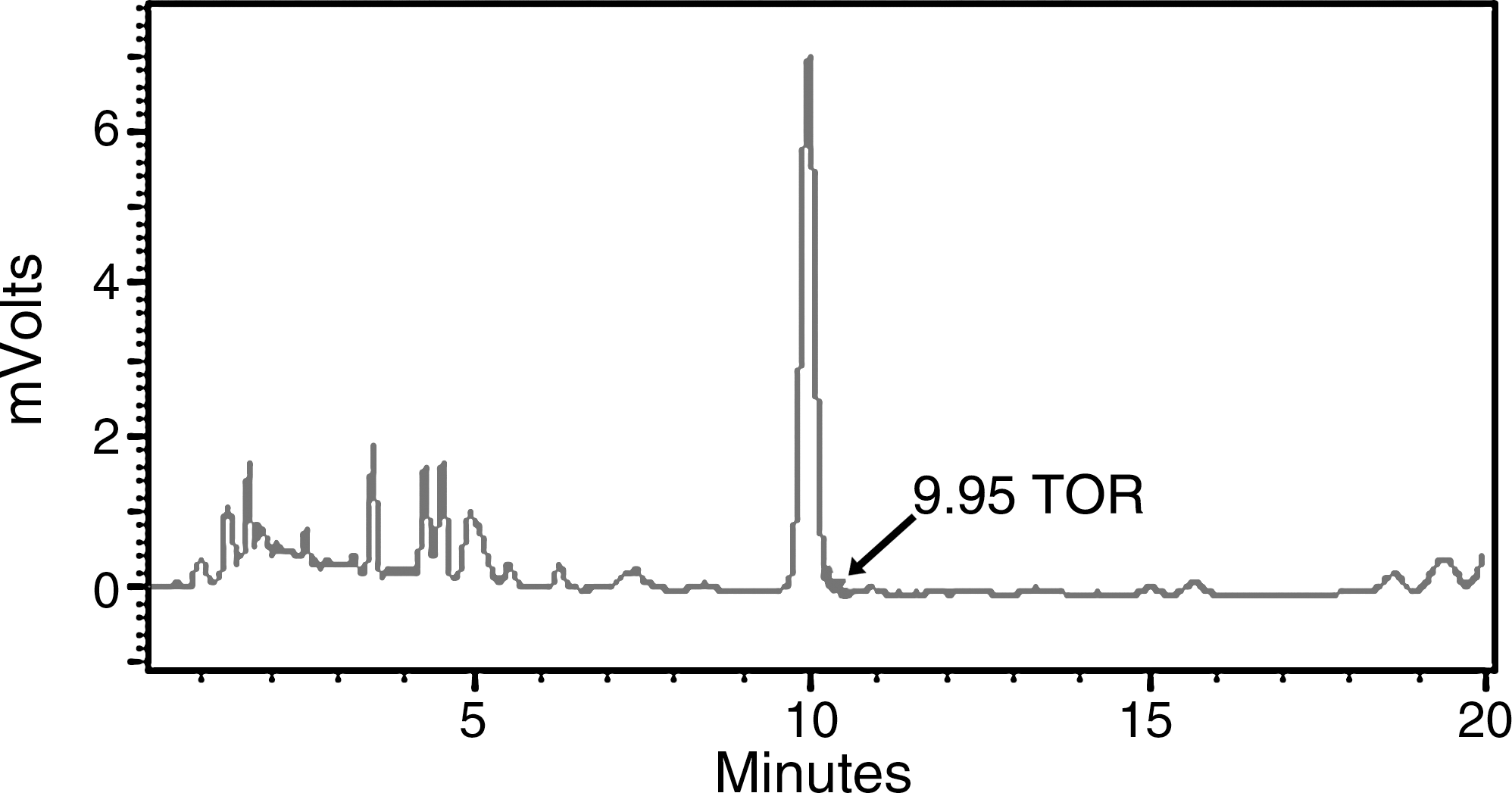
High-performance liquid chromatography chromatogram of TOR.
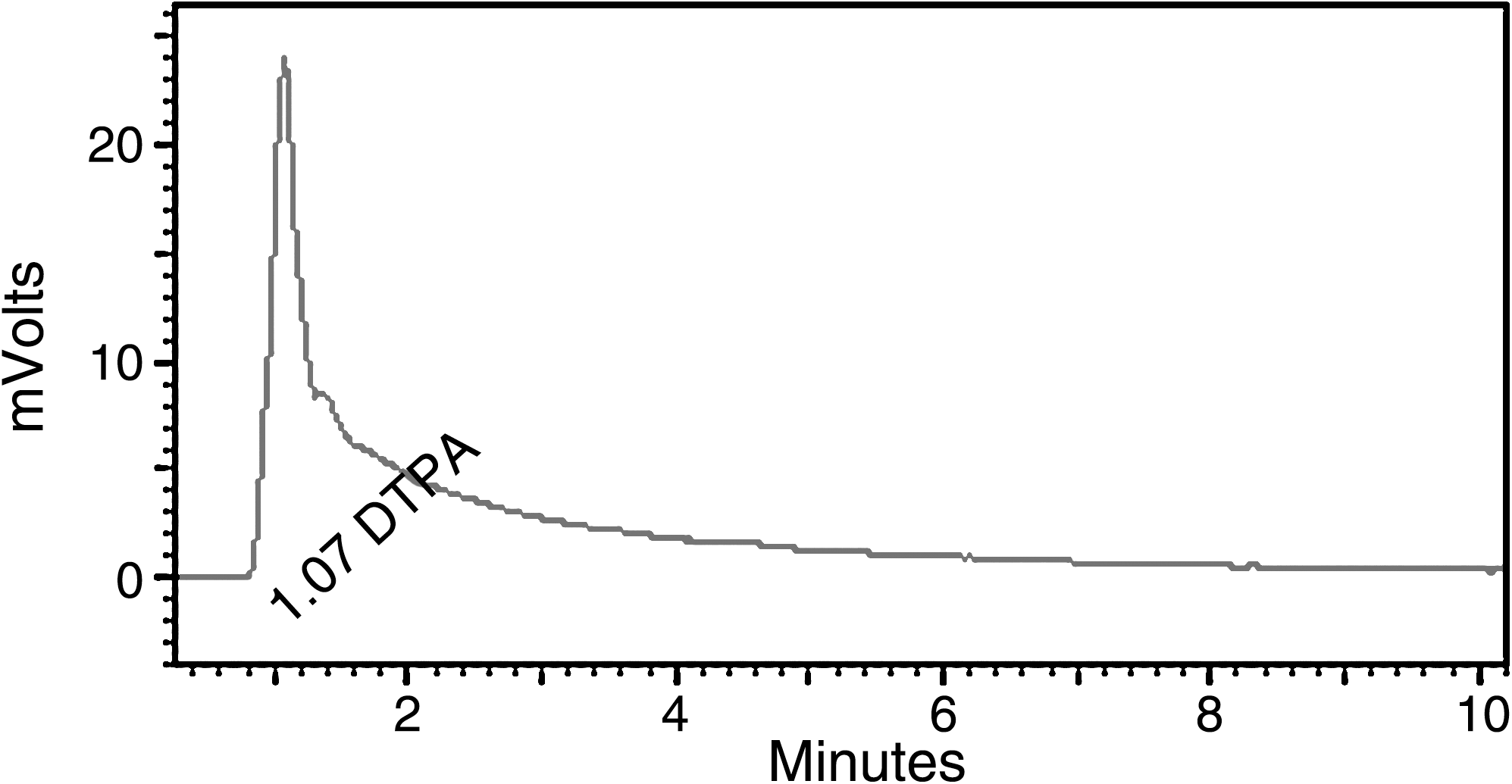
High-performance liquid chromatography chromatogram of DTPA.
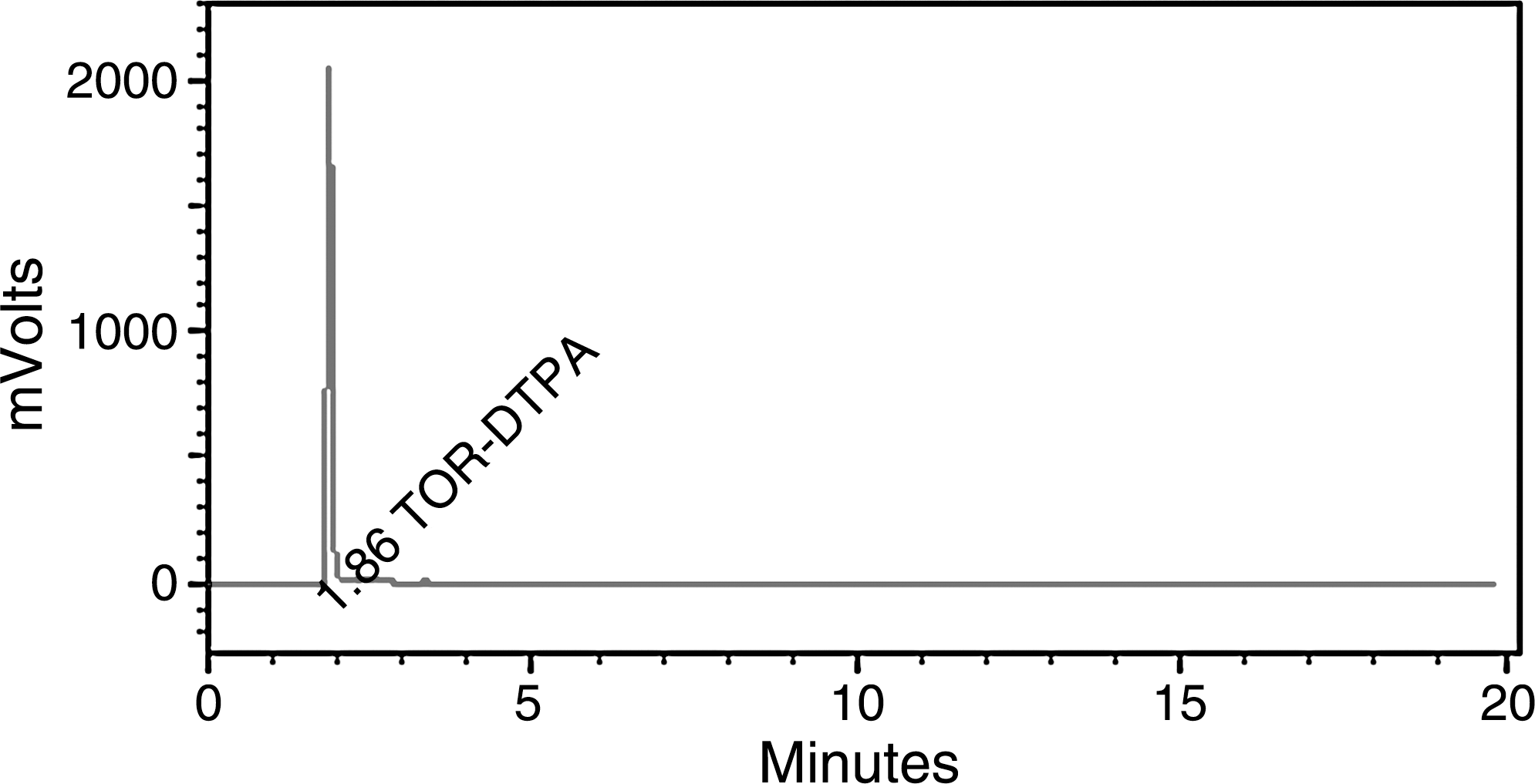
High-performance liquid chromatography chromatogram of TOR-DTPA.
Results of TLC studies
Results of radioelectrophoresis and TLRC studies
Radiolabeling of the TOR analog was performed by using Na99mTcO4 with tin (II) chloride as the reducing agent. The quality control of the radiolabeled compound was performed by TLRC and radioelectrophoresis. High radiochemical yield was obtained, according to the TLRC diagrams (98.07% ± 2.17%; n = 13). Table 3 shows the R f values of the components determined by the TLRC method. In the paper electrophoresis, 99mTc-TOR-DTPA moved toward the anode, which indicated that the complex was anionic at room temperature.
Results of stability study of radiolabeled TOR-DTPA in human serum
The stability of the complex in human serum was investigated at intervals of 30, 60, 240, and 1440 minutes after radiolabeling by the TLRC method. The results demonstrated that approximately 45% of 99mTc-TOR-DTPA existed as an intact complex in human serum up to 1440 minutes (Fig. 6).
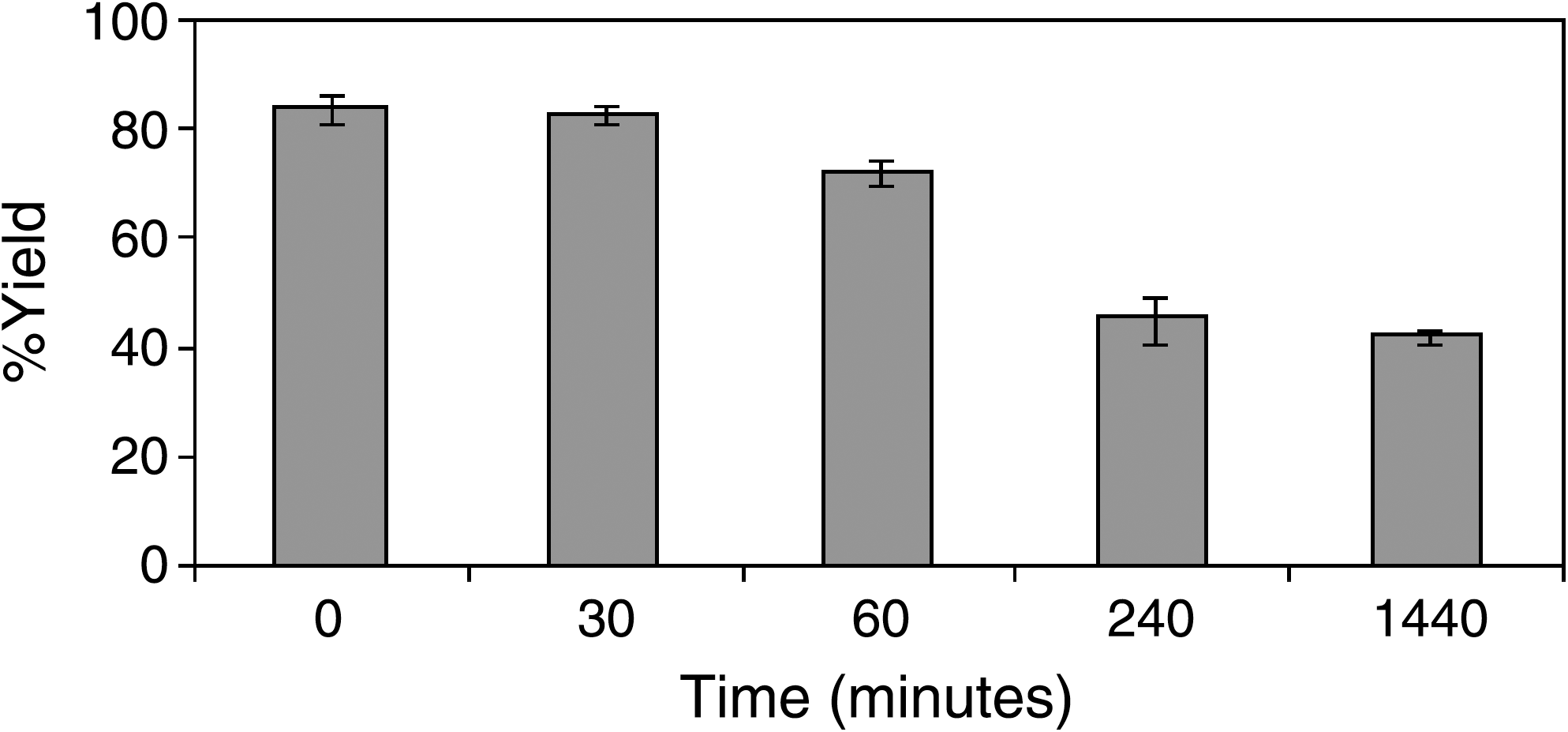
Stability of 99mTc-TOR-DTPA in human serum.
Results of logP for the complex
The logP has been calculated for the uncharged molecule theoretically. As seen in Table 4, DTPA changed the theoretic value for TOR. Consequently, 99mTc-TOR-DTPA may display less lipophilicity than does TOR.
Biodistribution studies on female Albino Wistar rats
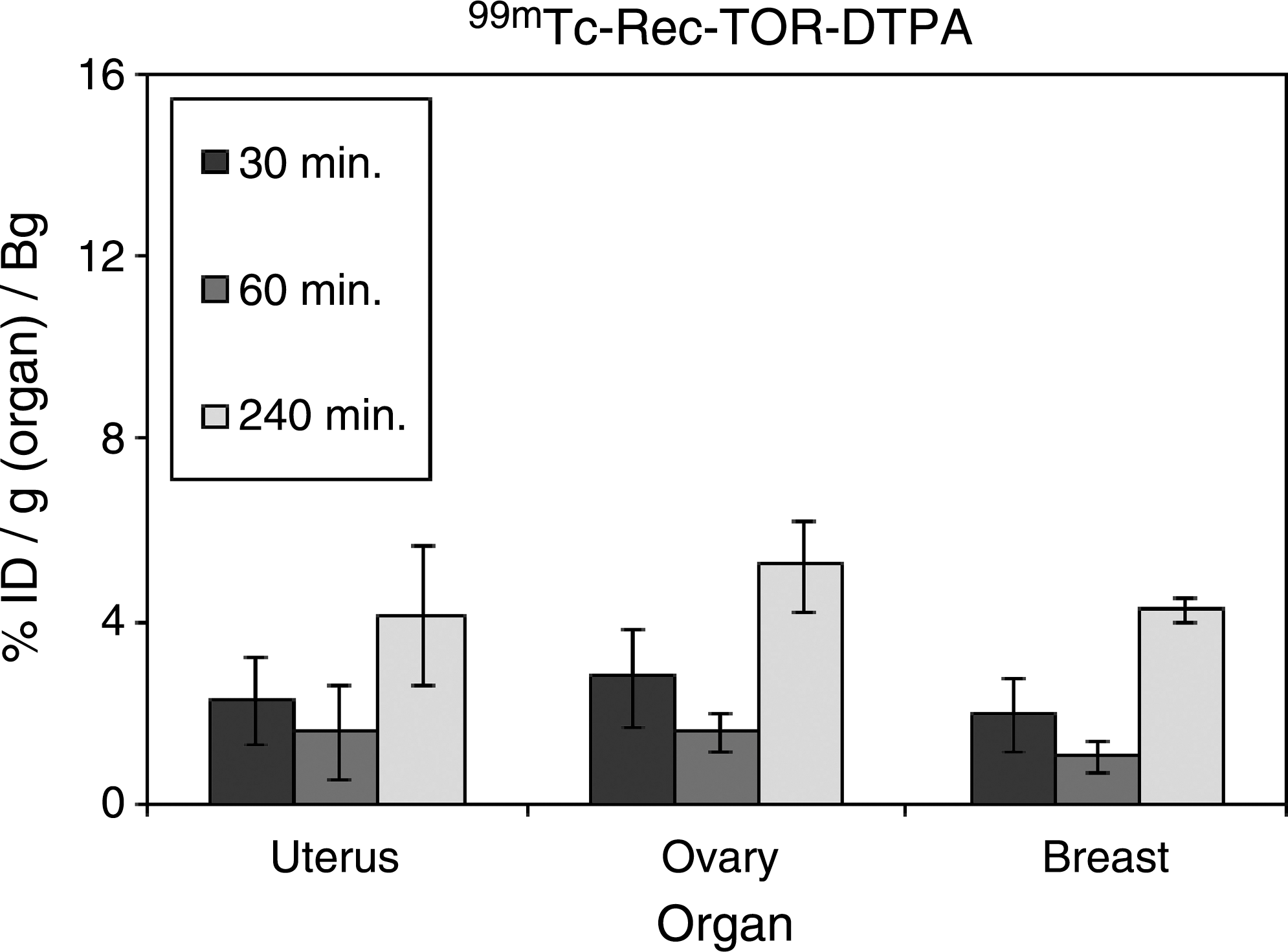
Biodistribution results in rat tissues for the complex are shown in Table 4. The ratio of the injected dose per g (%ID/g) value of various organs to %ID/g of muscle (Bg, background) for the 99mTc-TOR-DTPA complex can be seen. The breast/muscle ratios were 1.60, 8.45, and 13.19 at 30, 60, and 240 minutes, respectively. These results indicate that the complex has a significant uptake by the breast tissue. Figures 7 and 8 show receptor-unsaturated and receptor-saturated uptakes of 99mTc-TOR-DTPA in ER-rich tissues. When these figures are compared, it is clear that 99mTc-TOR-DTPA complex is specific for the breast tissue. The variance analysis, using the SPSS 13 statistics program, supports this result (p < 0.05). There was no distinct difference between receptor-saturated and -unsaturated studies on the uterus and ovary, which are also ER-rich organs, when Figures 8 and 9 are examined. However, the uptake ratios of ER unsaturated to ER saturated are 8 and 3 at 60 and 240 minutes, respectively for the breast. The highest breast uptakes were seen in 60 and 240 minutes in this study. These data indicate that the labeled compound persists at high levels in the breast tissue from 60 to 240 minutes.

Receptor-unsaturated activity ratios of 99mTc-TOR-DTPA for estrogen-receptor–rich tissues.
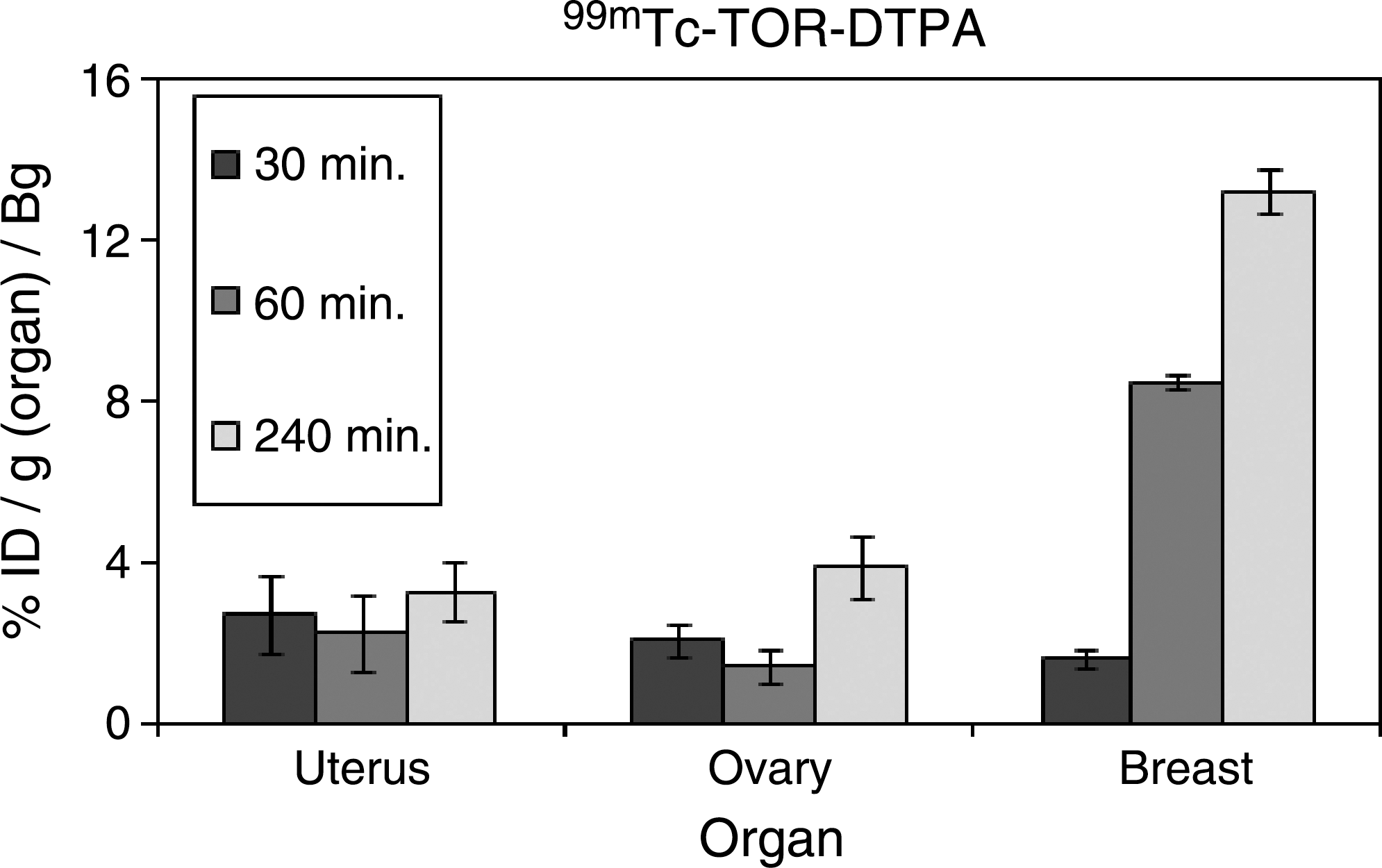
Receptor-saturated activity ratios of 99mTc-TOR-DTPA for estrogen-receptor–rich tissues.
Discussion
TOR is a lipophilic compound that is distributed throughout the body. The highest TOR-derived radioactivities in rats were found in the lungs, with the lowest in the bone, the eye, and the red blood cells by Kim et al. TOR obviously undergoes enterohepatic circulation and is excreted mainly via the feces as a metabolite. 19
In the literature, it is reported that TOR has less estrogenic effect than TAM in liver and uterus and high antiestrogenic effect in the breast. 12,13,19 In our study, it was found that 99mTc-TOR-DTPA has a potential antiestrogenic effect on breast and poor estrogenic effect on uterus.
Biber Muftuler et al. reported that 131I-TAM compound remained in the uterus for 180 minutes, and its uptake by the uterus reached its maximum level within 30 minutes postinjection, which was 3 times higher in ER-unsaturated, compared to ER-saturated, rat tissues. 20 In our study, 99mTc-TOR-DTPA showed potent antiestrogenic in the breast, but very weak estrogenic activity in the uterus (Table 5). The complex has shown ER specificity, especially in the breast tissue, so it may potentially be used as a radiopharmaceutical for imaging ER-based mammary tumors.
Other antiestrogens, such as 4-hydroxy-TAM, TOR, trioxifen, droloxifene, LY117018, and LY139481, have less estrogenic activity in the uterus than TAM. This is because of their short biologic half-lives. 21 The half-life of TOR was reported as 14 hours in the rat. 6 Biologic half-life of TOR-DTPA was determined to be approximately 132 minutes due to the DTPA content of the compound. This result suggests less of an estrogenic effect in the uterus for our labeled complex.
As Silva et al. reported, the radioactivity ratio (target-to-nontarget organ) has been used as an indicator for uptake selectivity. They gave the difference between target and nontarget organ uptakes and used it to show uptake selectivity, since it is responsible for the contrast needed in imaging. 22 The uptake ratios of breast to blood and breast to muscle are shown in Figure 9. The breast/blood and breast/muscle uptake ratios were approximately 20 and 8 in 60 and 240 minutes, respectively in the current study. However, similar ratios were found for Z[125I]IVDE ([125I](Z)-3-methoxy-17α-iodovinylestra-1,3,5(10),6-tetraen-17β-ol) in 24 hours 22 and for 2-iodo[131I]-3-methoxy-estrone in 1 hour. 23 This result confirmed that the breast uptake of 99mTc-TOR-DTPA was faster than that of estrogen derivatives. Consequently, higher ratios of breast-to-blood and breast-to-nontarget tissues are required to obtain a promising estrogen-receptor imaging agent.
Breast-to-nontarget organ radioactivity ratio of 99mTc-TOR-DTPA.
At 240 minute postinjection, kidney and gastrointestinal-tract uptake values remained high (%ID/g) (Table 5). This result meant that the intestinal system was the major route of excretion for the administered radioactivity. TOR was readily absorbed from the gastrointestinal tract. 24 The kidneys, which are the primary organs of metabolism and excretion of estrogen, demonstrated a great deal of uptake due to the DTPA group in the structure. It has been observed that the complex with carboxylic-acid groups became hydrophilic and showed excretion via kidneys. 25
In the present study, 99mTc-TOR-DTPA and 99mTc-Rec-TOR-DTPA had less uptake, with no significant change in liver and lung throughout the testing period. The strong implication is that 99mTc-TOR-DTPA has potential to be an effective imaging agent with ease of availability.
The stomach contains receptors for sex steroids, such as estrogen and androgen. 26 –28 In our study, stomach uptake was moderately high in both ER-saturated and ER-unsaturated experiments and kept increasing by time. It seems that radiolabeled TOR-DTPA uptake in the stomach is not ER specific, because there was no significant difference between ER-saturated and ER-unsaturated studies. Due to its high uptake by the stomach, TOR-DTPA may be a potential agent for receptor imaging in the stomach via high radioactivity. High stomach uptake was reported for other estrogen and antiestrogen derivatives. 20,23
Statistical analyses (analysis of variance) demonstrated that 99mTc-TOR-DTPA is receptor specific for the ER-rich tissues, such as heart, liver, kidneys, small intestine, large intestine, muscle, uterus, and fat tissue. The analysis had statistical meaning at the significance level of 0.05.
Conclusions
TOR-DTPA is synthesized by the conjugation of TOR with DTPA and is characterized by the TLC and HPLC methods. The structural analysis is accomplished by GS-MS/MS. It is concluded that the synthesized antiestrogen derivative ligand can be labeled with 99mTc radionuclide by using tin (II) chloride as the reducing agent. Labeling yield is 98.07% ± 2.17% (n = 13). The stability studies in serum at 37°C showed that 99mTc-TOR-DTPA maintained its stability throughout the testing period. When the partition coefficients (LogP) were considered, 99mTc-TOR-DTPA was found to be more hydrophilic than TOR due to its DTPA content. The labeled compound was receptor specific in the breast tissue, which is an ER-rich tissue. This result is supported by the statistical analyses. We come to the conclusion that 99mTc-TOR-DTPA has shown significant ER specificity for breast, so it may prove to be valuable for imaging breast tumors as a novel technetium-labeled antiestrogen radiopharmaceutical.
Footnotes
Acknowledgments
This work was funded by the Turkish Prime Ministry, State Planning Organization (contact no. 06 DPT 06) and Ege University Research Fund (contact no. 2007 NBE 006, Izmir, Turkey). The authors thank Prof. Dr. Feza Öztürk for editing the English language. The authors also thank Prof. Dr. Tamerkan Ozgen and research assistant, Murat Erdogan, for GS/MS/MS measurements in the Izmir Institute of Technology, Department of Chemistry.
Disclosure Statement
No competing financial interests exist.