




Abstract
Positron emission tomography is a highly specialized imaging technique using short-lived radiolabel substances to produce extremely high resolution images of the body's biological function. The 18F− ion is produced via the 18O(p,n)18F reaction using a silver target cell filled with 1.4 mL of enriched [18O] water. On a typical run, the target is irradiated for 45 minutes with 16.5 MeV protons (on target) and an average beam current of 5–45 mA. When the same reaction takes place with [16O] water [13N] Ammonia is produced as the primary product by the abstraction of hydrogen from water. This study investigated the physical parameters of medical cyclotron during the radiochemical process with induced radioactivity flux and mutual correlation of physical parameters for 16.5 MeV medical cyclotron at the INMAS Delhi, India. It is observed that by getting farther from the target, the relative number of low-energy neutrons increases while the overall flux of neutrons decreases. This is due to multiple scattering of high-energy neutrons in the walls and eventually absorption of low-energy neutrons. The other parameters are also linked with each other which are correlatable.
Introduction
P
X and Y are the parent and daughter nuclides respectively, β+ is a positron and νe is the electron neutrino. The positron is emitted from the nucleus and will travel a distance before annihilating with an electron. Due to conservation of the momentum principle, positron-electron annihilation produces two 511 keV gamma rays that are emitted at 180° to each other. PET depends on the detection of these annihilation gamma rays to create an image of the location of the labeled radiopharmaceutical. The common isotopes for PET application are medical cyclotron produced 11C,13N,18F etc.
Medical Cyclotrons are particularly accelerators working with negative ions (H−) in the energy ranges 10–20 MeV. These devices are employed in the production of the most important PET radionuclide. In the acceleration of the beam inside the cyclotron and in the irradiation of targets, neutrons are produced as secondary particles. 2 –6 The contribution of neutrons emitted in the operation of bio-medical cyclotrons is, in general, the most important component to radiation dose fields around the accelerator, driving shield calculations. Neutrons are produced in nuclear reactions involving several materials and components of the accelerator system. 7 –12 The INMAS PET trace Cyclotron is a fixed-energy isochronous cyclotron equipped with up to six targets. The Cyclotron is vertically oriented and one of the side yokes of the Magnet can be opened for access to the Vacuum Chamber. The Accelerator comprises the Cyclotron with the following subsystems: Magnet System, Radio-Frequency System, Ion Source System, Beam Extraction System, Beam Diagnostic System, Vacuum System and Target System. So a lot of physical parameters are working which can be correlated.
The rationale behind this work is to obtain specific information for optimum planning of PET cyclotron installations. Another interest is to obtain pure data regarding both the environmental dose equivalent produced during irradiation in the typical set up of the most relevant production reactions, and the dose angular distribution – at least in those directions that are not shielded by the cyclotron own structure. The angular distribution is of great interest to confirm that the prevailing emission mechanism is indeed evaporation rather than cascade.
Finally, neutrons are emitted at energies of the MeV order, and albeit thermal neutrons are present due to scattering in the target or in the structural material and to backscattering from the bunker walls, which are responsible for a minor fraction of the dose. The latter play, by far, the main role in shielding calculations given the harder shielding requirements of fast neutrons. ,. Further, only fast neutrons are of interest in investigating whether the main emission mode is by evaporation or cascade emission. In the light of these considerations, only results pertaining to fast neutrons will be presented in what follows – albeit thermal neutrons were also measured, confirming that they represent only a minor contribution in the dose fields. 13 –15
Experimental Procedure
Cyclotron operating conditions for production of radionuclide
The GE Medical System PETtrace cyclotron used at the Molecular Imaging Centre INMAS, Delhi was commissioned in October 2006 and commenced manufacture of 18F-fludeoxyglucose [18F] FDG under Good Manufacturing Practice conditions. PETtrace is a fixed energy isochronous cyclotron, capable of accelerating negatively charged hydrogen (H−) or deuterium (D−) to energies of 16.5 and 8.4 MeV, respectively. To date, the cyclotron has been exclusively employed for the production of 13N, 15O, and 18F for PET studies. On a typical run, the target is irradiated for 60 minutes with 16.5 MeV protons (on target) and an average beam current of 35 mA. With the beam currents employed, the silver target assembly must be cleaned, and the Havars foil replaced after typically 2000 minutes of irradiation to avoid an excessive decrease in the 18F fluorination reaction yield. The reduction in the latter has been attributed to competitive ionic association with metal impurities introduced into the 18O-enriched water from the window. Irradiated foils are stored in a 10-cm thick lead-walled container, which is kept inside a controlled area.
Data on radiation monitoring was collected over a period of 2 years during the production of each batch of 18F− production. An an on-line monitoring system, ROTEM's MediSmarts (Medical Survey Mapping Automatic Radiation Tracking System) was used to measure radiation levels at various locations in the medical cyclotron facility. It is a comprehensive, modular, real time online system that consists of a radiation monitoring system and a control system. The radiation monitoring system has three basic components: the detectors, data processing units and a computer containing software and communication network. The detectors and the data processing units s constitute a monitoring channel that is in turn connected to a computer having software for analysis. Two types of detectors namely PM-11 and GM-42 are used in these monitoring channels for radiation detection. The PM-11 monitoring channel is used to detect and report on low levels of radiation up to 50,000 cps. The PM-11 detector has sensitivity of ∼28,000 cps/mR/h for an energy range of 350–700 keV. It has an accuracy of ± 10% withinmeasuring range of 511 keV. The GM-42 monitoring channel is used to detect and report on higher levels of radiation from 0.02 mR/h to 1 R/h. The GM-42 detector has sensitivity of 17 cps/mR/h and has accuracy of ± 10% within measuring range of 0.05–1.3 MeV.
The 18F− ion is produced via the 18O(p,n)18F reaction using a silver target cell filled with 1.4 mL of enriched [18O] water. On a typical run, the target is irradiated for 45 minutes with 16.5 MeV protons (on target) and an average beam current of 5–45 mA. When the same reaction takes place with [16O] water [13N] Ammonia is produced as the primary product by the abstraction of hydrogen from the water. However, as the radiation dose to the target is increased radiolytic oxidation occurs producing oxo anions of nitrogen (Fig. 1).

Chemical reactions occurring during proton irradiation of an oxygen-16 water target.
Method of analysis
It is expected that after the incident the particle enters the target nucleus and neutron emission take place mainly through evaporation from the excited nucleus (IAEA, 1988). The energy spectrum of neutrons can be described by a maxwellian distribution characterized by a “nuclear temperature” parameter generally in the range 1–10 MeV. Even for energies below 30 MeV it can be safely assumed that secondary neutron production is sharply peaked forward, with >90% of the neutrons emitted in the direction of the incident beam. 6,7
The physical parameters associated with a negative ion cyclotron are that negative ions are accelerated, but positive ions are extracted. Beam extraction is quite different and much simpler than for a positive ion machine. Also high beam intensities can be extracted with minor activation of the extraction system, as compared to a positive ion cyclotron. The principle of acceleration of negative ions is not different from the one of positive ions. All forces have the same direction but opposite sense, as Q is negative. If positive ions rotate counter clockwise, then negative ions will rotate clockwise in the same magnetic field. Once the negative ions have reached their final energy at radius R, they hit a stripping foil, that removes the electrons. The ion charge, being now positive, experiences the same force in the same direction but with opposite sense. The trajectory of the positive ion is the mirror image of the trajectory of the negative ion. In this way the positive ion leaves the magnetic field and continues straight forward to an external target position. In this work, the energy spectrum as well as all physical parameters associated with each other were calculated. The correlation and energy diagram are given in Figures 2 –6.
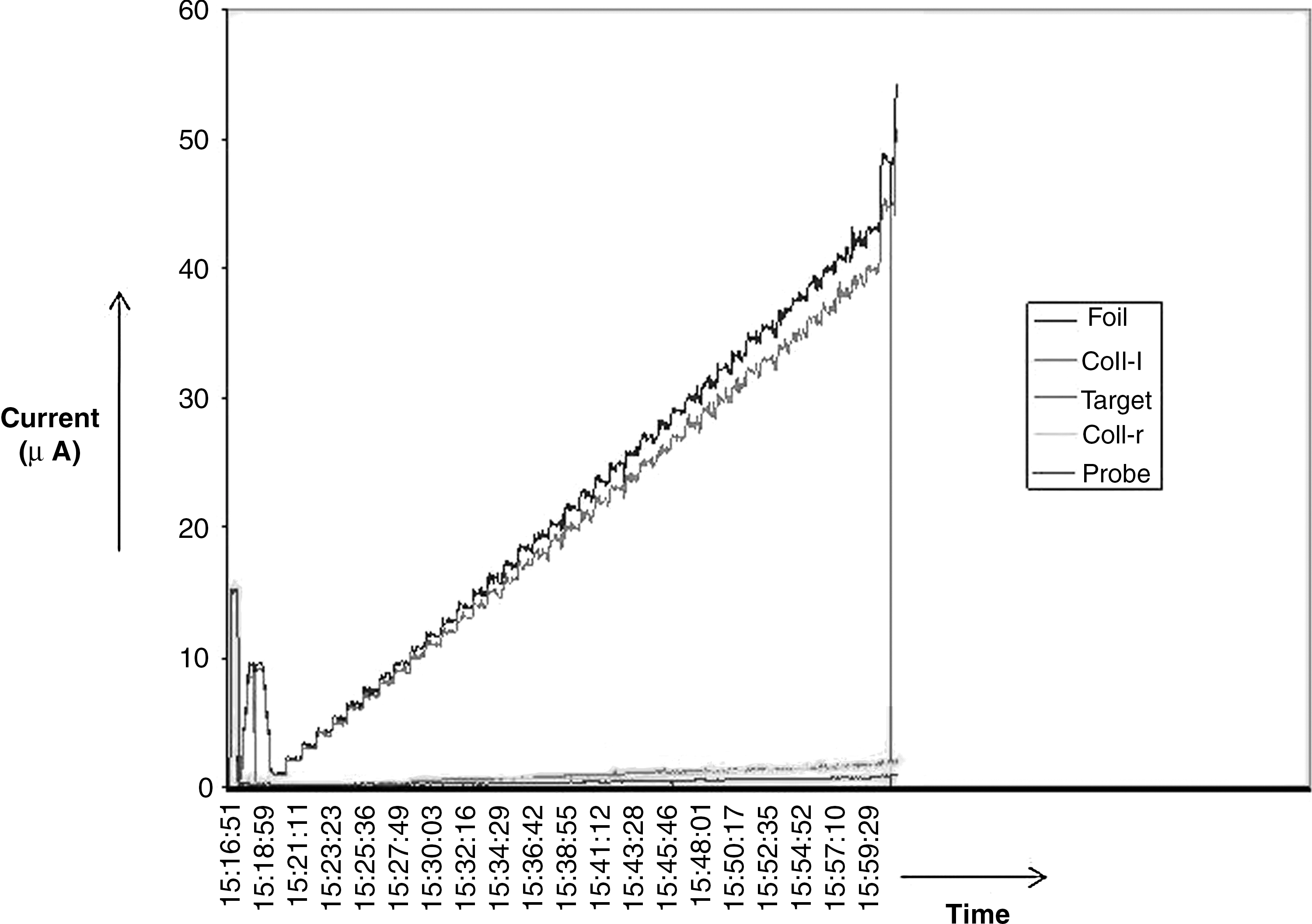
Correlation of foil/collimator/target/probe current with time.
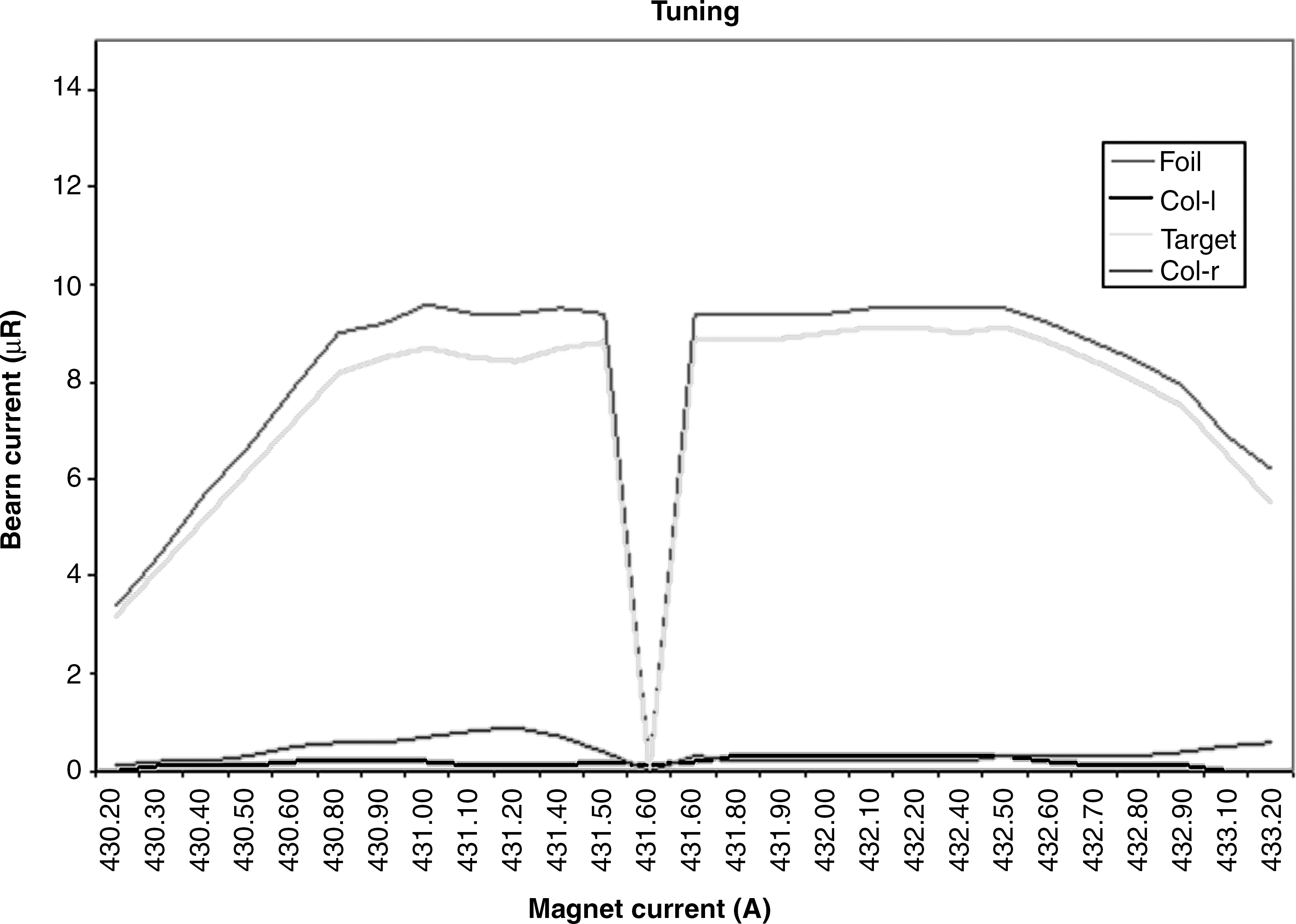
Correlation of foil/collimator/target/probe current with magnet current.
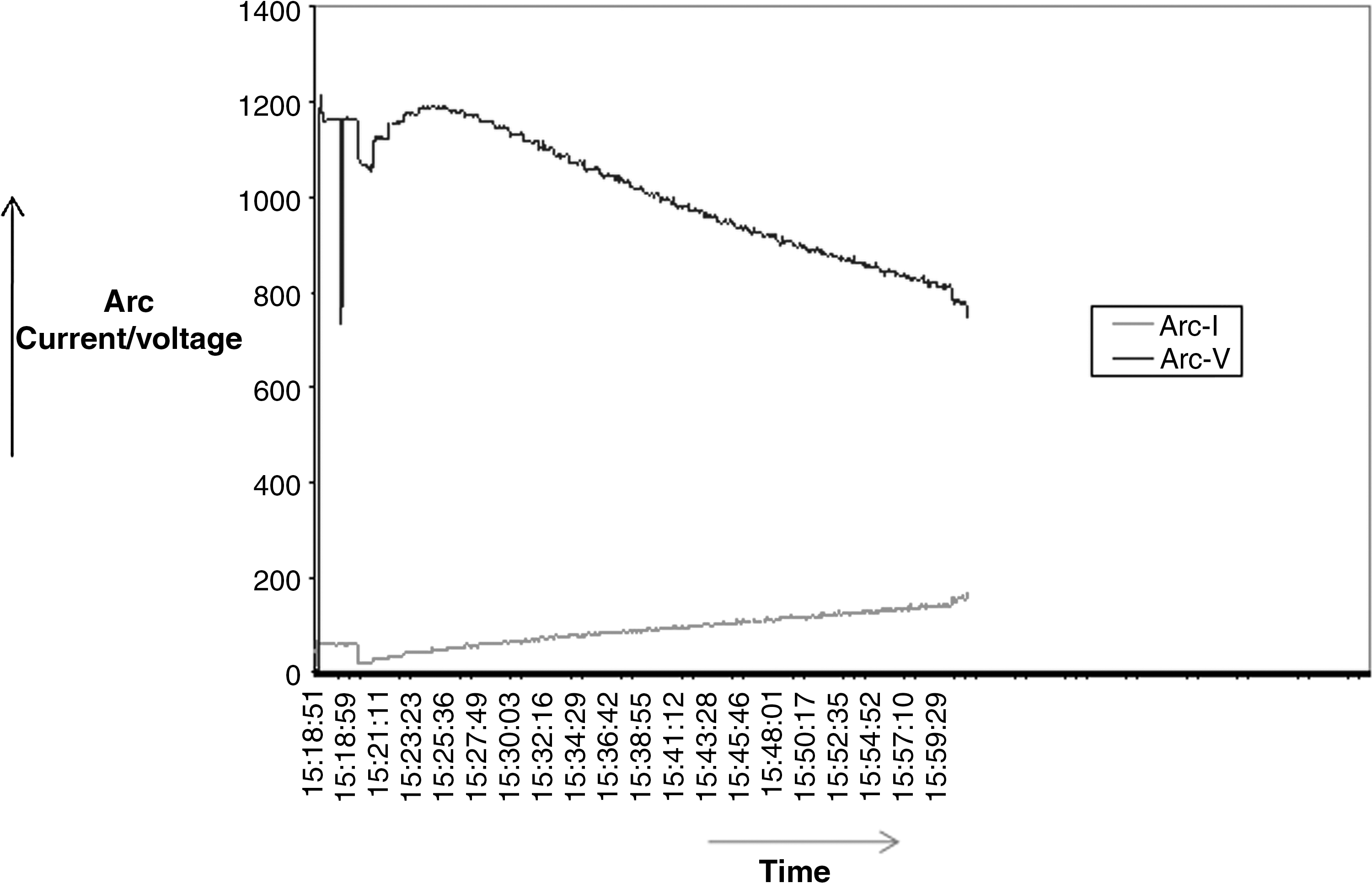
Correlation of arc current/voltage with time.
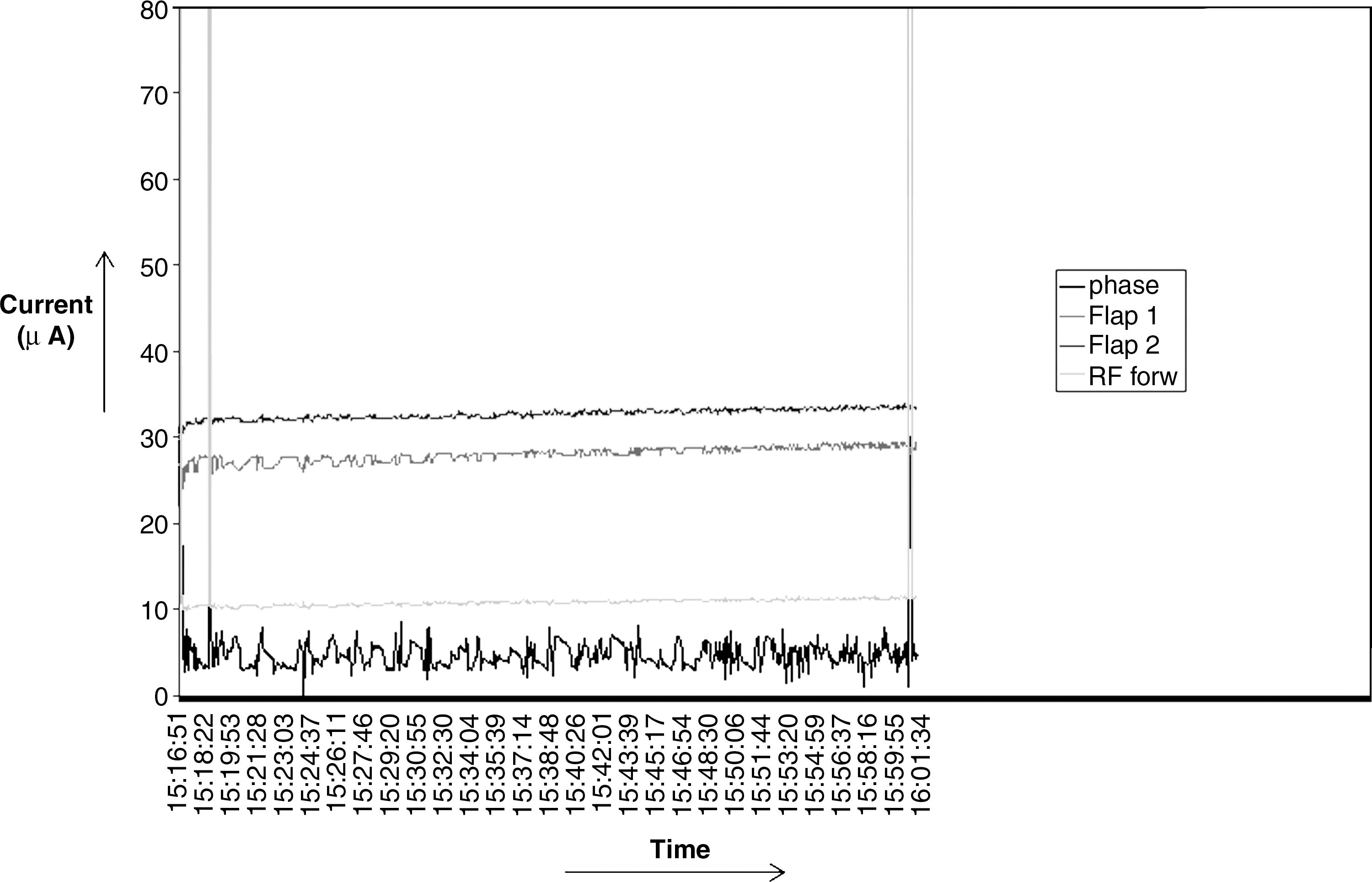
Correlation of RF/flap/phase with time. RF, radiofrequency.
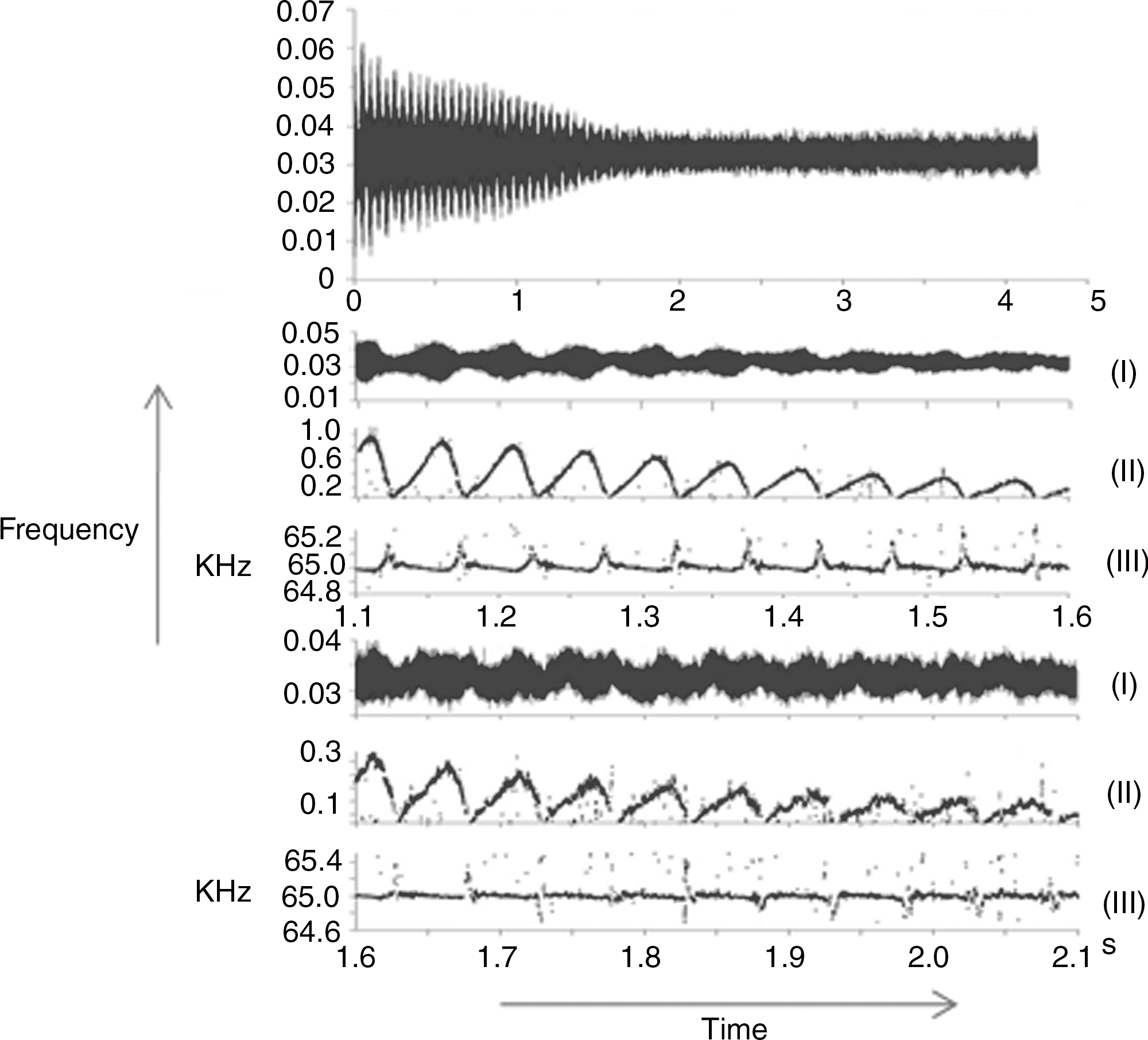
Medical cyclotron operation in 0.05 to 650 kHz.
During calculations at different sites, all neutron source terms that were used give approximately the same results. In the energy range 1–20 MeV, differences were observed only when monoenergetic sources (8.27 and 13.92 MeV) were used as source term. This spectrum has an error <3% in all the energy bins except the last one that has an error of 4.3%, except with monoenergetic source, where a peak at the upper energy section is expected. Normalized neutron spectra are measured and calculated at all sites produced by protons interacting with Faraday cup.
Results and Discussion
The radiation levels measured inside the medical cyclotron facility were related to cyclotron operation. During production of 18F− for PET radiopharmaceuticals the medical cyclotron normally operated with an average operating current of 40 μA on the target. The energy spectra and intensity of neutrons and gamma-rays produced in the target have been utilized 8,9 by calculating neutron and gamma production cross-sections at corresponding proton energies for each of the sub-layers. The gamma radiation level in the cyclotron vault measured by GM-42 detector at a distance of 1 m from the cyclotron was observed to be >10 mSv/h. However, the radiation level was reduced to <100 μSv/h at 1 m from the cyclotron one hour after the end of the bombardment. The neutron radiation level at the same location was >1000 mSv/h but it reduced to nil as soon as the beam was off. The gamma radiation level on the door of the vault was measured to be in the range of 0.2–0.4 μSv/h during beam ON. It reduced to 0.1 μSv/h after the end of the bombardment. The correlation of other parameters Ion Source current/voltage, Dees voltage, Collimator current, and magnet current are linked with each other which are correlatable.
Conclusions
The neutron/gamma radiation spectra around the PETrace have been assessed for the main productions. The most intense dose field, as expected, was found to be generated in the H2O18(p, n)F18 production. In the calculation of shielding for new installations of PET cyclotrons, the results of the present investigation can offer guidance for appropriate choice of the parameters concerning distribution of neutron dose, and helping avoid underestimating lateral shields. Similarly it is equally important for understanding other parameters correlation during PET radionuclide production.
Footnotes
Acknowledgments
The authors thank Dr. R.P. Tripathi, Director, INMAS, for providing all the facilities and for his deep interest and constant encouragement during the course of the study. The authors are also thankful to GE who has given technical support during the experiment.
Disclosure Statement
This is also confirmed that there is no conflict of interest for any of the authors.