




Abstract
Yttrium-90 (T½ 64.1 hours, Eβmax=2.28 MeV) is a pure β− particle emitting radionuclide with well-established applications in targeted therapy. There are several advantages of 90Y as a therapeutic radionuclide. It has a suitable physical half-life (∼64 hours) and decays to a stable daughter product 90Zr by emission of high-energy β − particles. Yttrium has a relatively simple chemistry and its suitability for forming complexes with a variety of chelating agents is well established. The 90Sr/90Y generator is an ideal source for the long-term continuous availability of no-carrier-added 90Y suitable for the preparation of radiopharmaceuticals for radionuclide therapy. The parent radionuclide 90Sr, which is a long-lived fission product, is available in large quantities from spent fuel. Several useful technologies have been developed for the preparation of 90Sr/90Y generators. There are several well-established radiopharmaceuticals based on monoclonal antibodies, peptides, and particulates labeled with 90Y, that are in regular use for the treatment of some forms of primary cancers and arthritis. At present, there are no generators for the elution of 90Y that can be set up in a hospital radiopharmacy. The radionuclide is procured from manufacturers and the radiopharmaceuticals are formulated on site. This article reviews the development of 90Sr/90Y generator and the development of 90Y radiopharmaceuticals.
Introduction
Presently, the treatment of various types of cancers relies on a multimodality approach, out of which targeted therapy using unsealed radiotherapeutic agents plays an increasingly significant role. 1,2 This is primarily due to the availability of a wide variety of therapeutic radionuclides, such as 153Sm, 177Lu, 90Y, and 188Re having favorable nuclear decay characteristics and amenable coordination chemistry for complexation with a variety of ligands and biomolecules. Additionally, the emergence of sophisticated molecular carriers, such as peptides and monoclonal antibodies, which provide a vector for selective deposition of radioactivity in the vicinity of the cancer cells play pivotal role toward this development. The major advantage of employing targeted radiotherapy compared to other conventional approaches lies in the systemic administration of a tracer specifically targeting the sites needing treatment, which minimizes the toxicity to the potential nontargeted or healthy tissues. This treatment modality is generally better tolerated and higher radiation doses can be delivered to the targets as compared to the external beam irradiation. This is especially effective in the case of neuroendocrine tumors (NETs), which are often more radiation resistant compared to other solid tumors. 1
Selection of an appropriate radionuclide for therapeutic applications is primarily dependent on its nuclear decay characteristics and biolocalization of the radiolabeled agent. The radiation dosimetry and biological response of the targeted cell relative to the nontargeted tissues is governed by several factors, such as the half-life and decay energy of the radionuclide, uptake and excretion characteristics of the radiopharmaceutical as well as the size and vascularity of the tumor. Nevertheless, the success of targeted radiotherapy using a suitable radionuclide is dependent on its ease of production and convenient availability of the radionuclide in the nuclear medicine centers with high radionuclidic purity and appreciably high radioactive concentration. Additionally, targeted radiotherapy requires high-specific activity radionuclides, which restricts the choice of the radioisotope.
The commonly used radionuclides for targeted therapy, their nuclear decay characteristics are summarized in Table 1. Rhenium-188 (188Re) and 90Y offer the highest possible specific activity due to their availability in no-carrier-added (NCA) form from 188W/188Re and 90Sr/90Y generators. The radionuclide generators serve as a convenient alternative to in-house radioisotope production facilities like reactors or cyclotrons and can conveniently be transported to distant hospital sites. Despite, the great potential of 188Re for therapeutic use, the production of its precursor 188W is still limited only to three high flux research reactors, HFIR at Oakridge in the USA, the SM reactor at Dimitrovgrad in the Russian Federation, and the BR2 reactor in Belgium, which, in turn, confines the use of this radioisotope in few selected countries. 3 Fortunately, there is an unlimited potential availability of 90Y, as its parent 90Sr is one of the major fission products and the annual world production of 90Sr in the nuclear reactors amounts to ∼600 MCi. 3 Moreover, 90Sr/90Y is one of the typical examples of a secular equilibrium with a very long-lived parent (90Sr, t½ 28.8 years) and a short-lived daughter (90Y, t½ 64.1 hours). By adapting suitable separation techniques, a few thousand Curies of usable high-purity 90Y can be isolated from a 37 GBq (1 Ci) stock of 90Sr. The potential widespread availability of this radioisotope at a reasonable cost makes it an economical choice for therapeutic use.
Only principal decay mode is mentioned.
For β− particles maximum β− energy is mentioned.
Inorganic Chemistry of Yttrium
Yttrium (Z=39) is the first d block element and belongs to group 3 and period 5 of the periodic table. The ground state electronic configuration is [Kr]4d 1 5s 2 . Though being a d-block element, aqueous yttrium chemistry often resembles with that of the lanthanides owing to their comparable ionic radii. Its ionic radii (0.88 Å) is in between that of Ho (0.894 Å) and Er (0.881 Å). For this reason, Y shows greater similarity to the heavier lanthanides rather than to the lighter ones. Yttrium almost exclusively exists in a tricationic state and is hydrated by eight water molecules in an aqueous solution, most probably with a distorted bicapped trigonal prismatic geometry. It is also considered a harder acidic cation owing to a closed-shell electron configuration and tends to form complexes with hard donor atom ligands, displaying high coordination numbers, usually 8 or 9. Therefore, the labeling of peptides with Y3+ has been performed using mainly polyaminocarboxylic ligands, such as ethylenediamine tetraacetic acid (EDTA), diethylenetriaminepentacetic acid (DTPA), 1,4,7,10-tetraazacyclododecane-1,4,7,10-tetraacetic acid (DOTA), 1,4,8,11-tetraazacyclododecane-1,4,8,11-tetraacetic acid (TETA), 1,4,7-triazacyclononane-1,4,7-triacetic acid (NOTA), and 3,6,9,15-tetraazabicyclo [9.3.1]pentadeca-1(15),11,13-triene-3,6,9-triacetic acid (PCTA) (Fig. 1). The stability constants for complexes of these ligands with trivalent Y3+ are summarized in Table 2. 4,5 Among these ligands, Y3+ is coordinated more avidly by DOTA derivatives owing to the pronounced thermodynamic stability and better kinetic inertness of the corresponding complexes.
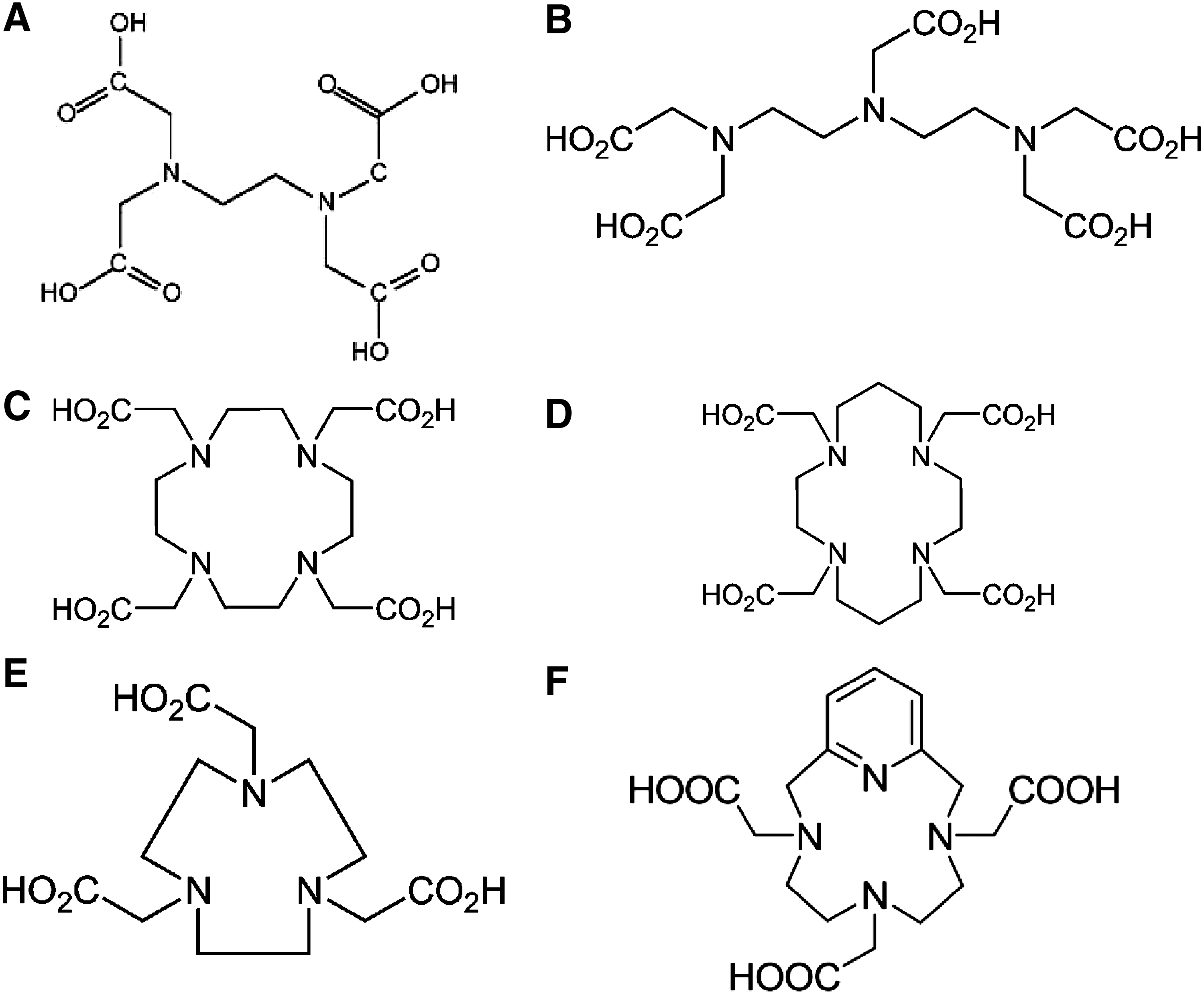
Structures of the bifunctional chelators used for complexing Y3+
K ML =[ML]/[M][L].
TETA, 1,4,8,11-tetraazacyclododecane-1,4,8,11-tetraacetic acid; EDTA, ethylenediamine tetraacetic acid; PCTA, 3,6,9,15-tetraazabicyclo [9.3.1]pentadeca-1(15),11,13-triene-3,6,9-triacetic acid; DTPA, diethylenetriaminepentacetic acid; DOTA, 1,4,7,10-tetraazacyclododecane-1,4,7,10-tetraacetic acid.
Yttrium Radionuclides in Nuclear Medicine
Yttrium is mononuclidic with the only stable isotope being 89Y. Radioactive yttrium isotopes cannot be found in nature. More than thirty radioisotopes of yttrium with a mass number ranging from 76 to 108 have been reported, most of which are produced during the nuclear fission process. Mostly, the radioisotopes having the mass number below 89 decays by electron capture or β+, while those having mass numbers above 89 decays by β− emission. The radioisotopes 88Y, 91Y, 87Y, 90Y, and 86 Y with half-lives of 106.6 days, 58.5 days, 79.8, 64.1, and 14.6 hours, respectively, are the long-lived radioisotopes. Out of these radioisotopes, only 86Y and 90Y possess radioactive decay properties appropriate for use in clinical PET studies and therapeutic applications, respectively. The nuclear decay characteristics and potential uses of these two yttrium radioisotopes in nuclear medicine are summarized in Table 3. These two radioisotopes of yttrium offer an ideal pair in cancer theranostics, which is based on a combination of a diagnostic test with a therapeutic entity aimed at providing personalized diagnostic-therapy to individual patients. 6 Consequently, there has been an extensive research on the production and utilization of these two radioisotopes. Because a discussion of the production and applications of 86Y is beyond the scope of this review, the remainder of this manuscript will be devoted to only 90Y.
Production of Yttrium-90
Yttrium-90 can be directly produced by neutron activation of 89Y in a nuclear reactor. As yttrium is mononuclidic, there is no need for enriched isotopes for irradiation. The radionuclidic purity of this directly (n,γ) activated product is generally very high. However, depending on the epithermal flux in the reactor, detectable levels of strontium-89 (89Sr) could be present owing to the (n,p) reaction. Moreover, 90Y produced by (n,γ) activation in a nuclear reactor is of low-specific activity due to the small neutron absorption cross section (0.001 b) of 89Y. 3 Yttrium-90 of moderate specific activity can only be produced by irradiation of the target in high flux reactors. However, NCA 90Y of near theoretical specific activity is required for the preparation of labeled antibodies and peptides used for targeted therapy. 3 NCA 90Y can be produced in a nuclear reactor by pursuing the 90Zr(n,p)90Y reaction using 100% enriched 90Zr target and fast neutron flux of ∼7.5×1013 cm2 second−1. 7 Although this method obviously holds promise as a viable approach, several issues are related to the long-term availability and cost of enriched 90Zr; the requirement of fast neutron flux, R&D associated with target design, separation of 90Y, and 90Zr recycling are sought to be tackled. The amount of radioactivity produced by this route will also be limited.
Since large quantities of 90Y are needed for nuclear medicine applications, separation of 90Y in an NCA form from 90Sr making use of the radionuclide generator system is relatively more appealing, especially if adequate support and technological attention are given for isolating 90Y of sufficient purity. 3 The simplified decay scheme of 90Sr is shown in Figure 2. Since 90Sr has a long half-life of 28.8 years, it can be used repeatedly for multiple cyclic extractions to produce 90Y. To meet the demand for 90Y, it is necessary that an assured supply of high-purity 90Sr is available. The next section of this manuscript will be devoted for the isolation of 90Sr.
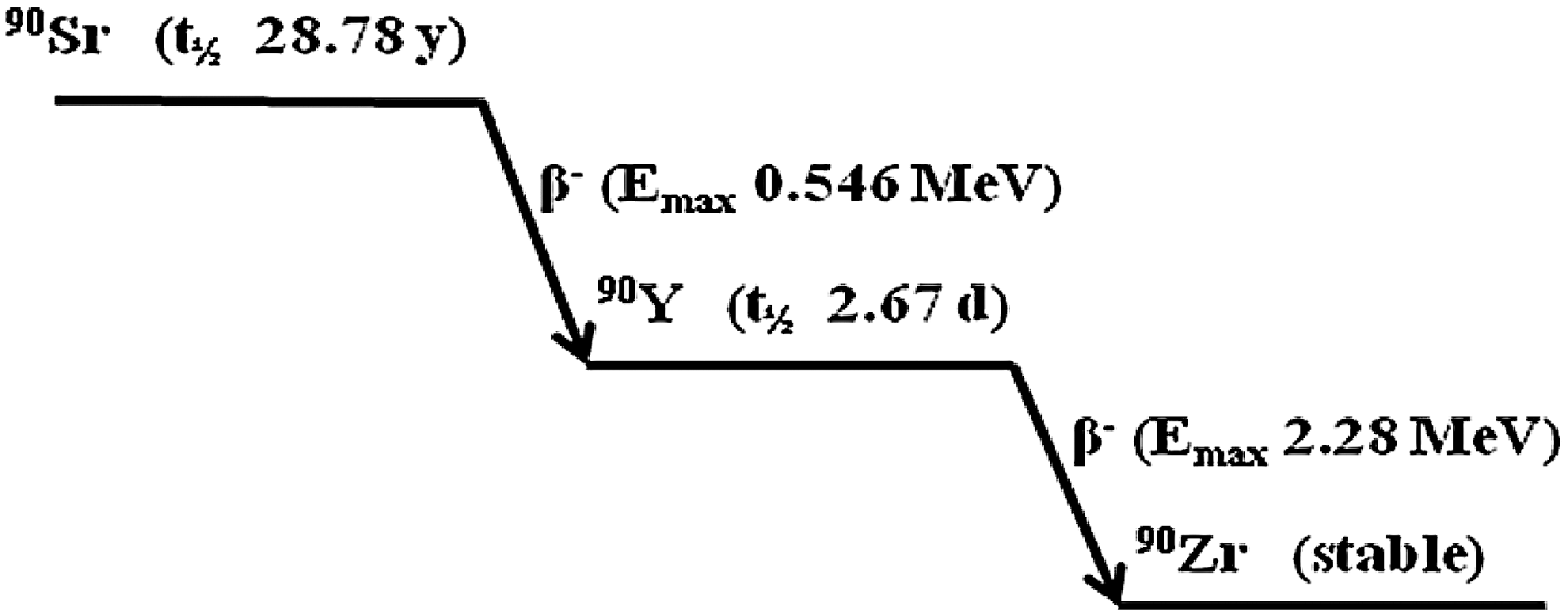
Simplified decay scheme of 90Sr (energy levels not drawn to scale).
Production of Strontium-90
Strontium-90 is one of the major fission products of 235U with a fission yield of 5.93%; and can be isolated from aqueous nuclear fuel reprocessing high-level liquid waste (HLLW) solutions. Currently, spent reactor fuel is reprocessed in five to six countries in the world, including India, to recover Pu and unused U. The highly radioactive solution after the recovery of Pu and U, known as HLLW, contains 90Sr along with other fission products and minor actinides. Countries pursuing a reprocessing program have developed the process chemistry required for large-scale isolation of 90Sr from HLLW. An interest in the recovery and purification of 90Sr has waxed hot, and then waned several times over the last few decades. Early interest in the recovery of 90Sr from reprocessing streams was focused mainly to cater to the need in radioisotope thermoelectric generators and as heat sources as well as from a waste management perspective. It is pertinent to note that the quantity of 90Sr required to meet the demand for the preparation of 90Y generators is very small compared with the quantity that is present in HLLW generated from the reprocessing of spent nuclear fuel. Without doubt, the current impetus for the recovery of 90Sr stems from healthcare requirements, which demand instant, in-house availability of 90Y for a gamut of therapeutic applications.
There is an industrial level facility for the recovery of 90Sr (and other fission products) at Mayak, Russia. 8 A large-scale facility for recovery of up to 55500 GBq (1500 Ci) of pure 90Sr from nuclear waste has been developed at the Pacific Northwest National Laboratory, USA. 8,9 In India, the separation of 90Sr from the high-level PUREX waste usable for the 90Sr/90Y generator has been developed at the Bhabha Atomic Research Centre, Mumbai. 10
The radioactive waste generated during the production of 99Mo through the fission route can be viewed as an alternative source for the recovery of 90Sr, much of its potential has not yet been exploited. 8 This is one of the attractive routes to realize the scope of accessing 90Sr especially for countries that do not have a reprocessing programme. The volume of production made possible by this route will be limited, but could still be of interest and utility in meeting local requirements. Despite the enormous potential of this source, relatively less attention has been paid to realize this option.
The process chemistry for isolation of 90Sr from nuclear waste requires a series of multistep complex radiochemical separation and purification process, such as precipitation, solvent extraction, and ion-exchange chromatography, either alone or in combination with others and requires sophisticated technical skills and well-equipped hot cells. 8 Listed in Table 4 are the various strategies that have been adopted for the removal and/or recovery of 90Sr from fission product waste solutions. 11 –20
HLLW, high-level liquid waste; TBP, tributylphosphate; CMPO, octyl(phenyl)-N,N-diisobutylcarbamoylmethyl phosphine oxide.
Purity requirements for 90Sr for availing medically useful 90Y are very high, and extensive quality controls (QCs) are essential. The expected radionuclidic impurities that may be associated with 90Sr are 137 Cs and 106 Ru/ 106 Rh, the level of which can be determined by γ-spectrometry using the HPGe detector coupled with a multichannel analyzer. 8 The level of chemical impurities in the form of metal ions is determined by inductively coupled plasma atomic emission spectroscopy (ICP-AES).
Separation of Yttrium-90 from Strontium-90: The Available Options
The separation of NCA 90Y from 90Sr has been understandably a challenging task for the radiochemists for over five decades. Although column chromatography using a bed of sorbent has emerged as the most popular approach for preparation of different generator systems, its applicability for 90Sr/90Y is precluded owing to the long half-life of 90Sr (T½=28.8 years) as well as a greater linear energy transfer of β radiations emanating from 90Sr/90Y. The 90Sr cannot be left in the column matrix any longer than necessary, because of denaturation resulting from energy deposition of the high-energy β− particles from decay of the 90Sr as well as 90Y, which often results in 90Sr breakthrough in the eluate. 3 The availability of 90Y with very low levels of 90Sr contamination is essential for therapeutic applications, since 90Sr localizes in the skeleton and, owing to its long half-life, has a very low maximum permissible body burden (MPBB) of 74 kBq (2 μCi) over a patient's lifetime. 3 A variety of separation approaches based on precipitation, solvent extraction, ion-exchange chromatography, extraction-chromatography, electrophoresis, membrane-based separation, electrodeposition, etc. were reported with an aim to isolate 90Y from 90Sr. 21 –37
A literature survey of the separation technologies reported during the past six decades shows that there is an abundance of publications on utilizing the effectiveness of each separation strategy (Fig. 3). It appears that interest in this area has significantly increased in the last two decades. Figure 3 also reveals that recent advances in separation science have been largely overlooked in favor of the more mature ion-exchange and solvent extraction methods. However, barring a few, the majority of the research carried in this field were restricted to laboratory scale, largely devoted to arriving at the optimal conditions for separation and their applicability in real sample remains to be proved in many cases. Also, many approaches did not focus on the durability and robustness of the separation system and the purity of the obtained 90Y for clinical utility. Because of their in-vivo application, the 90Y used must meet rigorous purity standards set forth by regulatory agencies. Consequently, there are only a handful of separation technologies that have been developed to the stage, where they are ready for making 90Sr/90Y generators. Moreover, till date, none of the 90Sr/90Y generators are approved by the US Food and Drug Administration (FDA). Presently, 90Y is separated by the industrial manufacturers and supplied as a radiochemical.

The number of articles published for separation of 90Y from 90Sr (as per Scopus).
In view of the wide range of 90Y separation options currently available in open literature and the major progress made in this area, it is imperative to discuss all these techniques to acquire a basic knowledge of the separation chemistry required for evolving new strategies with better perspectives. Any separation strategy with a realistic prospect of success needs to be evaluated thoroughly.
Ion-exchange separation
Owing to its operational simplicity, the ion-exchange chromatographic-based separation has been the method of choice for the preparation of 90Sr/90Y generators. Both inorganic and organic resins have been used as chromatographic supports for the preparation of 90Sr/90Y generator. 38 Organic resins are more susceptible to radiation degradation, which is manifested by reduction in the elution yield and parent breakthrough on prolonged use. The radiolytic products come along with the 90Y activity in the eluate and constitute undesirable chemical impurities. The limited radiation stability of organic resins often places a restriction on the amount of 90Sr that can be loaded onto the generator column. In view of these limitations, assessing the potential of more radiolytically stable inorganic ion-exchange materials was considered not only an interesting proposition, but also a necessary one. However, there are limits beyond which these materials also undergo radiolytic degradation. The use of inorganic ion-exchange materials also raises concern about the secondary reactions leading to pH changes, gas evolution, pressurization, and degradation of the inorganic matrix caused by radiolysis products in their vicinity on prolonged use. This, in turn, causes serious operational problems and also leads to the bleeding of the parent 90Sr as well as column matrix in the 90Y eluate that might render it unsuitable for the preparation of radiopharmaceuticals.
A variety of ion-exchange separations of 90Y from 90Sr utilizing both organic and inorganic materials have been reported. Each of these methods carries substantial technical challenges specific to the particular objective of availing 90Y of requisite purity. In the following section, the most commonly employed ion-exchange separations techniques will be discussed.
At the initial stage, the cation exchange resin Dowex-50 has been the center of much attention for devising a separation strategy based on ion-exchange chromatography. In this endeavor, Kawashima in 1969 demonstrated the utility of Dowex-50 to separate NCA 90Y from 90Sr using the methanol–ammonium acetate solvent as the eluent. 39 Extending this theme, Skraba et al. in 1978 have demonstrated the utility of an ion-exchange paper impregnated with Amberlite IR-120 resin to separate 90Y. 40 In this method, 90Sr was adsorbed on the ion-exchange paper and 90Y could be eluted from this generator using 0.003 M EDTA as eluent with >95% yield and >99.9% radionuclidic purity. These findings encouraged further efforts to develop improved 90Sr/90Y generators.
The first successful laboratory-scale 0.925-GBq (25 mCi) 90Sr/90Y generator using Dowex-50 amenable for preparation of radiopharmaceuticals was reported by Chinol and Hnatowich in 1987. 41 In this procedure, 90Y of ∼99.998% radionuclidic purity could be eluted using a 0.003 M EDTA solution with >98% efficiency. The performance of this generator remained consistent over a period of 6 months. A major disadvantage of this method is that the activity is eluted in a chemical form not suitable for direct radiolabeling and it is essential to remove or destroy the complexing agents to avail 90Y in an ionic form or as a weak complex. Subsequently, Du et al. explored the effectiveness of ammonium acetate solution to elute 90Y. 42 To remove the trace levels of 90Sr impurity that was present in the primary 90Y eluate, the generator column was connected in-tandem with a small purification column containing Dowex-50. 42
The separation of 90Y from 90Sr using Dowex-50 as an ion-exchanger was scaled up at Centro de Isótopos (CENTIS), Cuba and the development of a 11.8-GBq (320 mCi) 90Sr/90Y generator has recently been reported.27 Another commercially available ion-exchanger, Aminex A-5 resin was also utilized for preparation of a 3.7-GBq 90Sr/90Y generator by adsorbing the 90Sr(NO3)2 solution on the ion-exchanger and eluting 90Y with an α-hydroxyisobutyrate (α-HIB, pH 5.4) solution. 43 The elution yield of 90Y was >70% and the 90Sr impurity content in the eluate was <200 Bq per 3.14 GBq of 90Y. Huntley has patented the use of commercially available Chelex-100 ion-exchanger for the separation of 90Y from 90Sr. 44 However, this work was carried out with trace levels of 90Sr and it was disclosed that the method was not suitable for the production of a higher activity of 90Y with a purity suitable for radiopharmaceutical applications.
There has been an increasing interest in the use of inorganic ion-exchange materials due to the perceived radiation-resistant properties of this class of materials. In this context, a large number of inorganic ion-exchange materials were studied by several researchers for the separation of the 90Y from 90Sr. Dash and Bhattacharyya used zirconium antimonate ion-exchanger as the column material on which 90Sr could be adsorbed and 90Y could be eluted with 4 M HNO3 with >80% yield and >99.99% radionuclidic purity. 26 This method is very convenient as 90Y is eluted in an ionic form. However, 90Y obtained from this generator was in a highly acidic form and required further chemical manipulations to convert it into a form suitable for the preparation of radiopharmaceuticals. Taking advantage of the selectivity of antimonite-based materials for 90Sr, Bilewicz reported the separation of 90Y from 90Sr on crystalline antimonic acid. 45
In the quest for advanced inorganic ion-exchangers, Sylvester has demonstrated the utility of clinoptilolite, potassium titanosilicate, pharmacosiderite, sodium titanosilicate, and sodium nonatitanate for the preparation of 90Sr/90Y generator and patented the innovative work. 46,47 While these materials are highly radiation resistant, thermally and chemically stable, nontoxic, and possess very high affinity for 90Sr with negligible affinity for 90Y, they have not yet been tested at higher levels of 90Sr activity. Hence, further research is required to evaluate the applicability of these materials in real radioactive solution. Lee et al. have described the utility of functionalized silica, a novel class of adsorbent for separation of 90Y from 90Sr. 31 The developed material possesses expected selectivity and the performance of this material was demonstrated using the 90Sr/90Y solution, simulated to represent 37-GBq activity by adding inactive Sr and Y carriers and the process was patented in 2011. 31,48 The efficacy of this sorbent is yet to be evaluated under high activity loading typically encountered in the clinical-scale generator. Though a wide variety of other inorganic ion-exchangers, such as cerium-iodotungstate, 32 sodium titanium silicate, 49 zirconium vanadate, 50 quinoline phosphomolybdate, 51 have been studied for separation of NCA 90Y from the trace level of 90Sr, none of them have been practically tested at the high activity level.
Solvent extraction
Solvent extraction or liquid–liquid extraction is one of the most effective separation methods owing its amenability to finite-stage mass transfer unit operations and have been exploited for the preparation of 90Sr/90Y generators. In this process, extraction of 90Y from the aqueous phase is typically accomplished by formation of extractable 90Y-organic complexes, which is formed either by interaction with the immiscible organic solvent, or by utilizing a complexing agent solvated in a diluent. The solubility of these complexes is much greater in an immiscible organic phase than it is in the aqueous phase. Over the years, a wide range of solvents/extractants have been used for the extraction and separation of 90Y from 90Sr. To identify technologies that could be conceivable to make 90Sr/90Y generators, it is essential to optimize the separation process and also assess the purity of separated 90Y for radiopharmaceutical applications.
In 1957, Peppard et al.
52
demonstrated the utility of dioctyl phosphoric acid as the extractant in the isolation of NCA 90Y from 90Sr. Subsequently in 1968, Mirza described the solvent extraction of 90Y from 90Sr into methyl isobutyl ketone containing 1-phenyl-3-methyl-4-caprylpyrazolone-5.
53
Di-(2-ethyl hexyl) phosphoric acid (HDEHP) has also been extensively investigated (Fig. 4), and found to be highly effective for the isolation of 90Y from 90Sr. The first successful solvent extraction approach for extracting multicurie levels of 90Y from the 90Sr solution using HDEHP was reported by Wike et al.
22
In this method, 90Y was extracted from a dilute acid solution of 90Sr/90Y using 1 M HDEHP in dodecane and was subsequently back extracted in a 6 M HCl solution. The process was further refined, scaled up, and patented by Bray et al.
34,35
Although, this method is very effective in separating the multicurie level of 90Y, the need for an elaborate multiple step extraction procedure to avail 90Y of requisite purity is a major roadblock that limits its wide-scale applicability and acceptability. Despite its inherent limitations
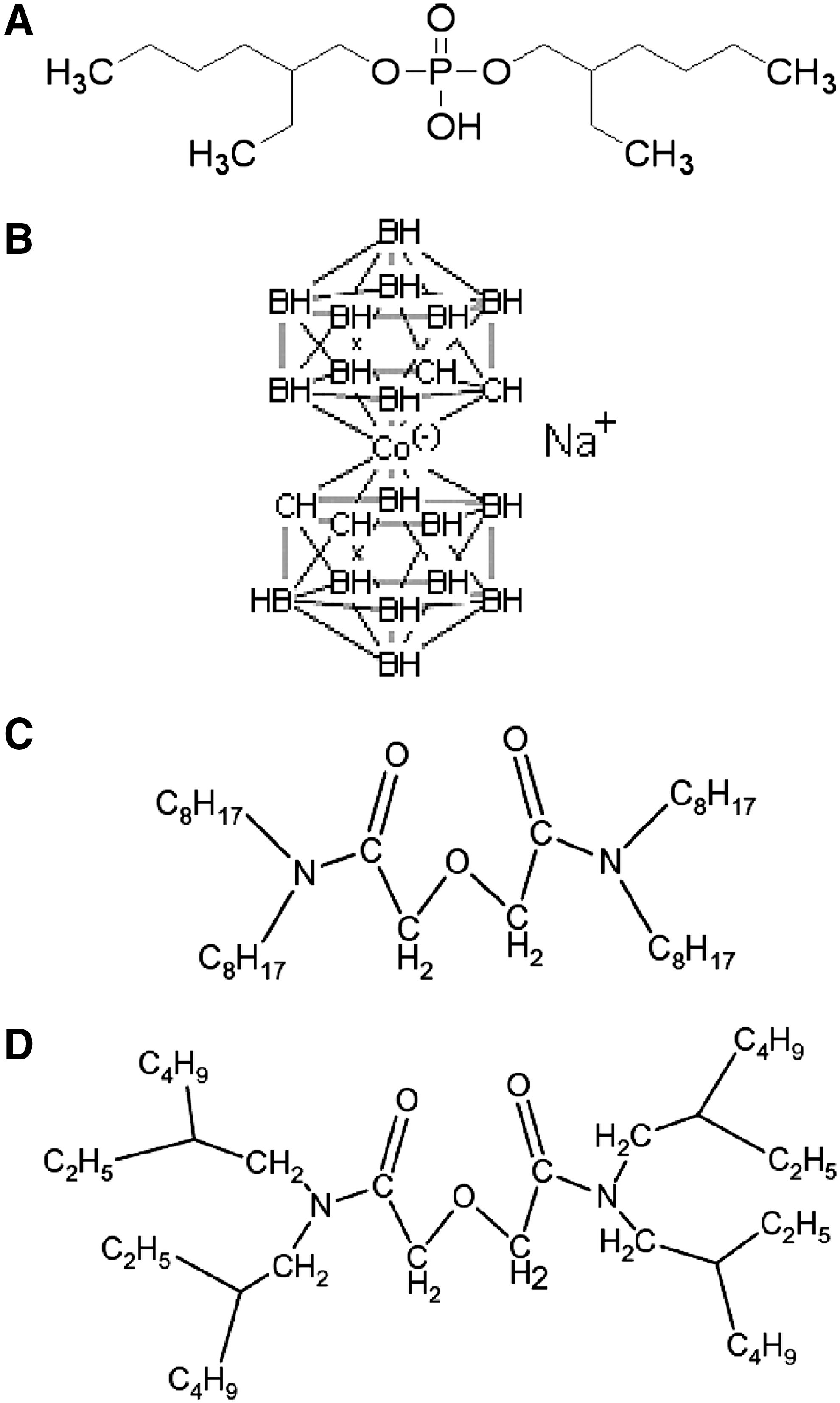
Structures of the extractants used for solvent extraction of 90Y
Extraction of 90Y from 90Sr using crown ethers has been extensively studied, but to date, no efficient process ready for scale-up has been proposed. 56,57 The major disadvantages of the crown ethers have been chemical and radiolytic instability, tendency for third-phase formation, and cost. 58 Other solvent extraction approaches reported for isolation of 90Y from 90Sr were based on the use of sodiumdicarbolyl cobaltate and dicarbolylcobaltate (HDCC)-benzo-crown-5, 59 –62 N,N,N′,N′-tetraoctyl diglycolamide (TODGA) 63 and N,N,N′,N′-tetra-2-ethyl hexyl diglycolamide (T2EHDGA) 64 as extractants (Fig. 4). These extractants were demonstrated on the laboratory scale and there appears to be very little literature supporting their effectiveness for preparation of clinical-scale 90Sr/90Y generators.
Extraction chromatography
Extraction chromatography (EXC) is a type of liquid–liquid chromatography, which combines the selectivity of liquid–liquid extraction with the ease of operation of column chromatography. In this process, the stationary phase is either an extractant or a solution of an extractant in an appropriate solvent supported on an inert substrate. Regardless of the method adopted, immobilization of an extractant on the inert support is primarily based on physical entrapment rather than chemical reaction between the support and the extractant. Over the last decade, EXC has emerged as an effective method for the separation of 90Y from 90Sr.
To tap the potential of EXC as a viable technique to separate 90Y from 90Sr, Malinin et al. have reported the use of a stationary phase based on the immobilization of HDEHP on fluoroplast. 65 In this system, the 90Sr/90Y mixture was loaded onto the column in 0.1 M HCl and the 90Y was eluted using 6 M HCl. One of the major drawbacks of this method is that the amount of 90Sr present in the eluted 90Y product was high, and was therefore unsuitable for clinical applications. Therefore, to realize the potential of this approach, multiple chromatographic columns arranged in sequence were used to achieve the requisite purity of 90Y. In this process, the solution was evaporated to dryness and the residue was taken up in dilute (0.1 M) hydrochloric acid before each successive purification step. The aforementioned procedure is not only complicated, but also cumbersome.
Instead of using fluoroplast, Hsieh et al. immobilized HDEHP on Dupont TF800 Teflon grains. 25 In this method, the 90Sr/90Y equilibrium solution in 0.3 N hydrochloric acid was loaded into the column and 90Y was eluted with 8 N HCl. This laboratory-scale study was never demonstrated on the actual sample. Use of di-(2-ethyl hexyl) phosphonic acid (KSM-17) instead of HDEHP for extraction chromatographic separation of 90Y from 90Sr has also been reported. 66 This method does not provide any information about the rationale of using KSM-17 and no further development of this process was pursued.
To circumvent the problem associated with HDEHP, the concept of using an EXC system in which 90Sr is more strongly retained than 90Y under the loading conditions seemed to be attractive as the effluent from the first column treatment could be passed directly, without the need for acidity adjustment, to subsequent columns. In this manner, in each step, the 90Sr level present would be reduced, yielding purified 90Y. In this context, the feasibility of using an extraction chromatographic material Sr-Resin (an inert polymeric support impregnated with a 1 M solution of the crown ether in 1-octanol) for the separation and purification of 90Y was reported. 67
Subsequent work by Deitz and Horwitz, led to the development of an extraction chromatographic process for separation of 90Y from 90Sr with high radionuclidic purity, using Sr-Resin, which was also patented by them. 24,68 The 90Sr/90Y mixture was passed through a series of Sr-selective chromatographic columns containing Sr-Resin. Subsequently, the daughter 90Y was passed through a Y-selective column packed with RE-Resin (prepared by impregnating Amberchrom CG-7lms resin with the 1 M solution octyl(phenyl)-N,N-diisobutylcarbamoylmethyl phosphine oxide [CMPO] in tributylphosphate [TBP]) and was finally eluted using 2 M HNO3. The concept of using Sr-Resin and RE-Resin is a spinoff outcome from another independent work of Horwitz et al. directed at the development of separation processes for nuclear waste treatment. 69
A similar approach using the crown-ether-bonded silica gel was reported by Chuang and Lo for extraction chromatographic separation of 90Y from 90Sr 70 , and a patent was taken in 1996. 71 Recently, Dutta et al. 72 have reported the extraction chromatographic separation of 90Y from 90Sr using an inert resin impregnated with TODGA from which 90Y was eluted using the 0.01 M EDTA solution. This investigation is untested at a higher activity level and the availability of 90Y in the 0.01 M EDTA solution is a major deterrent for radiopharmaceutical applications.
The feasibility of extraction chromatographic approach for large-scale separation of 90Y will remain debatable owing to the limited capacity of the column matrix, susceptibility of organic inert support to radiation damage, the generation of large volume of radioactive liquid waste, and the requirement of multistage purification strategy. The disposal of the spent extraction chromatographic columns is also an issue of concern.
Precipitation
The idea to exploit the differences in the solubility of yttrium and strontium was the trigger for precipitation strategy to separate 90Y from 90Sr. This approach was first exploited by Koda for the separation of 90Y from the 90Sr/90Y mixture by coprecipitation with ferric hydroxide. 73 Since yttrium has the property of forming insoluble hydroxide, it could be coprecipitated with ferric hydroxide, giving a first separation from 90Sr. Though the process is suitable for large-scale separation of 90Y, the presence of Fe3+ ions in 90Y is a major disincentive for its utility in the preparation of radiopharmaceuticals.
In a strong alkaline solution of 90Sr/90Y mixture, yttrium ion reacts with hydroxide ion to produce an insoluble precipitate owing to the difference in the solubility products of Y(OH)3 (1×10⁻²²) and Sr(OH)2 (3.2×10⁻⁴). This chemistry forms the basis of a precipitation process that has been used for the separation of 90Sr and 90Y. 74 The Y(OH)3 precipitate can be retained on the filter paper and could be recovered from the filter paper by dissolving in dilute HCl. Although effective, the utility of this approach for availing 90Y with adequate radionuclidic purity has not yet been proven and no further development of this process was pursued.
Kanapilly and Newton have described the use of hydrogen phosphate to form colloidal yttrium hydrogen phosphate under precisely controlled conditions and reported successful separation of multicurie amount of 90Y from 90Sr. 75 Although the method has been reported to be effective, the addition of Y carrier for efficient separation of 90Y from 90Sr lowered the specific activity of the separated 90Y and rendered it unsuitable for targeted therapy.
The most successful approach for isolating the multicurie level of NCA 90Y from 90Sr by precipitation was patented by Horwitz and Hines. 36 The process involved selective precipitation of 90Sr from the 90Sr/90Y mixture as 90Sr(NO3)2 by adding concentrated nitric acid, filtering or centrifuging the strontium nitrate solution to separate crystalline 90Sr nitrate salt from the solution, evaporating the separated 90Y supernatant to dryness and purification of 90Y by the yttrium selective extraction chromatographic column. However, this process results in the production of highly active 90Sr waste, both solid and liquid, as well as the loss of 90Sr.
Membrane-based separation
The supported liquid membrane (SLM) method for radiochemical separation is a modified version of EXC in which an ion-selective organic extractant is impregnated on an inert semipermeable membrane and 90Y separation from its parent 90Sr is achieved by its selective transport through the pores of the impregnated membrane.
The separation of 90Y from 90Sr present in the high-level waste of the Purex process by employing a SLM using 2-ethylhexyl-2-ethylhexyl phosphonic acid (KSM-17 or PC-88A) supported on a polytetrafluoro ethylene (PTFE) membrane was reported by Ramanujam et al. 76 Happel et al. have introduced another dimension to the applications of SLM by using nuclear track microfilters as SLMs and impregnating them with HDEHP and TBP. 77 Subsequently, the process was improved by incorporating a second stage membrane with a carrier phase consisting of CMPO. 33 The overall yield of 90Y was >90% and it was suitable for radiopharmaceutical applications. However, the process is inordinately slow and requires 8–10 hours for complete separation. This approach was further extended using hollow fiber-supported liquid membrane impregnated with PC-88A. 78 While initial 90Y recovery was good, the utility of such a system is limited by their relative instability and short lifetime, and 90Sr breakthrough.
Electrochemical separation
A simple paper electrophoresis approach was used for separation of trace level of 90Y from 90Sr. 79 However, this method is not amenable for separation of usable quantities of 90Y in a form suitable for radiopharmaceutical application.
The concept of exploiting the differences in the formal potential values of strontium and yttrium for selective electrodeposition of yttrium onto prefabricated inert electrode under the influence of controlled applied potential was the basis of electrochemical 90Sr/90Y generator. It has been nearly fifty years, since Lange et al. (1957) first demonstrated the utility of electrochemical approach to separate 90Y from the 90Sr(NO3)2 solution. 21 Hamaguchi et al. have also investigated this approach for isolation of NCA 90Y from 90Sr. 80 In 1963, Qureshi and Meinke introduced another dimension to the applications of electrochemical separation technique for the separation of 90Y from 90Sr by using a mercury cathode. 81 Under suitable conditions of electrolysis, the 90Sr capable of forming amalgam is preferentially transferred into the mercury electrode leaving behind 90Y in the aqueous solution.
In spite of the favorable results accrued from the above reported procedures, scant attention was paid to realize the stupendous potential of electrochemical approach for the preparation of a clinical-scale 90Sr/90Y generator and this approach remained dormant for almost five decades. It was only in 2008, that Chakravarty et al. reported the development of an electrochemical 90Sr/90Y generator suitable for biomedical applications. 82 The renewed impetus for exploring electrochemical route was driven mainly by the need to produce 90Y of acceptable purity for radiopharmaceutical applications.
The electrochemical separation process involved two electrolysis cycles: the first cycle for separation and the second cycle for purification of 90Y. The electrochemical setup used is shown in Figure 5. The first cycle involves electrolysis of a mixture of 90Sr and 90Y in nitrate form at pH ∼3 at a potential of −2.5 V, using a 100–200 mA current and platinum electrodes. The 90Y deposited on the cathode is removed and subjected to a second electrolysis in an electrolysis bath containing 3 mM HNO3 using another platinum electrode. In this step, the cathode from the first electrolysis containing 90Y is used as the anode. Upon electrolysis, 90Y is leached and deposited on the fresh cathode, which is removed and dipped in an acetate buffer to obtain 90Y-acetate, a form suitable for radiolabelling. The recovered 90Y had high radionuclidic purity with barely 30.2±15.2 kBq (817±411 nCi) of 90Sr per 37 GBq (1 Ci) of 90Y (0.817±0.411 ppm). 82
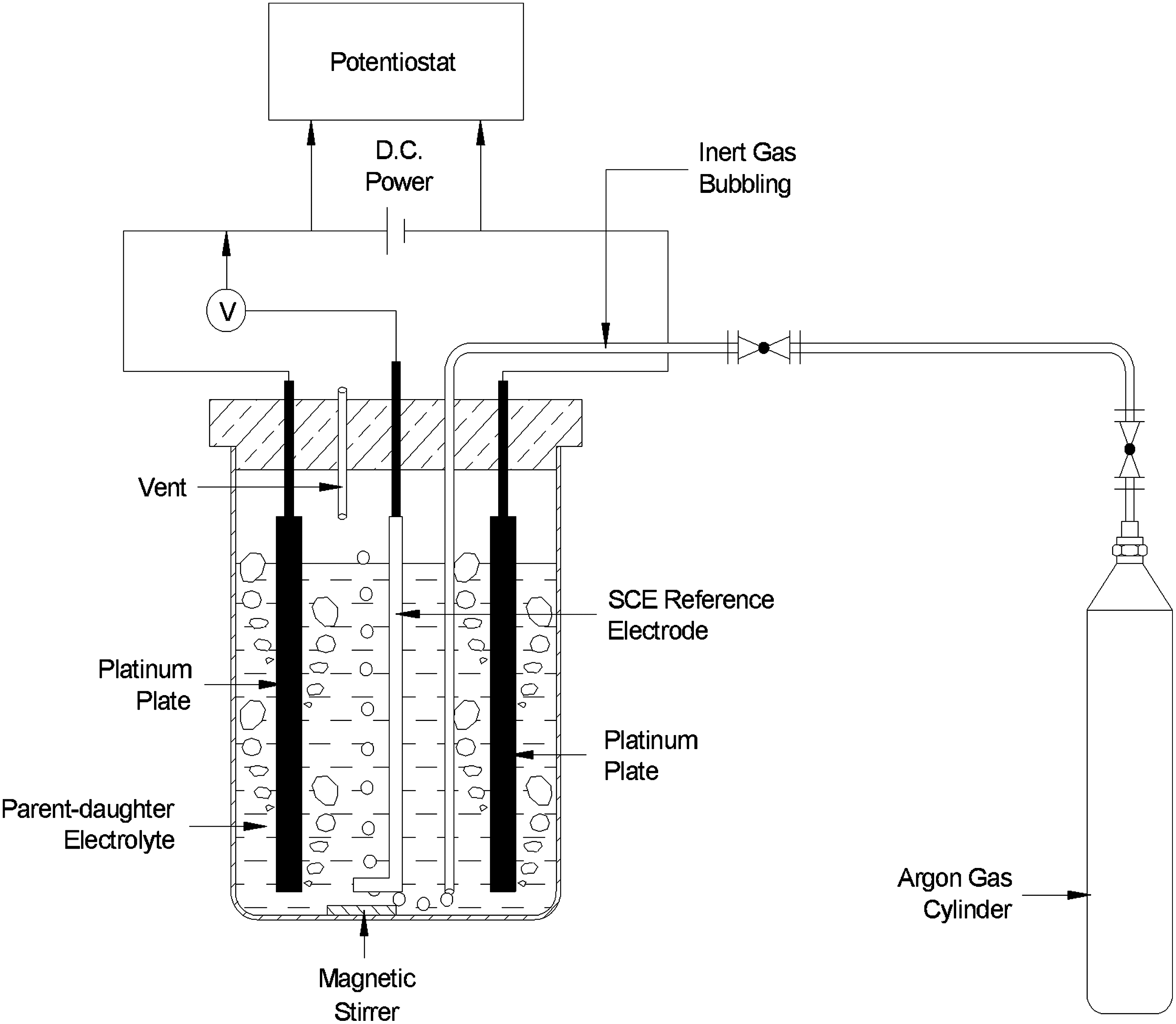
Schematic diagram of the electrochemical 90Sr/90Y generator.
The electrochemical method offers several advantages over the conventional approaches reported for 90Sr/90Y generators as it would use the same 90Sr feed solution repeatedly without further chemical treatment, except pH adjustment and at the same time avail 90Y in an acetate buffer medium (pH ∼5) with an appreciably high radioactive concentration that offers the convenience of radiolabeling biomolecules without any further chemical manipulations. The process involves a simple electrochemical process, is cost effective, requires minimum amount of chemicals, and generates negligible amount of radioactive waste. A 90Sr/90Y generator of 37-GBq (1 Ci) 90Sr capacity, can yield 16.6–18.5 GBq (450–500 mCi) of 90Y twice a week, with an insignificant loss of 90Sr activity except by natural decay. Supplementing the activity by adding about 10% (3.7 GBq or 100 mCi) of 90Sr once in every 4–5 years will be adequate to keep the 90Y supply constant. Another significant advantage of the electrochemical separation process over more traditional separation is that it can be scaled up or down quickly by adjusting the amount of feed solution depending on the requirement. Yttrium-90 can be milked from this 90Sr/90Y generator virtually for an indefinite period of time.
A fully automated electrochemical module for the 90Sr/90Y generator was developed (Fig. 6

Kamadhenu: The automated module for the electrochemical 90Sr/90Y generator (Courtesy; J. Comor).
Determination of Radionuclidic Purity of 90Y
Yttrium-90 used for therapy should be of a very high radionuclidic purity (>99.998%), as the most probable contaminant, 90Sr, is a bone seeker with a MPBB of only 74 kBq (2 μCi).This translates to limits of 90Sr to 74 kBq in 37 GBq of 90Y, assuming that a patient may be administered with a maximum of 37 GBq of 90Y in his entire life time. According to US Pharmacopeia, 90Sr/90Y activity ratio should not exceed 2×10⁻⁵ parts at the time of injection of any 90Y-based radiopharmaceuticals. 84
In view of such a demanding situation, the activity of 90Sr in the 90Y solution should be carefully analyzed to ensure that it is well within the acceptable limits. 3 Radionuclidic purity estimation by making use of the γ-spectrometric technique is precluded as both 90Sr and 90Y are pure β emitters. In view of this drawback, assessing the potential of other realistic methods is a necessity. This spurred into a search for possible options and as a result, the literature concerning estimation of 90Sr impurity in 90Y is abundant, which has been described comprehensively in this section.
Paper chromatography
The simple and facile analytical method explored for rapid estimation of 90Sr breakthrough is based on the paper chromatography technique making use of Whatmann No. 1 paper. 85 The paper chromatogram is developed using 0.9% NaCl solution as the eluent in which 90Sr migrates with the solvent front, while 90Y remains near the origin. The assay responds with good reproducibility and could be completed in less than an hour. However, reproducibility of this technique is limited, probably due to different species of Y in the solution, and thereby giving spread of activity in the paper. Therefore, this technique is not suitable for determination of trace levels of 90Sr impurities present in 90Y eluate.
An improved paper chromatographic approach with increased sensitivity for estimation of 90Sr impurity in 90Y has been proposed in the US Pharmacopoeia. 84 In this method, the Sr/Y carrier solution is applied at the origin of a cellulose phosphate chromatographic strip and dried. Subsequently, a small aliquot of 90Y is applied at the origin of the strip and the chromatogram is developed using 3 N HCl. The method is reproducible.
Paper electrophoresis
The level of 90Sr in 90Y was also estimated by the paper electrophoresis technique, which is based on the separation of charged species according to their response in electric current. 86 –88 In this procedure, 90Y in acetate form is applied at the center of a Whatmann chromatographic paper (35×1 cm). Paper electrophoresis is carried out using 0.15 g L−1 sodium citrate in 0.03 M sodium chloride solution as the electrolyte. A potential of 500 V is applied for 2 hours. At the end of electrolysis, the paper is dried, cut into 1-cm segments, and counted in the NaI (Tl) scintillation counter. In the paper electrophoresis, 90Sr and 90Y are expected to move toward the cathode and anode, respectively. 86 –88 In this technique, there is a relatively complete separation of the individual Sr and Y components. While the paper electrophoresis approach may not have the potential for accurate estimation of trace level of 90Sr impurity present in 90Y, it is more specific compared to the paper chromatographic approach and could be used to measure 90Sr breakthrough during generator operation.
Examining the decay pattern of 90Y
In this technique, the radionuclidic purity of 90Y is qualitatively estimated by monitoring the decay pattern of 90Y using a liquid scintillation counter. 43 Non-appearance of any deviation at the lower end of the straight line decay curve established that the 90Y fraction was pure and contained negligible quantities of 90Sr. If the half-life of 90Y as estimated from the decay curve is ∼64.1 hours, it indicates that there is no major 90Sr breakthrough in the 90Y product. However, small amounts of 90Sr present cannot be detected by this method. Hence, the procedure is not suitable for routine analysis of the radionuclidic purity of 90Y.
Another possibility is to allow for 90Y to decay completely and by measuring the activity after establishment of secular equilibrium in the sample, half the activity will correspond to 90Sr contamination in the original solution. Such a method for the determination of 90Sr in a 90Y solution can be done only as a post-facto analysis.
Precipitation approach
This approach is based on the selective precipitation of 90Sr or 90Y and subsequent counting of the precipitate and the filtrate to obtain the activity. In 1955, Salutsky and Kirby reported the precipitation of 90Sr in suitable forms, which was subsequently counted using liquid scintillation spectrometry. 89 A classical method available in literature describes the separation of 90Sr and 90Y under alkaline conditions on a filter paper. 74 In spite of the availability of numerous methods for the selective precipitation of 90Sr or 90Y, this approach could not be widely used for routine analysis of the radionuclidic purity of 90Y because of its relative complexity.
γ-ray spectrometry
The presence of trace level of 90Sr in 90Y could be easily estimated by spiking the 90Sr/90Y feed solution with 85+89Sr, before separation of 90Y. 75 The level of 90Sr impurity in 90Y was indirectly estimated by γ-spectrometry using a HPGe detector coupled to a multichannel analyzer. The photon peaks due to the γ-rays corresponding to 85 Sr are monitored for this purpose. Bremsstrahlung radiation from β-emitting 90Sr/90Y radionuclides often masks the weak γ peaks due to 85 Sr, which remain undetected, thereby making the procedure difficult to be adopted.
β-spectrometry
The β-spectrometric approach using the liquid scintillation counter was used by several authors for estimation of 90Sr in 90Y. 40,90,91 In this approach, it is assumed that since the maximum energy of β− particle from 90Sr is 0.54 MeV, the counts beyond this energy range in the β-spectrum was purely due to 90Y. This count rate (after energy range 0.54 MeV) was compared with that of a standard 90Sr/90Y sample to determine the radionuclidic purity of 90Y. The detailed calculations involved in this procedure have been reported by Skraba et al. 40 This procedure is not suitable for quantitative estimation of the trace level of 90Sr impurity in 90Y due to considerable overlapping of the β-spectra of 90Sr and 90Y
Ion-exchange chromatography
Doering et al. 92 reported a method for accurate determination of 90Sr breakthrough by passing the 90Y solution in an acetate form through an anion-exchanger, which retained most of the 90Y, while allowing the 90Sr to be eluted for counting using a GM counter. The ion-exchange method for the separation of either 90Sr or 90Y solution is not only time-consuming, but also laborious. Owing to the time taken for each separation, it will probably remain an unsuitable technique for routine use.
Extraction chromatography
An extraction chromatographic method for rapid determination of 90Sr impurity in freshly generator eluted 90Y was recently reported by Bonardi et al. 93 In this approach, the 90Y solution was passed through a column containing Sr-specific resin commercially available from Eichrom Technologies, USA. The trace level of 90Sr impurity present in 90Y was quantitatively retained in the chromatographic column, while 90Y was eluted out. The column was washed with 8 M HNO3 to achieve further decontamination of 90Y from 90Sr. Finally, 90Sr is eluted using 0.01 M HNO3 and the activity accurately measured using a liquid scintillation counter. While the initial studies held promise, a major deterrent to the ready adaptation of the extraction chromatographic option, is the requirement of an elaborate extraction chromatographic separation approach. In view of the foreseeable difficulties to perform such analysis on a very regular basis, the prospect of adapting this procedure for routine analysis seems dim.
Extraction paper chromatography
To mitigate disadvantages of the above reported methods and to detect the trace level of 90Sr impurity present in 90Y effectively, an effective pathway based on the quantitative aspects of 90Y-binding by 2-ethyl hexyl-2-ethyl hexyl phosphonic acid (KSM-17) impregnated on chromatographic paper called Extraction Paper Chromatographic (EPC) technique was developed. 94 This technique exploits the selective extraction capability of KSM-17 for 90Y and the convenience of paper chromatography technique. The procedure is based on the selective retention of 90Y by KSM-17, a chelate impregnated at the point of application of the paper chromatography strip. Yttrium-90 was applied on the chromatographic paper, which was developed in 0.9% saline. The KSM-17 retained Y+3 tightly at the point of application (Rf=0), while Sr+2 migrated with the solvent front, resulting in a clear separation. The 90Sr activity present at the solvent front, as measured using the liquid scintillation counter is compared to the total applied activity to obtain the radionuclidic impurity levels. This approach is suitable for quantitative estimation of nCi levels of 90Sr impurity in Ci quantities of 90Y.
Trace Metal Ions as Chemical Impurities in 90Y Solution
A common pitfall for the 90Y obtained from the 90Sr/90Y separation using different methods has been the presence of trace amounts of Zr4+, Fe3+, Cu2+, and Zn2+ ions in 90Y. 27,29 The multiple steps involved during the isolation of 90Sr from fission products could lead to inadvertent introduction of Fe3+, Cu2+, and Zn2+ ions metal ions resulting in their accumulation along with 90Y. Furthermore, 90Zr, which is the daughter product of 90Y gets accumulated in the 90Sr feed solution due to decay of 90Y. The presence of competing metal ions in the 90Y represents a major obstacle in the complexation chemistry of 90Y with the chelating agents, which are attached in micromolar amounts to the carrier molecules. Owing to the slow kinetics of the coordination reaction of the commonly used bifunctional chelators, such as DTPA and DOTA with 90Y3+, 24,43 maximum radiolabeling yields are achieved when the complexation procedures are carried out in molar excess of ligand. However, one of the considerations for targeted therapy is that the radiopharmaceutical should be prepared with very high-specific activity (activity of 90Y/amount of ligand). 41 If metal ion impurities are present in 90Y, attempts to radiolabel at high-specific activity would result in a high percentage of free 90Y3+, and therefore a low radiochemical purity of the radiolabeled agent. The radiochemical purity of the radiolabeled agent can be improved by post-labeling purification procedures. However, this would be time-consuming and will result in a loss of 90Y activity, and therefore it is preferred to remove the trace levels of metal ion impurities from the 90Y solution before its use for radiopharmaceutical preparation. 41
The quantification of such trace levels of metal ions in the final 90Y solution before radiolabeling has been accomplished by making use of analytical methods, such as ICP-AES 22,54 and electroanalytical techniques. 95 Indirectly, a qualitative idea about the level of trace metal contaminants present in 90Y may be obtained by complexation of 90Y with bifunctional chelators, such as DTPA and DOTA. 24,43
A chromatographic method using cation-exchange resin for removal of the trace level of metal contaminants from Y was first proposed by Strelow et al., 96 which was subsequently modified and utilized by Chinol and Hnatowich, 41 Wike et al., 22 and Castillo et al. 27,29 The chemical purity of the final 90Y solution after the purification steps was suitable for preparation of radiopharmaceuticals with very high-specific activity. 29,41
Security Aspects in the Handling of 90Sr/90Y Generators
As per the toxicity classification of radionuclides, 90Sr falls in the high radiotoxicity group (Group 2). 97 Owing to the similar chemical behavior of strontium and calcium, 90Sr gets deposited in bone. Strontium-90 incorporated into bone can irradiate the bone cells, hematopoietic tissues in the bone marrow, and surrounding soft tissues. Hence, immune and erythropoietic systems located in the bone marrow are susceptible to injury. All these factors, coupled with the proven carcinogenic effects of ionizing radiation and the long half-life of 90Sr, make it a potential hazard. Hence, 90Sr need to be well contained and the inventory strictly maintained to avoid any misuse or abuse.
The column chromatographic 90Sr/90Y generators might require periodical elution of 90Sr from the existing column and reloading of the radioactivity in a fresh column, before availing a sustained supply of 90Y with appreciably high yields and acceptable radionuclidic purity for radiopharmaceutical use. This is particularly essential owing to the radiolytic damage to the column matrix by the highly energetic β− particles emitted by 90Y. However, because of the potential dangers involved in handling and possible spill of 90Sr, in-house reloading of generator columns cannot be recommended and can only be performed in specialized laboratories. This is also essential from the security perspective of 90Sr in hospital radiopharmacies to prevent its misuse in the public domain.
90Sr/90Y generators pose security risk owing to the possible acquisition of such materials by terrorist groups to make dirty bomb or radiological dispersal device to disperse radioactive material over a targeted area, thereby contaminating facilities or places where people live and work, and thus disrupting lives and livelihoods. 98,99 Security systems at central nuclear pharmacy facilities are not optimally designed to avert the theft of such materials. In light of the perceived dangers on the use of 90Sr/90Y generators, it may be appropriate that 90Sr should be handled in a well-established, controlled laboratory by trained personnel with strict inventory maintenance. Facilities with access to 90Sr should be controlled by electronic devices and barriers, which would ensure limited access only to the authorized personnel. The international code of practice for handling 90Sr must be adhered to ensure that continued 90Sr usage to avail 90Y does not lead to vulnerability of an accident. Potential consequences of an accidental event can be minimized by developing effective emergency response and decontamination capabilities. The day-to-day physical security at the facility housing the 90Sr/90Y generator should be the responsibility of the operating commercial entity or state-owned enterprises to thwart any potential misuse of 90Sr that can inflict economic damage as well as exposure to public. While implementation of these controls at a central processing facility is expected to be straight forward, it could represent a significant challenge to small or hospital-based radiopharmacies.
Review of Clinically Important 90Y Radiopharmaceuticals
During the last decade, there has been an explosion of literature on the development of 90Y-based radiopharmaceuticals. The 90Y-radiopharmaceuticals are generally prepared in the hospital radiopharmacies adopting standard radiolabeling protocols after receiving 90Y from centralized radioisotope processing facilities. Table 5 gives a list of 90Y radiopharmaceuticals used for the therapy of a particular disease state. A thorough review of 90Y-based radiopharmaceuticals is beyond the scope of this article. However, a number of 90Y radiopharmaceuticals, which have already reached the product stage or have sufficient clinical data are discussed. These radiopharmaceuticals on the basis of their applications fall into two broad categories. The first category includes 90Y incorporated carrier molecules, such as peptides and antibodies used for cancer therapy. The second category contains the 90Y-labeled particulates and colloids used for liver cancer therapy and for radiation synovectomy, respectively. A brief description of some of the clinically useful products is given below.
90Y-Ibritumomab-tiuxetan for the treatment of non-Hodgkin's lymphoma
Non-Hodgkin's lymphoma (NHL), the most commonly occurring hematologic malignancy, is estimated to be the second fastest rising cancer in terms of incidence and mortality rates in the United States. 100,101 NHL comprise of a heterogeneous group of lymphoproliferative malignancies with variable patterns of behavior and responses to therapy. 102 A variety of treatment modalities, such as chemotherapy, external beam radiation therapy, bone marrow or stem cell transplantation, or a combination of these approaches for the management of NHL have been used over the years, but none have had a significant impact on survival. 103
In the recent years, radioimmunotherapy using 90Y-labeled ibritumomab tiuxetan has emerged as a promising therapeutic modality for the treatment of NHL demonstrating substantial improvements in a relapse-free and overall survival rate. 104,105 The antigen CD20 (B-lymphocyte restricted differentiation antigen; Bp35), a hydrophobic transmembrane protein is highly expressed on mature B-cells and is present on 95% of B-cell lymphomas. 104 Ibritumomab, a murine IgG1 monoclonal antibody that specifically targets the CD20 antigen is radiolabeled with 90Y through the chelator tiuxetan, which is a benzyl derivative of DTPA (Fig. 7). The chelating agent creates a high-affinity, stable thiourea-type (NH-CS-NH) bond between the antibody and 90Y. 104 Because of the effectiveness of 90Y-labeled ibritumomab tiuxetan in the treatment of NHL, the US FDA approved 90Y-ibritumomab tiuxetan (trade name 90Y-IT; Zevalin®) in February 2002 for the treatment of indolent or transformed, relapsed or refractory B-cell lymphoma. 106 Subsequently, 90Y-ibritumomab tiuxetan was approved in Europe for the treatment of relapsed or refractory follicular lymphoma (FL). 106
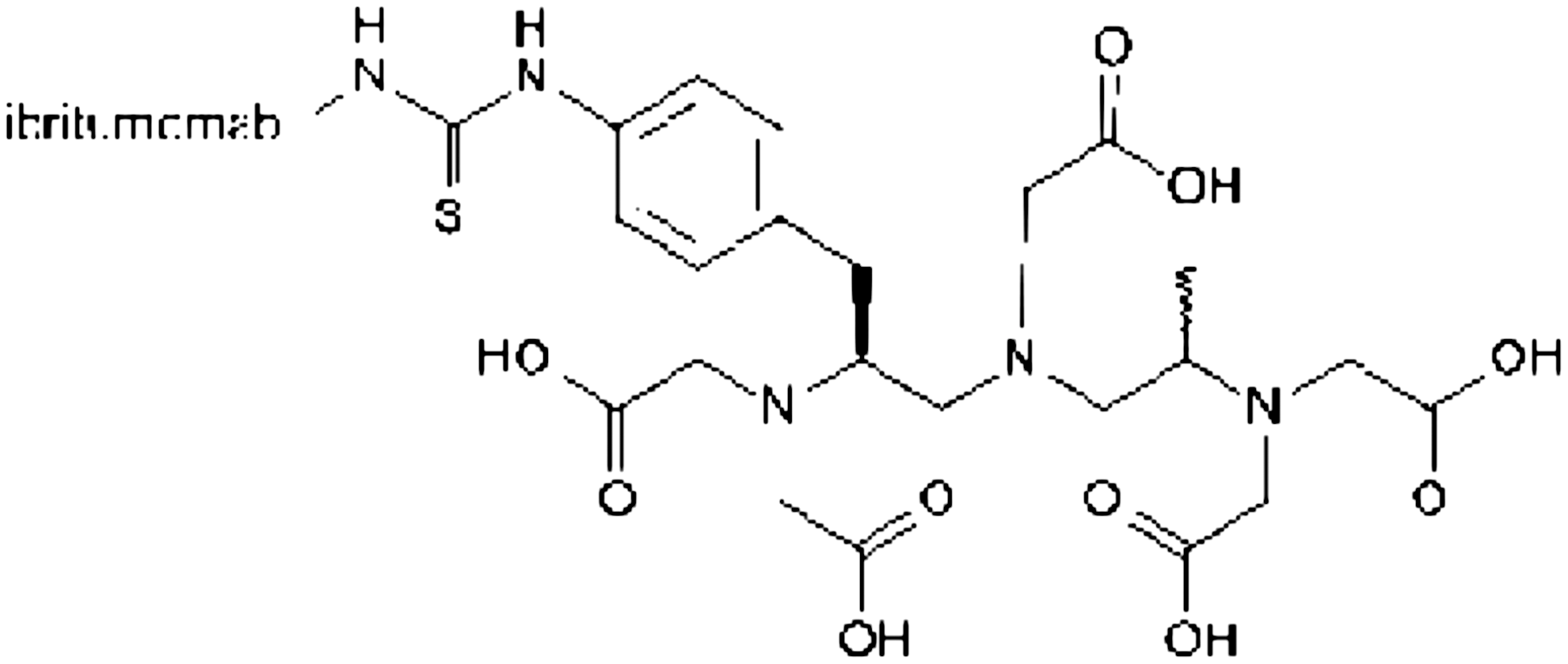
Pictorial representation of Ibritumomab-tiuxetan, 90Y binds to the tiuxetan ligand.
The initial clinical development of 90Y-ibritumomab tiuxetan for the treatment strategy comprised of three early phase (I/II) clinical trials and two phase III studies in patients with relapsed or refractory low-grade NHL. In the phase I/II study, it was established that the maximum tolerated dose (MTD) of 90Y-ibritumomab tiuxetan that could be administered (without stem cell support) to patients with relapsed or refractory B-cell NHL was 14.8 MBq (0.4 mCi)/kg and in patients with baseline platelet counts of 100,000–149,000/μL was 11.1 MBq (0.3 mCi)/kg. 107,108 The median time to progression (TTP) in responders treated with 0.4 mCi/kg was 15.4 months, and the TTP for complete responders ranged from 28.3 to 36.4 months (median not yet reached). The overall response rate (ORR) for the population of this study (n=51) was 67%, with complete responses (CRs) of 26%–28% in patients with low-grade, intermediate-grade, or mantle-cell NHL and 82% in patients with low-grade NHL. 107,108 It was observed that the adverse events were primarily hematological and there was no organ toxicity. In phase III, 143 patients with relapsed or refractory, low-grade, follicular, or transformed B-cell NHL were randomly assigned to receive a standard course of 90Y ibritumomab tiuxetan (0.4 mCi/kg) and it was found that a single intravenous dose of 90Y-ibritumomab tiuxetan (15 MBq [0.4 mCi]/kg) was suitable with regard to both ORR and CR. 107,108 Another phase III study with 57 patients, in which 0.4 mCi/kg of 90Y-ibritumomab tiuxetan was administered, yielded an ORR of 74%. 109 An ORR of 83% was achieved when patients with mild thrombocytopenia were treated with 90Y ibritumomab tiuxetan at a dose of 0.3 mCi/kg. 110 Based on the experience from these clinical trials, the currently recommended 90Y-ibritumomab tiuxetan treatment schedule consists of two doses of rituximab 250 mg/m2 on days 1 and 8 followed immediately by an infusion of 90Y-ibritumomab tiuxetan (14.8 MBq/kg [0.4 mCi/kg]) up to a maximum dose of 1200 MBq (32 mCi). 104 Treatment can be given on an outpatient basis and the dosage is calculated according to patient weight (up to a maximum of 1184 MBq), with no requirement for dosimetry. Generally, 111 In is used as an imaging analogue of 90Y before Zevalin® therapy.
The above highly promising results that emerged from the clinical studies demonstrated that treatment with 90Y-ibritumomab tiuxetan offers hope for meaningful clinical responses even in patients who have become refractory to chemotherapy. The future challenges include the evaluation of modified dosage schemes and treatment in an earlier course of the diseases. It would also be worthwhile to extend the spectrum of this treatment modality for other NHL subtypes.
90Y-DOTA-TOC for the treatment of NETs overexpressing somatostatin receptors
NETs comprise of a large, heterogeneous group of malignancies originating from the diffuse neuroendocrine cells. 111 A majority of NETs show an overexpression of somatostatin receptors, mainly of subtype 2. 112 The clinical behavior of NETs is enormously variable; they may be hormonally active or endocrinologically non-functioning, ranging from very slow-growing tumors to highly aggressive and very malignant tumors. 113 Nevertheless, surgical excision has been considered to be the preferred treatment modality in the management of such tumors. 114 However, malignant NET have poor prognosis and surgery is curative in <5% of all patients. 115 Moreover, for patients who have inoperable primary, recurrent, or metastatic disease, few therapeutic options are available to improve their quality of life. Peptide receptor radionuclide therapy (PRRT) with radiolabelled somatostatin analogues pathway has been identified as a promising therapeutic option in the management of NETs. 113 –115 In this modality, a stable somatostatin analog that has high affinity to the somatostatin receptor and linked to a chelator that can bind 90Y is injected intravenously into the circulation of a patient with a potential NET. The radiotracer will selectively bind to these somatostatin receptors and will actively be taken up by the cells through a process called receptor–ligand internalization and will lead to an accumulation of radioactivity in the tumor, compared with the rest of the organs. The radiation emitted from the radiolabeled peptide bound to a tumor kills the cells.
All somatostatin receptor subtypes bind native somatostatin (both 14-amino acid and 28-amino acid isoforms) with high affinity. However, natural peptides are unsuitable for PRRT because of their short biological half-life. Therefore in the 1980s, the octapeptide analogue, Tyr3-octreotide (TOC) having affinity for the somatostatin receptors and with longer half-life was synthesized.
116
It could be radiolabeled with 90Y after conjugation with a suitable BFCA, such as DOTA (Fig. 8
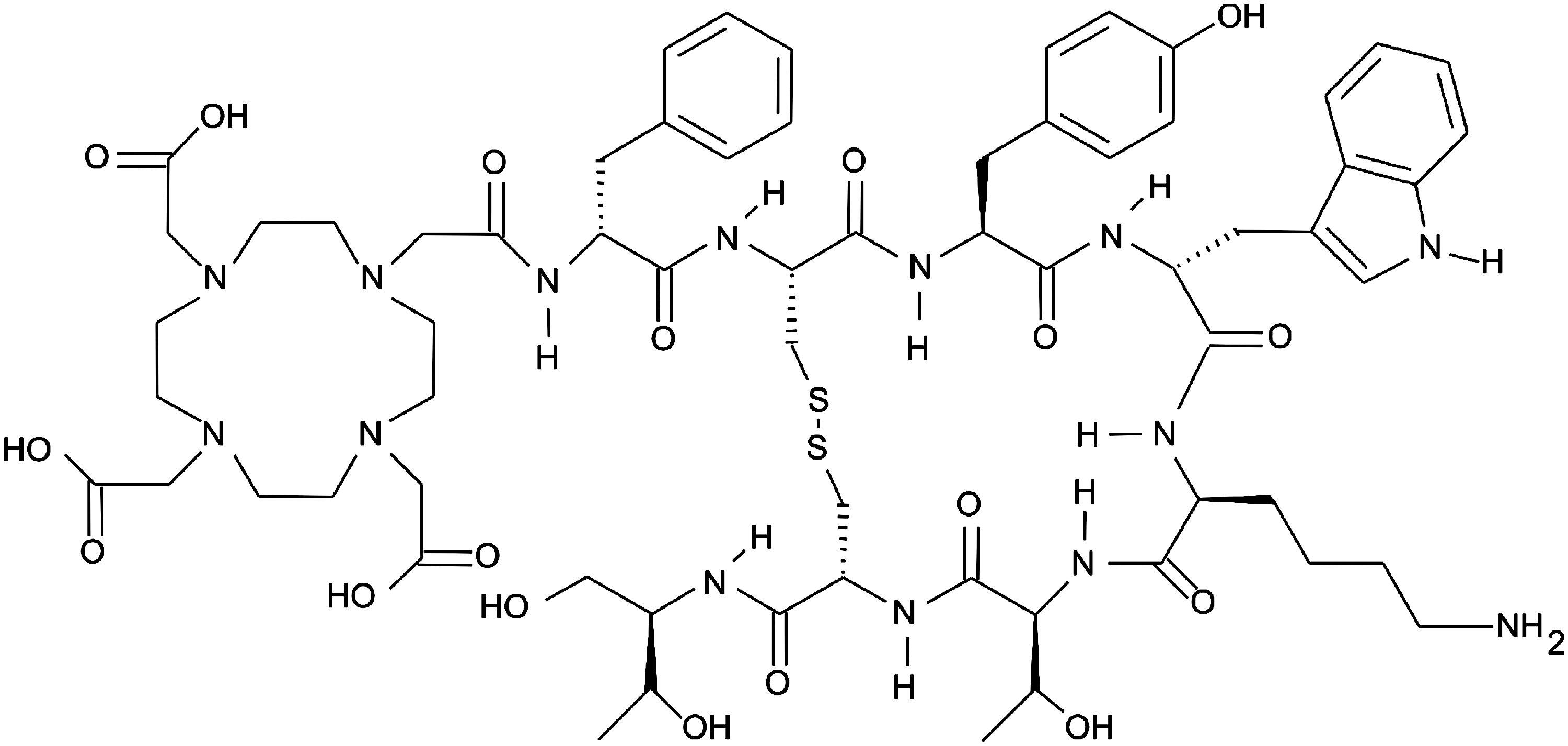
Pictorial representation of DOTA-TOC, 90Y binds to the DOTA. TOC, Tyr3-octreotide.
The first report on in-vivo administration of 90Y-DOTA-TOC in patients with NETs was published in 1997 by a group working at the Basel University in Switzerland. 121 In 1999, phase I clinical trial was carried out with 90Y-DOTA-TOC and renal toxicity was identified as the dose-limiting factor. 122 Consequently, the MTD was defined 162 mCi per m2 body surface of 90Y-DOTA-TOC without coinfusion of an amino acid solution for kidney protection. 122 In a phase II clinical study, it was observed that with amino acid coinfusion, the injected activity of 90Y-DOTA-TOC could be increased to 200 mCi per m2 body surface and safe administration of the radiopharmaceutical with tolerable toxicity could be achieved. 123 Subsequently, multicentric clinical trials with 90Y-DOTA-TOC were carried in the US and Europe and the clinical results are summarized in the recent reviews by Graham and Menda 117 and Ambrosini et al. 118
In spite of the promising studies with 90Y-DOTA-TOC, currently the interest is shifted toward the use of 177Lu-DOTA-TATE for PRRT. This is primarily due to the convenient availability of the radioisotope, 177Lu, with adequately high-specific activity. Additionally, the presence of low-energy γ rays of 177Lu (Eγ=113 keV [6.4%], 208 keV [11%]) helps in imaging the in vivo localization of the radiopharmaceutical without the use of a surrogate nuclide. Recently, it has been suggested that 177Lu-DOTA-TATE is more effective than 90Y-DOTA-TOC or 90Y-DOTA-TATE for treatment of malignant NET patients. 113 Moreover, in majority of the clinical studies with 90Y-DOTA-TOC, renal toxicity was observed even if kidney-protecting agents were used. 115,124,125 Therefore, it is envisaged that in future 177Lu-DOTA-TATE might be associated with a greater clinical acceptance compared with 90Y-DOTA-TOC or 90Y-DOTA-TATE.
90Y-microspheres for treatment of hepatic malignancy
Hepatocellular carcinoma (HCC) is one of the most common neoplasms encountered, and its incidence is increasing to become the fifth most common malignancy worldwide and the third leading cause of cancer-related death. 126 –128 The prognosis is determined by both residual liver function and tumor extension. Surveillance of patients with chronic liver disease allows early detection of HCC. Therapeutic options for this tumor include surgical resection, hepatic arterial embolization alone or with hepatic arterial chemotherapy, external irradiation, and systemic intravenous chemotherapy. Tumor size, hepatic functional reserve, or portal hypertension often limits the success of surgical or percutaneous ablation, and the outcome is laden with a high recurrence rate. 129 –136 Despite the development of various alternate treatment options to treat non-resectable HCC, they have limited impact on overall survival. Non-resectable HCC can be effectively treated either by directly targeting the tumor cells or by increasing the defense of the host against tumor growth.
Internal radiation therapy through trans-arterial administration of 90Y-loaded microspheres made of either glass (Theraspheres®) 129 –134 or resin (SIR-Spheres®) 135,136 has emerged as an in situ multidisciplinary cancer therapy for the treatment of patients with unresectable primary or metastatic liver tumors. Administration of microspheres through hepatic artery branches with subsequent deposition in the tumor terminal vasculature could result in delivery of high radiation doses selectively to tumor, while radiation exposure to the normal hepatic parenchyma remains within tolerable limits.
Thera Sphere® particles consist of insoluble and nonbiodegradable glass microspheres of 20–30-μm size with 90Y as an integral constituent. 137 One 3-GBq vial contains 1.2 million particles and an aggregate of 22,000–73,000 spheres weighs just about 1 mg. Thera Sphere® is available in three dose sizes: 5 GBq (135 mCi), 10 GBq (270 mCi), and 20 GBq (540 mCi). 137 The activity per microsphere is 2500 Bq at calibration. This device was approved by the FDA for use in treatment of unresectable HCC in 1999. 128 Another similar product, SIR-Spheres® is composed of biocompatible 90Y-bearing resin microspheres with sizes ranging from 20 to 60 μm. 138 One 3-GBq vial contains 40–80 million particles. The activity per microsphere is ∼50 Bq at calibration. This device was also approved by the FDA for use in colorectal carcinoma in 2002. 128
The original design, production, development of the 90Y glass microsphere device was first reported by Ehrhardt and Day 139 and its subsequent application for treatment of HCC took place in Canada. 130 The results of the initial clinical trials demonstrated that treatment with doses up to 100 Gy was well tolerated. 130,132 Subsequently, a larger phase II trial was conducted with a planned dose of 100 Gy, which indicated that patients who received larger doses survived for a longer time (635 days with a dose of >104 Gy vs 323 days with a dose of <104 Gy). 140 In the case of resin microspheres, most clinical trials with this device for treatment of HCC were performed in Hongkong. 141 The results of subsequent multicentric clinical trials using TheraSpheres™ and Sir-spheres™ are summarized in the recent reviews by Murthy et al., 142,143 Riaz et al., 128 Gates et al., 144 Salem and Hunter, 145 and Salem and Thurston. 146 The results of these extensive clinical studies indicated that use of 90Y microspheres represent an interesting modality for the treatment of liver cancer. However, the utility of this therapy remains to be determined within the context of the other currently available therapies.
90Y colloids for treatment of rheumatoid arthritis
Rheumatoid arthritis is one of the most common autoimmune diseases caused due to destruction of diarthrodial or synovial joints. It is estimated that about 3% of the population worldwide is affected by this disease, which causes severe pain, disability, and immobility in these individuals. 147,148
In this procedure, a 90Y-loaded radiocolloid is injected into the articular cavity in which they are phagocytized by the synovial lining cells and deliver radiation dose to the synovium without excessive irradiation of surrounding tissue, leads to a fibrotic and sclerosed synovial membrane. The inflammatory process, including the proliferative and destructive processes, is exterminated and resulting in an alleviation of the pain, improve mobility, and preserve joint function.
As early as 1924, Ishido published the first preclinical report of the administration and the action of a locally injected radionuclide on the synovial membrane. 149 In 1952, Fellinger and Schmid published the clinical results of administration of radionuclides for the therapy of inflammatory alterations of the synovial membrane. 150 The use of 90Y colloids for radiation synovectomy was suggested in 1964 and is still being used for treatment of resistant synovitis of knee joints after failure of long-term systemic pharmacotherapy and intra-articular steroid injections. 147,151 Various 90Y radiocolloids prepared are citrates, silicates, hydroxides, phosphates, labeled resins, labeled ferric hydroxide macroaggregates, and labeled hydroxyapatite were reported as potential agents for radiation synovectomy of knee joints 152 –155 ; out of which 90Y-silicate and 90Y-citrate received the maximum attention in clinical context 156,157 and are approved agents for radiation synovectomy in many counties. The results of the clinical studies carried out with 90Y-colloids have been published by several authors. 147,157 –165
Despite these clinical studies carried out mostly in Europe, radiation synovectomy is not extensively performed worldwide and large differences in its use exist between countries. This procedure is regularly practiced in Germany, Australia, and Canada, but virtually nonexistent in the Unites States. 164 Till date, the clinical effectiveness of 90Y-colloids for radiation synovectomy has been much debated, and several conflicting data have also been published. 165 –168
Imaging of 90Y Radiopharmaceuticals
Since 90Y lacks the γ-emission, the in vivo localization of 90Y-radiopharmaceuticals cannot be imaged accurately to ensure correct quantification of organ activity, after administration of a therapeutic dose. Additionally, before targeted therapy, an accurate diagnostic modality is required for planning and evaluation of the treatment response. Therefore, different approaches are used to mimic the biodistribution of 90Y-radiopharmaceuticals and predict their dosimetric parameters. Traditionally, 111 In, a pure γ-emitter (171 and 245 keV), with similar radiolabeling properties and almost identical half-life (T½=67.3 hours) as that of 90Y has been used as an imaging surrogate for 90Y. 169,170 However, several studies have revealed that there are significant differences in the biodistribution between 90Y and 111 In-labeled radiopharmaceuticals, 169 –171 which raises questions about the suitability of 111 In as a surrogate radionuclide for 90Y.
In the recent times, positron emitters, such as 86 Y 172 –174 and 89Zr 174 , have become attractive choices to serve as PET imaging surrogates for 90Y. PET imaging using these radionuclides is superior compared to 111 In-SPECT imaging in terms of sensitivity, spatial resolution, and accuracy of quantification. The major advantage of using 86 Y over other surrogate radionuclides is the identical biodistribution pattern expected of 86 Y- and 90Y-labeled radiopharmaceuticals. However, 86 Y is not an ideal PET radionuclide because 67% of its decays are accompanied by additional γ-rays with energies from 200 to 3000 keV that are mostly emitted simultaneously with positron emissions and the subsequent annihilation photons, thereby resulting in erroneous quantification of 90Y organ doses. 173,174
Recently, Arrichiello et al. have demonstrated the feasibility of direct dosimetry based on bremsstrahlung emission from 90Y in patients undergoing treatment with 90Y-ibritumomab tiuxetan. 175 It has also been proposed to use the low (0.003%) positron emission of 90Y to assess the biodistribution of 90Y-radiopharmaceuticals with PET. 172 However, the broad bremsstrahlung spectrum produced for SPECT imaging and the minuscule annihilation radiation present for PET imaging makes it difficult to accurately quantify the 90Y-radioactivity concentrations in individual regions of interest. These techniques are also difficult to be practiced in most nuclear medicine departments. Often, PET scan using 68 Ga-DOTA-TOC is used for diagnosis of NET, planning the therapy with 90Y-DOTA-TOC and also for evaluation of therapy-induced changes in tumor uptake. 117,176 Wu et al. has reported the use of 68 Ga-labeled SIR spheres as PET imaging surrogate for distribution assessment and radiation dose estimation of 90Y-SIR-Spheres®. 177 However, there is a significant variation in the pharmacokinetics of 90Y- and 68 Ga-labeled radiopharmaceuticals.
Conclusions
There is a great deal of interest in the use of 90Y for targeted therapy and a large volume of research in the development and clinical use of 90Y radiopharmaceuticals has been accomplished. Although several established radiopharmaceuticals with 90Y are currently in use for treating various diseases, the limited availability and high cost of 90Y has been a major road block for its wide-scale utility. Being separated from 90Sr, a fission product that is available in plenty, there is considerable scope for enhancing the availability of 90Y by adapting suitable separation methods that will give 90Y of high radionuclidic purity. The existing modality of obtaining 90Y for therapy will diverge, making it likely that future supply will take place through centralized radiopharmacies that comply with current codes of good manufacturing practices.
A review of the ongoing research 90Sr/90Y generator technologies indicates that the automated electrochemical 90Sr/90Y generator discussed in this article can be efficiently adapted in a centralized radiopharmacy setup. The payoff for the successful implementation of this strategy will be an assured supply of 90Y of required quality and quantity over a sustained period of time that is, >5 years with the same stock of 90Sr procured initially. With a wider availability of 90Y, the clinical utility of 90Y radiopharmaceuticals can grow manifold in the future. This would be of particular value to those countries having no research reactor facility to make other therapeutic isotopes, such as 177Lu, to ensure the proven benefit of 90Y radiopharmaceuticals for therapy.
Ensuring successful utilization of 90Y for targeted therapy demands quantitative estimation of Bq levels of 90Sr impurity in GBq quantities of 90Y and should be within the pharmacopeia-established limit. The EPC concept, which combines chelate-based extraction with partition chromatography looks very attractive as it exploits the ability of 2-ethyl hexyl-2-ethyl hexyl phosphonic acid (KSM-17) to retain 90Y selectively at the point of spotting and at the same time offers the convenience of separating other impurities by partition chromatography. The EPC technique is appealing for its utility as a routine QC procedure for estimation of 90Sr in 90Y radiopharmaceuticals before their administration to patients. Having successfully completed the feasibility demonstration studies, technology development of a compact, portable, and automated QC assembly concurrent to the procedure is an achievable objective. Availability of automatic QC system would not only ensure consistency in each step of the EPC process, but also reduce the radiation exposure.
Rapid and widespread growth in the use of 90Y for targeted therapy has been the driving force behind burgeoning research interests in the design of novel 90Y radiopharmaceuticals. It is evident that the future of 90Y radiopharmaceuticals for radionuclide therapy is assured and will prove to be a valuable tool in clinical oncology. Several 90Y-radiopharmceuticals have demonstrated their clinical utility in treating malignancies. For example, 90Y-ibritumomab tiuxetan has predominantly been used in patients with FL. Treatment of liver metastasis with 90Y-microsphere therapy (SIR-Spheres [Sirtex] or TheraSphere [Nordion]) is also US FDA approved, and its clinical use is growing. Until recently, the majority of clinical and basic science research has focused on the development of 90Y-labeled peptides, antibodies, particulates, and colloids. With the increased availability of 90Y and trustworthy facile QC procedure for estimation of 90Sr, several novel 90Y radiopharmaceuticals are expected in the future. Development of a new generation of 90Y radiopharmaceuticals for targeted therapy using novel target-specific carrier molecules is an interesting proposition, which will provide opportunities to serve a large population of patients needing systemic radiotherapy.
The widespread interest in 90Y-based radiopharmaceuticals for cancer therapy and other treatments has drawn attention to the radiation protection issues. To reduce the bremsstrahlung radiation exposure, radiolabeling is generally performed in a dedicated processing facility shielded by perspex (∼10 mm) instead of lead. While the use of x-ray shields and anticontamination gloves during radiolabeling has tangible safety benefits during manual operations, a completely automatic labeling procedure using specially designed synthesis modules is a trustworthy proposition. Safety precautions for medical professionals administering 90Y therapeutic doses are universal bremsstrahlung radiation protection, with the use of shielded (polymethylmethacrylate) syringes/vials and automatic dose fractionating systems. Good laboratory practice is important to keep radiation doses as low as reasonably achievable. The safety measures suggested above would significantly reduce the occupational dose for radiation team members handling 90Y radiopharmaceuticals. As there is no photon emission from 90Y, the risk of radiation exposure to healthcare workers and family members is minimal once the 90Y radiopharmaceutical has been administered.
Footnotes
Acknowledgments
Research at the Bhabha Atomic Research Centre is part of the ongoing activities of the Department of Atomic Energy, India and through government funding.
Disclosure Statement
No competing financial interests exist.