




Abstract
Affibody molecules (6–7 kDa) are a new class of small robust three-helical scaffold proteins. Radiolabeled subnanomolar anti-HER2 affibody ZHER2:342 was developed for imaging of HER2 expression in tumors, and a clinical study has demonstrated that the 111In- and 68Ga-labeled affibody molecules can efficiently detect HER2 expressing metastases in breast cancer patients. However, a significant renal accumulation of radioactivity after systemic injection of a radiolabeled anti-HER2 affibody conjugate is observed. The aim of this study was to investigate the mechanism of renal reabsorption of anti-HER2 affibody at the molecular level. Renal accumulation of radiolabeled anti-HER2 affibody molecules was studied in a murine model and in vitro using opossum-derived proximal tubule (OK) cells. It was found that kidney reabsorption of affibody molecule was not driven by megalin/cubilin. Amino acids in the target-binding side of affibody molecule were involved in binding to OK cells. On OK cells, two types of receptors for anti-HER2 affibody molecule were found: KD1=0.8 nM, Bmax1=71,500 and KD2=9.2 nM, Bmax2=367,000. The results of the present study indicate that affibody molecule and other scaffold-based targeting proteins with a relatively low kidney uptake can be selected using in vitro studies with tubular kidney cells.
Introduction
Radionuclide molecular targeting is a promising method for detection, characterization, and treatment of both localized and metastasized tumors. Several classes of radiolabeled proteins have been used for the delivery of radionuclides to tumors in vivo, utilizing the specific affinity of these agents for phenotypic alterations in malignant cells. In fact, a tumor targeting with radiolabeled antibodies for detection of malignancy or for therapeutic purposes has been reported as early as the 1950's. 1 During the last decades, there was a general trend toward using smaller targeting proteins like antibody fragments, peptide hormones, and scaffold proteins to overcome slow clearance of bulky antibodies. This strategy enables improved imaging with high contrast and reduction of the radiation dose to normal tissues during therapy. Nowadays, peptide-based radionuclide imaging and therapy play a well-established role in the management of patients with neuroendocrine tumors. 2 The use of somatostatin analogues for imaging and therapy of neuroendocrine tumors 3 and RGD (Arg-Gly-Asp) peptides to visualize tumor-associated angiogenesis 4 are some well-known examples. Selectivity of these radionuclide-loaded peptides to cancer cells, rapid penetration to the tumor tissue in combination with rapid clearance from normal tissues, designates them as very promising targeting agents.
Unfortunately, high kidney reabsorption after glomerular filtration was often a stumbling block for further development of many peptide-based agents as efficient radiolabeled targeting probes. This tubular reabsorption of tracers smaller than the cutoff for glomerular filtration (∼60 kDa) might potentially compromise a reliable diagnostic accuracy in the retroperitoneal, periaortic, and epigastric regions, especially with residualizing labels, such as radiometals. 5 Moreover, during radionuclide therapy, high accumulation of the radiotracer in the kidneys can be a limiting factor for the successful delivery of appropriate radiation doses to tumors. For example, deterioration of renal functions is the dose-limiting toxicity for treatment of neuroendocrine tumors with 90Y-DOTATOC despite a number of kidney-protecting precautions (dose fractionation, coinjection of positively charged amino acids, and pre-estimation of patient's risk factors). 6
It is known that megalin and cubilin, two endocytic receptors, expressed in the proximal tubule, play a major role in normal reabsorption of proteins in kidneys. 7 It has been demonstrated that the scavenger receptor megalin, is the main mediator of renal accumulation of somatostatin analogues and other small peptides. 8,9 Melis et al. showed that the reabsorbed somatostatin analogue 111In-DTPA-octreotide localized in the renal cortex. 10 Moreover, a profound decrease in radioactivity accumulation in the kidneys of megalin-deficient mice was observed for several radiolabeled small peptides, thus clearly indicating a direct involvement of the megalin/cubilin system in the reabsorption process of these agents. 11 Accumulation of the radiotracer in the kidney by the megalin/cubilin system is a complex process. Megalin is a large multiligand receptor (517 kDa) with several domains, each of which might interact with different parts of the ligand. Different binding sites might be involved in the accumulation of different peptides. 12 Moreover, it was proposed that the differences in renal accumulation of radiopeptides may be related to the number of charged amino acids of a molecule. 13 These data indicate that the kidney reabsorption mechanism for each peptide-based radioactive probe could be individual and the optimal strategy for decreasing renal reabsorption could differ from one protein to another.
Affibody molecules (6–7 kDa) are a new class of small robust three-helical scaffold proteins, based on a modified B-domain of a staphylococcal protein A. 14 Randomization of 13 amino acids on helices 1 and 2 provided a large library that enables a display selection of high-affinity (ranging from low nanomolar to picomolar) binders to different proteins. 14,15 The radiolabeled anti-HER2 affibody molecule ZHER2:342 and its derivatives have been evaluated preclinically for imaging of HER2 expression in tumors. 16 A clinical study has demonstrated that the 111In- and 68Ga-labeled affibody molecules can efficiently detect HER2 expressing metastases in breast cancer patients. 17 However, similar to other small proteins and peptides, efficient tumor targeting was associated with significant renal accumulation of the radioactivity. Fusion of ZHER2:342 with an albumin-binding domain allows noncovalent binding of the conjugate to albumin in the circulation, which resulted in a dramatic decrease of renal uptake, 18 suggesting that the kidney uptake was associated with tubular reabsorption. At the same time, the use of labeling methods yielding nonresidualizing radiocatabolites caused a significant reduction of renal retention. 19 –25
Better understanding of the fate of affibody molecules in the kidneys would open the way for the rational design of new affibody conjugates and/or could facilitate the development of substances that can effectively block kidney reabsorption. Therefore, here we studied the mechanism of kidney reabsorption of affibody molecules in detail both in vitro and in vivo. The opossum-derived proximal tubule (OK) cell line was selected as an in vitro model for this study. In these cells, the expression of scavenger receptors, transporters, and kidney ion channels are preserved. 26 –28 ZHER2:2395-Cys, a cysteine-containing derivative of the ZHER2:342 anti-HER2 affibody molecule was selected as a model molecule. This affibody molecule with KD=27 pM 22 was labeled with indium-111 via site-specifically conjugated maleimido derivative of 1,4,7,10-tetraazacyclododecane-1,4,7,10-tetraacetic acid (DOTA) and with technetium-99m using a peptide-based natural chelating system at the C-terminus. 22,23 Earlier, it was shown that both labeling methods yielded residualizing radiocatabolites and similar biodistribution profiles (kidney radioactivity uptake was 191%±15% injected dose per gram tissue [ID/g] for 99mTc and 168%±24% ID/g for 111In at 4 hours post injection [p.i.]). 22,23
The aim of this study is to investigate the mechanism of renal reabsorption of anti-HER2 affibody molecules at the molecular level, and to determine the role of the megalin/cubilin receptor complex system in this process.
Materials and Methods
The 99mTc-pertechnetate solution was acquired by elution of an Ultra-TechneKow generator (Covidien) eluted with sterile 0.9% sodium chloride (Covidien). 111In-indium chloride was purchased from Covidien. All affibody molecules (ZHER2:2395-Cys, Ztaq:1154, Zinsulin:810, and ZEGFR:2377) were kindly provided by Affibody AB. The radioactivity of samples was measured in an automated gamma counter with a 3 inch NaI(Tl) well detector (1480 WIZARD™; Wallac Oy). Cells in in vitro experiments were counted manually using a cell counter (Scepter, Millipore). Labeling of affibody molecules with indium-111 was performed as described previously. 22 Labeling with technetium-99m was performed using a two-vial freeze-dried kit method as described previously. 29 After purification on the NAP-5 size-exclusion column (Amersham Biosciences) purity of 99mTc-ZHER2:2395-C was >95%, whereas the content of hydrolyzed 99mTc did not exceed 1%.
Animal experiments
All animal experiments were planned and performed in accordance with national legislation on laboratory animals' protection. The studies had been approved by the Local Ethics Committee for Animal Research. In all in vivo experiments indium-labeled ZHER2:2395-Cys was used.
To evaluate a gender influence of renal reabsorption of radiolabeled affibody molecules, four Naval Medical Research Institute (NMRI) male and four NMRI female mice were intravenous (IV) injected with 1 μg of the 111In-labeled anti-HER2 affibody molecule (30 kBq). Biodistribution was determined at 4 hours p.i. Mice were exsanguinated by heart puncture under anesthesia, organs and tissue samples were collected, weighed, and the radioactivity content was determined.
For SPECT imaging, five kidney-specific megalin-deficient mice 30 and five wild-type mice were injected IV with 10 μg of the 111In-labeled anti-HER2 affibody molecule (20 MBq). SPECT images were acquired at 4 hours p.i., using the USPECT II (MILabs). Mice were scanned in a prone position under general anesthesia (isoflurane/N2O/O2) for 45 minutes using the 1.0-mm-diameter pinhole collimator tube. After completion of the acquisition of the images, mice were euthanized and the concentration of the radioactivity in dissected tissues was determined as described above. Scans were reconstructed with MILabs reconstruction software, using an ordered-expectation maximization algorithm, with a voxel size of 0.375 mm.
Cell experiments
The opossum kidney cell line (OK) and ovarian cancer cells (SKOV-3) were purchased from ATCC, via LGC Standards AB, Boras, Sweden. OK cells were cultured in the MEM Earle's and SKOV-3 cells in the RPMI medium complemented with 10% fetal calf serum (FCS), 2 mM L-glutamine, and PEST (penicillin 100 IU/mL, streptomycin 100 μg/mL), all from Biochrom AG, Berlin, Germany. These media are referred to as complete media in the text. In all the experiments with OK cells, cells were incubated in a 1% FCS medium. Cells were detached using the trypsin-ethylenediaminetetraacetic acid (EDTA) solution (0.25% trypsin, 0.02% EDTA in a buffer; Biochrom AG). In vitro studies were performed in triplicate. In all cell experiments, the 99mTc-labeled affibody molecule ZHER2:2395-Cys was used. Cells were seeded 2 days before the experiment in Petri dishes (ø 3.5 cm) in amount 2×10⁶ cell/dish.
Binding kinetics: cell-associated radioactivity as a function of the incubation time
Cultured OK cells were washed once with the serum-free medium and incubated with 1 mL of 1 nM 99mTc–ZHER2:2395-Cys in a 1% FCS medium at 4°C up to 4 hours. At predetermined time points, the cells were washed two times with the serum free-medium and treated with 0.5 mL/dish trypsin-EDTA at room temperature. When the cells were detached, 0.5 mL/dish of the serum-free medium was added and the cells were resuspended and collected. The radioactivity was measured and the percentage of cell-associated radioactivity at different time points was calculated. Data were normalized to maximum cell-associated radioactivity.
Binding of 99mTc–ZHER2:2395-Cys to OK cells at different conditions
The goals of this experiment were to investigate if the binding of 99mTc–ZHER2:2395-Cys to OK cells is saturable by nonlabeled ZHER2:342, whether the presence of FCS interferes with binding, and whether internalization contributes to the uptake of 99mTc–ZHER2:2395-Cys by OK cells. In total, four sets of cells (12-well plate, Nunclone Surface; Nunc) were prepared. A radiolabeled conjugate was added to cells in a concentration of 1 nM and incubated at 37°C. One set of cells was preincubated for 1 hour at 37°C in a medium without FBS and to another set, a 10,000-fold excess of unlabeled affibody molecule ZHER2:342 was added 5 minutes before adding the labeled conjugate. One set of cells was incubated for 1 hour at 4°C. After incubation, supernatants were collected and cells were treated as described above. The radioactivity of samples was measured and the percentage of cell-bound radioactivity was calculated.
Competitive binding assay, IC50 determination
The ability of different affibody molecules and human albumin to inhibit binding of 99mTc–ZHER2:2395-Cys to OK cells was studied in vitro. The half maximum inhibitory concentration (IC50) of HER2- (ZHER2:342) and non-HER2- (Ztaq:1154, Zinsulin:810 and ZEGFR:2377) affibody molecules and of albumin was determined. Cell monolayers were washed once with the serum-free medium and incubated for 2 hours at 4°C with 99mTc–ZHER2:2395-Cys (1 nM) in the presence of increasing concentrations (range 0–9.7 10−4 M) of competitors. After incubation, cells were treated as described above. In addition, the half maximum inhibitory concentration (IC50) of ZHER2:342 for binding of 99mTc-Z2395-C to SKOV-3 cells (high HER2 expression) was determined.
Receptor expression and affinity, Scatchard analysis
OK cells were incubated for 2 hours at 4°C with 99mTc–ZHER2:2395-Cys (a concentration range of 0.5 to 300 nM). For each data point, four dishes were used, including one presaturated with 30 μM unlabeled ZHER2:342 to determine unspecific binding. After incubation, the medium was aspirated and the cells were treated as described above. From the cell suspension, 0.1 mL was used for cell counting and the rest for radioactivity measurements. Finally, data were corrected on unspecific binding.
Cellular processing of 99mTc–ZHER2:2395-Cys by OK cells
OK cells were incubated with 3 or 30 nM 99mTc–ZHER2:2395-Cys in a 1% FCS medium at 37°C
Data analysis and statistics
Data for cell analysis were investigated by the unpaired, two-tailed t test using GraphPad Prism (version 4.00 for Windows GraphPad Software) to find significant statistical differences (p<0.05). Binding data were analyzed using the GraphPad Prism software package.
Results
Animal experiments
The biodistribution data of 111In-labeled anti-HER2 affibody molecules are presented in Tables 1 and 2. No apparent difference in the radioactivity uptake in kidneys related to the mice gender was found. Remarkably, the uptake of 111In-DOTA-ZHER2:2395-Cys in the kidney of the megalin-deficient mice was identical to the uptake in the kidneys of the wild-type mice. Micro-SPECT images of the kidney in megalin-deficient mice and wild-type mice of 111In-DOTA-ZHER2:2395-Cys confirmed the identical accumulation of the radioactivity in kidneys (Fig. 1), indicating that megalin expression in the kidney is not essential for the renal uptake of 111In-labeled anti-HER2 affibody molecules.

micro-SPECT images of megalin-deficient mice
Significant difference (p<0.05) in a unpaired t-test.
Mice were injected iv (tail vein) with 1 μg of protein per animal. Data are presented as average% ID per organ±SD (n=4).
ID, injected dose; iv, intravenous; NMRI, Naval Medical Research Institute.
Mice were injected iv (tail vein) with 10 μg of protein per animal. Data are presented as average% ID per organ±SD (n=5).
In vitro characterization
The in vitro assay showed that 99mTc–ZHER2:2395-Cys at 4°C showed rapid binding to OK cells that reached a plateau almost in 1.5 hours with a cell-associated radioactivity 3.6% from added (Fig. 2). It was also found that incubation of cells at 4°C should not exceed 4 hours, since cells start to detach. Preincubation of OK cells in the serum-free medium to stimulate protein transport did not influence binding of 99mTc–ZHER2:2395-Cys to OK cells (Fig. 3). Incubation at 4°C or addition of an excess of the nonlabeled affibody molecule significantly decreased binding.
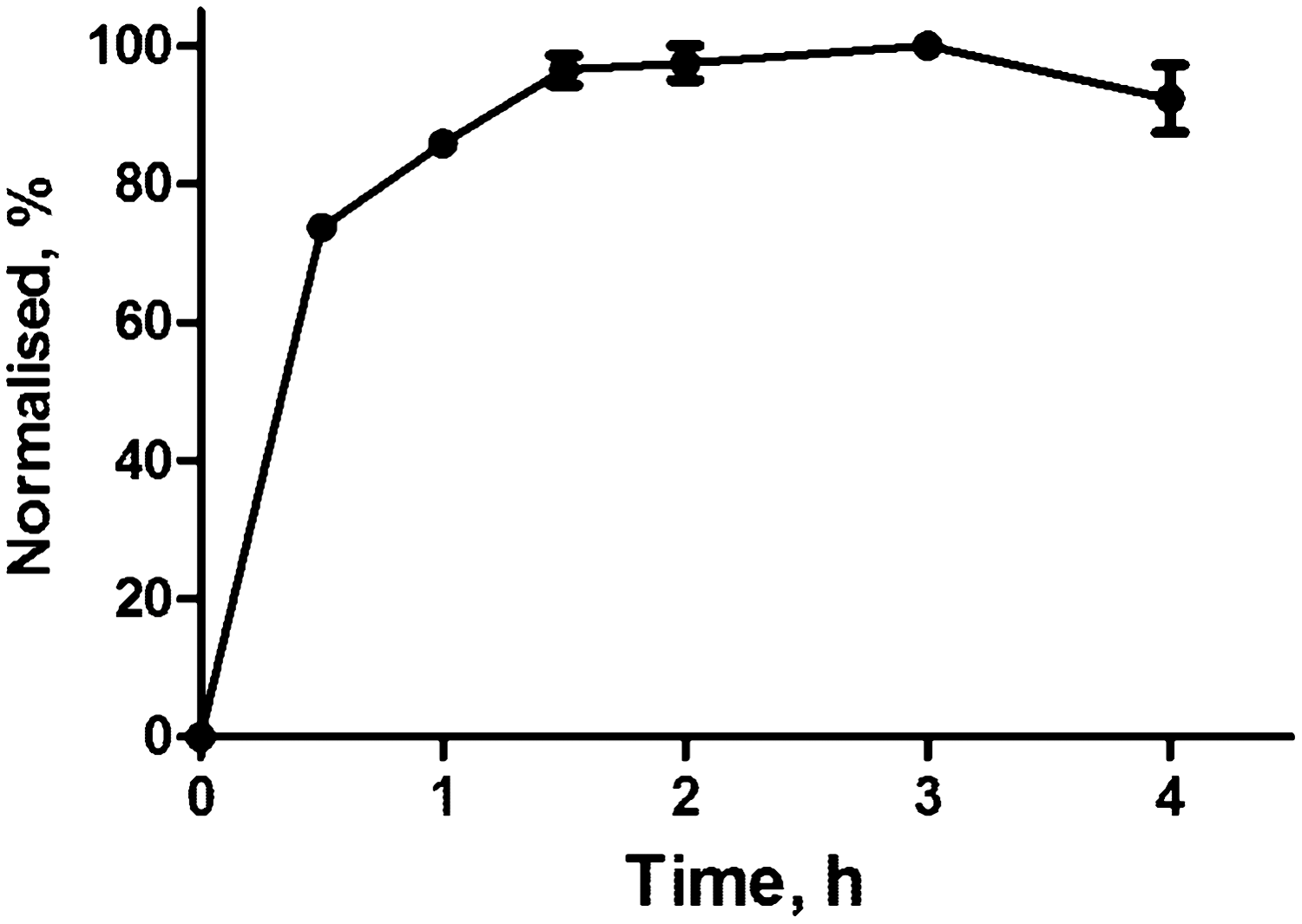
Binding of 99mTc–ZHER2:2395-Cys to opossum-derived proximal tubule (OK) cells at 4°C as a function of time. Data presented as an average of three samples with standard deviations, error bars might be not seen because they are smaller than point symbols.

Binding of 99mTc–ZHER2:2395-Cys (1 nM) to OK cells, 1-hour incubation in different conditions (block—preincubation for 15 minutes with 10 μM ZHER2:342, prefasting—preincubation for 1 hour with FBS-free media).
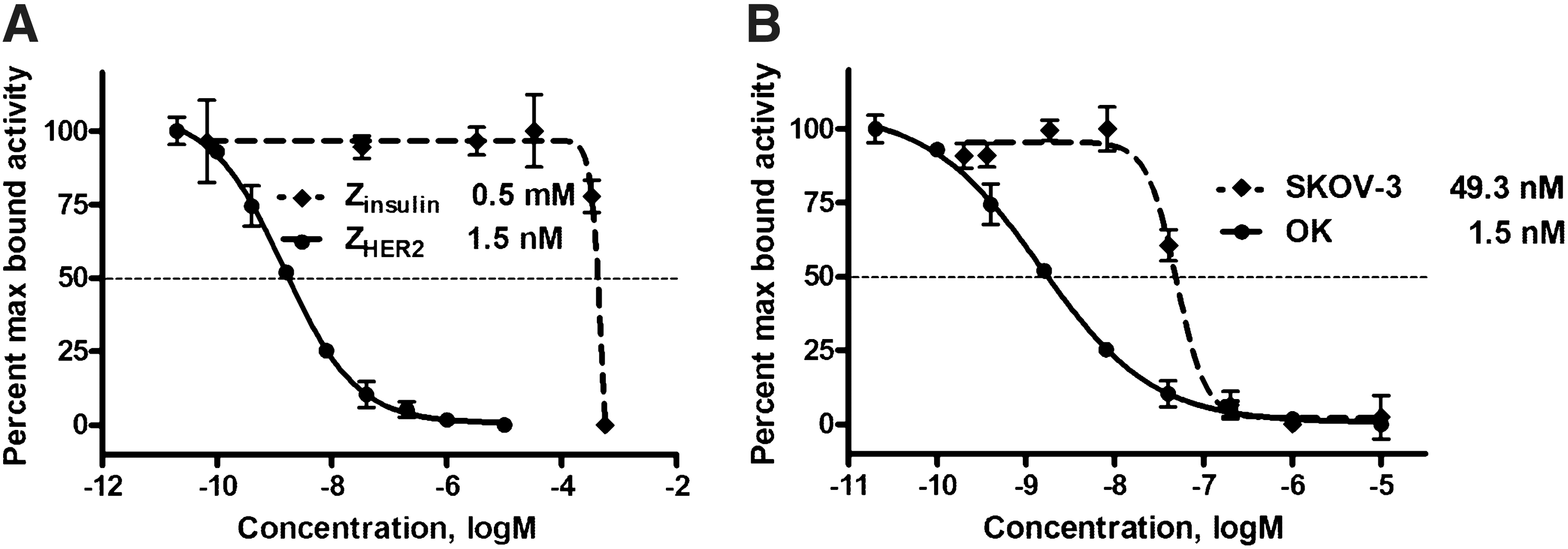
The IC50 values of the anti-HER2 affibody molecule ZHER2:342, the non-HER2 affibody molecules ZEGFR, Zinsuline, and Ztaq and albumin to OK cells were determined (see Fig. 4A and Table 3). The IC50 value of ZHER2:342 was in a low nanomolar range (1.46 nM) and was five orders of magnitude lower compared with the other affibody molecules and albumin. Comparison of binding of 99mTc-Z2395-C to kidney cells (OK) and cancer cells with high HER2 expression (SKOV-3) showed that the inhibition concentration, IC50, for binding of the anti-HER2 affibody molecule ZHER2:342 to OK cells was more than 30 times lower than for binding to HER2-expressing cells (1.5 nM for OK and 49 nM for SKOV-3 cells). Interestingly, the inhibition curve for OK cells showed a rather flat slope (slope=−0.7), which could be due to the presence of more than one binding site with different affinities for 99mTc–ZHER2:2395-Cys on OK cells.
The expression of receptors on OK cells capable to bind to 99mTc–ZHER2:2395-Cys was quantified in a saturation experiment (Fig. 5). In good agreement with inhibition data, the resulting binding curve fitted to two sites (receptors) binding model with two different affinities for 99mTc–ZHER2:2395-Cys, KD1=0.8 nM (Bmax1=71,500 receptors/cell) and KD2=9.2 nM (Bmax2=367,000 receptors/cell). The total amount of receptors capable to bind to the anti-HER2 affibody molecule on OK cells was 440,000 receptors/cell.

Nonlinear regression analysis for two sites binding of data from a binding saturation experiment. Increasing concentrations of 99mTc–ZHER2:2395-Cys (x-axis) were added to dishes with OK cells.
To study the role of the two different receptor types in anti-HER2 affibody molecule binding and cellular processing, OK cells were incubated with two different concentrations of 99mTc–ZHER2:2395-Cys (Fig. 6). The binding and internalization patterns at two different concentrations demonstrated different cellular processing of ligand–receptor complexes. At a concentration of 3 nM (same amount of 99mTc–ZHER2:2395-Cys bound to each receptor type), the cellular binding of 99mTc–ZHER2:2395-Cys reached a maximum at 2 hours. At later time points, cell binding decreased and dropped to 60% of the maximum after 8 hours. In contrast, when OK cells were incubated with a 30 nM concentration of 99mTc–ZHER2:2395-Cys (assuming 99mTc–ZHER2:2395-Cys more abundantly bound to the receptor with a lower affinity), the cell-associated and internalized radioactivity increased continuously during the experiment (about 80% bound within the first hour).

Binding and cellular processing of 99mTc–ZHER2:2395-Cys by OK cells at continuous incubation with two different concentrations at 37°C. Data presented as an average of three samples with standard deviations.
Discussion
The mechanism of renal reabsorption and retention of radiolabeled peptides and small proteins has been studied by several groups during the last decade. Possible renal toxicity and tentative mechanisms of its prevention utilizing various blockers were the main driving forces for these studies. The majority of these studies were performed using in vivo models. In particular, the molecular mechanism of kidney reabsorption of radiolabeled peptides and proteins mediated by the megalin/cubilin coreceptors has attracted substantial attention during the last years. Megalin and cubilin are synergistically acting endocytic receptors located mainly on the brush border of the apical parts of proximal tubules. 32 Megalin is a large transmembrane receptor; cubilin is a somewhat smaller receptor with no extracellular domain, which directs the trafficking of its ligands toward lysosomes through dimerization with megalin. Both receptors are important for the recovery of proteins, such as albumin, vitamin-binding proteins, hormones, and apolipoproteins, from the glomerular filtrate. Involvement of megalin in renal reabsorption of radiolabeled somatostatin analogues has been demonstrated. 8,26 Later, it has been confirmed that the same receptor pair is partly responsible for the renal reuptake of other peptides and proteins, such as exendin, minigastrin, and neurotensin. 11 Interestingly, although the level of expression of megalin/cubilin coreceptors in mice does not differ between the sexes, the same radiolabeled peptide exhibits a higher renal uptake in female than in male mice. 11 Coinfusion of substances that are ligands of megalin/cubilin, such as positively charged amino acids and albumin fragments, reduce the kidney uptake of the radiolabeled small protein. 9,33,34 Recently, the involvement of megalin in renal reabsorption of radiolabeled anti-EGFR nanobodies (15 kDa) has been demonstrated, 35 despite EGFR expression in a proximal tubule. 36 In summary, the studies so far suggest that the most important mechanism responsible for renal reabsorption of small radiolabeled proteins and peptides is megalin-mediated tubular reabsorption.
Affibody molecules appeared as promising imaging probes for in vivo detection of several tumor-associated molecular abnormalities. 16 Their prompt extravasation, high uptake by tumors, low uptake in normal tissues, and a rapid renal clearance provided high-contrast images within a few hours after injection. 17 However, affibody molecules labeled with radiometals consistently show the high radioactivity accumulation in the kidneys. Although the kidneys are a well-defined structure, the high uptake in the kidney might obscure imaging of lesions in the kidneys or in their vicinity and it might cause high-radiation doses during therapeutic application. It is known that HER2 is expressed only in developing proximal tubules. 36 Moreover, it was found that high renal reabsorption occurs for anti-HER2 affibody molecules independent of the labeling method used, but in the case of nonresidualizing labels (radiohalogens and some technetium-99m and rhenium-188), the renal retention is low. 25,37 At the same time, the tumor uptake and retention of radioactivity is stable for both residualizing radiometals and nonresidualizing radiohalogens (see Fig. 7). Long retention of the radioactivity in tumors correlates well with slow internalization rates of anti-HER2 affibody molecules in HER2-expressing tumor cells. 31,38 This mismatch indicates that different processes are involved in the cellular processing of radiolabeled affibody molecules in tumor cells and in the kidneys. Knowledge about different chelators and the properties they confer to the targeting agent and optimization of labeling chemistry enabled reduction of renal retention of the radioactivity. 19,21,24,39,40 However, the molecular mechanism of reabsorption of affibody molecules presumably by tubular cells is not fully understood.
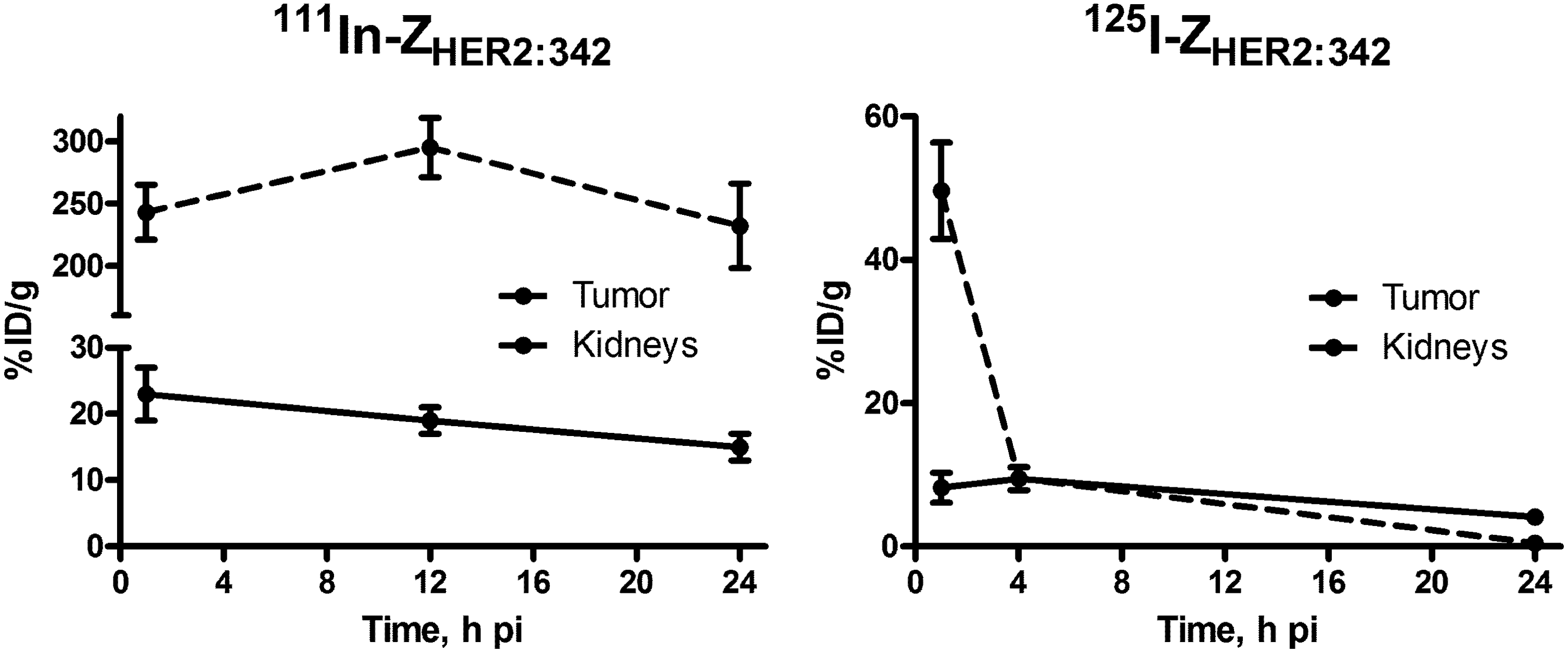
Biodistribution over time in SKOV-3 tumor-bearing BALB/c nu/nu mice after administration of 111In-DOTA-ZHER2:342 37 and 125I-PIB-ZHER2:342.25
In the present study, 111In-labeled anti-HER2 affibody molecules were injected in NMRI mice: the same level of the injected activity was retained in the kidneys in both male and female mice. This observation was the first indication that the megalin/cubilin system is not involved in kidney reabsorption of affibody molecules, considering the pronounced difference of the megalin activity in male and female mice. Additional in vivo experiments did not show any difference in the renal uptake of 111In-labeled ZHER2:2395-Cys between megalin-deficient and wild-type mice. This observation indicated that a megalin-mediated mechanism for kidney retention could be excluded.
Further experiments were carried out in cultured immortal tubular opossum kidney OK cells, which retained the molecular properties of kidney tubular cells. The time course of 99mTc–ZHER2:2395-Cys binding to OK cells showed that the equilibrium was reached fast and binding of 99mTc–ZHER2:2395-Cys to OK cells was significantly reduced by preincubation with an excess of an unlabeled conjugate, which was an indication that binding of the radiolabeled anti-HER2 affibody molecule to tubular cells is mediated by a saturable mechanism. Preincubation of OK cells in a serum-free medium before the incubation with radiolabeled proteins had been used to remove serum albumin from megalin/cubilin to examine the megalin/cubilin driven uptake of albumin. 27 Because prefasting had no effect on the binding of radiolabeled affibody 99mTc–ZHER2:2395-Cys to OK cells, megalin/cubilin is not involved.
Incubation of cells with 99mTc–ZHER2:2395-Cys at 37°C provided a significantly higher cell uptake than incubation at 4°C, suggesting internalization of the radiolabeled tracer. To exclude the influence of internalization, the IC50 was determined at 4°C. In the competition experiments, five orders of magnitude higher concentration of anti-EGFR, anti-insulin, and anti-Taq-polymerase affibody molecules was required to inhibit the binding of 99mTc–ZHER2:2395-Cys to OK-cells by 50%, compared to the unlabeled parent affibody molecule (ZHER2:342). Affibody molecules consist of a scaffold part, which is common for all tested affibody molecules, and a target-binding area determined by 13 amino acids on the surface of helices 1 and 2. The target-binding region is unique for ZHER2:2395-Cys and ZHER2:342. The results of the inhibition experiments clearly showed that amino acids in the target-binding parts of ZHER2:2395-Cys and ZHER2:342 were involved in the binding to OK cells. Furthermore, albumin was as inefficient in blocking of 99mTc–ZHER2:2395-Cys to OK cells as non-HER2-binding affibody molecules. As albumin is a ligand of megalin, this is another strong indication that the megalin/cubilin system is not involved in binding of the anti-HER2 affibody molecule that correlates with in vivo findings.
To evaluate a possibility that opossum ErbB2 (homologue of human HER2) is directly involved in the binding of 99mTc–ZHER2:2395-Cys by OK cells, an inhibition profile of 99mTc–ZHER2:2395-Cys was measured on the HER2-expressing human ovarian carcinoma SKOV-3 cell line. The half inhibition concentration on OK cells was 30-fold lower than that on SKOV-3 cells, where the uptake is HER-2 mediated. These data suggest that another receptor, different from the targeted antigen HER2, is responsible for this extensive uptake of 99mTc–ZHER2:2395-Cys by tubular OK cells.
Further determination of the equilibrium dissociation constant KD indicated the presence of two types of receptors on the OK cells that bind the anti-HER2 affibody molecule 99mTc–ZHER2:2395-Cys: one with a high affinity of 0.8 nM and one with a lower affinity of about 9.2 nM. Cellular processing of 99mTc–ZHER2:2395-Cys by OK cells was studied by a continuous incubation at physiological conditions at two different concentrations of the radiolabeled affibody molecule. The lower concentration (3 nM) was chosen at such a level that a contribution of a receptor with KD1 would be substantial (about 50% of bound radioactivity). At this concentration, 4·KD1 or 0.3·KD2, ∼80% of high-affinity receptors and 25% of low-affinity receptors will be occupied. At the higher concentration (30 nM), the more abundant low-affinity receptor should predominantly contribute to the binding and cellular processing pattern of 99mTc–ZHER2:2395-Cys. We found that binding kinetics was very rapid for both receptors and internalization was slow. After 2 hours incubation at the lower concentration, the cell-associated activity started to decline, and decreased to 60% of the maximum value at 8 hours of incubation. It should be noted that no depletion of radiolabeled affibody molecules occurred. Such a pattern points to internalization of the receptor–ligand complex without subsequent repopulation of the receptors. This pattern has not been observed for anti-HER2 affibody molecules bound to HER2 expressing cells. 21 In HER2 expressing tumor cells, monomeric affibody molecules do not trigger intracellular signaling, 41 which is reflected in slow internalization of a ligand–receptor complex. 21 The binding and processing pattern after binding to the low-affinity receptor was different: after rapid binding during the first 2 hours, the cell-associated radioactivity increased slowly during the 8-hour period. Taking into account that the high-affinity receptor-bound activity decreased, it can be assumed that the low-affinity receptor is constantly repopulated. After 8 hours, the internalized radioactivity was at a level that was twofold higher than that observed in HER2 expressing tumor cells. 21
We started this project with the aim to identify the molecular mechanism of renal reabsorption of the anti-HER2 affibody molecule ZHER2:2395-Cys, in particular, and affibody molecules as the scaffold protein in general. The development of efficient predictive in vitro models can help to reduce a number laboratory animals used for the development of new imaging agents. We hypothesized that the mechanism of renal reabsorption for affibody molecules was similar to that of other small proteins, for example, megalin/cubilin mediated. Unexpectedly, we have found that this coreceptor system is not involved in renal reabsorption of anti-HER2 affibody molecules. Moreover, in our in vitro model, the anti-HER2 affibody molecule binds to two types (or subtypes) of receptors with high affinity in a low nanomolar range. The nature of these receptors on OK cells still needs to be identified.
In conclusion, we have shown that megalin/cubilin coreceptors do not play a significant role in the renal uptake of radiolabeled anti-HER2 affibody molecules in mice. Experiments with opossum tubular OK cells indicated that binding of the anti-HER2 affibody molecule 99mTc–ZHER2:2395-Cys is mediated by scavenger receptors cross-reacting with the binding site of the anti-HER2 affibody molecules, but it is unlikely that HER2 is one of them. We are considering approaches to further identify these receptor types. The results of this study indicate that affibody molecules and other scaffold-based targeting proteins with a relatively low kidney uptake can be selected using in vitro studies with tubular kidney cells.
Footnotes
Acknowledgment
This work was supported by a grant from the Swedish Research Council (Vetenskapsrådet). The authors express their gratitude to Affibody AB for providing affibody molecules for this study. Affibody AB holds intellectual property rights and trademarks for affibody molecules. A. Orlova is a member of the Scientific Advisory Board of Affibody AB.
Disclosure Statement
There are no existing financial conflicts.