




Abstract
The synthesis, labeling, and biological evaluation of a dextran derivative (DCM-30-iso
Introduction
Diagnostic single photon emission computed tomography (
An area of particular interest in diagnostic nuclear medicine is the development of suitable radiopharmaceuticals for detecting the sentinel lymph node, the first node to receive lymphatic flow as well as metastatic cells from the primary tumor sites. The spread of some forms of cancer usually follows an orderly progression, spreading first to regional lymph nodes. The probability of finding metastases in a distant lymph node is very small when the sentinel lymph node has no disease. 2 Consequently, sentinel node biopsy is gradually replacing the extended removal of lymph nodes in cancer patients offering more accurate diagnosis with smaller surgical intervention. 3,4
Identification of the sentinel lymph node by nuclear medicine techniques is performed by injecting small radio-labeled particles (20 to 500 nm) in the area where a tumor is located. The particles migrate from the injection site into the lymphatic channel mainly by passive diffusion and they are cleared from the lymph as foreign matter, based on active, saturable phagocytosis. 5 However, the commonly used radiopharmaceuticals (99mTc-sulfur colloid, filtered 99mTc-sulfur colloid, 99mTc-antimony trisulfide and various preparations of 99mTc-labeled albumin microcolloids) have disadvantages, like high retention at the site of injection, migration to secondary nodes, potential risks from using biological products like human serum albumin, etc. 6,7
An interesting alternative to the existing preparations is the development of a tracer that could be taken up by sentinel lymph node through interaction with mannose receptors on the surface of macrophages present in the lymph node. 8,9 These mannose-binding receptors which recognize and bind macromolecules that have carbohydrate side chains terminating with a mannose glycoside, are potential molecular targets for the development of radiopharmaceuticals for sentinel lymph node detection. Consequently, various mannosylated macromolecules have been prepared and evaluated in the past few years. 10 –16
Dextrans have been used as carrier molecules in the development of pharmaceuticals being biodegradable, nontoxic, and available at pharmaceutical grade in a variety of molecular weights. The synthesis and characterization of a new dextran derivative DCM-30-iso (Fig. 1) bearing mannoses as active moieties for uptake by the lymph node, together with isocyanide groups for 99mTc-labeling is presented herein. The analogous derivative without mannoses (DC-25-iso) was also synthesized (Fig. 1) to allow for conclusions to be reached on the role of mannoses in the sentinel node uptake. The 99mTc-labeling of both derivatives was achieved through the formation of ‘4+1’ complexes with the 99mTc(III) core to give the 99mTc-DC25-iso and the 99mTc-DCM-30-iso, respectively (Fig. 2) with the isocyanide acting as a monodentate ligand and the tripodal chelator 2,2
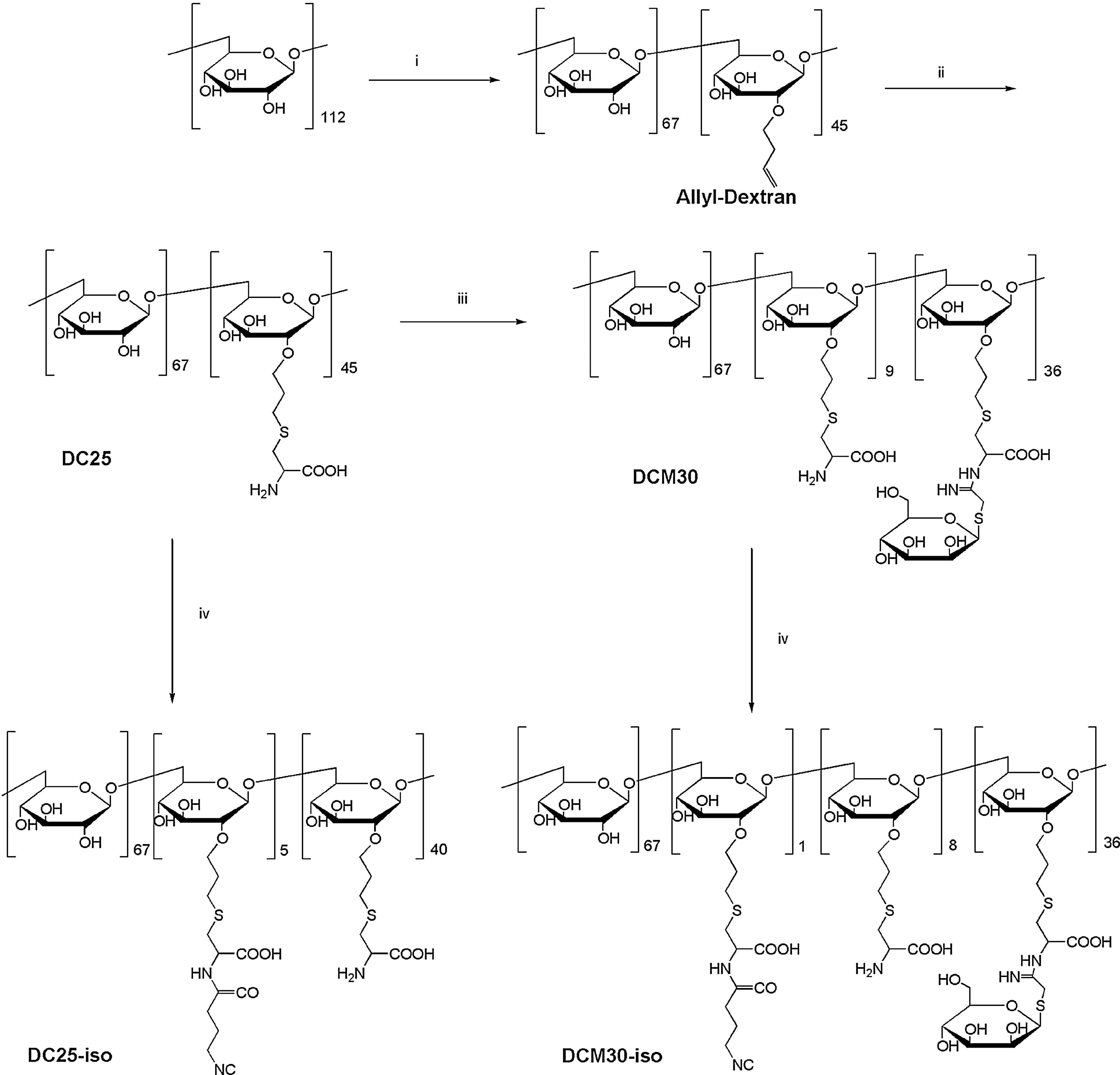
Synthetic scheme leading to DC-25-iso and DCM-30-iso: (i) allyl bromide, NaOH, NaBH4, (ii) L-cysteine, (NH4)2S2O8, water, nitrogen, (iii) 2-imino-2-methoxethyl-1-thio-β-D-mannoside, borate buffer (pH=9, 0.01M), (iv) 4-isocyanobutyric acid 2,5-dioxo-pyrrolidin-1-yl ester, Et3N, water.
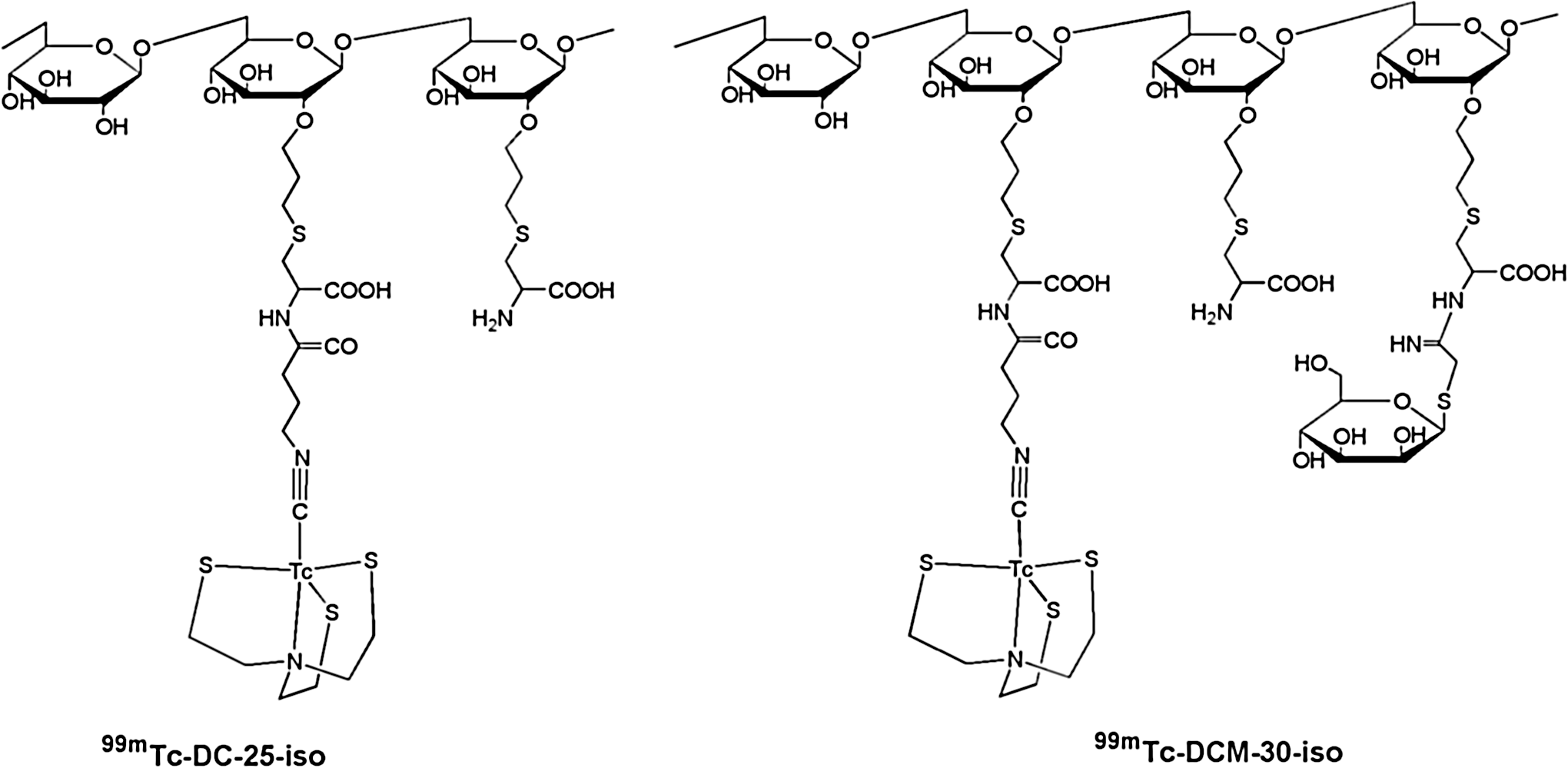
99mTc ‘4+1’ mixed ligand complexes of DC-25-iso and DCM-30-iso.
Materials and Methods
General
All laboratory chemicals were reagent grade and were used without further purification. Dextran-15 (MW 18100 g/mol) was purchased from Serva Electrophoresis GmbH. The cyanomethyl 2,3,4,6-tetra-O-acetyl-1-thio-β-D-mannopyranoside was prepared according to literature. 22,23
2,2′,2′′-nitrilotris(ethanethiol) was prepared by the reaction of tris(2-chloroethyl)amine hydrochloride with potassium thioacetate, followed by reduction with LiAlH4. The final product was precipitated as oxalate salt and used as such in further reactions. Detailed conditions are given in Reference 17 .
The coupling agent 4-isocyanobutyric acid 2,5-dioxo-pyrrolidin-1-yl ester and the rhenium precursors Re(NS3)(PPhMe2), Re(NS3)(CNCH2CH2CH2COONHS) were synthesized according to previously published methods. 18,19,21
Solvents for chromatographic analysis were HPLC grade. [Na99mTcO4] was obtained from a commercial generator (Tecnonuclear SA). NMR spectra were recorded in D2O at 25°C on a Bruker 500 MHz Avance DRX spectrometer using DSS as internal reference. Assignment of the spectra was based on a series of 1H-1H and 1H-13C correlation experiments, as described in detail in the literature. 16 Activity measurements were performed either in a Dose Calibrator, Capintec CRC-5R or in a scintillation counter, 3′′×3′′ NaI (Tl) crystal detector associated to an ORTEC monochannel analyzer. Size exclusion HPLC analyses were performed on a Smartline system (Knauer) equipped with a pump 1000, a manager 5000, a PDA detector 2800 and a homemade γ-ray detector (Bohrloch, NaI(Tl) crystal) and on a Waters 600E chromatography system coupled to both a Waters 486 UV detector and a GABI gamma detector from Raytest (γ trace for 99mTc). Separations were achieved on a size exclusion column (Shodex SB-803HQ (8×300 mm) eluted with water at a flow rate of 1 mL/min.
Synthesis
Synthesis of allyl dextran
Dextran-15, MW 18100, (10 g) was dissolved in 75 mL of distilled water together with 2.5 g of NaOH and 0.1 g of sodium borohydride. The solution was warmed to 50°C and allyl bromide (17.5 g, 0.15 mol) was added. The pH was maintained at 11 by addition of 2.5 N NaOH. After 3 hours, the solution was neutralized (pH 7.0) with acetic acid and the dextran was purified by precipitation with ethanol. Further purification was performed by ultrafiltration. The white solid was dissolved in 50 mL deionized water, filtered through a 5 μm filter, and the filtrate was transferred into an ultrafiltration cell (Model 8400; Millipore Corp.) fitted with an ultrafiltration membrane (YM03, MW cut off 3000). The volume was fixed to 250 mL with deionized water and then concentrated to 15 mL by applying gas (nitrogen) pressure directly to the ultrafiltration cell. The retentate was diluted with 250 mL deionized water, re-concentrated to 10 mL and finally lyophilized. Yield: 9.80 g, 89%.1H NMR (ppm): 5.97 (OCH2
Synthesis of DC-25
To a solution of 3.0 g of allyl dextran in 15 mL of distilled water, 3.27 g L-cysteine hydrochloride monohydrate and 0.18 of ammonium persulfate were added and the resulting solution was stirred for 4 hours at 50°C under nitrogen. The pH was adjusted to 4.0 using 0.1 N NaOH and the solution was left at room temperature for 24 hours. The volume was fixed to 50 mL with 0.02 M sodium acetate buffer pH 4.0 and after filtration (5 μm) the filtrate was transferred into an ultrafiltration cell (Model 8400; Millipore Corp.) fitted with an ultrafiltration membrane (YM03, MW cut off 3000). The volume was fixed to 250 mL with 0.02 M sodium acetate buffer pH 4.0 and then concentrated to 10 mL by applying gas (nitrogen) pressure directly to the ultrafiltration cell. Subsequently, the retentate was diluted with 250 mL 0.1 M bicarbonate buffer, concentrated to 10 mL, as above; the retentate was diluted with 250 mL deionized water, re-concentrated to 10 mL and finally lyophilized. Yield: 2.80 g, 79%. 1H NMR (ppm): 5.16 (subst. dextran anomeric), 4.97 (dextran anomeric), 3.98-3.41 (dextran), 3.81, 3.75 (O
Synthesis of DCM-30
To a methanolic suspension of cyanomethyl 2,3,4,6-tetra-O-acetyl-1-thio-β-D-mannopyranoside (1.41 g in 33 mL methanol), 2 mL of sodium methanoxide solution (21.6 mg) were added and the mixture was agitated periodically. After 24 hours 20 mL of the solution were transferred to a dried recovery flask and methanol was removed by rotary evaporation, affording 2-imino-2-methoxyethyl-1-thio-β-D-mannopyranoside as a golden syrup. Immediately, a solution of DC25 (0.18 g) in 7.5 mL of 0.2 M borate buffer pH 9.0 was added to the flask and left to react for 20 hours under periodical stirring. After filtration (filter of 5 μm), the filtrate was transferred into an ultrafiltration cell (Model 8050; Millipore Corp.) fitted with an ultrafiltration membrane (YM03). The volume was fixed to 50 mL with 0.1 M bicarbonate buffer and then concentrated to 5 mL by applying gas (nitrogen) pressure directly to the ultrafiltration cell. Subsequently, the retentate was diluted with 50 mL deionized water, concentrated to 5 mL, as above (twice) and, finally, the retentate was lyophilized. Yield 0.20 g, 83%. 1H NMR (ppm): 5.16 (subst. dextran anomeric), 4.97 (dextran anomeric), 3.99-3.40 (dextran), 3.88, 3.82 (O
Synthesis of DC-25-iso
The dextran-cysteine derivative (DC-25) (24 mg, 0.946 μmol) and triethylamine (100 μL) were dissolved in water (1.0 mL) in a vessel protected from light. 4-Isocyano-butyric acid 2,5-dioxo-pyrrolidin-1-yl ester (9 mg, 42 μmol) was added. The reaction solution was stirred at room temperature for 24 hours, was lyophilized and the white solid produced was washed with methanol and diethylether. Yield 18 mg, 73%. 1H NMR (ppm): 5.16 (subst. dextran anomeric), 4.98 (dextran anomeric), 4.37 (subst. cysteine SCH2
Synthesis of DCM-30-iso
The dextran-cysteine-mannose derivative (DCM-30) (12 mg, 0.355 μmol) and triethylamine (100 μL) were dissolved in water (1.0 mL) into a vessel protected from light. 4-Isocyano-butyric acid 2,5-dioxo-pyrrolidin-1-yl ester (4.5 mg, 21 μmol) was added. The reaction solution was stirred at room temperature for 24 hours, was lyophilized and the white solid produced was washed with methanol and diethylether. Yield 8 mg, 75%. 1H NMR (ppm): 5.40 (mannose anomeric), 5.16 (subst. dextran anomeric), 4.97 (dextran anomeric), 4.37 (subst. cysteine SCH2
Synthesis of Re(NS3)(DC-25-iso)
Re(NS3)(PPhMe2) (2 mg, 3.86 μmol) dissolved in 1 mL acetonitrile was added to an aqueous solution of DC-25-iso (1.0 mL, 16.6 mg, 0.643 μmol). The reaction solution was stirred at room temperature for 5 hour and then washed with dichloromethane (3×3 mL). Addition of methanol to the aqueous phase resulted in precipitation of a pale green powder that was washed with diethylether. 1H NMR (ppm): 5.16 (subst. dextran anomeric), 4.98 (dextran anomeric), 4.82 (coordinated COCH2CH2
Radiolabeling
Preparation of 99mTc-EDTA
99mTc-EDTA was prepared by adding [Na99mTcO4] (300-1000 MBq, 1 mL) to a freeze dried kit that contains ethylenediamine tetracetic acid sodium salt (5 mg), mannitol (5 mg), and stannous chloride dihydrate (0.08 mg) and the mixture was incubated at room temperature for 5 minutes. The radiochemical purity was checked by thin layer chromatography on Silica gel using acetone and water as mobile phases.
Substitution by DC-25-iso and DCM-30-iso
A solution of DC-25-iso or DCM-30-iso in saline solution (800 μg in 250-500 μL) and 2,2
Biological evaluation
Biodistribution studies
Experimental animal studies were approved by the Ethics Committee of the Faculty of Chemistry from Uruguay. Normal Wistar rats (female, 250–300 g, 3 animals per group) were anesthetized with sodium thiopental (50 mg/Kg) administered in the peritoneal cavity and subsequently injected in the rear foot pad with 99mTc- labeled dextran derivatives (0.05 mL, 0.37 MBq, 0.2 nmol). Ten minutes before sacrifice, 0.05 mL of patent blue was also injected to facilitate lymph node visualization. At different time intervals postinjection (15, 30, 60, and 180 minutes and 24 hours) animals were sacrificed by neck dislocation. Lymph nodes (popliteal and external lumbar) were extracted first. Other organs and samples of blood and muscle were also collected, weighed and assayed for radioactivity. Total urine volume was collected during the experiment and added to that removed from bladder after sacrifice. The bladder, urine, and intestines were not weighed. Corrections by different sample geometry were applied when necessary. Results were expressed as % dose/organ.
Blocking experiments
About 50 μL of a solution containing 4 mg/mL of mannose (1 μmol/animal) was injected in the foot pad of normal Wistar rats (female, 250–300 g, 3 animals per group). After 10 minutes, the tracer 99mTc-DCM-30-iso was injected and biodistribution was performed as indicated in the previous section at 15 and 30 minutes postinjection.
Imaging studies
Normal Wistar rats (female, 250–300 g) were anesthetized with sodium thiopental (50 mg/Kg) administered in the peritoneal cavity and subsequently injected in the rear foot pad with 99mTc- labeled dextran derivatives (0.05 mL, 100 MBq, 2 nmol). Imaging was performed using a rectangular field (21.2×15.7 inches) gamma/camera (Sophy Camera DSX) equipped with a low energy, high resolution, parallel hole collimator. Static images were obtained at 15, 30, 45, and 60 minutes postinjection.
Results and Discussion
Synthesis of the dextran derivatives (DC-25-iso and DCM-30-iso)
The procedure for the synthesis of the new dextran derivatives DC-25-iso and DCM-30-iso is shown in Figure 1. The intermediate products allyl dextran, DC-25 and DCM-30 were synthesized and characterized by NMR following procedures already presented for the preparation of similar dextran derivatives with lower molecular weight. 16 Specifically, reaction of allyl bromide with dextran-15 (MW 18100 g/mol, 112 glucose units) yields the intermediate allyl dextran. Comparison of the intensity of allyl peaks in NMR spectra to those of the anomeric protons of dextran, indicates that ∼40% of the dextran glucose units are allylated. Addition of cysteine to allyl dextran results in the quantitative formation of the dextran-cysteine derivative DC-25. Subsequently, DC-25 is mannosylated to yield the DCM-30 derivative by employing the bifunctional reagent 2-imino-2-methoxethyl-1-thio-β-D-mannoside. Comparison of the intensity of the mannose anomeric peak to that of the anomeric peaks of dextran shows that about 80% of the cysteines are mannosylated, as is also observed for the lower molecular weight dextrans. 16
Introduction of the isocyanopropyl chains on DC-25 and DCM-30 was effected by reaction of their cysteine amine groups with the 4-isocyanobutyric acid 2,5-dioxo-pyrrolidin-1-yl ester to yield DC-25-iso and DCM-30-iso, respectively. DCM-30-iso is the final mannosylated product, while DC-25-iso is the nonmannosylated analogue that was synthesized and evaluated only for comparison purposes. In the 1H NMR spectra of the DC-25-iso (Fig. 3A), characteristic methylene peaks of the isocyanopropyl chain are present (the CO

1H-NMR spectra (5.5–1.5 ppm) of product DC-25-iso
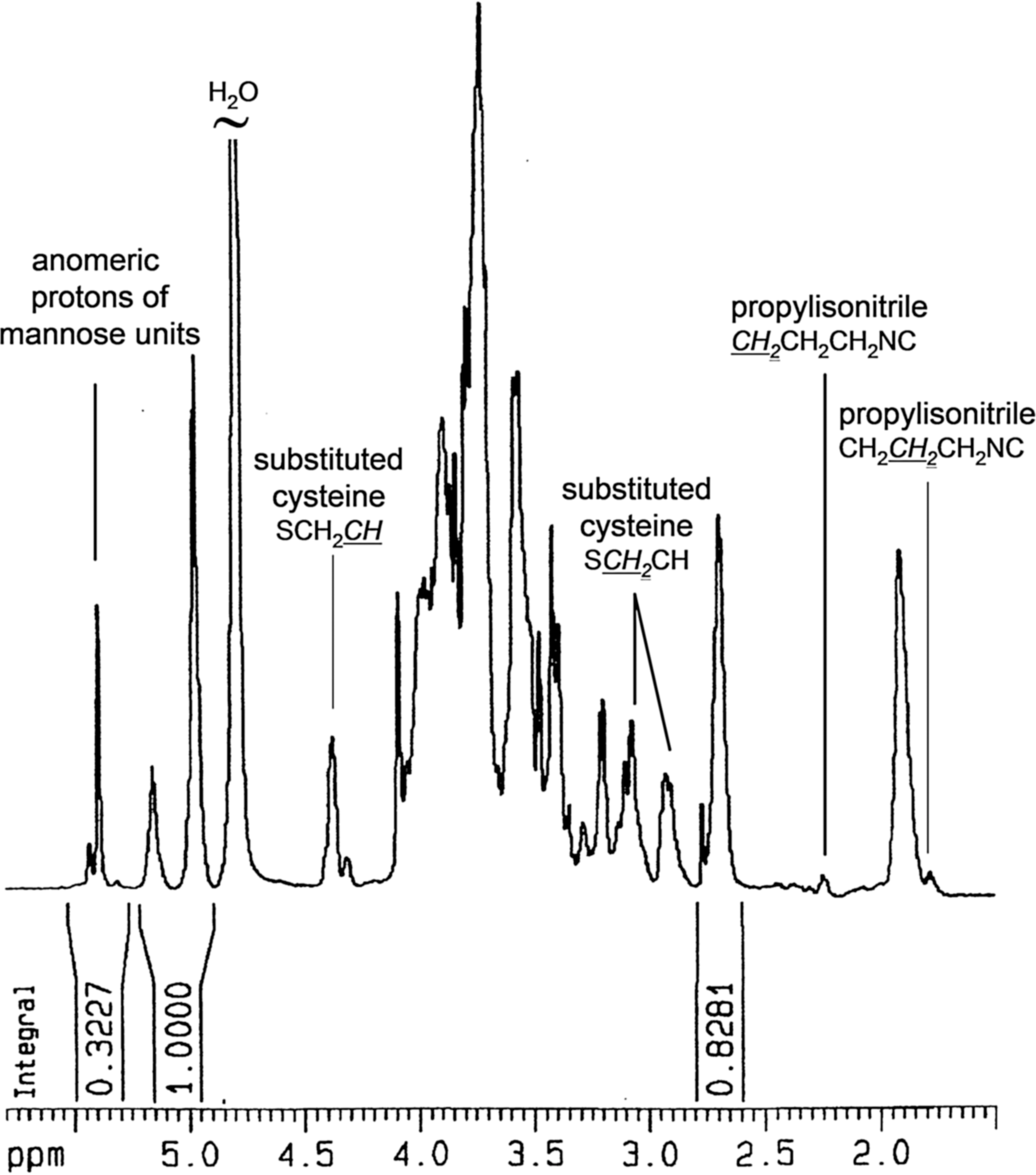
1H-NMR spectra (5.8–1.5 ppm) of product DCM-30-iso in D2O at 25°C.
Overall, it can be deduced based on the percentage of derivatization of each synthetic step that on average both products bear 45 cysteine branches. In DC-25-iso, five of the cysteine branches are derivatized with the isocyanopropyl group, while in DCM-30-iso, one cysteine is derivatized with the isocyanopropyl group, 36 cysteine branches are mannosylated and eight remain free.
Synthesis of the rhenium complex Re-DC-25-iso
Synthesis of the rhenium complex of the nonmannosylated DC-25-iso which bears more isopropyl units relative to the mannosylated DCM-30-iso and is expected to give stronger NMR signals from the chelated unit, was effected to provide structural evidence on the formation of the ‘4+1’ complex. The complex was prepared by reacting the DC-25-iso with the Re(NS3)(PPhMe2) precursor in aqueous CH3CN solution.
In the NMR spectra, characteristic shifts of the isocyanopropyl chain denote the coordination of the isonitrile to the metal. Specifically, the COCH2CH2
Preparation of the technetium-99m complexes 99mTc-DC-25-iso- and 99mTc-DCM-30-iso
The synthesis of the ‘4+1’ Tc complexes was performed by a two-step substitution procedure using 99mTc-EDTA/manitol as precursor. This precursor was obtained by direct reduction of pertechnetate using stannous chloride as reducing agent. Radiochemical purity of the labeled precursor was assessed by classical chromatographic procedures and found to be higher than 90%. Ligand substitution was achieved by the simultaneous addition of the dextran derivatives (DC-25-iso or DCM-30-iso) containing the monodentate isocyanide moiety, and the tetradentate NS3 coligand 2,2
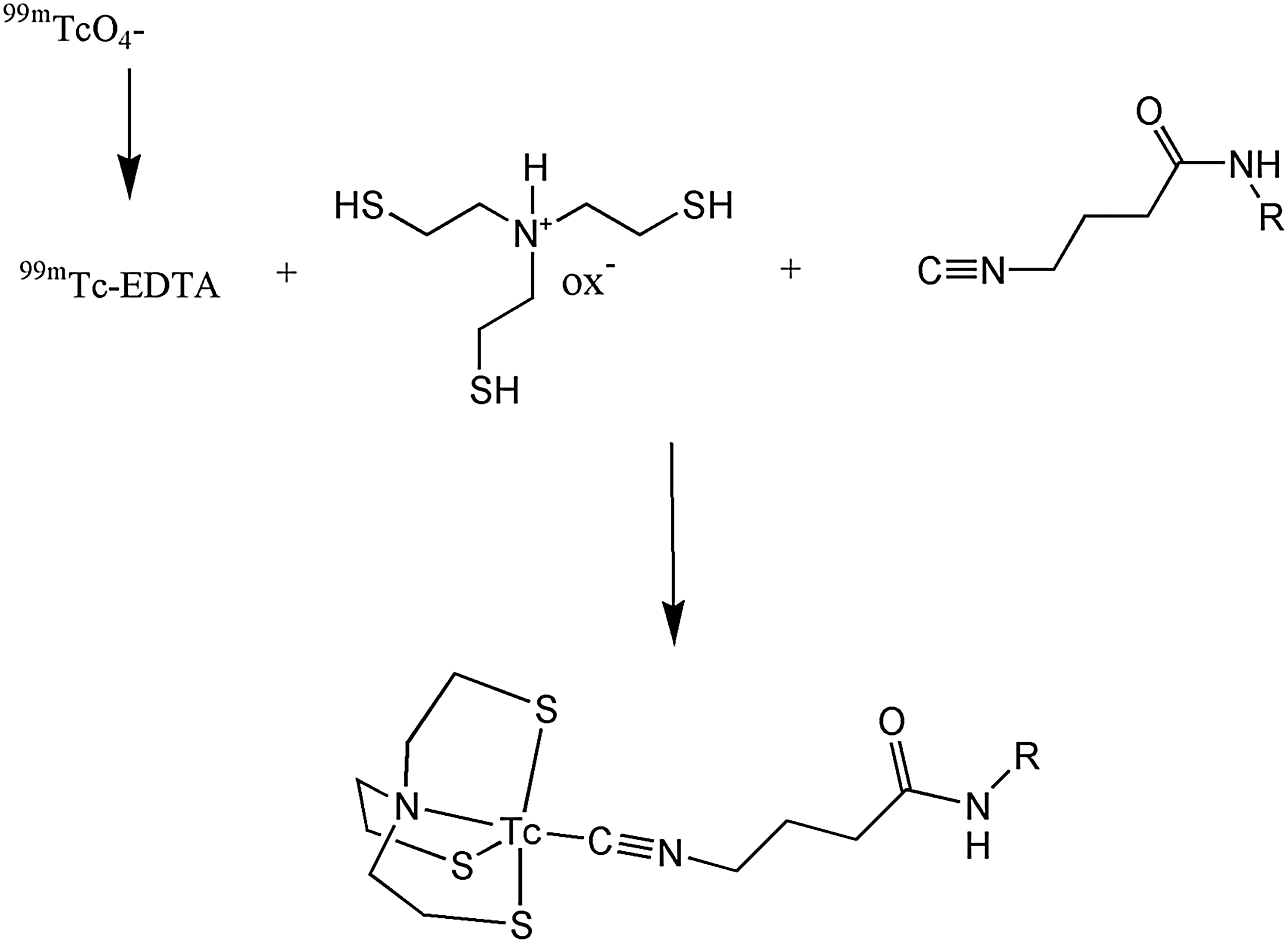
Scheme of 99mTc labeling reaction (R=either DCM-30-iso or DC-25-iso).
Radiochemical purity could be assessed by a single TLC run, as labeled dextrans remain at the origin, while 99mTc-EDTA and 99mTcO4 − migrates with the solvent front (water). As a consequence, the radiochemical purity of dextran derivatives labeled by this procedure could be accurately assessed and found to be higher than 90%. In addition, size exclusion HPLC was also used to assess the radiochemical purity of labeled dextrans. The recovery of the column was quantitative indicating absence of 99mTc-colloid. Figure 6 shows the typical chromatographic profile of the precursor (99mTc-EDTA) and of the final products; thus, clearly demonstrating that substitution was complete and that 99mTc-labeled dextrans were obtained as the only reaction product.
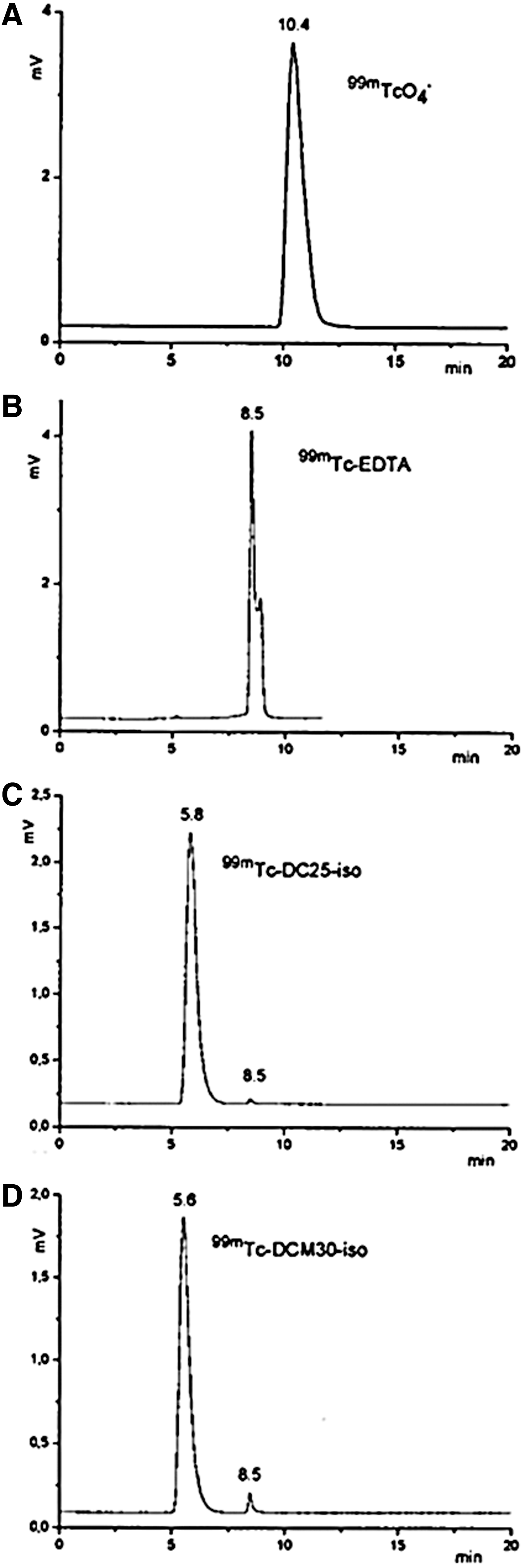
Size exclusion HPLC profile (radiometric detection) of
Comparative HPLC studies showed that the 99mTc-DC-25-iso co-elutes with its well-characterized rhenium analogue indicating that both complexes have similar chemical structure (Fig. 7). It should be noted that when the labeling procedure was performed using the DCM-30 in place of DCM-30-iso the only radiolabeled product present was the 99mTc-EDTA precursor indicating that the isocyano group is crucial in achieving adequate labeling yield.
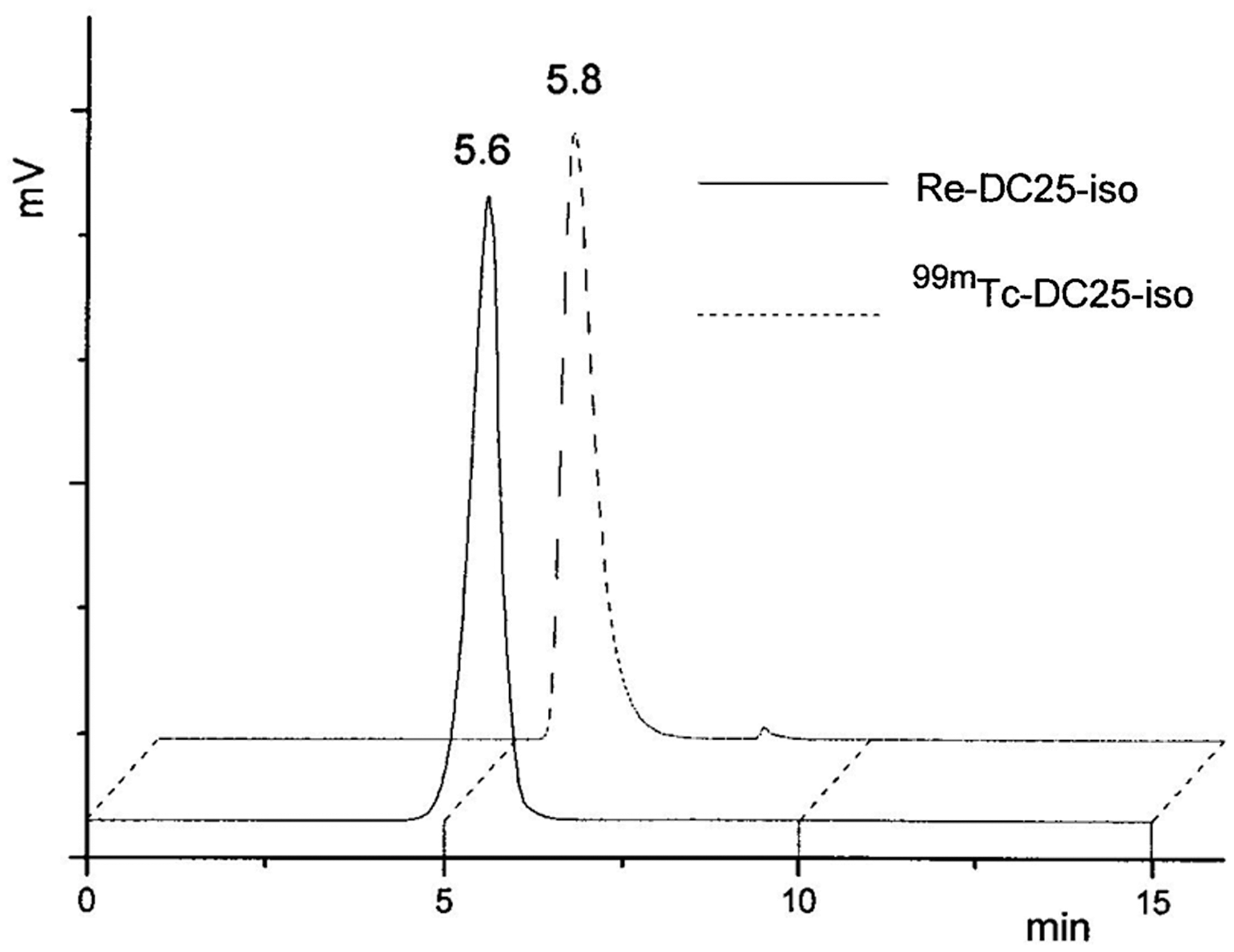
Comparative HPLC study of 99m Tc-DC-25-iso (radiometric detection) with its well-characterized rhenium analogue Re-DC-25-iso (UV detection).
In vitro stability of the 99mTc-labeled compounds isolated by HPLC and incubated at 37°C for up to 4 hours postlabeling, was evaluated by size exclusion HPLC. Radiochemical purity remained over 90% demonstrating that no decomposition occurred within the duration of the study.
Biological evaluation
Biodistribution studies
Biological evaluation of the 99mTc-labeled DCM-30-iso was performed both by biodistribution and imaging studies using Wistar rats as animal model. Biodistribution results at 15, 30, 60, and 180 minutes and 24 hours after subcutaneous injection in the rear foot pad are shown in Table 1.
Popliteal extraction is calculated as popliteal extraction=[% Dose (Popl. Lymph node) − % Dose (Ext. lymph node)/% Dose (Popl. lymph node)]×100.
High uptake in the first lymph node (popliteal) was observed at all time points (9.4±1.2, 5.90±0.82, 5.55±1.40, 5.42±0.88, and 7.0±1.0 at 15, 30, 60, 180 minutes, and 24 hours, respectively), while the activity in the secondary node (external lumbar) was significantly lower (p<0.05) at all time points (1.18±0.52, 1.33±0.91, 1.42±0.99, 0.79±0.54, and 3.40±0.43 at 15, 30, 60, 180 minutes, and 24 hours, respectively). Uptake in other organs was negligible, except for blood, and liver where low uptake was observed (3.9±1.6 and 2.8±1.9 for blood and liver, respectively at 15 minutes postinjection; 0.64±0.11 and 6.28±0.41 for blood and liver, respectively at 24 hours postinjection). Uptake in blood and liver at 3 hours p.i. is higher than in other time points, probably due to the release of compound from the injection site to systemic circulation. Once in blood, the compound could be accumulated in the liver due to the presence of mannose in the macromolecule. After 24 hours, these values become lower probably because of renal excretion Efficiency of extraction by the sentinel lymph node is reported in the literature using a calculated parameter denominated popliteal extraction (P), calculated as P=[% Dose (Popl. lymph node)−% Dose (Ext. lymph node)/% Dose (Popl. lymph node)]×100. Table 1 shows the values of P calculated for the 99mTc-labeled DCM-30-iso for biodistribution times between 15 minutes and 24 hours. An extraction of more than 85% is achieved very rapidly and remains almost constant during the first 3 hours of the study (P=87.8±4.0 and 86.3±7.8, at 15 and 180 minutes, postinjection, respectively).
Comparison of our data with the reported values for other mannosylated dextran radiotracers for SLND like [99mTc]DTPA-mannosyl-dextran (Lymphoseek), 12,13 99mTc(CO)3DCM20, 16,24 99mTc(CO)3DCM30, 25 99mTc(CO)3 pyrazolyl-mannosyl-dextran 15 presented in Table 2, should be cautiously interpreted as these compounds were evaluated using different experimental procedures and animal models. Nevertheless, it should be noted that the current studies show higher initial sentinel lymph node uptake (9.40%±1.20%), while a significant retention up to 24 hours postinjection in the SLN is observed. In terms of popliteal extraction and injection site clearance, another two important parameters, the values obtained for 99mTc(CO)3DCM20, 99mTc(CO)3DCM30 and Lymphoseek are better.
nd, not declared; f, front footpad; r, rear footpad.
To investigate whether the lymph node uptake may be attributed to the presence of the mannose moiety, a biodistribution study of the nonmannosylated analogue 99mTc-DC-25-iso was also performed under the same conditions. Results are shown in Table 3.
Its biodistribution profile is completely different from that of 99mTc-DCM-30-iso at all time points. Uptake in both lymph nodes (popliteal and external lumbar) was very low, while activity in blood and liver was significantly higher. Increasing activity in intestine and urinary system demonstrated that excretion occurred during the time period under study. These results indicate that mannose moieties play a very important role in the uptake and retention mechanism of 99mTc-DCM-30-iso by the first lymph node. To corroborate our hypothesis, blocking experiments were also performed by injecting 40-fold of mannose to animals 10 minutes before administration of 99mTc-DCM-30-iso. Biodistribution was performed 15 and 30 minutes after administration of the radiotracer and the results are shown in Table 4. Mannose was used as blocking agent instead of the unlabeled DCM-30-iso, because it was observed that injection of high amounts of dextran derivatives in the animal foot pad caused intense local inflammation which could affect the experimental results.
The preinjection of mannose drastically changed the biodistribution profile of 99mTc-DCM-30-iso, which then became similar to that of the nonmannosylated analogue 99mTc-DC25-iso. Uptake in both lymph nodes (popliteal and external lumbar) was significantly reduced, while activity in blood and liver was higher. Figure 8 shows the uptake in popliteal lymph node of 99mTc-DCM-30-iso with and without blocking agent. The difference in uptake is significant for both time points under study (p<0.05); thus, confirming our hypothesis.

Uptake in popliteal lymph node of 99mTc-DCM-30-iso with and without preinjection of mannose as blocking agent.
Dynamic images up to 30 minutes for both 99mTc-DCM-30-iso and 99mTc-DC-25-iso, showed a consistent biodistribution profile to the results which were obtained by dissection. As for 99mTc-DCM-30-iso, the first and second lymph nodes were clearly visualized, while liver and bladder were also visualized. On the other hand, for 99mTc-DC-25-iso, the uptake to lymph nodes was almost negligible, while high uptake in kidneys, bladder, and liver was observed.
Static images at 30 minutes for 99mTc-DCM-30-iso and 99mTc-DC-25-iso, respectively, are shown in Figure 9. Sentinel lymph node is clearly visualized only for 99mTc-DCM-30-iso, confirming our previously described findings.
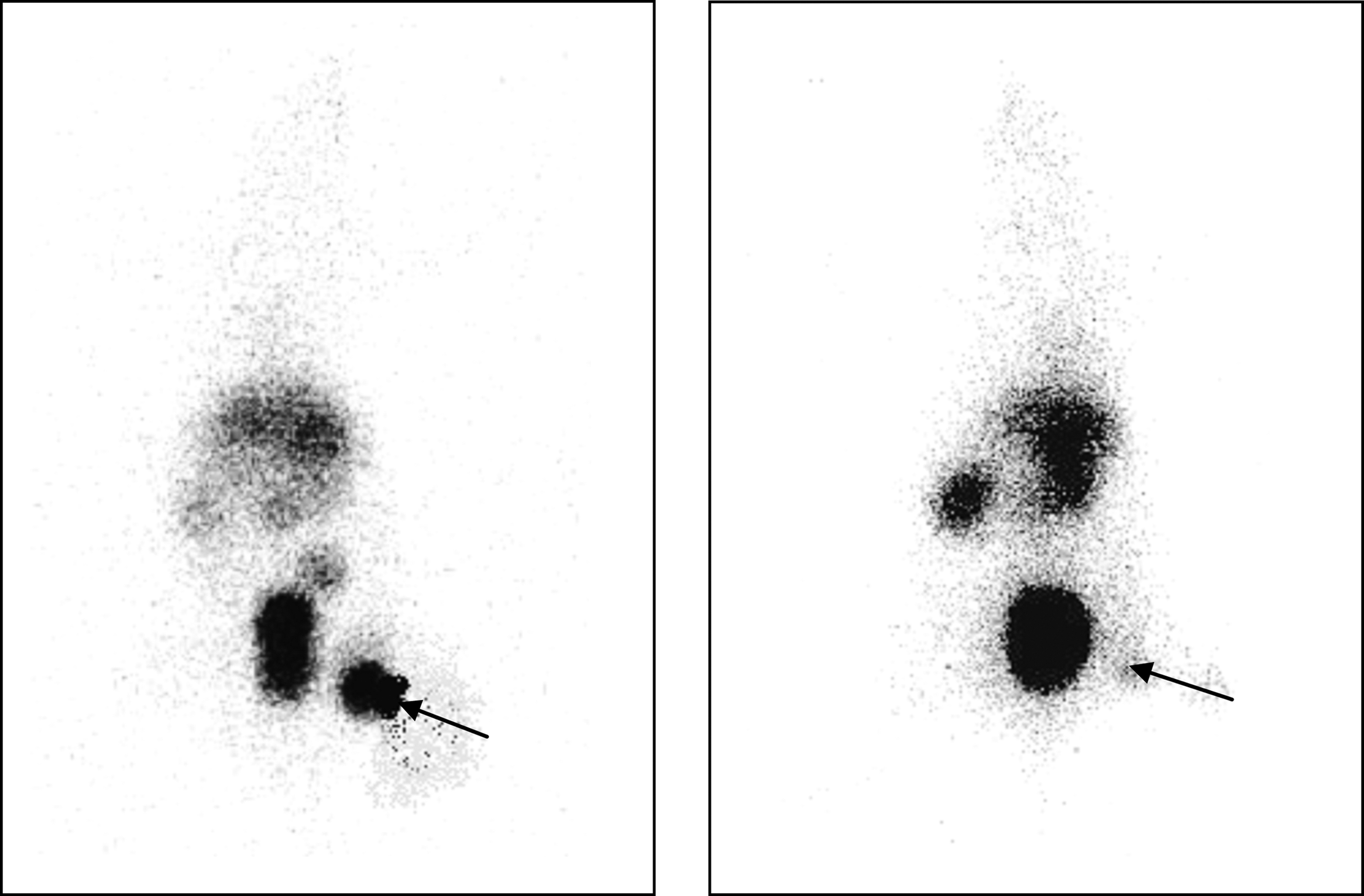
Static images of 99mTc-DCM-30-iso (left) and 99mTc-DC-25-iso (right), respectively, at 30 minutes. p.i. (posterior view) after administration of 100 MBq of each dextran derivative. Animals were anesthetized by intraperitoneal injection of 50 mg/Kg of sodium thiopental. The arrows indicate sentinel lymph node.
Conclusions
With the aim of developing new radiopharmaceuticals for sentinel node detection, we have worked on the synthesis, labeling, and biological evaluation of a dextran derivative DCM-30-iso, bearing mannose as active moiety and an isocyanide group, as electron donor for technetium. This compound contains ∼36 mannose units as pharmacophore and one isocyanide unit for labeling with 99mTc. The nonmannosylated analogue DC-25-iso, was also included in the study for comparison. Synthesis of both compounds was successfully achieved by a multistep procedure. 99mTc-labeling of both compounds was performed through the formation of Tc(III) ‘4+1’ complexes and resulted in each case in a single product with high radiochemical purity as demonstrated by TLC and HPLC. The labeled products were stable for at least 4 hours. Biodistribution data for 99mTc-DCM-30-iso where mannose moieties are present demonstrated high uptake in the first lymph node and low uptake in the following node, as well as low activity in the rest of the body when mannose moieties are present. On the other hand, lack of mannose in the 99mTc-DC-25-iso resulted in negligible uptake in all lymph nodes. In addition, the lymph node uptake of the mannosylated dextran could be blocked by preinjection of mannose. Imaging experiments corroborated the biodistribution data obtained. These results indicate that the uptake in the sentinel lymph node could be attributed to specific binding.
Other dextran derivatives containing mannose as active moiety have been proposed by various groups. The mannosylated 99mTc-diethylenetriaminepentaacetic acid (DTPA) labeled dextran, proposed by Vera et al. 10 –12 has shown good preclinical results and clinical trials are underway. However, lack of a well-established chemistry of DTPA-Tc complex is an obvious drawback especially in view of the emphasis currently given on the complete structural characterization of new probes. 26 Furthermore, there is experimental evidence indicating that 99mTc- DTPA may be in the III, IV, or V oxidation state and that the product may be reaction condition-specific, with different species being produced according to the specific set of reaction conditions. 27 Our approach, on the other hand, combines adequate in vivo results with a well-documented chemistry and good stability of the 4+1 mixed ligand Tc(III) complexes both in vitro and in vivo 17 –21 offering thus, an attractive alternative to sentinel node radiopharmaceutical development.
Footnotes
Acknowledgments
This work was supported by IAEA Coordinated Research Project on “Development of 99mTc Radiopharmaceuticals for Sentinel Node Detection and Cancer Diagnosis” and by Pedeciba-Química and CSIC (Uruguay). Special thanks go to Dr. M.R.A Pillai and Dr. A. Duatti from the Department of Nuclear Sciences and Applications of the IAEA and to Dr. R. Pasqualini, IBA molecular.
Disclosure Statement
No conflict of interest is declared.
References
Supplementary Material
Please find the following supplemental material available below.
For Open Access articles published under a Creative Commons License, all supplemental material carries the same license as the article it is associated with.
For non-Open Access articles published, all supplemental material carries a non-exclusive license, and permission requests for re-use of supplemental material or any part of supplemental material shall be sent directly to the copyright owner as specified in the copyright notice associated with the article.
