




Abstract
Curcumin and 5-Fluorouracil (5-Fu) have been reported to have anticancer potentials and show certain synergetic effect on some cancer cell lines. However, the poor bioavailability and rapid metabolism limited their medical application. In this study, we encapsulated curcumin with solid lipid nanoparticles (SLN), 5-Fu with Layered double hydroxides (LDHs) separately and tested its properties and anticancer potentials. SLN-curcumin and LDH-5-Fu were determined to be 100 and 60 nm by Transmission Electron Microscopy detection, and the loading efficiency were 28%±2.5% and 16.7%±1.8%, individually. Furthermore, SLN-curcumin and LDH-5-Fu showed a significantly synergetic effect on SMMC-7721 cell stronger than plain drugs together, of which the Idrug loaded nano-carriers was only 0.315. FACS analysis revealed that the combination of SLN-curcumin and LDH-5-Fu induced 80.1% apoptosis in SMMC-7721 cells, which were 1.7-folds of the sum of the two plain drug loaded carriers. The results demonstrated the significant synergetic anticancer potentials of nano-encapsulated curcumin and 5-Fu, which could be further explored for the treatment of other carcinoma.
Introduction
5-Fluorouracil (5-Fu) is one of the most potent antimetabolites which have been widely used in the treatment of advanced solid tumors. It is a suicide inhibitor and works through irreversible inhibition of thymidylate synthase. However, the clinical use of 5-Fu on carcinoma is limited as well as highly toxic to bone marrow, gastrointestinal tract, and skin when used at the therapeutic dose. 1,2 To overcome the defect, combination chemotherapy of 5-Fu with other drugs has been used widely to enhance its antitumor effects and in the same time, minimize its side effects. 3,4
Curcumin is a yellow polyphenol isolated from the rhizomes of Curcuma longa, a plant which grows in India, China, and South East Asia. 5 In vitro and animal studies have proven that curcumin has antitumor, 6 –8 antioxidant, antiarthritic, antiamyloid, and anti-inflammatory properties. Its potential anticancer effects stem from its ability to induce apoptosis in cancer cells without cytotoxic effects on healthy cells. Curcumin can interfere with the activity of the transcription factor NF-κB, which has been linked to a number of inflammatory diseases, such as cancer. 9 A 2010 study in malignant brain tumors showed curcumin effectively inhibits tumor cell proliferation, as well as migration and invasion, and these effects may be mediated through interference with the STAT3 signaling pathway. 10 However, the clinical application of curcumin was limited because of its extremely low aqueous solubility, rapid metabolism and poor bioavailability. 11 –13 So, the drug delivery systems, such as polymer, 14 liposome, 15 and solid lipid nanoparticles (SLN), 16 was applied to achieve better bioavailability and targeting delivery.
Hepatocellular carcinoma (HCC) is the sixth most common malignancy worldwide. 17 The majority of HCC patients are diagnosed at an advanced stage of their disease so that they could not benefit from surgical treatment. Thus, finding efficient and low toxic anti-HCC agents is a significant problem facing research in this area. SMMC-7721 is a cell line that derived from human HCC, which is generally used as a model cell line for antiliver cancer research. 18 –20 It was reported that the effect of 5-Fu in SMMC-7721 cells can be significantly enhanced with β-aescin. 21 So, combination or synergy therapy, in which two or more drugs are used at the same time, is the proven treatment for cancer therapy.
Here we aimed to use two drug delivery systems, SLN and Layered double hydroxide (LDH), to overcome the defects of curcumin and LDH, separately, and examine the combined antitumor effects of SLN-curcumin with LDH-5-Fu on SMMC-7721 cells, in the hopes of assessing a relatively effective and safe medicament potentiated for liver cancer treatment.
Materials and Methods
Regents
5-Fu, Curcumin (purity ≥95%), Polysoybate Stearate (40) (Myrj 52), Dimethyl sulphoxide, 3-(4,5-dimethylthiazol-2-yl)-2 and 5-diphenyltetrazolium bromide (MTT) were purchased from Sigma Chemical Co. Stearic acid, lecithin and chloroform, all of high-performance liquid chromatography (HPLC) or analytical grade, were purchased from Sinopharm Chemical Reagent Co., Ltd. RPMI-1640, fetal calf serum, penicillin G, streptomycin, and trypsinase were obtained from GIBCO BRL (Grand Island). All other reagents and chemicals used were of analytical grade. All aqueous solutions were prepared with distilled and deionized water.
Preparation of SLN-curcumin
Briefly, curcumin (150 mg), stearic acid (200 mg), and lecithin (100 mg) were dissolved in 10 mL chloroform in a glass flask (organic phase). Myrj 52 was dissolved in 30 mL distilled water and heated up to 75°C in water bath (aqueous phase). Then the organic phase was added to the aqueous phase at 1000 rpm using an overhead stirrer at the same temperature. About 60 minutes later, when the system volume condensed to about 5 mL, the flask was removed from the water bath, 10 mL of ice-cold distilled water was added, and stirring of the mixture at 1000 rpm continued for 120 minutes. The resultant suspension was centrifuged by a super speed refrigerated centrifuge (Avanti J-25; Beckman Coulter) at 20,000 rpm and 4°C for 120 minutes to remove the supernatant. The pellet was resuspended in ultrapure water, refrigerated under −80°C for 60 minutes, followed by lyophilization in tabletop lyophilizer.
Preparation of LDH-5-Fu
LDHs were prepared by co-precipitation under N2 atmosphere. The LDH composition was prepared by coprecipitation under low supersaturation from a solution of the appropriate metal nitrates with a molar ratio of Mg:Al equal to 3:1. A total volume of 40 mL NaOH (272 mg, 6.8 mmol) and 5-Fu (390 mg, 3 mmol) was mixed together and stirred at 600 rpm under N2 atmosphere for 10 minutes in a four-neck flask (solution A). The mixed 10 mL solution of 3 mM Mg (NO3)·6H2O and 1 mM Al(NO3)·H2O was prepared in sealed conical flasks with continuous stirring under nitrogen gas flow. The mixed metal solution was added into solution A and final pH value was then adjusted to 10.0±0.2 by adding 1 M NaOH solution dropwise (LDH was well crystallized in the range of pH ∼8–10.5) and was stirred vigorously at 80°C for 5 hours in a nitrogen-filled environment with occasional pH readjustment. Resulting white precipitate was aged for 24 hours, collected by centrifugation, washed thoroughly with decarbonated water, and dried overnight under a vacuum at 60°C.
Entrapment ratio of SLN-curcumin and LDH-5-Fu
To determine the entrapment efficiency (EE), the amount of curcumin was determined in freshly prepared SLN-curcumin by HPLC. The totally added curcumin (n1) was known before synthesis. Before HPLC analysis, free curcumin (n2) in the prepared mixture was separated by Sephadex G50 column chromatography and diluted with DI water. The amount of curcumin in the sample was determined from the peak area using a calibration curve constructed of standard curcumin. The EE% was obtained using the following equation:
HPLC conditions
Column: C18 column (25 cm×4.6 mm, 5 μm) on an Agilent 1100 series equipment (Agilent). The mobile phase: acetonitrile: 0.1% trifluoroacetic (1:1, v/v), flow rate: 0.8 mL/min, and detection wavelength: 420 nm. Under these chromatographic conditions, the retention time of OXT328 was 8.9 minutes.
The EE% of LDH-5-Fu was measured using UV–VIS spectroscopy. The total weight of added curcumin (m1) was known before synthesis. The total weight of prepared LDH-5-Fu was known as (m2). A known weight (m2′) of freshly prepared LDH-5-Fu was placed in a 10 mL flask and 5 mL of 1 M HCl was subsequently added onto it and the flask was filled with 100% ethanol until total volume reached 10 mL. The solution was stirred until LDH layers were completely dissolved and followed by analyzing with a UV–VIS spectrophotometer against a series of standards prepared using the same method. The selected wave length for measurement of 5-Fu was 285 nm, and its concentrations (c2) were calculated using a calibrating curve constructed of standard 5-Fu. The EE% was obtained using the following equation:
Determination of loading capacity
The loading capacity of curcumin in SLN was measured using HPLC. A known weight (M1) of the nanoparticles was placed in a 1.5 mL volumetric flask. 1 mL of 100% ethanol was subsequently added into the flask and the solution was stirred for complete demulsification. Then the concentration of curcumin (C1) in the solution was analyzed by HPLC using a calibration curve constructed of standard curcumin. The loading capacity (LC%) was calculated as follows:
The amount of intercalated 5-Fu was measured using UV–VIS spectroscopy. Briefly, a standard weight of LDH-5-Fu (M1) was placed in a 10 mL flask and 5 mL of 1 M HCl was subsequently added onto it and the flask was filled with 100% ethanol until total volume reached 10 mL. The solution was stirred until LDH layers were completely dissolved and followed by analyzing with a UV–VIS spectrophotometer against a series of standards prepared using the same method. The selected wave length for measurement of 5-Fu was 285 nm, and its concentrations (C1) were calculated using a calibrating curve constructed of standard 5-Fu:
Characterization of SLN-curcumin and LDH-5-Fu
Particle size distribution, surface morphology, and zeta potentials of two delivery systems were measured by a variety of protocols. The particle size distribution and surface morphology of SLN-curcumin and LDH-5-Fu was detected via Transmission Electron Microscopy (TEM) and Photon Correlation Spectroscopy. The zeta potential was measured by Laser Doppler Velocimetry (Zetasizer 3000; Malvern Instruments) at 25°C. X-ray diffication measurements were performed to character the crystallographic structure of the SLN-curcumin, curcumin, blank SLN, LDH-5-Fu, 5-Fu and blank LDH. The patterns were carried out with X-ray diffractometer (XRD) (BRUKER; D8Advance) in the range of 5°–50°. The measurements were performed at a voltage of 40 kV and 25 mA.
In vitro drug release
The release pattern of curcumin from SLN and 5-Fu from LDH were studied using dialysis bag with a molecular cutoff of 12 kDa in PBS (pH 7.4). The dialysis bag was suspended in 100 mL of release medium (PBS, pH 7.4 with 1% Tween-80, v/v) at 37°C in shaking water bath at 50 rpm. At predetermined time intervals, the aliquot of dialysis medium was removed and the same volume of fresh solution was added. To determine the amount of curcumin or 5-Fu released, 20 μL of the removed dialysis medium was dissolved in 1 mL ethanol for the following HPLC detection with the same condition described in entrapment ratio detection.
Cell culture and cytokinetic analysis
SMMC-7721 was grown as recommended by ATTC. Cell viability was measured using the MTT assay (Roche Diagnostics). The anticancer potent of 5-Fu, curcumin, LDH-5-Fu, SLN-curcumin, LDH-5-Fu, and SLN-curcumin, LDH and SLN was detected on SMMC-7721 cells. All the nano-carriers and drug loaded nano-carriers were sterilized by UV light for 1 hour before cell seeding. The concentration ratio of SLN-curcumin (based on curcumin) and LDH-5-Fu (based on 5-Fu) was set as 2:1 for the synergy effect detection. The concentration of 5-Fu was set from 10 to 320 μg/mL. The concentration of curcumin was set as twice as that of 5-Fu. The concentration of SLN-curcumin or LDH-5-Fu was with respect to plain drugs. LDH was set as equimolar to LDH-5-Fu, and SLN was set as equimolar to SLN-curcumin.
Cell apoptosis and necrosis were detected by Annexin V and propidium iodide staining as described before. 22 The concentration for apoptosis experiment was set as 1×IC50 of LDH-5-Fu&SLN-curcumin, which was 32 μg/mL for LDH-5-Fu and 64 μg/mL for SLN-curcumin as detected by MTT assay, based on the dose of plain drugs. Cells were treated with 5-Fu (32 μg/mL), LDH-5-Fu (32 μg/mL based on drug), curcumin (64 μg/mL), SLN-curcumin (32 μg/mL based on drug), SLN (equimolar to SLN-curcumin), LDH (equimolar to LDH-5-Fu), and LDH-5-Fu&SLN-curcumin (32 μg/mL for 5-Fu and 64 μg/mL for curcumin).
Isobole-method/interaction-index analysis of combined drug effects
The synergy between SLN-curcumin and LDH-5-Fu or curcumin and 5-Fu in SMMC-7721 cells was determined using an isobole analysis. 23 Cells were treated with their combinations at the dose ratio of 2:1, based on the concentration of loaded drugs. The values of IC50 of single or combined agents were used as coordinates to construct isobolograms. The diagonal straight line connecting the IC50 of SLN-curcumin and LDH-5-Fu or curcumin and 5-Fu represents the theoretical line of additivity for a continuum of different fixed dose ratios. When the combination is synergistic, the isobole is a concave curve, and an antagonistic combination yields a convex curve. The interaction index (I) defined synergistic (<1), additive (=1) and antagonist (>1) effects.
Statistical analyses
Each experiment was repeated for thrice and data were given as Mean±SEM. Differences in anticancer effects were analyzed with one-way or two-way ANOVA analysis with Bonferroni post-tests performed by Prism (GraphPad). p-Values lower than 0.05 were considered significant and lower than 0.01 or 0.001 were considered very significant.
Results and Discussion
Physicochemical characteristics of SLN-curcumin and LDH-5-Fu
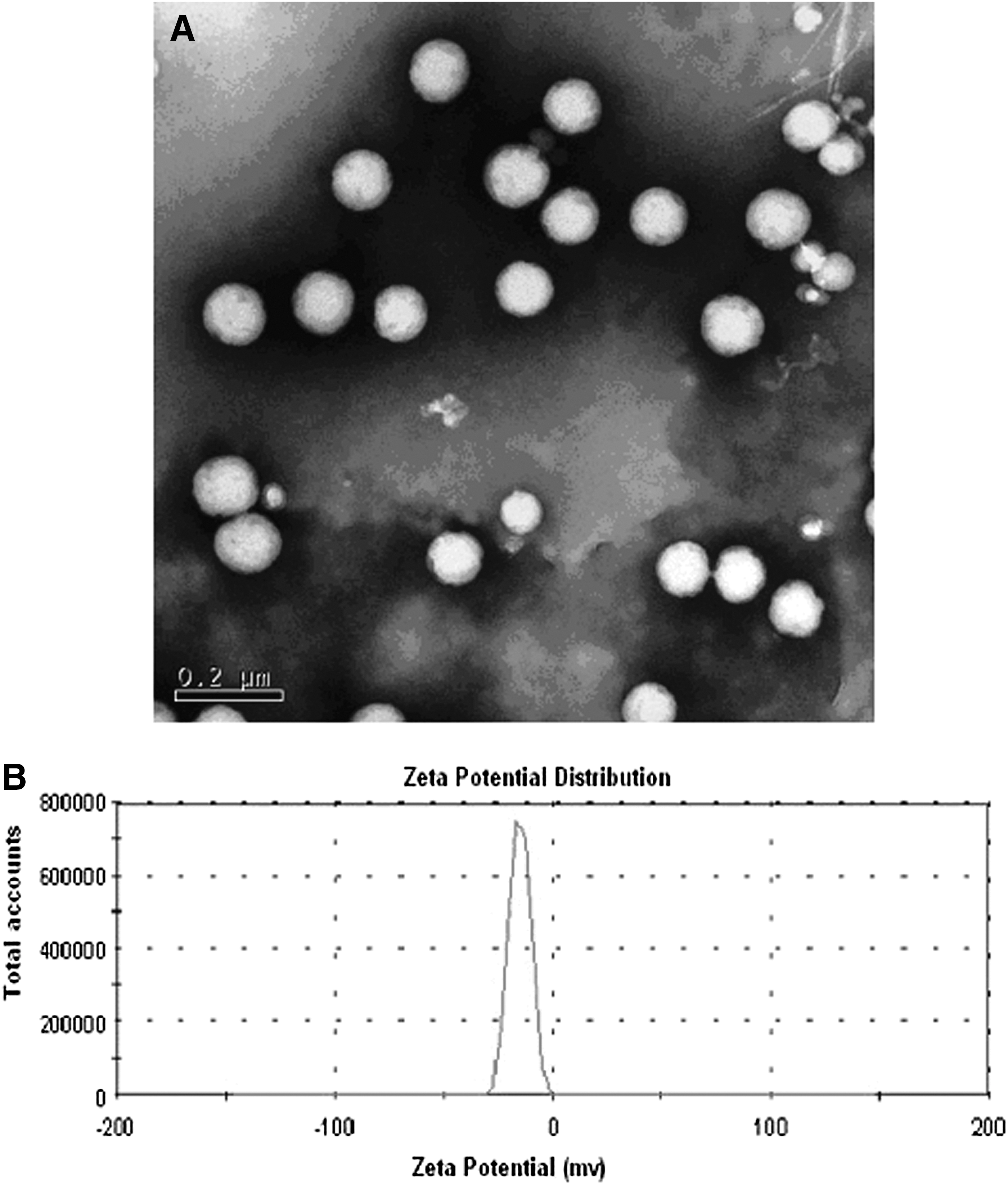
The data of particle size, zeta potential, entrapment ratio, loading efficiency, and XRD diagrams were given to reveal the physicochemical properties of the two kinds of drug loaded nanoparticles. As shown in Figure 1A, the SLN-curcumin particles were found to be spherical in shape and the mean particle size was found to be 100 nm. The EE and drug-loading capacity of SLN-curcumin were tested to be 62%±3.5% and 28%±2.5% by HPLC, respectively. The nanoparticle possessed a negative surface charge with −20.7±1.2 mV (Fig. 1B, which helps the formulation repel each other, ensure long term stability and avoid particle aggregation. 24 The diffraction pattern of curcumin, blank SLN and SLN-curcumin were analysis by XRD. As shown in Figure 2, the pure curcumin exhibited sharp peaks in the range of 10°–30°, which implied the high crystalline structure. But there were almost no characteristics peaks displayed when drug entrapped in SLN, which indicating that curcumin entrapped in the lipid core of SLN was in amorphous or disordered-crystalline phase. Our results were in agreement with the literature reported before, 25 which stated that the disordered-crystalline phase of curcumin helped in sustained release of the drug from the nanoparticles.

XRD pattern of
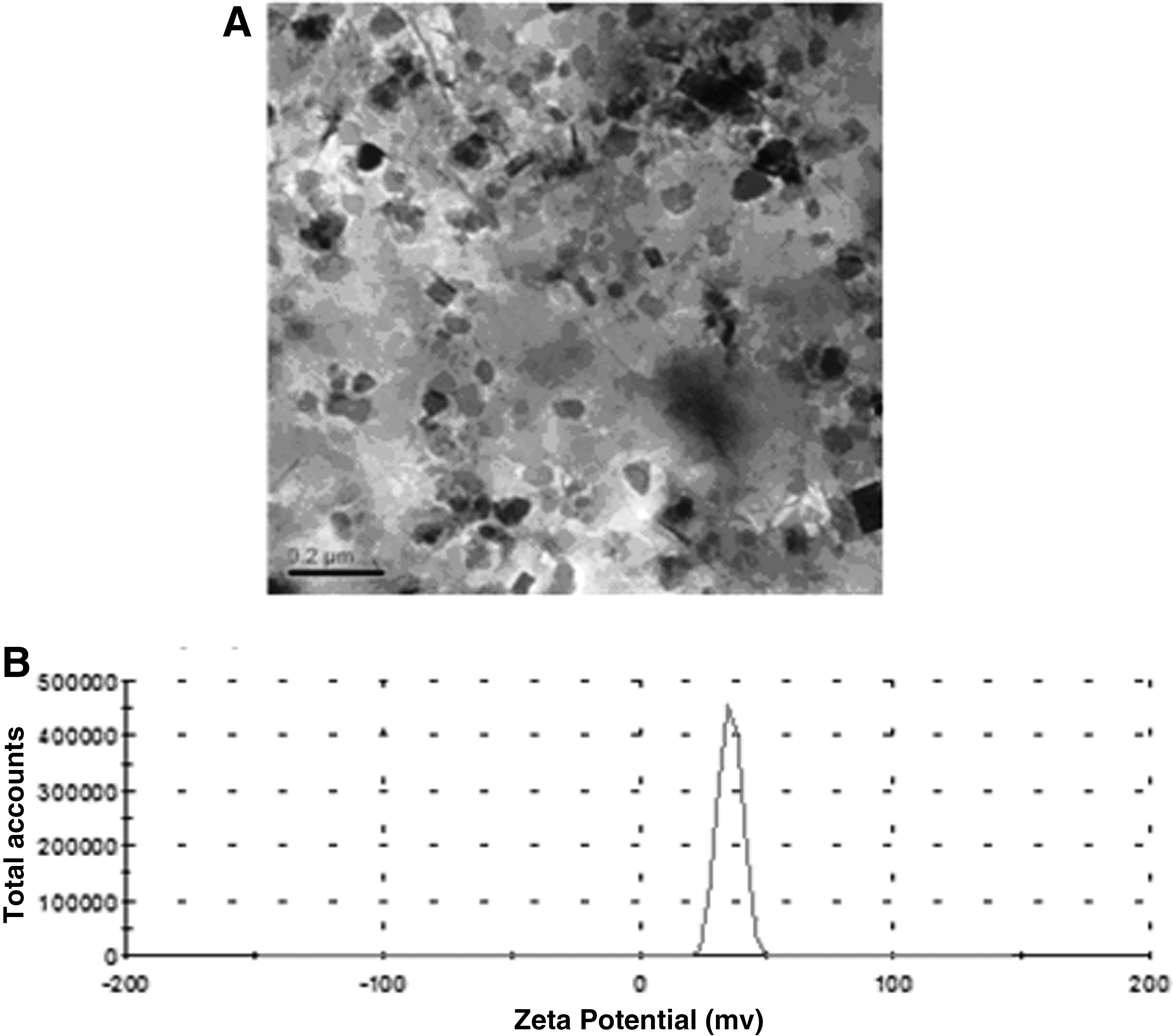
As shown in Figure 3A, the TEM images showed that LDH-5-Fu particles are plate-like, with the lateral dimension from 50 to 100 nm, and as revealed in Figure 3B, the surface charge of LDH-5-Fu was 25 mV. The XRD diagrams proved a successful intercalation of 5-Fu into the LDH host. As shown in Figure 4, LDH showed a typical XRD pattern of Mg2Al (NO3)–LDH with basal spacing of 8.8 Å. The intercalation of folic acid led to an obvious increase in the interlayer space. LDH-5-Fu basal spacing was 10.6 Å when prepared by co-precipitation method. LDH sheet thickness was 4.8 Å and gallery heights were measured to be 5.8 Å. The value was a little bit longer than the longitudinal molecular length of 5-Fu (5.6 Å). 26 From the gallery heights, it can be calculated that 5-Fu molecules were arranged in a perpendicular monolayer, as shown in Figure 5. The drug-loading capacity was detected to be 16.7%±1.8% by HPLC.

XRD pattern of

The intercalation pattern of 5-FU into the LDH host. LDH-5-FU basal spacing was 10.6 Å and LDH sheet thickness was 4.8 Å.
Controlled release of LDH-5-Fu and SLN-Curcumin
Since curcumin was a highly hydrophobic drug, 10% (v/v) Tween-80 was used in the receptor medium. In Figure 6A, SLN-curcumin exhibited a slight burst effect with about 22.9% drug released in the first 4 hours, which might due to the drug adsorbed on the surface of nanoparticles. Subsequently, curcumin entrapped in nanoparticles released more sustained, about 73.2% of drug was released at 72 hours, and about 83.5% was released at 120 hours. This could be attributed to the erosion and degradation of the components of nanoparticles. In Figure 6B, LDH-5-Fu exhibited an initial burst effect with about 22.6% drug released in the first 20 minutes. Subsequently, 5-Fu released more sustained, about 65.3% of drug was released at 6 hours, and about 85.7% was released at 8 hours.
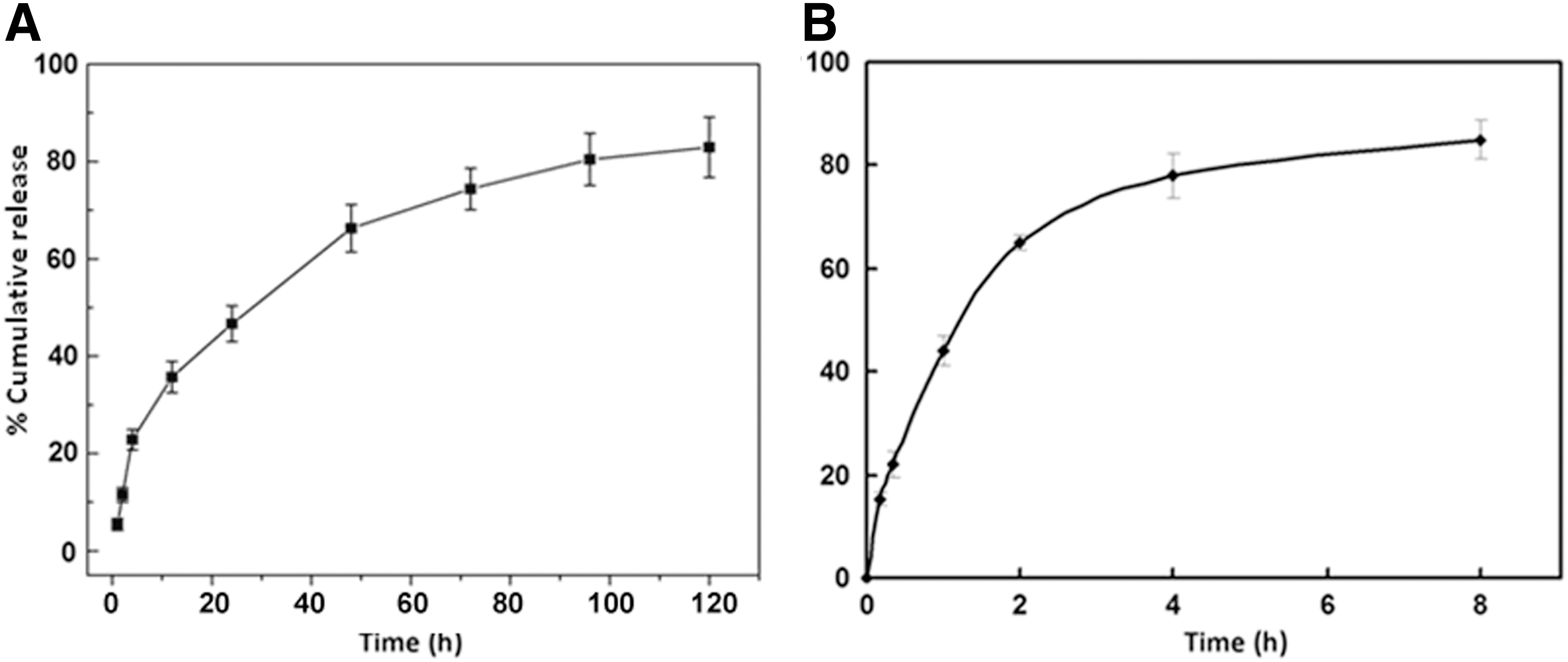
In vitro release kinetics of curcumin from
Cytotoxicity of LDH-5-Fu and SLN-Curcumin and the synergetic effect on SMMC-7721 cells
We evaluated the synergy effect of LDH-5-Fu and SLN-Curcumin on the growth of SMMC-7721 cells derived from human liver cancer. In each group, the dose of curcumin was set as twice as that of 5-Fu to evaluate the synergetic effect. As shown in Figure 7, LDH had little inhibitory effect on SMMC-7721 cells. SLN inhibited 29% SMMC-7721 cell growth at the highest dose. The inhibitory effects of curcumin and 5-Fu were significantly improved after loaded into nano-carriers. The IC50 of plain curcumin and 5-Fu was 696 and 312 μg/mL, individually. The IC50 of SLN-curcumin and LDH-5-Fu was 394 and 184 μg/mL, individually. In addition, the anticancer potent of SLN-curcumin and LDH-5-Fu together were determined to be 82% inhibitory effect on the growth of SMMC-7721 at 80 μg/mL, which was 1.8-folds as plain drugs together at the same dose. The IC50 of curcumin and 5-Fu together was 123 μg/mL, based on the concentration of 5-Fu. The IC50 of SLN-curcumin and LDH-5-Fu together was determined to be 32 μg/mL, based on the concentration of 5-Fu, in which the concentration of curcumin was 64 μg/mL. In this study, the anticancer effect of 5-Fu and curcumin together was significantly improved by the two nano-carriers, which might come from the enhanced cell uptaking and lengthened releasing time. 27,28
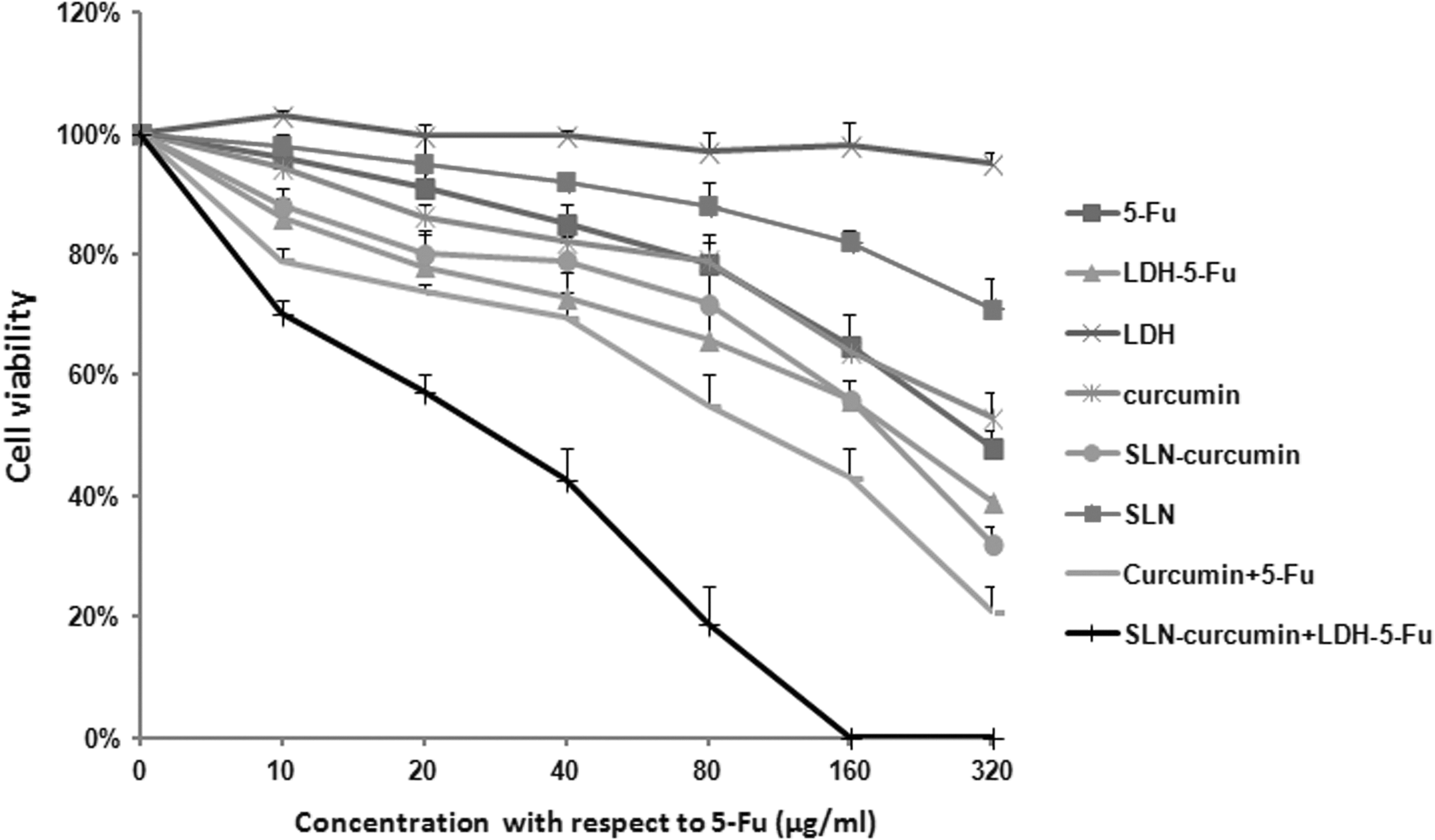
The anticancer effects of 5-Fu, curcumin, LDH-5-F-u, SLN-curcumin, LDH-5-F-u, and SLN-curcumin, LDH and SLN on SMMC-7721 cells. In these groups, the concentration of curcumin was twice as that of 5-Fu. Cells were treated with 5-Fu or curcumin or LDH-5-F-u (equimolar to 5-Fu) or SLN-curcumin (equimolar to curcumin) or LDH-5-F-u&SLN-curcumin or LDH (no drug loaded) equivalent to LDH-5-Fu or SLN (no drug loaded) equivalent to LDH-5-Fu for 24 hours, separately.
The isobol-curve method was used and the results are illustrated in Figure 8. As to plain drugs, when the ratio of the agents was 2:1, the result was a concave isobole, Iplain drugs=0.747<1, indicating a synergism between the agents. As to the drug loaded nano-carriers, when the ratio of SLN-curcumin and LDH-5-Fu was 2:1 (based on the dose of drugs), the result was a concave isobole, Idrug loaded nano-carriers=0.315<1, indicating a remarkable synergism between the two kinds of drug loaded nano-carriers. The decrease of the I value proved the increased synergetic effect between curcumin and 5-Fu after they were loaded into SLN and LDH separately. The IC50 values of the combination at a ratio of 2:1(curcumin:5-Fu) were 32 μg/mL for LDH-5-Fu and 64 μg/mL for SLN-curcumin (based on the dose of drugs), and these concentrations were used in subsequent experiments to investigate the mechanism of the synergistic effect.

Isobol-curves for IC50 of SMMC-7721cells using the combination of curcumin and 5-Fu
Both 5-Fu and curcumin have been reported to have a wide spectrum of pharmacological activities. 29,30 They also involved in some anticancer studies. 31,32 Moreover, curcumin was currently involved in early phase of clinical trial as potential chemopreventive agent. 33,34 Hence, it is rational to investigate the combined effect of 5-Fu and curcumin as a new antiproliferative agent for liver cancer cells. However, 5-Fu and curcumin have their shortcomings, such as toxicity and very low bioavailability, so much work was focused on the development of nano-carriers to overcome these shortcomings. 35,36 It was reported that there was a synergism between 5-Fu and curcumin, 37 which was also testified in our study. The nano-carrier could increase the endocytosis of plain drugs, which would further enhance the effect of synergism between 5-Fu and curcumin.
Apoptosis induction of LDH-5-Fu and SLN-Curcumin on SMMC-7721 cells
Cells were treated with different drugs or drug loaded carriers or carriers separately for 24 hours. As shown in Figure 9, plain curcumin and 5-Fu induced 8.62% and 9.04% of apoptotic cells separately, and the apoptosis ratios of SMMC-7721 were significantly increased to 26.88% and 18.6% after drugs were loaded into nano-carriers. All the drugs and drug-loaded carriers inhibited the cell growth via apoptotic pathway, only a few went through necrosis. The synergetic effect was further proved by the apoptosis analysis, for which SLN-curcumin&LDH-5-Fu together induced 80.1% cells to apoptosis, including 41.9% of early apoptosis and 38.2% of late apoptosis.

The apoptosis ratio of SMMC-7721 induced by SLN-curcumin (64 μg/mL, based on curcumin), LDH-5-Fu (32 μg/mL, based on 5-Fu), curcumin (64 μg/mL), 5-Fu (32 μg/mL), SLN-curcumin&LDH-5-Fu(32 μg/mL for 5-Fu and 64 μg/mL for curcumin), SLN (equimolar to SLN-curcumin), and LDH (equimolar to LDH-5-Fu). PI, propidium iodide.
In the present study, research on the cell death induced by the treatment of combined SLN-curcumin and 5-Fu was conducted. Apoptosis is a programmed cell death, which is activated to expel damaged cells, excessive numbers of cells and cells that are not needed during the development and normal tissue homeostasis. 38 Failing of trigger apoptotic cell death may lead to the development of neoplastic. 39 Therefore, cytotoxicity effect via the induction of apoptosis was considered as criteria for the identification or screening for a new cancer chemotherapy agent. 40 Our investigations showed that both SLN-curcumin and LDH-5-Fu was able to induce apoptotic cell death in the SMMC-7721 cell line. The combination treatment was tested to induce apoptosis cell death much stronger than SLN-curcumin and LDH-5-Fu used singly. Hence, the synergetic effect between SLN-curcumin and LDH-5-Fu might come from the apoptotic induction of the two agents together. Previous study also explored the synergism between chemical agents through apoptotic pathway, the cleavage of cytochrome C, the change of mitochondrial membrane potential and DNA ladder were all observed to determine the mechanisms. 41
Conclusion
In this report, we prepared and characterized LDH-5-Fu and SLN-curcumin, and evaluated the synergetic effect between LDH-5-Fu and SLN-curcumin on SMMC-7721 cells. Plain drugs were successfully entrapped into SLN and LDH with satisfying size distribution and entrapment efficiencies and loading capacities. The IC50 of plain drugs together was 123 μg/mL for 5-Fu and 246 μg/mL for curcumin. After loaded into the nanocarriers, the IC50 of LDH-5-Fu&SLN-curcumin was significantly decreased to 32 μg/mL for 5-Fu and 65 μg/mL for curcumin. The plain drugs together showed certain synergetic effect on SMMC-7721 cells when the ratio was set as 2:1(curcumin:5-Fu), for which the Iplain drugs was 0.747<1. And the nanocarriers can remarkably increase the synergetic effect, for which the Idrug loaded nano-carriers was only 0.315. The apoptosis analysis was carried out at the dose of 1×IC50 of LDH-5-Fu&SLN-curcumin. Palin drugs didn't induce significant apoptosis on SMMC-7721 cells. SLN-curcumin and LDH-5-Fu can improved the ratio of apoptosis to 26.88% and 19.12%, individually. The synergetic effect was also determined by the apoptosis analysis, for which SLN-curcumin&LDH-5-Fu together induced 80.1% cells to apoptosis, including 41.9% of early apoptosis and 38.2% of late apoptosis. This study, provided a novel and effective synergetic treatment for liver cancer, and gave a new method of drug delivery systems for combined medication.
Footnotes
Acknowledgments
This study was supported by the National Natural Science Foundation of China (Grant No. 81271694), International S&T Cooperation Program of China (Grant No. 0102011DFA32980), Science and Technology Commission of Shanghai Municipality (Grant No. 12nm0502200, 11411951500), the Doctoral Foundation of China (20090072120019), and the Fundamental Research Funds for the Central Universities.
Disclosure Statement
No competing financial interests exist.