




Abstract
This article describes the long-term evaluation of a nanoceria-polyacrylonitrile (CeO2-PAN) composite sorbent-based 68Ge/68Ga generator reported. This generator used the new CeO2-PAN composite sorbent for preparation of the 68Ge/68Ga generator. Since this sorbent has not been previously evaluated, a thorough long-term evaluation of the performance of the generator is necessary to ensure its applicability for clinical practice. The performance of the generator was evaluated in terms of 68Ga yield, 68Ge breakthrough, radioactive concentration of the 68Ga solution, and suitability of the 68Ga for the preparation of 68Ga-labeled tracers. The 68Ge/68Ga generator was able to provide a 68Ga activity with consistent yields (>70%) and having acceptable radionuclidic (<10−4% of 68Ge breakthrough), radiochemical, and chemical purities for an extended period of time. The eluted 68GaCl3 is useful for the majority of the 68Ga complexation chemistry.
Introduction
The 68Ge/68Ga generator has emerged as a convenient source to provide 68Ga in a hospital radiopharmacy for the synthesis of 68Ga-labeled radiopharmaceuticals and represents a developmental milestone in the field of PET-based molecular imaging. As a metallic radionuclide, 68Ga has great capability to be used for radiolabeling molecular tumor-targeting vectors, such as peptides or proteins (monoclonal antibodies or fragments thereof), through a bifunctional chelator link. 1,2 A number of new 68Ga tracers have been developed in the recent past, which is reflected by the continuous increase in research articles from all areas of 68Ga-based radiopharmaceutical chemistry. 1
Over the years, a variety of 68Ge/68Ga generators have been developed using a gamut of sorbents such as Al2O3, CeO2, SnO2, TiO2, ZrO2, and organic matrices. 1 Consequently, 68Ga was eluted with different eluents. In spite of remarkable advancements, the low radioactive concentration, high acidity, unacceptable 68Ge breakthrough, and the presence of potential metal ion impurities in the generator eluate have emerged as the major deterrents in the path of direct preparation of 68Ga-based radiopharmaceuticals. Most of the commercially available 68Ge/68Ga generator systems demonstrate deteriorating performance in terms of increased 68Ge breakthrough and reduced 68Ga elution yield on repeated elutions over a prolonged period of time. 2,3 To circumvent these issues, attempts were made to perform postelution processing of the 68Ga eluate from the 68Ge/68Ga generator and a number of purification strategies using anion and cation exchange chromatography and fractionation have evolved, which provide 68Ga in acceptable pH free from metallic impurities as well as 68Ge breakthrough. 3 –9 However, these additional manipulations are making the studies with 68Ga more time-consuming as well as expensive. For these reasons, the availability of 68Ge/68Ga generators, which can be directly used in the hospital radiopharmacy similar to 99Mo/99mTc generators, is desirable.
In this context, we have reported the results of preliminary studies using the nanoceria-polyacrylonitrile (CeO2-PAN) composite for fabrication of 68Ge/68Ga generators, which provided the 68Ga eluate free from metallic impurities and exhibited low 68Ge breakthrough, which could be used directly for the synthesis of 68Ga radiotracers. 10 In this article, we report the 1-year performance evaluation of the CeO2-PAN-based 68Ge/68Ga generator in terms of 68Ga yield, 68Ge breakthrough, radioactive concentration of the 68Ga solution, and suitability of the 68Ga for the preparation of 68Ga-labeled radiotracers.
Materials
Reagents, such as hydrochloric acid, ammonium hydroxide, and ammonium acetate, used in the studies were of analytical grade procured from the Aldrich Chemical Company. Cerium (III) nitrate (99.9% pure) was purchased from E. Merck. The p-benzyl isothiocyanato derivatives of bifunctional chelators such as diethylenetriaminepentaacetic acid (DTPA-NCS), 1,4,7,10-tetraazacyclododecane-1,4,7,10-tetraacetic acid (DOTA-NCS), 1,4,7-triazacyclononane-1,4,7-triacetic acid (NOTA-NCS) and 3,6,9,15-tetraazabicyclo [9.3.1]pentadeca-1(15),11,13-triene-3,6,9-triacetic acid (PCTA-NCS) were purchased from Macrocyclics. The RGD peptide conjugate, namely, DOTA-E[c(RGDfK)]2 (DOTA-RGD2) was custom synthesized by Ms. ABX Advanced Biochemical Compounds. DOTA-TATE (DOTA0-DPhe1-Tyr3-octreotate, DOTA was obtained from Pi Chem. The structures of the ligands and conjugate peptides used are given in Figure 1. Germanium-68 (68Ge) in the HCl medium was obtained from the Atom Hightech Company Limited. All the reagents were dissolved in deionized water (resistivity >18.2 MΩ).
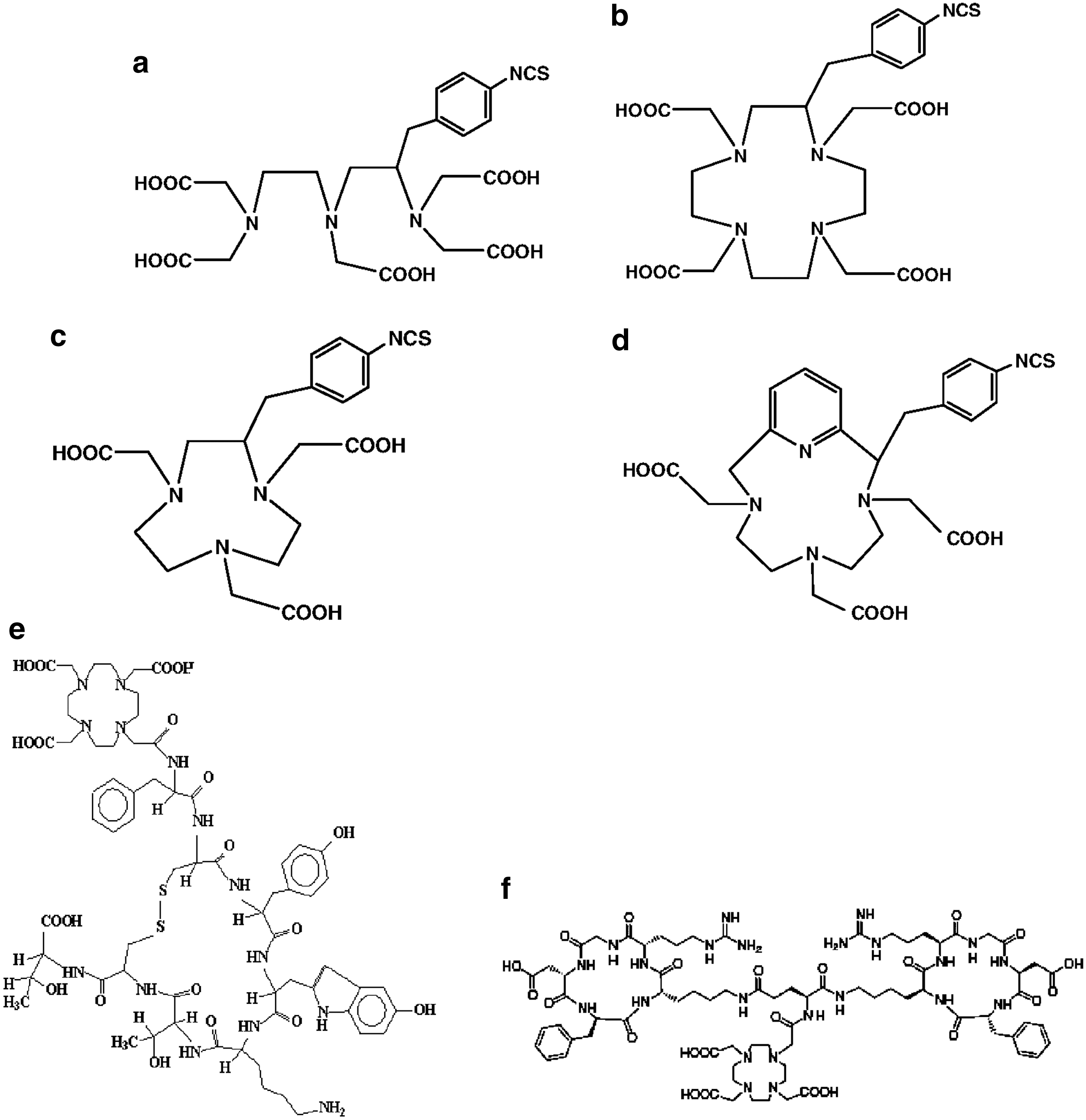
Structures of the ligands used for 68Ga-labeling
A HPGe detector (Canberra Eurisys) coupled to a multichannel analyzer (MCA) was used for analysis of 68Ga. The chemical analysis for the trace level of metal ions was performed using Inductively Coupled Plasma-Atomic Emission Spectroscopy (ICP-ES JY-238; Emission Horiba Group). UV-visible spectrometry was carried out using the JASCO V-530, UV/Vis the spectrophotometer. The high-performance liquid chromatography (HPLC) system used was obtained from JASCO (PU 1580). A well-type NaI(Tl) scintillation detector was coupled to the system (Model PNS-2, Electronic Enterprises (I) Pvt. Ltd.) for radioactivity measurements in the eluate. All the solvents used were of the HPLC grade and purchased from reputed local manufacturers, degassed, and filtered before use.
Experimental
Synthesis of CeO2-PAN composite sorbent
The CeO2-PAN sorbent was prepared by the decomposition of the cerium oxalate precursor to cerium oxide followed by incorporation in the PAN matrix, as described in our earlier article. 10 Several batches (n=10) of CeO2-PAN were prepared and were subjected to structural characterization as we reported earlier. 10
Development of 68Ge/ 68Ga generator using CeO2-PAN sorbent
A 740 MBq (20 mCi) 68Ge/68Ga generator was prepared adopting the procedure reported earlier. 10 An 8×0.6-cm inner diameter (i.d.) borosilicate glass column, with a sintered disc (Go) at the bottom was packed with 0.5 g of CeO2-PAN and maintained in a lead shielded container after preconditioning the material with 0.01 M HCl. All the operations were carried out in the closed cyclic system using connecting tubes. The input and output connections were made with standard Teflon tubings of 1-mm i.d. and connectors. The generator column, connectors, and connection tubings were integrated within a small portable lead shielded unit throughout experimental use for radioprotection purpose. Only the elution vial and output vial were accessible externally. A disposable 0.22-μm membrane filter was attached to the generator column output by Teflon tubing. To avoid the presence of metallic impurities, only Teflon needles were used for connecting the input and output vials. A schematic diagram of the 68Ge/68Ga generator system is shown in Figure 2. The 68Ge/68Ga solution containing 740 MBq (20 mCi) of 68Ge at pH 2 was percolated into the column maintaining a flow rate of 0.25 mL·min−1. The 68Ge-loaded column was washed with 100 mL of the 0.1 M HCl solution, and then dried under vacuum for 1 minute.
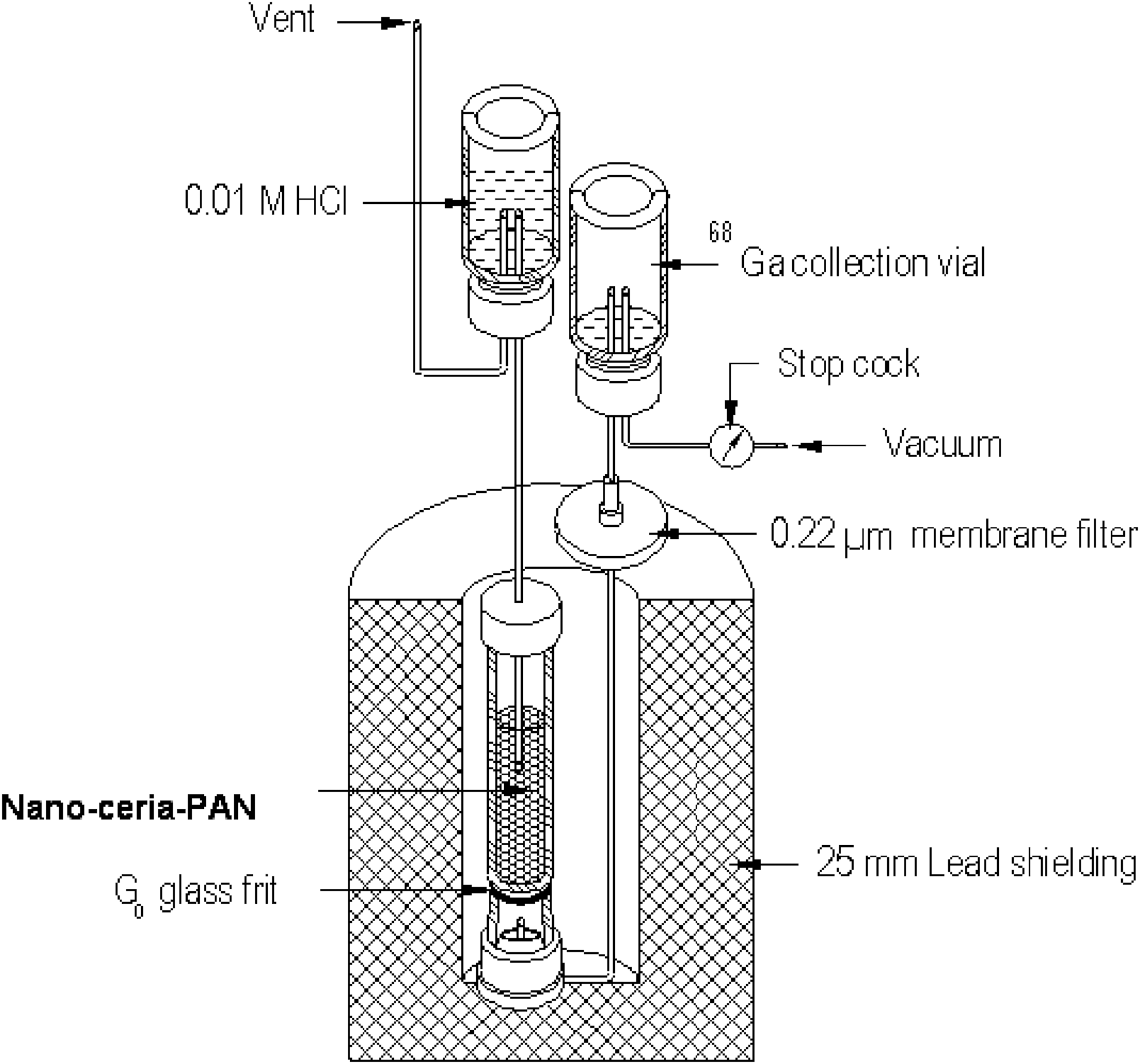
Schematic diagram of the 68Ge/68Ga generator assembly.
Evaluation of the performance of the 68Ge/ 68Ga generator over a period of 1 year
Gallium-68 was periodically eluted from the generator using the 0.1 N HCl solution at a flow rate of 2 mL·min−1. More than 250 elutions were carried out during the 1-year period of study. The generator elution profile was studied by collecting the eluates in fractions of 1 mL volume and determining its activity. The elution profile of the generator was determined at the beginning of each month (Fig. 3). In general, a fractionated elution approach was adopted in which, the first 1–1.5 mL fraction containing a negligible amount of activity was discarded and the subsequent 1.5–2.0 mL fraction containing the major portion of the 68Ge activity was used for evaluation as well as radiolabeling studies. The performance of the generator was evaluated for ∼1 year, by periodic elutions at a 24-hour interval (Fig. 4).
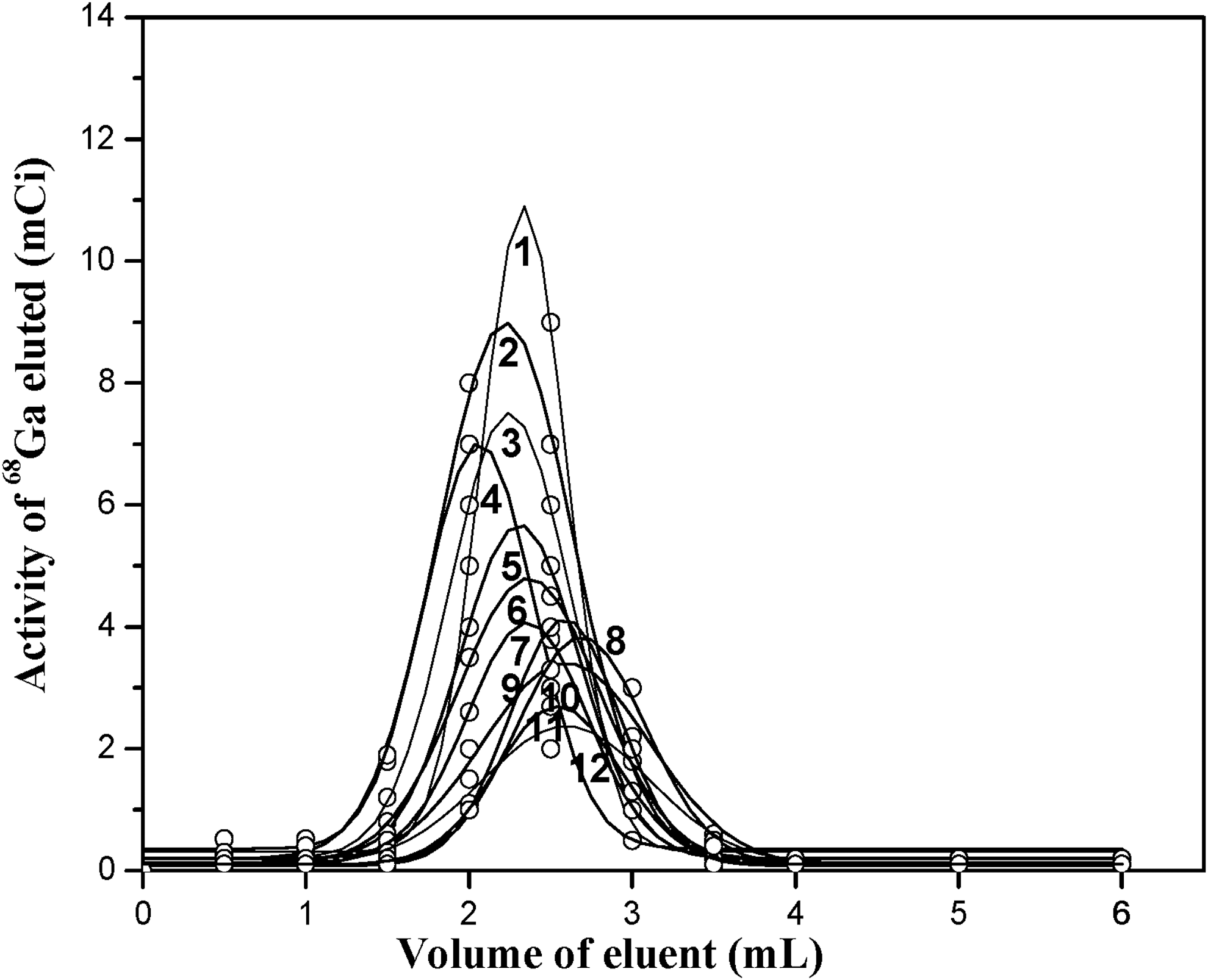
The elution profiles of the nanoceria-polyacrylonitrile (CeO2-PAN)-based 68Ge/68Ga generator over the period of 1 year: each curve indicated by numbers indicates the profile at the beginning of that month.
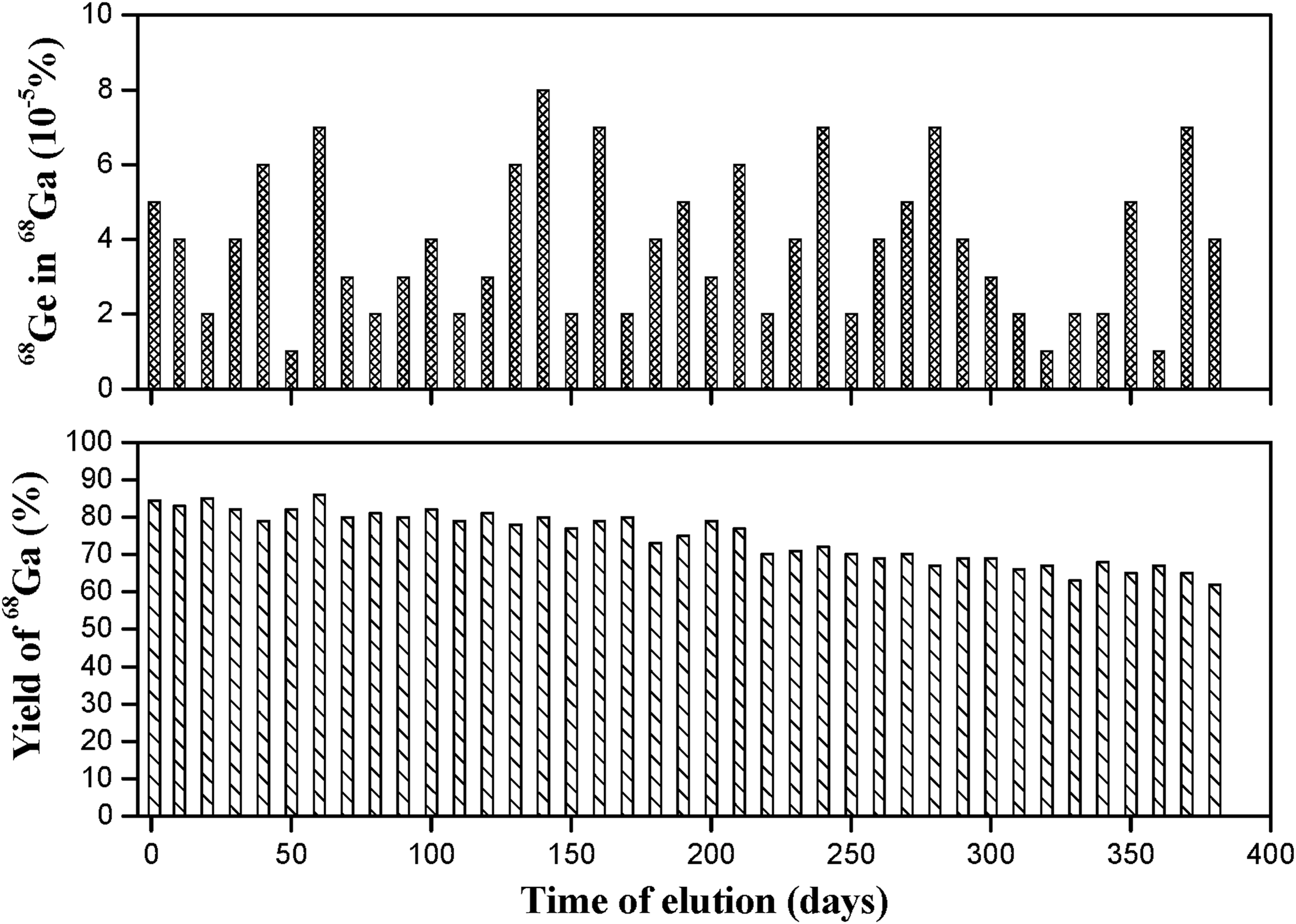
Elution performance of the 68Ge/68Ga generator over a period of 1 year: the generator was eluted at 24-hour intervals and the data points at 10-day intervals are indicated in the figure.
The activity of 68Ga was measured using a precalibrated HPGe detector coupled with an MCA. The measured activity of 68Ga after allowing time ‘t’ for its growth, is denoted by As(t), and the elution yield is calculated by using the following equation:
where A1° is the activity of 68Ge and λ2 is the decay constant of 68Ga. The 68Ge contamination level in 68Ga was quantified by allowing the separated 68Ga samples to decay for 2 days, and then measuring the 511 keV γ-peak of 68Ga daughter. This, in turn, corresponds to the level of the 68Ge contaminant.
To determine the presence of potential chemical impurities (in the form of Ce, Cu, Fe, Al, and Mn ions) in the 68Ga eluate, the 68Ga samples were allowed to decay for 7 days. The trace levels of the metal ion contamination in the decayed samples were determined by ICP-AES analysis. The calibration curves for these ions were obtained by using standard solutions having known concentrations of these ions. The presence of trace levels of organic impurities that are likely to result from radiation degradation of the polyacrylonitrile was tested by UV-visible spectrometry using the decayed 68Ga samples, as reported earlier. 10 The chemical purity of the 68Ga eluate was determined by random selection of 68Ga samples over this period of time.
Preparation of the complexes of 68Ga with various ligands
Various bifunctional chelators (DOTA-NCS, DTPA-NCS, NOTA-NCS, and PCTA-NCS) and DOTA-conjugated peptides (DOTA-TATE, DOTA-RGD2) were radiolabeled with 68Ga availed from the generator, adopting the procedure reported earlier. 10 –12 The respective ligand solution (20 μL) of concentration 1 μg/μL in HPLC grade water was mixed with 300 μL of 0.1 M ammonium acetate buffer (pH ∼5) and 200 μL of the 68Ga eluate was then added. The pH of the resulting mixture was found to be ∼4. In case of DOTA- and DTPA-based ligands, the reaction mixtures were incubated 353 K for 15 minutes, while the NOTA- and PCTA-based ligands were incubated at room temperature for 5 minutes. The complexation yields were determined by the HPLC technique (Fig. 5).
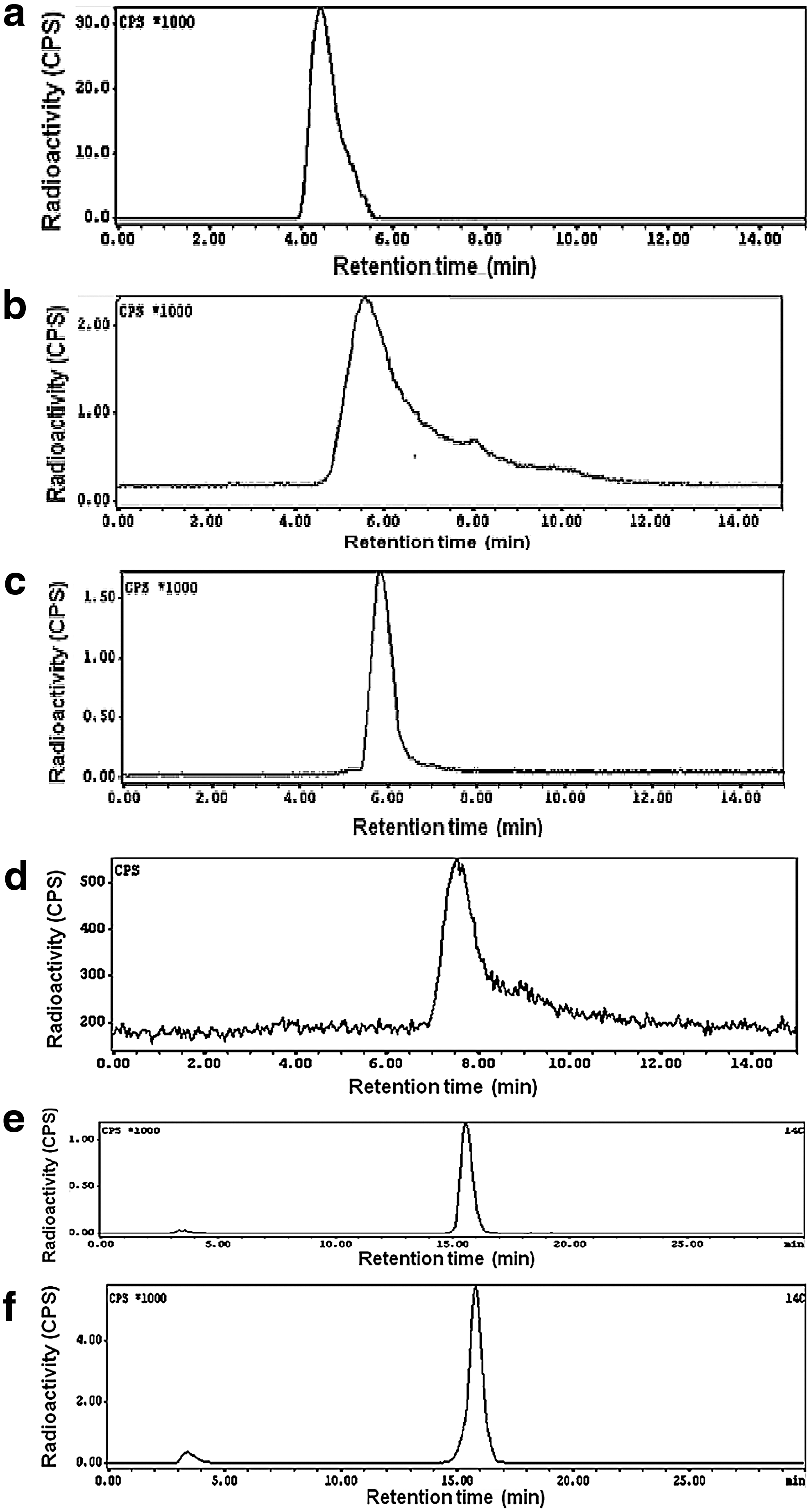
The typical radio-HPLC patterns of
HPLC of the 68Ga complexes was performed using a dual pump HPLC unit with a C-18 reversed phase HiQ-Sil (5 μM, 25×0.46 cm) column. The elution was monitored both by detecting the UV signal at 254 nm as well as the radioactivity signal using a NaI(Tl) detector. Water (A) and acetonitrile (B) mixtures with 0.1% trifluoroacetic acid were used as the mobile phase. The flow rate was maintained at 1 mL·min−1.
Results
Synthesis of CeO2-PAN composite sorbent
The preparation of the nanoceria by decomposition of the cerium oxalate precursor and its subsequent immobilization in PAN constitutes a preconceived strategy of availing an engineered form of nanoceria amenable for column operation. The structural characterization studies were carried out, not only to ensure the quality of the material, but also to predict any inter batch variation and, thus, to demonstrate the reproducibility of the synthesis protocol. The structural characterization studies revealed that the material was nanocrystalline in the cubic phase, consisting of agglomerated particles (mean agglomerate size ∼23 μm), consisting of primary particles of about 10–12 nm, and possessing a surface area of 75±6 m2·g−1 (n=10). The synthesis yield as well as structural characteristics of the nanosorbent remained practically unchanged from batch to batch indicating the dependability and reproducibility of the synthesis procedure.
Development of the 68Ge/ 68Ga generator and evaluation of its performance over a period of 1 year
A 740 MBq (20 mCi) 68Ge/68Ga generator (Fig. 2) was prepared and 68Ga was eluted regularly at 24-hour intervals, over a period of 1 year for radiotracer production. The elution profile of the generator was studied at the beginning of each month and the results obtained over the period of 1 year are illustrated in Figure 3. An examination of the elution profiles in Figure 3 reveals that the elution profiles obtained were quite sharp throughout the period of elution for 1 year. A close scrutiny of the elution profiles reveal that only a low percentage of activity (<5%) was eluted in the first 1.5 mL fraction and the majority of radioactivity was eluted in subsequent 1.5–2.0 mL fractions. This helped to provide the 68Ga eluate with a maximum radioactive concentration throughout the useful life of the generator. In case of the commercial 68Ge/68Ga generators, 4–6 mL of the HCl solution was required for elution of 68Ga with >80% yield. 4,13 The concept of fractionated elution seemed attractive as it was possible to elute 68Ga with high radioactive concentrations and at the same time circumvent the broadening of the elution profiles without much loss of activity. After 8 months of continuous operation, a slight broadening in the subsequent elution profiles was noted, however, 68Ga elution yields remained high (Fig. 4).
The elution performance of the generator over the span of a 1-year operation is shown in Figure 4 (data points shown at 10-day intervals). An examination of the results demonstrates that for the first few months of operation, the elution yield of 68Ga was found to be ∼85%, which gradually decreased to ∼70%. The gradual decrease in the elution yield of 68Ga from ∼85% to ∼70% seems to be due to the impact of structural transformation of the sorbent matrix over a prolonged period of time. Structural transformation emerged as the impediment for the diffusion of the 68Ga ions from the interior surface of the sorbent matrix to the solution phase and its effect is manifested in terms of reduction in the elution yield. The determination of the nature and extent of the structural transformation would require further studies and is beyond the scope of this investigation. It is pertinent to note that the magnitude of decrease in the elution yield is significantly lower than that observed with commercial generators, where the elution yield decreases to ∼50% of the initial value. 2
The 68Ge breakthrough from the generator was measured regularly and the data points at 10-day intervals are shown in Figure 4. The breakthrough of 68Ge in the 68Ga eluate was negligibly low (<10−4%) and it remained unchanged over the period of 1 year. The breakthrough of 68Ge from the CeO2-PAN-based 68Ge/68Ga generator was significantly lower than that is observed with commercial 68Ge/68Ga generators, where the level of 68Ge impurity in 68Ga varies between 10−2%–10−3%. 4,13 The ICP-AES analysis of the randomly selected decayed samples of 68Ga revealed that the level of Ce, Fe, Cu, Mn, and Al ions was always <0.1 ppm. Owing to the unavailability of instrumental facility to analyze radioactive samples, elemental analysis of Zn ions in the freshly eluted 68Ga samples could not be carried out. The generator eluate was also found to be free from other metal ion impurities that could interfere in Ga(III) complexation chemistry. In contrast, metal ion impurities such as Fe, Cu, Al, Zn, Sn, Ti, and Mn are detected in the 68Ga eluate from the commercial 68Ge/68Ga generators and the level of each of these metal ions vary between 1 and 10 ppm. 2,3,5 From analysis of the UV-visible spectra of decayed 68Ga samples, it could be inferred that PAN residue was not present in the 68Ga eluate, as no absorption was observed at 278 nm, which corresponds to the characteristic n-π* transition of nitrile groups. 14
Preparation of the complexes of 68Ga with various ligands
The complexation yields of 68Ga with different ligands obtained using 68Ga eluted from the generator are summarized in Table 1. All the radiolabeling studies were carried out by using 68Ga directly eluted from the generator, without any postelution purification or concentration step. It is evident from the results that 68Ga eluted from the generator could be successfully utilized for the preparation of the complexes with >95% yields. These radiolabeling studies were planned and carried out when the generator was more than 300 days old. The complexation yields of 68Ga-complexes were determined by radio-HPLC analysis. The retention times of the 68Ga-complexes observed in the HPLC technique used are also given in Table 1. Uncomplexed 68GaCl3 was eluted within 2.5 minutes for both the solvent systems used. The typical radio-HPLC patterns of 68Ga-complexes studied are given in Figure 5.
I: 0–5 min 100% A, 5–15 min 100% A to 90% A, 15–16 min 90% A to 100% A, 16–20 min 100% A. II: 0–5 min 95% A, 5–15 min 95% A to 5% A, 15–20 min 5% A, 20–25 min 5% A to 95% A, 25–30 min 95% A. Where A: 0.1% trifluoroacetic acid in water and B: 0.1% trifluoroacetic acid in acetonitrile (n = 10, ‘±’ indicates standard deviation).
The maximum activity of 68Ga that was used for the preparation of the complexes was 185 MBq (5 mCi), which is equivalent to one patient-dose of 68Ga-based radiopharmaceuticals that are commonly used in Nuclear Medicine Departments. 15,16 Accordingly, the maximum specific activity of 68Ga-complexes that could be achieved was ∼9 MBq/μg of ligand.
Discussion
The use of 68Ga-labeled tracers together with the development of small tumor-affine peptides targeting somatostatin receptors has not only changed the diagnostic approach to neuroendocrine tumors, but also opened unlimited potential for exploring the development of 68Ga tracers for molecular imaging applications. With the rapid advances in the development and clinical use of 68Ga radiopharmaceuticals and the exciting perspective of the 68Ga radiopharmacy, the need for a user friendly 68Ge/68Ga generator without the necessity of postpurification attachment, similar to the 99Mo/99mTc generator to meet the expectations of clinicians is imminent. The development of optimal sorbents for the 68Ge/68Ga generator is an important task. For commercial generator production, Cyclotron Ltd., Obninsk, Russian Federation uses a modified TiO2 phase, 17 the Eckert & Ziegler Isotope Products uses titanium dioxide (IGG 100), 18 and iThemba, Republic South Africa uses a SnO2. 4,19 While the utilities of these sorbents constitute a successful paradigm for fabrication of 68Ge/68Ga generators, the presence of metal ion impurities as well as 68Ge breakthrough in the 68Ga eluate necessitates a postelution purification procedure. The presence of the 68Ge activity in the eluate of the 68Ge/68Ga generator, although low, has been a point of concern for clinical application of 68Ga-labeled pharmaceuticals because Ge is rapidly absorbed after oral, subcutaneous, intramuscular, or intraperitoneal administration and could be a potential long lived contaminant in a patient for years. 20
The elution yield of 68Ga from the CeO2-PAN-based 68Ge/68Ga generator varied between 70%–85% and the breakthrough of 68Ge in the 68Ga eluate was negligibly low (<10−4%). These values remained consistent over a period of 1 year. In contrast, the elution efficiency of the commercial generators decreased to half of the initial value (∼80%) after 100–200 elutions. 2 In addition, the values for 68Ge breakthrough increase to ∼10−2% on repeated elution over a prolonged period of 1 year. 2 The scope of using CeO2-PAN-based 68Ge/68Ga generators seemed very attractive as it not only provides consistent performance over a prolonged period of time, but also precludes the requirement of postprocessing procedures for concentration and purification of 68Ga. Realization of this paradigm-changing 68Ge/68Ga generator represents a cost-effective proposition for assessing 68Ga to meet future research and clinical demands.
The radiolabeling yields of different bifunctional chelators as well as conjugated peptides with 68Ga was found to be >98% even while 68Ga eluted after 9 months of the generator was used in these studies. The breakthrough capacity of CeO2-PAN sorbent was determined to be 20±2 mg Ge per g of sorbent in our earlier investigation. 10 This result reflects that even a small column containing 500 mg of the CeO2-PAN sorbent (as used for the preparation of the present generator) would offer the scope of making a 9.25 GBq (250 mCi) 68Ge/68Ga generator. However, further investigations are required to evaluate the effect of radiation on the performance of the CeO2-PAN sorbent containing high activity of 68Ge before such generators can be used in the clinical context.
Owing to the reported enhanced radiation stability of nanocrystalline metal oxides compared to their bulk counterparts 21 as well as PAN-based composite materials, 22,23 it is anticipated that the CeO2-PAN sorbent would resist radiation degradation. Therefore, it is plausibly assumed that issues regarding radiation stability of this sorbent can be addressed to prepare high-activity 68Ge/68Ga generators suitable for clinical applications.
Conclusion
The CeO2-PAN-based 68Ge/68Ga generator is an important development to provide 68Ga of adequate radioactive concentration free from not only metal impurities that could interfere in Ga(III) complexation chemistry, but also providing consistently low 68Ge breakthrough. The long-term performance evaluation of the CeO2-PAN-based 68Ge/68Ga generators has demonstrated consistently high elution yields (>70%) and provided 68Ga with minimal metal contamination and acceptable 68Ge breakthrough, which is in contrast to what is observed in case of commercial generators, which show degrading performance in terms of decreasing elution yield and increasing 68Ge breakthrough on repeated elutions over a prolonged period of time. The 68Ga eluate while used for complexation studies with different ligands and conjugated peptides gave high complexation yields.
This indigenous CeO2-PAN-based 68Ge/68Ga generator represents a new paradigm, and a quality compliance with current codes of good (pharmaceutical) manufacturing practices (cGMP) for parametric release of 68Ga as an approved pharmaceutical ingredient for clinical use is essential. Having successfully completed the demonstration studies, regulatory approval of the generator will be taken up shortly. As this investigation contains scientific data that could provide an insight into the various stages of the entire process, the measures to ensure safety and evidence on the quality of separated 68Ga for clinical applications, these could be used as supporting data for obtaining regulatory approval.
It is anticipated that CeO2-PAN as a sorbent would interest other users to develop 68Ge/68Ga generators, which are more user friendly and cost effective using the same or similar sorbents. We believe that local availability of a simple-to-handle 68Ge/68Ga generator at an affordable cost would facilitate more research on new radiopharmaceuticals with 68Ga and promote the beneficial use of 68Ga for imaging in the country. There is a great deal of anticipation that the BARC 68Ge/68Ga generator will find its way into many more institutions in India to offer cost-effective molecular imaging service in the foreseeable future.
Footnotes
Disclosure Statement
No competing financial interests exist.