




Abstract
Introduction:
177Lu-DOTA-TATE is a clinically useful and promising therapeutic radiopharmaceutical for peptide receptor radionuclide therapy of neuroendocrine tumors (NETs) overexpressing somatostatin receptors. Currently, the radiopharmaceutical is prepared in-house at nuclear medicine centers, thereby restricting its use to limited centers only. In this article, the authors describe systematic studies toward bulk scale formulation of “ready-to-use” 177Lu-DOTA-TATE using medium specific activity 177Lu (740–1110 GBq/mg) at a centralized radiopharmacy facility.
Methods:
In an optimized protocol, 177Lu-DOTA-TATE synthesis was carried out by direct heating of 177LuCl3 (Sp. act. 740–1110 GBq/mg) with DOTA-TATE peptide (1.5–3.0 equivalents) in ammonium acetate buffer (0.2 M) containing 2,5-dihydroxy benzoic acid (gentisic acid). Thereafter, the crude labeled product was purified using a Sep-Pak® C18 column and diluted with acetate buffer–gentisic acid (1.5% w/v) solution to final radioactive concentration of 740 MBq/mL. This was further sterilized and dispensed as 7.4 GBq patient dose/vial with 2 days postformulation calibration.
Results:
A peptide/metal ratio of 1.5–3.0 is essential for complexation wherein radiolabeling yields >90% are obtained minimizing free 177Lu waste. For formulation of 7.4 GBq patient dose (2 days postproduction), even specific activity of about 555 GBq/mg was found to be adequate for the radiometal. The ready-to-use 740 MBq/mL 177Lu-DOTA-TATE formulation with gentisic acid (1.5% w/v) is observed to be safe for human use for more than 1 week (radiochemical purity >98%) from the day of production when stored at −70°C. However, the target specificity may get affected beyond 2 days as the total peptide content for 7.4 GBq dose may exceed the critical peptide limit of 300 μg. Patient treatment carried with several batches of present formulation in diseased NET patients exhibited desired distribution at the tumor and its metastatic site.
Conclusions:
A ready-to-use formulation of 177Lu-DOTA-TATE was successfully prepared and optimized for regular bulk scale production and supply to distant nuclear medicine centers.
Introduction
177Lu labeled [DOTA0,Tyr 3 ]octreotate (DOTA-TATE) is a clinically useful therapeutic radiopharmaceutical for the treatment of neuroendocrine tumors (NETs) overexpressing somatostatin receptors (SSTRs) for more than a decade. 1 –10 Two intrinsic factors, high affinity of the peptide octreotate for binding SSTR subtype 2 coupled with favorable nuclear decay characteristics of 177Lu [T1/2 = 6.65 days and Eβ(max) = 497 KeV], make 177Lu-DOTA-TATE treatment modality very successful. High affinity of peptide allows effective dose delivery to small tumors (<1 cm) or micrometastasis lesions, thereby minimizing radiation damage to surrounding normal tissue/organs. 11 –13 Currently, 177Lu-DOTA-TATE is synthesized using commercially available 177Lu radiochemical produced either in no-carrier-added (NCA) form or carrier-added form. 14 –16 NCA 177Lu has been found to be especially useful for labeling of peptides, antibodies, etc. which effectively target limited concentrations of protein/peptide receptors expressed on tumor cell surfaces. 17,18 The total mass of these biological entities in the final radiolabeled formulation is very crucial to achieve desired therapeutic outcomes. 19 However, use of NCA 177Lu is not common in developing countries like India compared with that produced by direct neutron activation because of the exorbitantly high cost. On the contrary, direct neutron activation of enriched 176Lu target in a medium flux research reactor (thermal neutron flux: 1–5 × 10¹⁴ n cm2 s−1) yields 177Lu in large quantity and with adequate specific activity and radionuclidic purity (177mLu ∼0.015%) as a cost-effective option for formulation of receptor targeting radiopharmaceuticals. 20,21
In this preview, a large number of clinical studies using 177Lu-DOTA-TATE formulation prepared with carrier-added 177Lu of specific activities >740 GBq/mg have been reported demonstrating the therapeutic utility of the product. 1 –10,22,23 In most of the cases, the synthesis and quality control of the radiopharmaceutical are carried out at the hospital radiopharmacy and used for captive consumption. However, a number of nuclear medicine centers lack the suitable infrastructure for formulation of the finished radiopharmaceutical in bulk scale as per the current good manufacturing practices (cGMPs) regulations at hospital premises. Also, 177Lu produced in-house by several research reactors such as Dhruva reactor, India, there can be a batch-to-batch variation of the specific activity depending on the irradiation parameters. Since the radiopharmaceutical is intended to be used with highest possible specific activity, the preparation involves a careful adjustment of the amount of cold peptide (DOTA-TATE) as well as other ingredients that are required for the formulation. This subtle challenge posed in the preparation of this radiopharmaceutical, particularly in terms of therapeutic patient doses, has restricted its use in limited centers only with trained personnel. To circumvent the mentioned limitations, a ready-to-use formulation of 177Lu-DOTA-TATE radiopharmaceutical has been proposed, which is produced as per the existing cGMP regulations and also amenable for transport and use in patients for next 2 days from the date of production without compromising the clinical efficacy of the product.
This work includes optimization of labeling reaction with different specific activities of 177Lu radiometal by varying peptide/metal ratios. A purification protocol using C18 cartridge was standardized in addition to shelf-life determination studies at different storage conditions. This detailed systematic study was undertaken in view of regular production, supply, and safe transport of 177Lu-DOTA-TATE to different nuclear medicine centers throughout India. The production methodology described here can be adapted in any centralized facility of the world for regular production and supply of present ready-to-use 177Lu-DOTA-TATE preparation.
Experimental
General
The peptide [DOTA0,Tyr3]octreotate (DOTA-TATE) was procured from M/s Pi-CHEM, Austria. Ammonium acetate and 2,5-dihydroxy benzoic acid (gentisic acid) (both spectroscopic grade) were procured from M/s Alfa Aesar, Germany. High performance liquid chromatography (HPLC) grade water was obtained from M/s Merck, India. Absolute ethanol was obtained from M/s Brampton, Ontario, Canada. 177Lu was produced by thermal neutron activation (neutron flux ∼1 × 10¹⁴ n/(cm2·s)) of enriched lutetium target (84% in 176Lu; Isoflex, USA) on irradiation for 2 weeks in Dhruva research reactor at Bhabha Atomic Research Center, India. 24 The irradiated target was then dissolved in 0.01 M HCl by gentle warming to produce 177LuCl3 solution with specific activity varying in the range 555–925 GBq/mg and is of clinical grade. All solutions were prepared using HPLC grade water. All other reagents used were of analytical grade and were used without further purification. Whatman No. 1 paper was used for paper chromatography (PC) studies. The HPLC of the radiolabeled preparation was carried out on a JASCO PU 2080 Plus dual pump HPLC system, Japan, with a JASCO 2075 Plus tunable absorption detector and Gina Star radiometric detector system, using a C18 reversed phase HiQ Sil (5 μm, 4 × 250 mm) column. Sep-Pak® Vac C18 3 cc (500 mg) cartridges were obtained from M/s Waters, USA. Preconditioning of the Sep-Pak column was carried following a reported procedure. 15 Sterile 0.22 μm membrane syringe filter was procured from M/s Millipore, India.
Synthesis
The bulk doses were formulated by proportionately varying the amount and volume of the constituents according to the total dose requirements. A single patient dose of 177Lu-DOTA-TATE was synthesized by the following procedure. 177Lu (0.2 mL 177LuCl3 solution in 0.01 M HCl; 9.25 GBq 177Lu) was added to a sterile glass vial containing mixture of DOTA-TATE solution (0.25 mL of 1 mg/mL solution in HPLC grade water; 250 μg, 2.5 equivalent of Lu) and gentisic acid (33 mg, 0.1 mmol) dissolved in ammonium acetate buffer (0.2 M; 2.2 mL). The vial was crimped and heated at 95°C using a metal heating block for 1 hour. Subsequently, the reaction vial was allowed to cool and attain ambient temperature. The contents of the reaction mixture were loaded onto preconditioned C18 Sep-Pak cartridge and washed with 6–8 mL saline to remove unreacted free 177Lu. The column was further washed with 0.6 mL ethanol to remove the solvent in void volume. Finally the labeled product was eluted out in absolute ethanol (1 mL) and the activity of the labeled product (177Lu-DOTA-TATE) was assayed using a dose calibrator. The assayed product was further diluted using ammonium acetate buffer (0.2 M) containing gentisic acid (1.5% w/v) (pH 4–5) to a final radioactive concentration of 740 MBq/mL (ethanol content <10%). The diluted formulation is then filtered through a 0.22 μm syringe filtration assembly into a 100 mL sterile glass vial. Finally, the sterile formulation 177Lu-DOTA-TATE is dispensed aseptically into a sterile glass vial of 15 mL capacity and crimped with sterile combiseal.
The synthesis protocol already described was finalized after extensive radiochemical optimization studies.
Quality control studies
Paper chromatography
About 2–5 μL aliquot (370 kBq) of 177Lu-DOTA-TATE preparation was spotted at a length of 1.5 cm from one end of 1 × 15 cm strip and developed up to a length of 12 cm in acetonitrile: water (1:1 v/v) mobile phase. The strip was subsequently removed, dried, and scanned using a TLC scanner.
High performance liquid chromatography
HPLC analysis of the radiolabeled formulation was carried out on C18 reversed phase column using gradient elution with water (A) and acetonitrile (B) as mobile phase. Both the solvents were filtered through 0.22 μm filter and contain 0.1% trifluroacetic acid (v/v). The wavelength for ultraviolet detection of cold peptide was fixed at 220 nm. About 20 μL (∼1.85 MBq) of the test solution was injected into the column and the following gradient elution program was followed to effect separation (0–4 minutes 95% A, 4–15 minutes 95% to 5% A, 15–20 minutes 5% A, 20–25 minutes 5% to 95% A and 25–30 minutes 95% A) of free 177Lu from labeled 177Lu-DOTA-TATE preparation.
Optimization studies
DOTA-TATE to Lu molar ratios
The optimum molar ratio of DOTA-TATE to Lu required to obtain high yield and radiochemical purity of 177Lu-DOTA-TATE formulation was ascertained by varying peptide content used for radiolabeling in the range of 0.8–3.0 equivalents of Lu metal. The specific activity of 177Lu used for this study was around 740 GBq/mg. The radiolabeling yields were determined by PC and HPLC.
177Lu specific activity
A wide range of specific activities of 177Lu (407–925 GBq/mg) was studied for labeling DOTA-TATE using the radiolabeling procedure already described. For these studies, the peptide content was fixed at 2.5 equivalents to the Lu metal and radiolabeling yields were assessed.
Gentisic acid concentrations for stabilization
Two different concentrations of gentisic acid (1.5 and 4.0% w/v) in 0.2 M ammonium acetate buffer was added to the purified 177Lu-DOTA-TATE formulation (radioactive concentration ∼740 MBq/mL) and stored at −70°C to ascertain the in vitro stability of the radiolabeled formulation.
Storage at different temperature conditions
Purified 177Lu-DOTA-TATE formulations (1.0 mL) containing gentisic acid (1.5%w/v) in 0.2 M ammonium acetate buffer and having specific concentration of 740 MBq/mL were kept under different storage conditions (room temperature, 4°C, and −70°C). The radiochemical purity of the radiolabeled formulation stored under different temperature conditions was monitored by HPLC for a period of 9 days. In addition, the stability under dry ice packing of complete dose (9.25 GBq) was tested up to a period of 5 days and was observed to be stable with radiochemical purity >95%.
Stability at different radioactive concentrations (555–1110 MBq/mL)
After C18 purification, the product was reconstituted in the range of 555–1110 MBq/mL radioactive concentration using 0.2 M ammonium acetate buffer containing 1.5% gentisic acid (w/v). All the formulations were stored at −70°C and the radiochemical purity of each specific concentration was monitored by HPLC up to a period of 9 days.
Sterility test
177Lu-DOTA-TATE samples were tested for sterility using sterile, disposable needles and syringes, in a laminar flow bench equipped with adequate precautions for safe handling of radioactivity. The product was aseptically transferred into sterile fluid thioglycollate medium (for detection of aerobes and anaerobes) and sterile soyabean casein digest medium (for detection of fungi). The inoculated medium was incubated at 30°C–35°C and 20°C–25°C, respectively, for a period of 14 days. At intervals during the incubation period and at its conclusion, the medium was examined for macroscopic evidence of microbial growth by visual examination.
The appearance of the medium was compared with negative control test containers during this entire period. Negative control test containers were prepared by aseptic inoculation of sterile fluid thioglycollate medium and soyabean casein digest medium with sterile saline in the same work area. If no evidence of microbial growth was found, the samples were deemed to be complying with the test for sterility.
Bacterial endotoxin test
Bacterial endotoxin test was carried out using a standard commercially available kit (Charles River, India). Sterile, depyrogenated glassware and material were used to conduct the test. The 177Lu-DOTA-TATE sample was diluted and incubated with limulus amebocyte lysate reagent at 37°C ± 1°C for 60 ± 2 minutes. The lysate sensitivity used was 0.125 λ (λ denotes the minimum level of endotoxin that can be detected by the lysate). The endotoxin limit for the samples was defined at 14 endotoxin units (EU)/mL (1 ng endotoxin [Escherichia coli or EC] = 10 EU of USP Reference Standard EC-6) based on the volume of the sample injected. At the end of the incubation period, the tube was inverted by 180° to detect gel–clot formation. This was compared with negative and positive water control tests and product control tests. The former contained endotoxin-free water and the latter contained the 177Lu-DOTA-TATE sample in the absence and presence of standard endotoxin, respectively.
Patient evaluation studies
The preparation stored in dry-ice packing was removed and allowed to stand at ambient temperatures for 1–1.5 hours for thawing the frozen preparation. The vial was then vigorously stirred for 2 minutes to ensure complete dissolution of any residual insoluble gentisic acid left and checked for clarity. Patient evaluation studies of ready-to-use 177Lu-DOTA-TATE formulation were performed after prior approval from Radiopharmaceuticals Committee, India, and obtaining informed consent from the patient or other responsible individuals. Clinical efficacy was evaluated in 12 patients suffering from NETs of abdominal region using ready-to-use 177Lu-DOTA-TATE formulation prepared in six different batches. Each patient was treated with a dose of 177Lu-DOTA-TATE in the range of 5.5–7.4 GBq. All the preparations used for therapy had specific activity >29.6 MBq/μg of the peptide conjugate at the time of administration and were administered within 2 days from the date of preparation. The clinical studies were undertaken following the standardized PRRT protocol with renal protection protocol using amino acid coinfusion (commercially available mixed amino acid preparations were used for this purpose). The radiolabeled preparation was administered for a period of 15–30 minutes. The selected patients were diagnosed cases of metastatic/advanced NETs (mostly up to Ki-67 or MIB 1 labeling index up to 20%) who were pre-evaluated with dual tracer PET imaging (68Ga-DOTA-TATE PET/CT and FDG-PET/CT) and demonstrated at least Krenning score of 3 or 4 on SSTR-based 68Ga-DOTA-TATE PET/CT imaging.
Results and Discussion
Easy availability of ready-to-use injectable radiopharmaceutical preparation at the nuclear medicine clinic is one of the key factors in the widespread applicability of therapeutic radiopharmaceuticals. Although till date, majority of therapeutic radiopharmaceutical preparations are carried out at hospital centers, there is always an inherent risk associated with leakage of relatively long-lived therapeutic radioisotope, leading to mass public exposure and increased dose burden to radiochemists/technologists. To obviate these difficulties, this work successfully demonstrates the bulk scale formulation of ready-to-use 177Lu-DOTA-TATE at a centralized radiopharmacy and its subsequent distribution and clinical utilization at various nuclear medicine clinics. Centralized production units also experience risks associated with higher quanta of radioactivity handling and shipment of radioactive consignments to distant nuclear medicine centers. However, the major scientific challenge posed to them is with respect to maintaining the integrity of therapeutic radiopharmaceutical preparations towards radiolytic degradation during their transportation to distant clinics. In this regard, an extensive optimization of several parameters such as molar ratio of peptide and radiometal, radioactive concentration of the formulation and molar concentration of the stabilizing agent in the formulation are warranted. Moreover, since in this modality the radiopharmaceutical formulation could be administered 1–2 days after its formation, the significant decrease in specific activity of the radiolabeled product needs to be taken into account while formulating the ready-to-use preparation.
Therapeutic doses of 177Lu-DOTA-TATE were directly synthesized upon addition of 177Lu in 0.01 M HCl to a solution of DOTA-TATE in ammonium acetate buffer containing gentisic acid. The pH of the reaction mixture is a key factor determining the radiolabeling yield. Therefore, the molarity of the buffer and gentisic acid content should be adjusted such that the final pH of reaction mixture should be 4.0–4.5 on addition of acidic 177Lu activity. The total volume of the reaction mixture also has an effect on the overall yield of the radiolabeled product. The radiochemical yield of the synthesized labeled complex using the protocol standardized was 98.4% ± 0.4% (n = 6). Uncomplexed free 177Lu was efficiently removed by C18 Sep-Pak purification. The recovery of the purified product from the column in ethanol was ∼95% and its radiochemical purity was >99.5%.
The yield and radiochemical purities were ascertained by PC and HPLC. In PC, 177Lu-DOTA-TATE was found to move toward the solvent front (Rf = 0.8–1.0), whereas unreacted 177Lu remains near the point of spotting (Rf = 0.0–0.1). Figure 1 shows the HPLC pattern of the purified 177Lu-DOTA-TATE formulation, where the labeled complex eluted out as a sharp peak at 16.3 ± 0.3 minutes and free 177Lu eluted out early between 3–4 minutes. The radiochemical yields ascertained by these two methods were near identical in all the experiments.
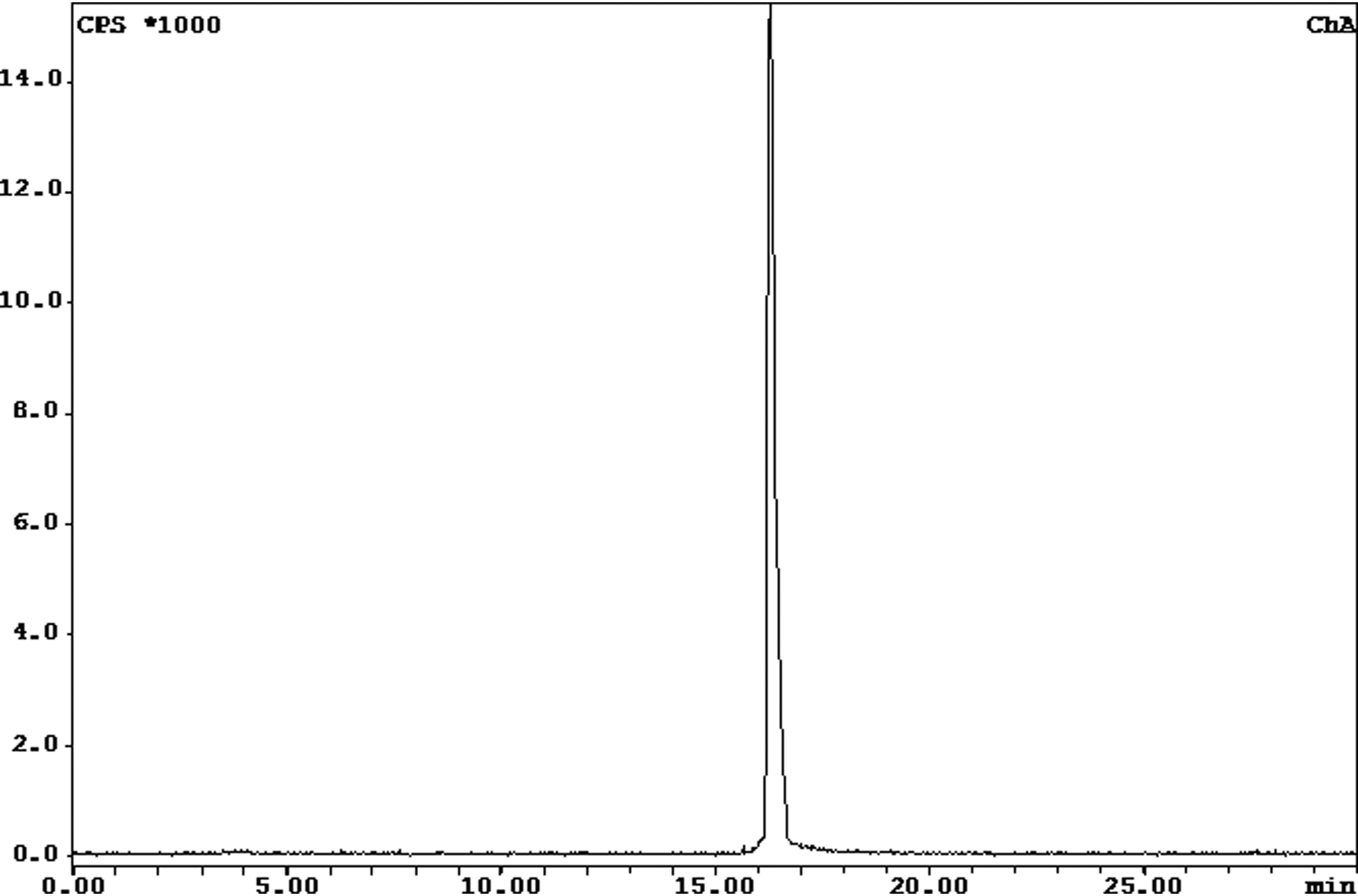
Characterization of 177Lu-DOTA-TATE by HPLC. HPLC, high performance liquid chromatography.
To ensure the therapeutic efficacy of the radiopharmaceutical, the amount of peptide conjugate in a 7.4 GBq dose of 177Lu-DOTA-TATE should not be >300 μg at the time of administration. 25 The total peptide content for a 177Lu-DOTA-TATE preparation is dependent upon the 177Lu specific activity and the peptide/metal ratio chosen for labeling. Table 1 theoretically provides the maximum (DOTA-TATE)/(Lu) ratio that can be selected for labeling 300 μg of peptide with different specific activities of the Lu metal. The ratios are determined for a single patient dose of 7.4 GBq, precalibrated for 2 days. Thus, the minimum specific activity of the radiolabeled 177Lu-DOTA-TATE formulation has to be ≥29.6 MBq/μg (9250/300) on the production day for retaining its efficacy up to a period of at least 2 days.
Total peptide content 300 μg.
Table 2 summarizes the radiolabeling yields of 177Lu-DOTA-TATE formulation (9.25 GBq patient dose), synthesized using different molar ratios of (DOTA-TATE)/(Lu), ranging between 0.8 and 3.0. The specific activity of 177Lu used in all the formulations for this study was ∼740 MBq/μg. The radiochemical purity was consistently >98% when the peptide/metal ratio was 2.5. Although (DOTA-TATE)/(Lu) ratio of 2.0 is optimal for high yield of the labeled product, use of higher peptide/metal ratio of ∼2.5 could completely avoid need for Sep-Pak purification, thereby reducing purification losses and production time. The specific activity of the labeled product would be ∼29.6 MBq/μg of peptide in this case. Radiochemical yields observed in this study are >90% for molar ratios >1.5 similar to the previous reported values. 26 Below this ratio, yields are significantly affected. This differs from published finding that report even 1:1 ratio for obtaining yields >95%. 27 This difference may be related to the higher specific activity of 177Lu used in the published report. The latter factor was experimentally verified by carrying out radiolabeling studies using different specific activities of 177Lu while maintaining peptide/Lu metal ratio at 2.5, and the results are shown in Figure 2. The results demonstrate that the yield of the reaction falls <95% when the specific activity of 177Lu is <555 GBq/mg. Thus the therapeutic doses of 177Lu-DOTA-TATE should preferably be formulated with 177Lu having specific activity >555 GBq/mg to achieve high radiochemical purity and avoiding activity losses during the purification step.
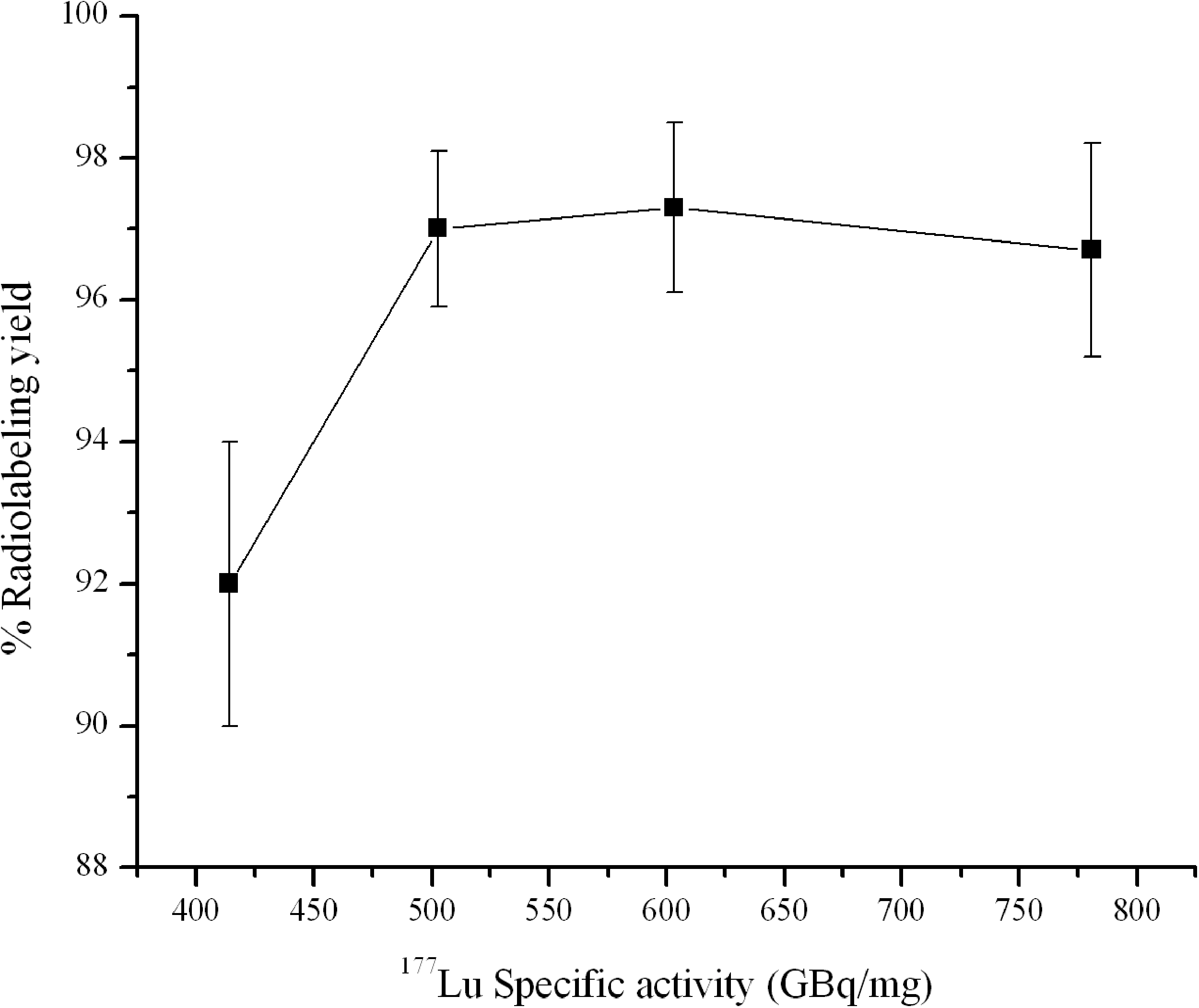
Radiolabeling yields of “177Lu-DOTA-TATE” at different specific activities of 177Lu with peptide/metal ratios fixed at 2.5:1.
Since the ready-to-use formulation of 177Lu-DOTA-TATE is intended to be used for therapy even 2 days after its preparation, in vitro stability of the formulation is a very important parameter. Therapeutic radiopharmaceutical preparations formulated in aqueous medium are susceptible to radiolytic degradation. In this context, three parameters, namely, radioactive concentration of the final formulation, concentration of the stabilizing agent, and storage temperature are the crucial factors determining the in vitro stability of radiopharmaceutical preparations. In this study, the authors have selected gentisic acid as the stabilizing agent. Two different concentrations of gentisic acid were used for stabilizing the final formulation. The gentisic acid present in higher concentrations in the final radiopharmaceutical preparation (4.0% w/v) was found to precipitate out under refrigerated conditions and does not redissolve on attainment of ambient room temperature conditions. Hence, lower content of gentisic acid (1.5% w/v) was found appropriate as no solubility issues were observed at this concentration even when stored at −70°C. However, there were no tests performed to ascertain the size of the particle present in the clear formulation on attainment of ambient temperature. This was not considered necessary as the labeled formulation was diluted in saline before infusion in patients.
Table 3 shows the radiochemical purity of the therapeutic dose of 177Lu-DOTA-TATE preparation having radioactive concentration of 740 MBq/mL observed up to a period of 9 days stored under variable temperature conditions. The radiochemical purity was found to degrade <95% after 3 days when stored at temperatures >4°C. However, the high radiochemical purity of >98% was maintained up to a period of 9 days for a preparation stored at −70°C. The HPLC radiochromatogram of the formulation after 9 days of storage at −70°C is shown in Figure 3, clearly demonstrating almost no degradation of the radiolabeled complex. This is in contradiction to a previous finding 23 wherein stability at room temperature with higher concentrations of gentisic acid (4% w/v) was observed up to a period of 7 days. Stability in previous report was verified in a hospital setup, where degradation with respect to free 177Lu generation was monitored using the PC technique. However, HPLC characterization of preparations stored at room temperature showed peaks corresponding to degraded radiolabeled peptide fragments. Hence storage under subzero temperature is recommended for stability. At radioactive concentrations ≥925 MBq/mL, the radiolabeled formulation undergoes radiolytic degradation and the radiochemical purity falls <95% post 3 days preparation. Hence, a concentration of 740 MBq/mL was found to be optimal for the prolonged shelf-life of product and considered suitable for its deployment. In routine clinical practice, 177Lu-DOTA-TATE is generally infused into the patients through saline for a period of time, hence there are no stringent norms for radioactive concentration supplied to hospital radiopharmacy.
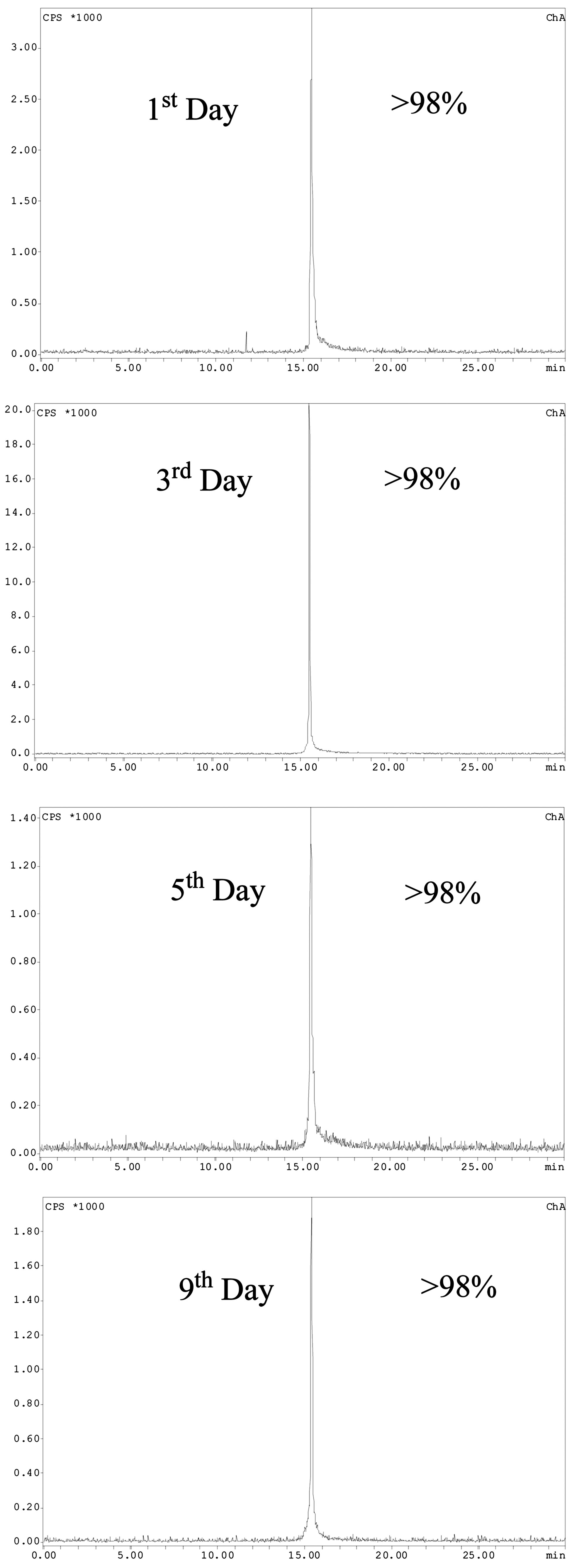
Radiochemical purity of 177Lu-DOTA-TATE with initial radioactive concentration of 740 MBq/mL stored at −70°C over a period of time.
Radioactive concentration of the formulation was 740 MBq/mL and gentisic acid concentration was 1.5% (w/v).
Patient evaluation studies showed localization of the radiotracer at the diseased NET site as per the expected distribution. Figure 4 shows the representative whole body post-therapy scan in a patient of ileocecal NET with hepatic metastases (MiB1 index 2%), who underwent treatment with 7.4 GBq dose of ready-to-use 177Lu-DOTA-TATE formulation. The whole body anterior and posterior views show low-grade or minimal physiological tracer distribution in the pituitary, spleen, normal liver parenchyma, bilateral kidney, and gut (sites of SSTR expression). Intense multiple focal areas of pathological uptake are seen in both the lobes of liver (arrows). These correspond to the metastases in this proven patient of NET. The present distribution indicates excellent targeting of the ready-to-use therapeutic 177Lu-DOTA-TATE formulation at the metastatic NET sites.
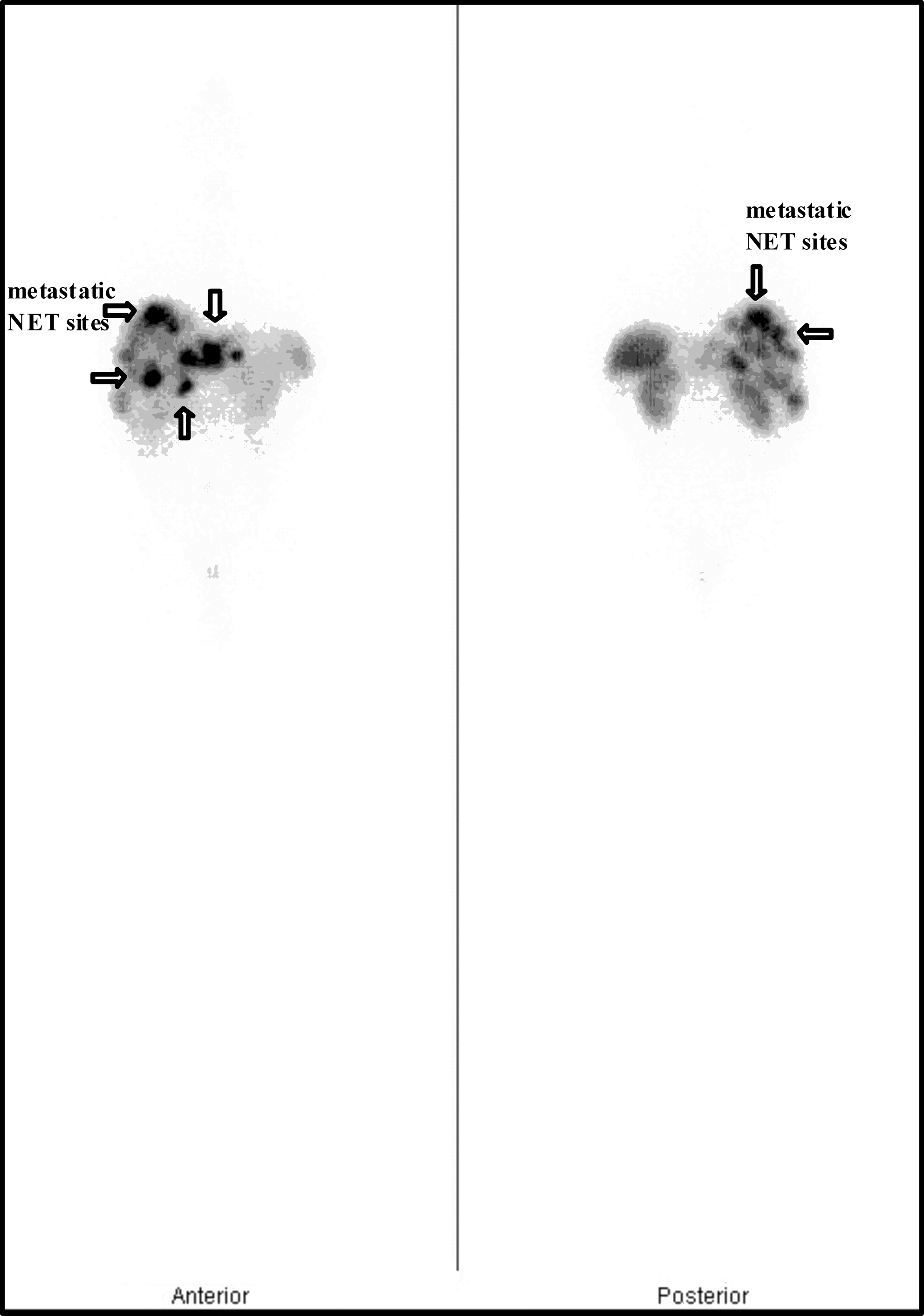
Post-therapy whole body scan (anterior and posterior views) in a patient of ileocaecal NET with hepatic metastases (MiB1 index 2%). Neuroendocrine tumor with bilobar hepatic metastases (marked with arrows) obtained during discharge from the isolation ward at 24 h following injection with 7.4 GBq 177Lu-DOTA-TATE preparation.
Conclusions
A protocol for bulk scale formulation of ready-to-use 177Lu-DOTA-TATE for therapy of NETs was developed using moderate specific activity 177Lu produced by direct neutron activation in a medium flux research reactor. The specific activity of the radiolabeled peptide was ≥29.6 MBq/μg of the peptide conjugate on the date of its formulation. The product retained its radiochemical purity to the extent of >98% when stored at −70°C with concentration of 740 MBq/mL, ensuring that there would be no constraint in its deployment from central radiopharmacy to distant nuclear medicine centers. The biological distribution in patients showed expected distribution in NETs and its metastases to bring the desired therapeutic result.
Footnotes
Disclosure Statement
No competing financial interests exist.