




Abstract
The primary objective of this investigation is the development of a strategy for the synthesis of polyhydroxamic acid (PHA)-grafted cellulose film, its characterization, and evaluation of its usefulness for the preparation of 177Lu skin patches for superficial brachytherapy applications. PHA-grafted cellulose films were synthesized and characterized by Fourier transformed infrared spectrometer analysis and visual color test with Fe(III) solution. Uptake of 177Lu on the PHA-grafted cellulose was investigated by varying the experimental conditions such as the pH of feed solution, amount of nonradioactive Lu carrier, time, and temperature of the reaction. Under the optimized conditions, >95% loading of 177Lu on the PHA–cellulose film could be achieved. Autoradiography studies of 177Lu–PHA–cellulose film confirmed the uniform distribution of 177Lu on the surface. Energy dispersive X-ray analysis of nonradioactive Lu–PHA–cellulose film confirmed the loading of Lu on PHA–cellulose film. The utility of PHA-functionalized cellulose films for the fabrication of radioactive sources for superficial brachytherapy applications could be successfully demonstrated.
Introduction
Skin cancer is one of the most common malignancies affecting the Caucasian population, especially the elderly, with rising incidences. 1,2 Skin cancers are broadly categorized as melanoma and nonmelanoma types. Treatment modalities include surgical excision, cryosurgery, radiotherapy, chemotherapy, laser ablation and curettage, and Mohs' microsurgery. 3 –5 Contact brachytherapy using radioactive skin patches impregnated with β− emitting radionuclides such as 90Y, 186Re, 166Ho, and 32P has emerged as one of the inexpensive and effective therapeutic options for topical treatment of skin cancer, especially in areas such as the eyelids, nose, and lips, which are difficult to excise. 6 –14 This mode of therapy is noninvasive and is capable of delivering therapeutic radiation doses on outpatient basis with minimum risk of scarring and other complications commonly associated with surgery and radiation therapy. Moreover, it is an economical treatment option as it does not call for expensive therapy units.
Even as a multitude of factors contribute to the effectiveness of radioactive skin patches, selection of an appropriate substrate capable of retaining the desired radionuclide is very important. In the quest for a novel biodegradable substrate, the authors focused on the biodegradable polymer cellulose that finds versatile applications as a functional material in drug delivery, water treatment, etc. 15 –17 Cellulose-based materials endowed with high mechanical strength, chemical stability, thermal stability, and high sorption capacity have been synthesized by introducing functional groups into its matrix by means of chemical modifications or by physical incorporation or blending with suitable chemical moieties. 17 –19 The utility of chemically modified cellulose-bearing functional groups such as amine and carboxyl for the uptake of metal ions such as Cu (II), Pb (II), and Ni (II) has been evaluated previously and the functionalized cellulose has been effectively used for the removal of these metal ions from chemical waste streams. 19,20 However, the usefulness of functionalized cellulose for the preparation of radioactive skin patches has not been investigated yet.
Toward the modification of cellulose for sorption of radionuclides, polyhydroxamic acid (PHA) groups were introduced on the surface of cellulose due to the ability of PHA to form chelates with many metal ions. Previously, the efficacy of a PHA-functionalized sorbent for the sorption of metal ions has been demonstrated by other researchers. 21 Among the therapeutic radionuclides available for incorporation into cellulose-based materials, use of 177Lu was considered owing to its nuclear decay characteristics [T1/2 = 6.65 d, Eβ(max) = 497 keV, Eγ = 113 keV (6.4%), 208 keV (11%)] and viability to produce routinely in a nuclear reactor following the 176Lu (n, γ) 177Lu route. 22,23
This article describes a systematic approach for the synthesis of PHA-grafted cellulose film, its characterization, and the optimization of experimental factors for the loading of 177Lu onto the PHA–cellulose film. Evaluation of uniformity of radioactivity distribution on the surface of the PHA–cellulose film as well as the extent of release of radioactivity from the 177Lu–PHA–cellulose film was also carried out.
Materials and Methods
Materials
Acrylamide, N,N-methylene-bis-acrylamide (MBA), and lutetium chloride were purchased from Sigma-Aldrich (Steinheim, Switzerland). Ammonium persulfate, methanol, hydroxylamine hydrochloride, sodium hydroxide, and hydrochloric acid were obtained from S.D. Fine Chemicals (Mumbai, India). N,N-dimethylformamide and cellulose films were procured from Merck (Mumbai, India). All other chemicals/reagents were of analytical grade and were procured from Sigma-Aldrich (United States).
Enriched lutetium oxide target (82% enriched in 176Lu, >99.99% pure) was irradiated in the Dhruva reactor, BARC, at a thermal neutron flux of ∼1.4 × 10¹⁴ ncm2·s−1 for 21 days to produce 177LuCl3. 23 A well-type NaI(Tl) scintillation counter (ECIL, Hyderabad) was used for radioactivity counting. Scanning electron microscope (SEM) images were recorded on SNE4500M Mini-SEM instrument of SEC Global. Energy dispersive X-ray (EDS) spectra were recorded on Bruker Nano GmbH XFlash detector 410-M (Berlin, Germany) and were analyzed using Quantax Esprit 2.0 Bruker microanalysis software. Fourier transformed infrared spectrometer (FTIR) spectra were recorded by ALPHA-P ATR-FTIR. Industrial X-ray films were obtained from Agfa India, Pvt., Ltd. (Mumbai, India). Optical density (OD) measurements of the exposed X-ray films were carried out using OPTEL transmission densitometer model No. 125. 3E NDT, LLC (Pasadena, CA).
Methods
Synthesis and characterization of PHA-grafted cellulose films
The grafting solution was prepared by dissolving acrylamide in dimethyl formamide followed by MBA. The amount of MBA was kept at 10 mole percentage to that of acrylamide. About 0.5 mL of methanol was added to the mentioned solution to facilitate complete dissolution. Subsequently, ammonium persulfate (which acts as the thermal initiator) dissolved in dimethyl formamide was added to the grafting solution. The square-shaped host cellulose film (5 × 5 cm) was immersed in the grafting solution and kept overnight as such. Thereafter, excess of polymerizing solution adhering to the surface was removed. This solution-filled cellulose film was sandwiched between two transparent polyester sheets to prevent any loss of solution filled in the pores. Care was taken to remove excess grafting solution and the air bubbles trapped between the cellulose film and the polyester sheets. This setup was then kept in an oven at 90°C for 15 minutes. It was then allowed to cool, the cellulose film was taken out, and washed thoroughly with dimethyl formamide, methanol, and distilled water to remove the unreacted reagents. The polyacrylamide-grafted cellulose film thus obtained was then treated with 3.3 mol L−1
hydroxylamine hydrochloride solution for 30 minutes. Subsequently, the solution pH was adjusted to 12 using sodium hydroxide solution and the setup was left overnight as such. The cellulose film was then washed with deionized water and treated subsequently with 3 mol L−1
HCl solution for 30 minutes followed by repeated washing with deionized water till the washing water tested neutral with a pH paper. This gave the PHA-grafted cellulose film. The extent of grafting of PHA on the cellulose film was determined gravimetrically using the following equation:
wherein Wi and Wf are the dry weights of the cellulose film and PHA-grafted cellulose film, respectively.
The presence of hydroxamic acid groups in the PHA–cellulose film was confirmed from a visual color test by treating a piece of the film with Fe(III) solution. The PHA–cellulose film was also characterized by FTIR analysis in comparison with the native cellulose film.
177Lu uptake studies
To determine the extent of uptake of 177Lu on the PHA–cellulose films, sorption experiments were performed by immersing square-shaped PHA–cellulose films of dimensions 1 × 1 cm in the feed solution whose volume was kept constant at 2 mL. The feed solution contained 370 kBq (10 μCi) of 177LuCl3 as tracer along with known amount of nonradioactive 176LuCl3 carrier. The experimental parameters optimized were (1) pH of the feed solution (pH 1–7 using 25 μg Lu carrier at 40°C for 5 hours), (2) amount of Lu carrier (0–150 μg at the optimized pH), (3) reaction time (1–6 hours at optimized pH and carrier Lu), and (4) temperature (25°C and 40°C) of the reaction. After the incubation period, the PHA–cellulose films were subsequently washed to remove unbound 177Lu radioactivity and were air dried. For determination of the percentage of 177Lu retained on the PHA–cellulose film, a measured aliquot of the feed solution (20 μL) was withdrawn and counted on a NaI(Tl) counter before and after the completion of the uptake experiment. The percentage uptake of 177Lu on PHA–cellulose was thus calculated using the following equation:
wherein Ai and Af are the initial and final radioactivity counts in the feed solution. All the experiments were carried out in triplicates to ensure reproducibility and accuracy of the results. Subsequently, the 177Lu–PHA–cellulose films were immobilized within cellophane sheets for safe handling.
Fabrication of 177Lu–PHA–cellulose sources
Based on the optimized experimental conditions, 177Lu-impregnated PHA–cellulose sources were fabricated using square-shaped PHA–cellulose films of dimensions 1 × 1 cm containing up to ∼185 MBq of 177Lu per cm2 and 25 μg of inactive Lu carrier in the feed solution, which was maintained at pH 5–6 for 5 hours at 40°C.
Tests for surface contamination and release of radioactivity
The cellophane-laminated 177Lu–PHA–cellulose (185 MBq) sources were tested for the presence of loosely bound radioactivity by swiping their surface with alcohol-immersed cotton wool, which were counted on a NaI(Tl) scintillation counter.
Release of radioactivity from the sources was determined as per the method recommended by Atomic Energy Regulatory Board (AERB, India). In brief, one 177Lu-loaded PHA–cellulose film of dimension 1 × 1 cm containing 37 MBq (1 mCi) of 177Lu was placed in a beaker containing water for 48 hours at ambient temperature. Thereafter, the radioactive source was removed, the water was concentrated by heating, and was then counted on a NaI(Tl) well-type counter to determine whether there is any release of 177Lu activity.
Autoradiography studies
For ascertaining the uniformity of radioactivity distribution, the 177Lu–PHA–cellulose sources (185 MBq) were subjected to autoradiography by exposing them to industrial X-ray films for 120 seconds. OD distribution of the exposed X-ray films was measured at various locations using a Black & white transmission densitometer.
SEM and EDS analysis
Nonradioactive Lu-loaded PHA–cellulose source of dimensions 1 × 1 cm was prepared following the procedure for the radioactive source preparation. SEM and EDS analysis of the sample were carried out in comparison with PHA–cellulose using specimens coated with a thin (ca. 4 nm) over-layer of gold. EDS microanalysis technique was used to identify the elemental constituents of the Lu-loaded PHA–cellulose.
Results
Synthesis and characterization of PHA-grafted cellulose films
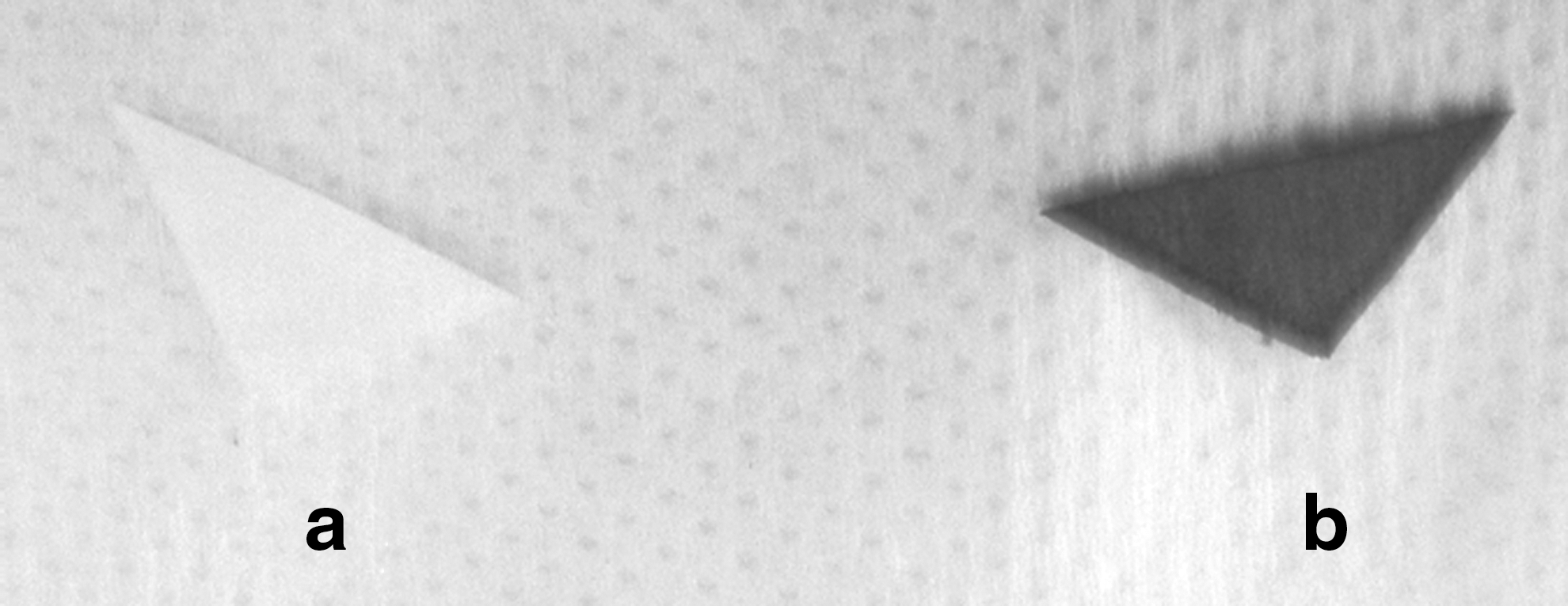
PHA could be grafted on to the surface of cellulose following the synthesis procedure detailed in the Methods section. Figure 1 is the pictorial representation of the synthesis scheme. Under the optimized reaction conditions, about 80% of PHA could be grafted on to the cellulose film. This could be confirmed visually from the result of treatment with Fe(III) solution, wherein the PHA–cellulose film turned dark brown due to the complexation of the hydroxamic acid groups with iron. This is well evident from Figure 2a, which shows the PHA-grafted cellulose film, and Figure 2b, which shows the PHA-grafted cellulose film when kept in contact with Fe(III) solution. The uniform brown color of the Fe(III)-treated PHA–cellulose film as shown in Figure 2b evidenced the uniformity of grafting hydroxamic acid groups on the cellulose film.

Synthesis scheme for PHA–cellulose.
Additional confirmation for the presence of PHA groups on the cellulose film could be obtained from FTIR analysis. The FTIR spectra of the cellulose film, PHA-grafted cellulose film, and Lu-loaded PHA-grafted cellulose film are shown in Figure 3. The FTIR spectrum of cellulose film shows two distinct absorption peaks at 3323 and 1029 cm−1 corresponding to -OH stretching and C-O-C (ether linkage) ring stretching vibrations, respectively. The FTIR spectra of PHA–cellulose film and Lu-loaded PHA–cellulose film show absorption peaks at 3334 and 3190 cm−1 due to the N-H asymmetric and symmetric stretching vibrations of amide (-CO-NH-R) group, and a peak close to 1650 cm−1 is due to carbonyl (C = O) stretching, confirming that the grafting of hydroxamic acid groups on the cellulose film could be accomplished.

Infrared spectra of (1) cellulose film (2) PHA–cellulose film and (3) Lu-loaded PHA–cellulose film.
177Lu uptake studies
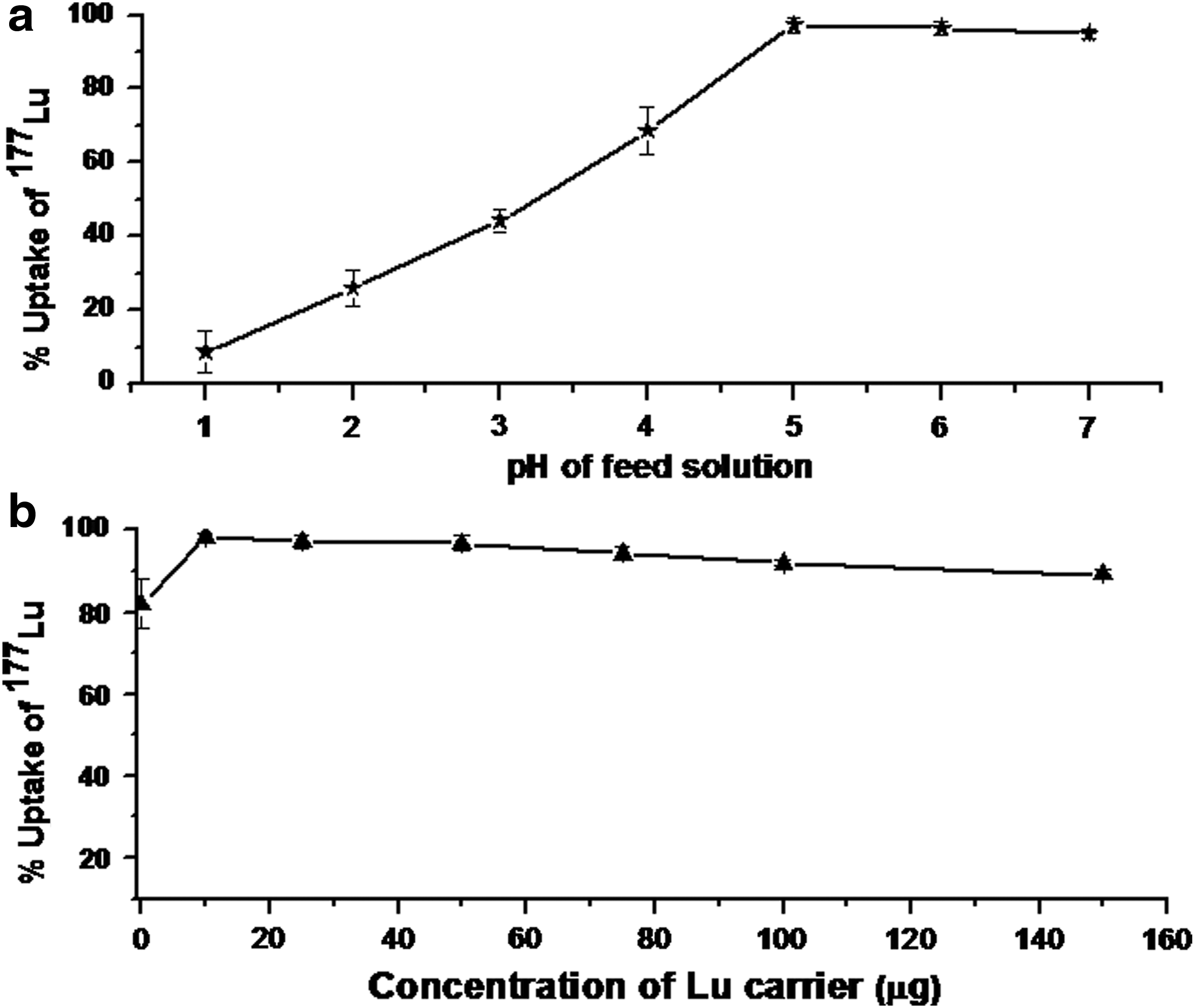
To determine the experimental conditions for maximum loading of 177Lu activity on the PHA–cellulose film, a number of parameters influencing the uptake of 177Lu were studied. pH of feed solution was found to influence the uptake of 177Lu on the PHA–cellulose film significantly as evident from Figure 4a. The uptake of 177Lu was very less when the pH of the feed solution was <2; with further increase in pH, the uptake of 177Lu increased significantly. When the feed solution was maintained in the pH range of 5–6, >95% of the 177Lu radioactivity in the feed solution was incorporated into the PHA–cellulose film. The uptake of 177Lu on PHA–cellulose film remained >95% up to pH 7. As Lu has a tendency to precipitate as hydroxide at alkaline conditions, pH beyond 7 was not studied.
Influence of
Results of the experiments carried out to study the influence of nonradioactive Lu carrier on the uptake in 1 × 1 cm sized PHA–cellulose are presented in Figure 4b. In the absence of any nonradioactive Lu carrier, the uptake of 177Lu on the PHA–cellulose film was determined to be 82% ± 6%. It is very evident from Figure 4b that even when 10 μg of carrier Lu was taken, >95% of the Lu could be loaded on the PHA–cellulose film. Uptake of 177Lu on PHA–cellulose remained >95% when up to 50 μg of carrier Lu was added. Addition of Lu carrier in excess of 50 μg was found to reduce the uptake of 177Lu on the PHA–cellulose film. Hence, all further experiments were carried out using 25 μg of Lu carrier in the feed solution maintained at pH 5–6.
Lu incorporation on the PHA–cellulose film was found to be faster at 40°C than the sources prepared at ambient temperature. For studying the influence of time of contact on the impregnation of 177Lu ions in the PHA–cellulose film, experiments were carried out at various time intervals (at 40°C), the results of which are shown in Table 1. It is evident that the uptake of 177Lu on PHA–cellulose film increased with increase in contact time and remained constant at >95% after 5 hours of contact at 40°C.
Preparation of 177Lu–PHA–cellulose source
PHA-grafted cellulose film could be advantageously utilized for incorporation of adequate amounts of 177Lu with excellent reproducibility, enabling the preparation of 177Lu–PHA–cellulose sources with the desired source strength (185 MBq). Immobilization of the sources without significant radiation attenuation could be achieved by sandwiching them within thin sheets of cellophane.
Test for surface contamination and release of radioactivity
Tests carried out to determine the percentage of radioactivity release as well as surface contamination revealed that there was negligible release of radioactivity, which is within AERB-recommended limits (<185 Bq). There was also no surface contamination of the sources, confirming their safety for brachytherapy applications.
Autoradiography
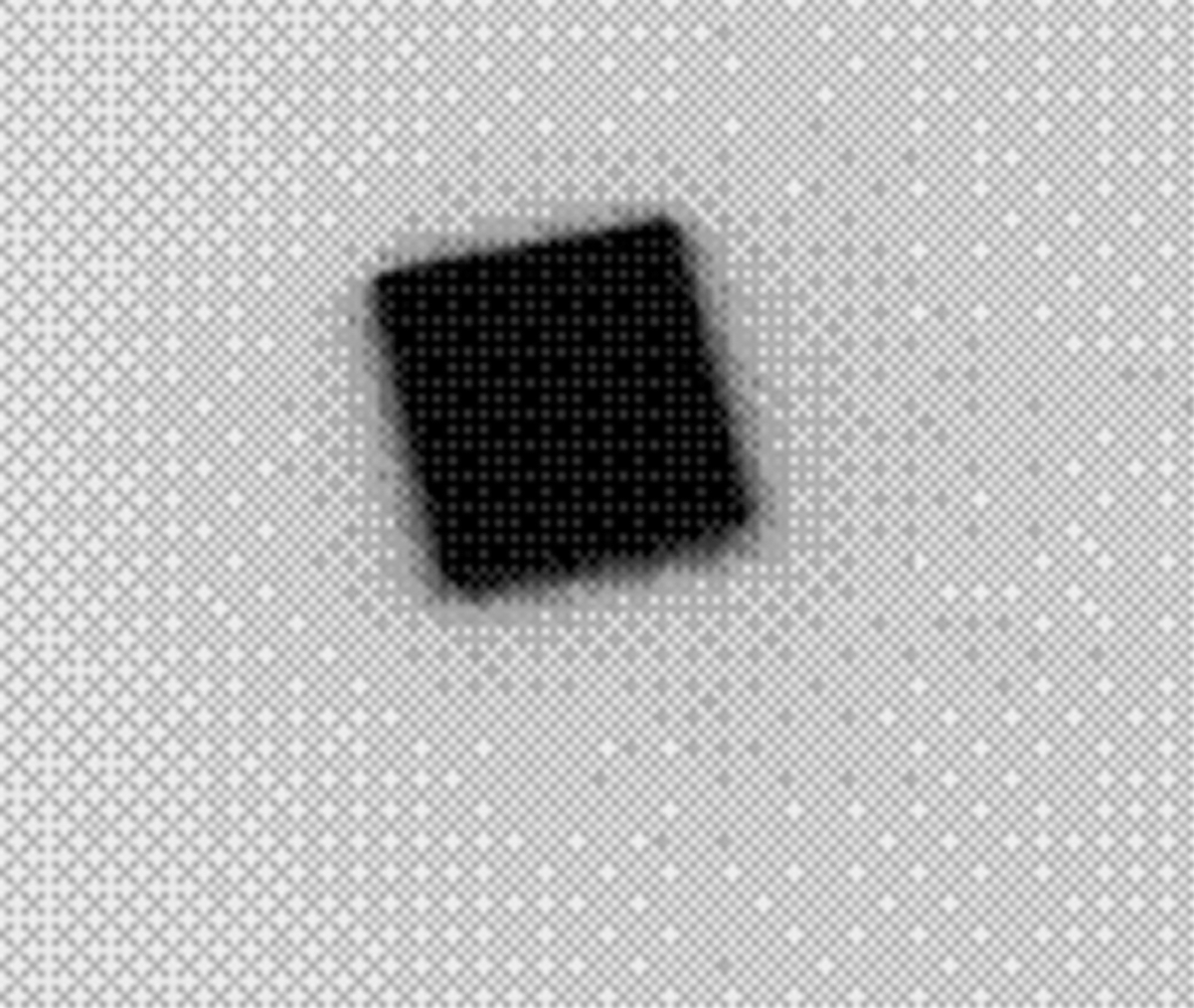
Autoradiography of the 177Lu–PHA–cellulose sources was carried out using X-ray films. OD measurements at different points of the exposed films confirmed uniformity of radioactivity distribution on the PHA–cellulose matrix. The results of OD measurements after different exposure durations are depicted in Table 2, whereas a typical autoradiograph of one such 177Lu–PHA–cellulose film source is shown in Figure 5.
Autoradiograph of 177Lu–PHA–cellulose film.
SD, standard deviation.
SEM and EDS analysis
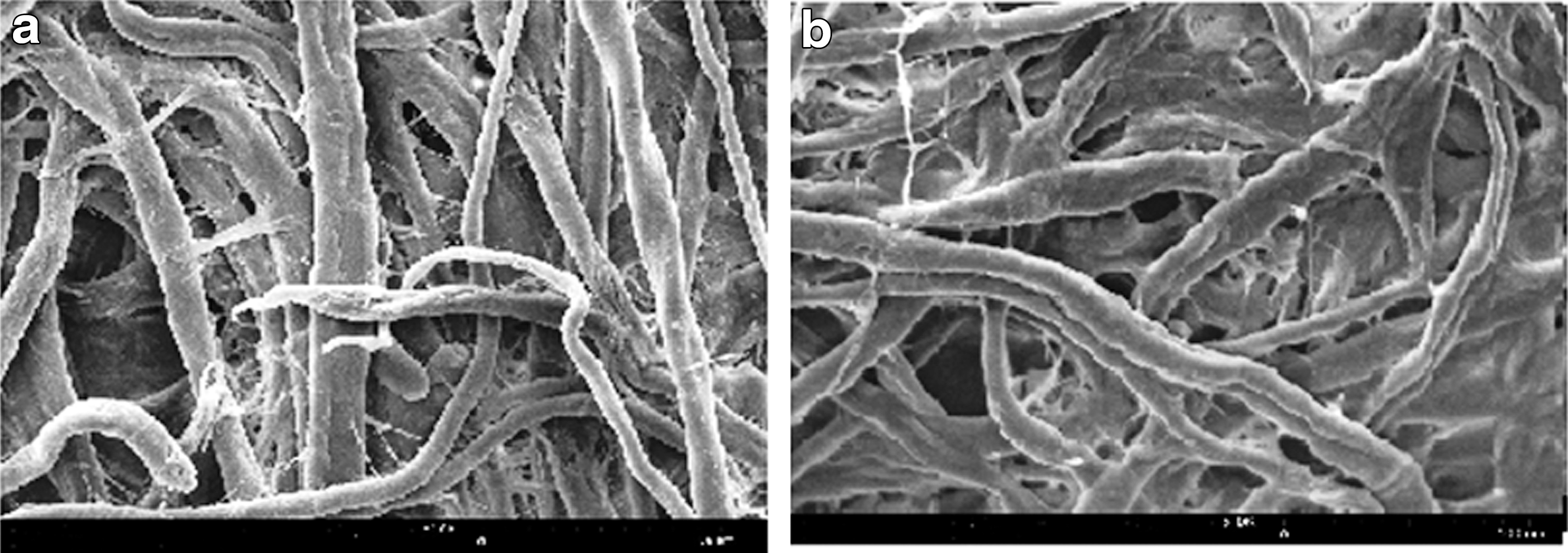
Figure 6a and b represents the SEM images of cellulose film and PHA-grafted cellulose film, respectively. The SEM images reveal that the fine pores in cellulose were covered because of grafting with PHA, giving it a smoother appearance. The EDS spectra of PHA-grafted cellulose film and PHA-grafted cellulose film loaded with Lu are shown in Figure 7a and b, respectively. The carbon and oxygen peaks are those of cellulose. The Au distribution profile is due to gold coating deposited for avoiding charging during SEM scanning. The Mα and Lα peaks of Lu are clearly visible in the Lu-loaded PHA-grafted cellulose film, confirming that the loading of lutetium onto the PHA-grafted cellulose film could be achieved under the optimized reaction conditions.
Scanning electron microscope micrographs of
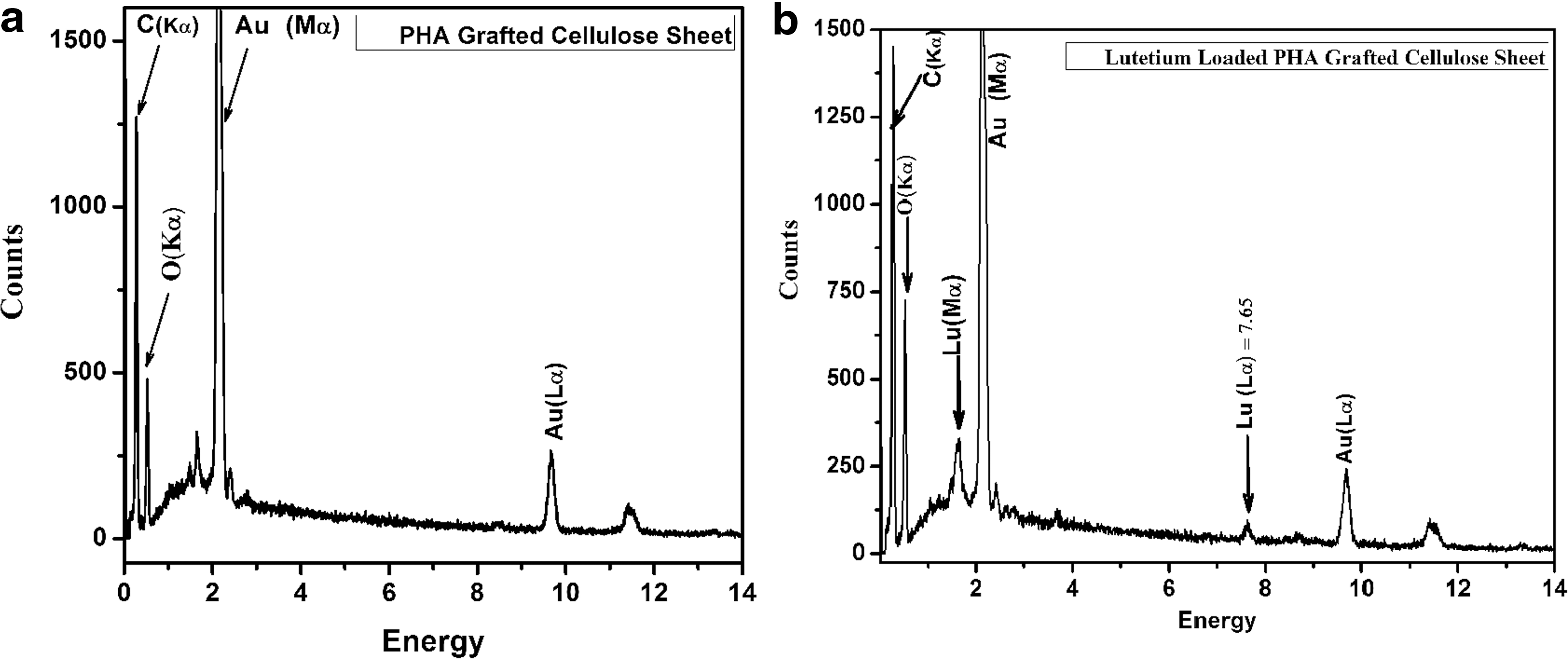
Energy dispersive X-ray spectra of
Discussion
Over the past few decades, skin cancer therapy using radioactive patches has evolved into an effective therapeutic strategy for topical treatment of skin cancer. In this study, the authors aimed to evaluate the utility of functionalized cellulose for the fabrication of radioactive skin patches. The interest on the use of cellulose could be primarily attributed to its nontoxicity, biocompatibility, biodegradability, and amenable chemistry for functionalization with chelating groups. PHA was chosen for the funtionalization of cellulose by virtue of its capacity to form complexes with a wide range of metallic radionuclides and ability to be incorporated into the cellulose matrix by modification of the terminal OH group of cellulose. Under the optimized reaction conditions, PHA could be successfully grafted on to the cellulose. More than 95% of the 177Lu could be loaded to the synthesized PHA–cellulose film. EDS characterization studies of nonradioactive Lu–PHA–cellulose confirmed the presence of Lu on the surface of the PHA–cellulose film. Uniformity of distribution of the 177Lu radioactivity on the PHA–cellulose film could be established by autoradiography.
In comparison with some of the strategies previously reported for preparation of radioactive skin patches such as the neutron irradiation of skin patches containing the nonradioactive parent in the nuclear reactor, the present strategy using the PHA–cellulose is a simple and user-friendly method. Recently, Koneru et al. 24 have reported on the preparation of 166Ho radiotherapeutic bandages, wherein 165Ho-containing garnet nanoparticles were synthesized, which were embedded in polyacrylonitrile fibers that was then irradiated to get the 166Ho skin patch. The irradiation of nonradioactive parent-loaded skin patch in the nuclear reactor may lead to the formation of radioactive impurities. An important advantage of the radioactive PHA–cellulose source is that as per the tumor contour, the radioactive source can be custom-made. PHA–cellulose film is also endowed with good mechanical strength, which is essential for such applications. Besides, as PHA is uniformly grafted on to the cellulose network, the uniformity of radioactivity distribution is also ensured, which is a very critical parameter for therapeutic response. 177Lu was chosen for the preparation of the radioactive skin patches due to the in-house capability to produce with high radionuclidic and radiochemical purities in required quantities following the (n, γ) route in the “Dhruva” research reactor of BARC. Owing to their similar chemical properties, this method can be used for the preparation of 90Y- and 166Ho-incorporated PHA–cellulose skin patches by substituting 177Lu with either of the radionuclides and thus offers flexibility in the preparation of the radioactive skin patches corresponding to the depth of the skin tumor.
To the best of the authors' knowledge, this is the first proof of concept study on the fabrication of radioactive skin patches for therapeutic applications using functionalized cellulose film, which may have important implications on the future development of biodegradable radiation sources for therapeutic purposes.
Conclusions
The objective to functionalize cellulose film with PHA groups to fabricate 177Lu-loaded skin patches could be successfully realized. Under the optimized conditions, 177Lu–PHA–cellulose sources compliant with the regulatory requirements could be prepared for contact brachytherapy. Uniformity of radioactivity distribution on the sources could be confirmed, which has important implications in tumor response. Sources could be custom-made commensurate with the tumor contour. This proof of concept study can be extrapolated to the preparation of PHA–cellulose skin patches with other β− emitting radioisotopes such as 90Y and 166Ho.
Footnotes
Acknowledgments
Research at the Bhabha Atomic Research Centre (BARC) is part of the ongoing activities of the Department of Atomic Energy, India, and is fully supported by government funding. The authors express their sincere thanks to Dr. B.S. Tomar, Director, RC&I Group, BARC, for his encouragement and support. The authors are thankful to the staff of Radiochemicals Section, Radiopharmaceuticals Division, BARC, for the supply of 177Lu and to the staff of Fuel Chemistry Division for the SEM/EDS analysis.
Disclosure Statement
None of the authors have any conflict of interest, financial or otherwise, in the publication of this article.