




Abstract
Background:
Neuroblastoma (NB) is one of the most aggressive and common solid tumors in pediatrics. Development of effective new therapeutics for NB is in progress to help reduce mortality and morbidity of the disease, particularly in relapsed patients. The tumor suppressor protein p53 plays a critical role in multiple signaling pathways to maintain cellular hemostasis. Dysregulation of p53 protein and/or molecular aberrations have been associated with multiple human malignancies. p53 stability and protein activity is negatively regulated by the E3 ubiquitin ligase (MDM2). Thus, targeting p53-MDM2 protein–protein interaction is a feasible and promising therapeutic strategy to restore the physiological function of p53 in cancer cells. RG7112 is a highly potent and selective small molecule inhibitor, which target a unique structure located within p53 binding motif of MDM2.
Methods:
The efficacy of RG7112 in vitro using NB cell lines was examined. Two wild-type (WT)-p53 NB cell lines IMR5 and LAN-5, a mutant p53 cell line SK-N-BE(2), and a WT-p53/p14 deleted cell line SH-EP were employed.
Results:
Data showed that RG7112 significantly reduced cellular viability of IMR5 (IC50, 562 nM) and LAN-5 (IC50, 430 nM), but not SK-N-BE(2) and SH-EP cells. Further, RG7112 restores p53 and p21 protein levels in IMR5 and LAN-5 in a dose-dependent manner. RG7112 induces cell cycle arresting (60% G1 arresting) in WT-p53 cells (IMR5), but no pronounced effect observed in SK-N-BE(2). In this study, 15 different drugs in combination with RG7112 in IMR5 cell line and identified venetoclax (Bcl-2/Bcl-xL inhibitor) as a promising candidate were evaluated.
Conclusions:
Taken together, these findings provide initial proof-of-concept data for further investigations of RG7112 in selected subgroups of NB patients.
Introduction
Neuroblastoma (NB) represents the third most common cancer and the most common extracranial solid tumor in pediatric oncology, representing ∼1 in 10 of all childhood cancer cases. 1 This tumor displays a high degree of biological and phenotypic heterogeneity, resulting in differences in a variety of clinical manifestations of the disease. 2 Despite the recent advances in the therapeutic and clinical care of these patients, the 5-year survival rate in high-risk NB is only about 50%. 3 Thus, development of new therapeutic approaches is urgently needed to reduce disease mortality and morbidity in these children. The tumor suppressor protein p53 plays a critical role in genomic stability, by regulating the expression of multiple genes involved in cell cycle arrest, apoptosis, DNA repair mechanisms, and inhibition of angiogenesis and metastasis. 4 P53 is the most frequently mutated gene in >50% of all human malignancies. 5 However, similar to other pediatric cancers, it has been shown that p53 gene is not commonly mutant in NB tumors (<2%). 6 Under physiological conditions, p53 stability and abundance is negatively regulated by E3 ubiquitin ligase (MDM2). 7 A direct protein–protein interaction of MDM2 with p53 leads to suppression of p53 protein activity, shuttling of p53 to the cytoplasm, and protein degradation through ubiquitin-proteasome pathway. 8 Thus, targeting MDM2-p53 protein–protein interaction by small molecule inhibitors is a very promising strategy for the development of novel NB cancer therapeutics. 9 Indeed, the significance of this pathway in NB cancer was initially highlighted in vivo using the MDM2-haploinsufficient transgenic mouse, in which tumor growth and development was significantly reduced by releasing the MDM-2-dependent suppression of the p19ARF/p53 axis in NB. 10 To date, various number of small molecule inhibitors have been developed to target this interaction: SAR405838, 11 MK-8242, 12 DS-3032b, 13 NVP-CGM097, 14 HDM201, 15 RG7388, 16 ALRN-6924, 17 and AMG 232. 18 Early studies to examine the effects of Nutlin (first MDM2-p53 compound) induced cell cycle arrest and upregulated expression of p53 target genes using in vivo and in vitro cancer models. 19,20 Nutlin core structure was used as a lead compound to design analog structures to achieve higher biological efficacy and to minimize chemical liabilities. 21 A structural analysis of the p53 binding domain of MDM2 revealed some possible hydrophobic clef binding motif (Phe19, Trp23, and Leu26), which is potentially important to mediate this protein–protein interaction. 22 RG7112 inhibitor was developed and optimized to target critical motif to disturb p53-MDM2 interaction and restore the physiological activity of p53. Further characterization of RG7112 has been achieved in glioblastoma, 23 ovarian cell carcinoma, 24 soft tissues sarcoma, 25 and leukemia. 26 In this study, the antitumor activity of RG7112 using cell lines derived from refractory NB patients were examined in vitro.
Materials and Methods
Cell lines and cell culture
Four different NB cell lines were used in this study: IMR5/75, LAN-5, SH-EP, and SK-N-BE(2). hTERT-immortalized primary cells were used as control cells in this study. A description of p53 molecular status is indicated in Table 1. The cells were maintained in Opti-MEM media (Gibco, Invitrogen Corporation, Burlington, ON) supplemented with 10% fetal bovine serum and 100 U/mL penicillin and 100 U/mL streptomycin (Gibco). All cell cultures were maintained at 37°C in a humidified incubator with 5% CO2. RG7112 compound was purchased from Selleck (Cedarlane, Burlington, Ontario, Canada). Stock solutions of RG7112 were prepared as 10 mM in DMSO and stored in aliquots at −20°C.
List of All Neuroblastoma Cell Lines Used in this Study and Their p53 Molecular Status
NB, neuroblastoma; WT, wild-type.
Cytotoxicity assay
RG7112 or control (DMSO) was diluted in 100 μL of Opti-MEM per well in 96 well plates in triplicate at final concentrations ranging from 1 × 10⁻⁷ to 10 μM and the cells were added to the wells (1 × 10 4 cells per well in 100 μL). Cultured cells were incubated in the presence or absence of the drug for 96 h. Then, total cell viability was evaluated by Alamar blue assay as previously described. 27 In brief, the NB cells in the wells containing diluted RG7112 were incubated with 5% Alamar blue for 4 h. After incubation, the absorbance at 570–620 nm was measured (Opsys MR Plate Reader, Dynex Technologies, Chantilly, Virginia) and percent cell survival rate was calculated by normalizing the absorbance ratio (percentage) of the test well to the vehicle control.
Western blot analyses
Whole cell extracts were prepared from cell cultures by first washing cells with PBS; then cells were harvested and lysed using RIPA buffer [(50 mM Tris-HCl (pH 8), 150 mM NaCl, 1% NP-40, 0.5% sodium deoxycholate; 0.1% sodium dodecyl sulfate (SDS)] supplemented with 1% phosphatase inhibitor (Sigma-Aldrich, St. Louis, MO), 1% protease inhibitor (Sigma-Aldrich), and 1% sodium orthovanadate (Alfa Aesar, Ward Hill, MA). Supernatants were collected as whole cell lysates. Total protein content was quantified using the bicinchoninic acid (BCA) Protein Assay Kit (Pierce, Rockford, IL). Appropriate volumes of samples and loading buffer (50 mM Tris-HCl [pH 6.8], 2% SDS, 10% glycerol, 1% β-mercaptoethanol, 12.5 mM ethylenediaminetetraacetic acid, and 0.02% bromophenol blue) were mixed, ensuring that equal amounts of protein were loaded (30 mg of protein per well). Cellular extracts were resolved by SDS-PAGE and transferred to 0.2 μm nitrocellulose membranes in a Tris/glycine transfer buffer containing 10% (v/v) methanol. Nonspecific binding sites were blocked with 5% (w/v) nonfat dry milk in Tris-buffered saline with Tween [TBST, 25 mM Tris-HCl, 137 mM NaCl, 3 mM KCl, and 0.05% (v/v) Tween-20]. Membranes were washed and incubated overnight with primary antibody at 1:1000 dilution with 1% (w/v) nonfat dry milk in TBST. Membranes were then incubated for 1 h with horseradish peroxidase-conjugated secondary antibody (dilution 1:10,000) in TBST and developed with enhanced chemiluminescence reagent. Antibodies to p53 was purchased from Santa Cruz Biotechnology, Inc. (Dallas, TX); p21 and β-actin were purchased from Cell Signaling (Danvers, MA).
Flow cytometry
NB cell lines [IMR5/75 and SK-N-BE(2)] were plated at a concentration of 5 × 10 5 cells per well. After treatment with 1 μM RG7112 or DMSO (vehicle control), the cells were harvested after 24 h of drug treatment, fixed in ice-cold 70% (v/v) ethanol and stored at 4°C. Before analysis, cells were washed with PBS, resuspended in 500 μL PBS with 50 μg/mL propidium iodide (Sigma) and 25 μg/mL RNAse A (Sigma), and incubated at 37°C for 45 min. Propidium iodide was analyzed by FACScan (Becton Dickinson). Cell number in each phase was expressed as the percentage of the total cell number.
Calculation of combination index values
Combination studies were achieved by calculating IC25 of the drugs panel to be combined with RG7112. Drugs were assayed in 100 μL of Opti-MEM per well in 96 well plates in triplicate at final concentrations ranging from 1 × 10⁻⁶ to 10 μM. Cell viability values were converted to relative compound effect values (normalized to vehicle control) and the combination index (CI) values were calculated using the following formula: CI <1 indicates synergistic activity, 0.9–1 indicates nearly additive activity, 0.7–0.9 indicates slight synergism, and 0.5–0.7 moderate synergism.
Results
RG7112 reduces cell variability of wild-type-p53 cells (IMR5 and LAN-5), but not SH-EP and SK-N-BE(2)
In vitro cell cytotoxicity assay demonstrated a reduction of cell viability in IMR5 (IC50,562 nM) and LAN-5 cells (IC50, 430 nM). Both cell lines have a wild-type (WT)-p53 where no detectable molecular aberrations were previously found. However, RG7112 showed very minimal activity against SH-EP and SK-N-BE(2) cell lines (IC50 >10 μM). Control cells exhibited cell cytotoxicity at low micromolar range (∼1.8 μM). These data demonstrated a pronounced antiproliferative activity of RG7112 compound against WT-p53 cell lines, but not the mutant one (Fig. 1).
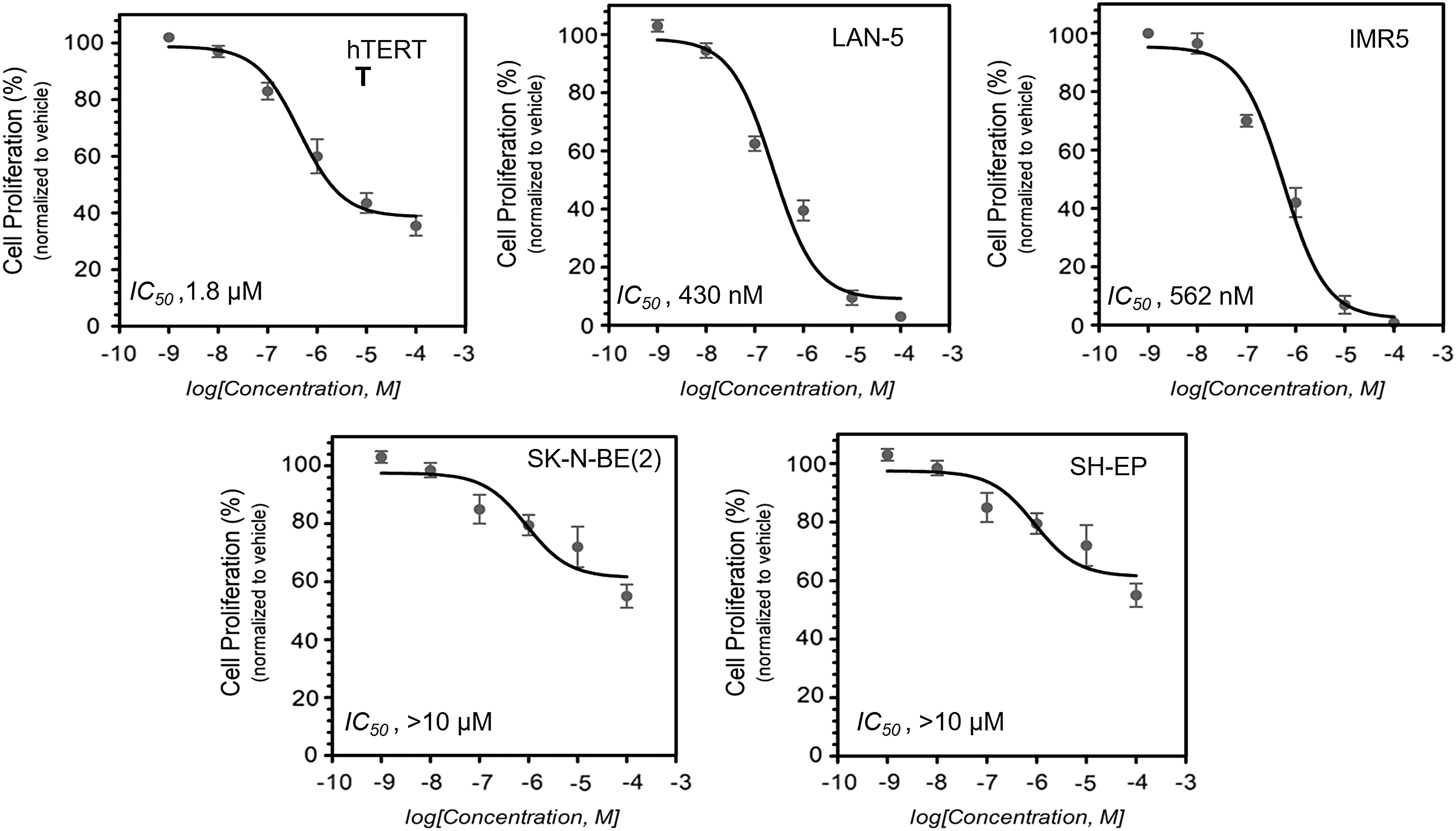
Determination of IC50 of RG7112 compound using in vitro cytotoxicity assay on different NB cell lines. NB cells were incubated with a gradient concentration [1 × 10⁻⁷ to 10 μM] of RG7112 compound for 96 h. Cell viability was calculated as (%) by comparing the absorbance ratio (%) of the treated cells normalized to the control (DMSO) treated cells. NB, neuroblastoma.
RG7112 enhances p53 and p21 proteins stability in IMR5 and LAN-5
Cells were treated with vehicle (DMSO) or 1 μM of RG7112 compound. Western blot analyses of IMR5/75 and LAN-5 displayed an increase of p53 and p21 proteins signal upon cells treatment with RG7112. However, it was not able to detect any changes in protein levels of p53 and p21 in SH-EP and SK-N-BE(2) cells (Fig. 2). Further analysis of this effect was completed by employing a gradient increase [0–2 μM] of RG7112 on IMR5 and LAN-5 cells compared with hTERT cells (Fig. 3). These data showed a consistent increase of p53 protein signal and the downstream target protein, p21 in IMR5 and LAN-5 NB cells. Levels of p53 and p21 were normalized to total β-actin protein levels.
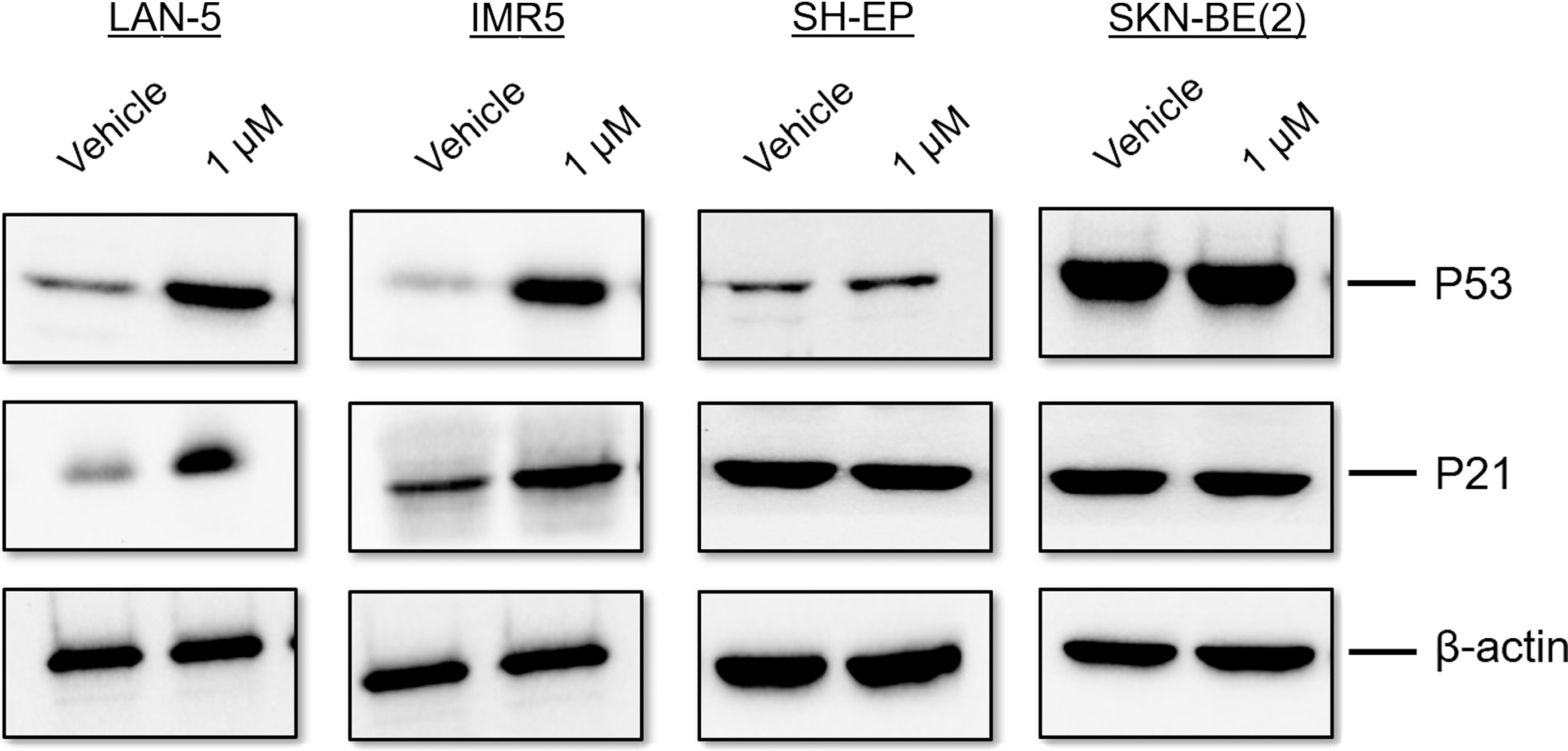
RG7112 restores p53 and p21 protein levels in WT-p53 cells. Human NB cells were treated with RG7112 [1 μM] or vehicle control (DMSO). p53 and p21 protein levels were quantified and normalized to total β-actin total protein. WT, wild-type.
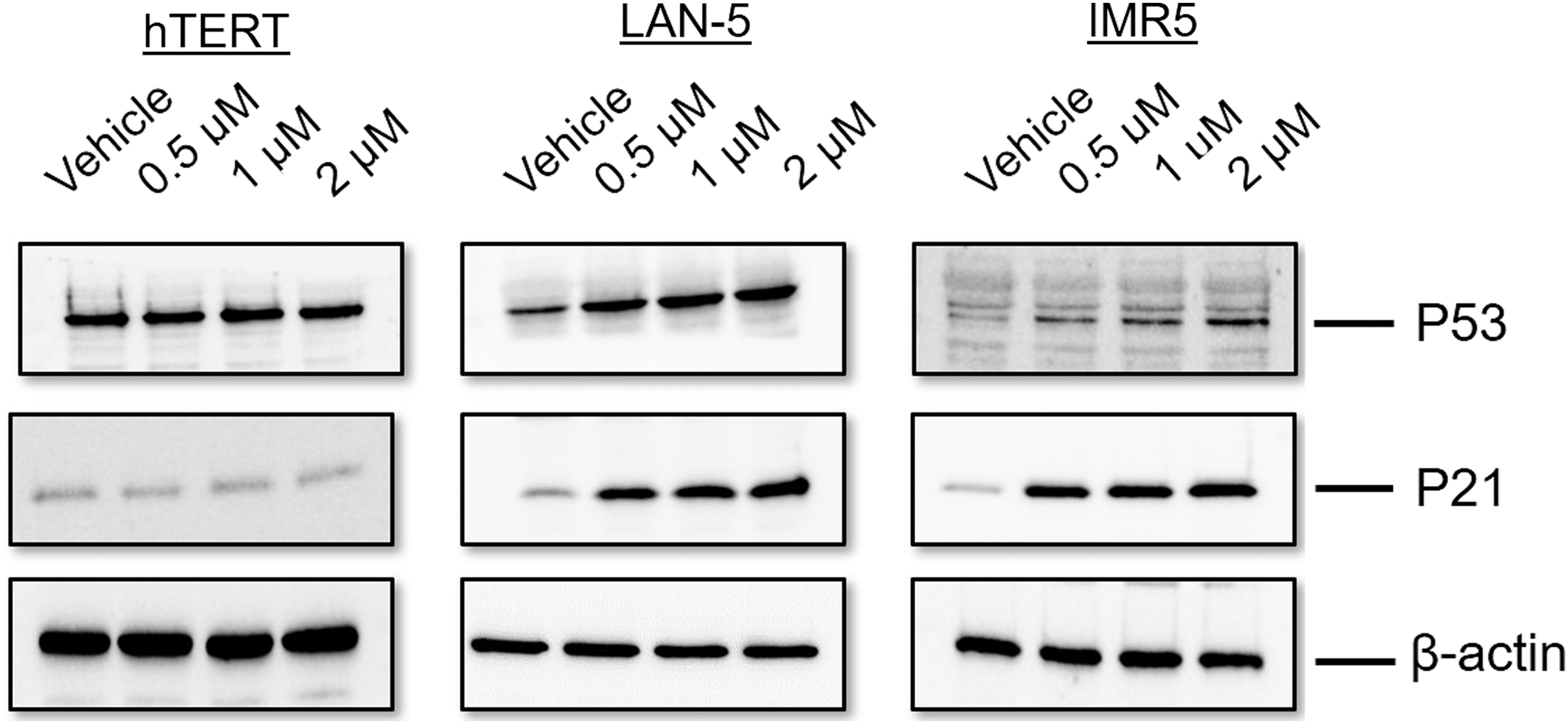
Dose-dependent increase of p53 and p21 protein levels in RG7112-treated cells. Human NB cells were treated with an increasing concentration [0–2 μM] of RG7112 or vehicle control (DMSO). p53 and p21 protein levels were quantified in IMR5, LAN-5, and hTERT cell lines and normalized to total β-actin total protein.
RG7112 induces cell cycle arrest in IMR5 cells
IMR5 and SK-N-BE(2) cells were treated with 1 μM of RG7112 or vehicle (DMSO) for 24 h. The effect of RG7112 on cell cycle regulation on a WT-p53 cell line (IMR5) and a mutant p53 cell line [SK-N-BE(2)] were examined. That data showed the ability of RG7112 to induce cell cycle arrest in IMR5 cells. RG7112 induces G1 arrest by 60% in RG7112-treated IMR5 cells compared with vehicle control (Fig. 4A). No pronounced change was detected in SK-N-BE(2) cells after treatment (Fig. 4B).
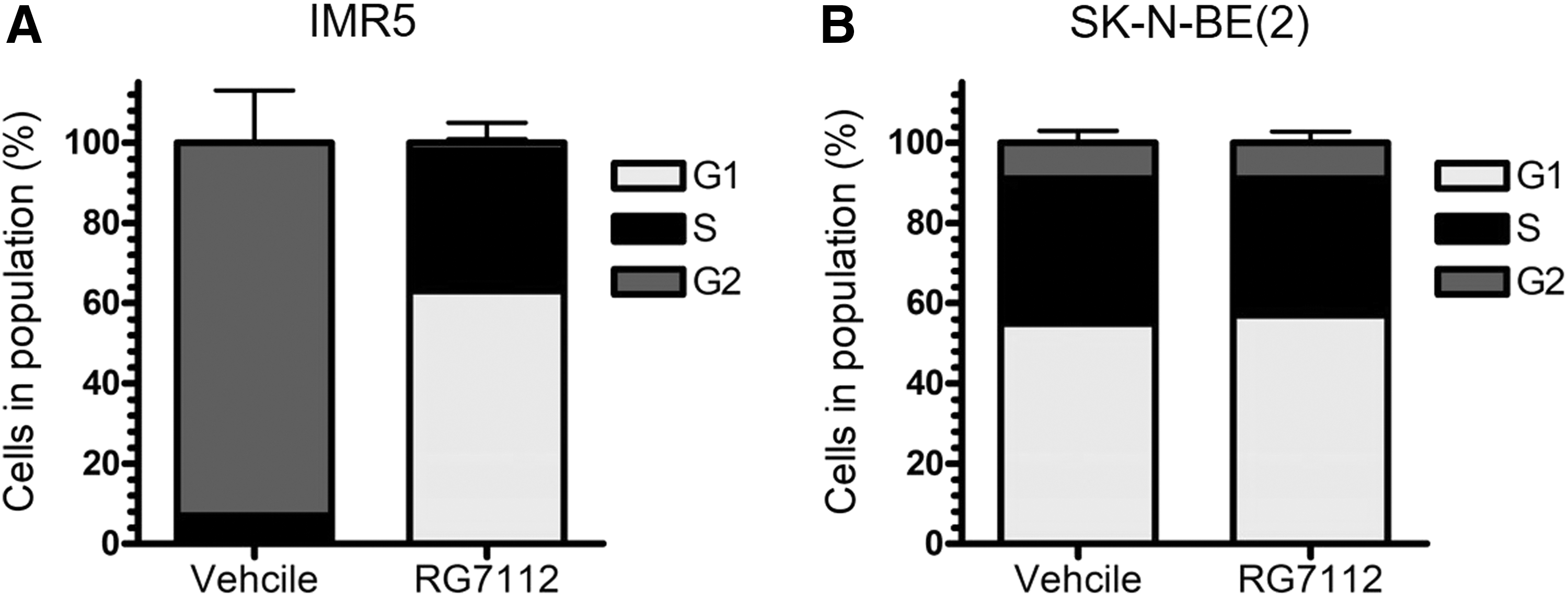
Cell cycle arresting induced by RG7112 in IMR5 cells. IMR5 and SK-N-BE(2) cells were incubated with RG7112 [1 μM] or vehicle control (DMSO). Cell cycle analysis completed after 24 h of treatment revealed a dramatic increase in the G1 fraction of IMR5-treated cells compared with a vehicle (DMSO) (
Combined RG7112/Navitoclax displays a potential synergistic activity
The data showed that RG7112 is a highly potent compound to stabilize p53 levels in IMR5 cells. In the next set of experiments, it was aimed to identify effective drug synergies using drug combination studies. Fifteen therapeutic agents were selected based on their ability to target essential growth and survival pathways in NB. IMR5 cells were treated with RG7112 and/or RG7112 and one of the selected compounds to identify CI values. The data showed that combination of RG7112 with Navitoclax (BCL2/BCL-XL inhibitor) resulted in a moderately synergistic activity (CI: 0.67). However, less synergistic activity was detected when RG7112 combined with the other Bcl-2 and Bcl-xL inhibitor, ABT-737 (CI: 0.97). Similarly, data presented in Table 2 show that only additive effects were seen with molecules that target checkpoint kinase (CI: 0.94), nuclear export shuttling mechanism (CI: 0.91), heat shock protein 90 (HSP90) (CI: 0.9), 26S proteasome (0.83), and PARP1 and PARP2 (0.95).
List of All Drugs Used in Combination Analysis with RG7112
This data show the cellular targets of these compounds, calculated CI, and their combination status.
CI, combination index.
Discussion
RG7112 is a small molecule inhibitor designated to occupy in the p53 binding pocket, thus blocking MDM2-p53 protein–protein interaction. RG7112 showed a promising efficacy to target various types of blood and solid tumors. 23,26,28 In this study, the ability of this compound to target different NB cell lines was sought to be examined. The study employed two WT-p53 cell lines IMR5 and LAN-5, one mutant p53 cell line SK-N-BE(2), and a WT-p53/p14 deleted cell line SH-EP. Also, hTERT-immortalized primary cells were employed as control normal cell line as they closely mimic the physiology of cells in vivo, and they offer prolonged proliferative capacity in culture. The data demonstrated that RG7112 induced cell cytotoxicity in IMR5 and LAN-5 cell lines. RG7112 exhibited inhibitory effect in WT-p53 cells, with IC50s in the nanomolar range. Similar observations have been described by a pediatric preclinical testing program using a broad range of p53 WT xenografts. 29 RG7112 compound did not show any measurable antiproliferative activity in SK-N-BE(2) cells; this is possibly due to the presence of p53 mutations in this cell line, which possibly leads to diminish p53 protein binding to MDM2, thus reducing p53 sensitivity to degradation by proteasome-MDM2 machinery signal. SH-EP cell line displayed resistance to RG7112 compound with no observed cytotoxicity. The SH-EP is characterized by a deletion of p14ARF deletion; this protein is negatively regulating MDM2-mediated degradation of p53. 30 Lacking p14ARF activity potentially leads to MDM2 upregulation and lessening the antiproliferative activity of RG7112. Western blot analyses of p53 and p21 proteins showed an increase of protein levels in RG7112-treated IMR5 and LAN-5 cells. In contrast, p53 and p21 protein levels were not changed in SK-N-BE(2) and SH-EP treated cells compared with vehicle control. These data supported the mechanistic action of RG7112 of stabilizing p53 and p21 proteins through attenuating MDM2-p53 interaction. To confirm this observation, a gradient [0–2 μM] concentration of RG7112 on IMR5 and LAN-5 cells compared with normal (hTERT) cells were employed. These data showed a gradual increase of p53 and p21 protein levels over RG7112 concentration increase in IMR5 and LAN-5, but not in hTERT cells. Next, cell cycle regulation by applying RG7112 on IMR5 cells (WT-p53) compared with SK-N-BE(2) (mutant-p53) was sought to be analyzed. Flow cytometry analysis of IMR5 demonstrated the ability of RG7112 to arrest cell cycle at G1 phase. In contract, RG7112 did not affect cell cycle components in the treated SK-N-BE(2) cells compared with control. Various number of studies demonstrated that combination treatments are more advantageous than monotherapies; less toxic, more durable, and target multiple cancer pathways. 31 –35 The preclinical screening involved different drugs that were combined with RG7112 to achieve better cytotoxic effect in NB cells. IMR5 (p53-positive) cells were employed in this analysis to evaluate the CI of these compounds combined with RG7112. A good degree of synergism was detected when RG7112 combined with Navitoclax (BCL2/BCL-XL inhibitor). The Bcl-2 protein family plays a critical role in the regulation of programmed cell death, apoptosis. 36,37 Previous reports showed that Bcl-2 expression is highly associated with aggressive features of NB and a poor stage of prognosis for this disease. 38 In addition, it has been suggested that Bcl-2 expression promotes NB cell survival and might be highly responsible for tumorigenesis of NB. 39 Further examination is required to study the combinatory effect of targeting p53-MDM2 complex and Bcl-2 in NB.
Taken together, data presented in this study show that RG7112 is a highly potent MDM2-p53 inhibitor with the capability to restore p53 functions leading to cellular cytotoxicity and cell cycle arrest in WT-p53 NB cells. These data provide the mechanism and initial proof-of-concept foundation for succeeding investigations for an early phase clinical trial for defined subgroup of currently difficult-to-cure NB patients.
Footnotes
Acknowledgments
The authors thank Chunfen Zhang for her assistance to provide cytotoxicity data of RG7112 in control cells. This study was supported by a research grant from the POETIC Foundation.
Authors' Contributions
A.A.G. wrote the article, collected the data, and prepared all figures. A.N. conceived and coordinated the study. All authors reviewed the results and approved the final version of the article.
Disclosure Statement
No competing financial interests exist.