




Abstract
Objective:
The purpose of this study was to explore the potential use of 177Lu-diethylenetriamine penta-acetic acid-deoxyglucose (177Lu-DTPA-DG) as a radiopharmaceutical for hepatic tumor treatment.
Methods:
Lutetium-177 (177Lu) was labeled with DTPA-DG by adding 2 mCi 177LuCl3 to 0.05 mg DTPA-DG (pH 5–6) at room temperature for 1 h. The quality of the177Lu-DTPA-DG solutions was determined by thin-layer chromatography and high-performance liquid chromatography. Cellular uptake studies with 18F-fluorodeoxyglucose (FDG), 177Lu-DTPA-DG and 177Lu-DTPA and a blocking study with 1.0 mg
Results:
177Lu-DTPA-DG had a high radiochemical purity (>97%). The cellular uptake of 177Lu-DTPA-DG was much higher than that of the 177Lu-DTPA. The biodistribution of 177Lu-DTPA-DG demonstrated that the complex accumulated in the tumor with high tumor/blood and tumor/muscle ratios. The tumors in mice in the 177Lu-DTPA-DG group clearly displayed the high uptake of 177Lu-DTPA-DG. After radiotherapy with 177Lu-DTPA-DG, tumor growth decreased, and the overall survival was longer than that in the 177LuCl3 group (268.58 ± 17.96 mm3 vs. 507.43 ± 55.72 mm3, p = 0.002) and the normal saline group (268.58 ± 17.96 mm3 vs. 483.68 ± 27.51 mm3, p < 0.05).
Conclusions:
This preliminary study suggests that 177Lu-DTPA-DG has the potential to become a liver radiopharmaceutical agent and should be further investigated.
Introduction
Primary liver cancer includes hepatocellular carcinoma (HCC, accounting for 75%–85%), intrahepatic cholangiocarcinoma (accounting for 10%–15%) and other rare types. 1 Liver cancer is predicted to become the sixth most commonly diagnosed cancer in 2018. 1 China is a high-risk area for primary liver cancer, the main risk factors for HCC are chronic infection with hepatitis B virus (HBV) and aflatoxin exposure. 1 There are many treatments for liver cancer, including hepatectomy, liver transplantation, and local ablation therapy. 2 Surgical treatment is the most important method for patients with HCC to achieve long-term survival. Transcatheter chemoembolization has been recognized as one of the most common nonsurgical treatments for liver cancer, but tumor recurrence, contraindications, and adverse reactions pose serious challenges. 2 In addition, more than 70% of patients diagnosed with HCC have disease that is not amenable to treatment with liver transplantation or locoregional therapy. 1 Therefore, exploring new and effective treatment methods has become an urgent task in current clinical research.
18
F-fluorodeoxyglucose (FDG), a glucose analog, enters cells through glucose transporters (GLUTs). FDG has been used for clinical positron emission tomography (PET) applications. Due to factors such as difficult access and high cost, the use of
18
F-FDG in clinical practice is still limited. Theoretically,
Lutetium-177 (177Lu) is an ideal medical radionuclide because it has a suitable half-life (T1/2 = 6.17 d). 177Lu emits β-particles with energies of 497 KeV (78.6%) and 176 KeV (12.2%), which are useful for therapy; and γ-photons with energies of 113 KeV (6.4%) and 208 KeV (11%), which are useful for imaging with a conventional γ camera equipped with a low-energy, high-resolution collimator. 9 Recently, 177Lu-PSMA and 177Lu-DOTA-TATE have been used in prostate cancer and neuroendocrine tumors, respectively, and achieved satisfactory results. 10 –13
DTPA can be easily and efficiently labeled with 177Lu with high radiochemical purity and stability. 14 Previous studies have shown that DTPA-DG may be used as a radiopharmaceutical agent for tumors. The aim of this study was to explore whether 177Lu-diethylenetriamine penta-acetic acid-deoxyglucose (177Lu-DTPA-DG) has potential as a radiopharmaceutical for hepatic tumor treatment.
Materials and Methods
Materials and reagents
177Lu was produced by the Institute of Nuclear Physics and Chemistry, China Academy of Engineering Physics (CAEP, Mianyang, China). DTPA was purchased from Sigma-Aldrich (Shanghai, China), and DTPA-DG was synthesized based on the authors' previous research report. 15 HCl was purchased from Chengdu Jinshan Chemical Reagent Co., Ltd. Sodium hydroxide (NaOH), ammonium acetate, methanol, and potassium dihydrogen phosphate (KH2PO4) were purchased from the Chengdu Kelong Chemical Reagent Factory.
A calibrator (CRC-15R; Capintec, Inc., Florham Park, NJ) and a γ-counter (SN-695B; Hesuo Rihuan Photoelectric Instrument, Co., Shanghai, China) were used to measure the radioactivity of the samples. The radiochemical yield was documented by paper chromatography using Xinhua No. 1 chromatography paper (Hangzhou Xinhua Paper Company, Hangzhou, China) and a thin-layer chromatography (TLC) scanner (Mini-Scan; Bioscan, Inc., Washington, DC). Images were recorded by a pinhole collimator single-photon emission computed tomography (SPECT; GE Infinia Hawkeye 4; GE Medical Systems, Milwaukee, WI) scanner and a micro-PET/CT (computed tomography) scanner (SIEMENS Inveon™, Munich, Germany). SMMC-7721 tumor cells are a hepatic cell cancer cell line. Nude mice were purchased from Chongqing Tengxin Biotechnology Co., Ltd. The mice were kept under specific pathogen-free conditions and were handled and maintained according to the Institutional Animal Care and Use Committee guidelines. All studies were approved by the Ethics Committee of Southwest Medical University.
Radiosynthesis of 177Lu-DTPA-DG
177LuCl3 solution (2 mCi) was added to a tube containing 0.05 mg DTPA-DG (10 mg/mL). The pH was adjusted to 5–6 using 0.1 N HCl and 0.1 N NaOH. After the addition of all reagents, the resulting solution was incubated for 1 h at room temperature.
Quality control of 177Lu-DTPA-DG
The quality of the 177Lu-DTPA-DG solutions was determined with TLC and high-performance liquid chromatography (HPLC), as follows. By TLC, the starting point was labeled by a pencil (∼2 cm from one end of a Xinhua No. 1 paper), and 3–5 μL of each final solution (n = 3) was applied at the origin of paper chromatography strips (∼3 mm in diameter). The developing agent was an ammonium acetate (10%): methanol solution (1:1 v/v). 176Lu-DTPA-DG was obtained by reaction of 176Lu and DTPA-DG (1:1 mol/mol). HPLC was performed using a C18 column (5 μm, 250 × 4.6 mm, ZORBAX Bonus-RP; Agilent, Inc.) and isocratic elution with 5 mM KH2PO4 and methanol (90:10 v/v) as the mobile phase with a flow rate of 1 mL/min. The injection volume of the radiochemical solution was 20 μL.
In vitro stability
For determination of the stability of this complex, the aliquots (n = 3) from three vials containing the 177Lu-DTPA-DG complex were spotted on paper strips at different time intervals (0.5, 1, 2, 5, 10, 24 h). The change in stability of 177Lu-DTPA-DG was analyzed at each time interval by TLC, as described in Quality Control of 177Lu-DTPA-DG section.
Cellular uptake rates of radiotracers
SMMC-7721 cells were grown at 37°C in RPMI-1640 containing 10% fetal bovine serum in a humidified atmosphere with 5% CO2. SMMC-7721 cells (4.0 × 10⁵ cells/well) were seeded into six-well plates and were randomly divided into groups A, B, and C (n = 3/group). Approximately 5 μCi
18
F-FDG, 177Lu-DTPA-DG, and 177Lu-DTPA were added to groups A, B, and C, respectively. After the cells were incubated for 1–24 h, a digestive enzyme was used to terminate the cell culture. A blocking study was performed with 1.0 mg
Biodistribution
Tumor cells were subcutaneously injected into the left forelimb of each nude mouse. Biodistribution and imaging studies were conducted when the tumor volume reached at least 10 × 10 × 10 mm3. A 0.1 mL (0.1 mCi) solution of 177Lu-DTPA-DG was injected into the tail vein of nude mice bearing SMMC-7721 tumors. The mice were sacrificed at 1, 4, and 24 h (four mice at each time point) after injection. Blood samples and relevant organs were collected and weighed, and a γ-counter was used to measure the radioactivity counts of the organs. The results are expressed as the percentage uptake of the injected dose per gram (%ID/g).
Imaging
For imaging, 0.1 mL (0.3 mCi) 177Lu-DTPA-DG was injected into the tail vein of 3 mice bearing SMMC-7721 tumors. As a control, 0.1 mL (0.3 mCi) 177Lu-DTPA was injected into the tail vein of another 3 nude mice with tumors. Serial images (10 min, 128 × 128 matrix) were recorded by SPECT at 30, 60, 90, 120, 180, 210, and 240 min after injection. Then, 0.1 mCi 18 F-FDG in ∼0.1 mL was injected through the tail vein. Serial images were recorded by micro-PET at different times, as described above. Before the acquisition of images, the animals were maintained without food or water for more than 6 h.
Radiotherapy
Seven days before the start of radiotherapy, 0.1 × 10⁷ tumor cells (SMMC-7721) were subcutaneously injected into the shoulder region of nude mice. Mice bearing subcutaneous SMMC-7721 tumors were used to study radiotherapy (n = 5/group). Each group was administered 177Lu-DTPA-DG (0.1 mL, 0.3 mCi), 177LuCl3 (0.1 mL, 0.3 mCi), and 0.9% sodium chloride (0.1 mL) once every 3 d, with four total doses. Animals were kept alive for tumor growth and survival monitoring for 30 d. Tumor volumes were calculated by the following formula: V = 1/2 L × W 2 (where L = long axis and W = short axis). The authors also evaluated the biodistribution after 12 d of 177Lu-DTPA-DG treatment.
Statistical analysis
SPSS 21.0 software was used for analysis. The results are shown as the mean ± standard deviation. Differences between two groups were determined by a Student's t test. A probability value of p < 0.05 was considered significant. The radiochemical labeling data were analyzed by using Origin Pro8 software. Survival analysis was performed by the Kaplan–Meier method and long-rank tests (GraphPad Prism 5.0 software; GraphPad Software, Inc.).
Results
Radiochemistry and characteristics of the labeled compounds
The following experimental conditions were used for 177Lu-DTPA-DG: 2 mCi (50 μL) 177LuCl3 solution (40 mCi/mL) was added to a tube containing 0.05 mg (5 μL) DTPA-DG (10 mg/mL), pH 5–6, and incubated at room temperature for 1 h. The final mixture had a specific activity of 40 mCi/mg. The reaction scheme of 177Lu-DTPA-DG is shown in Figure 1. As shown in Figure 2, the radiochemical purity of the 177Lu-DTPA-DG complex was >97%. The radiochemical yield of 177Lu-DTPA-DG was also confirmed as >97%, and 177LuCl3 (Rf = 0–0.1) remained at the point of origin, whereas 177Lu-DTPA-DG (Rf = 0.9–1.0) moved to the solvent front under the same conditions (Fig. 3). With regard to the in vitro stability, the radiochemical yield of 177Lu-DTPA-DG was still >95% (n = 3) after 24 h at room temperature (25°C ± 2°C), as shown in Figure 4. Hence, the compound was stable.

The reaction scheme of 177Lu-DTPA-DG. 177Lu-DTPA-DG, 177Lu-diethylenetriamine penta-acetic acid-deoxyglucose.

HPLC analysis of 177Lu-DTPA-DG
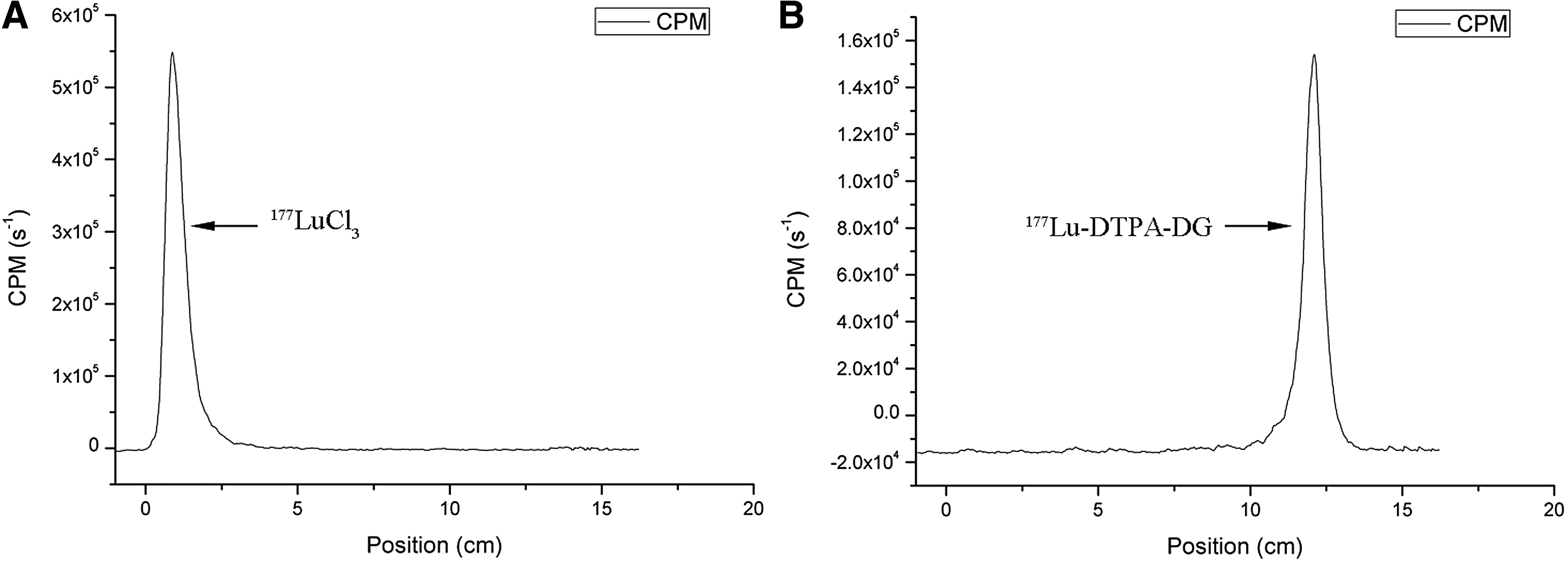
TLC patterns of 177LuCl3
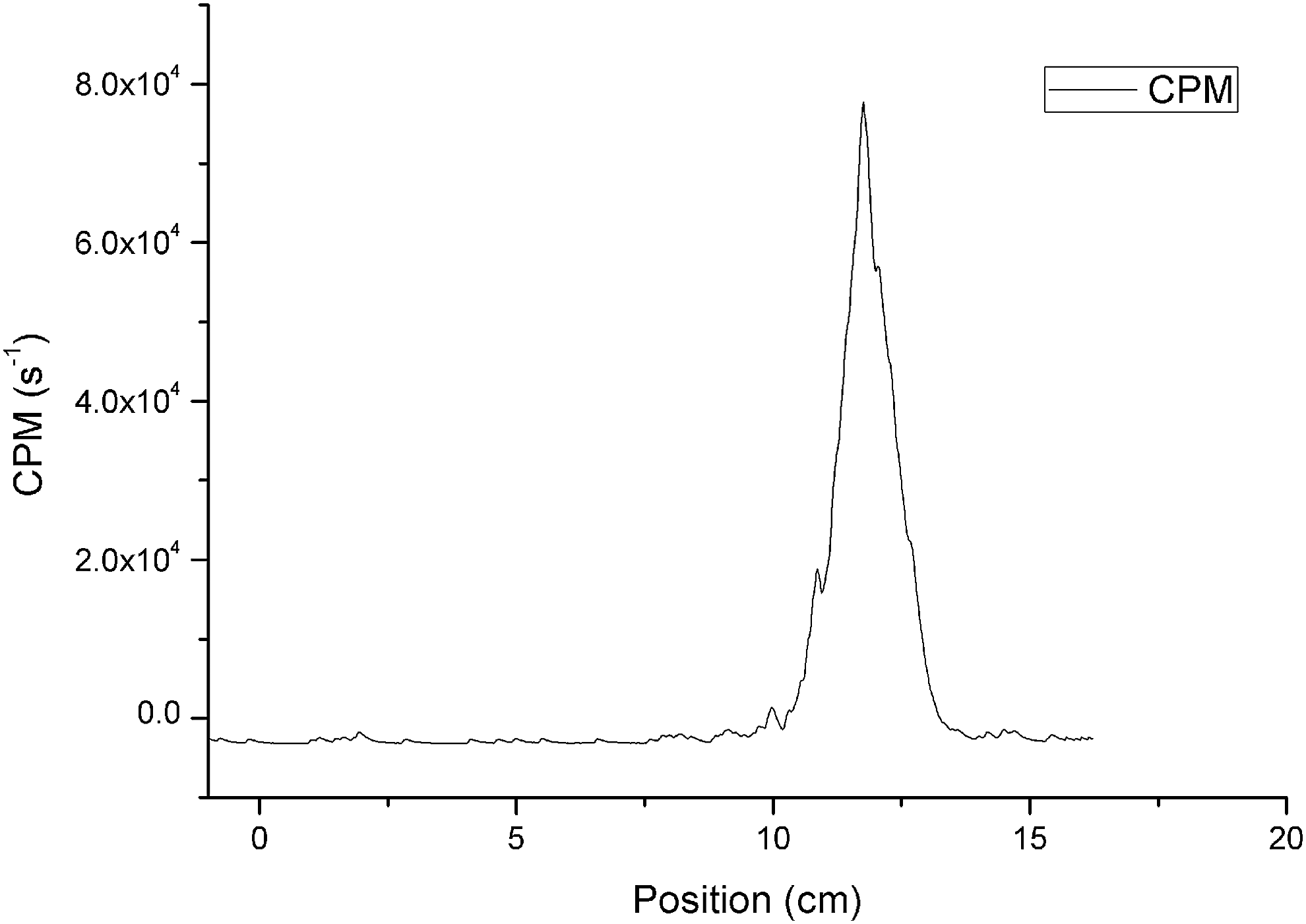
TLC patterns of the stability of 177Lu-DTPA-DG after 24 h (n = 3).
Cellular uptake rates of radiotracers
Figure 5 shows the results of the analysis of the cellular uptake of radiotracers. The uptake rate of 177Lu-DTPA-DG was slightly lower than that of
18
F-FDG but was obviously higher than that of 177Lu-DTPA. The cellular uptake rates of 177Lu-DTPA-DG were higher than those of 177Lu-DTPA (3.66% ± 0.45% vs. 0.10% ± 0.01%, t = 15.879, p = 0.001) at 1 h. As shown in Figure 6, the addition of 1.0 mg

The cellular uptake of 18 F-FDG, 177Lu-DTPA-DG, and 177Lu-DTPA in SMMC-7721 cells at different times (n = 3). FDG, fluorodeoxyglucose.
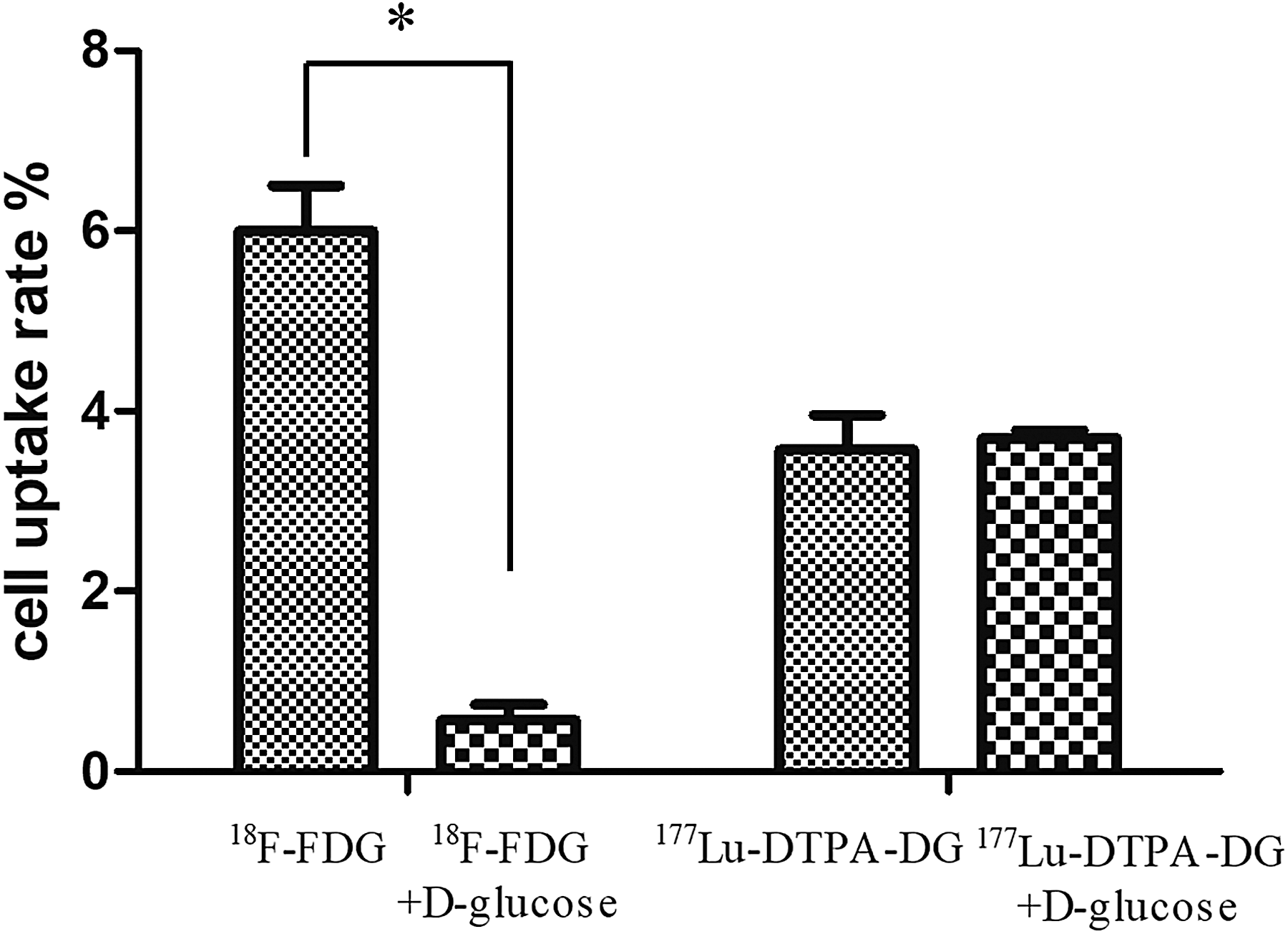
The cellular uptake of
18
F-FDG and 177Lu-DTPA-DG when 1.0 mg
Biodistribution
Table 1 shows the results of the biodistribution studies. The blood and organs were harvested at different time points, and the radioactivity was measured. The mean percentage uptakes of the injected dose per gram of tumors at 1, 4, and 24 h after injection were 3.96 ± 0.49%ID/g, 1.80 ± 0.74%ID/g, and 0.77 ± 0.11%ID/g, respectively. The activity of 177Lu-DTPA-DG decreased with time in all the organs tested. At 24 h postinjection, the radioactivity that accumulated in the blood and organs was <0.85%ID/g. The primary route of clearance was renal. The uptake ratio of the tumor/muscle, tumor/liver, and tumor/blood was 5.07, 3.22, and 3.12, respectively, at 1 h. After 12 d of 177Lu-DTPA-DG treatment, the tumor/blood uptake ratio was 3.09.
177 Lu-DTPA-DG Biodistribution (%ID/g) in SMMC-7721 Tumor-Bearing Nude Mice at 1, 4, and 24 H After Injection (n = 4)
Indicates the biodistribution after 12 d of 177Lu-DTPA-DG treatment.
Lu-DTPA-DG, 177Lu-diethylenetriamine penta-acetic acid-deoxyglucose; %ID/g, percentage uptake of the injected dose per gram.
Imaging
Micro-PET images of nude mice after 18 F-FDG injection and whole-body scintigraphic images after 177Lu-DTPA-DG injection are shown in Figure 7. Both 18 F-FDG and 177Lu-DTPA-DG uptake in tumors in mice could be observed in 4 h. Furthermore, the 177Lu-DTPA-DG was evident in the tumors in mice (Fig. 8B, arrow), but the 177Lu-DTPA uptake at the same location (Fig. 8A) was unremarkable at 90 min after injection.
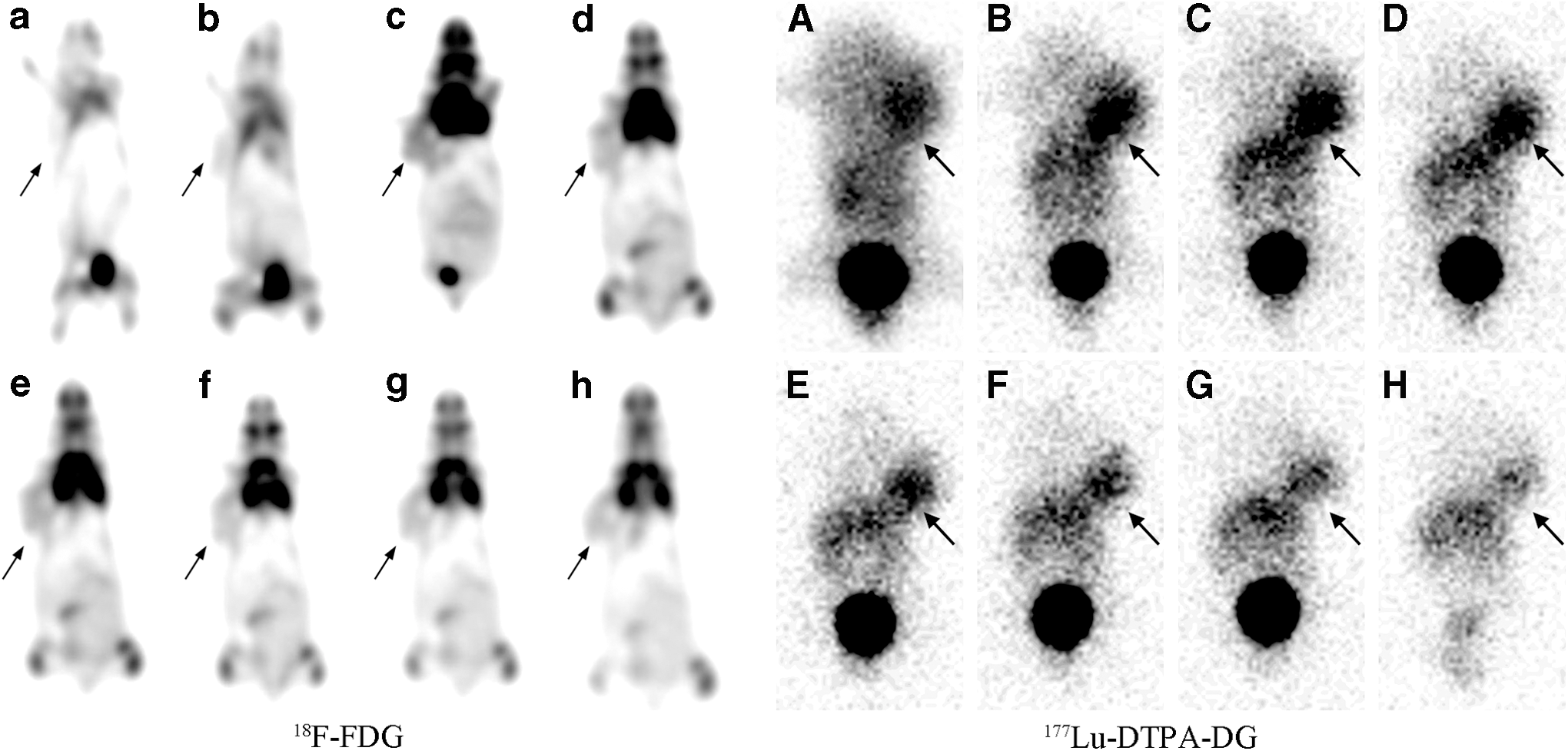
Scintigraphic images were acquired after the injection of
18
F-FDG (0.1 mCi) and 177Lu-DTPA-DG (0.3 mCi) at different times
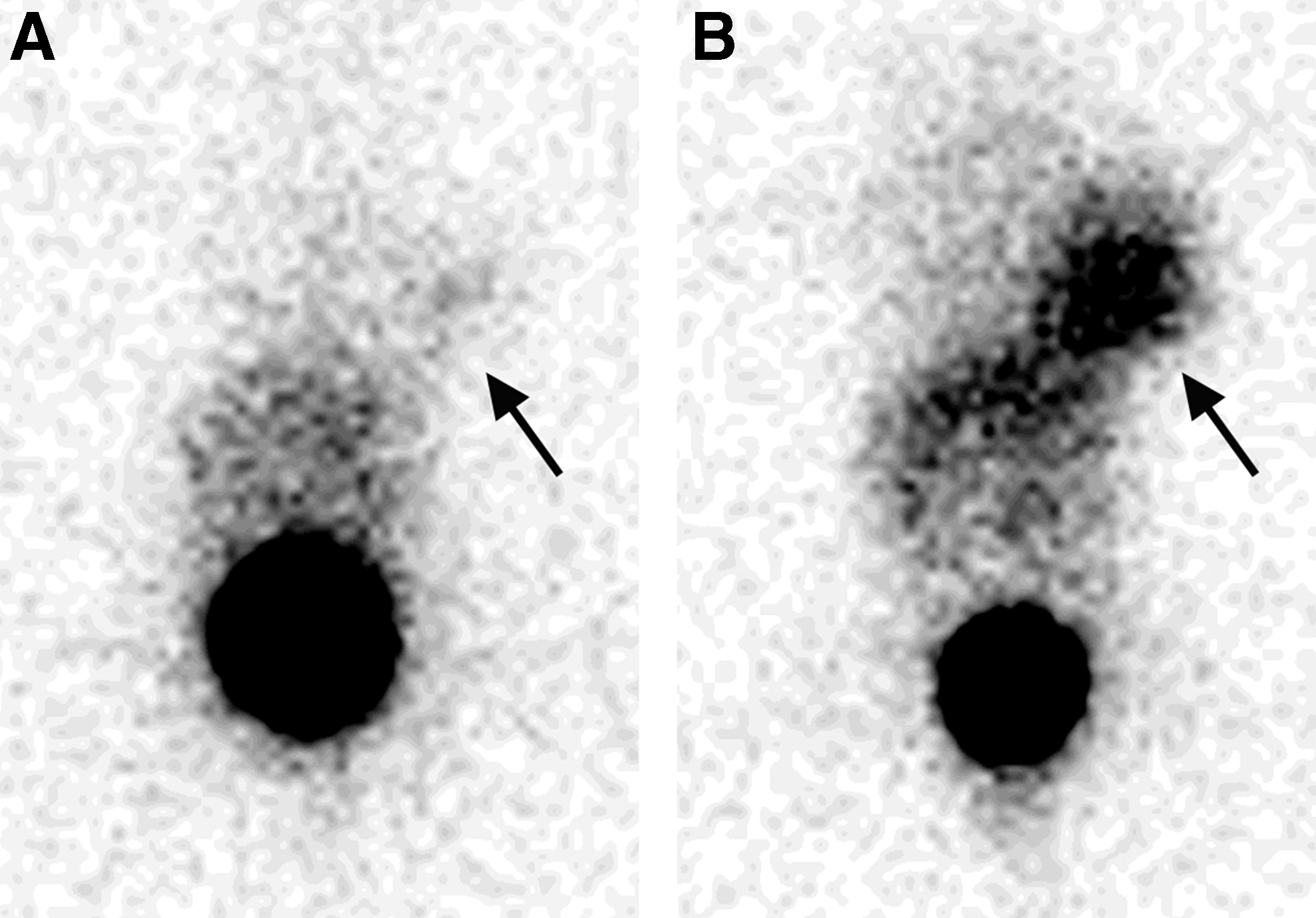
Scintigraphic images were acquired 90 min after the injection of 0.3 mCi 177Lu-DTPA
Radiotherapy
The therapeutic effect of 177Lu-DTPA-DG on tumor-bearing mice was compared with that of 177LuCl3 and normal saline. Kaplan–Meier curves (Fig. 9) demonstrated that mice that received 177Lu-DTPA-DG survived longer than animals that received 177LuCl3 (25.5 d vs. 14.5 d, p = 0.0007, log-rank test) and normal saline (25.5 d vs. 14 d, p = 0.0001, log-rank test). 177Lu-DTPA-DG induced the most efficient tumor growth inhibition. The 177Lu-DTPA-DG group exhibited significantly lower tumor volumes on day 12 than the 177LuCl3 group (268.58 ± 17.96 mm3 vs. 507.43 ± 55.72 mm3, p = 0.002) and the normal saline group (268.58 ± 17.96 mm3 vs. 483.68 ± 27.51 mm3, p < 0.05), as shown in Figure 10.
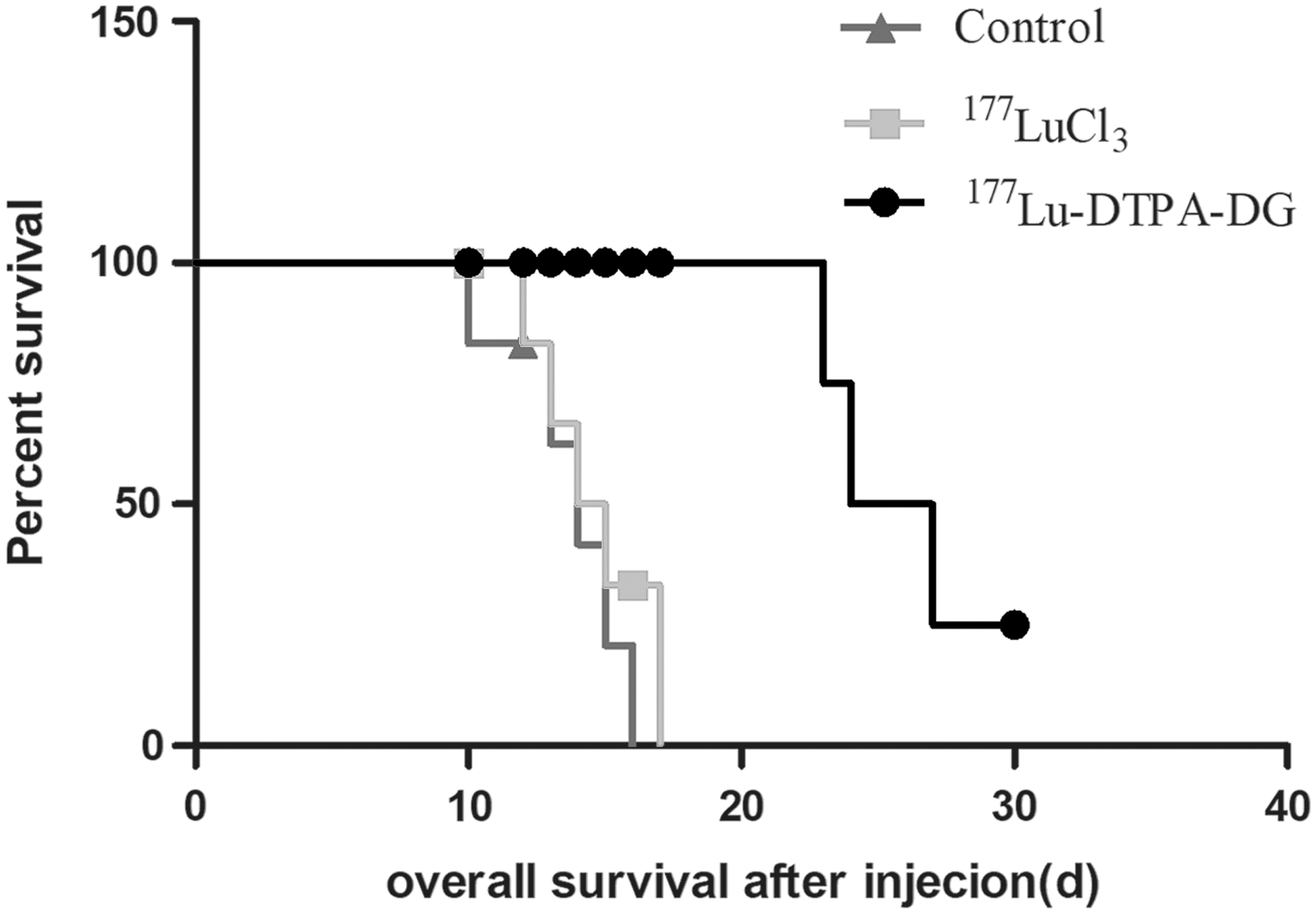
Comparison of the Kaplan–Meier survival curve of the three groups of tumor-bearing mice after treatment (five mice per group).
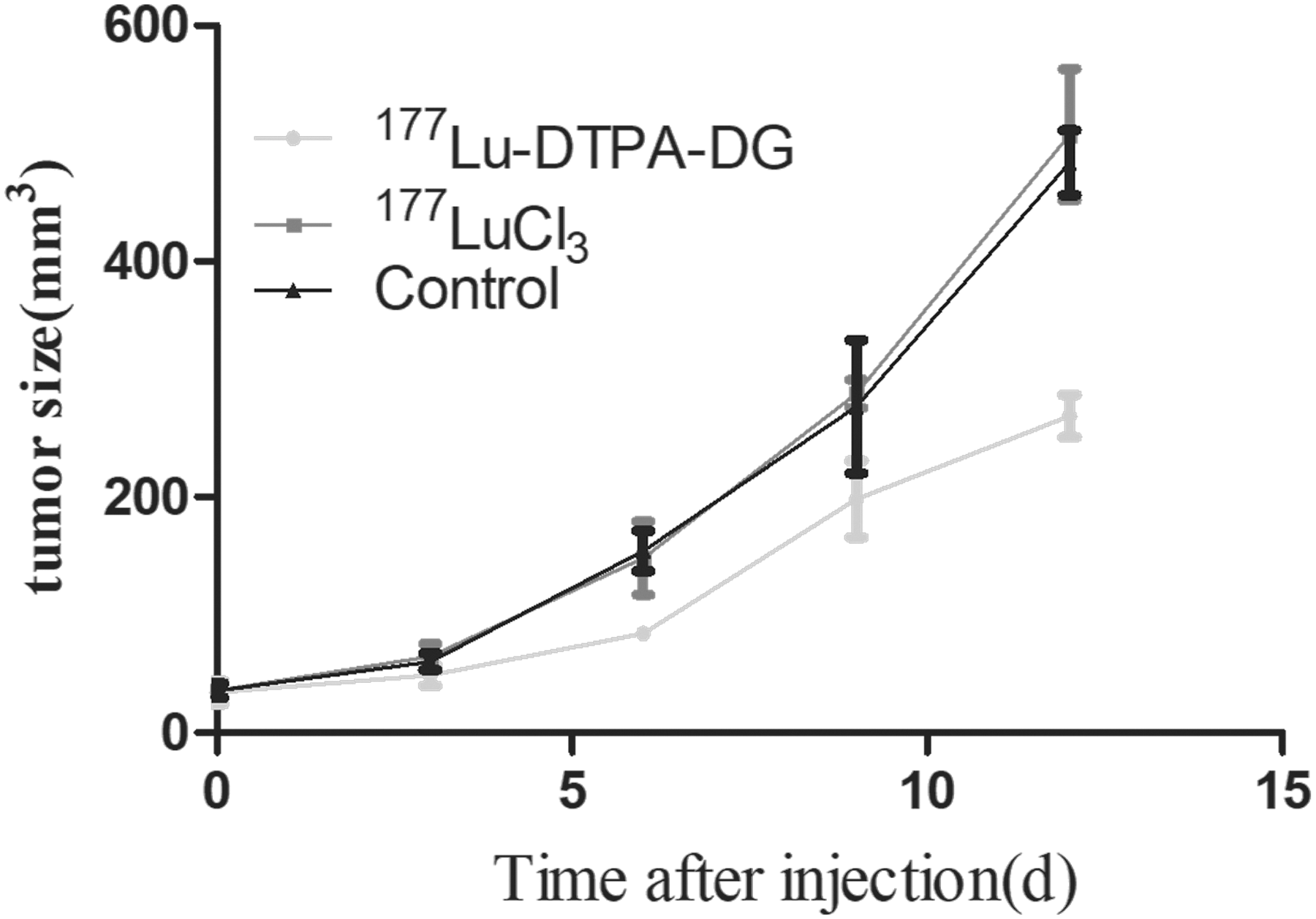
Comparison of the tumor volume within 12 d of treatment in the three groups (five mice per group).
Discussion
In their study, DTPA-DG could be labeled with 177Lu with high efficiency and stability at room temperature. Compared with the 177Lu-DTPA group, the 177Lu-DTPA-DG group showed higher cellular uptake of the radiotracer. In the biodistribution study, the authors also found that the distribution of 177Lu-DTPA-DG in the tumor was higher than that in other organs. The tumor/muscle, tumor/liver, and tumor/blood ratios were high after treatment with 177Lu-DTPA-DG for 12 d. In addition, imaging studies revealed that 177Lu-DTPA-DG injections could clearly identify tumors. These findings suggest that 177Lu-DTPA-DG can enter tumor cells and shows a good Target/Non-Target ratio.
Because tumor cells do not rely on mitochondrial oxidation for energy, most of their energy is generated through glycolysis.
16
Thus, cancer cells show high rates of glucose uptake and glycolysis. To meet the high energy needs of a malignant tumor, GLUTs are highly expressed on tumor cell membranes. There are more than 10 known GLUT subtypes. DTPA-DG is formed by the conjugation of
Radionuclide therapy has become increasingly important for the treatment of malignant tumors. Many new radiotherapy agents for the targeted radiotherapy of tumors have been investigated, including 131I, 21 233Ra, 22 and 188Re. 5 Internal radiotherapy is a viable method for the treatment of unresectable HCC. The main radiopharmaceuticals used for intra-arterial radionuclide therapy are 90Y-labeled resin and glass microspheres. Two types of 90Y-labeled resin or glass microspheres have been approved by the Food and Drug Administration. 23 Despite some studies showing that this treatment is useful for liver cancer, it may not be appropriate for some patients, such as patients with poor liver reserve function or extrahepatic metastatic disease. 24 Determining the quality and quantity required for 90Y is complicated, 25 and the high cost and limited supply limit its clinical use. 90Y emits pure β−-particles with a half-life of 64.1 h. Since 90Y lacks γ-emission, it is not easy to obtain any information about the positioning and biological distribution of 90Y microspheres in patients by imaging after the administration of a therapeutic dose. 177Lu has some physical characteristics that make it a promising radioisotope for radioimmunotherapy. One of the advantages of 177Lu is that it can be inexpensively produced on a large scale. 9 In their study, mice that received 177Lu-DTPA-DG survived longer and had slower tumor growth than mice in the other groups. These results regarding the therapeutic response suggest that 177Lu-DTPA-DG may be an efficient radiotherapeutic agent.
A previous study showed that 188Re-DTPA-DG had an apoptotic effect on carcinoma cells. 26 Both 188Re and 177Lu can emit γ photons for imaging and β−-particles for therapy, but the characteristics of these radionuclides are different. 188Re is obtained from a 188W/188Re generator in clinical settings and has a half-life of 0.7083 d, with a complicated decay mechanism. 27 188Re can emit β−-particles with maximum and mean energies of 2.12 and 0.76 MeV, respectively, 27 and the mean penetration distance in tissue is 3.8 mm. Compared with 188Re, the 177Lu decay mechanism is simple, with a half-life of 6.646 d, and the average soft tissue penetration distance is 2 mm, which is more suitable for small tumor radionuclide therapy. A large amount of 177Lu can be obtained at one time through neutron irradiation energy in a nuclear reactor. The suitable half-life not only ensures the time required for radiolabeling and quality control but also provides a strong logistical advantage for site transportation away from radioisotope production sites or radioactive centers.
Conclusions
In their study, DTPA-DG could be labeled with 177Lu with a high radiochemical purity. The in vitro stability of the complex was found to be adequate. The results of cellular uptake, biodistribution, imaging, and radiotherapeutic studies indicate that 177Lu-DTPA-DG could become a liver radiopharmaceutical agent, and this promising result deserves further study.
Footnotes
Disclosure Statement
There are no existing financial conflicts.
Funding Information
There was no funding received for this article.