




Abstract
Backgrounds:
LncRNA long intergenic non-protein coding RNA p53 induced transcript (LINC-PINT) is downregulated in multiple types of cancer cells. The authors explored the possible involvement of LINC-PINT in esophageal squamous cell carcinoma (ESCC).
Materials and Methods:
Sixty-two patients with early-stage ESCC were included in this study. Reverse transcription-polymerase chain reaction (RT-PCR) was used to detect gene expression in plasma from ESCC patients and healthy controls. Diagnostic analysis was performed by receiver operating characteristic (ROC) curve. Transfections were performed to analyze gene interactions. Cell invasion and migration were analyzed by Transwell assays.
Results:
Plasma LINC-PINT was downregulated and microRNA (miRNA)-21 was upregulated in early-stage ESCC patients. Diagnostic analysis by ROC curve revealed that downregulation of lncRNA LINC-PINT distinguished ESCC patients from healthy controls. Plasma levels of LINC-PINT and miRNA-21 were negatively correlated in ESCC patients. After surgical resection, only local recurrence was observed during 3-years of follow-up. LINC-PINT expression was further downregulated in recurrent patients but not in nonrecurrent patients. ROC curve analysis revealed that plasma levels of LINC-PINT at 12 months before recurrence can be used to distinguish ESCC patients from healthy controls. Overexpression of LINC-PINT could inhibit the expression of miRNA-21 in human ESCC cells, whereas LINC-PINT expression was not altered by miR-21 overexpression.
Conclusion:
Therefore, downregulation of LINC-PINT participated in the recurrence of ESCC possibly by interacting with miRNA-21.
Introduction
Most oncology research focuses on the development of tumors, but less research is performed on the mechanism of tumor postoperative recurrence directly related to death after surgery. 1,2 Esophageal squamous cell carcinoma (ESCC) is a rare type of human malignancy worldwide, except in China where ESCC is one of the most frequently diagnosed cancers, accounting for >80% of the new cases of ESCC. 3 –5 ESCC is a leading cause of deaths among cancer patients in China owing to its highly aggressive nature. 4 At present, the survival rate for recurrent ESCC patients is still low. 6
MicroRNAs (miRNAs) are a subgroup of noncoding RNAs and play crucial roles in cancer biology. 7,8 MiRNA-21, as an oncogenic miRNA, not only promotes cancer cell proliferation but also directly affects outcomes of cancer therapies. 9,10 MiRNA-21 is overexpressed in ESCC, which predicts poor prognosis of ESCC patients. 11 It has been well established that miRNA-21 mainly targets tumor-suppressive phosphatase and tensin homolog (PTEN) pathway to participate in cancer biology 9,10 ; however, it can also promote cancer development through interactions with long noncoding RNAs, 12 which is another subgroup of noncoding RNAs that with pivotal roles in cancer. 13 LncRNA LINC-PINT inhibits tumor cell invasion in different types of cancers by interacting with multiple cancer-related factors, such as EGR1 and CTNNB1, and downregulation of LINC-PINT has been observed in multiple cancer cells, which can also predict pancreatic cancer. 14,15 This preliminary transcriptome study showed that lncRNA LINC-PINT was downregulated in ESCC and was negatively correlated with miRNA-21 (data not shown). It is found that downregulation of LINC-PINT participated in the recurrence of ESCC possibly by interacting with miRNA-21.
Materials and Methods
Patients and cells
This study included 62 patients with early-stage ESCC (35 men and 27 women, 32–68 years, 50.1 ± 6.1 years). The patients were diagnosed and treated in Sichuan Cancer Hospital from January 2013 to May 2015. Inclusion criteria: (1) initial diagnosis by pathological examinations; (2) patients at stage 0 (n = 12), I (n = 22), or II (n = 28), grade 1 (n = 7), 2 (n = 18), 3 (n = 26), or unknown grade (n = 11), no lymph node spread was observed; (3) patients received surgical resection. Exclusion criteria: (1) patients complicated with other severe clinical disorders, such as other types of malignancies, metabolic disorders, and severe infections; (2) patients died of causes unrelated to ESCC during follow-up; (3) patients who were lost during follow-up. Control group included 55 healthy volunteers (30 men and 25 women, 34–67 years, 50.8 ± 5.7 years). Ethics Committee of Sichuan Cancer Hospital approved this study (No. SCH2012WH77653). All participants signed informed consent.
Hs 285.T and KYSE510 human ESCC cell lines from ATCC were used in this study. RPMI-1640 medium (containing 10% fetal bovine serum [FBS]) was used to cultivate the cells in an incubator (37°C, 5% CO2).
Specimen collection, treatment, and follow-up
Blood (6 mL) was extracted from the day of admission. Treatment approaches were mainly determined according to patients' clinical stages and health conditions. Surgical resection, chemotherapy, radiotherapy, and their combinations were performed. Patients were followed up for 3 years after surgical resection to record recurrence. Patients were visited every 4 months and blood was extracted during each visit. The blood was used to prepare plasma.
RT-qPCR
Total RNA was extracted using Blood/Cell Total RNA Mini Kit (RB050; Geneaid). After reverse transcription performed using Reverse Transcriptase AMV (Sigma-Aldrich) with total RNA as template or miScript II RT Kit (QIAGEN) with miRNA as template, SYBR® Green Quantitative reverse transcription-quantitative polymerase chain reaction (RT-qPCR) Kit (Sigma-Aldrich) or mirVana qRT-PCR miRNA Detection Kit (Thermo Fisher Scientific) was used to prepare qPCR systems. PCRs were performed through following conditions: 95°C for 1 min 15 s, and then 40 cycles of 95°C for 18 s and 58.4°C for 40 s. Primers were synthesized by Sangon (Shanghai, China). GAPDH was used as endogenous control for LINC-PINT and RNU6B (U6) was used as the endogenous control of miRNA-21. Primer sequences were: 5′-CGTGGGAGCCCCTTTAAG-3′ (forward) and 5′-GGGAGGTGGCGTAGTTTCT-3′ (reverse) for LINC-PINT; 5′-CCTCTGACTTCAACAGCGACA-3′ (forward) and 5′-GGTCCAGGGGTCTTACTCC-3′ (reverse) for GAPDH. Forward primer of miR-21 was 5′-TAGCTTATCAGACTGATGT-3′ (forward). Universal reverse primer and U6 primers were included in the kit. Data normalizations were performed using 2−ΔΔCT method. The sample with the biggest ΔCT was set to “1.” All other samples were normalized to this sample to calculate the relative expression levels of LINC-PINT and miR-21.
Cell transfection
LINC-PINT-expressing vectors and empty vectors were constructed and obtained by Sangon. Mimic of miRNA-21 and NC (negative control) miRNA were purchased from Sigma-Aldrich. Cells were cultivated to reach ∼80% confluence before transfection. Vector (12 nM) or miRNA (40 nM) was transfected into cells by Lipofectamine 2000 (11668–019; Invitrogen). NC group included empty vector or NC miRNA transfection. Treatment with Lipofectamine 2000 only was used as a control. Overexpression was confirmed at 24 h after transfection.
Measurement of cell migration and invasion abilities
Cells were collected and 0.1 mL cell suspension containing 3000 cells was transferred to the upper chamber, and the lower chamber was filled with cell culture medium containing 20% FBS. Before invasion assay, membranes were coated with Matrigel (356234; Millipore) for 12 h at room temperature before use. Cells were cultivated for 24 h, followed by the staining of the lower surface of upper chamber membrane for 12 min with 0.5% crystal violet (Sigma-Aldrich) at 25°C. Cells were observed using a light microscope.
Statistical analysis
Experiments were performed three times to obtain consistent data. Correlations LINC-PINT and miRNA-21 were analyzed by Pearson correlation coefficient. Diagnostic values of LINC-PINT for ESCC or recurrence were analyzed by receiver operating characteristic (ROC) curve analysis, which plots the true positive rate against the false positive rate to illustrate the diagnostic ability. Unpaired t-test was used to compare two groups. Paired t-test was used to compare two time points. One-way analysis and Tukey t-test were used to analyze differences among multiple groups. p < 0.05 indicated a statistically significant difference.
Results
LINC-PINT and miRNA-21 were dysregulated in early-stage ESCC patients
The expression levels of LINC-PINT and miRNA-21 in plasma from both ESCC patients and healthy controls were detected by RT-qPCR. It was observed that the LINC-PINT levels in plasma of ESCC patients were significantly lower than healthy controls (Fig. 1A, p < 0.05). However, miRNA-21 was upregulated in ESCC patients in comparison with healthy controls (Fig. 1B, p < 0.05).

LINC-PINT was downregulated and miRNA-21 was upregulated in early-stage ESCC patients. RT-qPCR results showed that, compared with healthy controls, expression levels of plasma LINC-PINT were significantly lower
Downregulation of lncRNA LINC-PINT separated ESCC patients from healthy controls
Diagnostic value of LINC-PINT for ESCC was analyzed by ROC curve analysis. With healthy controls as true negative cases, area under the curve was 0.8622 (p < 0.0001; standard error: 0.03452; 95% confidence interval: 0.7945–0.9298, Fig. 2).
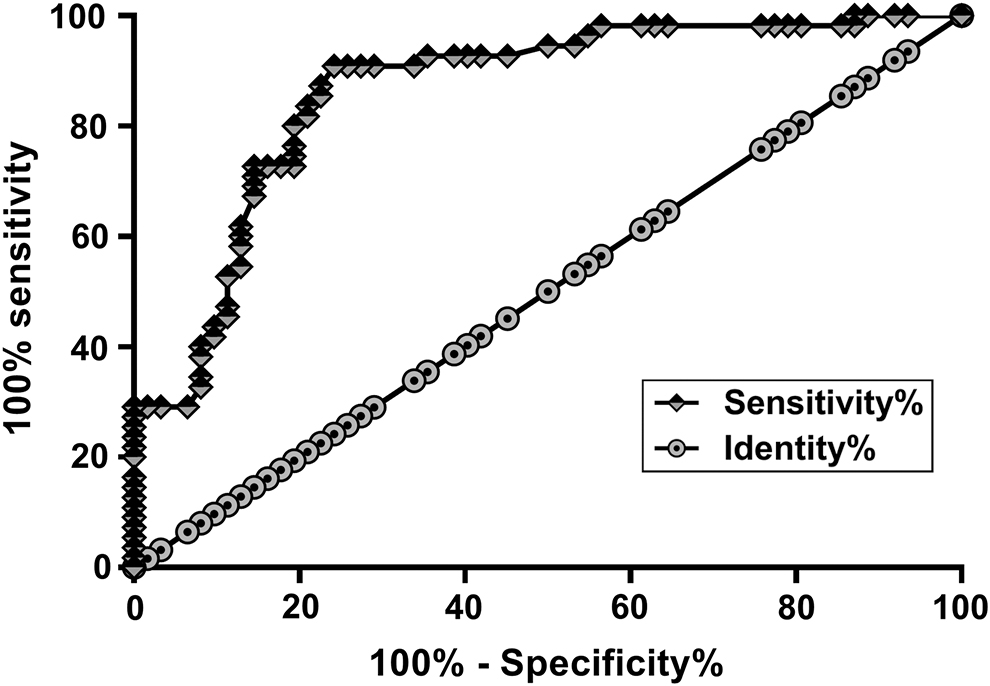
Downregulation of LINC-PINT separated ESCC patients from healthy controls. ROC curve analysis showed that downregulation of lncRNA LINC-PINT separated ESCC patients from healthy controls. ROC, receiver operating characteristic.
LINC-PINT and miRNA-21 were inversely correlated in ESCC patients
Correlations between LINC-PINT and miRNA-21 were analyzed by Pearson correlation coefficient. In ESCC patients, plasma levels of LINC-PINT and miRNA-21 were negatively and significantly correlated (Fig. 3A, p < 0.05). However, the correlation between plasma levels of LINC-PINT and miRNA-21 was not significant in healthy controls (Fig. 3B, p < 0.05).

LINC-PINT and miRNA-21 were inversely correlated in ESCC patients. Pearson correlation coefficient showed that expression levels of LINC-PINT and miRNA-21 were inversely correlated in ESCC patients
Recurrence of ESCC accompanied by downregulation of LINC-PINT
During 3 years of follow-up, 28 out of the 62 ESCC patients experienced local recurrence, no distant recurrence was observed. As shown in Figure 4, continuous decrease of plasma levels of LINC-PINT were observed in the 28 recurrent cases (p < 0.05) but not in the 34 nonrecurrent cases.
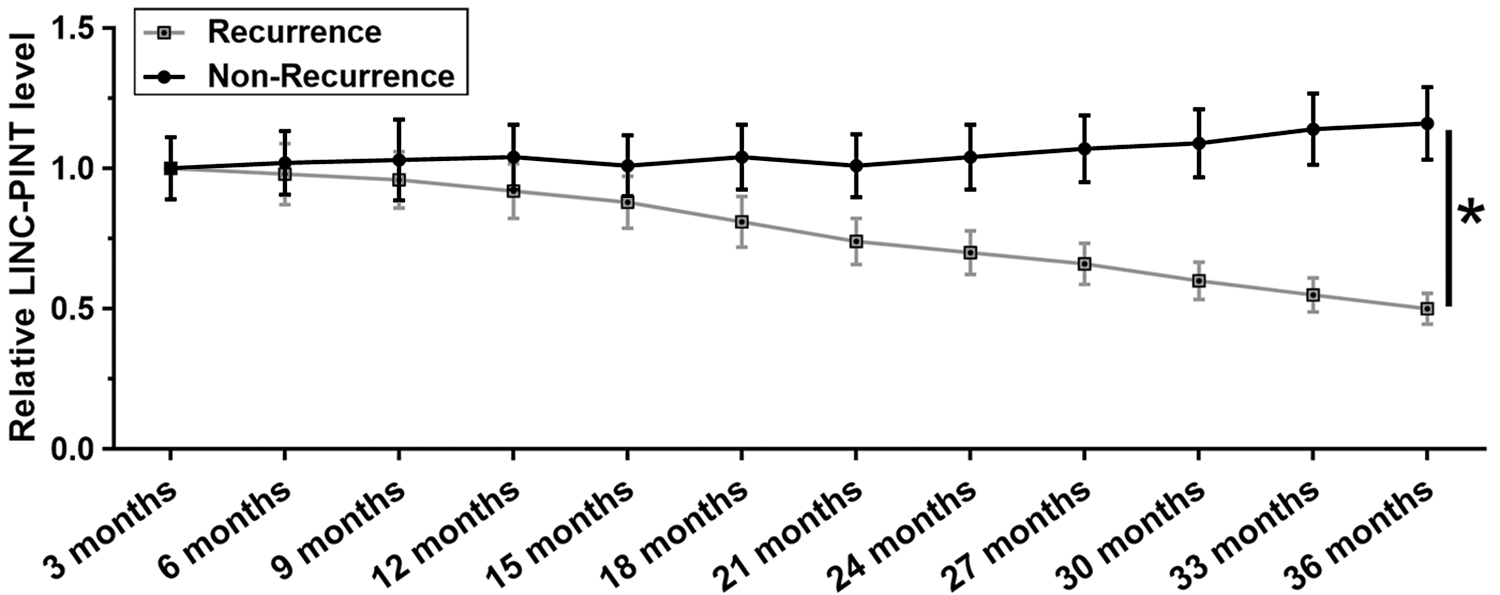
LINC-PINT was further downregulated in patients with recurrence during follow-up (*, p < 0.05).
Plasma levels of LINC-PINT at 12 months before occurrence distinguished ESCC patients from healthy controls
ROC curve analysis was performed to evaluate the plasma levels of LINC-PINT. In this analysis, patients without recurrence were true negative cases and patients with recurrence were true positive cases. As shown in Figure 5, plasma levels of LINC-PINT at 12 months before occurrence could distinguish patients with ESCC from controls (area under the curve: 0.8126; standard error: 0.02755; 95% confidence interval: 0.7567–0.9012, p < 0.001). Plasma levels of LINC-PINT detected before this time point (12 months before recurrence) failed to diagnose ESCC.
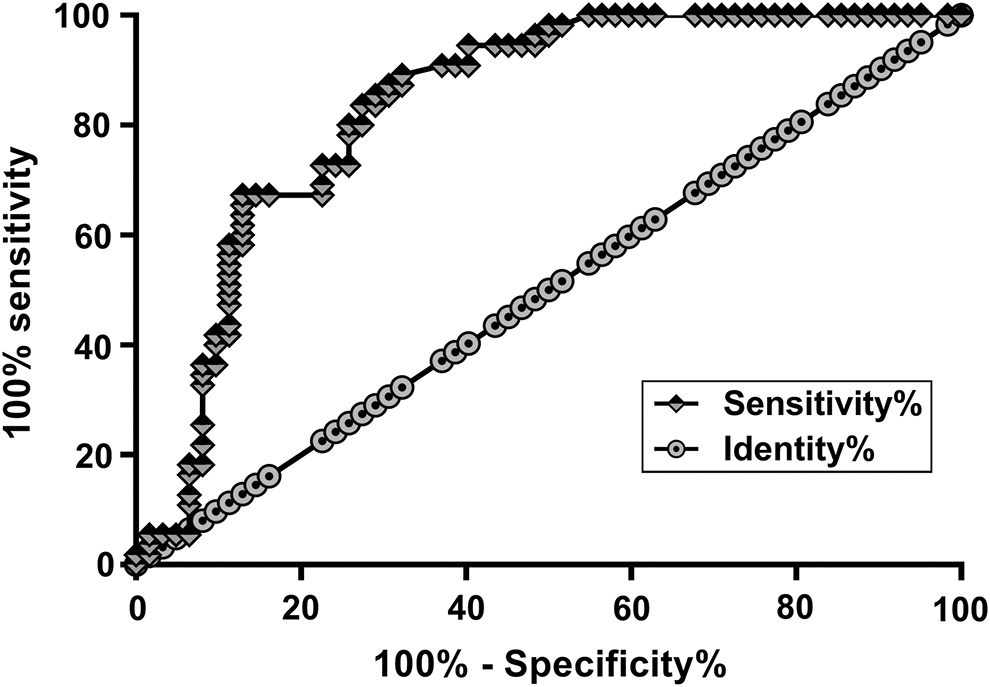
Plasma levels of LINC-PINT at 12 months before occurrence distinguished ESCC patients from healthy controls.
LINC-PINT overexpression led to inhibited miRNA-21
As shown in Figure 6A, LINC-PINT and miRNA-21 significantly upregulated in cells of both Hs 285.T and KYSE510 cell lines compared with NC (cells transfected with empty vector) and control (C, untransfected cells) (p < 0.05). LINC-PINT overexpression could inhibit the expression of miRNA-21 (Fig. 6B, p < 0.05). However, upregulated miRNA-21 did not affect the expression of LINC-PINT (Fig. 6C).
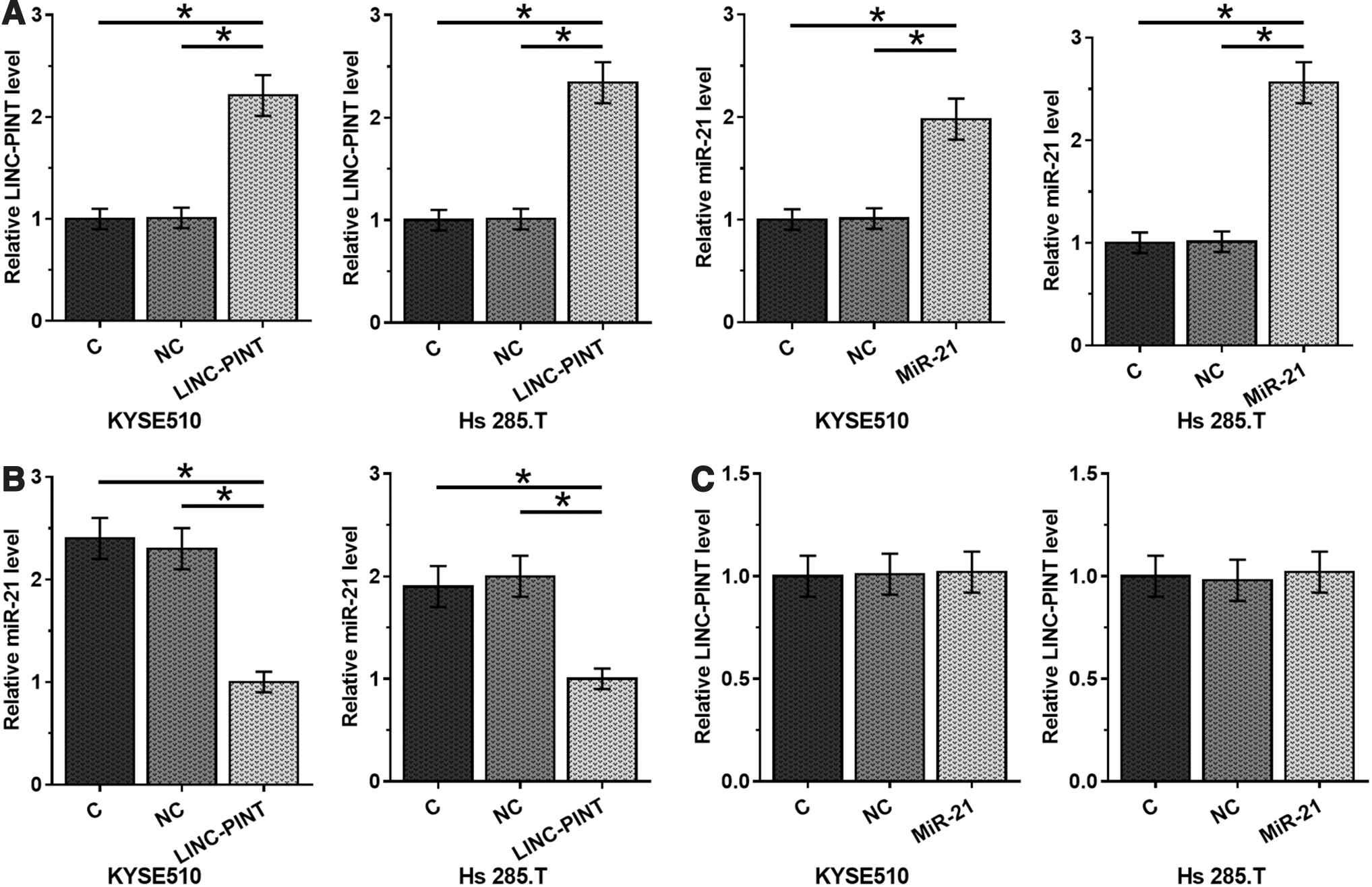
LINC-PINT overexpression led to inhibited miRNA-21 expression in cells of ESCC cell lines. Overexpression of LINC-PINT and miRNA-21 were reached in cells of both Hs 285.T and KYSE510 cell lines
LINC-PINT overexpression inhibits ESCC cell migration and invasion through miRNA-21
Compared with NC (cells transfected with empty vector) and control (C, untransfected cells), overexpression of LINC-PINT significantly inhibited migration (Fig. 7A) and invasion (Fig. 7B) of cells of both Hs 285.T and KYSE510 cell lines (p < 0.05), whereas miRNA-21 overexpression significantly promoted. Moreover, overexpression miRNA-21 reduced the inhibitory effects of LINC-PINT overexpression (p < 0.05).
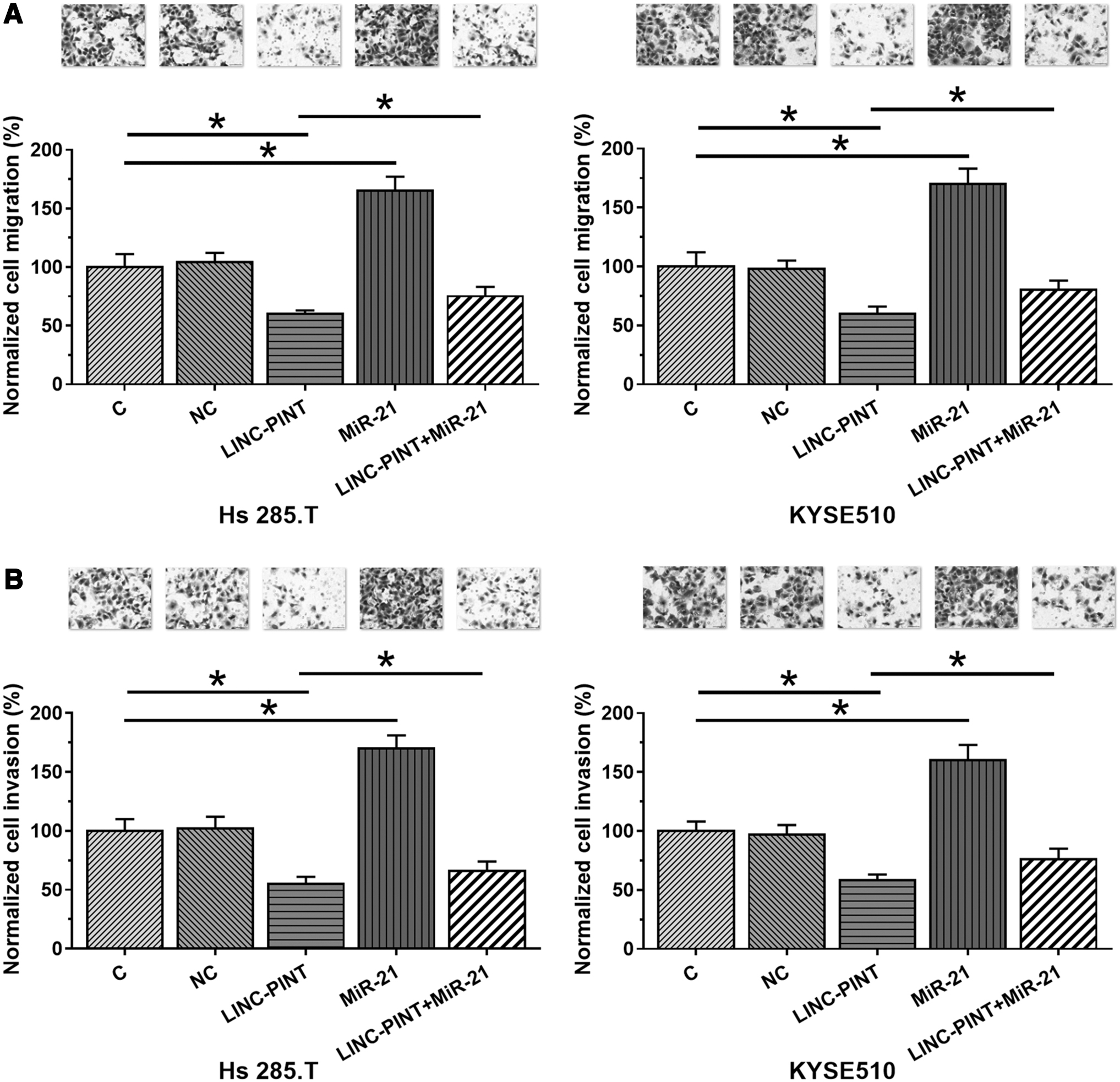
LINC-PINT overexpression inhibits ESCC cell migration and invasion through miRNA-21. Overexpression of LINC-PINT led to significantly inhibited, whereas miRNA-21 overexpression led to significantly promoted migration
Discussion
In this study, it is found that LINC-PINT was downregulated in ESCC, which was consistent with previous research. 14 Downregulation of LINC-PINT can be used to diagnose ESCC and predict the recurrence of ESCC. The authors also revealed that the roles of LINC-PINT in ESCC might be mediated by its interactions with miRNA-21.
MiRNA-21 is a well-established oncogenic miRNA in the development of different types of human malignancies, whose upregulation can promote migration, proliferation, and invasion of cancer cells. 9 Expression levels of miRNA-21 were also directly correlated with the treatment outcomes of cancer therapy. 10 The authors also reported the overexpression of miRNA-21 in ESCC patients.
LINC-PINT is considered as a tumor suppressor lncRNA partially due to its downregulation in different types of cancer cells. 14 Because of the high mortality rate of patients with metastatic ESCC, early diagnosis followed by active therapy is extremely critical for the treatment of this disease. 16,17 In the study, the authors found that downregulated LINC-PINT could effectively distinguish ESCC patients from healthy controls, indicating that plasma circulating miRNA-21 might be used to diagnose ESCC at early stages.
Interestingly, this study observed downregulated plasma LINC-PINT only in patients with recurrence during follow-up. Therefore, downregulation of LINC-PINT is likely to be a contributor to the postoperative recurrence of ESCC. This speculation is supported by the results of in vitro cell migration and invasion assay. More importantly, this study revealed that plasma levels of LINC-PINT were sufficient to distinguish recurrent patient from nonrecurrent patients at 12 months before the diagnosis of recurrence. Therefore, this study provided a biomarker that could guide the prevention of ESCC recurrence after surgical resection. However, more clinical studies are needed to further confirm the application potential.
This study also observed a significantly reverse correlation between LINC-PINT and miRNA-21 in ESCC patients. The in vitro cell experiments suggested that LINC-PINT might be an upstream activator of miRNA-21. However, the data also showed that LINC-PINT did not interact with miRNA-21 directly. This conclusion is based on the observation that correlation between the expression levels of LINC-PINT and miRNA-21 was not significant in healthy controls. Owing to lack of complete medical record of some patients, this study failed to compare the recurrence rate among patients with different cancer grades. In future research, the authors will try to perform more comprehensive investigations.
Conclusion
In conclusion, LINC-PINT was downregulated and miRNA-21 was upregulated in ESCC. Downregulation of LINC-PINT participated in the recurrence of ESCC possibly by interacting with miRNA-21.
Ethics Approval and Consent to Participate
All procedures followed were in accordance with the ethical standards of the responsible committee on human experimentation (institutional and national) (No. SCH2012WH77653) and with the Helsinki Declaration of 1964 and later versions. Informed consent or substitute for it was obtained from all patients for being included in the study.
Footnotes
Authors' Contributions
H.R. did the experimental work, clinical research, and article writing. B.C. performed data analysis, literature research, and article writing. K.M., X.W., and J.P. were in charge of experiments work, data collection, and data analysis. J.Z. put a lot of effort on the experiment design and article revision. The final version was approved by all authors.
Disclosure Statement
No competing financial interests exist.
Funding Information
No funding was received for this article.