




Abstract
Background:
Glioma is a malignant brain tumor with poor prognosis. Sevoflurane has been shown to have antitumor effects in various cancers. However, the underlying role and mechanism of sevoflurane in glioma is still unclear.
Materials and Methods:
Glioma cell lines were exposed different concentrations of sevoflurane (sev). The cell proliferation and migration were examined by Cell Counting Kit-8 (CCK-8) and Transwell assays, respectively. All protein levels were measured by Western blot. The levels of noncoding RNA in the INK4 locus (ANRIL) and let-7b-5p were detected by quantitative real-time polymerase chain reaction. The binding sites between ANRIL and let-7b-5p were predicted by StarBase v.3.0 and confirmed using dual-luciferase reporter assay.
Results:
Sevoflurane treatment suppressed proliferation and migration of glioma cells. The expression of ANRIL was downregulated in glioma cells after treatment with sevoflurane in a dose-dependent manner, and overexpression of ANRIL reversed sevoflurane-induced inhibition of proliferation and migration of glioma cells. Furthermore, let-7b-5p was targeted by ANRIL, and ANRIL knockdown recovered the promoting effects of silencing let-7b-5p on proliferation, migration, and JAK2/STAT3 pathway in sevoflurane-treated glioma cells.
Conclusions:
Sevoflurane hindered proliferation and migration through JAK2/STAT3 pathway mediated by ANRIL and let-7b-5p in glioma cells, indicating a new reference for the application of anesthetics like sevoflurane in glioma.
Introduction
Glioma is a kind of primary intracranial tumor, which mainly occurs in the adult central nervous system with high mortality. 1,2 Surgical removal of the tumor is still the primary treatment for glioma, but patients diagnosed with glioma are often in an advanced stage. 3 Thus, it is urgent to investigate the potential biomarkers and therapeutic targets for early diagnosis of glioma.
Cell migration is thought to be one of the main characteristics of tumor metastasis. 4 Anesthetics have been shown to affect the migration of tumor cells and are associated with postoperative recovery. 5 Therefore, to avoid retransmission of tumor cells during surgery, it is vital to select anesthetics with the properties of inhibiting tumor cell proliferation and migration. Sevoflurane can protect brain function and is often used as an anesthetic for neurosurgery. It has been confirmed that sevoflurane inhibited cell migration and invasion in colorectal cancer. 6 Ding et al. demonstrated that sevoflurane could hinder growth and migration of cervical cancer cells. 7 Yi et al. also indicated that sevoflurane restrained glioma cell migration and invasion. 8 Nevertheless, the related mechanisms of sevoflurane in glioma are unclear.
Long noncoding RNA (lncRNA) is currently the most attractive RNA with a length of more than 200 nucleotides. 9 lncRNA could participate in kinds of cellular biological processes containing proliferation and migration. 10 Many reports have confirmed that lncRNAs were involved in the regulation of glioma development. For instance, lncRNA SNHG20 promoted proliferation of glioma cells. 11 Interference with lncRNA PEG10 impaired proliferation and metastasis of glioma cells. 12 lncRNA in the INK4 locus (ANRIL) has previously been reported to affect the progression of several cancers; it was obviously enhanced in retinoblastoma, 13 gastric cancer, 14 and colorectal cancer 15 as an oncogene. ANRIL facilitated the progression of these cancers by affecting cell growth and metastasis. Furthermore, it has been reported that ANRIL knockdown impeded growth and metastasis of glioma cells. 16 However, the exact role of ANRIL in glioma remains not clear.
MicroRNAs (miRNAs) are also small ncRNA molecules, and they can regulate various biological behaviors by affecting the expression of target genes. 17,18 let-7b-5p is a member of the let-7 family and plays a vital regulatory role in the cell cycle and differentiation. let-7b-5p has been identified as a tumor-inhibiting factor in multiple myeloma. 19,20 In addition, Xi et al. indicated that let-7b-5p hindered metastasis and cell cycle of glioma cells. 21 But the role of let-7b-5p in glioma has not been fully elucidated.
In this study, the impacts of sevoflurane on glioma cell proliferation and migration were first investigated, then, the authors explored the role of the sevoflurane/ANRIL/let-7b-5p network on proliferation, migration, and JAK2/STAT3 pathway of glioma cells. This research on sevoflurane was expected to provide new targets for the treatment of glioma.
Materials and Methods
Cell culture and exposure to sevoflurane
Human microglia cell line H123 and glioma cell lines U251 and LN229 were obtained from Procell (Wuhan, China). Cells were cultured in Dulbecco's modified Eagle's medium (Gibco, Carlsbad, CA) containing 10% fetal bovine serum (Hyclone, South Logan, UT) and 1% penicillin/streptomycin (Psaitong, Beijing, China) at 37°C with 5% CO2.
For sevoflurane exposure, U251 and LN229 cells were tiled to plates; the next day, the plates were placed in an airtight chamber linked to an anesthesia machine (Mindray, Shenzhen, China), a Datum L vaporizer (Huanxi Medical, Shanghai, China) was used to fill sevoflurane into the chamber, and the concentrations of sevoflurane were detected using a gas monitor (Honeywell, Morris, NJ). The cells were treated with different concentrations (1%, 2%, or 4%) of sevoflurane for 6 h, and then other tests were carried out as needed.
Cell proliferation assay
U251 and LN229 cells were plated and incubated in 96-well plates at 37°C following the aforementioned treatment (1%, 2%, or 4% of sevoflurane). At different time points (0, 24, 48, or 72 h) after transfection, 10 μL of Cell Counting Kit-8 (CCK-8; Beyotime, Shanghai, China) was added to the wells and incubated for 4 h. The absorbance at 450 nm was examined with a microplate reader (Promega Corporation, Fitchburg, WI).
Cell migration assay
The migration of U251 and LN229 cells was detected through Transwell assay without Matrigel. The starved glioma cells were suspended in 100 μL serum-free medium and then added to the upper chamber, and 600 μL of complete medium was filled with the lower chamber. Following the cultivation for 24 h, the cells attached to the lower surface were fixed and stained with 0.1% crystal violet (Psaitong) for 20 min and then counted by microscope (Olympus, Tokyo, Japan).
Western blot assay
The proteins of U251 and LN229 cells were lysed using RIPA buffer (Beyotime). Proteins were then separated and transferred to polyvinylidene difluoride membranes (Solarbio, Beijing, China). After soaking in 5% milk powder for 1 h, the membranes were incubated with primary antibodies (Cyclin D1, 1:200; Vimentin, 1:2000; matrix metalloprotein-9 [MMP-9], 1:2000; phosphorylation-JAK2 (p-JAK2), 1:1000; JAK2, 1:2000; phosphorylation-STAT3 [p-STAT3], 1:1000; and STAT3, 1:1000) overnight at 4°C; these antibodies were obtained from Thermo Fisher Scientific (Waltham, MA). Next, the membranes were incubated with secondary antibodies (1:3000, Thermo Fisher Scientific) for 1 h. Finally, the bands were examined using a BeyoECL Plus ECL Kit (Beyotime).
Quantitative real-time polymerase chain reaction
Total RNA was isolated from U251 and LN229 cells by TRIzol reagent (Invitrogen, Carlsbad, CA) and reversely transcribed to cDNA using a PrimeScript™ RT Reagent Kit (Takara Biotechnology, Wuhan, China), and quantitative real-time polymerase chain reaction (qRT-PCR) was conducted on AB7300 thermo-recycler system (Applied Biosystems, Foster City, CA) using SYBR® Premix Ex Taq™ II Kit (Takara Biotechnology). For analysis of ANRIL level, glyceraldehyde-3-phosphate dehydrogenase (GAPDH) was used as the internal control, and the expression of let-7b-5p was normalized to the expression of U6. The relative expression was calculated by the 2−ΔΔCt method. The sequence of primers: ANRIL forward: 5′-TGCTCTATCCGCCAATCAGG-3′; reverse: 5′-GGGCCTCAGTGGCACATACC-3′. GAPDH forward: 5′-TATGATGATATCAAGAGGGTAGT-3′; reverse: 5′-TGTATCCAAACTCATTGTCATAC-3′. let-7b-5p forward: 5′-ATCCAGTGCGTGTCGTG-3′; reverse: 5′-TGCTTGAGGTAGTAGGTTG-3′. U6 forward: 5′-AACGCTTCACGAATTTGCGT-3′; reverse: 5′-CTCGCTTCGGCAGCACA-3′.
Transfection
The overexpressed plasmid of pcDNA-ANRIL (ANRIL) and the control pcDNA (vector), small interfering RNA (siRNA) against ANRIL (si-ANRIL-1 or si-ANRIL-2) and the control si-NC, let-7b-5p-mimics and the control mimics-NC, and let-7b-5p inhibitor (anti-let-7b-5p) and the control inhibitor-NC (anti-NC) were synthesized by RiboBio (Guangzhou, China). Lipofectamine 2000 was applied for transfection (Invitrogen).
Dual-luciferase reporter assay
Wild ANRIL sequence containing let-7b-5p binding sites or ANRIL mutant sequence without let-7b-5p binding sites was cloned into the pmirGLO vector (Promega) to generate ANRIL-WT or ANRIL-MUT, respectively. Then, the constructs of ANRIL-WT or ANRIL-MUT and let-7b-5p-mimics or mimics-NC were cotransfected into U251 and LN229 cells, 24 h after transfection, and the relative luciferase activity was assessed by a Dual-Luciferase Reporter Kit (Promega).
Statistical analysis
The data were shown as mean ± standard deviation and repeated at least thrice. Student's t-test was used for statistical analysis. The p-value <0.05 was considered as significantly different.
Results
Sevoflurane repressed glioma cell proliferation and migration
To test the effect of sevoflurane on the proliferation of glioma cells U251 and LN229, different concentrations of sevoflurane were used to treat glioma cells. CCK-8 assay results showed that treatment with 1%, 2%, or 4% of sevoflurane obviously hindered proliferation of U251 and LN229 cells in a dose-dependent and time-dependent manner compared with no treatment (Fig. 1A). The role of sevoflurane at different concentrations on glioma cell migration was detected by Transwell assay. As shown in Figure 1B, treatment with 1%, 2%, or 4% of sevoflurane significantly impeded cell migration in a dose-dependent and time-dependent manner compared to control in U251 and LN229 cells. To further verify these results, the authors measured the protein levels of Cyclin D1, Vimentin, and MMP-9 in U251 and LN229 cells by Western blot. The data indicated that 1%, 2%, or 4% sevoflurane downregulated the protein levels of Cyclin D1, Vimentin, and MMP-9 in a dose-dependent manner (Fig. 1C, D). In general, sevoflurane could restrain proliferation and migration of glioma cells.

Sevoflurane repressed glioma cell proliferation and migration. U251 and LN229 cells were treated without (control) or with sevoflurane at 1%, 2%, or 4% concentrations, respectively.
Sevoflurane downregulated the expression of ANRIL in glioma cells
First, the authors examined the expression of ANRIL in glioma cells; qRT-PCR results showed that the expression of ANRIL was markedly increased in human glioma cell lines U251 and LN229 compared with that in human microglia cell line H123 (Fig. 2A). Meanwhile, the authors found that ANRIL expression in U251 and LN229 cells was significantly reduced by the treatment of sevoflurane in a dose-dependent manner (Fig. 2B). Sevoflurane at a concentration of 4% was used for further tests.
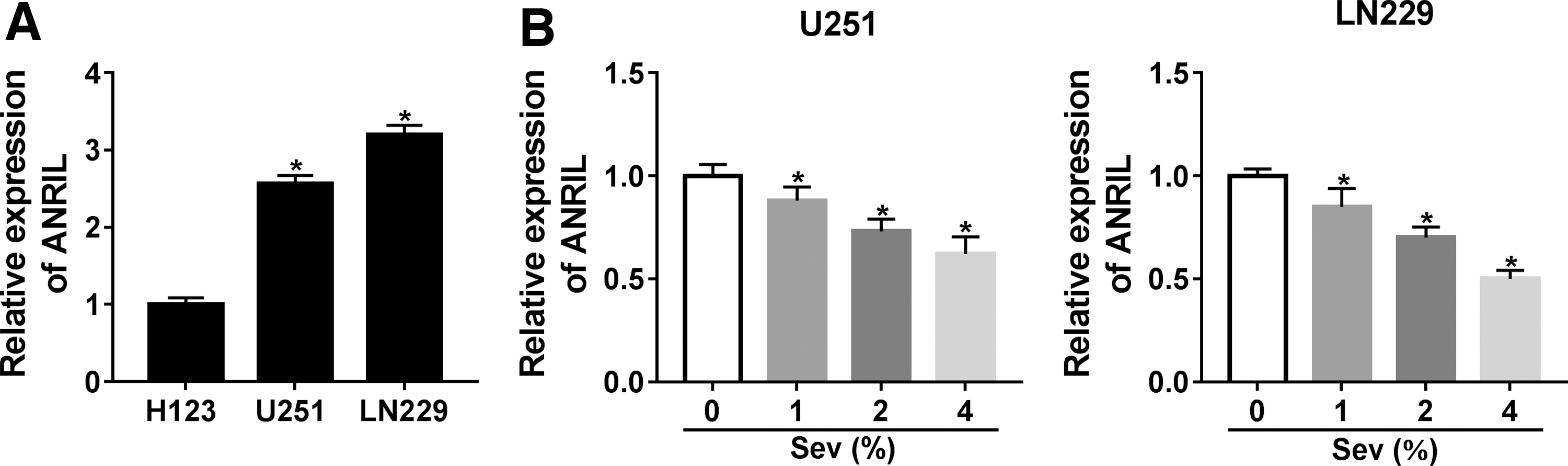
Sevoflurane downregulated the expression of ANRIL in glioma cells.
Overexpression of ANRIL restored the inhibitory effects of sevoflurane on the proliferation and migration of glioma cells
To investigate the effect of ANRIL on glioma cell process, the overexpressed plasmid of ANRIL was transfected into glioma cells after the treatment of sevoflurane. The transfection efficiency was first detected by qRT-PCR, and ANRIL expression was remarkably augmented in U251 and LN229 cells transfected with ANRIL relative to that cells transfected with pcDNA vector (Fig. 3A). In addition, the level of ANRIL was recovered by overexpressing ANRIL in U251 and LN229 cells after the treatment of sevoflurane (Fig. 3B). In addition, the ANRIL overexpression inverted the decrease of cell proliferation and migration induced by sevoflurane in U251 and LN229 cells (Fig. 3C, D) and also restored the declined protein levels of Cyclin D1, Vimentin, and MMP-9 induced by sevoflurane (Fig. 3E, F). These results signified that ANRIL promoted glioma cell proliferation and migration and overturned the inhibition of sevoflurane on cell proliferation and migration.
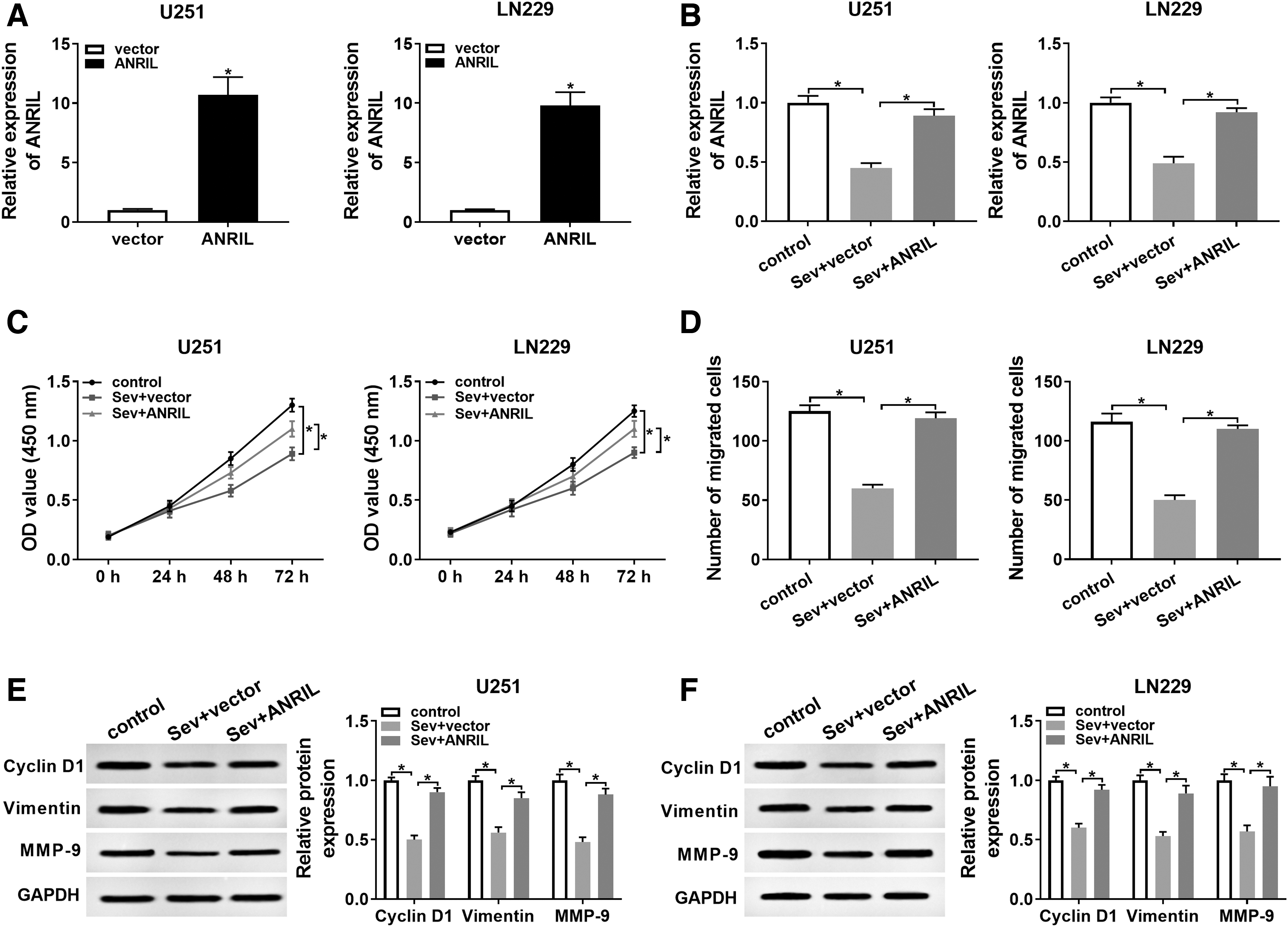
ANRIL overexpression reversed sevoflurane-induced inhibition of proliferation and migration of glioma cells.
ANRIL served as a molecular sponge of let-7b-5p in glioma cells
To illuminate the mechanism of ANRIL participated in regulating glioma progression, the authors predicted the downstream target miRNAs by StarBase v.3.0. As shown in Figure 4A, there were binding sites between ANRIL and let-7b-5p. The dual-luciferase reporter assay further proved that let-7b-5p was the target miRNA of ANRIL, in which let-7b-5p-mimics significantly decreased the luciferase activity of ANRIL-WT but not ANRIL-MUT in U251 and LN229 cells (Fig. 4B). In addition, two siRNAs against ANRIL were transfected into U251 and LN229 cells, respectively, and the expression of ANRIL was significantly dwindled (Fig. 4C). Meanwhile, the authors examined the level of let-7b-5p in U251 and LN229 cells and found that ANRIL knockdown obviously enhanced the let-7b-5p level (Fig. 4D). The results revealed that ANRIL could target let-7b-5p and regulate its expression in glioma cells.

ANRIL directly targeted let-7b-5p in glioma cells.
ANRIL knockdown reversed the promoting effect of silencing let-7b-5p on proliferation and migration in sevoflurane-treated glioma cells
Given the negative regulatory effect of ANRIL on the expression of let-7b-5p in glioma cells, the authors further investigated whether ANRIL had the same effect on the function of let-7b-5p. As shown in Figure 5A, let-7b-5p knockdown in U251 and LN229 cells overturned the increase of let-7b-5p expression induced by sevoflurane, and the effect of let-7b-5p knockdown on its expression was canceled by interfering with ANRIL. Functionally, silencing let-7b-5p alleviated the decline of cell proliferation and migration caused by sevoflurane in U251 and LN229 cells, and the impacts of let-7b-5p knockdown on cell proliferation and migration were also inverted by si-ANRIL (Fig. 5B, C). Moreover, let-7b-5p inhibitor (anti-let-7b-5p) could regain the decreased protein levels of Cyclin D1, Vimentin, and MMP-9 induced by sevoflurane in U251 and LN229 cells; similarly, the promotion effects of anti-let-7b-5p on these protein levels were alleviated by ANRIL knockdown (Fig. 5D, E).
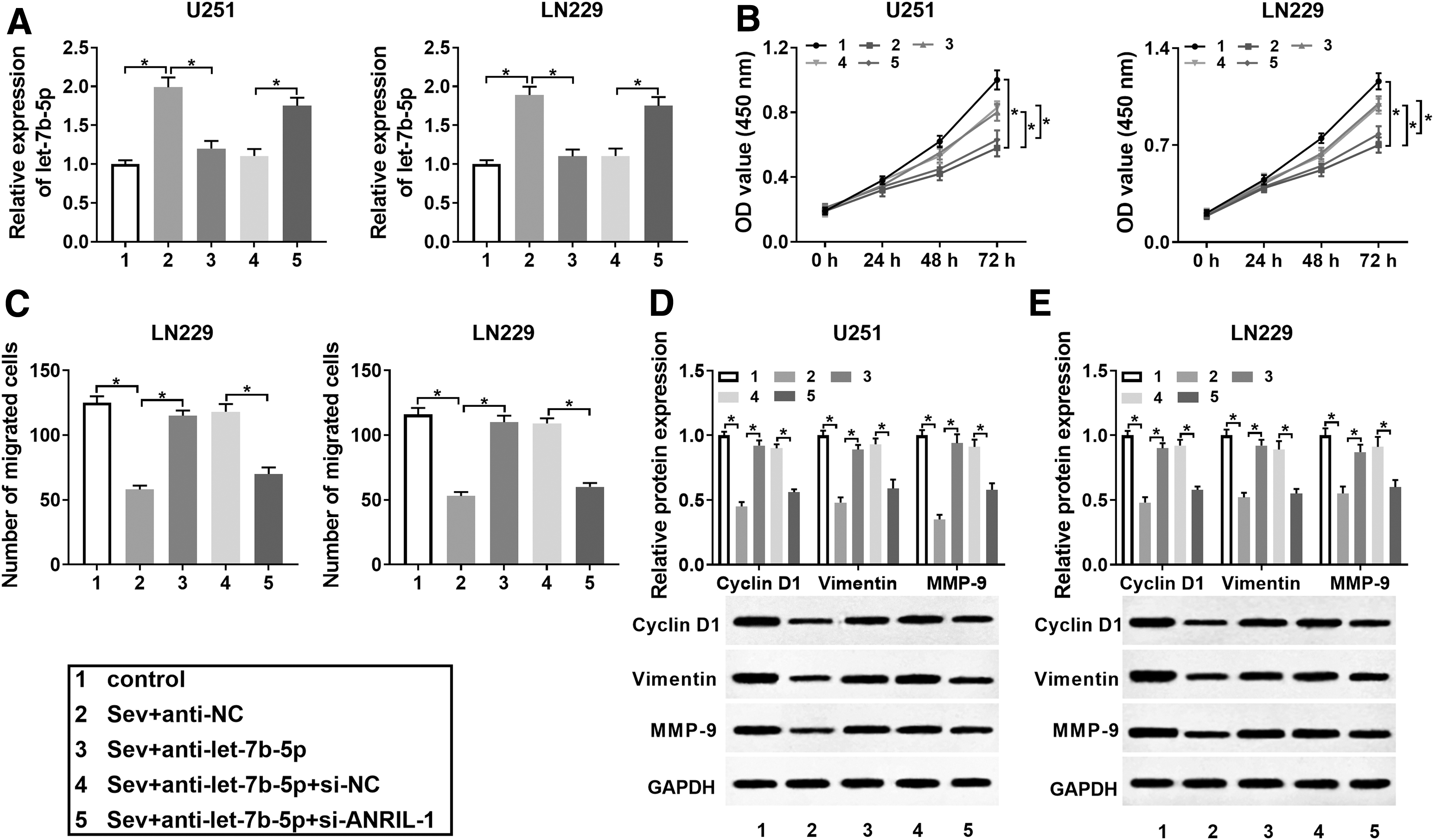
ANRIL knockdown reversed the promoting effect of silencing let-7b-5p on proliferation and migration in sevoflurane-treated glioma cells.
si-ANRIL overturned the promotive effect of silencing let-7b-5p on JAK2/STAT3 pathway in sevoflurane-treated glioma cells
The authors further investigated by Western blot whether the JAK2/STAT3 pathway could be modulated by sevoflurane, ANRIL, or let-7b-5p in glioma cells. As shown in Figure 6A and B, sevoflurane repressed the protein levels of p-JAK2 and p-STAT3 in U251 and LN229 cells, and knockdown of let-7b-5p attenuated the inhibitory effects of sevoflurane on the protein levels of p-JAK2 and p-STAT3, and the effects of let-7b-5p knockdown on these phosphorylated proteins were regained by si-ANRIL.
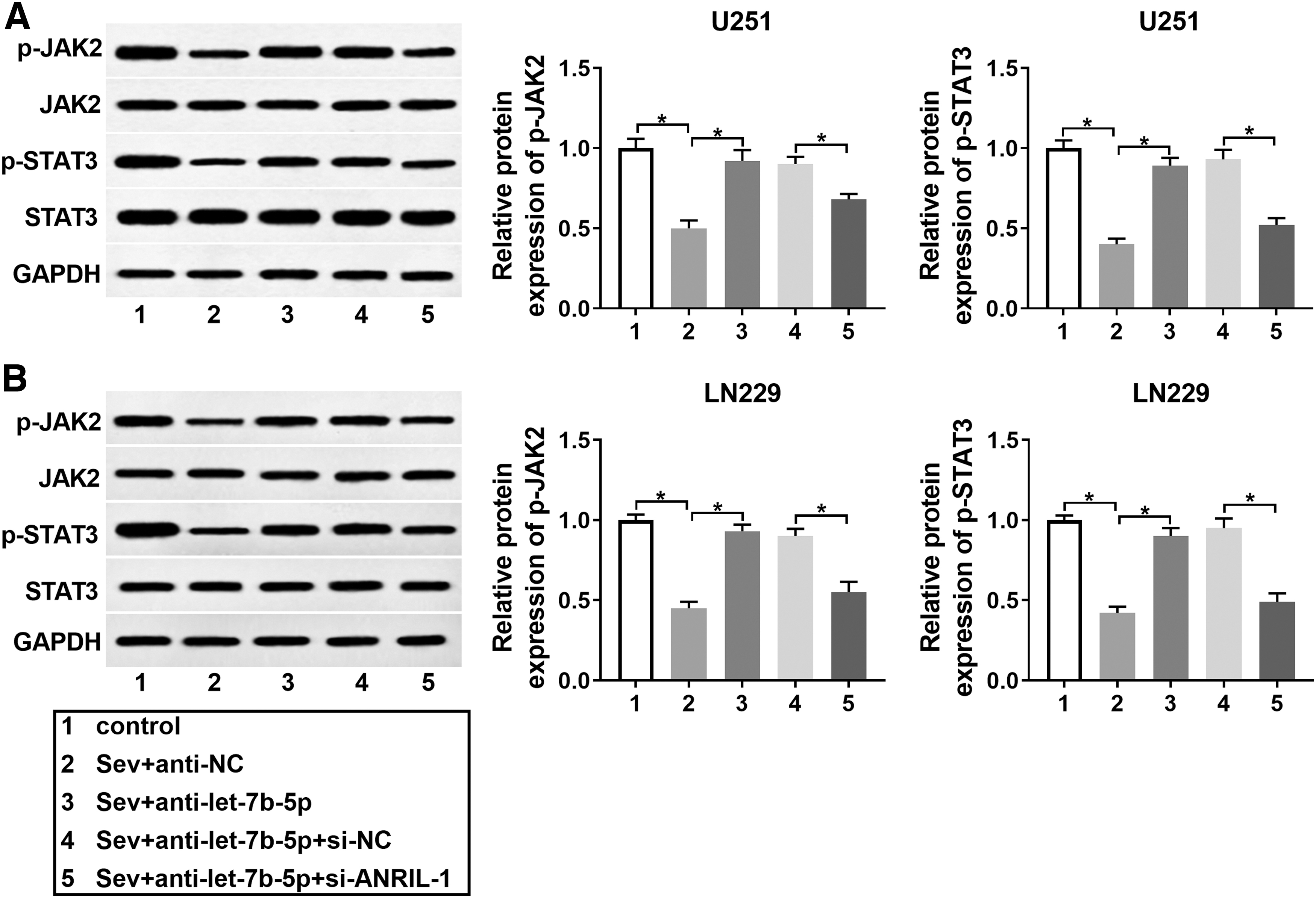
si-ANRIL overturned the promotive effect of silencing let-7b-5p on JAK2/STAT3 pathway in sevoflurane-treated glioma cells.
Discussion
As an aggressive primary brain tumor, the overall survival of patients with high-grade glioma was only 13 months. 22 By reason of the rapid proliferation and metastasis of glioma, there are still no effective drugs for the treatment of glioma. Besides, preventing tumor cell proliferation and metastasis during surgery is also a major challenge. As Zhang et al. reported, the propofol could impede viability and contribute to apoptosis of cervical cancer cells by inhibiting the HOTAIR-mediated mTOR pathway. 23 Like propofol, sevoflurane is also an anesthetic; it has been shown that sevoflurane inhibited proliferation of breast cancer cells by increasing the level of miR-203. 24 Their results indicated that treatment with sevoflurane could restrain the proliferation and migration of glioma cells, which was in agreement with the previous results. 25,26 Clinically, Hahnenkamp et al. reported that sevoflurane might offer the potential for shortening turnover in pediatric anesthesia. 27 But the potential mechanism needs to be further investigated.
ANRIL has been found to promote the progression of gastric cancer 28 and esophageal squamous cell carcinoma. 29 And Dong et al. demonstrated that ANRIL knockdown repressed growth and metastasis of glioma cells. 16 To verify whether ANRIL could be modulated by sevoflurane in glioma, the authors first examined the level of ANRIL in glioma cells. In accordance with previous results, ANRIL was upregulated in glioma cells and its expression was obviously declined by sevoflurane in a dose-dependent manner, and more importantly, ANRIL recovered the suppressive impacts of sevoflurane on proliferation and migration of glioma cells. These results suggested that the inhibition of sevoflurane on the progression of glioma cells might be caused by regulating the expression of ANRIL.
lncRNAs mainly participate in various biological behaviors as competitive endogenous RNAs of miRNAs. 30 Zhang et al. reported that ANRIL knockdown restrained proliferation and migration of medulloblastoma cells by sponging miR-323. 31 In their study, let-7b-5p could be directly targeted by ANRIL, and silencing ANRIL upregulated the expression of let-7b-5p. In addition, interference with let-7b-5p downregulated the increase of let-7b-5p expression induced by sevoflurane; the impact of let-7b-5p knockdown on its expression was inverted by silencing ANRIL. Functionally, knockdown of let-7b-5p could alleviate the reduction of glioma cell proliferation and migration induced by sevoflurane, and the role of let-7b-5p knockdown on cell proliferation and migration was also overturned by interfering with ANRIL. In accordance with previous results, let-7b-5p inhibited migration of glioma cells. 21 This further indicated that sevoflurane might suppress cell proliferation and migration through regulating the ANRIL/let-7b-5p axis in glioma.
JAK2/STAT3 has been reported to be implicated in regulating tumor cell growth and metastasis. 32 More than that, Xie et al. found that miR-135b-5p had an effect on myocardial ischemia/reperfusion injury by activating JAK2/STAT3 pathway in mice during sevoflurane anesthesia. 33 In this study, sevoflurane repressed phosphorylation of JAK2 and STAT3 in glioma cells, and let-7b-5p knockdown recovered the inhibitory impacts of sevoflurane on the phosphorylation of JAK2 and STAT3, and the function of let-7b-5p knockdown on these phosphorylated proteins was overturned by silencing ANRIL. Taken together, the authors hypothesized that sevoflurane might promote let-7b-5p expression by inactivating the AK2/STAT3 pathway to inhibit the expression of ANRIL in glioma.
In summary, their results signified that sevoflurane impaired proliferation, migration, and AK2/STAT3 pathway of glioma cells by upregulating let-7b-5p and inhibiting the expression of ANRIL. This suggested that some active ingredients in sevoflurane might have anticancer effects, which might provide a clue for the development of new drugs to treat glioma.
Footnotes
Acknowledgment
The authors sincerely appreciate all members who participated in this study.
Disclosure Statement
No competing financial interests exist.
Funding Information
No funding was received for this article.