




Abstract
Objective:
This study investigated the expression and clinical value of hsa-miR-504 in cervical cancer and its possible mechanism of regulating the progress of cervical cancer.
Methods:
The expression of microRNAs (miRNAs) in cervical cancer was analyzed on The Cancer Genome Atlas (TCGA) database. The correlation between differentially expressed miRNAs and overall survival (OS) of cervical cancer patients was analyzed by Kaplan–Meier method. The target genes regulated downstream by hsa-miR-504 were predicted by miRWalk 2.0 and analyzed by Gene Ontology (GO) annotation and Kyoto Encyclopedia of Genes and Genomes (KEGG) after differential screening. Univariate and multivariate Cox regressions were performed to screen the prognosis-related target genes.
Results:
There were 82 differentially expressed miRNAs between cervical cancer and noncancerous tissues in TCGA database (fold change >2, p < 0.05). Among them, nine miRNAs, including hsa-miR-504, were significantly correlated with OS in cervical cancer patients. Hsa-miR-504 was downregulated in cervical cancer, and low hsa-miR-504 expression was associated with poor prognosis. There were 2670 target genes of hsa-miR-504, and 240 target genes were further confirmed to be upregulated by TCGA database (fold change >2, p < 0.05). GO and KEGG showed that the upregulated target genes were mainly enriched in cell cycle, DNA replication, p53 signaling pathway, and so on. Kaplan–Meier survival analysis showed that 21 target genes were associated with OS in cervical cancer patients (p < 0.05). Univariate and multivariate Cox regression analysis showed that five genes were independent prognostic factors in cervical cancer.
Conclusion:
The low expression of hsa-miR-504 was closely related to the occurrence and development of cervical cancer, and hsa-miR-504 might be a potential molecular marker for favorable prognosis in cervical cancer. Cell cycle, DNA replication, and p53 signaling pathway were important mechanisms of downregulated hsa-miR-504 involved in the occurrence and development of cervical cancer.
Introduction
MicroRNAs (miRNAs) are small, conservative, noncoding RNA molecules, which play their regulatory role mainly through regulating target gene expression. 1,2 There is growing evidence that miRNAs play a key regulatory role in the occurrence and development of various malignant tumors, including cervical cancer. 3 –6 For example, in patients with cervical cancer, the decreased expression of miR-361-3p was related to lymphatic vascular infiltration, and its high expression led to a relative higher overall survival (OS). 7 The expression of miR-9-5p in cervical cancer patients was significantly higher than that in paracancerous tissues. Overexpression of miR-9-5p could promote the proliferation and invasion of cervical cancer cells in vitro and in vivo. miR-9-5p could affect the angiogenesis and radiosensitivity of cervical cancer cells by targeting SOCS5. 8 The expression of miR-338-3p in cervical cancer was significantly decreased, and it was correlated with FIGO stage, lymph node metastasis, depth of cervical invasion, and poor prognosis. miR-338-3p could inhibit the proliferation of cervical cancer cells and induce apoptosis by targeting MACC1. 9 However, the mechanism of miR-504 in the occurrence and development of cervical cancer is still unclear.
MiR-504 plays a role as a tumor suppressor in a variety of cancers. For example, miR-504 inhibited the interstitial phenotype of glioblastoma by targeting FZD7, inhibited the growth and migration of acute myeloid leukemia cells by targeting MTHFD2, and inhibited cell proliferation and invasion by targeting LOXL2 in non-small cell lung cancer. 10 –12 However, the role, prognostic value, and potential regulatory mechanism of miR-504 in cervical cancer have not been reported. In this study, we analyzed its role in the occurrence and development of cervical cancer and its possible regulatory mechanism by using The Cancer Genome Atlas (TCGA) database.
Methods
TCGA data processing and visual analysis
We downloaded TCGA-CESC miRNA and mRNA count data from TCGA official website. Among them, there were 312 miRNA expression samples, 309 mRNA expression samples, and 307 survival data available. Edge R was used for differential gene analysis. After data processing, R was used for visual analysis.
miRwalk 2.0
miRWalk 2.0 is a comprehensive database of miRNA target genes, which records the miRNA target gene information of human and other genera, and integrates the target gene information from miRWalk, MicroT4, miRanda, miRBridge, miRDB, miRMap, miRNAMap, PICTAR2, PITA, RNA22, RNAhybrid, and TargetScan databases. Only those genes predicted by more than three databases were recognized as target genes.
Gene Ontology and Kyoto Encyclopedia of Genes and Genomes analysis
The upregulated target genes of miR-504 in the TCGA database (fold change >2, p < 0.05) were analyzed by Gene Ontology (GO) and Kyoto Encyclopedia of Genes and Genomes (KEGG) using the “clusterProfiler” package to find the biological functions and signal pathways that involved miR-504.
Construction of risk assessment model
Kaplan–Meier survival analysis was used to screen miR-504 target genes with prognostic significance (p < 0.05). Prognostic significance of the target genes was further evaluated by univariate Cox regression analysis. In addition, multivariate Cox regression model was used to evaluate independent prognostic factors. According to the median expression of mRNAs, cervical cancer patients were divided into high-risk and low-risk groups to evaluate the risk of death in two groups. Furthermore, the sensitivity and specificity of survival assessment model were diagnosed by the time-dependent receiver operating characteristic curve analysis model.
Statistical analysis
Data processing and statistical analysis were processed by Perl and R (v.3.5.2) language. Wilcoxon signed-rank test and Kaplan–Meier survival analysis were used to analyze the expression of miRNAs in cervical cancer and their associations with OS of cervical cancer patients. The associations of genes with OS were analyzed by Kaplan–Meier survival analysis and Cox regression. A two-tailed value of p < 0.05 was considered statistically significant.
Results
Differentially expressed miRNAs in cervical cancer and noncancerous tissues
Based on the analysis of 309 cervical cancer and 3 noncancerous tissues in TCGA database, 82 miRNAs, including miR-504, were differentially expressed by fold change >2.0 and p < 0.05 in cervical cancer tissues, and miR-504 was downregulated (Fig. 1 and Table 1). Further Kaplan–Meier survival analysis found that there were 9 miRNAs (hsa-mir-33b, hsa-mir-99a, hsa-mir-142, hsa-mir-145, hsa-mir-151b, hsa-mir-218-2, hsa-mir-425, hsa-mir-504, and hsa-mir-6507) related to OS in cervical cancer patients (Fig. 2), and low miR-504 expression was associated with poor prognosis (Fig. 2H).
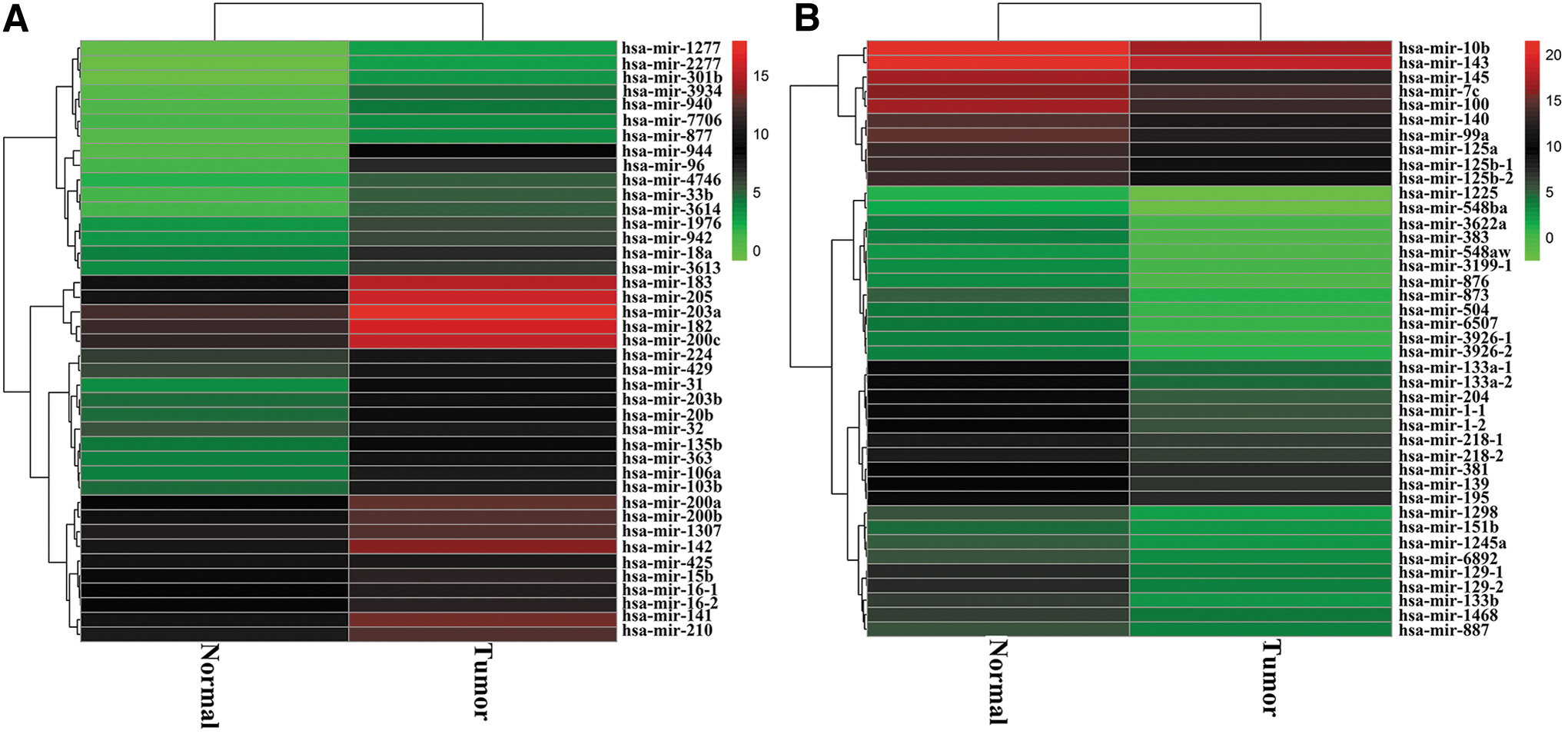
Hierarchical clustering showing differential expressed miRNAs. Each column represents a sample and each row represents a miRNA. Red strip represents high relative expression and green strip represents low relative expression.
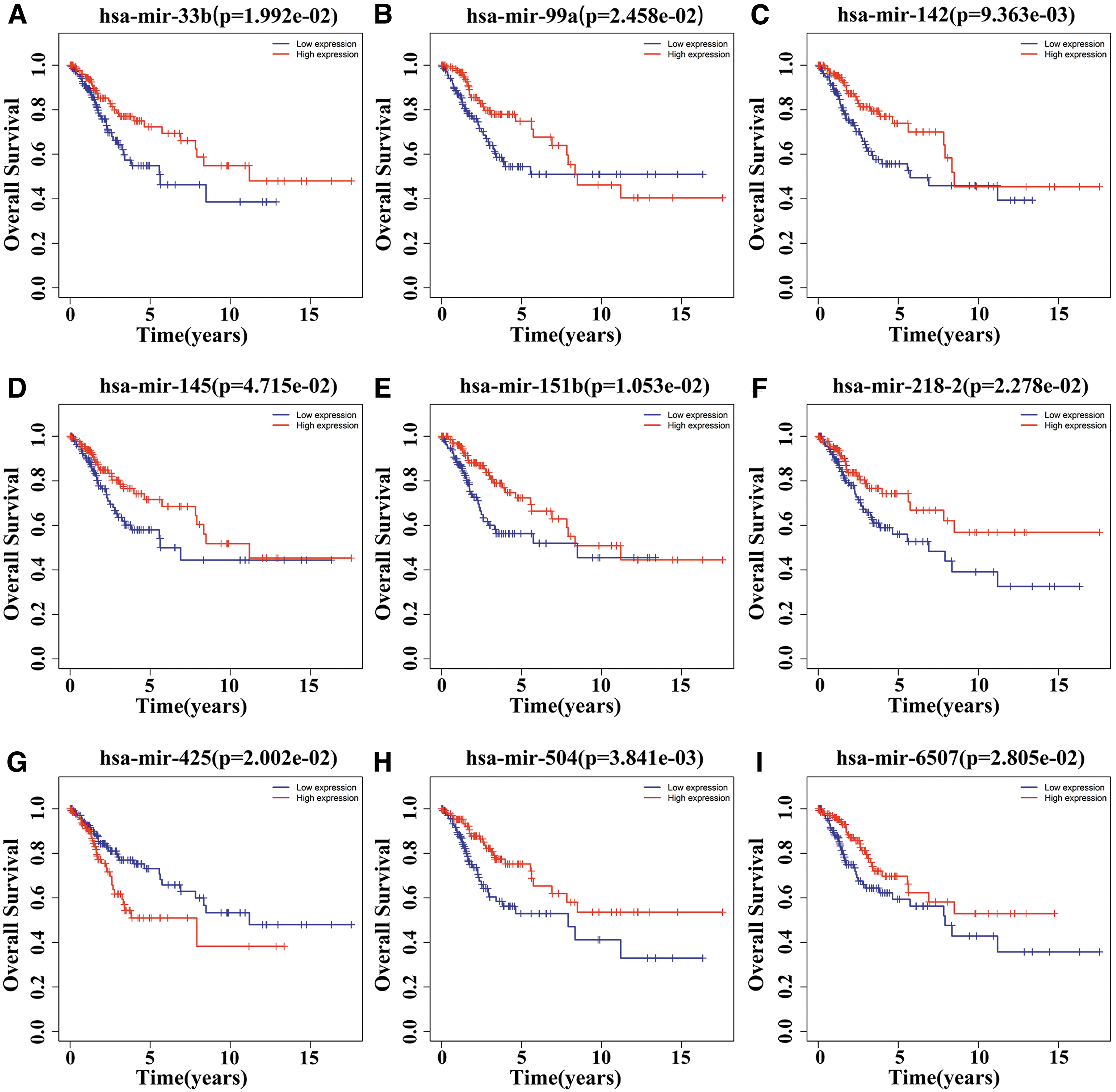
The 9 miRNAs [
The 82 Differentially Expressed MicroRNAs Ranked by p Value
Bioinformatics analysis of miR-504 target genes
From miRwalk 2.0 database, 2670 targeted genes of miR-504 predicted by more than three databases were obtained (Supplementary Table S1). A total of 1720 overexpressed genes in cervical cancer were collected from TCGA database (fold change >2, p < 0.05). After the intersection of predicted miR-504 target genes and overexpressed genes in cervical cancer, 240 predicted target genes were selected (Fig. 3A). To further determine the potential function of miR-504 in the development of cervical cancer, we analyzed the 240 target genes by GO and KEGG. GO analysis showed that the target genes were mainly enriched in cell cycle, DNA replication, mitosis, and so on (Fig. 3B and Table 2). KEGG analysis showed that the target genes were significantly enriched by p53 signaling pathway and human immunodeficiency virus 1 (HIV) infection (Fig. 3C and Table 2).

GO annotation and KEGG pathway analysis for target genes.
Gene Ontology Annotation and Kyoto Encyclopedia of Genes and Genomes Pathway Analysis
GO, Gene Ontology; KEGG, Kyoto Encyclopedia of Genes and Genomes.
Kaplan–Meier survival analysis of miR-504 target genes
Kaplan–Meier survival analysis of 240 highly expressed targeted genes showed that BAIAP2L1, CALML3, CAMK2N2, CD68, DSG2, FAM83A, HSD17B7, INADL, KRT78, LYPD5, MYO6, NFATC2IP, PAICS, PHKG2, PKD2L1, PRKX, RUNX1, TCF7, TPM3, VANGL1, and WNT3A were associated with OS in cervical cancer patients (p < 0.05; Fig. 4 and Table 3). Figure 5 showed the 21 differentially expressed targeted genes by hierarchical clustering (p < 0.05).
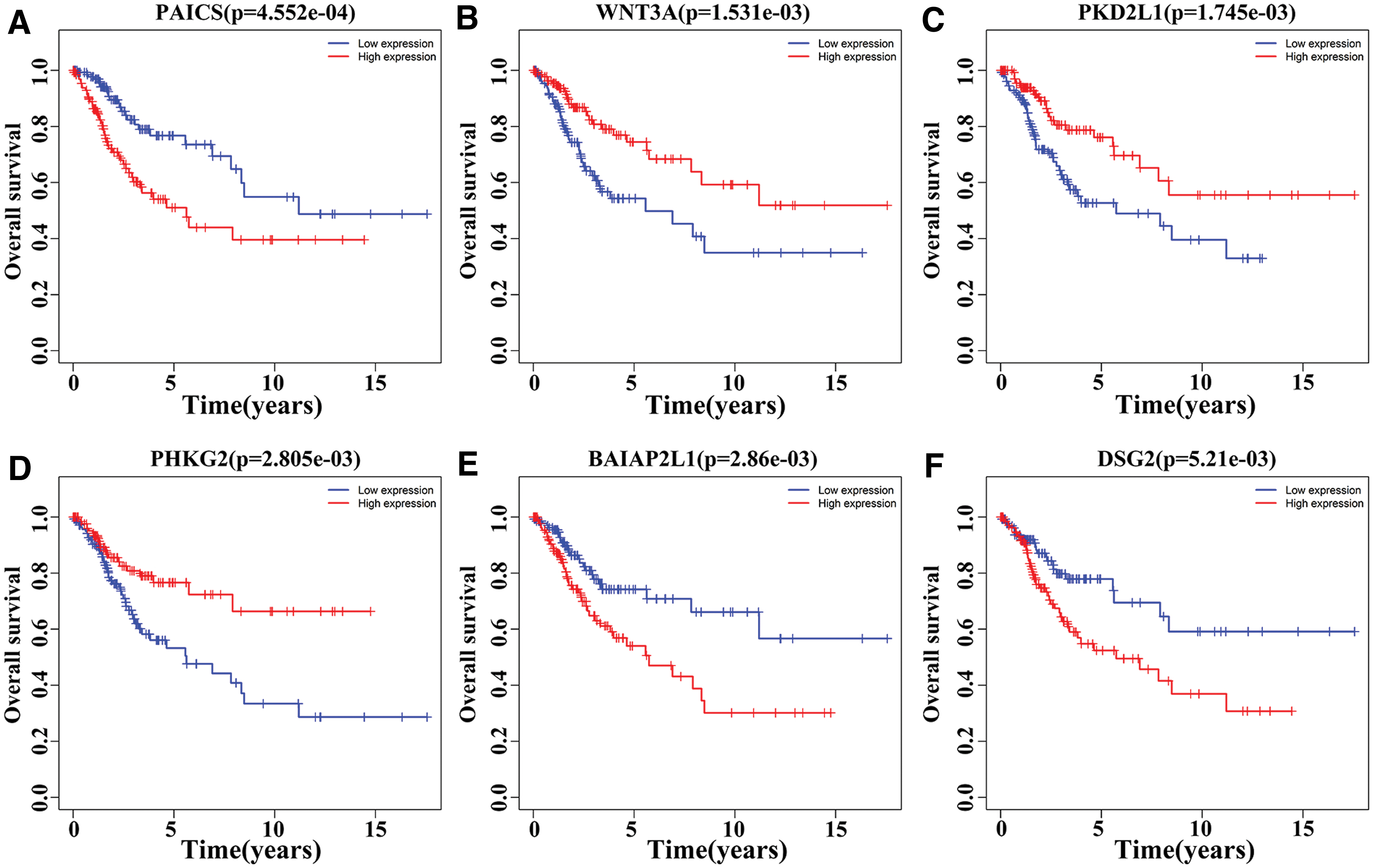
Part of highly expressed targeted genes associated with prognosis of cervical cancer patients.

Hierarchical clustering showing 21 highly expressed targeted genes. Each column represents a sample and each row represents a mRNA. Red strip represents high relative expression and green strip represents low relative expression. Color images are available online.
The 21 Differentially Expressed Targeted Genes Correlated with Overall Survival of Cervical Cancer Patients (p < 0.05)
OS, overall survival.
Construction of Cox risk proportional model
After univariate Cox regression analysis of 21 target genes with survival significance, 12 target genes (WNT3A, TPM3, INADL, VANGL1, PHKG2, DSG2, PKD2L1, CD68, CAMK2N2, LYPD5, BAIAP2L1, and PAICS) were associated with the prognosis of cervical cancer patients (p < 0.05; Table 4). Then, further multivariate Cox regression analysis showed that five target genes (WNT3A, DSG2, INADL, PKD2L1, and BAIAP2L1) were independent prognostic factors in patients with cervical cancer. The model was established according to the expression level and correlation coefficient of target genes in TCGA database. Hazard score = [WNT3A × (−3.585)] + (INADL × 1.464) + (DSG2 × 2.503) + [(PKD2L1 × (−2.387)] + (BAIAP2L1 × 1.602).
The 12 Target Genes (WNT3A, TPM3, INADL, VANGL1, PHKG2, DSG2, PKD2L1, CD68, CAMK2N2, LYPD5, BAIAP2L1, and PAICS) Correlated with the Prognosis of Cervical Cancer Patients Analyzed by Univariate Cox Regression
p < 0.05; ** p < 0.01; *** p < 0.001.
HR, hazard ratio.
The risk score of each cervical cancer patient was calculated and the patients were divided into high-risk and low-risk groups according to the median threshold. Kaplan–Meier analysis of all patients showed that the survival rate of patients in the low-risk group was significantly higher than that in the high-risk group (p < 0.05; Fig. 6A). The distribution of five genes in all samples showed that patients in the low-risk group might have higher expression levels of WNT3A and PKD2L1. In contrast, patients in high-risk groups tend to have higher levels of INADL, DSG2, and BAIAP2L1 (Fig. 6B). The area under the curve value of the survival assessment model of the five genes was 0.7 (Fig. 6C).
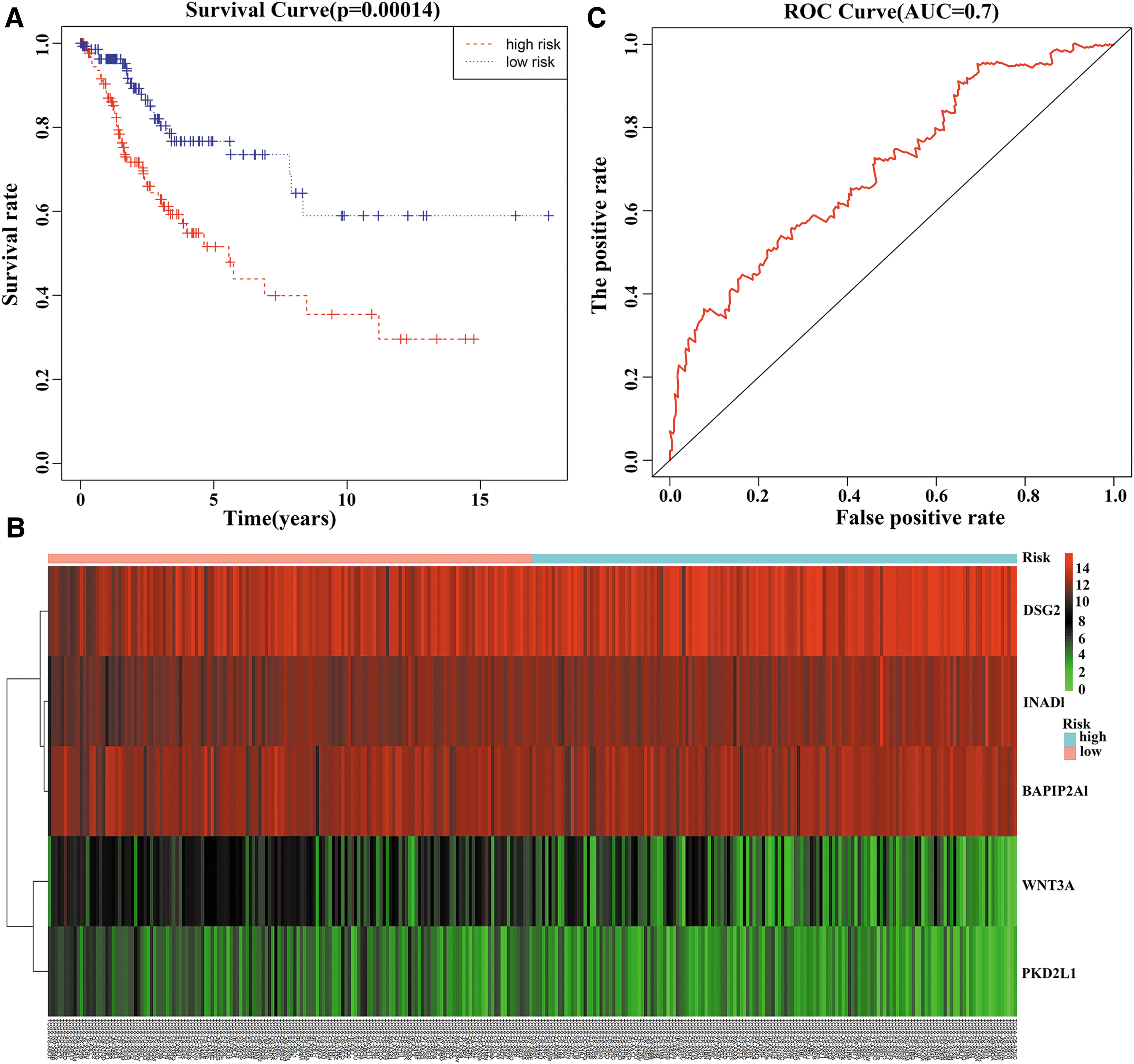
Cox risk proportional model.
Discussion
MiR-504 has been reported abnormally expressed in a variety of tumors and is involved in the occurrence and development of tumors. Previous studies found that in acute myeloid leukemia, overexpression of miR-504-3p led to cell growth arrest, invasion and migration inhibition, and elevated rates of apoptosis by decreasing the expression of MTHFD2. 11 The expression of miR-504 in glioma tissues and cell lines was significantly decreased, and the downregulation of miR-504 was significantly correlated with invasive clinicopathological features and poor prognosis in glioma patients. miR-504 downregulated FOXP1 expression and inhibited cell proliferation, induced cell cycle arrest, and promoted apoptosis of glioma cells. 13 The expression level of miR-504 was often downregulated in hepatoma tissues and cell lines. miR-504 inhibited the proliferation and invasion of hepatoma cell lines by targeting FZD7. 14 However, miR-504 promoted human osteosarcoma cells growth and metastasis to play the role of oncogene by targeting TP53INP1. 15 In this study, we observed that the expression of miR-504 in cervical cancer tissues was significantly lower than that in normal tissues, and patients with high miR-504 expression had better OS. Our results were consistent with the conclusions of most researchers. Therefore, we hypothesized that miR-504 played a role as a tumor suppressor in the occurrence and development of cervical cancer and inhibited the progression of cervical cancer.
An miRNA might be involved in the regulation of multiple signaling pathways by targeting different mRNAs, and the targeted mRNAs might be specific in the occurrence and development of cancer. Therefore, the downstream target genes of miR-504 were predicted by miRwalk 2.0 software, and after difference screening, GO annotation and KEGG pathway analysis were performed. We found that the target genes were mainly involved in cell cycle, DNA replication, mitosis, p53 signaling pathway, and HIV infection. Cell cycle, DNA replication, mitosis, p53 signaling pathway, and HIV infection were very important factors in the occurrence and development of cervical cancer. Cyclin D kinase 4/6 inhibitor could inhibit cervical cancer cell proliferation and induce apoptosis. 16 The initiation of DNA replication was the key process of cell proliferation and had an important effect on the occurrence and development of tumor. The increased expression of SIX1 promoted the DNA synthesis, accelerated the progress of G1 to S phase, and promoted cervical cancer cell proliferation. On the contrary, downregulation of SIX1 could inhibit DNA synthesis, slow down the progression of G1 to S phase, and inhibit tumor cell proliferation and tumor growth. 17 RECK could inhibit cervical cancer cell migration and invasion by activating p53 signaling pathway, and its inhibition by PFT-α could antagonize the effect of RECK on migrative and invasive abilities of cervical cancer cells. 18 HIV infection was closely related to the progression of cervical cancer. 19,20
By multivariate COX regression analysis, we found that WNT3A, DSG2, INADL, PKD2L1, and BAIAP2L1 were independent prognostic factors in cervical cancer patients. Some studies have shown that inhibition of the WNT3A signaling pathway could inhibit the progression of cervical cancer. 21,22 DSG2 was associated with poor prognosis of cervical cancer patients. The downregulation of DSG2 inhibited the proliferation, migration, and invasion of cervical cancer cells, whereas the enhancement of DSG2 promoted the proliferation, migration, and invasion of cervical cancer cells. 23 The role of INADL, PKD2L1, and BAIAP2L1 in cervical cancer has not been reported before. We found that these target genes of miR-504 were all closely related to the prognosis of cervical cancer patients, which suggesting that miR-504 played an important role in the progression of cervical cancer and might be a biomarker of prognosis.
Conclusion
To sum up, the low expression of miR-504 was closely related to the occurrence and development of cervical cancer, and miR-504 might be a potential molecular marker for favorable prognosis in cervical cancer. Cell cycle, DNA replication, and p53 signaling pathway were important mechanisms of downregulated miR-504 involved in the occurrence and development of cervical cancer.
Availability of Data and Materials
The data used and/or analyzed in this study are available from the corresponding author on reasonable request.
Footnotes
Authors' Contributions
This research was completed by all the authors. Y.W. and G.-L.L. conceived the research topic, made the research plan, and directed the implementation of the whole research. D.L. and S.-H.L. drafted the article together, processed the data, revised, and verified the article. Q.-Y.L., Q.-Q.Z. and L.L. assisted in analysis of data. All authors read and approved the final version of the article.
Disclosure Statement
No competing financial interests exist.
Funding Information
This study was supported by National Natural Science Foundation of China (Nos. 31971164, 81672900), Fundamental Research Funds for the Central Universities (2018MS20), Guangdong Special Fund Project of Fundamental and Applied Research (2018A030313160), and Guangzhou Planned Project of Science and Technology (201804010221).
Supplementary Material
Supplementary Table S1
References
Supplementary Material
Please find the following supplemental material available below.
For Open Access articles published under a Creative Commons License, all supplemental material carries the same license as the article it is associated with.
For non-Open Access articles published, all supplemental material carries a non-exclusive license, and permission requests for re-use of supplemental material or any part of supplemental material shall be sent directly to the copyright owner as specified in the copyright notice associated with the article.
