




Abstract
Introduction:
The quality control parameters of in-house-produced 90Y-Acetate from high-level liquid waste (HLLW) using supported liquid membrane (SLM) technology were validated and compared with the pharmacopeia standard. The radiolabeling of DOTATATE yielding 90Y-DOTATATE in acceptable radiochemical purity (RCP), with expected pharmacological behavior in in vivo models, establish the quality of 90Y-Acetate. Clinical translation of 90Y-Acetate in formulation of 90Y-DOTATATE adds support toward its use as clinical-grade radiochemical.
Methods:
Quality control parameters of 90Y-Acetate, namely radionuclide purity (RNP), were evaluated using β− spectrometry, γ-spectroscopy, and liquid scintillation counting. RCP and metallic impurities were established using high-performance liquid chromatography and inductively coupled plasma optical emission spectrometry, respectively. The suitability of 90Y-Acetate as an active pharmaceutical ingredient radiochemical was ascertained by radiolabeling with DOTATATE. In vivo biodistribution of 90Y-DOTATATE was carried out in nude mice bearing AR42J xenografted tumor. Clinical efficacy of 90Y-DOTATATE was established after using in patients with large-volume neuroendocrine tumors (NET). Bremsstrahlung imaging was carried out in dual-head gamma camera with a wide energy window setting (100-250 keV).
Results:
In-house-produced 90Y-Acetate was clear, colorless, and radioactive concentration (RAC) in the range of 40–50 mCi/mL. RCP was >98%. 90Sr content was <0.85 μCi/Ci of 90Y. Gross λ content was <0.8 nCi/Ci of 90Y and no γ peak was observed. Fe3+, Cu2+, Zn2+, Cd2+, and Pb2+ contents were <1.7 μg/Ci. The radiolabeling yield (RLY) of 90Y-DOTATATE was >94%, RCP was >98%. The in vitro stability of 90Y-DOTATATE was up to 72 h postradiolabeling, upon storage at −20°C. Post-therapy (24 h) Bremsstrahlung image of patients with large NET exhibit complete localization of 90Y-DOTATATE in tumor region.
Conclusions:
This study demonstrates that the in-house-produced 90Y-Acetate from HLLW can be used for the formulation of various therapeutic 90Y-based radiopharmaceuticals. Since 90Y is an imported radiochemical precursor available at a high cost in India, this study which demonstrates the suitability of indigenously sourced 90Y, ideally exemplifies the recovery of “wealth from waste.”
The Clinical Trial Registration number: (P17/FEB/2019).
Introduction
Yttrium-90, a pseudo-lanthanide and a pure β− emitter, with a nuclear decay characteristics (T1/2 of 64.1 h and β− max of 2.27 MeV) decaying to stable 90Zr, is an isotope of choice in therapeutic nuclear medicine. 1 The high-energy β− emission, particularly makes it a favorable option in the treatment of large-volume cancers. The absence of an imageable gamma photon in 90Y is compensated in most cases by the availability of a matched pair of diagnostic radiopharmaceutical based on the PET isotope Gallium-68. The use of the 68Ga-90Y matched pair in a theranostic setting is well documented in literature. The thrust on development of 90Y-based radiopharmaceuticals lies in its uses for therapeutic modalities such as peptide receptor radionuclide therapy (PRRT), radioimmunotherapy (RIT) of large-volume tumors, and treatment of hepatocellular carcinoma. 2
However, the challenges posed in envisaging 90Y as a therapeutic radioisotope, are its availability and its purity for clinical use. The possibility of production of 90Y from 89Y using the direct thermal neutron activation, nγ route, in medium-flux reactors, is not a feasible option due to the low cross-section (1.28 barns) of 89Y, which results in low specific activity. 3 Therefore, for targeted radiotherapeutic applications, such as PRRT and RIT, the 90Y should be carrier free and have a specific activity of 2.01 × 10⁴ GBq/mg. 4 Toward this, several methods have been adopted worldwide for development of generators to separate the 90Y daughter from its long-lived parent 90Sr, with which it remains in secular equilibrium. Such generators, which aim at separation of the daughter 90Y in purity, equivalent to clinical standards, are based on electrochemical separation, 5 precipitation, 6 extraction, 7 ion exchange chromatography 8,9 -supported liquid membrane (SLM) separation 10 etc.
In most of the cases the 90Y has been made available in the 90YCl3 form and separated from long-lived 90Sr available at high-level liquid waste (HLLW). The most critical requirement is the purification of 90Y to the clinical grade form to enable proper radiolabeling with various peptides and monoclonal antibodies (MoAbs) for clinical translation in patients. However, getting clinical-grade 90Y with metal contents, namely Fe (< 5 μg/Ci), Pb (< 10 μg/Ci) and Cu, Zn, Al, and Cd (< 30 μg/Ci) 11,12 constitutes a challenging task. However, RNP of 90Y solution plays a critical role in determining the final radiolabeling yield. The level of the parent, 90Sr (which is β− emitter) in 90Y solution is of utmost importance as it is a bone seeker with high physical T1/2 of 28.8 years. As per the European pharmacopeia the 90Sr content should be ≤2.5 μCi/Ci of 90Y solution. 13,14
Apart from β− impurities, the levels of gross γ and α contents in 90Y solution arising from the presence of various long-lived radio-actinides and fission products, present in HLLW should be very low. The gross γ and α content in a clinical-grade 90Y solution should be <0.001% and ≤1 × 10⁻⁷%, respectively. 15,16
Radiolabeling of various peptides and MoAbs using clinical-grade 90Y is possible, when the extracted clinical-grade 90Y exist in single chemical species. Essentially, the radiochemical purity (RCP) of the extracted 90Y solution should be ≥98%. Apart from all these, the clinical-grade 90Y solution should be sterile and apyrogenic.
Toward this goal, the authors have extracted clinical-grade 90Y in 90Y-Acetate form using a SLM technique. 10 The quality control parameters of 90Y-Acetate were thoroughly validated and compared with the pharmacopeia standard. Regulatory approval by the Radiopharmaceutical Committee has been obtained for 90Y-Acetate for its intended use as a radiochemical precursor in formulation of therapeutic radiopharmaceuticals for use in human patients. The DOTATATE was radiolabeled with 90Y-Acetate, yielding the product with acceptable clarity, pH, RCP, RLY, RAC, and endotoxin limit (EL).
Furthermore, the in vitro and serum stability of 90Y-DOTATATE were established. The in vitro studies, namely cell binding, cell internalization, and competition assay studies, of 90Y-DOTATATE, were carried out on pancreatic adenocarcinoma AR42J cell-line-expressing somatostatin receptor-2 (SSTR-2). The in vivo pharmacological behavior of 90Y-DOTATATE was established by biodistribution studies in male athymic nude mice carrying AR42J pancreatic adenocarcinoma xenograft tumors. 17
This 90Y-Acetate has been utilized in the formulation of patient doses of 90Y-DOTATATE and subsequently used in the treatment of large, progressive, disseminated, metastatic, and neuroendocrine tumors in patients.
The consistency in the quality control parameters, in vitro stability, pharmacokinetic studies in suitable cell lines, and in vivo biodistribution in tumor-bearing mice of 90Y-DOTATATE, added support to its clinical translation in human patients following the approval by the Regulatory Committee.
Materials and Methods
Separation and purification of 90Sr from HLLW
Separation of 90Sr: HLLW from reprocessing plant was put through three cycles of solvent extraction process. In first cycle, depletion of residual uranium and plutonium from the waste was carried out using the plutonium uranium reduction extraction (PUREX) solvent that is 30% Tri-n-butyl phosphate (TBP) in n-dodecane (∼ 93% C12, sp. gr. = 0.751, refractive index = 1.42, Transware Chemia, Germany). Uranium (U) and plutonium (Pu) from organic phase are stripped in aqueous phase using 0.01 M HNO3 and sent back for reprocessing. The U/Pu lean raffinate from first cycle was put through a second solvent extraction cycle using domestically synthesized 0.03 M 1,3-dioctyloxycalix[4]arene-crown-6 (CC6) in 30% isodecanol/n-dodecane for selective recovery of 137Cs. Raffinate from 137Cs recovery cycle is subjected to N,N,N′,N′,-tetra (2-ethylhexyl) diglycolamide (TEHDGA) in isodecanol/n-dodecane.
In this third cycle, entire actinides/lanthanides and 90Sr are extracted quantitatively in organic phase leaving raffinate stream amenable to direct dilution and dispersal. Stripping of the organic phase using dilute nitric acid generates aqueous stream rich in 90Sr activity. This aqueous phase generated from stripping also contains minor actinides/lanthanides and traces of 137Cs activity. 18
Purification of 90Sr: In the first step, trace impurities of 137Cs was removed using granulated ammonium phosphomolybdate column. In the second step, α emitters, namely minor actinides, lanthanides, and traces of U and Pu, were removed by extraction chromatography using Truex solvent {0.2 M octyl(phenyl)-N,N-diisobutylcarbamoylmethyl phosphine oxide (CMPO, synthesized in-house) and 1.2 M TBP in n-dodecane}. In the third step, raffinate containing 90Sr in 3–4 M HNO3 (Sigma-Aldrich) was subjected to radiostrontium extraction process using 4,4′(5′)-bis(tert-butylcyclohexano)-18-crown-6 (Fluka Chemie, Switzerland) in isodecanol/n-dodecane. Finally, 90Sr from the organic phase was stripped quantitatively using 0.01 M HNO3 (Sigma-Aldrich).
In the fourth step, the stripped 90Sr (obtained after the third step of extraction process) was passed through a glass column containing polymeric absorbent that is XAD-7 (Supelco) to remove dissolved organic material if any. The resultant solution was evaporated to get concentrated 90Sr using a customized in-house-designed oven with a vent connected to fumehood. The 90Sr obtained from the above feed solution was further purified to remove small impurities and concentrated by employing radiochemical precipitation method.
About 10 mg of iron and 10 mg of strontium were added as carriers to the impure 90Sr(NO3)2 solution. Iron was precipitated as hydroxide along with other impurities by the addition of ammonia solution drop-wise until the pH of the supernatant reached ∼9.4. After centrifuging, the supernatant was collected in a separate vial. The precipitate was washed once with 5% ammonia solution and the wash was collected in the same vial. The hydroxide precipitate was discarded. Sr(OH)2 solution thus obtained was acidified and precipitated as carbonate using 5% solution of Na2CO3. This resulted in >80% recovery of 90Sr.
The final SrCO3 precipitate was separated after centrifugation, further washed with water, and dissolved in minimum volume of 2 M HNO3, (Sigma-Aldrich), while the pH was adjusted between 1 and 2. Purified 90Sr(NO3)2 solution was allowed to reach equilibrium, for extracting 90Y employing the two-stage SLM generator. After this stage of purification, the 90Y was extracted from 90Sr(NO3)2 by employing the two-stage SLM generator. The gross α levels in the extracted 90Y was found to be 10−8 Ci/1.0 Ci of 90Y. 18
Additional purification of 90Sr
This additional purification of 90Sr was carried out to reduce the gross α levels in clinical-grade 90Y-Acetate radiochemical from 10−8 Ci/Ci of 90Y to ≤10−9 Ci/Ci of 90Y. The parent 90Sr(NO3)2 solution obtained after radiochemical precipitation was kept in the feed chamber and allowed to transport to the receiver chamber containing 4M HNO3 (Sigma-Aldrich) through KSM-17-impregnated PolytetraFluoro ethylene (PTFE) membrane (Merck) in the first stage of separation. The 4 M HNO3 used in the receiver chamber was replaced at intervals of 8 h and discarded.
This receiving chamber was filled with fresh 4 M HNO3 and the process was repeated for six times keeping the parent 90Sr(NO3)2 in the feed compartment intact. The purified 90Sr(NO3)2 solution from the feed compartment thus obtained was allowed to grow the β− activity for 23–25 d and further used for extraction of 90Y based on the SLM technique. These steps were carried out to reduce the gross α levels of clinical-grade 90Y-Acetate from 10−8 Ci/1.0 Ci of 90Y to <10−9 Ci/1.0 Ci of 90Y. 18
Separation of clinical-grade 90Y in 90Y-Acetate form using the two-stage SLM generator
A two-stage SLM-based generator system developed in-house and used for the separation of carrier-free 90Y based on the solvent extraction properties of two ligands, namely 2-ethylhexyl 2-ethylhexyl phosphonic acid (KSM-17; BARC) and octyl phenyl-N,N-diisobutylcarbamoyl methyl phosphine oxide (CMPO; BARC) under optimum conditions. The system was operated in sequential modes with each borosilicate glass cell having 5 mL capacity (BARC).
In the first stage, the equilibrium mixture of 90Sr and 90Y adjusted to pH 1-2, which was used in the feed compartment, and the receiver compartment contained 4 M HNO3. KSM-17-based SLM was used for selective transport of 90Y to the receiver phase in about 4 h. The product from this stage was taken out and placed in the feed compartment of the second stage, whereas the 90Y depleted lean 90Sr left out in the feed compartment of the first stage was transferred back in the feed reservoir for next cycle. CMPO-based SLM was used for transport of 90Y in the second stage where 1 M CH3COOH (Sigma-Aldrich) was used as receiver phase1018.
Physicochemical and biological quality control of 90Y-Acetate
The RCP was evaluated by thin-layer chromatography (TLC) (RayTest) using 60Ao silica gel plastic TLC plates (Merck, Germany) and 0.1 M sodium citrate buffer, pH-5.0 as eluent. High-performance liquid chromatography (HPLC; Knauer) analyses were carried out using RP18 column, (isocratic mode) with eluent as 0.1%TFA in water/acetonitrile: 80/20.
RNP, namely gross γ, was determined by high-purity germanium (HPGe) coupled to 4 and 64 k multiple-channel analyzer (MCA) for 24 and 2 h, respectively (Baltic Scientific Instruments, Russia and ITECH Instruments). Gross α was quantified by ZnS(Ag) method and solid-state track detector CR-39 (Nucleonix). 90Sr content was quantified both by extraction paper chromatography (EPC) and β− spectrometry (Nucleonix).
Metallic impurities (Fe, Pb, Cu, Zn, and Cd) were determined by inductively coupled plasma optical emission spectrometry (ICP-OES) (Thermo Fisher Scientific). Phosphonic acid-based impurities generated from radiolytic damage of KSM-17 and 0.8 M CMPO-coated PTFE membrane was analyzed by 600 MHz 31P nuclear magnetic resonance (31P-NMR) (JEOL) in decayed 90Y-Acetate samples. Since the 90Sr/90Y-equilibrated feed mixtures in the first and second stages were 0.02 and 4 M HNO3 respectively, determination of NO3 − (Nitrate ion) concentration was carried out by ion chromatography (ACD; BARC). EL was quantified by the Gel-clot BET assay (Charles River). Sterility test was performed by the direct inoculation method (Himedia).
Radiolabeling of DOTATATE with 90Y-Acetate and its quality control
Carrier-free, clinical-grade 90Y-Acetate was sourced from a two-stage90Sr/90Y generator system based on SLM technology. The formulation for single patient dose (85–90 mCi) 90Y-DOTATATE was carried out using in-house-produced 90Y-Acetate, 0.2 N ammonium acetate buffer (pH: 5.5) (Sigma-Aldrich), and GMP grade DOTATATE acetate (ABX Biochemicals). The reaction mixture was incubated at 95°C for 35–40 min at pH ∼4.0–4.5. On cooling, 60 mg of 2, 5-dihydroxybenzoic acid (Sigma-Aldrich) per mL of saline was added. The resultant 90Y-DOTATATE was diluted with sterile, pyrogen-free saline (Nirlife) so as the radioactive concentration (RAC) was maintained between 8 and 10 mCi/mL and filtered using sterile 0.22 μm poly ether sulfone membrane syringe filter (Merck).
RCP was assessed by TLC (60Ao-silica-gel, 0.1 M sodium citrate buffer: pH-5.0) (RayTest) and HPLC (Knauer) by two different gradient modes, namely steep and shallow (Solvent: 0.1% TFA in H2O and CH3CN, steep gradient method: 0–5 min 95% water, 5–10 min 95% to 0% water, 10–15 min 0% water, 15–20 min 0% to 95% water, and 20–25 min 95% water. shallow gradient method: 0–4 min 95% water, 4–15 min 95% to 5% water, 15–20 min 5% water, 20–25 min 5% to 95% water, and 25–30 min 95% water) using RP18 column coupled with NaI (Tl) and UV-254 nm detector maintaining a flow rate of 1.0 mL/min. The EL was quantified by gel-clot BET assay and sterility test was done by direct inoculation. In vitro and serum stability of the product on storage at −20°C was evaluated by TLC/HPLC at 24, 48, and 72 h postradiolabeling.
In vitro studies of 90Y-DOTATATE
Cell binding
Pancreatic carcinoma cell-line AR42J (CLS Cell Lines Service; Eppelheim)-expressing SSTR-2 (Somatostatin receptor, subtype 2), used for the in vitro evaluation, was grown in IMDM (Gibco, Thermo Fisher Scientific) with 10% FBS in 5% CO2 at 37°C (Thermo Fisher Scientific). In vitro cell-binding studies were performed by incubating AR42J cells in 1mL of internalization buffer (IMDM, 0.2% BSA) containing radioligand (∼5 × 10–12 mol peptide) for 15, 30, 60, and 120 min followed by washing with PBS. Quantification of radioactivity was performed in β− counter (Nucleonix). For membrane receptor-binding assay, AR42J cell homogenates were incubated above time points, followed by washing with PBS. MCF7 cell (NCCS cell repository) was used as negative control for SSTR2 expression.
Cell internalization
Pancreatic carcinoma cell-line AR42J-expressing SSTR-2, used for the in vitro evaluation, was grown in IMDM with 10% FBS in 5% CO2 at 37°C. In vitro cell-binding studies were performed by incubating AR42J cells in 1 mL of internalization buffer (IMDM, 0.2% BSA) containing radioligand (∼5 × 10–12 mol peptide) for 15, 30, 60, and 120 min followed by washing with PBS. Quantification of radioactivity was performed in β− counter.
Competition assay
The receptor binding affinity and nonspecific binding was determined by preincubation of SSTR-2-expressing AR42J cells with cold DOTATATE (1 nM) followed by incubation with 90Y-DOTATATE (0.5 and 1 pM) for 120 min. Competitive binding of the cold conjugate resulted in complete inhibition of cell surface receptor binding as well as internalization of the radioconjugate as studied using live AR42J cells.
In vivo biodistribution studies of 90Y-DOTATATE
The degree of receptor-mediated uptake was determined by biodistribution studies of the radioconjugate in male athymic nude mice (Vivo Biotech). The nude mice were injected with pancreatic neuroendocrine carcinoma cell-line AR42J (2 × 10⁶ cells/mice) at the proximal flank region of the mice, and tumor was allowed to grow to 1 cm3 volume.
The radioconjugate, 90Y-DOTATATE (50-100 μCi/mice), was injected in xenografted mice through the tail vein. The biodistribution studies were done at 6, 24, 48, and 72 h postinjection, for evaluation of the 90Y-DOTATATE. Before sacrificing, these mice were imaged on a gamma camera (dual-head Siemens E-cam) for Bremsstrahlung radiation to study the uptake in the tumor. PET/CT imaging was performed in mice by injecting a higher dose of 90Y-DOTATATE due to the lesser fraction positron emission after administering lasix for bladder clearance and under isoflourane sedation using Philips Gemini TF 16-slice camera, Netherlands.
Clinical studies of 90Y-DOTATATE
Patients (n = 12) having large neuroendocrine tumors (NET) with gross liver involvement showing good tumor uptake on diagnostic 68Ga-DOTATATE study were selected for treatment with 90Y-DOTATATE. The patients underwent renogram studies to check the renal status along with other blood investigations before therapy. Patients were admitted in the ward and cationic amino acid infusion was started 4 h before the therapy. 90Y-DOTATATE (85–90 mCi per patient) was administered followed by another 4 h of amino acid infusion.
Twenty two to 24 h post-therapy, the patients were imaged on a dual-head Siemens E-cam γ-camera with the help of Bremsstrahlung radiation to study the uptake in the tumor. Bremsstrahlung imaging was performed with wide energy window setting (100–250 keV). Post-therapy, a regional PET/CT scan was carried out on a Philips Gemini TF 16-slice camera for 30 min to study imaging characteristics of 90Y-DOTATATE with low positron flux of 90Y.
Results
In this work, extensive evaluation of quality control parameters of 90Y-Acetate samples (n = 44, batch size: 200 mCi) with RAC of 40–50 mCi/mL were analyzed and presented. Further radiolabeling and quality control study data were presented for 90Y-DOTATATE (n = 24) formulated using indigenously sourced 90Y-Acetate.
RNP of 90Y-Acetate
In the indigenously sourced 44 batches of 90Y-Acetate from HLLW, the β− content arising due to the presence of 90Sr determined by EPC method were found to be 0.83 ± 0.08 μCi/Ci of 90Y, which were below the permissible limits of 2.5 μCi/Ci of 90Y. β− spectrum of 90Y-Acetate solution shows single peak with Emax of 2.28 MeV (Fig. 1A), whereas β− spectrum of decayed 90Y-Acetate samples (post 65 d of extraction) does not exhibit any prominent peak (Fig. 1B). For validation of our β− spectroscopy method, the β− spectrum (Fig. 1C) of 90Sr/90Y equilibrated mixture shows two peaks with Emax of 0.546 and 2.28 MeV corresponding to 90Sr and 90Y, respectively.
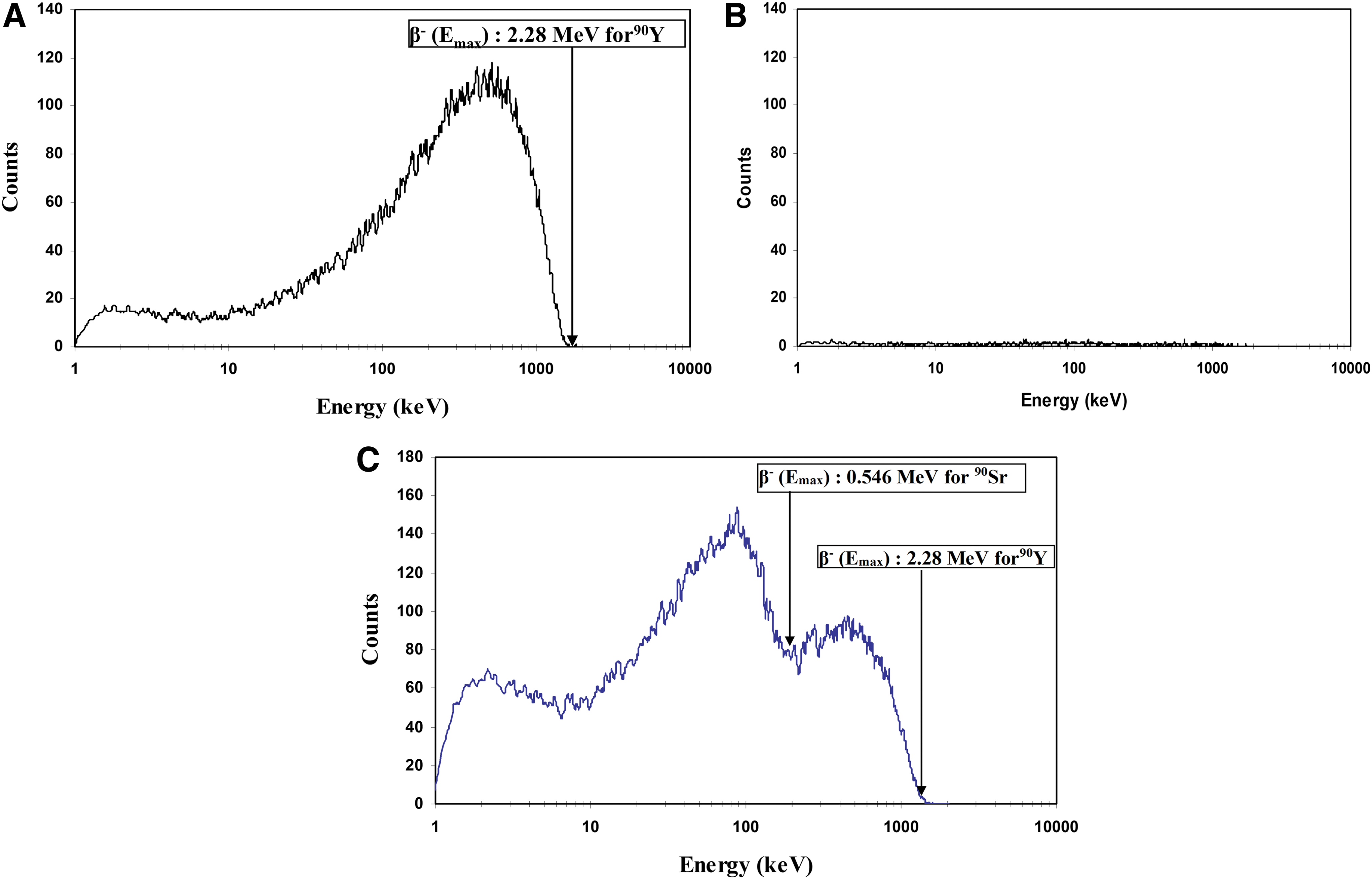
Beta (β−) Spectrum of
The presence of any γ ray-emitting radionuclides was analyzed in all the produced batches of 90Y-Acetate (n = 44). The γ spectrum recorded for 2 h using 64 k MCA channel coupled to HPGe detector shows large Bremsstrahlung spectrum characteristics of a pure β− emitter. Another 511 keV peak was observed over large Bremsstrahlung spectrum, which is attributed to the internal pair production for the branching ratio for the 0+ −0+ transition of 90Zr 19 (Fig. 2A). The γ spectrum of 90Y-Acetate sample of 24 h using 4 k MCA channel exhibits background X ray (< 100 keV), 137Cs (1460 keV), and 40K (661 keV), apart from the 511 keV peak of 0+ −0+ transition of 90Zr (Fig. 2B). In Figure 2B, the large Bremsstrahlung peak characteristic of 90Y diminished using shielding for the detector made from alloy of lead, cadmium, and copper.

Gamma (γ) spectrum of
The gross α contents in all the 90Y-Acetate batches (n = 44) arising from various actinides in HLLW were 0.78 ± 0.26 nCi/Ci of 90Y, determined using liquid scintillation counting system. The results of gross α contents in 90Y-Acetate counted by liquid scintillator were correlated with the results obtained from ZnS(Ag)-based scintillation counter and were found to be 0.80 ± 0.14 nCi/Ci of 90Y. The gross α contents in our 90Y-Acetate samples estimated by both the methods were much below the permissible limits of 1 nCi/Ci of 90Y. 20,21
The RCP of 90Y-Acetate
The RCP of 90Y-Acetate samples (n = 44) estimated by radio-TLC method using two different mobile phases that is 0.1 M sodium citrate buffer (pH: 5.0) and 0.1 M sodium citrate/1 M HCl (97/3 v/v) (pH: 4.5) were 98.9% ± 0.66% (Rf between 0.8 and 0.9) and 98.9% ± 0.73% (Rf between 1.0 and 1.1), respectively (Fig. 3A, B). The RCP derived by radio-HPLC was 98.9% ± 0.55% with Rt between 3 and 5 min (Fig. 3C). The RCP of all the batches of 90Y-Acetate samples derived by TLC and HPLC method was above the specified limits of >98%.
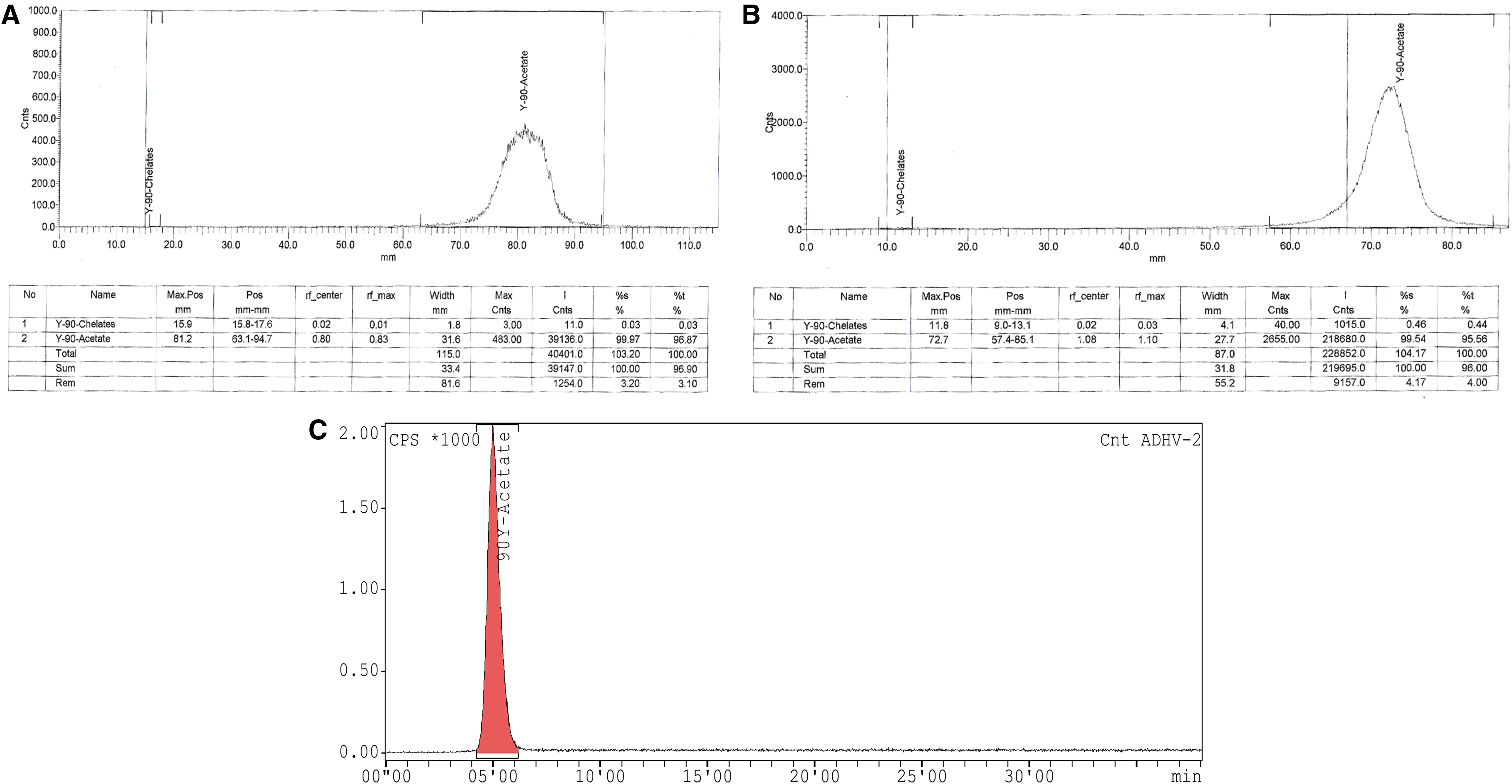
Radio-Thin-Layer Chromatogram of 90Y-Acetate in
Metallic impurities in 90Y-Acetate
In all the batches of 90Y-Acetate (n = 44) the levels of Fe3+, Cu2+, Zn2+, Cd2+, and Pb2+ were (1.66 ± 1.15), (0.83 ± 0.60), (0.91 ± 0.70), (0.60 ± 0.40), and (1.39 ± 1.09) μg/Ci of 90Y, respectively. The observed Fe3+, Cu2+/Zn2+/Cd2+ and Pb2+ levels in 90Y-Acetate batches were much below the specified limit of <5 μg/Ci, <30 μg/Ci, and <10 μg/Ci, respectively.
Nitrate ions, phosphorus, and stable 90Zr contents in 90Y-Acetate
The concentration of nitrate ions, which could be transported through CMPO-impregnated PTFE membrane in 90Y-Acetate solutions (n = 44) was (0.94 ± 0.52) %. With this concentration, the amount of nitrate ions when calculated during single PRRT, with a patient dose of 100 mCi using 90Y-DOTATATE, works out to be 1.25 mg/kg of body weight. These levels of nitrate ions in 90Y-labeled peptides are considered to be nontoxic for patients undergoing PRRT since the acceptable daily intake of nitrate ions is 3.7 mg/kg. 22
The absence of any peak in proton-decoupled 31P-NMR of decayed 90Y-Acetate samples confirms the absence of any phosphonic acid-based compounds (Fig. 4A). The single peak (proton) in 1 H-NMR of the decayed 90Y-Acetate samples is due to the presence of 1 M CH3COOH (Fig. 4B). As a confirmatory measure, the 31P-NMR of KSM-17 and 0.8M CMPO solution were recorded and the single peak observed for Phosphorus-31 could not be seen in the proton-decoupled 31P-NMR of decayed 90Y-Acetate samples. This eliminates the possible presence of any radiolytically degraded phosphorus-based polymers in 90Y-Acetate samples (Fig. 4C, D).
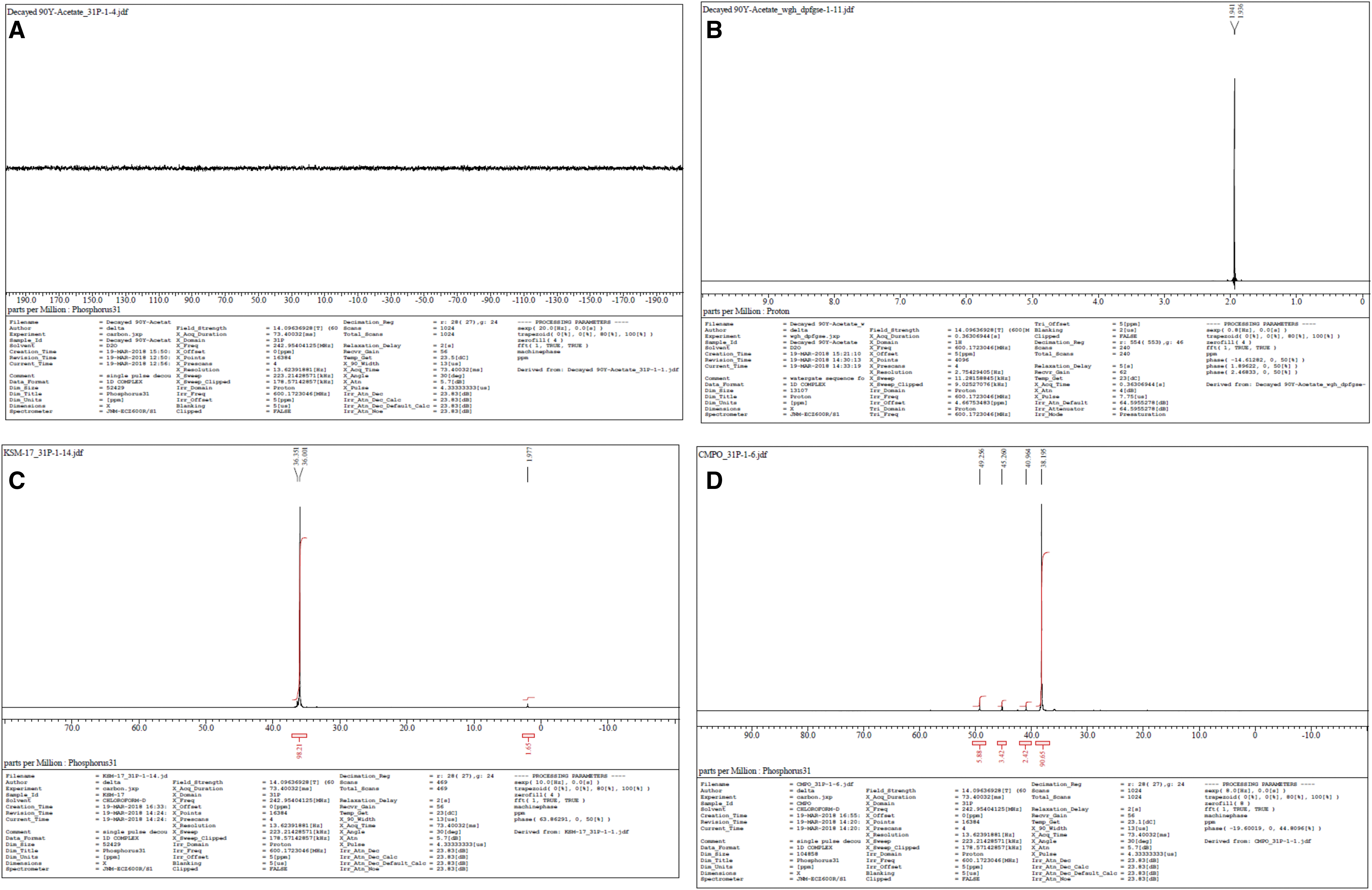
Proton-decoupled 31P-NMR spectrum of
The 90Zr content observed in the 90Y-Acetate (n = 44) was 0.30 ± 0.17 μg/Ci of 90Y. This concentration of stable 90Zr in 90Y-Acetate, when calculated in a single patient dose of 100 mCi undergoing PRRT using 90Y-DOTATATE, corresponds to 0.4 ng/kg of body weight. These levels of stable 90Zr in 90Y-labeled peptides are nontoxic, since the acceptable limit for annual intake of stable 90Zr through food is 18 mg/kg of the body weight. 23
EL and sterility of 90Y-Acetate
The EL for all the batches of indigenously sourced 90Y-Acetate (n = 44) was found to be <3 EU/mL, which is below the specified limit of <5 EU/mL. The 90Y-Acetate was found to be sterile.
The sterility test by direct inoculation method was validated by setting up positive cultures using microorganisms, namely Staphylococcus aureus, Pseudomonas aeruginosa, Bacillus subtilis, and Candida albicans. Luxuriant growths in media bottles were observed containing inoculums of microorganisms and 90Y-Acetate within 3 d of incubation.
Table 1 demonstrates the quality control results of in-house-produced 90Y-Acetate.
Quality Control Results of 90Y-Acetate
EPC, extraction paper chromatography; EU, endotoxin unit.
Regulatory approval
Regulatory clearance from DAE's Radiopharmaceutical Committee was obtained for 90Y-acetate as a clinical-grade radiochemical for use in formulation of 90Y-based radiopharmaceuticals
Radiolabeling and quality control of 90Y-DOTATATE
Using clinical-grade 90Y-Acetate, a single patient dose of 95–100 mCi of 90Y-DOTATATE was formulated (n = 24) with RLY 94.07% ± 2.68%. In-house-produced 90Y-DOTATATE was found to be clear and of pale yellow color, whereas pH was in the range of 4.0–6.0. The RAC was observed to be in the range of 8–10 mCi/mL. The maximum RLY was observed when 90Y to DOTATATE used were in the molar ratios of 1: 25. Table 2 shows the decreased RLY, when molar ratios of 90Y to DOTATATE were reduced to 20, 15, 10, and 5.
Influence of Metal/Ligand Ratio on RLY of 90Y-DOTATATE
RLY, radiolabeling yield.
The RC Purities of 90Y-DOTATATE (n = 24) estimated by radio-TLC and radio-HPLC were 98.74% ± 0.49% with Rf between 0.00 and 0.10 (Fig. 5A) and 99.11% ± 0.55% with Rt between 10 and 12 min (Fig. 5B), respectively. The EL of 90Y-DOTATATE was <6 EU/mL and the produced radiopharmaceutical was found to be sterile.
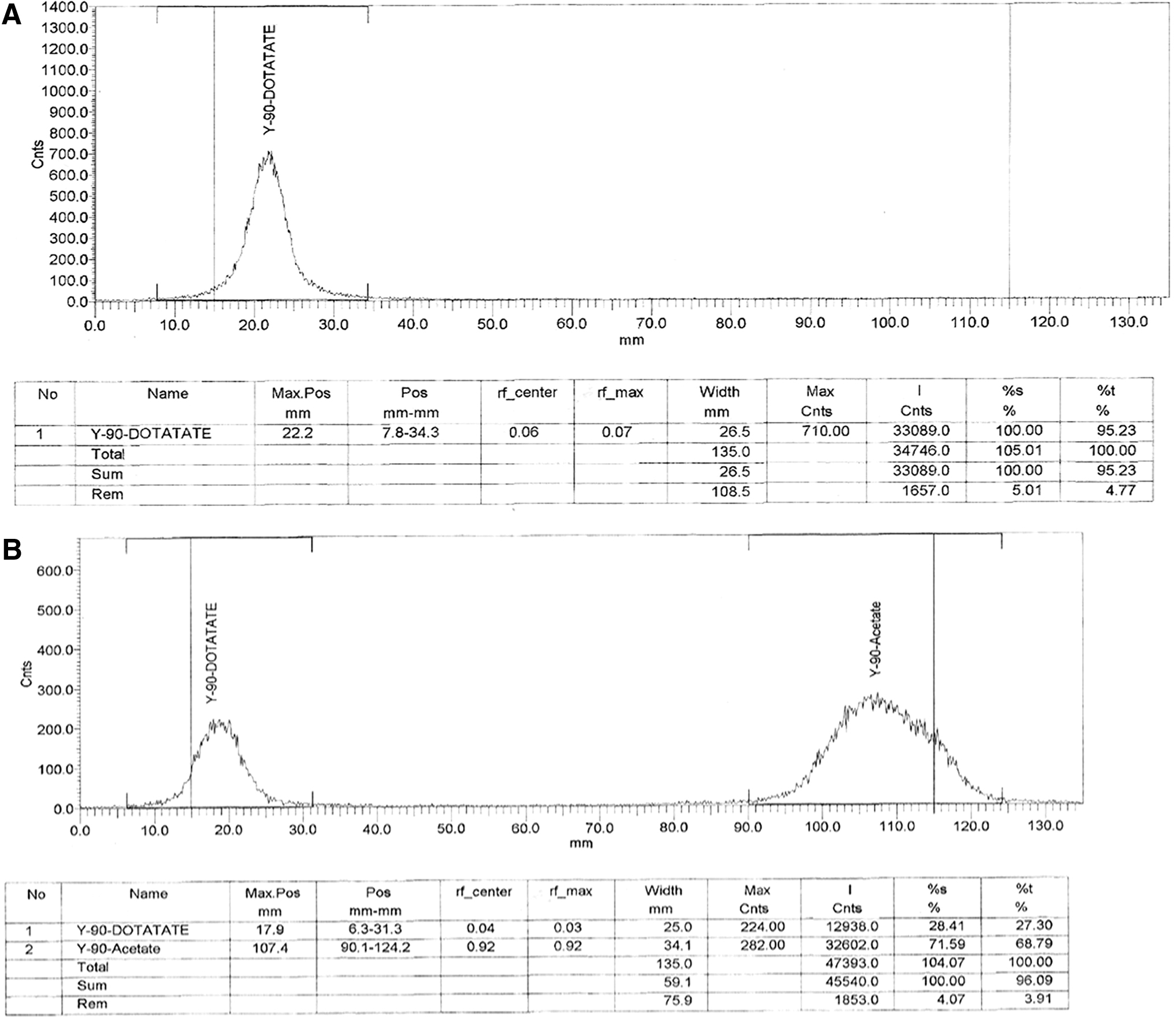
Radio-Thin-Layer chromatogram of

For validating the radio-TLC and radio-HPLC method, the 90Y-DOTATATE was spiked with a known concentration of 90Y-Acetate. Radio-TLC chromatogram (Fig. 5C) exhibits two peaks with Rf 0.92 and 0.04 corresponding to 90Y-Acetate and 90Y-DOTATATE, respectively, whereas radio-HPLC chromatogram (Fig. 5D) exhibits two peaks with Rt 3.35 and 11.3 min corresponding to 90Y-Acetate and 90Y-DOTATATE.
Stability of 90Y-DOTATATE
In vitro (radio-HPLC, Fig. 6A) stability of the 90Y-DOTATATE was found to be 98.70% ± 0.53% up to 72 h upon storage at −20°C using 60 mg/mL of gentisic acid as the stabilizer. Radio-TLC chromatogram (Fig. 6B) ascertains the in vitro serum stability of 90Y-DOTATATE with RCP of 98.62% ± 0.47% upon 24 h postincubation (37°C) and further storage for 24 h at −20°C.
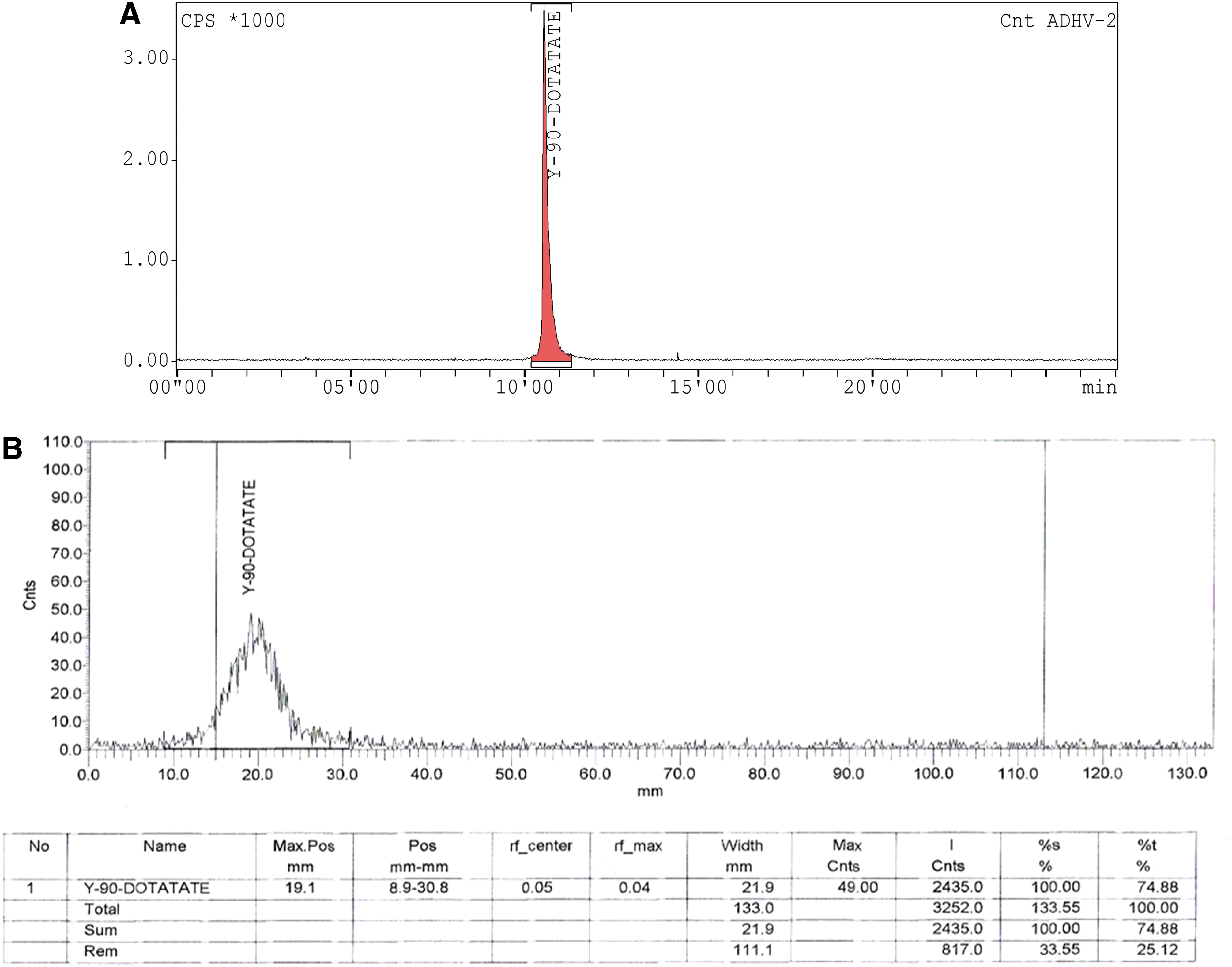
Table 3 demonstrates the physicochemical and biological quality control results of the produced 90Y-DOTATATE.
Quality Control Results of 90Y-DOTATATE
HPLC, high-performance liquid chromatography; TLC, thin-layer chromatography.
In vitro cell binding and cell internalization of 90Y-DOTATATE
In vitro cell-binding studies carried out in AR42J cells showed a rapid and specific binding of 25% ± 0.1% with 90Y-DOTATATE (0.7 nM) at 30 min. The cell binding reached a plateau after 30 min of incubation with the radiopharmaceutical. The cell binding reduced to 5.5% ± 0.2% (25% inhibition) when incubated with 100 nM of cold DOTATATE, indicating the specificity of 90Y-DOTATATE for SSTR-2 antigen. Nonspecific MCF7 cells showed only background counts. Figure 7A shows the total binding at different incubation times.
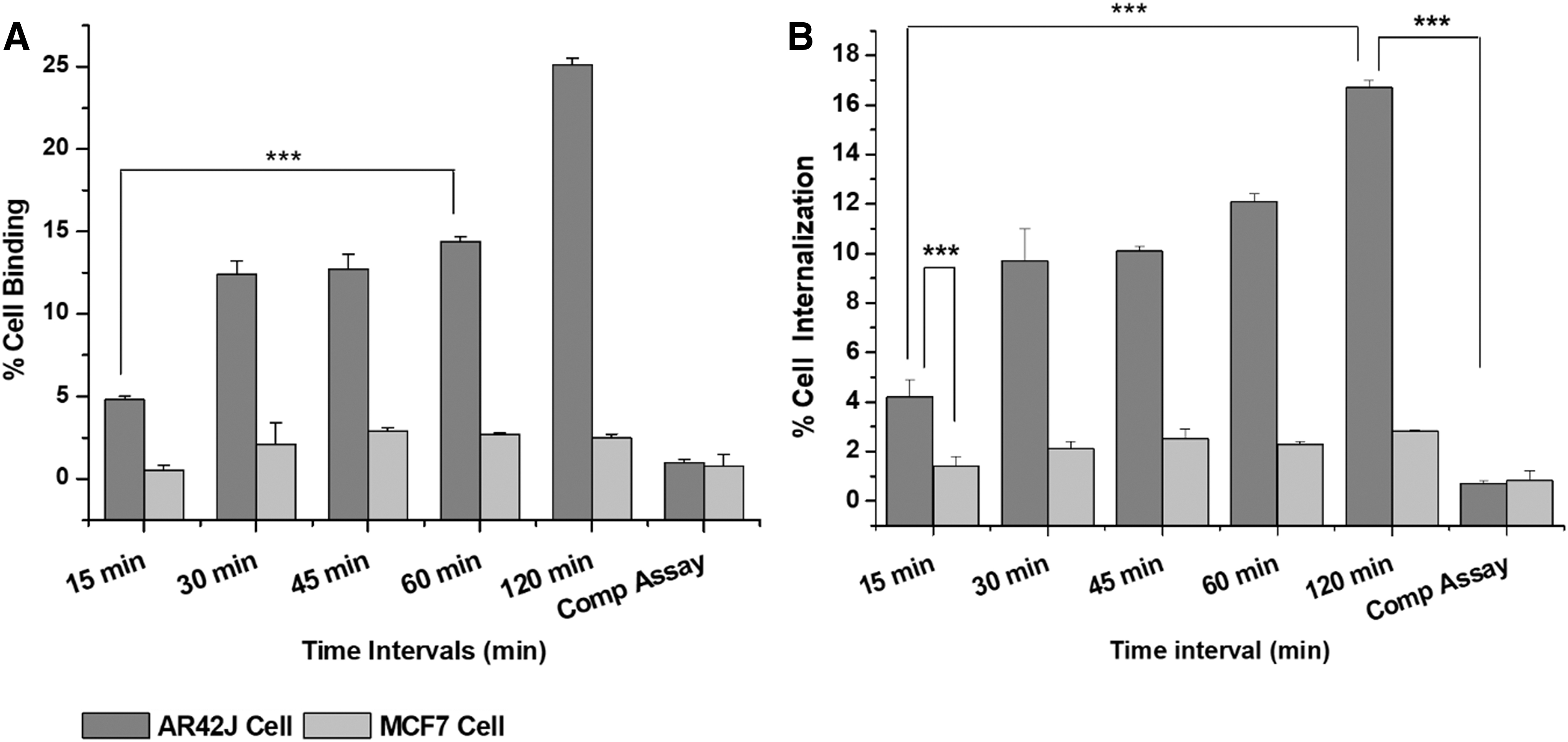
Percentage of the radiopharmaceuticals internalized into AR42J tumor cells at different incubation times is also shown in Figure 7B, which indicates the percentage of the total cell binding after acid treatment to remove the unbound fraction of radiopharmaceutical on the cell surface.
Biodistribution studies of 90Y-DOTATATE in male nude mice
Biodistribution profiles of 90Y-DOTATATE in male nude mice carrying AR42J pancreatic adenocarcinoma xenograft tumor are shown in Figure 8A. In the biodistribution study, the tumor uptake value (2.9% ± 0.8% dose/g) observed using 90Y-DOTATATE was 14.6-fold higher compared with blood (0.2% ± 0.14% dose/g), which is statistically significant (p < 0.01).
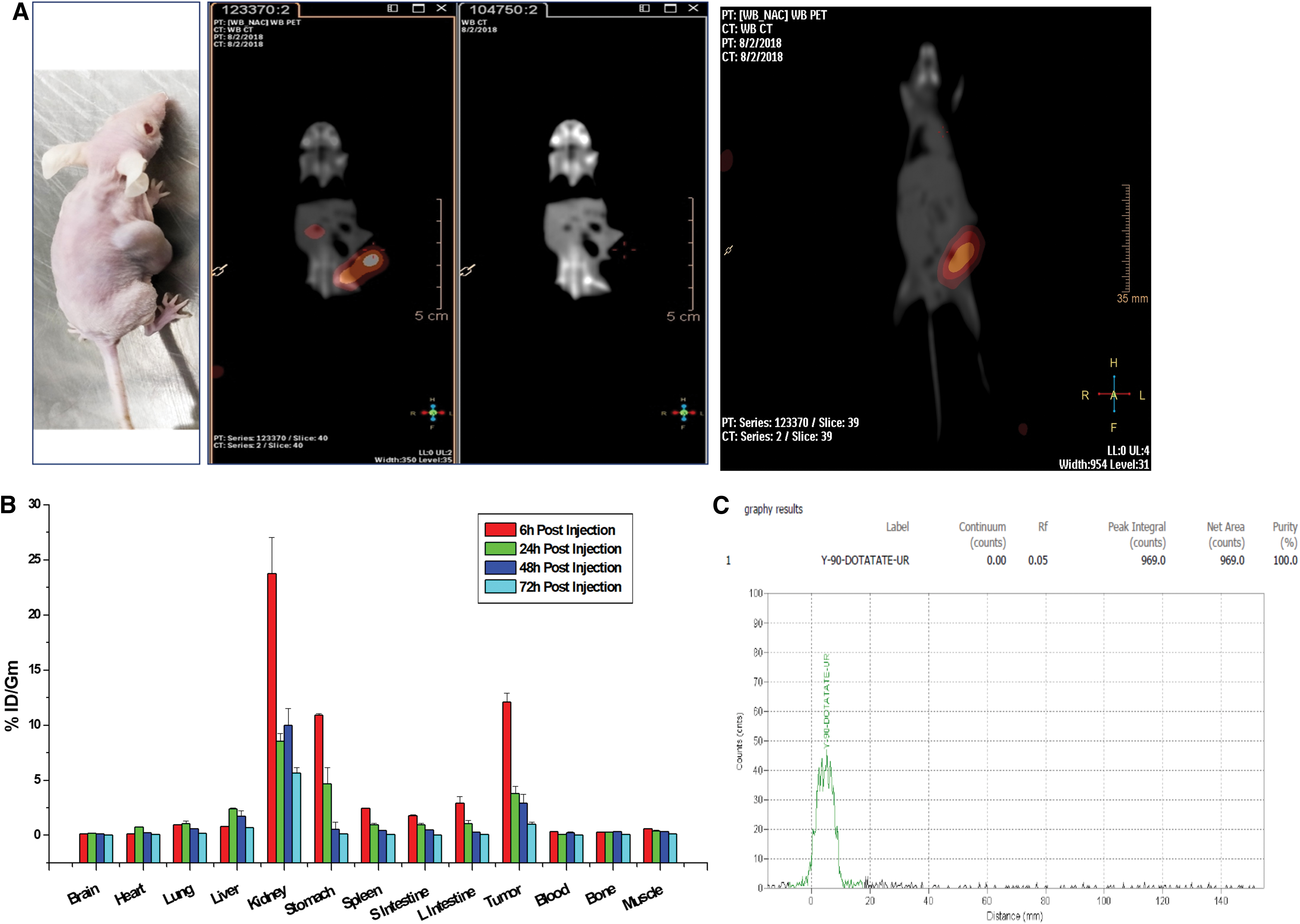
90Y-DOTATATE was found to be cleared predominantly by the renal route. Radioactivity in the blood and most of the organs decreased after 48 h postinjection. High uptake and long-term retention of radioactivity were found in the kidney (9.96% ± 1.56% dose/g), which is in accordance with our scintigraphy data as shown in Figure 8B. Pharmacokinetic studies in male nude mice confirmed the in vivo stability of the product, as confirmed by the urine sample TLC 24 h postinjection (Fig. 8C).
Clinical efficacy of 90Y-DOTATATE
The whole-body post-therapy Bremsstrahlung image (Fig. 9A) of patient with pancreatic NET involving liver metastasis after 1st cycle, whereas Bremsstrahlung image (Fig. 9B) of the same patient post 2nd cycle of 90Y-DOTATATE therapy shows ideal localization of radiopharmaceutical in tumor. The pretherapy 68Ga-DOTATATE image (Fig. 9C) was similar to post-therapy (after 1st cycle) Bremsstrahlung image of the same patient, showing significant tumor uptake of indigenously produced 90Y-DOTATATE.

On follow-up after 3 months, post-therapy scan using 68Ga-DOTATATE of the same patient showed reduction in the tumor uptake (Fig. 9D), which corroborates with excellent clinical efficacy of the administered 90Y-DOTATATE. Post-therapy, PET/CT scan was carried out for the same patient after 1st and 2nd cycle of 90Y-DOTATATE treatment (Fig. 9E) to study the imaging characteristics of 90Y-DOTATATE with lower positron flux.
Clinical significance and response of patients who underwent 90Y-DOTATATE PRRT
The PRRT therapy with90Y-DOTATATE was initially adopted in our institute in Sequential duo-PRRT format 24 ; in this protocol, patients with tumor lesion size of >5 cm and no response to two cycles of 177Lu-DOTATATE PRRT were considered for 90Y-DOTATATE as part of sequential duo-PRRT with 177Lu-DOTATATE. The 90Y-DOTATATE therapy (in the sequential duo-PRRT regimen) was tolerated well by all 12 patients, with mild nausea in 2 patients (a standard observation in most PRRTs due to amino acid coinfusion) and transient grade I hematotoxicity in 2 patients reverting to normal between 10 and 12 weeks following 90Y-DOTATATE treatment, with no nephrotoxicity or hepatotoxicity, until the follow-up period.
There was excellent tracer uptake in the known lesions on post-PRRT 90Y-DOTATATE imaging (the Bremsstrahlung and PET/CT imaging were compared with previously done 68Ga-DOTATATE PET/CT and 177Lu-DOTATATE post-therapy scans). A clinical patient example is depicted in Figure 9A–D in the Clinical efficacy of 90Y-DOTATATE section.
Discussion
β− radionuclide impurity
The presence of various actinides (238U, 239Pu, 241Am, 244Cm) and fission products (137Cs, 144Ce, 106Ru, 147Pm, 125Sb, 106Rh, 90Sr129I, 106Pd, 152/154Eu) makes the HLLW solutions radiotoxic and hazardous. 25 Separation of purified 90Sr therefore poses a challenging task. The 90Sr (T1/2: 28 years) attains secular equilibrium with 90Y (T1/2: 2.67 d) in a short period and constitutes to be a perpetual source of 90Y. Some of these actinides and fission products contribute for α, β−, and γ-emitting radionuclidic impurities in 90Y-Acetate solution. The major source of β−-emitting radionuclide impurity in 90Y-Acetate solution is 90Sr. The specified levels of 90Sr content in clinical-grade 90Y-Acetate solution should be less than ≤2.5 μCi/Ci of 90Y. Therefore, it becomes important to accurately determine such low content of 90Sr. The estimation of 90Sr content by EPC technique was not deemed suitable for estimating the 90Sr content in the 90Y-Acetate solution. A second method, which is essentially carrying out β− spectrometry enables the accurate estimation of the levels of 90Sr in 90Y-Acetate solution.
Gross γ radionuclide impurity
The contributing γ-emitting radionuclidic impurities in 90Y-Acetate solution are 144Ce and 125Sb. The recording of γ spectrum in 64 k (2 h) and 4 k (24 h) channels allow the determination of high-energy, low-abundance γ-emitting radionuclidic impurities (if any) in the presence of long-lived γ-emitting radionuclides in the 90Y-Acetate solution.
Gross α radionuclide impurity
The determination of the limit of α radionuclide in 90Y-Acetate solution is critical and poses a major challenge. This is particularly difficult since no pharmacopeia reference is available stating the acceptable limits of gross α activity. Hence for establishing the limit, we had to focus on assessing the content of the radionuclides, which contribute to the α impurities in 90Y-Acetate solution. Considering the extraction of 90Y from HLLW, the major α radionuclides, which could be possibly present are 241Am or 239Pu. The hazard factor (HF) for 241Am (3.85 × 10⁹) is 80–90 times more compared with 239Pu (1.91 × 10⁷). 25 Hence the gross α impurities in 90Y-Acetate solution are attributable to the presence of 241Am.
Taking the annual limit of intake for 241Am (Ingestion limit: 30,000 Bq or 810 nCi, Inhalation limit: 220 Bq or 5.94 nCi) into consideration, 26 the permissible limits of gross α impurity levels were fixed at ≤1.0 nCi/Ci of 90Y. The single patient therapeutic PRRT dose does not exceed 120 mCi and the patient undergoes three cycles in a year. Considering the presence of 1 nCi of gross α levels in 90Y-Acetate solution, the patient will receive 0.36 nCi of gross α in a single year, which is much less than the permissible limit. For detecting such low levels of gross α in 90Y-Acetate solutions, the commonly used liquid scintillation-based counting will not suffice, hence ZnS (Ag)-based scintillation counting and solid-state track detector-based scanning should be adopted.
RCP of 90Y-Acetate
The presence of a single chemical species of 90Y is a very important factor for radiolabeling with peptides or monoclonal antibody. There is a finite chance that 90Y(NO3)3 be present apart from the desired radiochemical90Y-Acetate. During the transportation of 90Y from the feed chamber (containing 4 M HNO3) of second-stage SLM generator to receiver chamber (containing 1 M CH3COOH) through CMPO-impregnated PTFE membrane, there is a possibility of existing 90Y(NO3)3 in final 90Y-Acetate solution. The NO3 − concentration has been estimated and the presence of 90Y(NO3)3 has been ruled out.
Nitrate ion concentration in 90Y-Acetate
Stripping of nitrate ions from 4 M HNO3 present in the feed chamber of second stage SLM generator to receiver compartment (containing 1 M CH3COOH) through CMPO-impregnated PTFE membrane increases the nitrate ion concentration in 90Y-Acetate solution. Higher levels of nitrate content in any pharmaceutical and food product are toxic to human beings. The average daily intake of nitrate ion is 7.0 mg/kg of body weight per day, whereas LD50 values of sodium nitrate in rabbit is 1600–9000 mg per kg of body weight. 22 However, the level of nitrate ion concentration in the 90Y-Acetate solution was found to be 1.25 mg/kg of body weight in a single cycle of PRRT (single cycle dose is 120 mCi). Considering a patient undergoes three cycles of PRRT in a year, 3.75 mg/kg of body weight will be the total intake of nitrate ions in patients undergoing PRRT in a whole year.
Metal contents in 90Y-Acetate
The presence of a competing metal ion M3+, such as Fe3+, Cu2+, Zn2+ etc. drastically lowers the radiolabeling yield of the resultant 90Y-labeled peptides. The competing M3+ metal ions arise in 90Y-Acetate solutions during separation of 90Sr from Purex high-level waste. These transition metals have high thermodynamic stability with chelators used in radiolabeling reactions. Such metals are usually present in the purified 90Sr(NO3)2 feed solution at comparatively higher concentrations than permissible limits. However, they do not get transported through KSM-17-impregnated PTFE membrane to the receiver chamber of first-stage SLM generator containing 4 M HNO3. The levels of intervening metal content in 90Y-Acetate solution could be substantially reduced by using ultrapure grade 4 M HNO3 and 1 M CH3COOH.
Phosphorus-based impurities in 90Y-Acetate
The phosphorous content in the 90Y-Acetate solution may increase, due to radiolytic degradation of the KSM-17 and CMPO (both are phosphorus-based polymers)-impregnated PTFE membrane during the process of separation, even though these PTFE membranes are meant for single use. The absence of any peak in 31P-proton-decoupled NMR and comparison with that of the 31P-proton-decoupled NMR of CMPO and KSM-17 (which individually shows a single peak) establishes that the 90Y-Acetate solution is devoid of any phosphorous content.
Stable 90Zr content in 90Y-Acetate
There is no defined limit of stable 90Zr in 90Y-Acetate solution available in the reported literature. However, at the same time, the stable 90Zr is toxic to humans. 90Zr obtained from standard daily diet is 3.5 mg, which means that the allowed daily intake is 3.5 mg, per individual. This corresponds to 1280 mg of 90Zr for a 70 kg body weight individual in a year from standard dietary sources. 23 Eventually, 90Y decays to 90Zr, hence maximum 90Zr produced by decay of repeated doses from 90Y is 1 μg in a single year. 23 Apart from decay of 90Y to 90Zr, there are also chances for increased levels of 90Zr in 90Y-Acetate solution during two-stage SLM-based separation process and various purification processes of HLLW.
The level of 90Zr in our indigenously sourced 90Y-Acetate solution was 0.4 ng/kg of body weight in a single cycle of PRRT (single cycle dose is 100 mCi). Considering a patient undergoes three cycles of PRRT in a year, 1.2 ng/kg of body weight will be the total intake of 90Zr in patients in the whole year. The intake of stable 90Zr in patients undergoing PRRT will be <90 ng/70 kg body weight in any circumstances, which is much less than the allowed annual intake of 90Zr.
Radiolabeling of DOTATATE using indigenously sourced 90Y-Acetate
With respect to the radiolabeling of peptide with 90Y, the 90Y-Acetate has an advantage over that of 90Y-Chloride. Generally radiolabeling is carried out in acetate buffer either in the form of sodium acetate or ammonium acetate. Therefore, by using 90Y-Acetate, the pH of the reaction mixture can be adjusted to 4.0 with less volume of buffer without addition of any NaOH.
Radiolabeling was carried out using both the buffers that is, sodium acetate and ammonium acetate under same reaction conditions. However, 0.2 M ammonium acetate buffer has an advantage over that of 0.2 M sodium acetate buffer, since the limited volume of 0.2 M CH3COONH4 buffer (3 mL) has a good buffering capacity to raise the pH of reaction mixture from 2.0 to 4.0 for 100–120 mCi of 90Y-Acetate. Comparatively CH3COONH4 buffer stabilizes the radiolabeling reaction without any 2, 5-dihydroxybenzoic acid or ascorbic acid.
Incomplete radiolabeling of 90Y-DOTATATE was observed when 2, 5-dihydroxybenzoic acid was added during the radiolabeling process. Therefore, a C18 Sep-Pak purification postradiolabeling becomes mandatory to obtain the desired RCP of 90Y-DOTATATE (>98%). The addition of a required concentration of stabilizer (2, 5-dihydroxybenzoic acid) after radiolabeling process allows to stabilize 90Y-DOTATATE with RCP >98% without any C18 Sep-Pak purification. The addition of stabilizer postradiolabeling process also increases the in vitro stability of 90Y-DOTATATE up to 72 h on storage at −20°C with retention of RCP >98%.
Quality control of 90Y-DOTATATE
Apart from Radio-TLC, Radio-HPLC allows to detect the presence of radiochemical impurities (if any) at low levels in the 90Y-DOTATATE.
The choice of gradient mode, namely steep gradient or shallow gradient, is an important step toward determining of RCP in 90Y-DOTATATE. The chances of detecting low levels of radiochemical impurities (if any), in 90Y-DOTATATE, using steep gradients, is by far the least as compared with the results when a shallow gradient mode is used. Hence the shallow gradient mode HPLC must be adopted for determining RCP of 90Y-DOTATATE.
In vitro and serum stability of 90Y-DOTATATE
Different storage conditions of 90Y-DOTATATE were evaluated to optimize the in vitro stability of the product. 90Y-DOTATATE started degrading at 24 and 6 h postradiolabeling on storage at 4°C with stabilizer and in both cases RCP falls <90%. Therefore, the recommended use of 90Y-DOTATATE is within 3 h postformulation upon storage at room temperature and 4°C.
In vitro and in vivo studies of 90Y-DOTATATE
In vitro cell-binding studies carried out in AR42J cells showed high specificity of 90Y-DOTATATE for SSTR-2. In the in vitro experiments, the cell-binding percentage of 30% could be obtained with the 90Y-DOTATATE and the results were comparable with values reported earlier. In vitro cell internalization and competition binding assays ascertain the specificity and efficacy of the radiopharmaceutical.
Detailed bioevaluation studies in AR42J xenograft tumor-bearing nude mice further confirmed the specificity of the product. High uptake in the tumor target and long retention thereof ascertains the effective dose delivery to the NET cancer tissue. Prolonged retention of the 90Y-DOTATATE in the kidney as is known confirms the renal mode of excretion. As reported earlier, the damage incurred to kidney can be minimized by renal protection through preadministration of positively charged amino acid.
Therapeutic value of 90Y-DOTATATE
Post 90Y-DOTATATE therapy, Bremsstrahlung image of the same NET patient, using γ camera corroborated with the diagnostic 68Ga-DOTATATE scan, thereby proving efficient radiolabeling and excellent tumor uptake with ideal target to background contrast.
Post 1st cycle (3 months) of 90Y-DOTATATE therapy, 68Ga-DOTATATE scan of the same patient showed reduced uptake of the radiopharmaceutical in the liver, thereby proving excellent therapeutic efficacy of the administered 90Y-DOTATATE. Post 1st cycle (3 months) of 90Y-DOTATATE therapy, 68Ga-DOTATATE scan of the same patient showed reduced uptake of the radiopharmaceutical in the liver, which was indicative of the possible therapeutic efficacy of the administered 90Y-DOTATATE.
Since the sequential duo PRRT with 90Y-DOTATATE was not completed in this group of patients, definitive data on therapeutic response assessment especially on scan/imaging response of the large-sized tumors, was not possible at this stage. However, the PRRT procedure was indicative of the tolerability of the agent with no observation of side effects.
Conclusions
Using a SLM-based 90Sr/90Y generator, where the feed 90Sr is obtained from HLLW, clinical-grade 90Y-Acetate could be obtained. This radiochemical precursor was successfully used in formulation of therapeutic doses of 90Y-DOTATATE. The quality control parameters of 90Y-Acetate were validated and compared with that of the pharmacopeia standard. This 90Y-Acetate has been utilized in the formulation of patient doses of 90Y-DOTATATE.
To the best of the authors' knowledge, the monograph of neither 90Y-Acetate nor 90Y-DOTATATE has been included in any pharmacopeia. The detailed validation of the quality control method of 90Y-Acetate was necessary for obtaining regulatory clearance of the radiochemical precursor. Successful formulation of 90Y-DOTATATE and its clinical translation exemplified recovery of “wealth from waste”. Clinical results in patients showed expected distribution in patients with large volume NET (≥ 5 cm) and its metastases.
Footnotes
Acknowledgments
The authors gratefully acknowledge the support and encouragement received from Dr K. Agarwal, erstwhile Director, Nuclear Recycle Group, BARC, Mumbai, India, and Dr C. P. Kaushik, Associate Director, Nuclear Recycle Group, BARC, Mumbai, India.
Disclosure Statement
No competing financial interests exist.
Funding Information
No funding was received for the work.