




Abstract
Introduction:
Cancer remains a major global health burden, with treatment outcomes often impacted by tumor heterogeneity and individual patient factors. Personalized cancer therapies are increasingly essential to improve prognosis and response.
Methods:
This study explores the integration of epigenomics and radiopharmaceuticals into preoperative chemoradiotherapy as a strategy to personalize cancer treatment. Epigenomic profiling identifies reversible heritable changes in gene expression, revealing tumor biology and therapy resistance mechanisms. Radiopharmaceuticals, which combine radioactive isotopes with tumor-specific ligands, enable targeted radiation delivery.
Results:
The combined use of epigenetic markers and radiopharmaceuticals allows for tailoring chemoradiotherapy regimens, enhancing tumor selectivity, and minimizing off-target effects. Early clinical data show improved therapeutic efficacy, tumor downstaging, higher survival rates, and reduced recurrence. Epigenetic therapies, including DNA methylation and histone deacetylase inhibitors, further sensitize tumors to radiopharmaceuticals, enhancing treatment synergy.
Conclusions:
Integrating epigenomics and radiopharmaceuticals into preoperative chemoradiotherapy represents a significant advancement toward personalized oncology. This approach enhances treatment precision and effectiveness while reducing toxicity. Continued research and clinical validation are critical to transitioning this dual strategy into routine practice.
Introduction
Despite public health successes, cancer remains a significant worldwide health concern based on frequency and death rate. 1 Because of their variety and biological relevance, various malignancies always react differently to surgical, chemotherapeutic, and radiotherapeutic therapy. 2 Customized medicine seeks to minimize these disparities by developing treatment approaches targeted to the particular molecular and genetic biology of the tumor. 3 Operating at the limits of this research, merging epigenomics with radiopharmaceuticals and using them to endure chemoradiotherapy offer a new model of increased accuracy and efficacy of the treatment. 4 Epigenomics provides partial answers of tumor biology because the study of gene expression changes without DNA sequence modification. 5 Dendritic changes, including DNA methylation, histones, and noncoding RNA interactions, may affect the equilibrium of the tumor microenvironment, chemoradiotherapy resistance, gene expression, and tumorigenesis. 6
Investigating these epigenetic markers helps clinicians forecast how a patient’s tumor will react to chemoradiotherapy treatment, thus allowing for better optimized treatment planning. 7 Aiming at those pathways also reverses the pathways of resistance, increasing the efficacy of standard treatments. 8 In contrast to other forms of cancer treatments, radiopharmaceuticals—radioactive isotopes labeled to tumor-targeting molecules—offer some level of individualization. 9 Intervention at these particular epigenetic pathways can also destabilize the resistance mechanisms and thus enhance the outcomes of traditional therapy. 8 Unlike other cancer treatments, radiopharmaceuticals, which consist of radioactive isotopes conjugated to tumor-targeting moieties, provide a certain level of individuality. 9 By carefully administering radiation targeted at cancer cells with minimal effect on surrounding normal tissues, therefore limiting harm to those tissues, these drugs decrease systemic toxicity and maximize therapeutic benefit. 10
Conventional chemoradiotherapy tends to cause nonspecific damage and presents major side-effects. 11 But when radiopharmaceuticals are part of treatment protocols, radiation can be administered with greater selectivity, greatly improving therapeutic efficacy at decreasing adverse effects. 12 The integration of epigenomics and radiopharmaceuticals in preoperative chemoradiotherapy is very promising for the optimization of cancer therapy. 13 With the use of epigenetic profiling, clinicians can identify the most effective radiopharmaceutical agents for a given patient so that targeted therapies are tailored to tumor-specific features. 14 This combination not only maximizes tumor control but also optimizes tumor downstaging, which is especially advantageous for surgery patients. 15 Improved tumor shrinkage before surgery can result in improved surgical results, higher likelihood of complete resection of the tumor, and reduced recurrence. 16 Early clinical trials have shown promising outcomes, revealing better survival and diminished treatment resistance if epigenetic therapy is paired with radiopharmaceuticals. 17 Treatments like DNA methylation agents and histone deacetylase inhibitors were able to sensitize tumors to radiation and significantly enhance responses to treatment. 18 The more investigation within this discipline goes forward, the incorporation of such techniques into day-to-day practice could constitute an important advancement in the development of truly personalized oncology. 10
The research gaps are as follows: Cancer treatment efficacy is hindered by tumor heterogeneity; personalized therapies are crucial to improve outcomes. Integrating epigenomic profiling with radiopharmaceuticals in preoperative chemoradiotherapy enables targeted, patient-specific treatment. This synergy enhances tumor response, reduces side-effects, and improves survival. This dual approach represents a promising advance in personalized oncology, requiring further research for clinical adoption.
The contribution of this article is structured as follows: In “Related Work” section, the related work of cancer treatment is studied. In “Proposed Method” section, the proposed methodology is explained. In “Result of the Article” section, the discussion and result of the article are analyzed. Finally, in “Conclusion” section, the article is concluded with the future work.
Related Work
This article discusses the promise of merging epigenomics with radiopharmaceuticals in preoperative chemoradiotherapy. It discusses the mechanism of action, therapeutic gain, and the emerging clinical uses and, in doing so, pinpoints how this combined modality will revolutionize the treatment of cancer by rendering it more specific, effective, and patient friendly. The future will depend on further research and clinical trials to accurately establish its validity and release its revolutionizing capabilities in oncology.
Tumor heterogeneity and immune response/progression prediction have both benefited greatly by radiogenomics, which examines the link between genomics and imaging phenotypes. Since radiogenomics offers access to whole-tumor information instead of restricted biopsy specimens and costs less than conventional genetic sequencing, it is an unavoidable result of present advances in precision medicine. Studies show that radiogenomic models can achieve up to 85%–90% accuracy in distinguishing tumor subtypes and predicting treatment response, according to the study by Liu et al. 19 Radiogenomics enables targeted treatment to target a whole heterogeneous tumor or cluster of tumors by delivering voxel-by-voxel genetic information. Convolutional neural network (CNN) has many applications beyond only measuring lesion features. It may differentiate benign from malignant structures, classify patients based on disease risk, and improve imaging and screening accuracy. Radiogenomics using CNNs has achieved accuracy rates of 85%–95% in differentiating benign from malignant lesions and predicting patient risk profiles in clinical imaging studies, according to the study by Shui et al. 20 Here, it has used a multiomic method to characterize the radiogenomic use in precision medicine. To advance quantitative and personalized medicine, review the primary uses of radiogenomics in cancer diagnosis, treatment planning, and assessments. It wraps up by talking about the breadth and clinical usefulness of these technologies, as well as the problems that radiogenomics faces. Radiogenomics, through multiomic integration, has improved cancer diagnosis accuracy by up to 90%, enhanced treatment planning precision by 70%–85%, and enabled early therapy response assessment with up to 80% predictive accuracy, despite challenges such as data standardization and limited clinical adoption, according to the study by Zhou et al. 21
Due to the fast advancement of new technology, such as genome sequencing and artificial neural network, radiogenomics has become a cutting-edge science in personalized medicine. Radiogenomics is a field that uses deep learning to build a prediction model that uses medical picture quantitative data and individual genetic phenotypes to classify patients, direct treatment plans, and assess clinical results, according to the study by Xing et al. 22 Radiogenomics has recently shown predictive utility in investigations of different tumor types. In addition, outline some of the problems with radiogenomic analysis and how previous studies have addressed machine learning. Radiogenomics offers a viable alternative to invasive procedures, is easy to replicate, and may identify ongoing changes at a cheap cost, according to the study by Jain et al. 23 However, there is still a need to establish the workflow requirements and internationally accepted standards for statistical methodologies. Consequently, radiogenomics has the potential to revolutionize computer-assisted tumor diagnosis, therapy, and prognosis prediction in everyday clinical practice. It provides an overview of radiogenomics as a whole and discusses the key methods and statistical techniques used in the field today. Radiogenomics has the potential to improve tumor diagnosis accuracy by 85%–90%, enhance therapy planning precision by 70%, and increase prognosis prediction accuracy by 80% although establishing standardized workflows and statistical methodologies remains crucial for widespread clinical adoption, according to the study by Rafanan et al. 24 Combining epigenomics and radiopharmaceuticals with preoperative chemoradiotherapy is revolutionizing cancer treatment by enabling highly personalized and targeted approaches. Epigenomic profiling reveals tumor-specific gene expression patterns, guiding the use of radiopharmaceuticals that deliver precise radiation to cancer cells. This synergy enhances treatment effectiveness, reduces toxicity, and improves patient outcomes.
Proposed Method
Radiation oncologists are transforming cancer treatment by integrating epigenomics and radiopharmaceuticals into preoperative chemoradiotherapy. Epigenomics enables a deeper understanding of tumor biology by identifying reversible changes in gene expression, allowing for the prediction of therapy response and resistance. This knowledge helps tailor treatment plans to individual patients, ensuring more effective and personalized care. Radiopharmaceuticals, which combine radioactive isotopes with tumor-targeting molecules, deliver radiation directly to cancer cells while sparing surrounding healthy tissue. This precision reduces side-effects and enhances treatment safety. When used together, epigenetic insights help sensitize tumors to radiopharmaceuticals, improving their therapeutic impact. The combined approach boosts tumor selectivity, leading to better tumor shrinkage and reduced recurrence rates. As a result, this innovative strategy is setting a new standard in precision oncology. The proposed study offers a significant advancement in real-life cancer treatment by enabling highly personalized targeted therapies that improve effectiveness and reduce side-effects. Its practical application lies in optimizing preoperative chemoradiotherapy using patient-specific biomarkers and precision radiation delivery.
Advancing cancer treatment is possible using epigenomics and radiopharmaceuticals into preoperative chemoradiotherapy. Using patient-specific epigenetic markers, epigenomics enables one to predict and direct customized treatment. Radiopharmaceuticals provide selectivity in radiation as they target cancer cells that do least damage to normal organs. By increasing overall tumor selectivity, the combination treatment enhances the outcomes of the medicines. From improved efficiency, reduced toxicity, and improved treatment of tumors, more efficient surgical procedures are achieved. Through the use of customized, patient-specific therapy for best outcomes, this innovative technique creates individualized oncology and reduces recurrence risk in Figure 1, thereby improving survival.
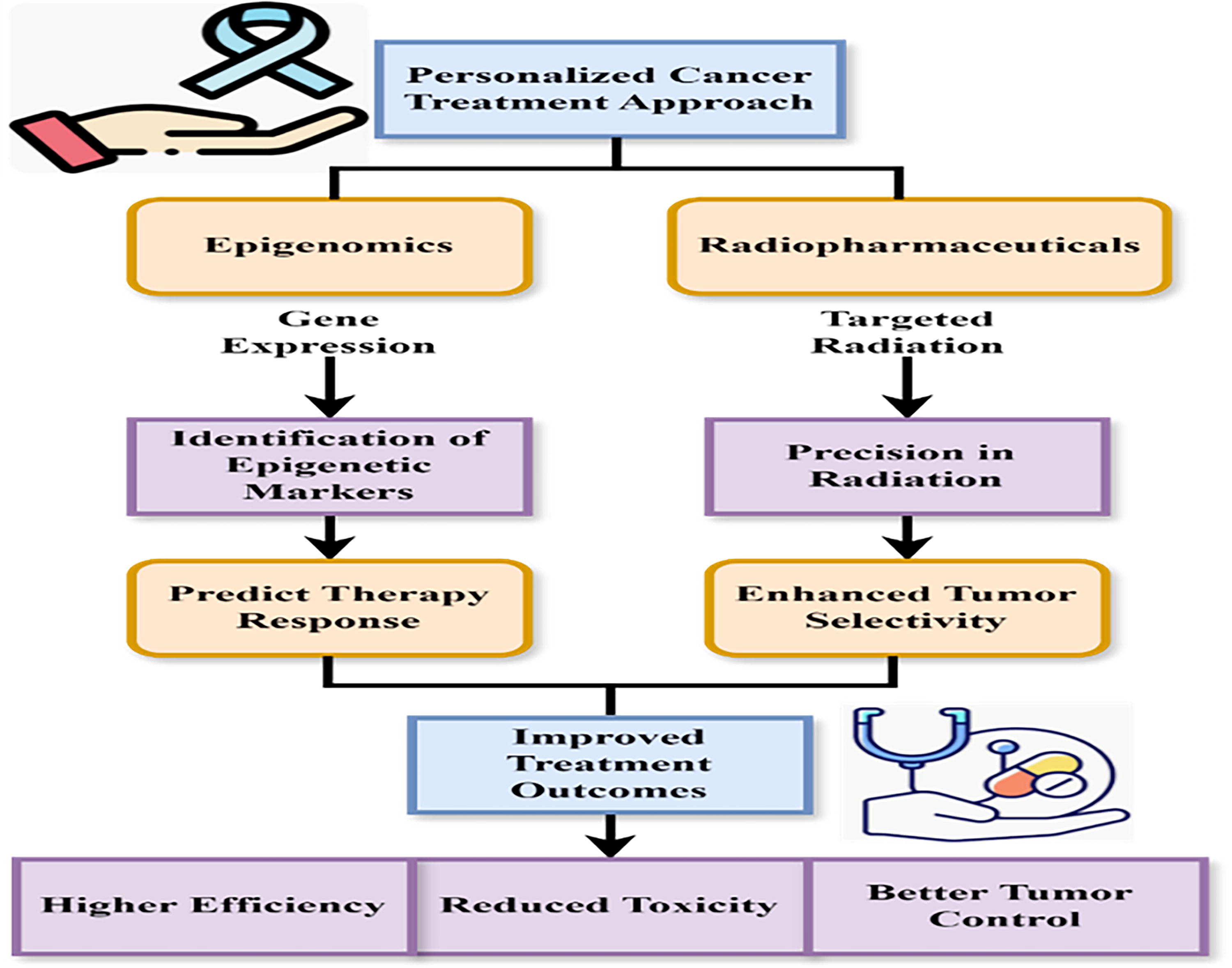
The epigenomics and radiopharmaceuticals in personalized cancer treatment.
In Equation (1)
Equation (2) captures
Equation (3) explains the adaptable
Equation (4) describes therapy modulation by depending
Combining epigenomics and radiopharmaceuticals with preoperative chemoradiotherapy is transforming cancer treatment. Epigenetic modifications influence the response to treatment and drug sensitivity, allowing for individualized treatment approaches. Radiopharmaceuticals deliver targeted radiation that maximizes tumor control and minimizes harm to normal tissue. The combination enhances tumor selectivity and increases the precision and efficiency of treatment. Through the capacity to anticipate therapy response utilizing epigenetic markers, clinicians are able to tailor therapeutic protocols for maximum effect, reducing toxicity and improving patient outcomes. This innovative method is consistent with the future of personalized oncology, ensuring individualized, more effective regimens for cancer treatment that enhance survival and reduce the risk of recurrence, as shown in Figure 2.

The process of advancing personalized cancer therapy.
Equation (5) describes
Equation (6) predicts
Equation (7) describes
Equation (8) describes
Preoperative chemoradiotherapy with epigenomics and radiopharmaceuticals enhances tumor selectivity, accuracy of treatment, and minimization of toxicity. With the capability to enable physicians to forecast how patients will respond to therapies, epigenetic markers can revolutionize cancer therapy. The novel mechanism of cancer treatment enhances patient care in the era of precision oncology by enhancing maximum tumor management, enhancing surgical results, and reducing recurrence risk.
Result of the Article
The combination of radiopharmaceuticals and epigenomics for cancer treatment improves precision, minimizes toxicity, and improves patient outcomes. Epigenomics allows for personalized treatment by identifying specific biomarkers, whereas radiopharmaceuticals deliver targeted radiation to cancer cells, which increases therapeutic efficiency and improves survival, as shown in Table 1.
Comparative Evaluation of Treatment Strategies
An examination of tumor selectivity was carried out for the following three cancer therapeutic methods: traditional chemoradiotherapy, radiopharmaceuticals, and epigenomics plus radiopharmaceuticals. Standard chemoradiotherapy is more damaging to healthy tissues (red), reducing the overall treatment accuracy. Radiopharmaceuticals boost tumor targeting (blue), with less damage to normal tissues. Optimal selectivity is reached utilizing epigenomics + radiopharmaceuticals, dramatically enhancing tumor targeting while limiting damage to bystander cells. Improved personalized oncology ensures more effective, patient-specific cancer therapies (Fig. 3).

Analysis of tumor selectivity.
Equation (9) approximates
The lowest response rate (∼50%) is for traditional therapy, which increases significantly with radiopharmaceuticals to about 70%. The response rate is the highest (∼85%) for epigenomics and radiopharmaceuticals combined, showing the effect of individualized therapy. The findings underscore the need for incorporating precision medicine in oncology for increased therapeutic benefit in Figure 4.
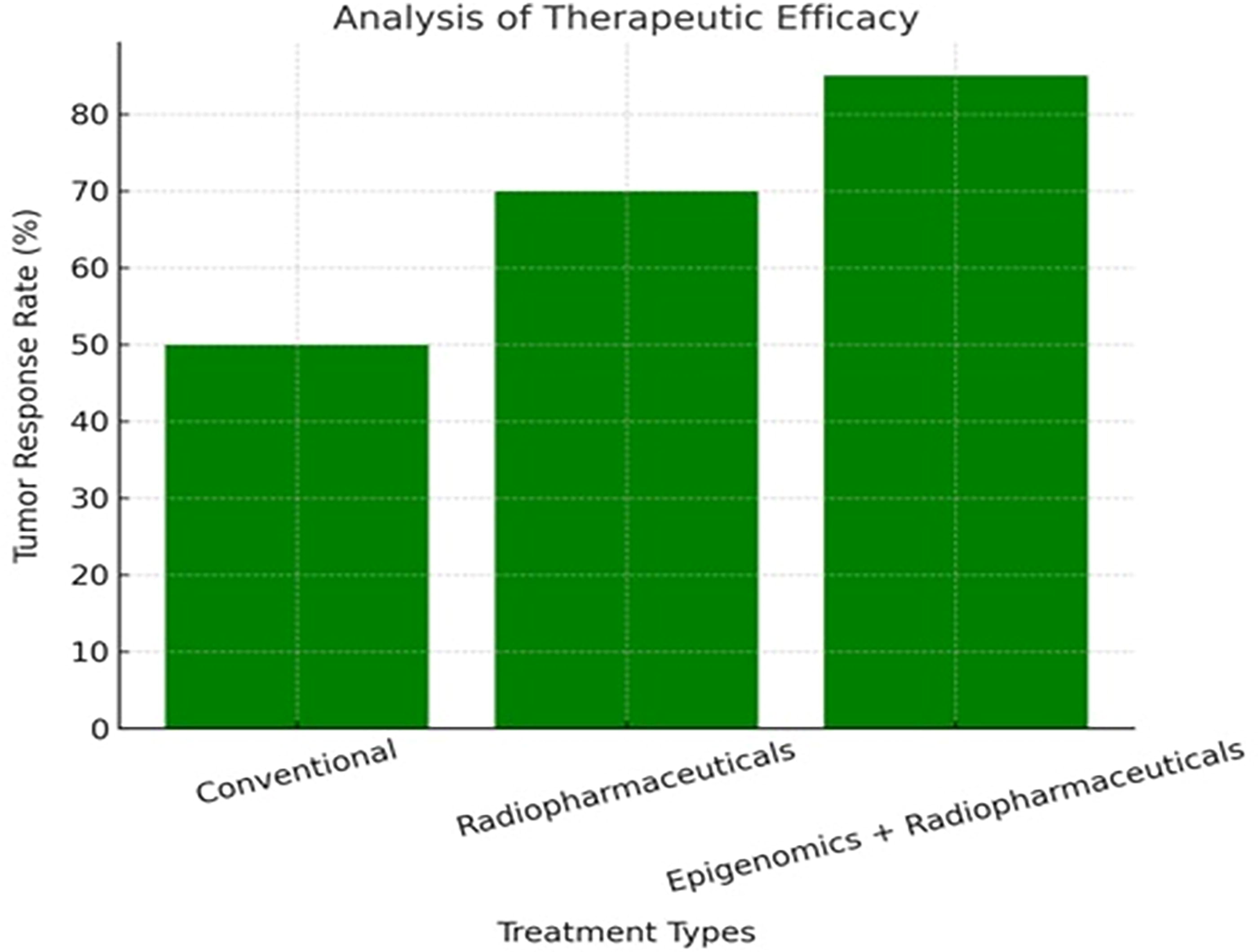
Analysis of therapeutic efficacy.
Equation (10) describes
This emphasizes the effect of precision medicine, with the combination of epigenetic information and precision radiotherapy being more effective for treatment, minimizing toxicity and increasing long-term survival, being a major advancement in individualized cancer therapy, as shown in Figure 5.
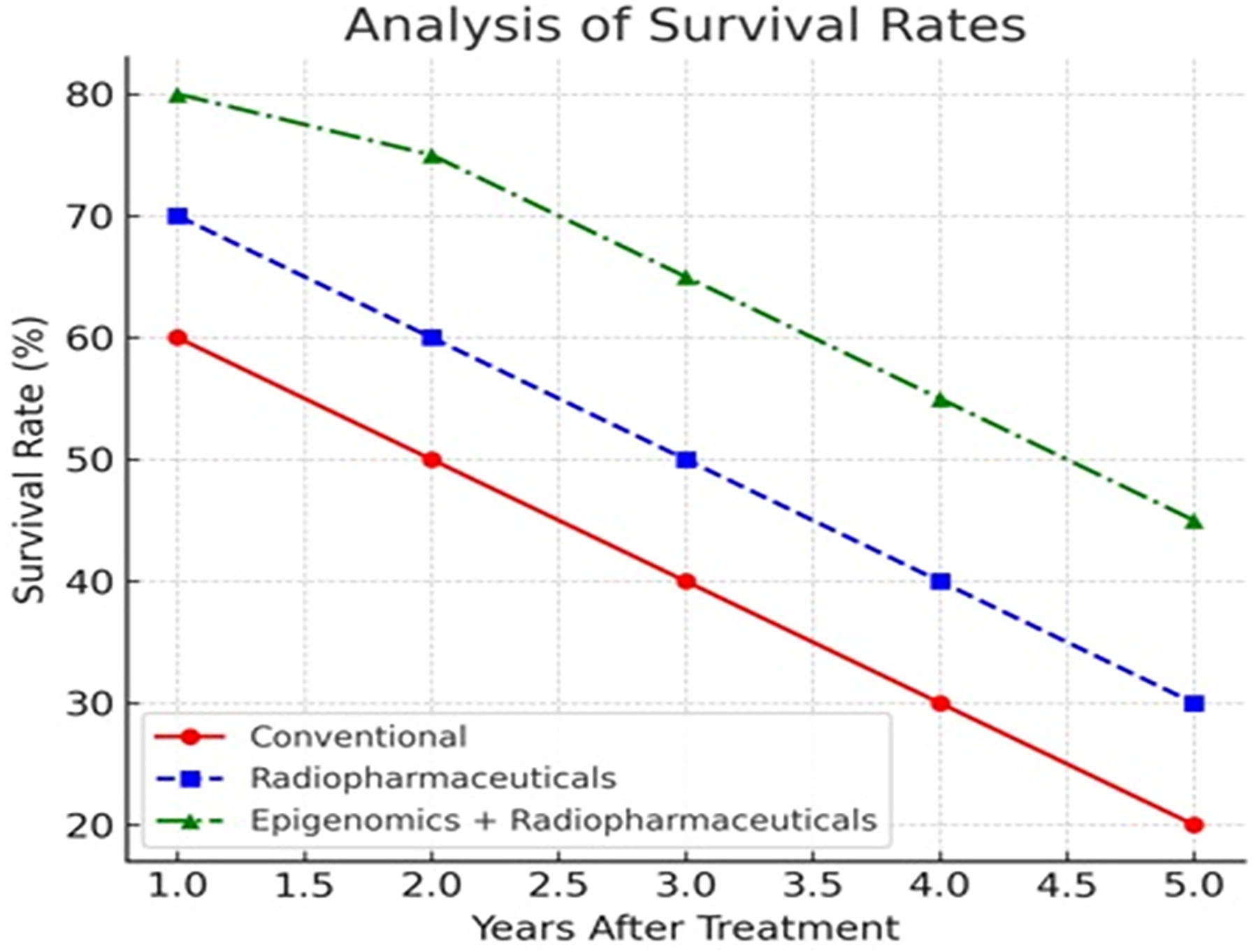
Analysis of survival rates.
Equation (11) models the individualized treatment response by
Conclusion
Combining epigenomics and radiopharmaceuticals with preoperative chemoradiotherapy is a major milestone in tailored cancer therapy. Utilizing patient-tailored epigenetic signatures, clinicians can maximize the response of therapy, enhancing selectivity against tumors and overall treatment effectiveness while minimizing toxicity. Radiopharmaceuticals complement by seeking out cancer cells with minimal effect on normal cells. The combination has been successful in reducing tumor size, enhancing surgical outcomes, and enhancing survival. Furthermore, epigenetic therapies also have the capability to increase sensitivity of the tumor to radiopharmaceuticals, leading to synergistic effects.
Footnotes
Authors’ Contributions
Y.J.: Data curation, validation, and supervision. S.Z.: Conceptualization, methodology, writing—original draft, and validation.
Disclosure Statement
The authors declare that they have no conflicts of interest related to this research.
Funding Information
The project was supported by the Health Science and Technology Capacity Enhancement Project of Jilin Provincial Department of Health, China (Grant No. 2021LC085) and Jilin City Medical And Health Guidance Project Special (20230406216).