




Abstract

In two amphibian species (Rana and Xenopus), it was found that swimming tadpoles could be produced following transfer from early-cleavage-stage embryos; however, the efficiency declined progressively as nuclei were taken from later stages of development. In addition, although tadpoles were produced, their development to adulthood was limited and adult animals were only obtained in Xenopus. Although development of clones to adulthood was demonstrated following transfer of nuclei from tadpoles, no amphibian clones have ever been obtained using nuclei from adult cells. In these circumstances, tadpoles formed, but they did not metamorphose to adults. It was assumed that all somatic cells have a full chromosome complement and it was suggested that the molecular mechanisms that regulate the formation of different tissues must be so complex and so rigidly fixed that nuclear transfer is not able to reverse them.
A similar pattern of results was obtained in the first mammalian nuclear transfer experiments. In mouse, over 90% of embryos developed to the blastocyst stage following transfer of pronuclei between zygotes (McGrath and Solter, 1983); however, when nuclei were transferred from progressively later-stage preimplantation mouse embryos into enucleated zygotes, the proportion that developed decreased dramatically (McGrath and Solter, 1984). After doubts were raised about the validity of the report, claims to have produced cloned mice from the nuclei of inner cell mass cells (Illmensee and Hoppe, 1981) were not confirmed. In commenting upon the results of cloning research in 1984, McGrath and Solter concluded that “the cloning of mammals by simple nuclear transfer is biologically impossible” (McGrath and Solter, 1984).
Courtesy of University of Nottingham.
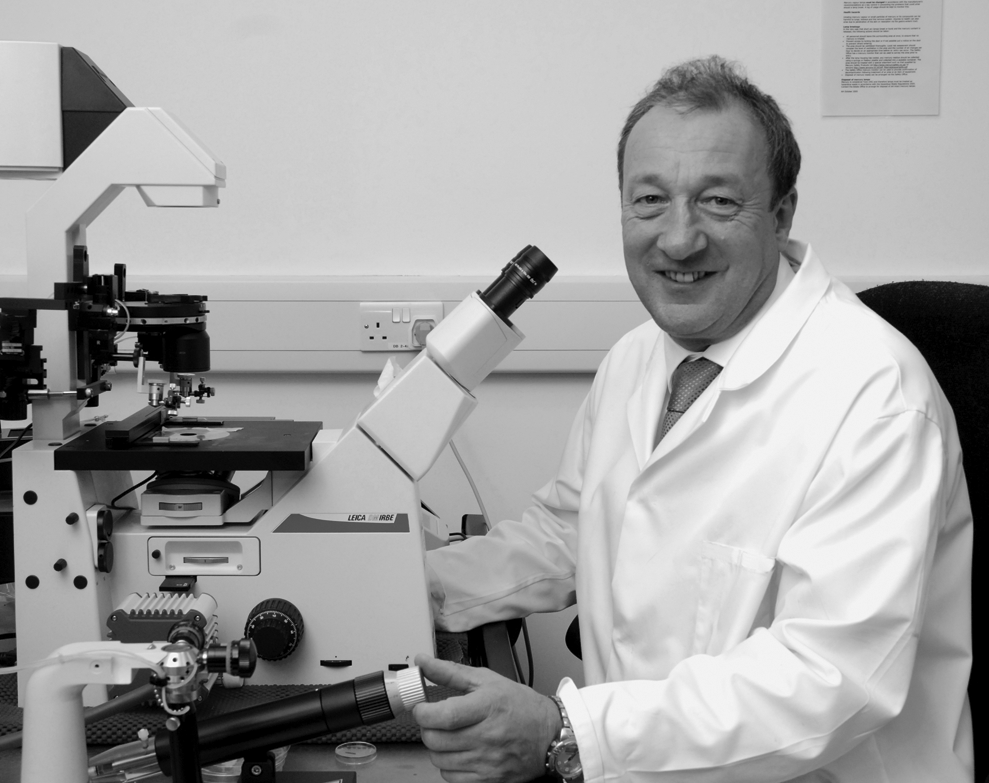
Although development in the mouse was limited, further research was later carried out in ruminants because of commercial interest in livestock production. By this stage in the development of the cloning procedures in mammals, the recipient cell was almost always an oocyte enucleated at the second metaphase of meiosis, rather than an enucleated zygote. In the 1980s, live lambs were produced using donor nuclei from 8- to 16-cell embryos (Willadsen, 1986), and subsequently clones of cattle and pigs were produced. At that time, nuclei were only transferred from early embryos (Barnes et al., 1991). Embryos with around 32 cells, morulae or early blastocysts, were the latest stage from which offspring were obtained (Smith and Wilmut, 1989). It was in this context that we began our research in 1991.
Keith joined a team that had very extensive experience of embryo recovery, manipulation, and transfer in sheep. This was gained in the course of research into causes of prenatal mortality (Wilmut and Sales, 1981; Wilmut et al., 1986) and for the production of transgenic animals by direct gene injection into nuclei in early embryos (Clark et al., 1989). The experienced surgery team was led by Marjorie Ritchie with John Bracken. Micromanipulation was carried out by William Ritchie. We were supported by experienced stockmen who were very familiar with routines for the induction of superovulation, synchronization and detection of heat, and the safe delivery of lambs. Research into nuclear transfer had been initiated in the group by a postgraduate student, Lawrence Smith, who demonstrated effects of cell cycle stage in the mouse (Smith et al., 1988). During research in sheep, he established the procedure for enucleation that was used throughout the project, by predicting the location of the spindle on the basis of the position of the first polar body and localized differences in the cytoplasm. Confirmation of enucleation was by use of a DNA-specific fluorochrome (Smith and Wilmut, 1989). Keith's experience in the cell and molecular biology of cell cycle and regulation of DNA replication gained during his postgraduate studies at Sussex University complemented the skills and experience already present and transformed the potential of the group.
When two cells are fused together, there are profound effects of their individual cell cycle stages upon the ploidy of the resulting hybrid (Johnson and Rao, 1970). Keith initiated a series of studies in cattle to examine the effects of cell cycle stages of the two cells used in nuclear transfer. These studies emphasized the need to select specific cell cycle stages. The recipient cells used in these studies were oocytes matured in vitro to metaphase II of meiosis before enucleation. He showed for the first time that the effect on nuclei of the high level of maturation-promoting factor (MPF) activity present in these oocytes was dependent upon their cell cycle stage at the time of transfer. All nuclei underwent nuclear envelope breakdown, premature chromosome condensation, and subsequent DNA replication regardless of the stage of their cell cycle (Campbell et al., 1993). As a result, normal ploidy was only to be expected if the donor nucleus was awaiting DNA replication.
On the basis of these observations, we established two approaches to successful nuclear transfer. In one procedure, when the recipient cell was an oocyte enucleated in metaphase II of meiosis, it was expected to have a high level of MPF activity and induce DNA replication in the transferred nucleus. Hence the donor cell would have to be selected in the G1 phase of the cycle for there to be a strong probability that normal ploidy would be maintained. In the innovative alternative, the recipient oocyte was activated to cause decay of MPF activity when it was shown that the transferred nucleus determined whether or not DNA replication occurred. This was christened the “Universal Recipient” because it was anticipated that DNA damage would be avoided and normal ploidy maintained regardless of the stage of the cell cycle of the donor nucleus with the exception of those cells in mitosis. This hypothesis was tested in a study using 16- to 32-cell sheep embryos as nuclear donors, and a significant increase in embryo development was shown (Campbell et al., 1994). Together these observations also provided an intellectual framework that possibly explained some of the results reported in earlier studies in which oocyte activation may have been induced unintentionally by allowing the oocytes to age before micromanipulation (Willadsen, 1986; Willadsen et al., 1991).
One objective of the project was to be able to use nuclear transfer from cultured cells to provide a route for precise genetic manipulation. This was one of the specific objectives of the funds that were used to recruit Keith to the Institute. At this time, and in fact still to this day, no embryonic stem cells (ESCs) have been derived from livestock embryos. In a collaborative project with Jim McWhir, cells were cultured from late blastocyst-stage sheep embryos. Although ES-like cells were observed during early culture, these were rapidly lost, with all cells displaying markers of differentiation. I proposed a study using the Universal Recipient protocol to discover if offspring could be obtained from cells taken from blastocyst at this late stage and then to discover whether the cultured cells lost their developmental potential in nuclear transfer as they differentiated. Although the use of the Universal Recipient avoided many of the cell cycle effects and had improved development using embryonic blastomeres as nuclear donors when using these cultured cells, offspring were obtained from early passages, but not from later passages, suggesting that a significant change had occurred quickly (Campbell et al., 1996). This apparently supported earlier suggestions that cloning was not possible from more differentiated cells (McGrath and Solter, 1984). However, we continued our studies, and subsequent experiments revealed the beneficial effect of optimal means of coordinating the cell cycle stage of the donor nucleus with the recipient cytoplasm (Campbell et al., 1996).
Because of our previous studies and the reprogramming literature, oocytes arrested at MII were used as recipient cells. To extend the period of exposure, techniques were developed to allow the transfer of the nucleus while preventing activation of the recipient oocyte. Although the initial studies had not yielded ESCs, a population of ES-like cells was established that at least during early isolation had been able to support development of cloned embryos. Although they were derived from embryos, these cells displayed the cell cycle checkpoints that are typical of adult cells. Coordinating the donor cell with the cytoplasmic environment of an MII oocyte required a diploid cell cycle state to prevent damage and maintain ploidy. Keith pointed out that during the cell cycle diploid cells are present during the G1 phase and they are also present in cells that have exited the growth cycle, as can occur naturally during differentiation or can be induced by removal of nutrients. Such arrested cells are said to be in G0, or quiescence, and are known to undergo changes in gene expression and chromatin structure, possibly associated with the differentiation process. The donor cells were synchronized in G0 by reducing the concentration of serum in the culture medium for several days prior to their use as nuclear donors. In this way, the first offspring were obtained from cultured cells in 1995 (Campbell et al., 1996).
At this time, we submitted patent applications covering two specific aspects of the new procedures. Two years later, they were the basis of a substantial investment in a company set up to develop the cloning procedures, Roslin Biomed. Of greater urgency, it was necessary to decide upon the next research steps. Because the efficiency had been low following transfer of nuclei from cultured blastocyst-derived cells, it was felt necessary to repeat that study. But we also wanted to transfer nuclei from later stages of development and to attempt to introduce genetic modifications into cells before nuclear transfer. We could not possibly afford to attempt all of these on government funding. However, PPL Therapeutics, a company that had been spun out from the Institute, had an interest in the technique and offered to fund some of the research. Alan Colman, Angelika Schnieke, and Alex Kind became involved in planning the project. Their first objective was to derive similar cell lines from late blastocysts and for us to assess their developmental potential and this we agreed to do. We gained government funds to transfer nuclei from fetuses in the first sheep season and adult cells in the following season. Halfway through the sheep season, we had obtained embryo development after transferring nuclei from a new embryo-derived line and a fetal line. Other sheep were available, and when it was decided to transfer from adult cells the question became “which cells?” The main business of PPL Therapuetics at that time was the production of clinically useful human proteins in the milk of sheep, and with this in mind Angelika had cultures derived from mammary gland of a pregnant sheep. It was she who suggested that they be used because they were a well-characterized, stable cell line. So it was that a few months later it was appropriate to christen our first clone from an adult ewe “Dolly,” after Dolly Parton.
During the following few months, the potential of the new procedures was confirmed by the birth of more offspring from cultured embryo-derived cells, but more importantly for the first time from fetal and adult cells (Wilmut et al., 1997). Subsequent research has shown that it is not essential to induce the donor cell to exit the cycle and become quiescent (Cibelli et al., 1998), but in some cases it confers an advantage (Wells et al., 1999). It is certainly very convenient in comparison to extremely accurate selection of cells in early G1 (Wells et al., 2003). Since the birth of Dolly, animal cloning from cultured cell populations derived from adult animals has been repeated in a wide range of species including sheep, pigs, cows, rats, mice, dogs, cats, horses, and deer.
The birth of Dolly has had profound effects in research and provided important opportunities in biomedical research, animal biotechnology, agriculture, and conservation. Modern genetic manipulation techniques have been applied to somatic cells before nuclear transfer, producing randomly integrated knockin and knockout transgenic animals (McCreath et al., 2000; Schnieke et al., 1997). Animals have been modified in this way to provide the first accurate model of cystic fibrosis (Rogers et al., 2008) or produce polyclonal human antibodies for use in therapy (Kuroiwa et al., 2004). The latter project involved transfer of a human artificial chromosome to bovine fibroblasts to be used as nuclear donors. The human artificial chromosome carried the entire unrearranged, human immunoglobulin heavy-chain (hIGH) and kappa light-chain (hIGK) loci. In addition, a key bovine gene was deleted to prevent production of proteins encoded by the bovine genes, and the gene encoding a prion protein was deleted to prevent contamination of any clinical product by prion proteins. This complex series of modifications was only possible through use of the cloning protocol we established.
In addition to these immediate practical effects, the announcement that the genes from a differentiated cell of a vertebrate could be reprogrammed to produce all of the cell types needed to make an entire living animal “changed forever the way that scientists view mammalian development” (Kuehn, 2003). The ability of the oocyte to reprogram the genome of a somatic cell prompted new lines of biological research for the production of pluripotent cells. First, ESCs could be isolated from cloned mouse embryos (Wakayama, 2003), and they were found to be indistinguishable from cells derived from fertilized embryos (Brambrink et al., 2006), suggesting that it may be possible to produce autologous cells for research or therapy. More importantly, many scientists began a search for other means of inducing dedifferentiation of adult cells.
The most dramatic success was obtained by Shinya Yamanaka and his colleagues, who first identified genes whose expression is essential for ESC maintenance or whose expression is particularly marked in ESCs. They then showed that simply by introducing four of these transcription factors into mouse or human skin cells a proportion acquire the characteristics of ESCs (Takahashi et al., 2007; Takahashi and Yamanaka, 2006). It was confirmed that mouse “induced pluripotent stem cells (iPSCs) are able to contribute to all of the tissues of a chimera, including the germ line.”
This ability to reprogram adult human cells is providing revolutionary new opportunities to study inherited human diseases. Together with the ability to control the differentiation of pluripotent cells to the lineages affected in inherited disease, the derivation of iPSCs makes it possible to have in the laboratory cells that resemble those in a patient early in their life and to compare these with comparable cells from a healthy donor. Effective models have already been created for several human diseases whose etiology was not understood, including familial dysautonomia, a rare, but fatal peripheral neuropathy (Lee et al., 2009), and motor neuron disease, otherwise known as amyotrophic lateral sclerosis (ALS) (Bilican et al., 2012). It seems likely that in time cells derived in this way will be used for cell therapy because they provide a convenient means of obtaining cells of selected genotype.
Reflections on Dolly and Keith
The birth of Dolly and all that has followed from it stands as testimony to the work of the entire group, but to Keith in particular. We knew at the time that the birth of an adult clone was a momentous achievement, but I do not think that we fully understood the manner in which it would open new frontiers in science, technology, and medicine. Our achievements are a clear illustration of the benefit of collaboration because this provides the opportunity to introduce a variety of experience, skills, and knowledge, and in this case each of us made important contributions. These achievements also make the case for the maintenance of core groups and facilities in centers of excellence because it would have been impossible to conduct this extensive program of research without excellent livestock and surgical facilities and the large team of people required to carry out all of the procedures in the laboratory and surgery and on the farm.
Keith and I were relatively close in age so that I tended to view him as a fellow Principal Investigator rather than a postdoctoral fellow. We had similar views on many social and political subjects and shared some interests and hobbies. He lived very close to a center for mountain biking and clearly loved roaming over the hills. He and Angela with their daughters often went away to the mountains in their VW camper van. By chance we lived in neighboring communities in the Scottish Borders, so that I was able sometimes to have a lift in his camper van, and this allowed us to discuss topics of the moment or the situation with our research on the way to and from work. Our conversations were easy and often lighthearted.
The birth of Dolly created career opportunities for Keith. He moved first in 1997 to our neighbors and collaborators PPL Therapeutics and then in 1999 to a research chair at the Sutton Bonnington Campus of the University of Nottingham. He was very proud to tell me of the startup package that he had been offered and the funds that were available to provide long-term support for his work. In addition to having many invitations to speak, Keith was a regular attender at the Annual Meeting of the International Embryo Transfer Society, where he is remembered as an enthusiastic participant in discussions lasting late into the night. Always cheerful and friendly—with a strong distaste for bureaucracy—he is sorely missed.
Footnotes
Acknowledgments
At different stages in the research, we were very grateful for financial support from Roslin Institute, DTI, MAFF, and EU along with Animal Biotechnology Cambridge and PPL Therapeutics. All of the experiments carried out at Roslin Institute that are mentioned in this tribute were carried out under the UK Scientific Procedures Act.