




Abstract
By dissecting metabolic and epigenetic features imposed by ageing in cardiomyocyte conversion from fetal and adult mouse fibroblasts, Santos et al. describe that metabolic modulation can enhance direct cardiac reprogramming.
Cardiovascular diseases (CVDs) are the main cause of mortality worldwide. Risk factors include ageing, family history, hypertension, dyslipidaemia, diabetes, and a sedentary lifestyle (Bays et al., 2022). Ageing is associated with metabolic and epigenetic changes that weaken cellular plasticity and heart tissue repair (Zhu et al., 2021). Standard of care treatments including pharmacological interventions and surgical procedures mainly manage symptoms and fail to restore lost tissue.
CVDs can irreversibly damage cardiomyocytes that fail to regenerate in the adult heart, leading to heart failure. Several approaches have been explored to regenerate damaged cardiomyocytes, including stimulating the proliferation of endogenous cardiomyocyte and the transplant of cardiac progenitor cells. Cellular reprogramming offers the possibility to remuscularize failing hearts with functional cells (Xie et al., 2022). Reprogramming-based heart regeneration strategies include allografts of cardiomyocytes and stromal cells induced from pluripotent stem cells (Jebran et al., 2025) or converted from somatic cells with direct cell fate reprogramming. Direct cardiac conversion (DCC) bypasses the pluripotent stage by converting fibroblasts into induced cardiomyocytes (iCMs) using transcription factors, microRNAs, or small molecules (Wang et al., 2021). Despite the potential of DCC for the development of cell-based heart therapies and the fact that different combinations of cardiogenic factors can increase reprogramming fidelity into functional iCMs, this method still holds limited efficacy. Importantly, the age-related loss of cellular plasticity imposes metabolic and epigenetic constraints that hinder the full potential of DCC.
A recent study published in Ageing Cell by Santos et al. provides a comprehensive analysis of age-related barriers in cardiomyocyte reprogramming (Santos et al., 2025) (Fig. 1). The authors induced DCC by overexpressing the transcription factors Mef2c, Gata4, and Tbx5 (MGT) in mouse embryonic fibroblasts or skin fibroblasts from 4- to 6- or 12-month-old mice. RNA sequencing analysis demonstrated that cardiac reprogramming progressed with increased efficiency in embryonic fibroblasts. iCMs generated from adult fibroblasts showed reduced expression of cardiac markers and decreased calcium flux, key for heart tissue contractions.
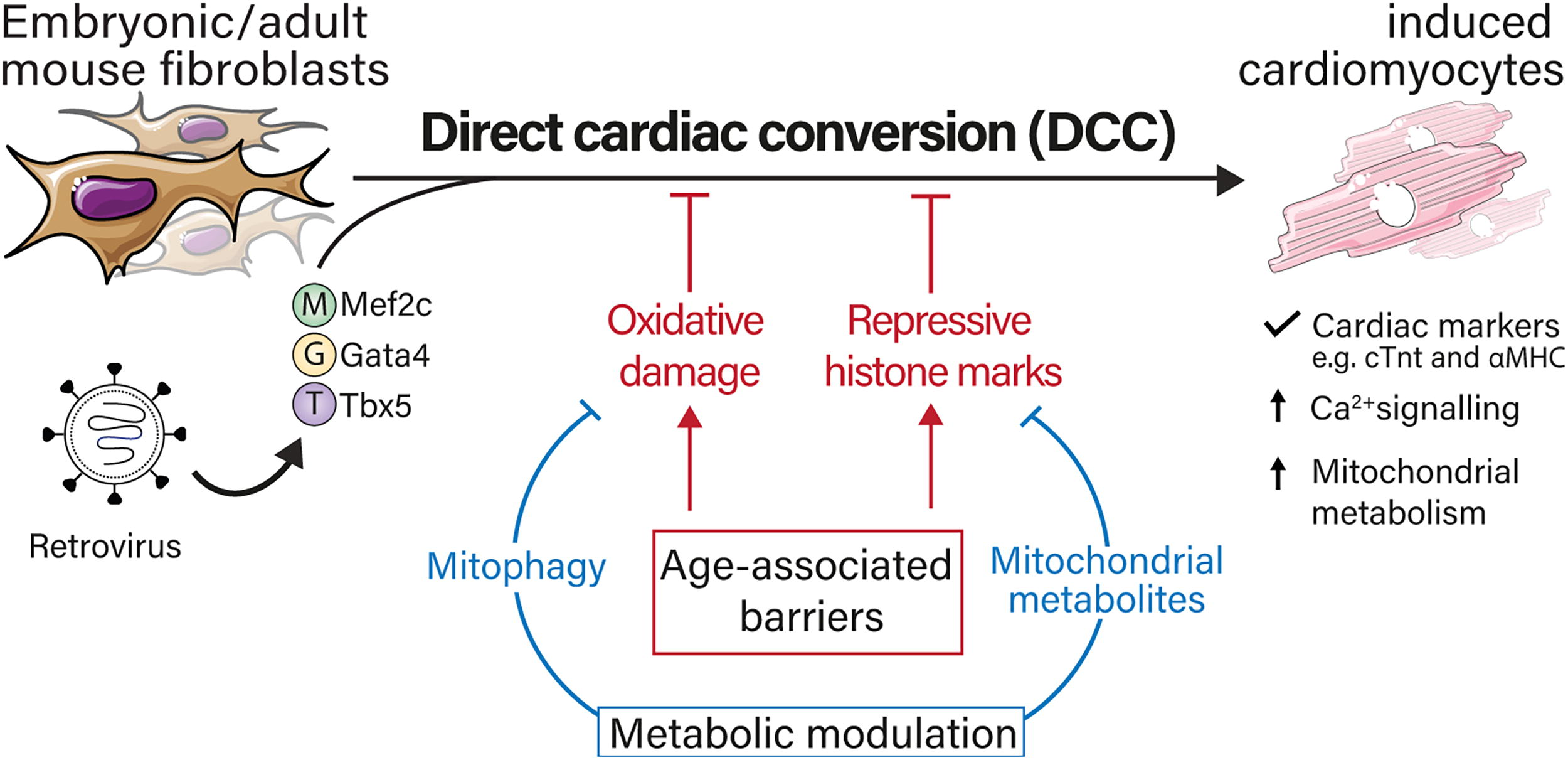
Direct cardiac conversion of fibroblasts into induced cardiomyocytes can be achieved by overexpression of Mef2c, Gata4, and Tbx5 transcription factors. Induced cardiomyocytes express cardiac troponin T (cTnT) and α-myosin heavy chain (α-MHC), exhibit spontaneous Ca2+ oscillation and increase mitochondrial activity. Using mouse embryonic and adult fibroblasts as source reprogramming material, the authors identified oxidative damage to the mitochondria and repressive histone marks such as H4K20me2 and K3K9me2 to be associated with reprogramming from aged adult cells. Metabolic rewiring using mitophagy-inducing drugs such as Urolithin A abrogates oxidative damage and lipid metabolism and tricarboxylic acid cycle intermediates such as α-ketoglutarate and acetyl-CoA drive cardiac histone mark signatures.
Mass spectrometry analysis of histone marks highlighted H4K20me2 and K3K9me2 as repressive marks at cardiac loci (Tnnt2, Pln, or Myh6) in MGT-transduced adult fibroblasts. Metabolomics analysis by LC-MS showed that iCMs—resembling the metabolic profile of maturing natural cardiomyocytes—rely on oxidative phosphorylation and fatty acids as fuels to sustain cell fate conversion from fibroblasts. As a result of increased mitochondrial activity, adult fibroblasts accumulate high levels of reactive oxygen species during DCC. Unlike embryonic fibroblasts, adult fibroblasts are less able to engage in mitophagy to mitigate oxidative damage and eliminate damaged mitochondria. This could partially explain the different DCC efficiencies when using embryonic and adult fibroblasts. Accordingly, the mitophagy inducer Urolithin A improved DCC efficiency from MGT-transduced adult fibroblasts.
Using a doxycycline inducible α-myosin heavy chain (α-MHC)-enhanced green fluorescent protein (eGFP) reporter, the authors further dissected the impact of metabolic shifts in DCC. Low lipid supplementation improved the efficiency of cardiac reprogramming from both embryonic and adult fibroblasts. This was accompanied by higher levels of H3K27me2 and H3K4un, similar to those found in neonatal mouse cardiomyocytes.
Exposure of adult mice to either high- or low-fat diets improved the cardiac reprogramming efficiency of adult cardiac and skin fibroblasts transduced with MGT ex vivo. While both diets decreased mitochondrial oxidative stress associated with DCC, low and high dietary lipid levels, respectively, increased and decreased H3 acetylation in MGT-transduced fibroblasts, a histone modification previously reported to enhance DCC in vitro (Singh et al., 2020). This suggests that metabolic modulation can remodel chromatin landscapes, which might improve DCC efficiency.
Building on previous links between mitochondrial metabolites and chromatin-modifying enzyme activity (Intlekofer and Finley, 2019), this study highlights the interplay between metabolism and epigenetics in cell fate decisions. In addition, since dyslipidaemia is a risk factor for CVDs, Santos et al. address the impact of differential lipid levels on DCC. Targeting metabolic barriers of ageing such as increased oxidative damage can help to fully unlock the potential for cardiac reprogramming, paving the way for innovative treatment of age-related heart diseases. For this, it will be crucial to assess whether the observed improvements in DCC translate into enhanced functional integration of iCMs in damaged hearts.
This work raises broader questions about whether age-related metabolic barriers could impact other forms of direct lineage reprogramming, such as into neurons or immune cells. If so, metabolic modulation may emerge as a universal enhancer of reprogramming technologies across regenerative medicine.
Footnotes
Authors’ Contributions
Conceptualization, writing—original draft, and visualization by P.P.C. Writing—review and editing by M.L.
Author Disclosure Statement
The authors declare no conflicting financial interests.
Funding Information
P.P.C. and M.L. are supported by CiNTech Project, grant number 7131 financed through the Recovery and Resilience Plan and Next generation EU funds.