




Abstract

How do scientists accelerate developments in personalized medicine for oncology? Mapping, not the kind you did at summer camp with a compass and protractor, the genomic kind. An ambitious undertaking by scientists at the University of California, San Francisco (UCSF) and University of California, San Diego (UCSD) School of Medicine, as well as additional support from an array of collaborators, is planning to delineate the interactions of constituent molecules within cancer cells. This endeavor was given the appropriate appellation of the Cancer Cell Map Initiative or CCMI.
“We're going to draw the complete wiring diagram of a cancer cell,” said Nevan Krogan, Ph.D., director of the UCSF division of QB3 and co-director of CCMI.
Although progress in genomic sequencing has been expanding at exponential rates over the past several years, the intricacies of how genetic mutations directly lead to cancer is only understood for a small percentage of tumors. To add a level of complexity, many patients who have developed the same cancer will have varying degrees of genetic mutations.
“The key to understanding genomic information is being able to place it into biological context. Mutations in tumor DNA that at first appear to be unrelated may in fact be clustered in specific pathways or multiprotein machines in the cell. The information, in context, will point to areas that we can target with specific therapies,” explained Dr. Krogan.
Lightsource/Deposit Photos
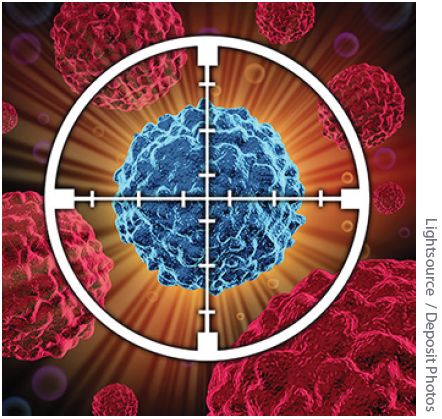
The current thinking is that while genomic mutations may be exclusive to individual patients, they all commandeer the same pathways that lead to aberrant and uncontrolled cellular proliferation. Since there is so much overlapping genomic data the CCMI team felt it was paramount to have a comprehensive cellular map for cancer, one that details the differences between normal and mutated molecular pathways. Their expectation is that it will support the acceleration of personalized therapies.
“We have the genomic information already. The bottleneck is how to interpret the cancer genomes,” said Trey Ideker, Ph.D., chief of medical genetics at the UCSD department of medicine and co-director of CCMI.
The intention is that the CCMI will alleviate the interpretive logjam by combining expertise at UCSD for extracting information from large datasets with the functional cell biology advances developed at UCSF. Moreover, tissue samples from patients currently being treated for cancer, in addition to clinical expertise for data analysis is being provided by the Moores Cancer Center and Helen Diller Family Comprehensive Cancer Center.
“The CCMI is an example of the best kind of collaborative science,” said Scott Lippman, M.D., director of Moores Cancer Center. “It draws together the strengths of multiple institutions and combines them in ways that are exponentially more powerful. And it is fundamentally driven by real people—actual patients with cancer. It is their stories, and the stories contained within their DNA, that will ultimately help us reveal cancer's darkest and most difficult secrets.”
Along with its fundamental role in generating the cancer cell map, the CCMI will act as a vital infrastructure conduit in the recent partnership between UCSD Health Sciences and San Diego-based Human Longevity. This collaboration plans to create thousands of tumor genomes from UCSD cancer patients, as well as utilize resources from the National Cancer Institute and the cancer genome databases from the San Diego Supercomputer Center and UC Santa Cruz.
David Haussler, Ph.D., director of QB3 at UCSC and creator of the NCI Cancer Genomics Browser, stated, “This is an exciting opportunity to utilize the unique NCI repository of 1.5 petabytes of cancer genomics data, combined with proteomic and functional data, to dive deeper into the molecular processes of cancer.”