




Abstract

iStock/Aldo Murillo
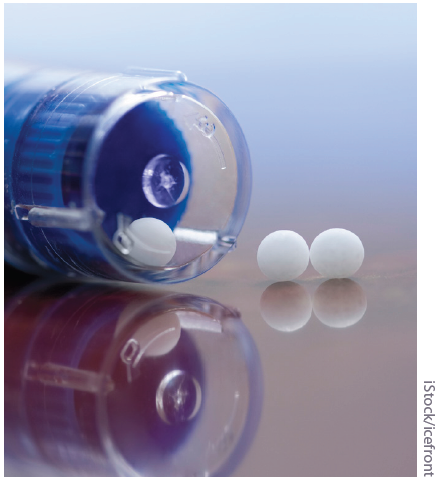
Placebo responders are different from placebo nonresponders, with implications for the design of clinical trials and the provision of clinical care. Placebo responders, for example, are thought to have brain signaling pathways that differ in subtle ways from nonresponders' pathways. Ultimately, these pathways—especially the dopamine, opioid, endocannabinoid, and serotonin pathways—differ at the genetic level.
The genes or gene patterns that affect the placebo response are bound to be extensive—so extensive, in fact, that they may merit the term place-bome. The term already graces the title of a paper prepared by researchers at the Beth Israel Deaconess Medical Center. This paper—“Genetics and the placebo effect: the placebome”—appeared April 13 in the journal Trends in Molecular Medicine.
“Evidence that genetic variations in these pathways can modify placebo effects raises the possibility of using genetic screening to identify placebo responders and thereby increase randomized clinical trial efficacy and improve therapeutic care,” the researchers proposed. “Furthermore, the possibility of interaction between placebo and drug molecular pathways warrants consideration in randomized clinical trial design.”
Although the researchers acknowledged that the study of the placebome is in its infancy, they felt it was time to review evidence from placebo studies and RCTs to identify putative genes in the placebome, examine evidence for placebo-drug interactions, and discuss implications for randomized clinical and clinical care.
Led by Kathryn Hall, Ph.D., a specialist in placebo studies, the Beth Israel team reviewed the evidence that the placebo response emerges from underlying biological processes. In addition, they catalogued polymorphisms in candidate genes that are thought to be placebome constituents.
“[We] speculate that the placebome comprises multiple intersecting pathways that have upstream or downstream effects on dopamine and opioid function, depending on the disease or disorder being treated,” they wrote. “The endocannabinoid and serotonin pathways may also be involved, but the evidence is more limited.”
These findings raise the possibility of using genetic screens to identify placebo responders. Such information could lead to better patient selection for clinical trials—for example, by pointing to those who should be excluded because they are likely to experience a benefit no matter what treatment they receive or by ensuring that potential placebo responders are evenly allocated across treatment arms.
Dr. Hall added that if the placebo response is influenced by certain brain signaling pathways, then it might also affect patients' responses to drugs that target those same pathways, and the magnitude of the drug effect might differ from one patient to another as a result of their genotype.
An important next step in describing the placebome, the team suggested, would be to include no-treatment controls in placebo-controlled randomized clinical trials that plan to capture omics data. “Our proposal to incorporate a formal placebo study into future clinical trials could represent significant cost savings, leading to rapid access to knowledge of mechanisms involved in the placebo response across a wide variety of disease and drug regimens,” said Dr. Hall.
If genetic profiles of placebo responders were to be established, several ethical issues would come to the fore, particularly if high placebo responders were to be excluded from clinical trials. For example, how would drugs be labeled, and which patients would be approved for treatment, if the drugs had been evaluated in tests limited to placebo nonresponders? Should physicians test for genetic placebo-response propensities, and should patients be allowed to refuse permission to be tested? Should patients be told about their propensity to respond to placebos, and could patients refuse to know or refuse to have this designation in their medical records? Would physicians be able to ethically use this information and, if so, how? And of course, what if knowing one is a placebo responder affects one's placebo response?