




Abstract

Tumors aren't mere blobs of cancer cells. They are complex structures. Besides cancer cells, they contain immune cells, fibroblasts, and cells that constitute supporting blood vessels. These noncancerous cells, it is known, play an important role in cancer biology. What is not known, however, is how these cells influence genomic analyses of tumor tissue.
The problem comes down to tumor purity, the proportion of cancer cells in the admixture that is the tumor microenvironment. Elements of the admixture interact with each other as the tumor grows. As a whole, the admixture is thought to have an important role in tumor growth, disease progression, and drug resistance.
To assess potential confounding effects of variable tumor composition, researchers based at the University of California, San Francisco (UCSF) undertook a systemic analysis of tumor purity across multiple cancer types. This analysis considered how tumor purity could bias predictions of checkpoint inhibitor performance.
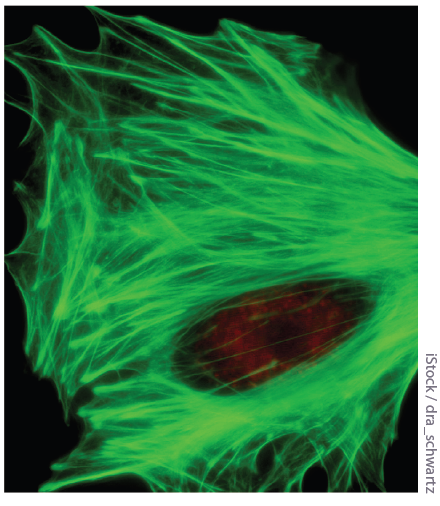
iStock / dra_schwartz
The most important result of the analysis was that predictions were accurate only when the extent of infiltration of immune cells into the tumor was explicitly quantified. When this aspect of tumor purity was not accounted for, estimates of the likely success of immunotherapy were either too high or too low.
This result appeared December 4 in the journal Nature Communications, in an article entitled, “Systemic pan-cancer analysis of tumor quality.” The article described how the UCSF team used four different methods to measure tumor purity from more than 10,000 samples across 21 tissue types from The Cancer Genome Atlas. Ultimately, the UCSF team examined how purity might affect the reliability of three of the most common genomic methods used in cancer research: correlation, clustering, and differential analysis.
Correlation techniques reveal so-called co-expression networks—genes that tend to be expressed together most frequently in tumor samples—with the aim of identifying molecular pathways that drive malignancy and metastasis. Clustering techniques group cancers into subtypes based on molecular markers, with the hope of arriving at more precise treatments. Differential analysis compares gene expression in tumors and normal tissue in order to uncover genetic flaws distinctive to cancer.
“We demonstrate the confounding effect of tumor purity on correlating and clustering tumors with transcriptomics data,” wrote the article's authors. “Finally, using a differential expression method that accounts for tumor purity, we find an immunotherapy gene signature in several cancer types that is not detected by traditional differential expression analyses.”
Specifically, with respect to correlation, the USCF team found that the tandem expression of JAK3 and CSF1R varied widely if tumor purity was taken into account. With respect to clustering, the team focused on three cancer types—breast, GBM, and LUAD. In these cancers, the USCF researchers noted, “the molecular subtypes and the subtyping method based on gene expression profiles are widely accepted, and in all three, we detected discrepancies in purity among subtypes.”
Finally, in analyses of samples of lung cancer, kidney cancer, and thyroid cancer, the researchers found that if tumor purity were not taken into account, differential analysis could yield misleading results on the relative expression of proteins called CTLA-4 and CD86, both important targets in cancer immunotherapy.
“[We] have shown that the influence of tumor purity on the results of genomic analyses is much stronger than previously appreciated,” the authors of the Nature Communications article noted. “Lower purity samples, by influencing genomic data, may make precision medicine efforts more challenging.” The authors concluded by urging cancer researchers and clinicians to take tumor purity into account when analyzing genomic data from patient samples.
“Tumor purity is a big problem when you're dealing with fresh tissue from real patients rather than with cell lines, and there has been no systematic analysis of this issue,” said first author Dvir Aran, Ph.D. “In the case of immunotherapy, it's an expensive treatment and it can have side effects, so it's important to know which patients are most likely to benefit. If we pay more attention to the immune cells that are actually in tumors, we may have more success.”