




Abstract

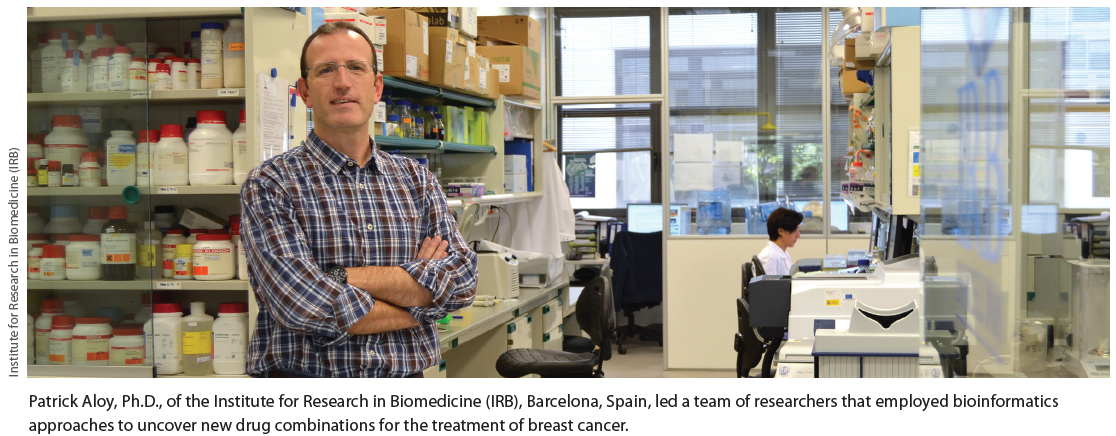
Patrick Aloy, Ph.D., of the Institute for Research in Biomedicine (IRB), Barcelona, Spain, led a team of researchers that employed bioinformatics approaches to uncover new drug combinations for the treatment of breast cancer.
Institute for Research in Biomedicine (IRB)
Cancer research has progressed rapidly over the last few decades, with a growing repertoire of drugs to fight the deadly disease. Despite advances, treatment resistance remains a problem, particularly for treating solid tumors such as breast cancer. Drug combinations are one of the most effective ways to fight back, and a group of scientists at the Institute for Research in Biomedicine (IRB) in Barcelona reportedthe successful use of” or “the use of” bioinformatics to uncover previously untested pairs of breast cancer therapeutics. The study appeared in the journal Cancer Research.
One way treatment resistance to cancer therapies occurs is when cancer cells evade destruction by using alternative signaling routes. “What we realized within the literature and by attending talks is that one of the big problems of treatment relapse or resistance is crosstalk between pathways,” says Patrick Aloy, Ph.D., head of IRB’s Structural Bioinformatics and Network Biology Lab, and a co-author of the study.
To address this issue, Dr. Aloy’s group used computational methods to quantify how well various drug combinations could prevent the signalling crosstalk and increase treatment efficacy. “The basic idea behind all this work was to maximize the damage we were incurring to the signalling pathways in cancer,” Dr. Aloy explains. “Impeding this crosstalk or damaging signaling networks could be an effective treatment for cancer.”
The researchers analyzed 64 breast cancer drugs in silico that were either currently in use or in clinical trials and discovered 390 novel drug combinations. From these, they chose ten to test in vitro on human breast tumor cells and found high level of synergy in seven of those combinations.
As a final step, the group validated one of those pairs, the estrogen response modifier raloxifene and the c-Met/VEGFR2 kinase inhibitor cabozantibib, in a mouse model of breast cancer. Though each drug reduced tumor size on its own, together the drugs had an additive effect, shrinking tumors by an impressive 60 percent. Remarkably, they saw this effect with much smaller doses of raloxifene and cabozantibib than used in current treatments, three and 25 times, respectively.
“Raloxifene isn’t a drug we think of as an excellent breast cancer drug […] so I think that combination sounds interesting, but we would have to really see whether there was clinical activity before coming to a conclusion on that,” says Larissa Korde, M.D., an oncologist specializing in breast cancer treatment research at the University of Washington Medical Center.
“I think the paper [used] a good strategy, although I would always say that it doesn’t matter what happens in silico if it doesn’t happen in reality,” Dr. Korde adds. “Sometimes things that work in cell lines and in mouse models end up doing very well in human studies and sometimes they don’t, so I think it’s a good first step.”
Dr. Korde also points out there are other forms of treatment for breast cancer, and some, such HER2 targeted therapies, have proven to be very successful. “I think that to some degree we are a little bit behind other cancers—there are other cancers that really do have very strong target drivers, whereas in breast cancer other than HER2 we haven’t really found that,” Dr. Korde tells ClinicalOMICs.
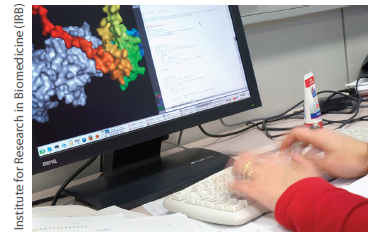
Institute for Research in Biomedicine (IRB)
Before bringing this combination to the clinic, the group has a few steps to complete. This means the group won’t move to test the raloxifene and cabozantibib combination in humans right away. Instead, they plan to see if it can prevent treatment resistance in xenografts, or tissue from human tumors transplanted in mice. The team also hopes to find more effective drug combinations for breast cancer by testing pairs of anti-tumor agents and drugs for other conditions such as high blood pressure and diabetes.
Breast cancer is not the only disease the group hopes to address. It is also applying these techniques to investigate treatment for Alzheimer’s disease, which, according to Dr. Aloy, is a much more difficult task since it involves restoring function in cells rather than simply killing them.