




Abstract

Biodesix
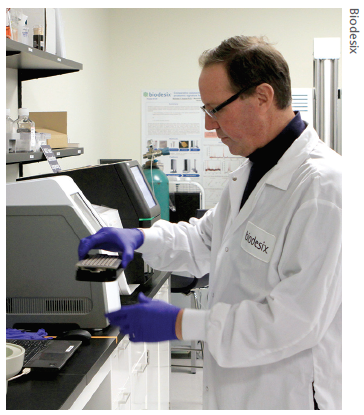
Cancer diagnostics company Biodesix, makers of the VeriStrat test, announced a collaboration with Beijing, China-based Bioyong Technology. Under the terms of the deal, Bioyong will develop and commercialize a version of the VeriStrat proteomic blood test for patient with non-small cell lung cancer for use in China, with potential future expansion to other countries in the region.
The move marks the first commercial entry for Biodesix in the Chinese market, though the company has maintained relationships with researchers in the region.
This is a tremendous opportunity for the company, and for lung cancer patients in Greater China,” Biodesix CEO David Brunel told Clinical OMICs. “Lung cancer is a major problem in China. There are nearly 850,000 new lung cancer diagnoses predicted in 2020 and approximately 37% of new cases of lung cancer, worldwide, are in China.”
According to Brunel, the opportunity for the company extends well beyond simply developing and marketing a targeted cancer test. It’s partner, Bioyong, is also keen to develop new tests on the VeriStrat platform that can be used in clinical studies with major hospitals in the region—activity that should build interest for the product.
The collaboration, however, will require significant work for technology transfer, specifically for Biodesix’s proprietary MALDI methods. Bioyong will pay Biodesix roughly $38 million over the course of the 10-year agreement, and will be responsible for development, clinical validation, regulatory approval, and commercialization of a version of the VeriStrat test in their territory. In addition, the two companies will work together to advance promote the use of MALDI for clinical applications.
“Building on our leadership in the clinical application of mass spectrometry, Bioyong looks forward to helping physicians make more informed treatment decisions, and provide better recovery and prognostic possibilities for patients suffering from lung cancer,” notes founder and chairman Dr. Qingwei Ma.
The combination of Biodesix and Bioyong is one of like minds, Brunel adds. “Both companies are trying to advance the use of MALDI-TOF in the clinic. Bioyong works in peptidomics and design/build of MALDI-TOF machines. Partnering with them means that we can focus on mutual clinical requirements, and they can expand their machine footprint and maybe design machines that reflect our mutual needs for MALDI-TOF.”