




Abstract

Researchers have pinpointed the gene responsible for a mysterious disease—a new form of muscular dystrophy characterized by muscle weakness, short stature, intellectual disability, and cataracts. The disease remained an enigma due to both the variability and the variety of symptoms, which overlap with dystroglycanopathies and Marinesco-Sjögren syndrome.
Funded by the March of Dimes and the Muscular Dystrophy Association, the study, which identified mutations in INPP5K as the genetic underpinning of the disease by performing whole-exome sequencing on affected patients and their families, will appear in the American Journal of Human Genetics.
The emergence of next-generation sequencing has accelerated the identification and description of rare, unidentified diseases according to the study’s lead author M. Chiara Manzini, Ph.D., an assistant professor at the George Washington University. “With next-generation sequencing, things are moving a lot faster, because you can sequence the child and the family to identify a genetic mutation. In the past, there was not much you could do on families with only one affected child apart from describe the clinical presentation,” Dr. Manzini said.
Perhaps as integral to the study as next-generation sequencing, was a web-based tool called GeneMatcher, which allowed Dr. Manzini’s research team to connect with other scientists studying INPP5K. “I like to call it match.com for scientists,” Manzini laughed. Three years after their initial hypothesis, Manzini finally connected with far-flung collaborators, like co-author Yalta Jamshidi, Ph.D., of St. George’s University of London, and identified enough families affected by this rare disorder to make the study feasible.
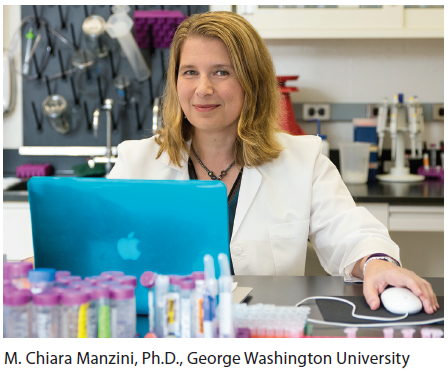
M. Chiara Manzini, Ph.D., George Washington University
“So now we’ve found more families,” noted Dr. Manzini with excitement, “and what’s interesting about INPP5K is that it’s different from other muscular dystrophy genes.” In contrast to other muscular dystrophy genes, which maintain the structural integrity of muscle fibers, INPP5K regulates intracellular signaling and protein trafficking—an entirely new mechanism that pharmaceutical companies could target to develop therapies.
For the more immediate future, families affected by the formerly mysterious disease can finally have a diagnosis with a name, a roadmap for disease progression, and hope for a cure.